


The complete guide
Choosing a Retractable Garden Hose Reel: A Practical Buyer's Guide
The hose problem nobody plans for
Most gardens end up with a hose that lives on the ground. It starts coiled neatly enough, then after a few waterings it becomes a loose spiral across the lawn. It gets walked on, mowed over, dragged through a bed, and left out in the sun where the outer layer slowly hardens. Then one morning there is a kink you cannot shake out, or a weep at the tap end, and the whole thing goes in the bin.
The irritation is not really the hose. It is the five minutes of coiling at the end of every job, which is exactly the five minutes nobody has. So the coiling stops happening, and the hose deteriorates faster than it should.
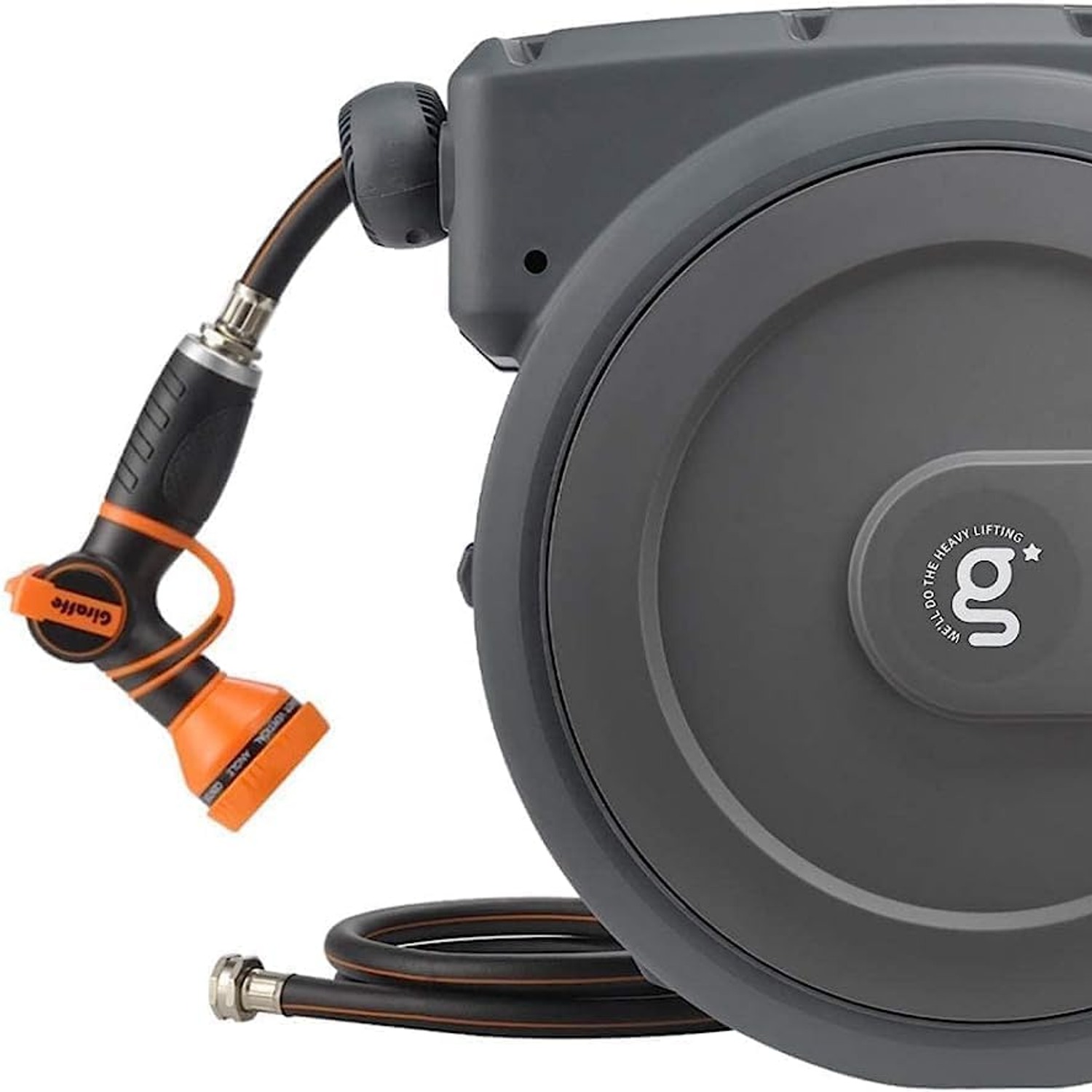
A retractable garden hose reel removes that step. The hose lives on a drum inside a housing fixed to the wall. You take out what you need, you water, you let it wind back. There is no coiling, no pile, and no hose baking on the patio for three weeks.
How a retractable reel actually works
Inside the housing is a spring-loaded drum. Pulling the hose out winds the spring. Left alone, that spring would drag the hose straight back in while you were trying to use it, which is why the lock matters.
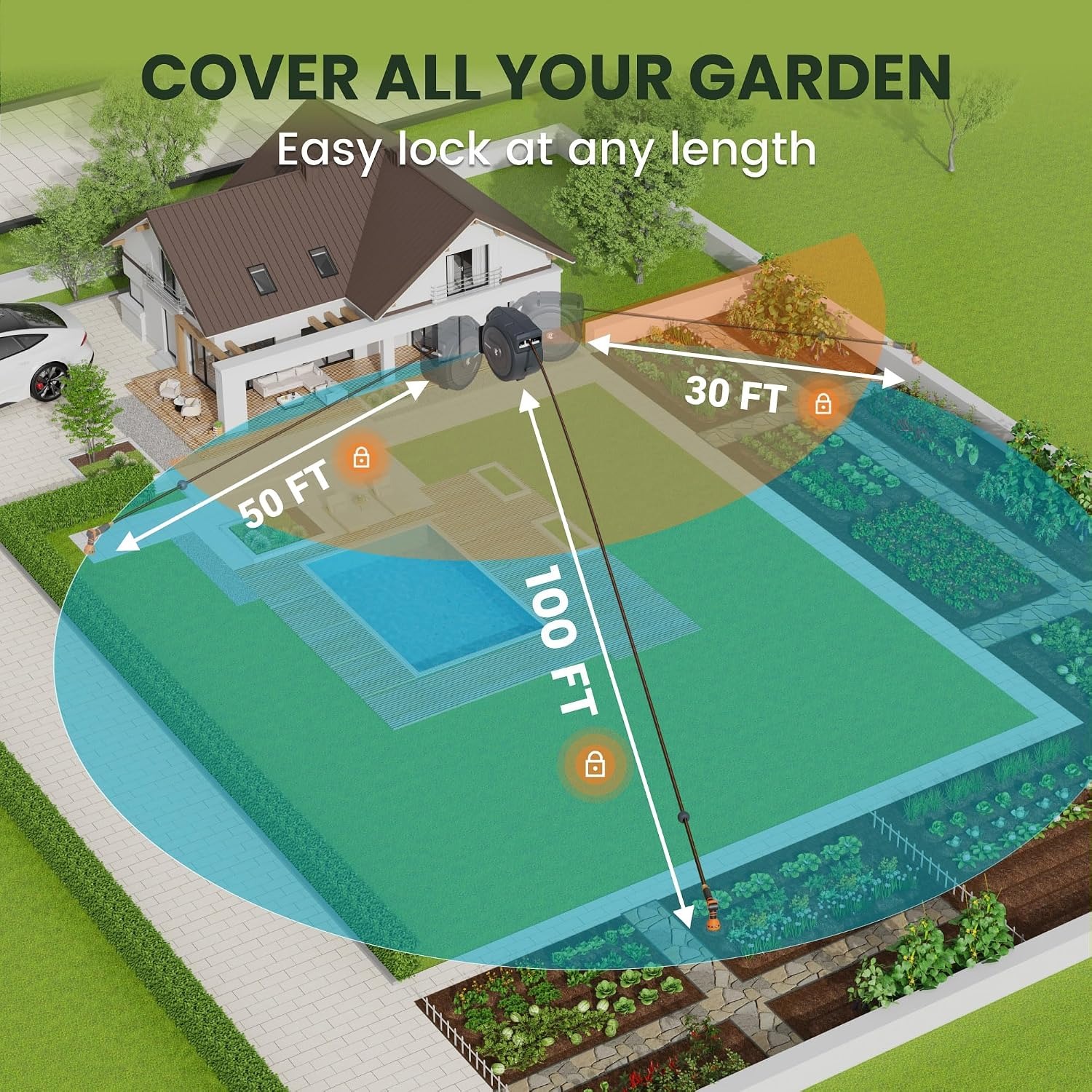
This reel uses an any-length lock. Rather than catching at fixed intervals, it holds the hose wherever you stop. Three metres for the pots by the door, fifteen for the vegetable beds, the full 30 m for the far fence. The hose stays put while you work and the spring stays loaded quietly in the background.
When you are finished, a short tug past the lock point releases the catch. The spring then draws the hose back through a guide inside the housing. That guide is the unglamorous part that does most of the work. It walks the hose side to side across the drum as it winds, so the coils lay flat instead of piling in one spot. Piling is what creates the kink you find next time, so a guide system is worth paying attention to when comparing models.
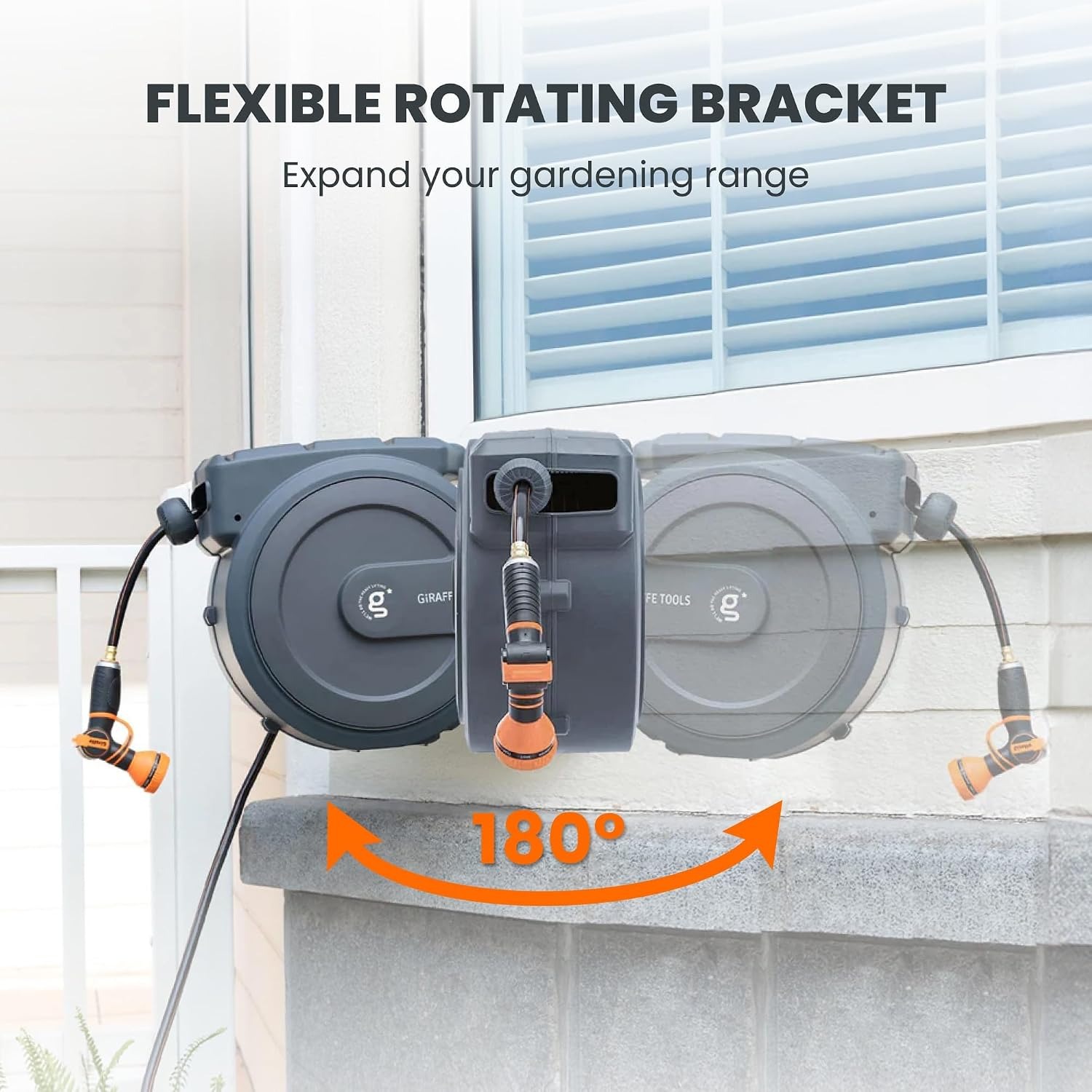
The bracket adds one more useful bit of movement. The reel swivels 180 degrees on its mount, which means you can pull the hose toward the lawn, swing round to the driveway, and the housing follows rather than resisting. Without that swivel, every pull at an angle grinds the hose against the housing edge.
What you get in this one
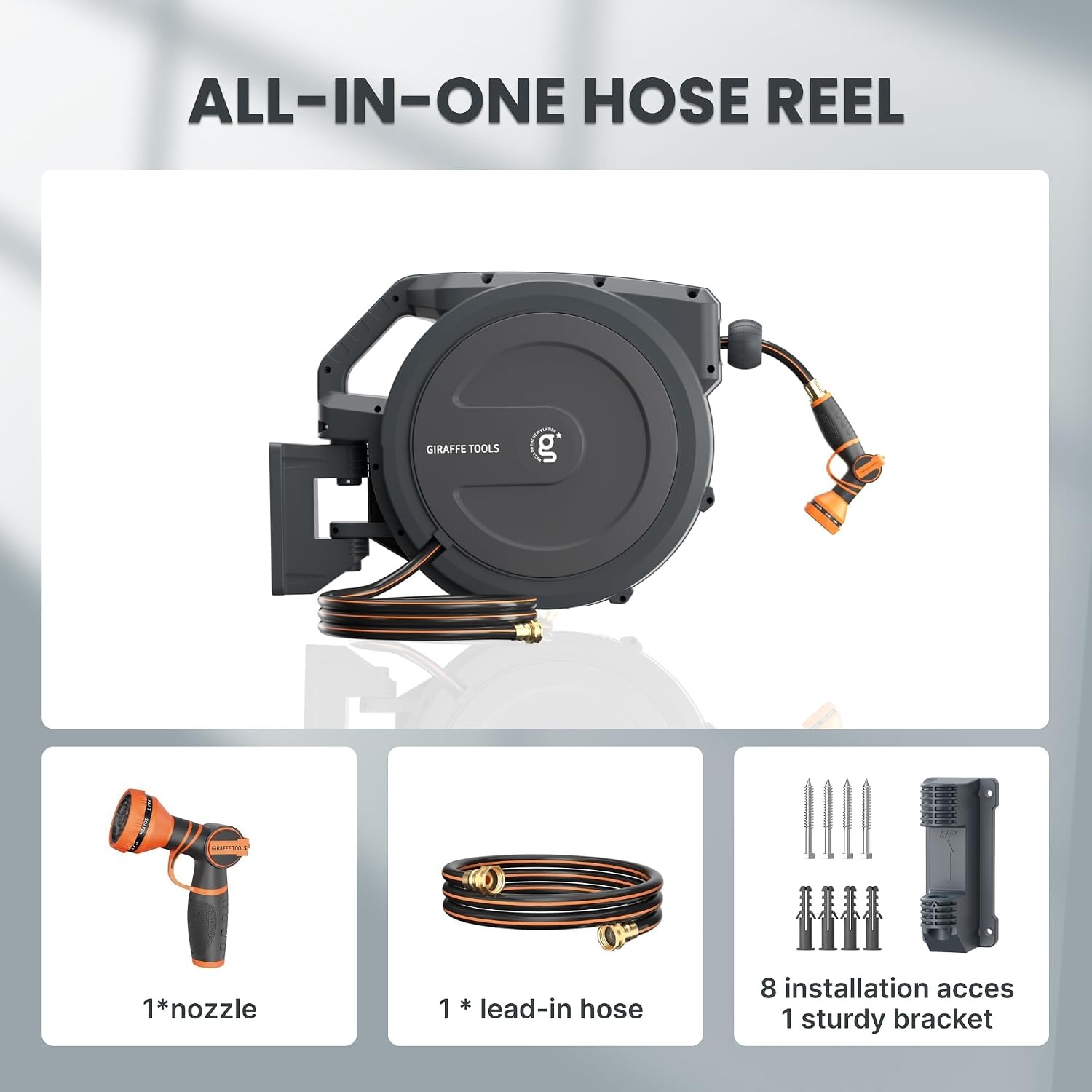
The hose is 30 m long with a 1.27 cm internal diameter, which the listing also gives as 100 ft and 1/2 inch. That diameter is standard for home taps and nozzles, so fittings are easy to source.
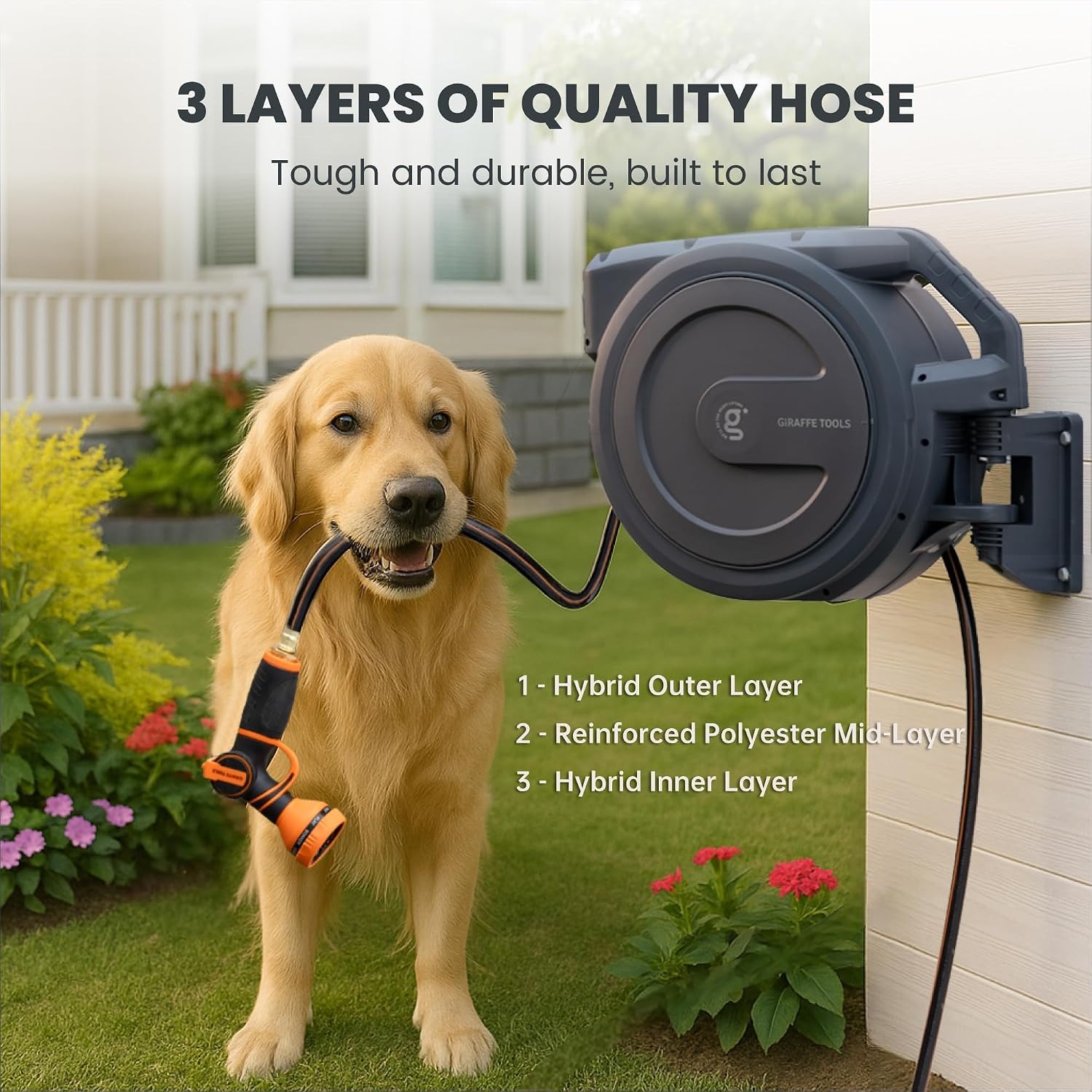
The hose is described as a hybrid type, flexible across weather conditions and resistant to abrasion. The listing records a 200 PSI pressure test and a 600 PSI burst pressure test. Domestic mains pressure is nowhere near those numbers, which gives you headroom.
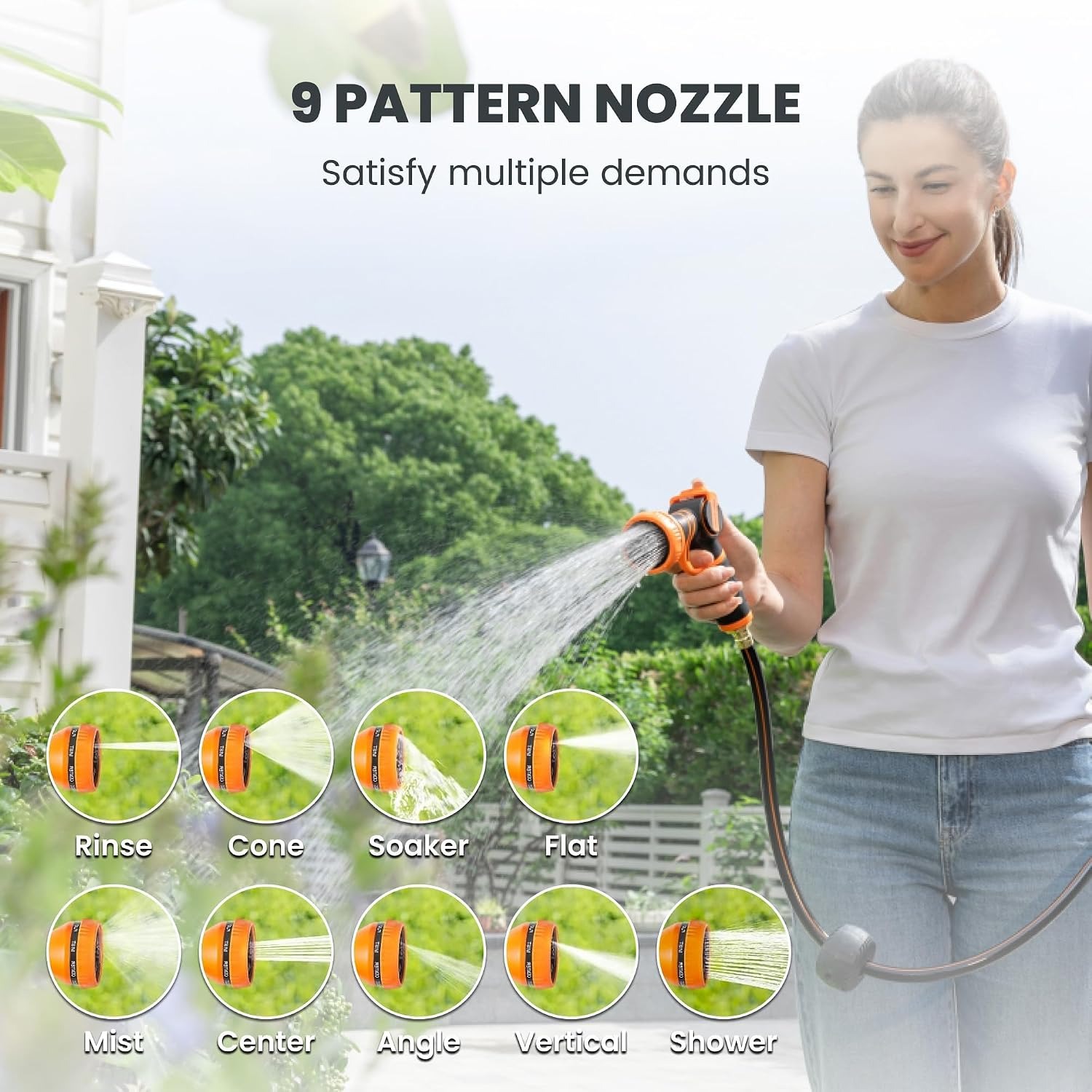
A nine-pattern nozzle is supplied. In practice you will use three or four of those patterns regularly: a fine mist for seedlings, a shower for general watering, a cone for shrubs, and a jet for rinsing paving or wheels. Having them on one head means you are not hunting for a different attachment halfway through a job.
The unit measures 50.8 x 43.2 x 25.4 cm and weighs 12.1 kg. Stated capacity is 11.9 kg. A two year warranty is listed for this model.
Who it suits
Anyone who waters by hand more than once a week will feel the difference quickly. Vegetable growers, people with a lot of pots, and anyone with a lawn that needs help in summer all fall into that group.
It also suits small gardens, which surprises people. A courtyard or a narrow back garden has no spare floor space for a hose trolley, and a wall unit uses the one surface that was doing nothing. The any-length lock means you can pull out two metres for the planters without wrestling the other twenty-eight.
Car washers get good value from it too. Thirty metres usually reaches the whole vehicle from a single tap position, and the jet pattern on the nozzle handles rinsing.
It is less suited to allotments or anywhere with no solid wall. Twelve kilograms of reel, plus the weight of water, needs real fixings. A panel fence will not hold it.
Choosing: the questions worth asking first
Start with distance. Walk from your outdoor tap to the furthest point you water and measure it, roughly. Add a few metres for walking around beds rather than straight through them. If that total is comfortably under 30 m, you are fine. If it is close to 30 m, think about whether the reel could be mounted nearer the middle of the run.
Then look at the wall. You need something solid that will take four screws and hold steady weight. Brick, block and concrete are straightforward with the right plugs. Rendered walls need fixings long enough to bite into the material behind. Timber needs to be structural, not cladding.
Think about height. Waist to chest height is usually right. Too low and the hose scuffs the ground on every pull. Too high and you are reaching up to lift a 12 kg unit off its bracket in October.
Finally, consider the tap fitting you already have. Most outdoor taps take a standard quick-connect. Older taps sometimes need a threaded adaptor, which costs very little and takes a minute to fit.
Fitting and first use
Mark the bracket holes with the bracket held level, drill, plug, and drive the four screws. A spirit level is worth the extra thirty seconds, because a tilted reel feeds unevenly.
Drop the reel onto the bracket and connect the leader hose to the tap. Open the tap slowly the first time and check the connection for drips before you walk away. A weeping washer is the most common first-day issue and it is a two-minute fix.
Then pull the hose all the way out and let it wind fully back once or twice before real use. That settles the hose onto the drum evenly and shows you how the lock feels.
Keeping it working
Rinse grit off the hose before letting it rewind. Sand and small stones dragged into the guide are the main thing that wears the mechanism, and a quick wipe with a cloth solves it.
Wipe the housing with mild soap and water. Skip solvents, which can haze plastic.
The big one is frost. Before the first cold snap, disconnect from the tap, let the hose drain fully, lift the unit off its bracket by the handle, and store it somewhere dry. Water left inside a hose expands when it freezes and splits it from the inside. That single habit does more for the life of a hose reel than anything else.
At the start of each season, check the tap washer, run the hose out fully, and look along it for scuffs or soft spots.
The short version
A retractable garden hose reel fixes a small daily annoyance rather than a dramatic one, which is why it tends to get bought late and appreciated immediately. This one gives you 30 m of hybrid hose, a lock that holds at any length, automatic rewind through a guide that keeps the coils flat, a 180 degree swivel bracket, and a nine-pattern nozzle in the box.
Measure your longest watering run, check the wall will take 12.1 kg on four screws, and pick a mounting height you will not resent in winter. Get those three right and the hose stops being something you think about.