

The complete guide
How To Choose A Bidet Attachment For Your Toilet
The problem nobody really talks about
Toilet paper is a dry solution to a wet problem. Most of us grew up with it and never questioned it, but it only takes one trip to a country where water washing is normal to notice the difference. You feel cleaner. You use a fraction of the paper. And in households where skin irritation, haemorrhoids or recovery after childbirth are part of life, the gap between paper and water stops being a matter of preference and becomes a matter of comfort.
The usual objection is that bidets mean plumbing work, a second fixture, a bathroom renovation. That was true once. It is not true now. A bidet attachment for toilet use slides in under the seat you already own, taps the water line that already fills your cistern, and asks nothing of your floor plan. The whole thing is about as involved as changing a tap washer.
How a non electric bidet actually works
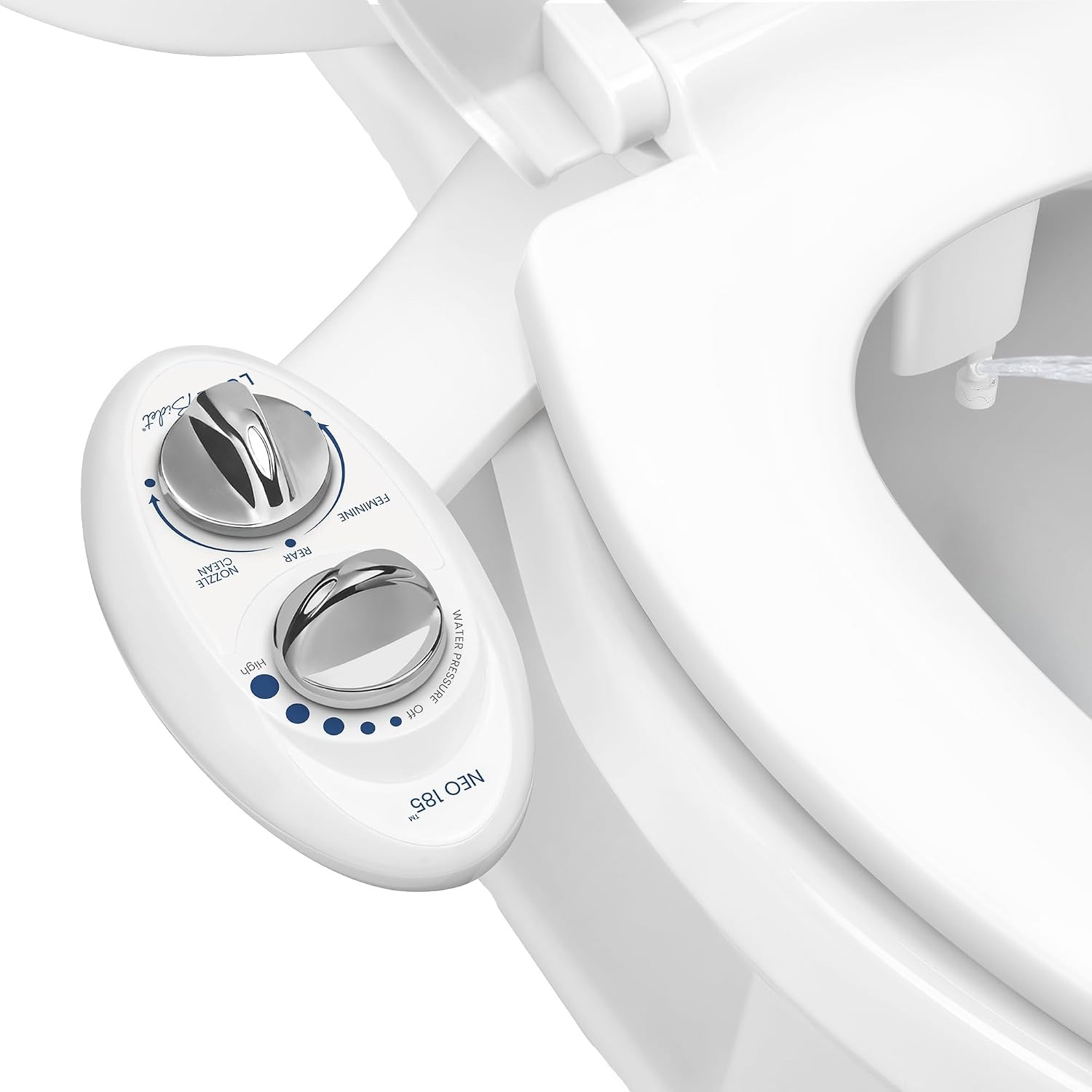
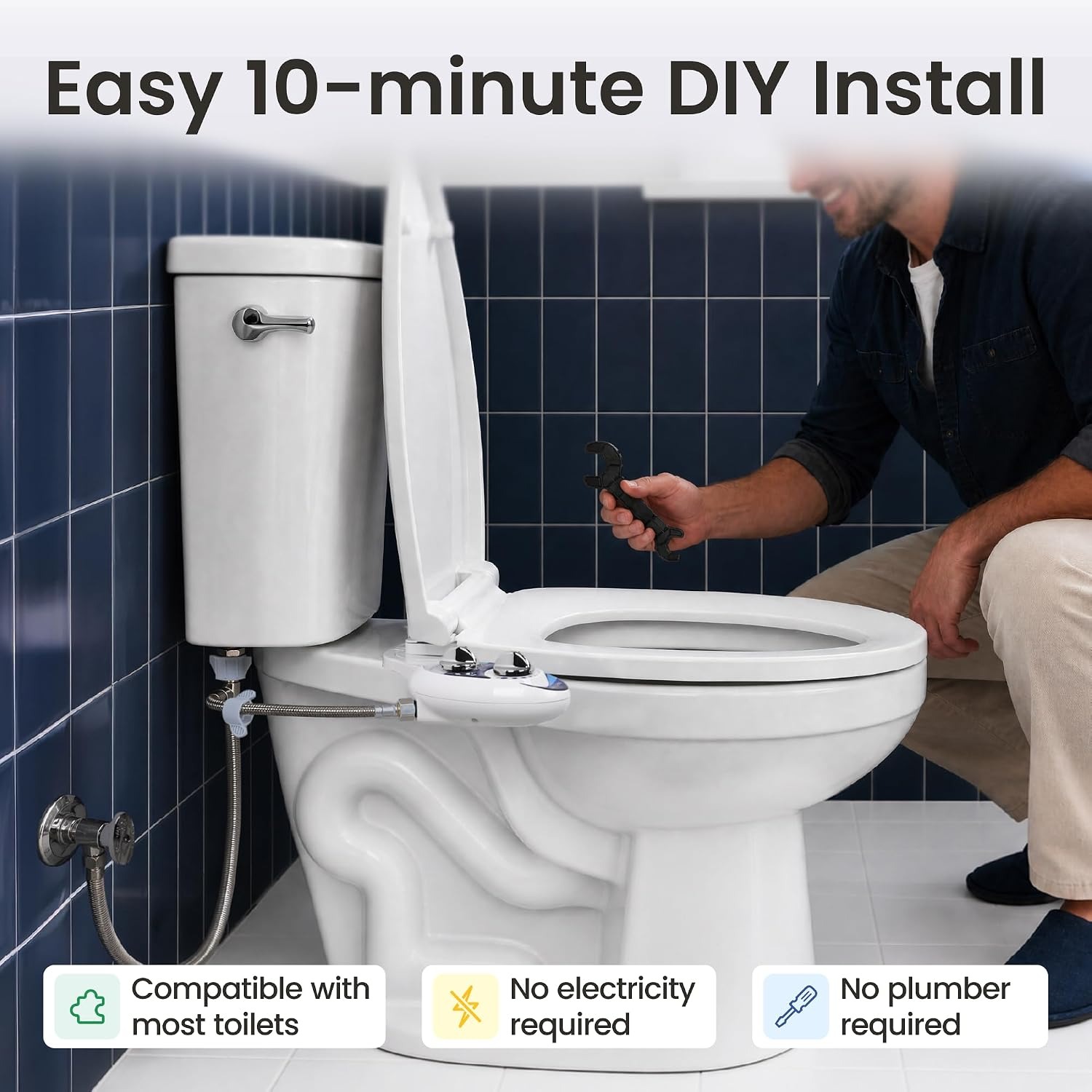
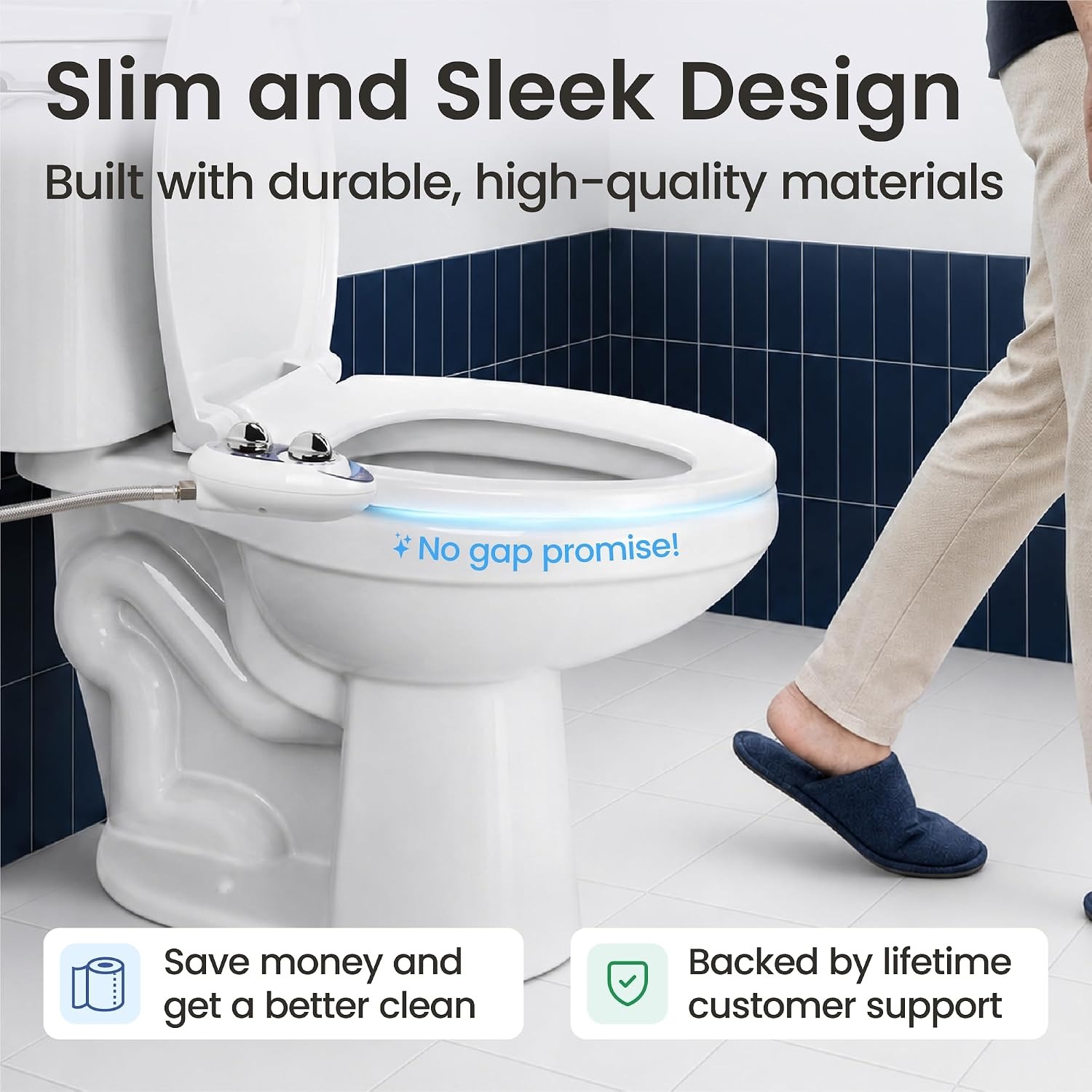
Your toilet already has clean, pressurised water coming into it. A cistern fills from a small supply line, usually at the back left or right of the bowl. A non electric bidet simply splits that line. A T-valve goes in between the wall shut-off and the cistern inlet, a steel hose runs from the T-valve to the attachment, and the attachment sits flat on the bowl rim under your seat.
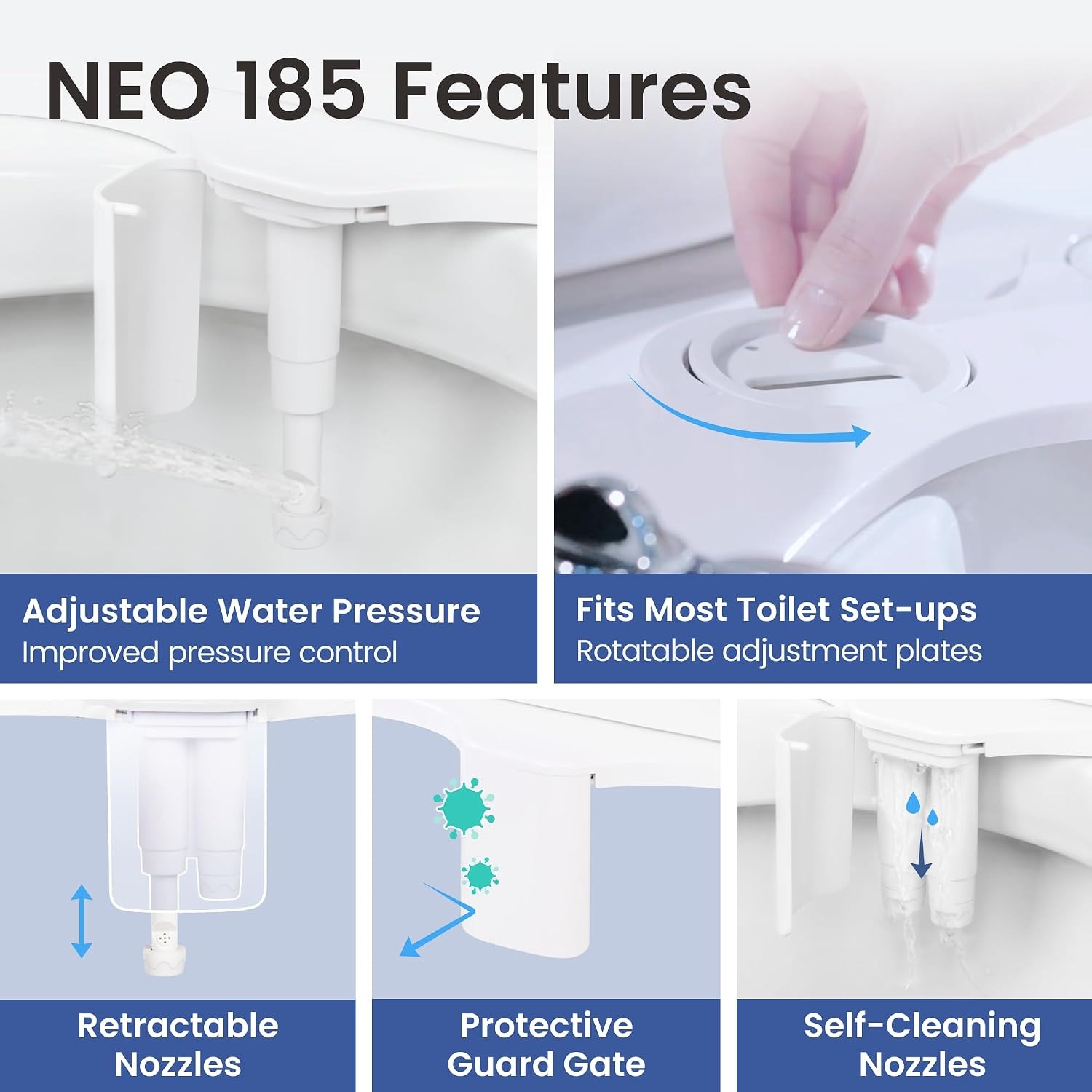
When you turn the control handle, water flows through a valve and out of a nozzle angled up into the bowl. Turn the handle further and more water flows, which means more pressure. Turn it back and the flow stops and the nozzle retracts. That is the entire mechanism. No pump, no heater, no electronics, no circuit board to fail in a damp room.
Because there is nothing electrical, there is also nothing to go wrong in the usual ways. The parts that do wear are the valve seals and the hose. This is why the build of those two components is the thing worth paying attention to when comparing models. This unit uses high-pressure valves with metal-ceramic cores and a steel hose, rather than the plastic valve bodies and plastic braided hoses found on the cheapest options. Ceramic discs inside a valve are the same technology used in good mixer taps, and they hold up to years of quarter-turn use far better than plastic on plastic.
Single nozzle or dual nozzle
This is the first real decision. A single-nozzle unit gives you one spray, usually aimed rearward, with adjustable pressure. A dual nozzle bidet sprayer gives you two separate spray heads at different angles.
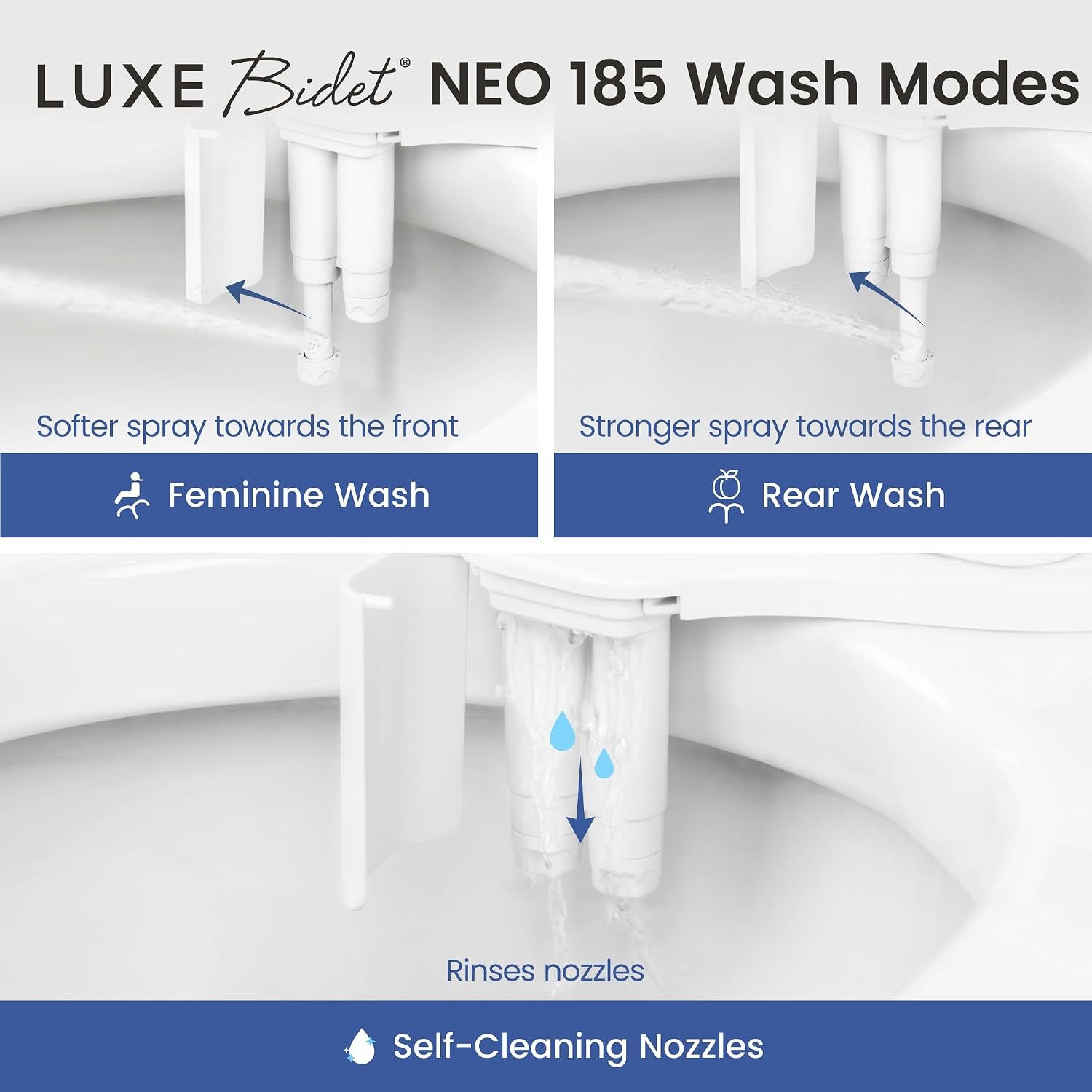
The rear wash does the everyday work. It is the stronger flow and it is aimed towards the back. The feminine wash is the second nozzle, with a softer flow aimed further forward. It gets used during monthly cycles, and it is one of the reasons the best bidet attachment for toilet use in a household with women and new mothers tends to be a dual model. Expecting mothers and those recovering after birth often find a gentle front wash far easier than anything involving reaching and wiping.
If you live alone and only ever want a rear rinse, a single nozzle will do. For a shared family bathroom, the second nozzle earns its place quickly.
Why the guard gate matters
An under seat bidet attachment lives in a toilet bowl. That sounds obvious, but it is the reason the guard gate exists. Without one, the nozzle tips sit exposed in the bowl area between uses.
The guard gate is a shield that drops in front of the nozzles when they are idle. After each wash, the nozzles pull back behind the gate automatically. There is also a self-cleaning setting that flushes water over the tips, and it is worth getting into the habit of running it when you clean the bathroom. A clean nozzle sprays a clean, even pattern. A neglected one eventually sprays sideways.
Who this suits
People who want a straightforward hygiene improvement without changing their bathroom. Renters, because the unit comes off as easily as it goes on, and you can take it to the next place. Households trying to cut how much toilet paper they buy, which adds up faster than most people expect over a year. Anyone dealing with skin sensitivity around that area, where dry paper makes things worse every single time.
It also suits people with reduced reach or mobility, since the side handle is operated while seated and does most of the work for you. Older children manage it fine once shown, as long as the pressure is left on a low default setting.
Who it does not suit: anyone who wants warm water. This model runs on the cold clean supply only. Most people adapt within a week and stop noticing, but if warm water is a firm requirement, look at a different category of unit entirely.
Checking it will fit
The listing describes attachment to a standard two-piece toilet, which covers the overwhelming majority of household toilets. Before ordering, do two quick checks.
First, look at the gap between your toilet seat hinges and the back of the bowl rim. The attachment plate needs to sit in that space. Second, find your water supply line and confirm there is a shut-off valve on it, usually a small tap on the wall or floor behind the toilet. Nearly all installations have one. If yours does not, you will need the mains off during the fit, which is still manageable but worth knowing in advance.
The unit itself is listed at a size of 13.5 x 7 x 3, and the packaged dimensions are 34.29 x 17.78 x 7.62 cm with a weight of 930 g. That is light enough to hold in one hand while you line it up.
The install, step by step in plain terms
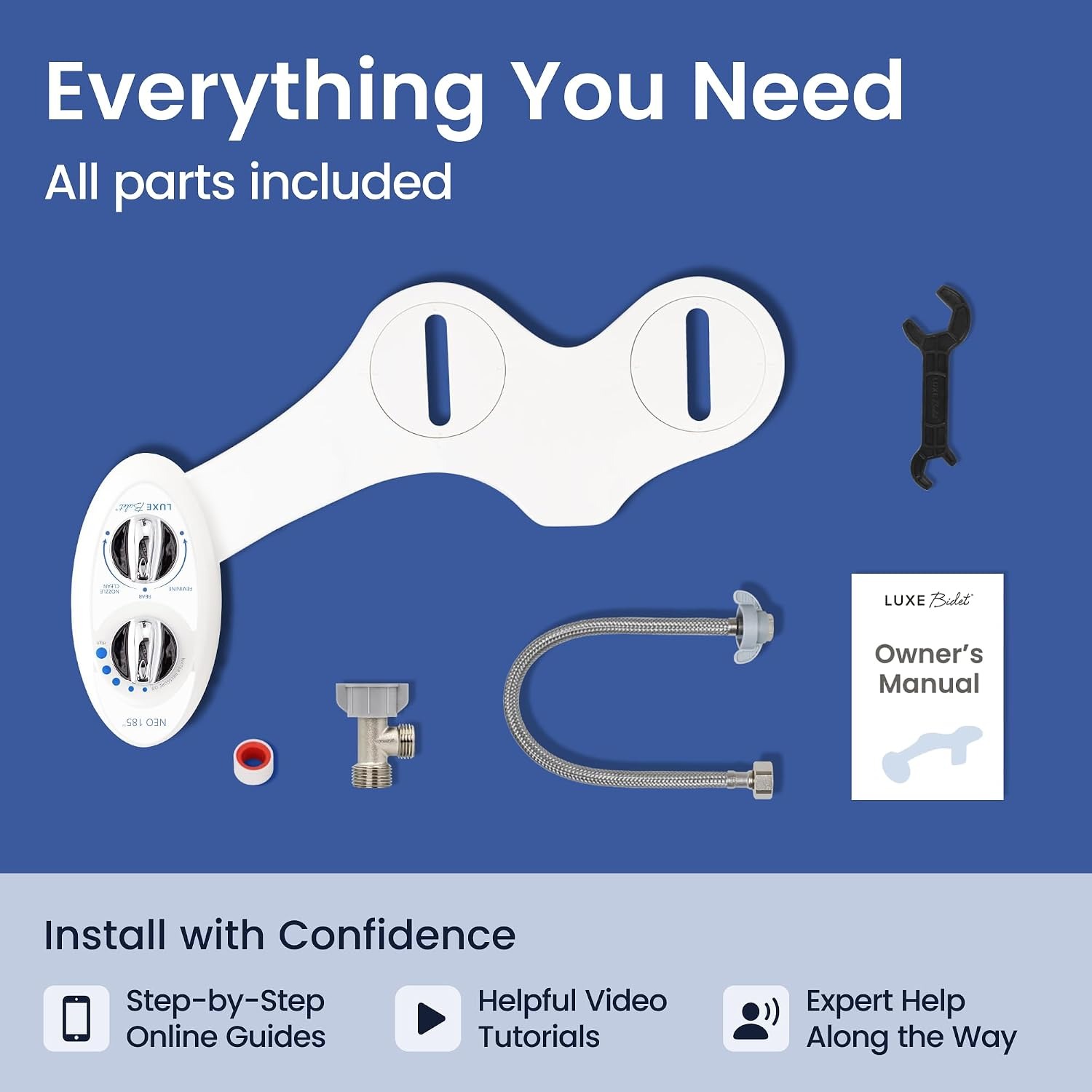
Shut off the water at the valve behind the toilet and flush to empty the cistern. Unscrew the seat and lift it off. Disconnect the supply hose from the bottom of the cistern. Fit the supplied T-valve onto the cistern inlet and reconnect the original supply hose to it. Place the attachment plate on the bowl rim, put the seat back on top and tighten the seat bolts through both. Run the steel hose from the T-valve to the attachment. Turn the water back on slowly and check every joint for drips.
Everything you need is in the box. The most common mistake is overtightening the plastic fittings, which can crack them. Hand tight plus a small nudge with a spanner is enough.
Living with it, and keeping it clean
Daily care is nothing. Wipe the housing when you wipe the rest of the toilet, using a soft cloth and a mild cleaner. Avoid bleach, scouring powder and abrasive pads on the polished white finish, since they dull it permanently.
Weekly, run the self-cleaning setting for ten or fifteen seconds. Every few months, glance at the hose connections for any sign of moisture. A slow drip is easy to fix early and annoying to fix late.
If the spray ever goes patchy, it is almost always mineral build-up on the nozzle tips rather than a fault. The self-cleaning function handles most of it.
The short version
A toilet seat bidet is one of the few bathroom upgrades that is cheap, quick and genuinely noticeable from day one. This one gives you two wash modes, a guard gate that keeps the nozzles shielded and retracts them after use, ceramic-cored valves and a steel hose where cheaper models use plastic, and everything needed to fit it to a standard two-piece toilet in the box. It weighs 930 g, comes in a polished white finish, and carries an 18 month warranty on the bidet and its accessories.
Measure the gap behind your seat, check you have a shut-off valve, and set aside twenty minutes. That is the whole project.