
The complete guide
How To Choose Gardening Arm Protectors (And Actually Wear Them)
The problem nobody warns you about
Gloves get all the attention. Every garden centre has a wall of them, every gift set includes a pair, and most people own three. Then you spend an afternoon cutting back a rose bush and discover that your hands are perfectly fine while your forearms look like you lost an argument with a cat.
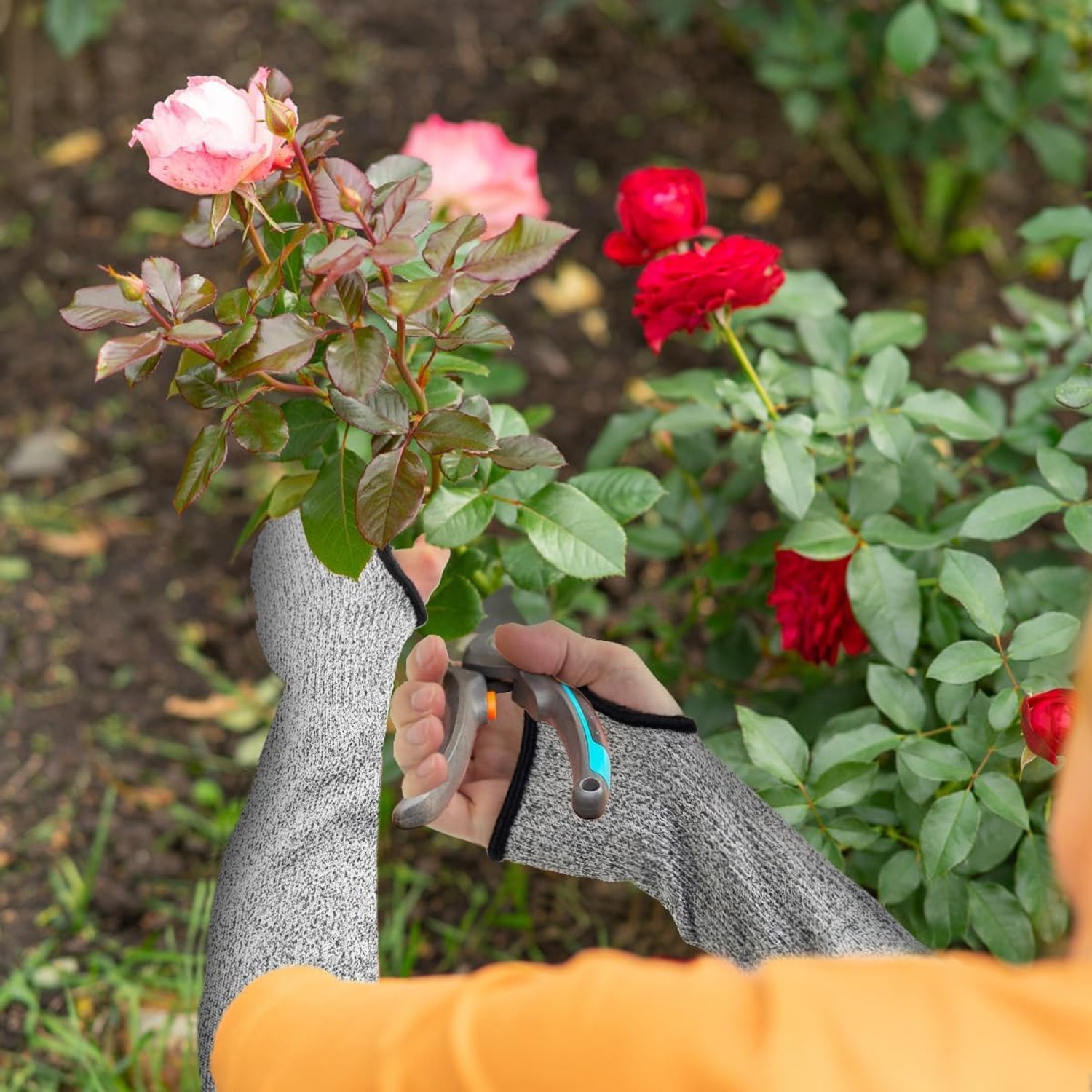
It happens because of how pruning actually works. You are not just snipping tips. You are reaching in past your elbow to find the base of a cane, then pulling your arm back out through everything you just reached past. The glove protects the twenty centimetres that were never really at risk. The forty centimetres above it take the whole trip.
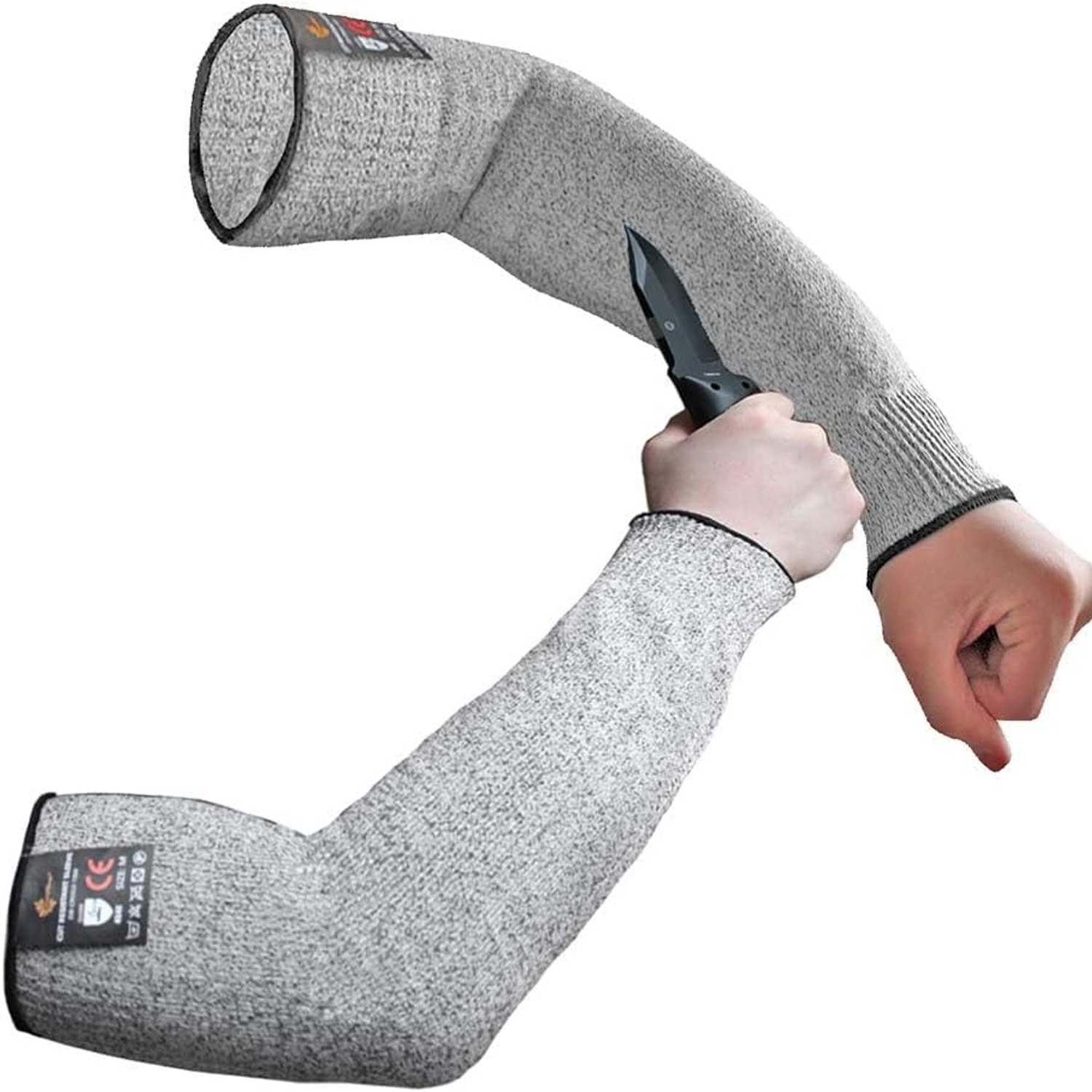
That is the gap gardening arm protectors fill. They are not clever, they are not high-tech, and that is rather the point. A layer of fabric over the part of your arm that keeps getting scratched.
How they work
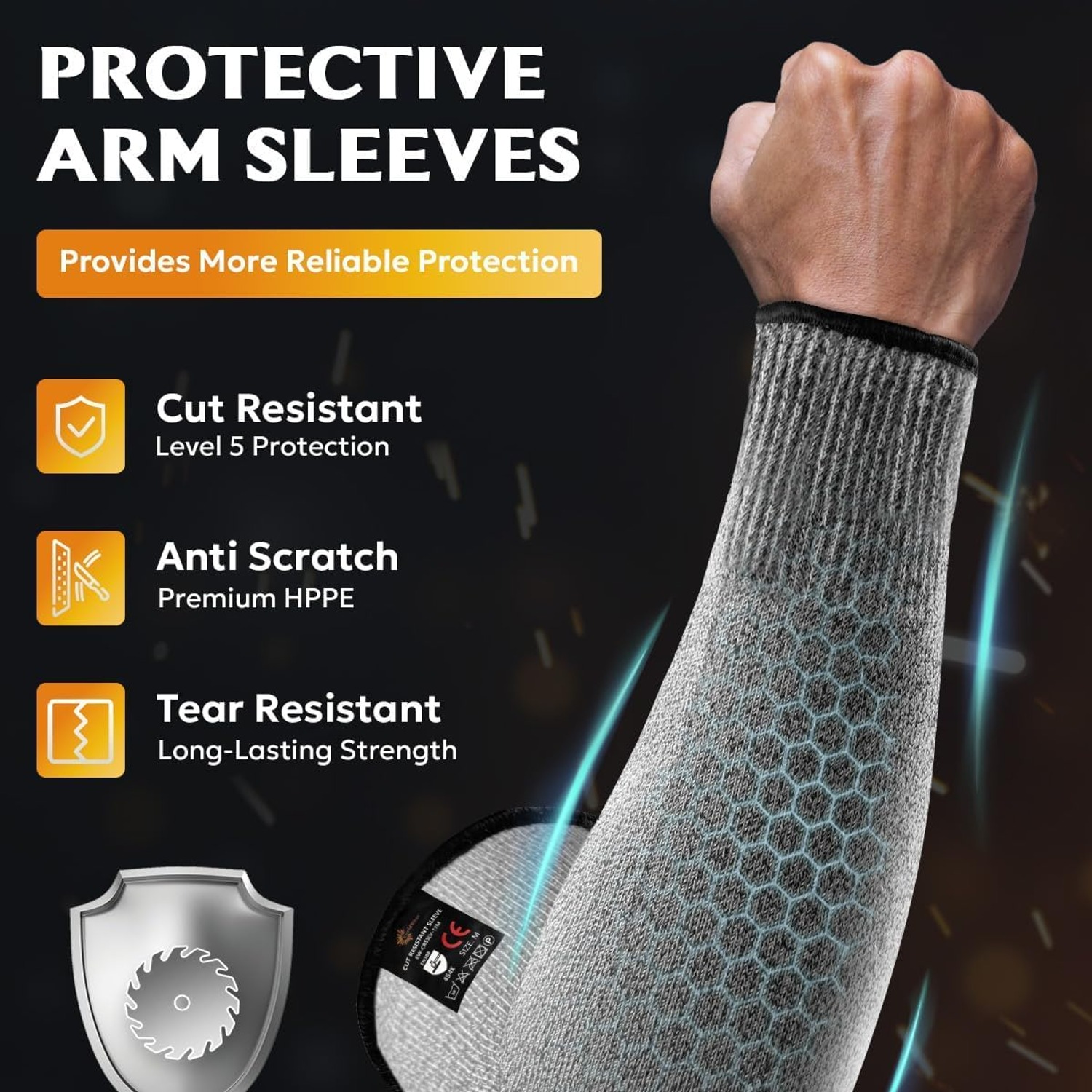
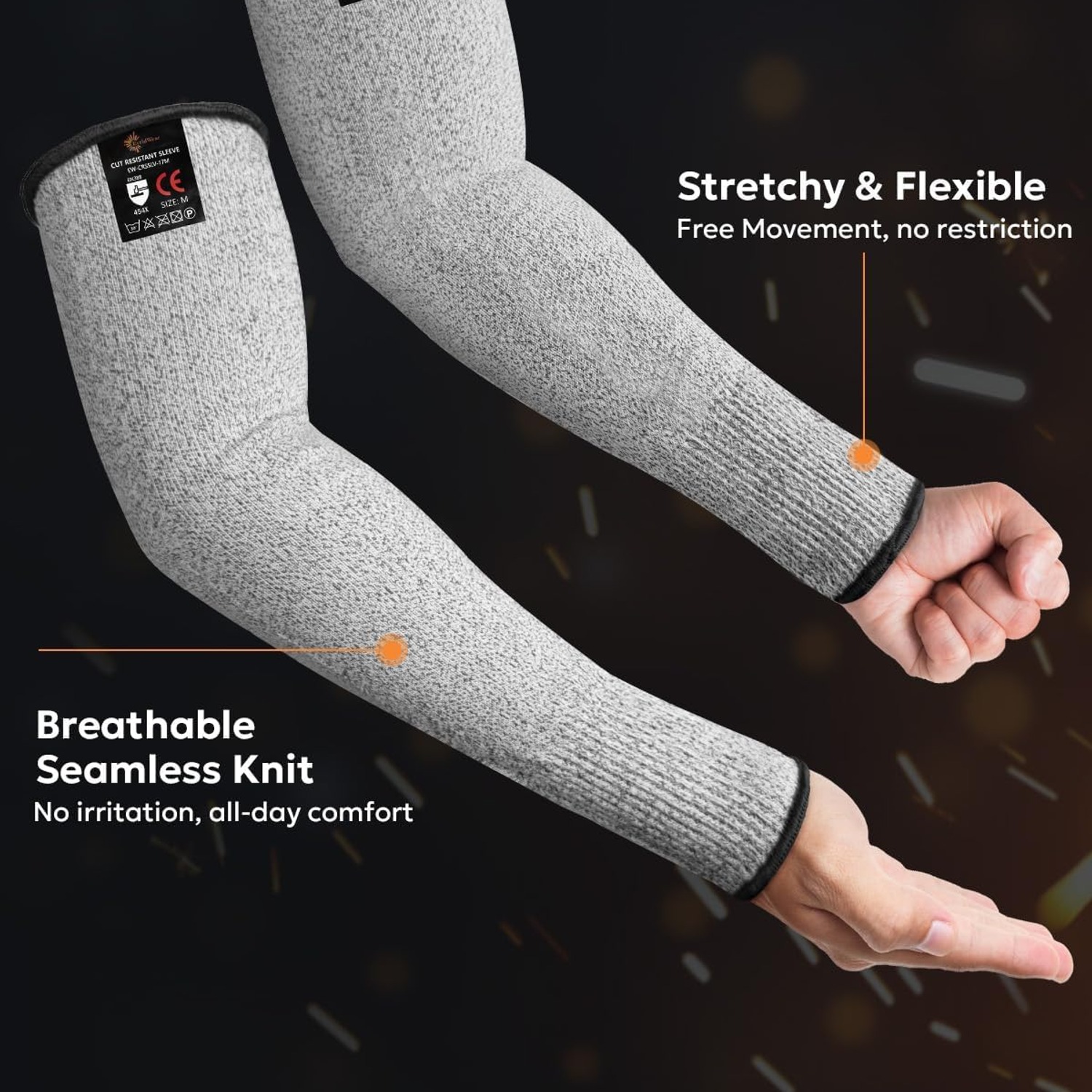
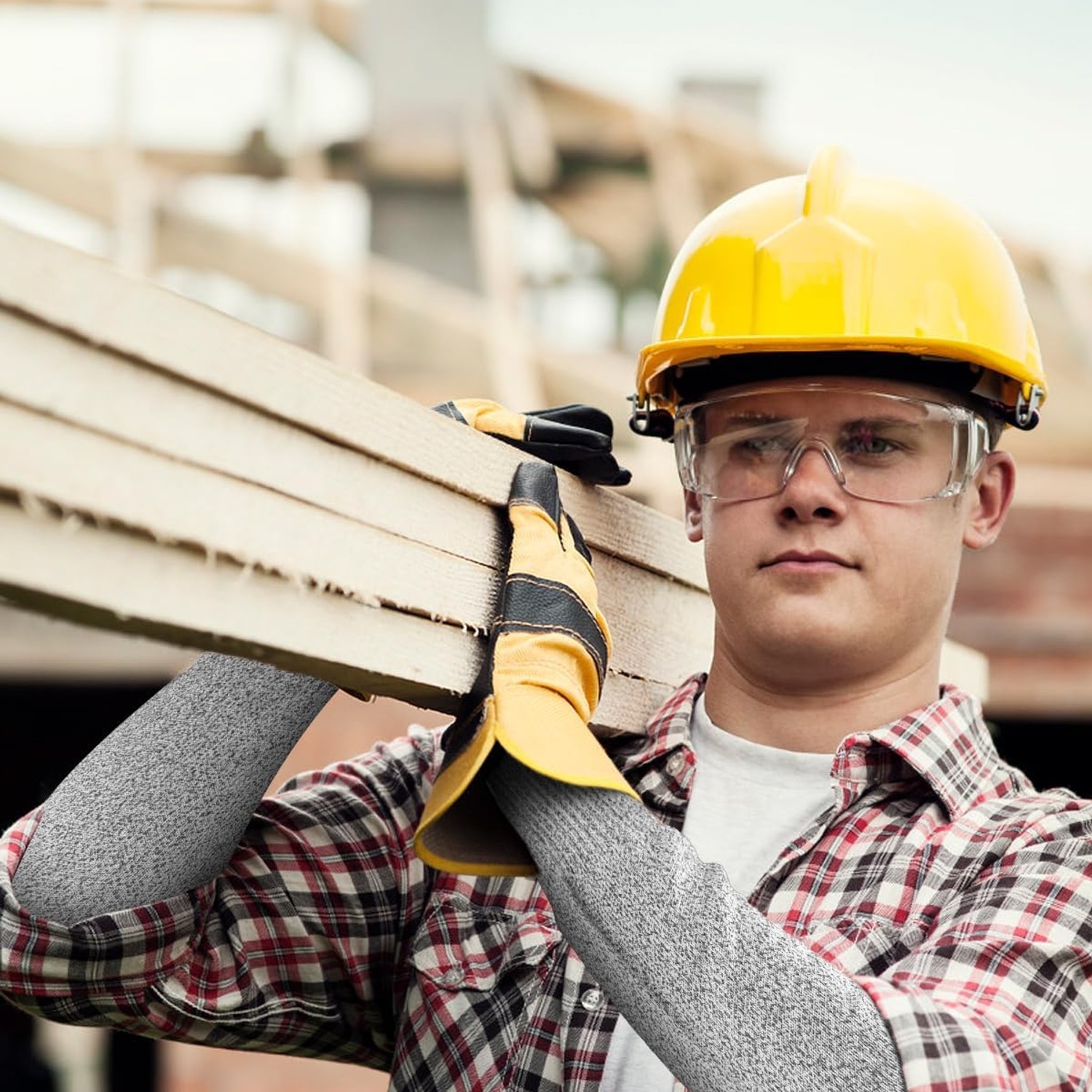
An arm sleeve is a tube of stretch fabric that runs from the wrist up past the elbow and onto the upper arm. You pull it on like a long shirt sleeve, except there is no shirt attached, so you can wear it with a t-shirt on a warm day.
The protection is mechanical, not magic. Thorns, rough bark and dry stems drag across fabric instead of skin. Most garden injuries are not punctures, they are abrasion: hundreds of small drags that add up to raw, stinging arms by the time you pack up. Fabric absorbs that.
Sun works the same way. Fabric blocks light before it reaches you. There is no UPF rating stated for these particular sleeves, so we are not quoting a figure, but physical cover is still physical cover. If you garden through spring and summer, keeping the sun off your forearms is one less thing to think about on a day when your hands are too dirty for sunscreen.
Who gets the most from them
Rose growers, obviously. Also anyone dealing with bramble, blackthorn, holly, berberis, pyracantha or any hedge that fights back. If you have ever stood up from a job and thought "I need to put a long sleeve on", these do that job without the heat.
Older gardeners are the other big group. Skin gets thinner with age and with some medications, including steroids and blood thinners. A scratch that a twenty-year-old would not notice can tear fragile skin and take a long time to heal. Garden sleeves for thin skin are not a medical device and we are not going to pretend otherwise, but putting fabric between your arm and a rose cane is a reasonable, cheap precaution.
Then there are people who just do not like being scratched. That is a perfectly good reason too.
Where they fall short
Worth being honest. These are not armour. A sharp thorn pressed hard will go through most fabric, and if you are shoving your arm into a mature hawthorn hedge, you will still feel it. Anyone selling you thorn-proof sleeves is overselling.
They also do not cover your hands or the back of your wrist unless you overlap them with a glove. That overlap is the single most useful trick with arm sleeves and we will come back to it.
And they are not a substitute for care around tools. Loose fabric and spinning blades are a bad combination. If you are using a hedge trimmer or strimmer, keep the sleeve fitted and keep your attention where it belongs.
Getting the fit right
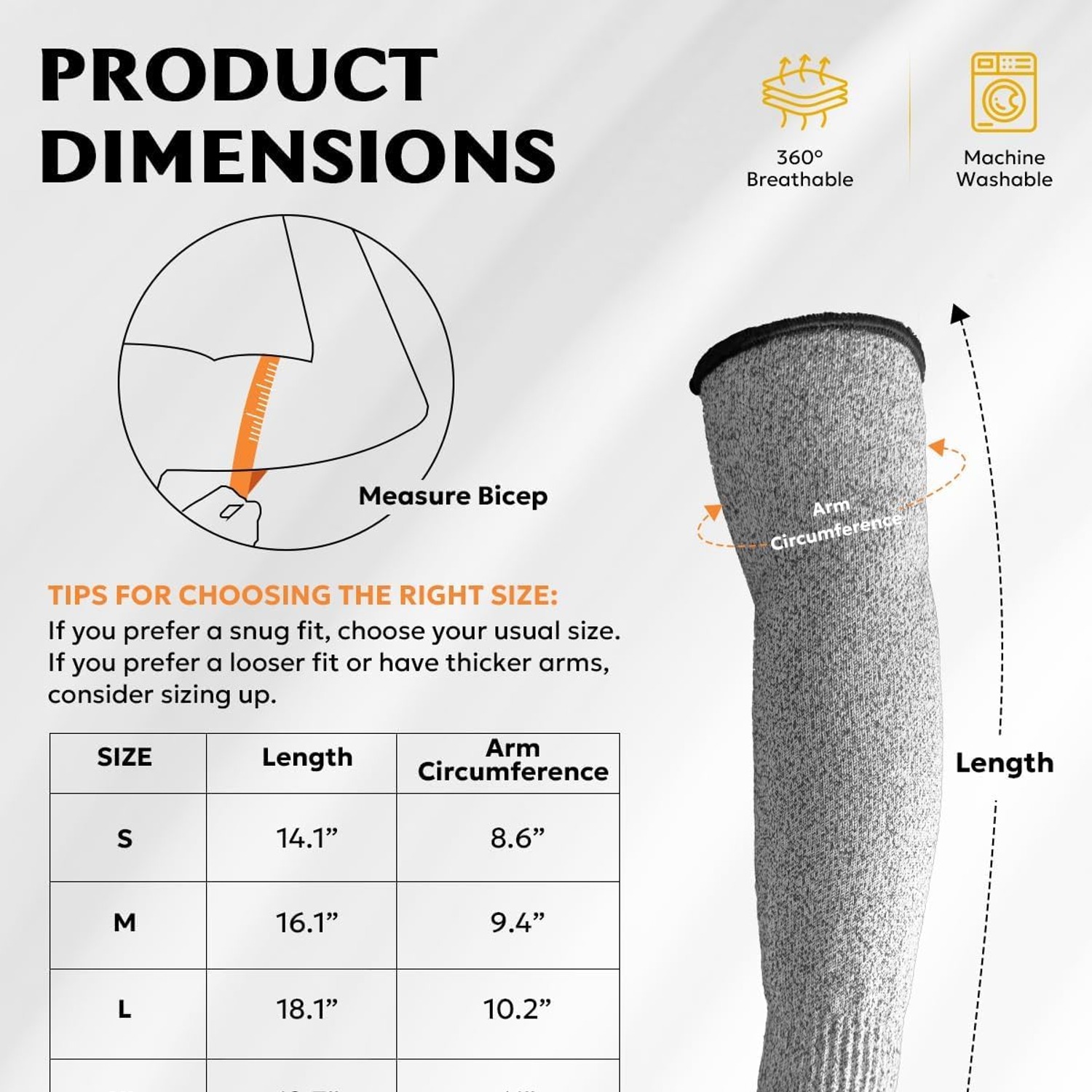
Sizing is where most people go wrong with sleeves of any kind. Too loose and they slide down your arm all morning. Too tight and you stop wearing them by week two.
The upper arm is the measurement that decides it. Forearms vary less between people than biceps do. If your upper arm is on the larger side, that is the number to check before buying. The supplier record for these does not state measurements, so if fit is a concern for you, ask us first rather than ordering and hoping.
A sleeve that fits well should stay put through normal bending and reaching without leaving a dent in your arm when you take it off. Slight compression is fine. Pins and needles is not.
The glove overlap
Here is the thing that turns arm sleeves from useful to genuinely good. Put the sleeve on first, pull the cuff down over your wrist, then put the glove on over the top of that cuff.
What you get is a continuous covered surface from fingertip to shoulder with no gap at the wrist. Without the overlap, there is a small ring of exposed skin exactly where stems catch when you pull your arm back out of a bush. With it, nothing gets in. Grit, soil and thorn fragments stay outside.
If your gloves have a short cuff, consider gauntlet-style rose gloves instead. The combination of a long glove and a full arm sleeve is about as covered as you can be while still having working hands.
Wearing them in hot weather
People assume covering up makes you hotter. In direct sun, often the opposite is true. Bare skin absorbs sunlight and heats up. A light sleeve blocks that and lets sweat evaporate, which is how your body is meant to cool itself.
Lightweight gardening sleeves breathe better than long-sleeve work shirts because there is less fabric overall and nothing across your back or chest. On a hot morning, a t-shirt plus sleeves usually beats a long-sleeve shirt by a clear margin.
If it is genuinely brutal out, the sleeves are not the problem. Work earlier, take breaks and drink water like you would anyway.
Looking after them
Rinse them on the day you use them. Soil and sap are much easier to shift before they dry. A quick hose-down or a soak in warm water with a little detergent does most of the work.
Machine wash cool or hand wash with mild detergent, then hang them to air dry out of direct heat. Avoid bleach and fabric softener. Softener coats fibres and can reduce stretch over time, and bleach attacks elastic. Skip the tumble dryer, since heat is what kills stretch fabrics faster than anything.
Store them with your gloves. Sleeves you have to hunt for are sleeves you will not bother with, and the whole point is that they take five seconds to put on.
How long they should last
Depends entirely on what you put them through. Light weeding and deadheading barely touches them. Hauling bramble out of a hedge every weekend will wear any fabric eventually, and that is true of gloves too.
The usual failure points are the elbow, where the fabric flexes most, and the cuff edge if you are forever pulling them up. Treat a worn pair as a consumable rather than a disappointment. They have done the job if your arms are intact.
Other uses
Plenty of people buy these for the garden and then find other jobs for them. Stacking firewood. Clearing scrub on a property. Dog grooming, where claws are the hazard. Fishing, where sun is. Light workshop jobs where you want your forearms covered but not your hands.
None of that is what they were designed for, but a sleeve does not care what you are doing when it keeps a branch off your arm.
The short version
If your hands are fine after gardening but your arms are scratched, you have the wrong protection. Gloves stop at the wrist. Gardening arm protectors cover the forty centimetres above that, which is where the damage actually happens.
They are especially worth it if your skin is thin or you spend a long time in the sun. Check the upper arm fit before buying, overlap them with your gloves at the wrist, wash them cool and air dry them. They will not make you invincible in a hawthorn hedge, but they will change what your arms look like at the end of a pruning afternoon.
Delivery is tracked across Canada, free on orders of $75 or more and $25 under that.