

The complete guide
How to Choose and Use a Wallpaper Steamer
The job nobody looks forward to
Stripping wallpaper has a reputation, and it is deserved. Anyone who has tried to do it with a spray bottle and a putty knife knows the feeling. You soak a patch, wait, scrape, and get a piece the size of a postage stamp. Three hours later you have cleared about a square metre, your arm aches, and the floor is covered in wet paper scraps.
The problem is not your technique. It is the glue. Wallpaper adhesive dries hard and bonds to the wall surface. Water applied to the face of the paper has to soak all the way through before it reaches the glue, and on painted or vinyl-faced paper it never gets there at all. You end up fighting the face of the paper while the adhesive sits behind it, perfectly dry and perfectly happy.
Steam changes the equation. It carries far more heat than warm water, it penetrates faster, and it softens the adhesive rather than just wetting the surface. That is the whole idea behind a wallpaper steamer. Soften the glue, and the paper stops being stuck.
How a steam wallpaper stripper works
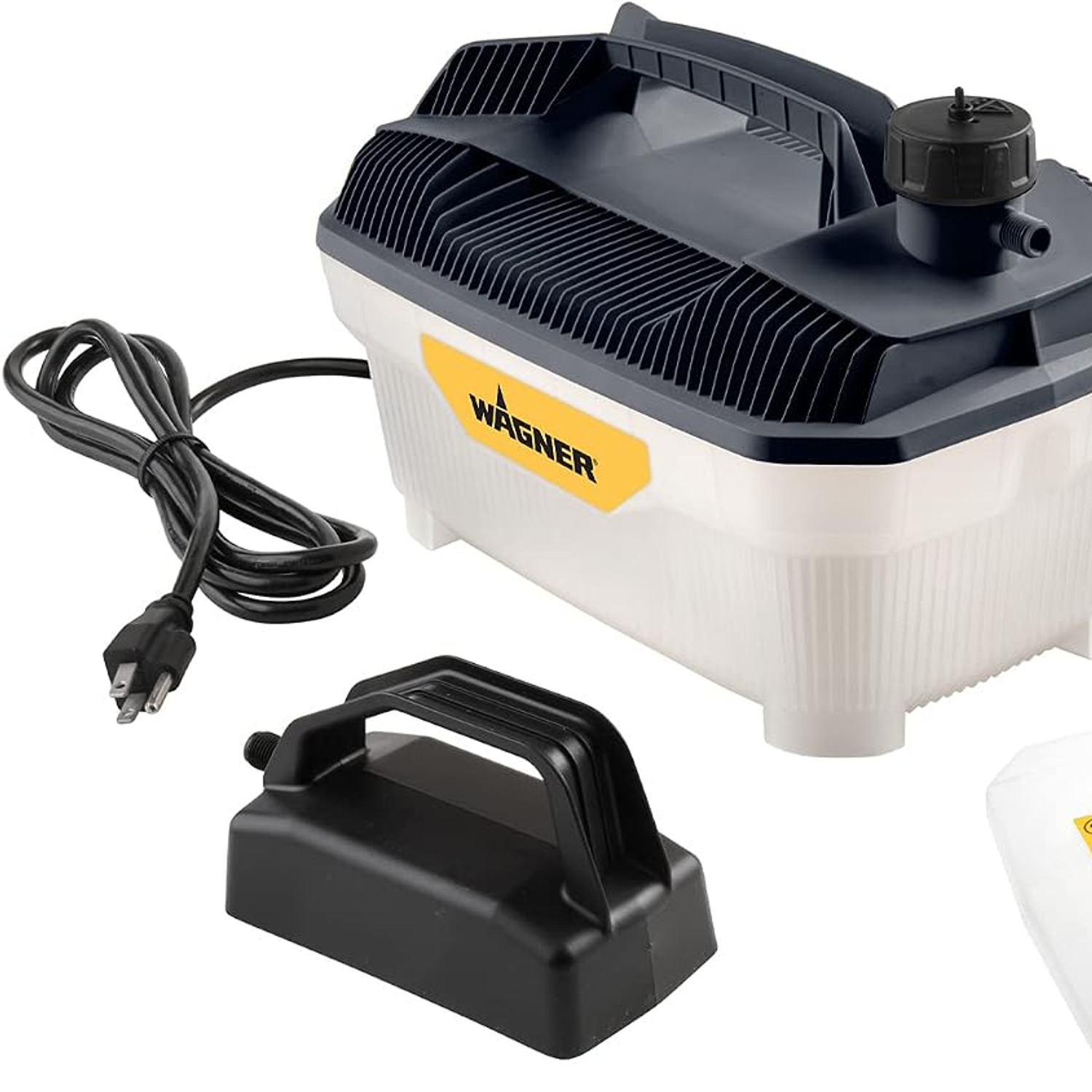
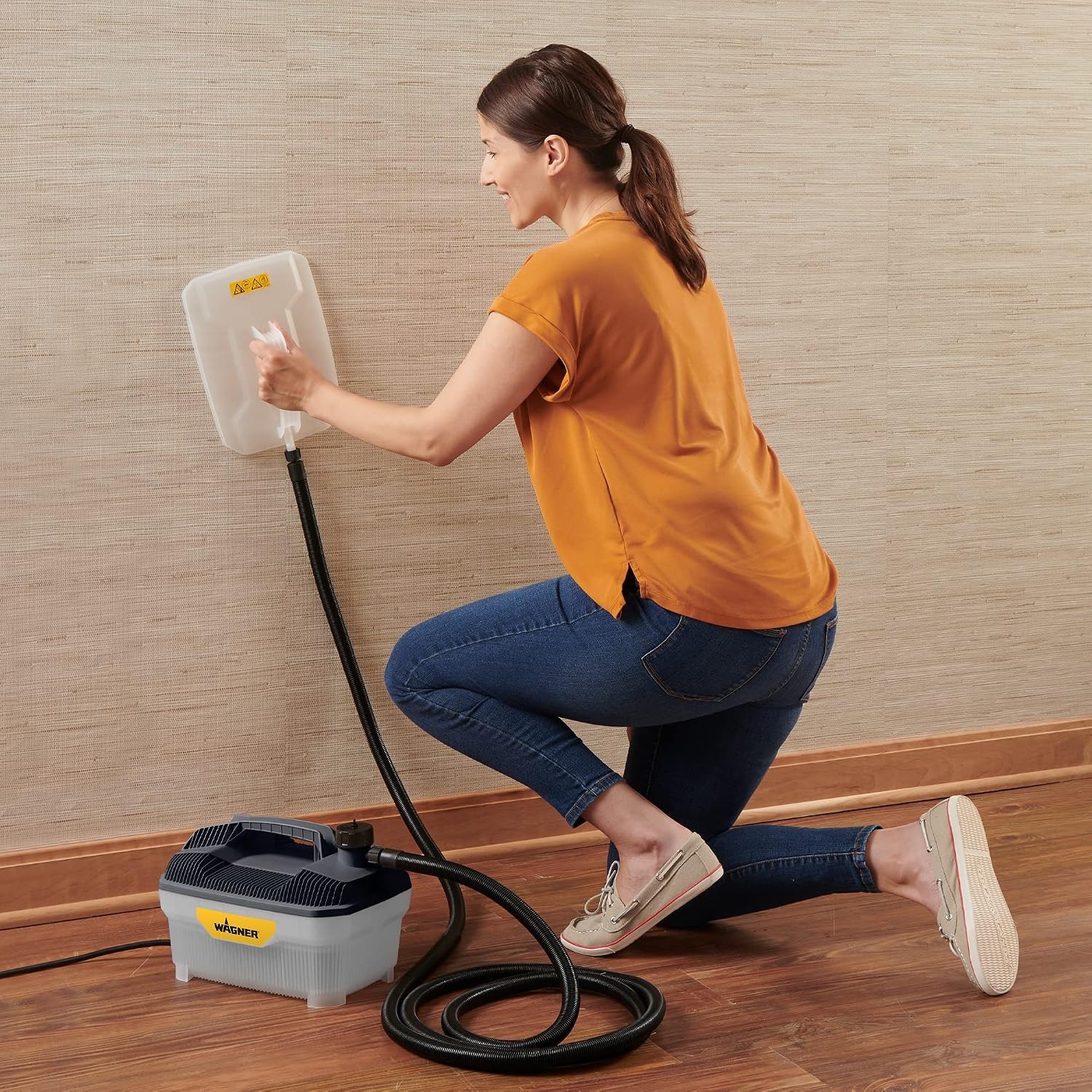
The design is simple, which is part of why these machines last. A tank holds water. A heating element boils it. Steam travels down a hose to a flat plate that you press against the wall. The plate holds the steam against the paper for as long as you keep it there, so the heat has time to work through to the adhesive.
Hold the plate on one spot for twenty or thirty seconds, lift it, and move to the next section. By the time you have steamed the new patch, the previous one is ready to scrape. You get into a rhythm quickly: steam, move, scrape, steam, move, scrape. Most people are surprised by how fast the wall clears once that rhythm starts.
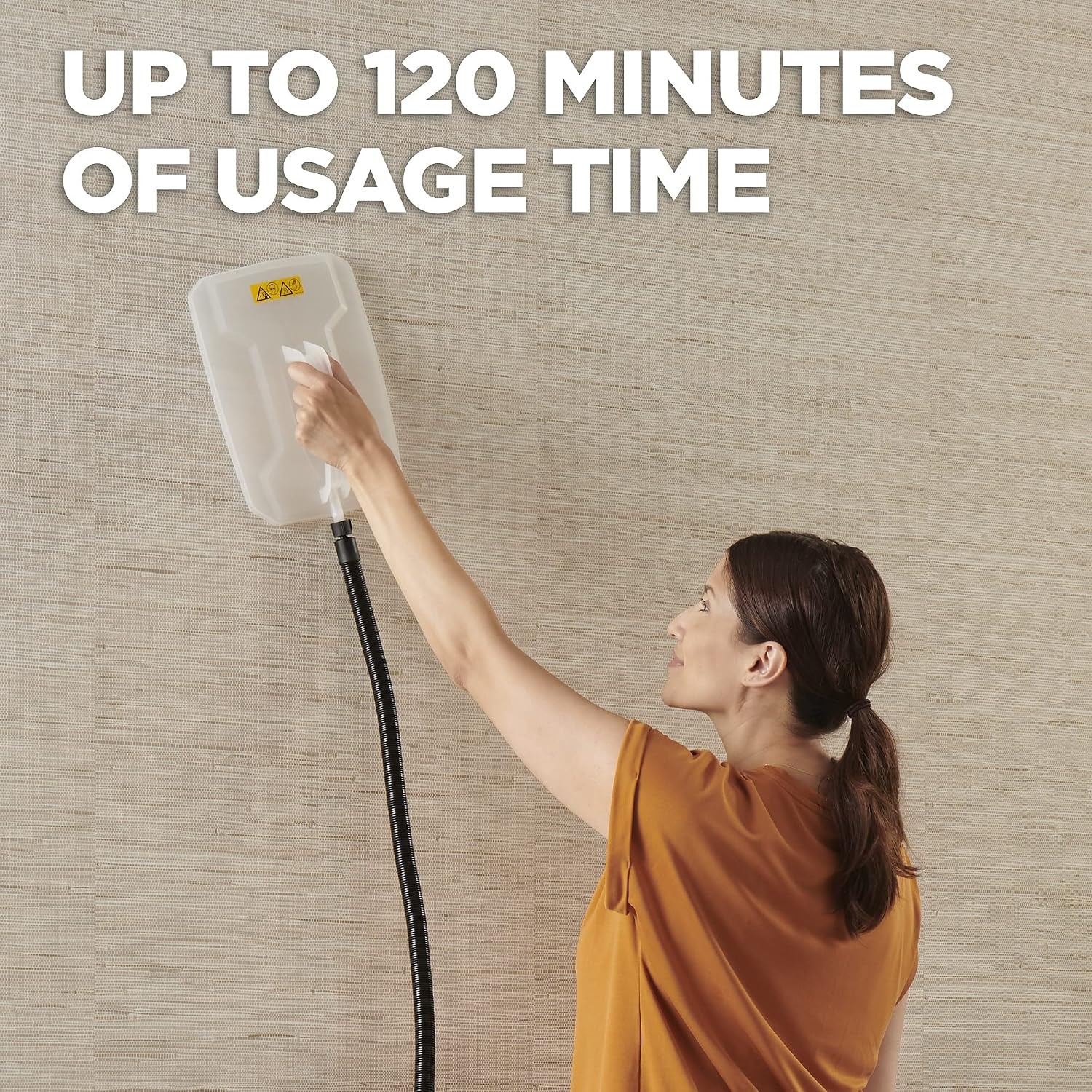
This unit holds a gallon of water and runs for up to two hours on a full tank. That is the figure to pay attention to when you are planning. Two hours of continuous steaming is a lot of wall. For most single bedrooms it means one fill and done, with no stopping to let the unit cool, refill and heat again.
Why two steam plates matter more than you think
A lot of cheaper machines ship with one plate, usually a medium-sized rectangle, and you end up compromising everywhere. This one includes two.
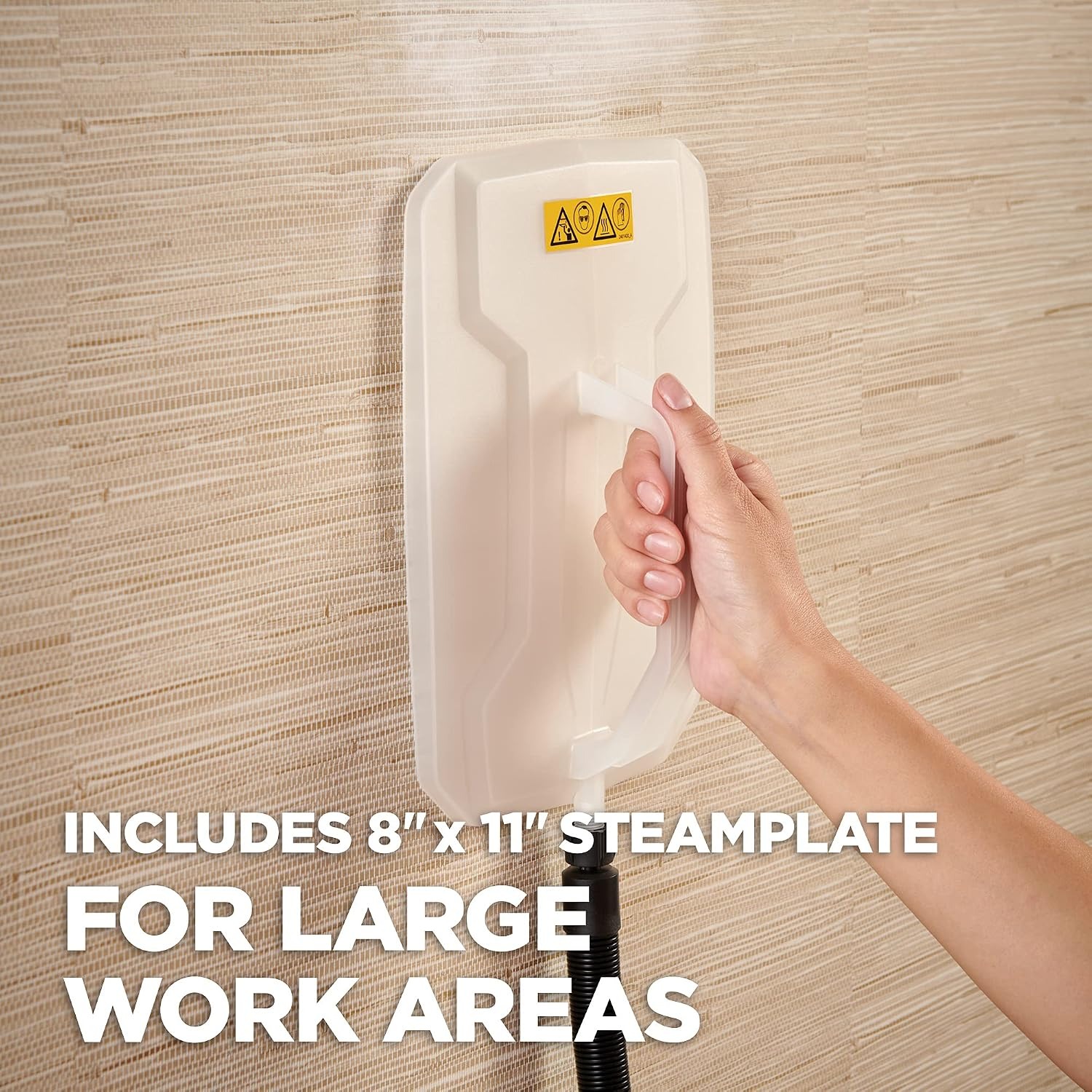
The large 8" x 11" plate is for the open ground. Long walls, the space between a skirting board and a dado rail, the broad runs in a hallway. More surface area per press means fewer presses, which means a faster job and less repetitive movement for you.
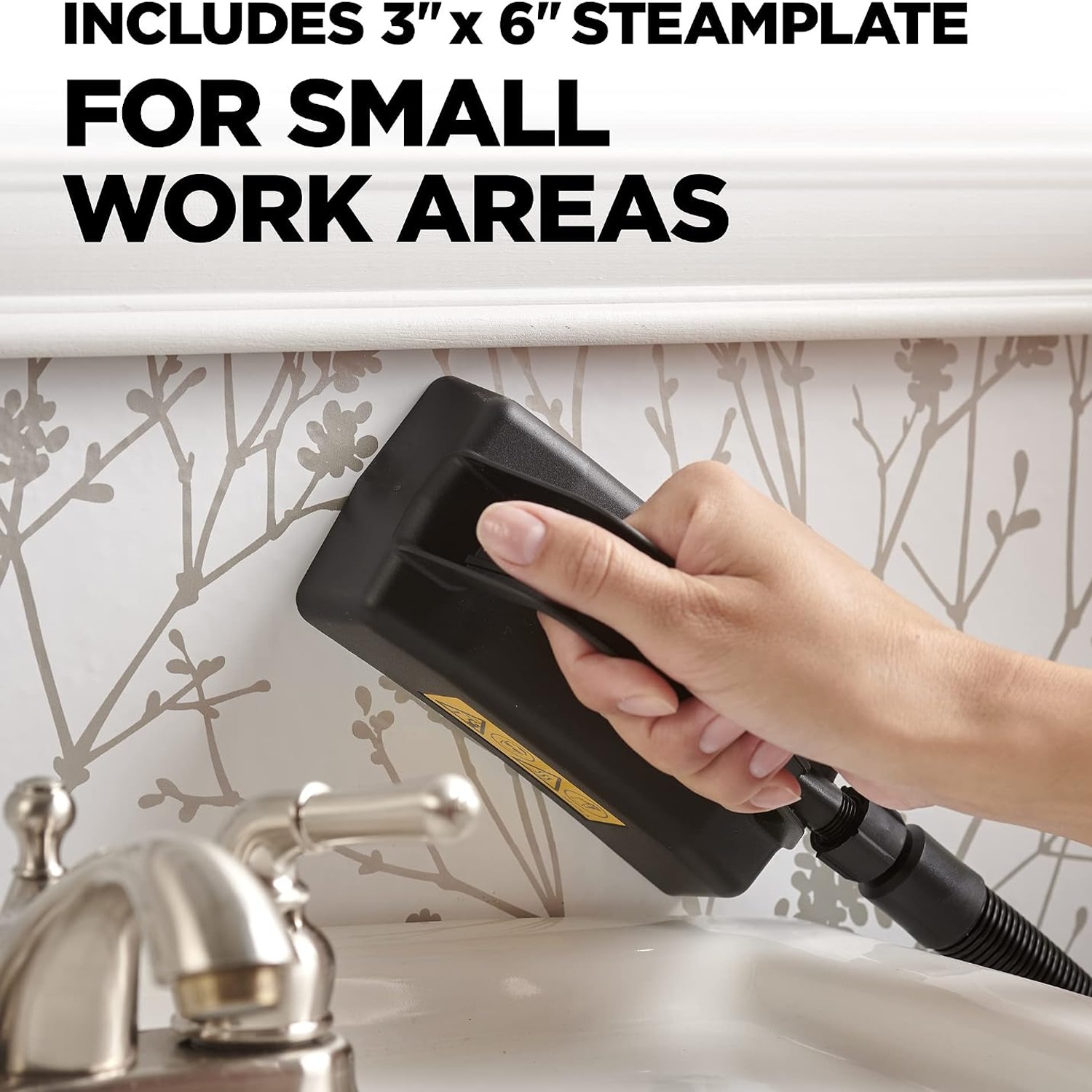
The small 3" x 6" plate handles the rest. Corners are the obvious one, since a big plate cannot sit flat where two walls meet. So are the narrow strips either side of a window, the panel above a door, the margin beside a radiator and the tight run behind a pipe. Trying to do those with a large plate is frustrating. Swapping to the small one takes a few seconds and makes those sections straightforward.
If you are comparing models and wondering what separates the best wallpaper steamer from a merely adequate one, plate options are near the top of the list. A machine that only suits open walls still leaves you doing the fiddly twenty percent by hand.
Reach, weight and why they affect your afternoon
Two numbers here are worth noting. The hose is 12 ft long, and the manufacturer quotes a 24 ft working area. In practical terms that means you can set the base down in the middle of a room and work the whole perimeter without dragging the unit along behind you. On a ladder it means the base can stay safely on the floor while you reach the top of the wall.
The second number is weight. At 2.43 kg the unit is light enough to pick up with one hand. That sounds minor until you have spent an afternoon shifting a heavy machine around furniture, up stairs and between rooms. A portable wallpaper steamer you can move without thinking about it is a steamer you will actually keep using.
Water only, no stripping solution
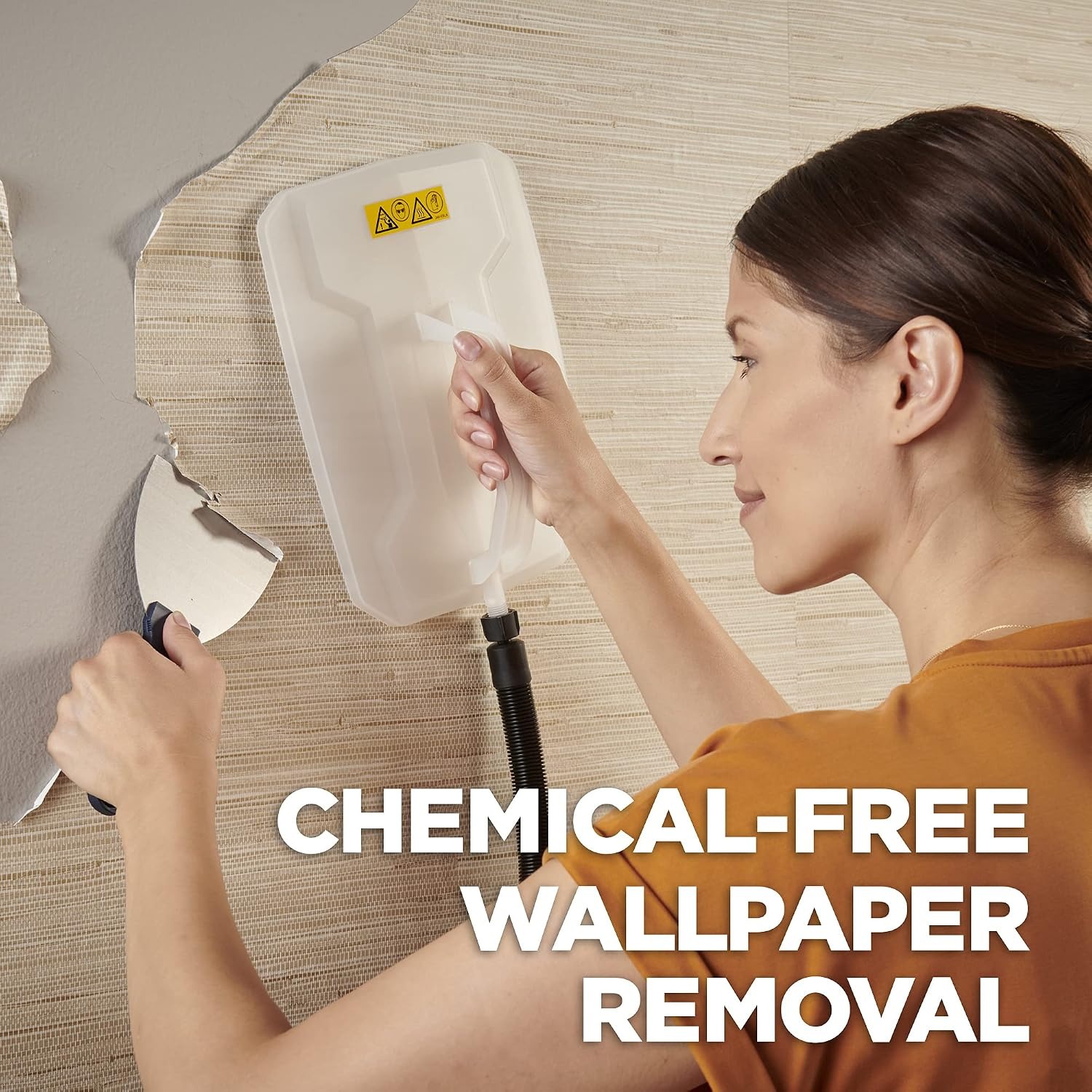
This is a chemical free wallpaper remover. You fill it with water and that is the whole supply list. There is no gel to spread and leave for twenty minutes, no solution to mix to a ratio, and no chemical smell lingering in the room while it dries.
For some people that is purely a convenience thing. For others it is the deciding factor. If you are stripping a nursery, a kitchen or a room where pets spend their time, not introducing a stripping chemical into the space is worth something. It also means no part-used bottles sitting in a cupboard afterwards.
The manufacturer recommends distilled water. The reason is scale. Tap water carries dissolved minerals that stay behind when the water boils off, and over many tanks they build up inside the unit. Distilled water avoids that and keeps the steam path clear.
Who this suits
Homeowners dealing with an older place are the obvious fit. Houses that have changed hands a few times often have two or three layers of paper, each stuck down on top of the last. That is exactly the situation where a steam wallpaper stripper earns its keep, because soaking through three layers with a sponge is close to hopeless.
It also suits anyone planning more than one room. If you are redecorating a whole floor, the time saved over manual stripping adds up quickly. Landlords and anyone turning over a property regularly will get plenty of use out of it too.
If you have one small feature wall of modern peel-and-stick paper, you probably do not need a machine at all. Modern strippable papers often come off dry if you lift a corner and pull steadily. Save the steamer for the stubborn stuff.
Getting a good result
Preparation makes the difference. Clear or cover the furniture, lay drop sheets along the skirting, and switch off the power to any sockets or switches on the wall you are working on. Steam and electricity do not mix, and a stripped wall will have outlet boxes exposed. Open a window, because steaming a room raises the humidity noticeably.
If the paper is painted over or has a vinyl face, score it first with a perforating tool. Those small holes are the entry point for steam. Without them the plate can sit there all day and the glue behind stays dry.
Use a wide, blunt scraper and hold it almost flat to the wall. A sharp blade at a steep angle gouges plasterboard. A broad edge at a shallow angle slides under the softened paper and lifts it. If a section resists, do not force it. Give it another fifteen seconds of steam and try again. Patience beats pressure every time with this job.
Keep the plate moving. Parking it on one spot for minutes at a time soaks the wall more than it needs and can soften the plaster surface. Twenty to thirty seconds, then move on.
Rushing that step is the most common reason new paint goes patchy.
Looking after it
Care is simple. Let the unit cool completely before you touch the tank. Drain the water out rather than leaving it standing inside between jobs. Wipe the plates and the hose with a damp cloth once they are cool, and store everything dry with the hose coiled loosely so it does not kink.
Using distilled water from the start is the single best thing you can do for its lifespan. The unit carries a 1 year limited warranty from the manufacturer, so keep your order confirmation somewhere you can find it.
The short version
Wallpaper comes off easily once the glue behind it goes soft, and steam is the fastest way to make that happen. This wallpaper steamer runs on water alone, holds a gallon, and gives up to two hours of steaming on a full tank. Two plates are included, a large one for open walls and a small one for corners and edges. The 12 ft cool touch hose gives a 24 ft working area and the unit weighs 2.43 kg, so moving around a room is easy.
Score any painted or vinyl paper first, keep the plate moving, scrape with a broad blade held flat, and wash the wall down before you paint. Do that and a room that would have taken a whole weekend by hand is usually finished in an afternoon.