



The complete guide
How To Choose A Toilet Seat Raiser That Actually Fits
The moment that gets hard
Most people never think about toilet height until something changes. A hip replacement, a knee that swells after a long day, arthritis that turns a simple movement into a negotiation. Then that last 10 or 15 cm of the sit becomes the hardest part of going to the bathroom, and you start bracing against the wall or the vanity to get back up.
Standard toilets are low. They were designed around an average that does not account for stiff joints, weak quads or a surgeon's instruction not to bend past a certain angle. You are asking your knees and hips to do a deep squat several times a day, often at night when you are half asleep.
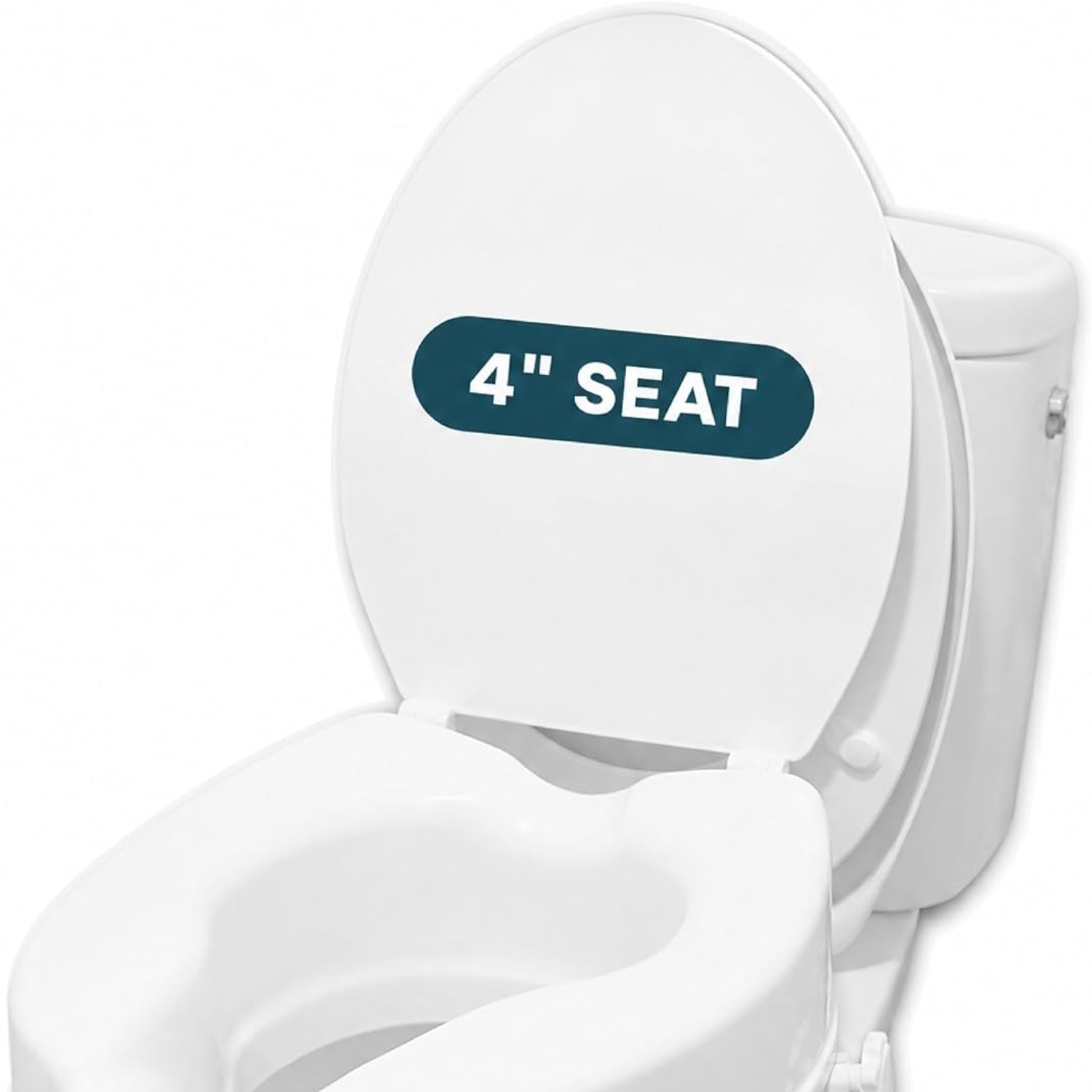
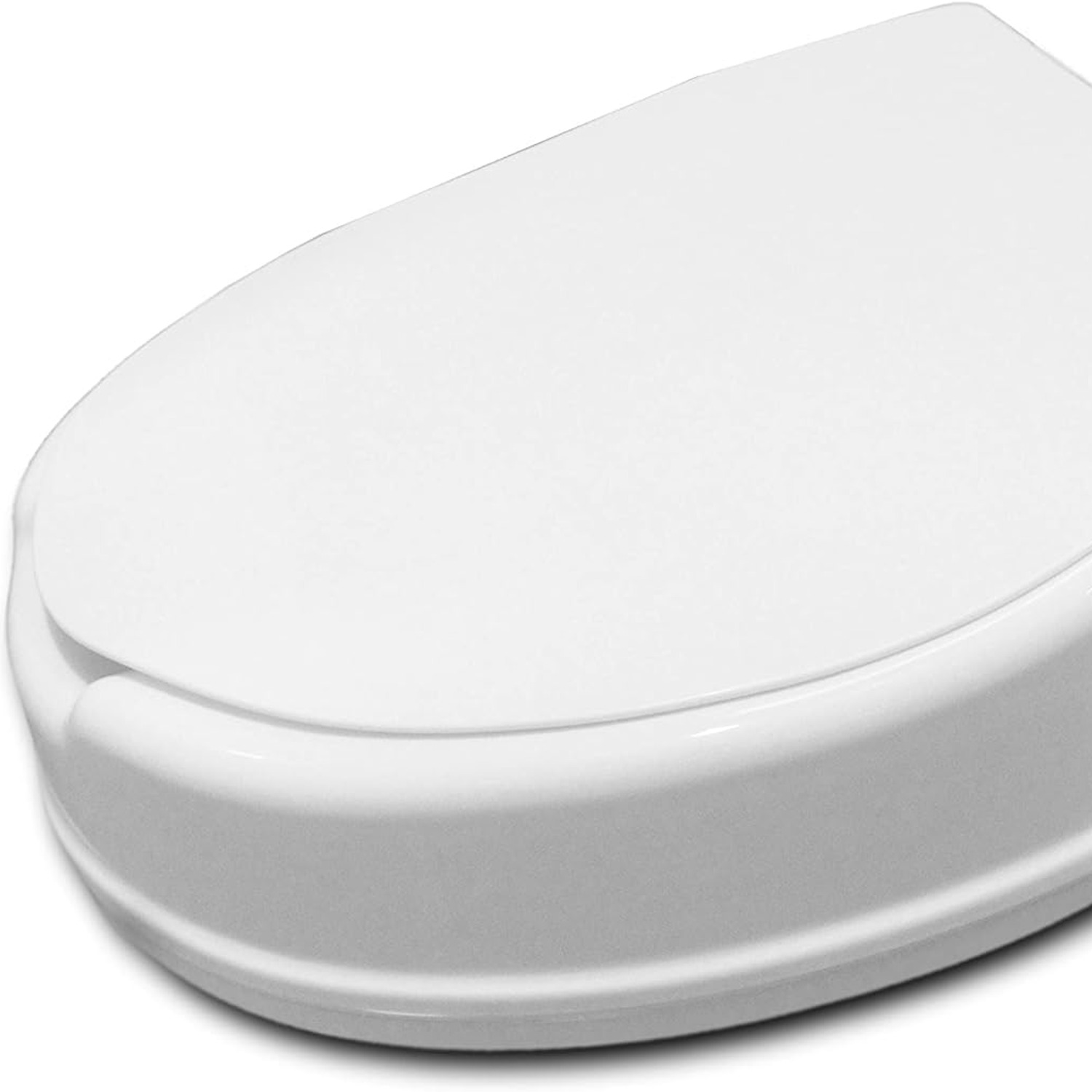
A toilet seat raiser fixes that without touching your plumbing. It sits on the bowl, lifts the seat by 10 cm (4 in), and takes a chunk of the effort out of both directions of the movement. That is the whole idea. No renovation, no plumber, no permanent change to a bathroom you may be renting.
How a seat raiser works
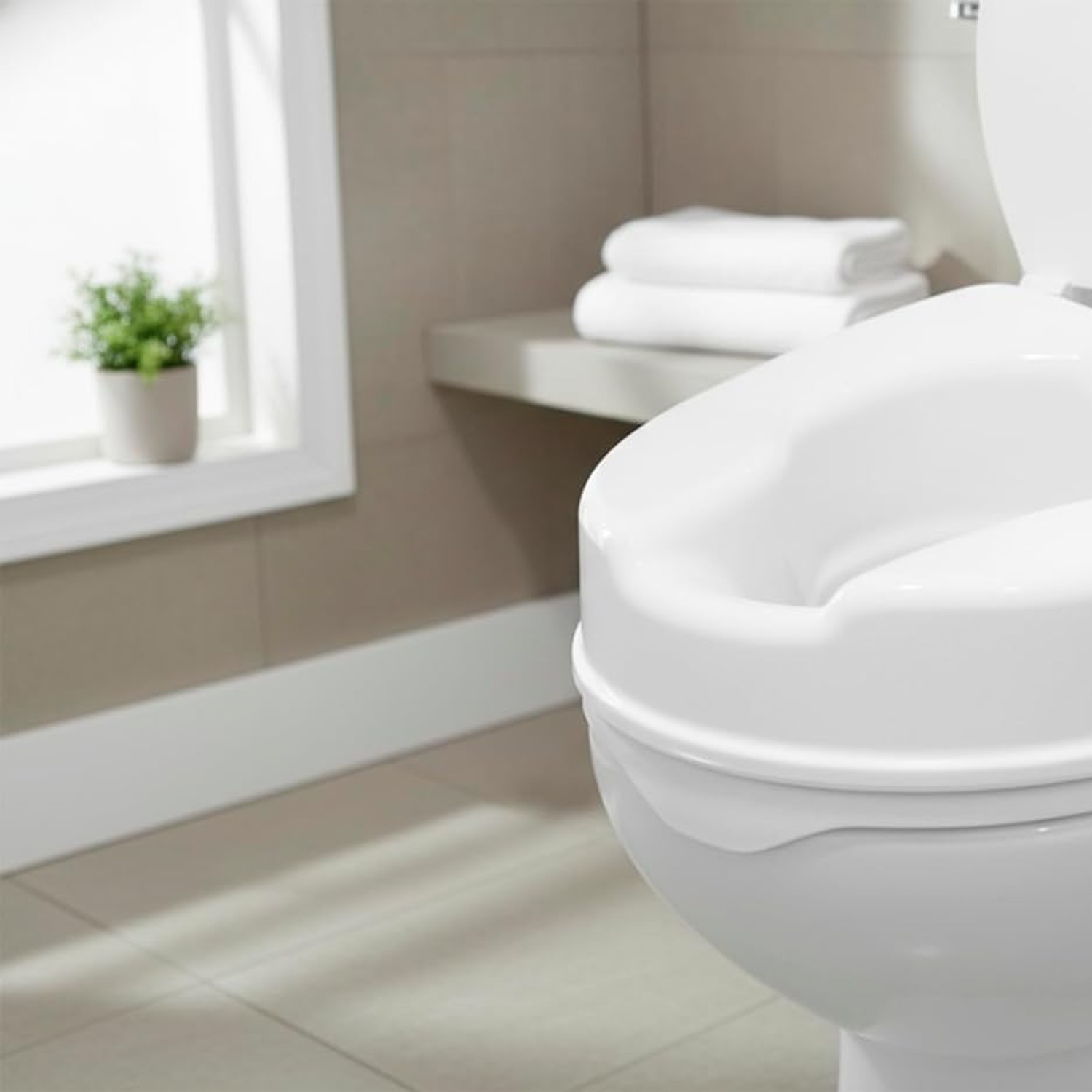
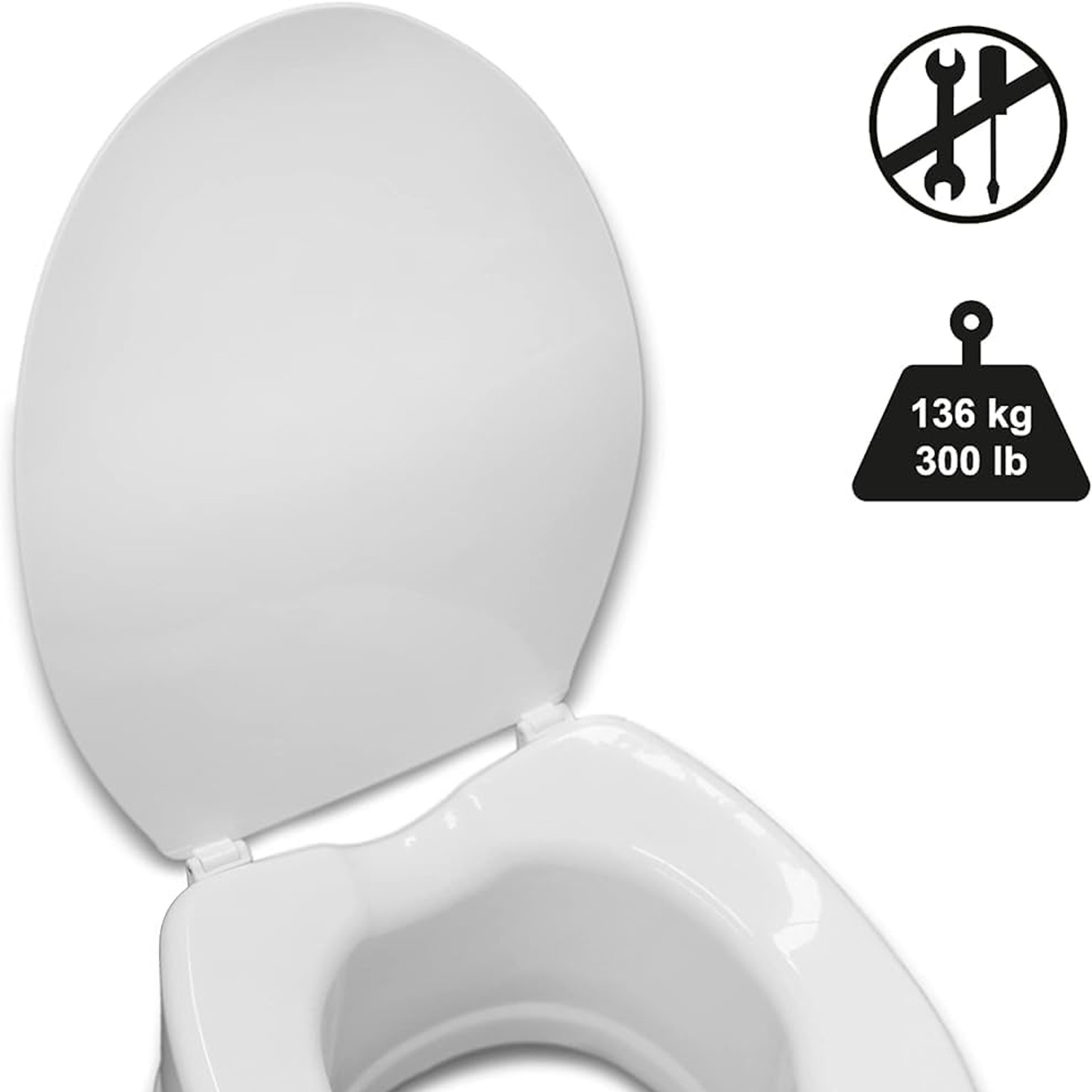
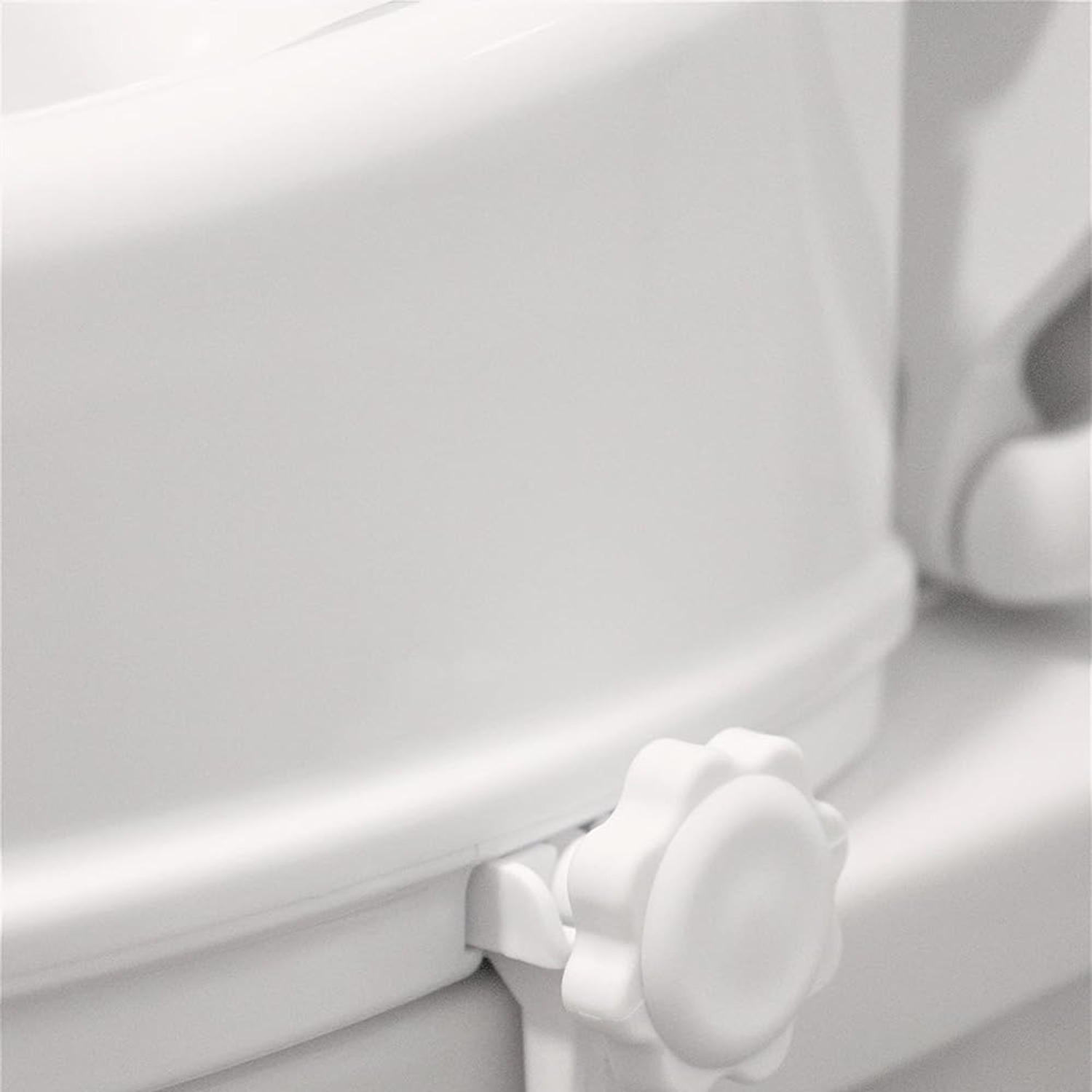
The unit is a moulded polypropylene shell that drops onto the top of your toilet bowl. Underneath it, two clamps on the sides twist and lock against the inner wall of the bowl. Turn them by hand until they bite and the raiser stops moving. That is the entire installation.
Stability is the thing that matters. A raiser that slides sideways as you lower yourself is more dangerous than no raiser at all, because you commit your weight expecting something solid. The twin side clamps on this model exist specifically to stop that. Tighten both of them evenly, then push the seat side to side with your hand before you trust it. Do the same check every week or two, the way you would with anything that lives in a wet room.
Removal is just as quick. Loosen both clamps and lift. That matters more than people expect. It means you can clean the bowl rim underneath properly, and it means other members of the household can use the toilet normally when the person who needs the raiser is out.
The without-arms question
This version comes without arms. It is worth being clear about who that suits and who it does not.
Without arms, the unit is smaller, lighter, less obtrusive and quicker to fit. It sits on the bowl and more or less disappears. If you have reasonable upper-body strength, or if there is already a grab rail, a sturdy vanity or a solid wall within reach, the no-arms version is usually the better pick. Less bulk in a small bathroom is a real benefit.
If you genuinely cannot push up without pulling on something, arms change the maths. In that case look at a framed model instead, or pair this one with properly fitted wall rails. Be honest with yourself about which group you are in. The best toilet seat riser without arms is still the wrong product if you have nothing to push against.
Measuring before you buy
This is where most disappointments come from, so take two minutes on it.
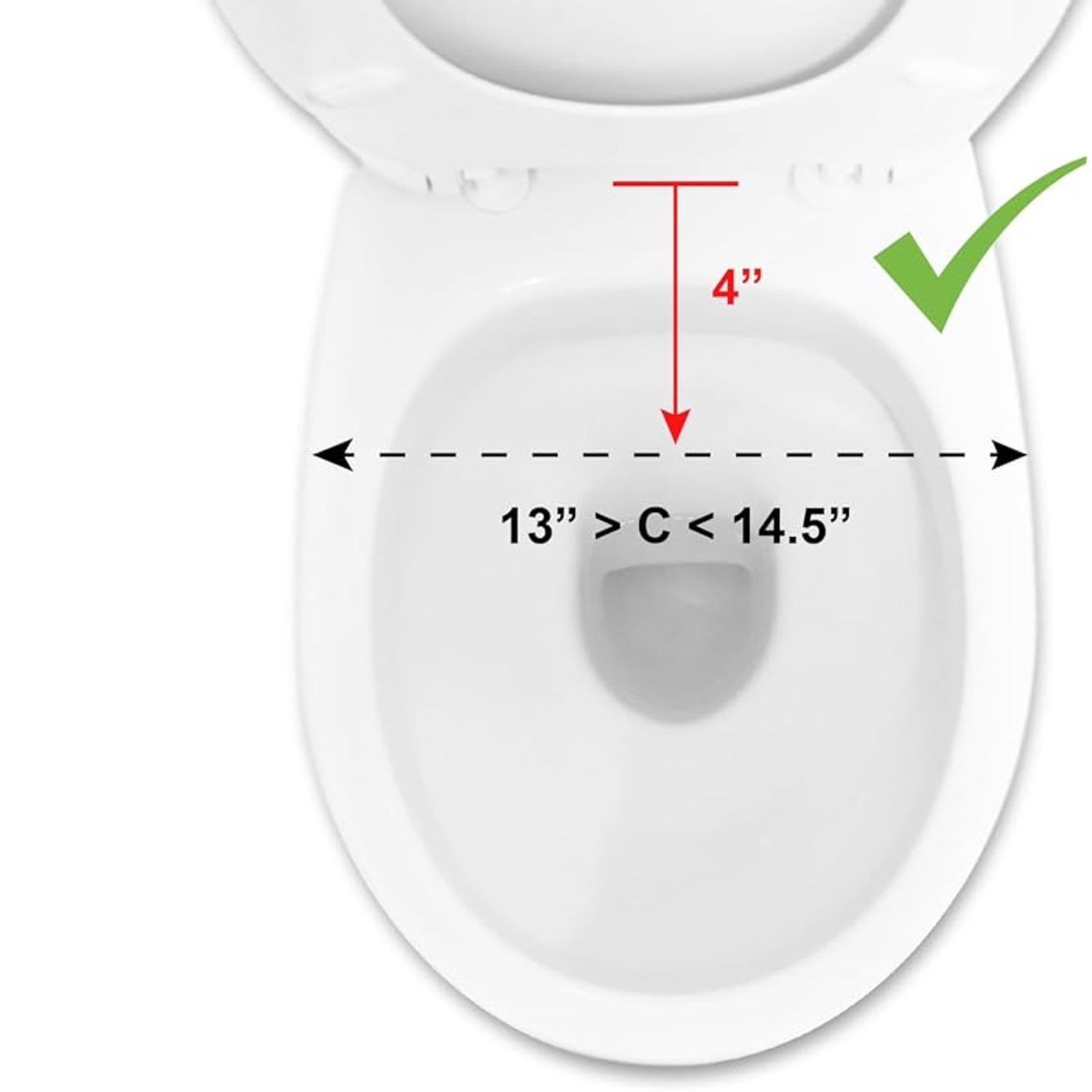
This raiser fits round and elongated bowls up to 38 cm (15 in) wide. Lift your existing toilet seat out of the way and run a tape across the widest part of the bowl rim, outside edge to outside edge. Write the number down. If it is 38 cm or under, you are in range. If it is over, this is not your product and no amount of hoping will change that.
While you have the tape out, measure front to back as well. It will not decide the fit on its own, but it helps you picture how the raiser will sit and whether the front edge will land where you expect. If you are right on the limit, measure twice, ideally with someone else holding the tape.
Also look at the shape of the bowl's inner wall. The clamps need a reasonably straight surface to grip. Heavily sculpted or unusually flared bowls can be awkward with any clamp-on toilet seat riser, not just this one.
Choosing the right height
Ten centimetres is the middle of the range for these aids, and it works for most adults who find a standard toilet too low. It is enough to make a noticeable difference and not so much that the seat feels like a perch.
Two things to check once it is fitted. First, can your feet still rest flat on the floor when you are seated? Stable footing gives you something to push against, and it keeps you balanced. If your heels are dangling, that is a problem. Second, does the height actually solve what was hurting? Sit down and stand up a few times. If you still feel the deep bend in your knees, you may need more lift. If the seat now feels uncomfortably high, less.
People recovering from surgery sometimes get a specific height instruction from a physio or surgeon. Follow that advice over anything written here.
Living with it day to day
Most users leave the toilet lid raised while the riser is in place, since the lid will usually not close over it. That is a minor adjustment and people stop noticing within a week.
Cleaning is straightforward. Wipe the top surface and the underside with warm water and a mild household cleaner or disinfectant, then rinse and dry. Lift the whole unit off once or twice a week so you can get at the bowl rim beneath it. That habit is what stops odour building up, which is the common complaint with any bathroom aid that stays in place.
Avoid abrasive scouring pads and long soaks in strong bleach. Polypropylene handles routine cleaning well but harsh treatment dulls the finish over time. A soft cloth does the job.
Keep an eye on the clamps and on the shell itself. If anything cracks, stop using it. These are not parts you repair.
Who tends to buy one
Older adults are the biggest group, often prompted by a family member who noticed how long it was taking to get up. It is one of the more useful bathroom mobility aids simply because it helps with something that happens several times a day, every day.
Post-surgery is the second big group. Hip and knee replacements come with movement restrictions for weeks afterwards, and a raised seat is usually part of the advice. Plenty of those buyers only need it temporarily, which is where the no-tools fitting earns its keep. On and off in minutes, and the bathroom goes back to normal afterwards.
Then there are people managing ongoing conditions, arthritis, back injuries, general weakness during a long illness. For them it tends to become permanent, and the quick-removal design just means the bathroom stays easy to clean.
The stated maximum user weight is 136 kg (300 lb). Check that figure applies to you before ordering.
What the record does and does not say
The raiser is made by IMD SL in Spain, model 3011, in polypropylene. It adds 10 cm (4 in), clamps on with two side locks, and fits round and elongated bowls up to 38 cm (15 in). The parcel measures 42.29 x 39.5 x 17 cm and weighs 1.61 kg.
Colour, finished product dimensions and warranty terms are not specified in this product record. If one of those details matters to your decision, ask us before you order rather than guessing.
The short version
Measure your bowl rim first. If it is 38 cm (15 in) or under, this raiser fits. Ten centimetres of extra height takes real strain off knees and hips, the two side clamps hold it steady, and it goes on and comes off without tools.
Pick the no-arms version if you can push up from a rail, a wall or a vanity. Pick a framed model if you cannot. Clean it regularly, check the clamps, stay within the weight limit, and it will quietly make one of the more awkward moments of the day a good deal easier.