





The complete guide
How to Choose a Bed Assist Rail That Actually Suits Your Bed
The moment this solves
There is a specific few seconds at the start of every day that most people never think about. You wake up, roll towards the edge of the bed, sit up, swing your legs round and stand. For years that happens without a thought. Then one day it does not. Maybe a knee is stiff. Maybe blood pressure drops when you stand too fast. Maybe a hip replacement has changed how your body moves and you are still learning the new rules.
What people do in that situation is grab whatever is nearby. A bedside table. A windowsill. A chair back. The trouble is that none of those things were built to take weight from an odd angle. Tables tip. Chairs slide. That is where a surprising number of household falls begin, not in some dramatic moment but in a quiet bedroom at six in the morning.
A bed assist rail puts a purpose-built handle exactly where your hand already wants to go. That is the whole idea. It does not change the bed, it does not need a tradesperson, and it does not announce itself as medical equipment. It just gives you a solid place to hold.
How a bed rail actually works
The design is simpler than people expect. A flat base section slides between your mattress and the bed base. The mattress sits on top of it, and your own body weight presses down and holds it in place. A vertical section rises from that base, and the handle sits at the top.
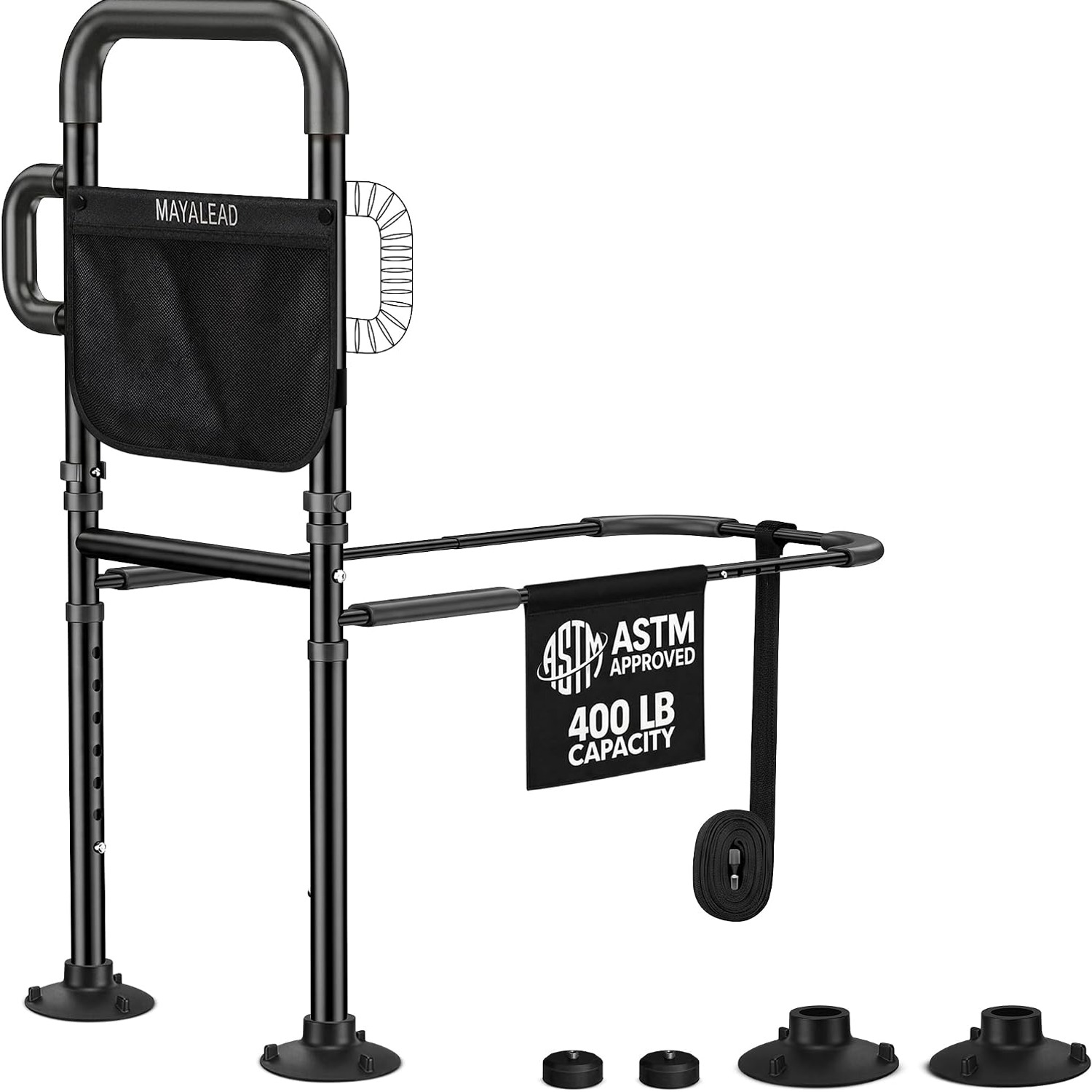
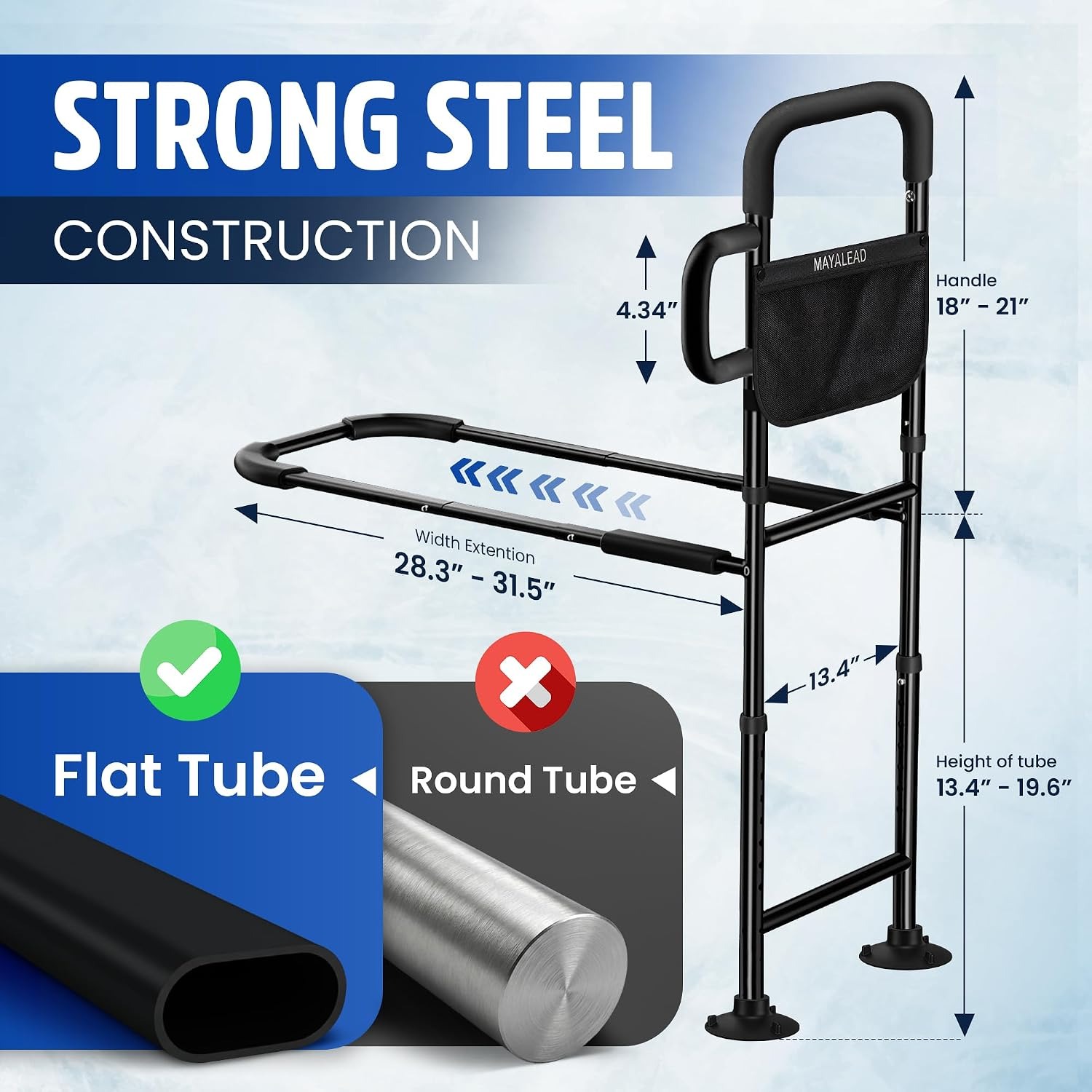
This model is a T-shape in carbon steel, finished black, measuring 79.6 cm wide and 103.5 cm high overall with a slim 5.1 cm profile. The whole unit weighs 3.27 kg. A safety strap is included to help secure the frame to the bed, which is worth using even though the mattress is doing most of the work.
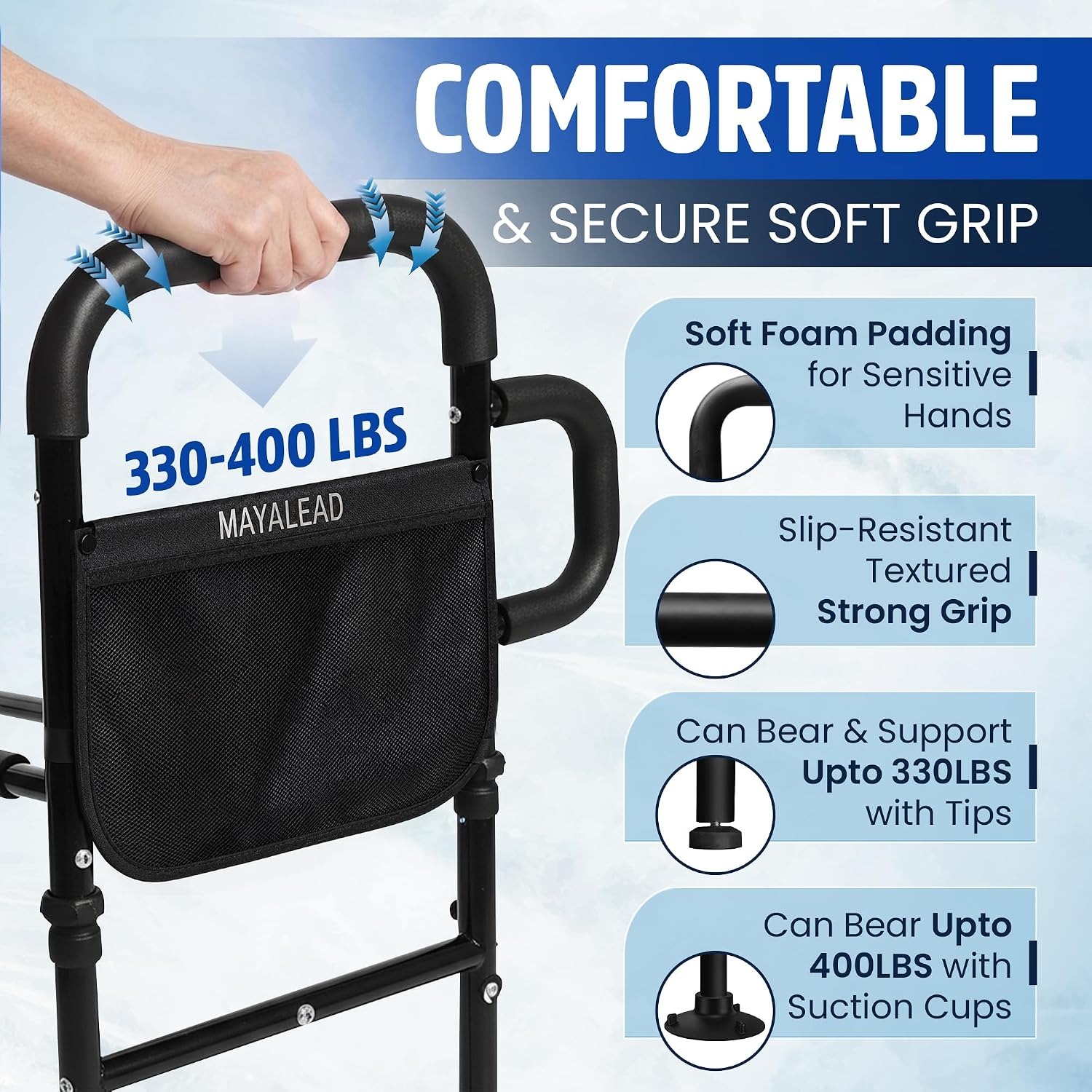
The handle section carries two padded non-slip grips rather than one bar. In practice you use them differently. The lower grip suits pulling yourself up from lying down. The upper grip suits pushing yourself up to standing. Having both means you are not stretching for the wrong one halfway through the move.
Two additions make the rail more useful than a bare handle. There is a motion sensor LED light with three modes and adjustable brightness, so the floor is lit before your feet reach it. And there is a storage pouch on the side, which quietly removes one of the riskiest small movements in the bedroom, the long twisting reach to a nightstand.
Who it suits
The clearest fit is an older adult who is still fully independent but has noticed that getting up is less automatic than it was. A bed rail for elderly adults in that situation is preventive rather than corrective. It is a handle you use on autopilot, and the value is the fall that never happens.
The second group is people in recovery. After hip, knee or back surgery, the instruction is usually to avoid twisting and to keep load off a specific joint. A fixed handle lets you control the sequence of a transfer rather than relying on momentum. Plenty of people use one for three months and then put it away, which the tool-free assembly makes easy.
Third are people living with conditions that affect strength or balance over the long term, such as arthritis, Parkinson's or multiple sclerosis. Here the rail becomes part of a wider setup alongside grab bars in the bathroom and better lighting in hallways.
And then there are carers. If you help someone out of bed each morning, a rail changes the job. The person can take some of their own weight, which means less lifting for you and less dependence for them.
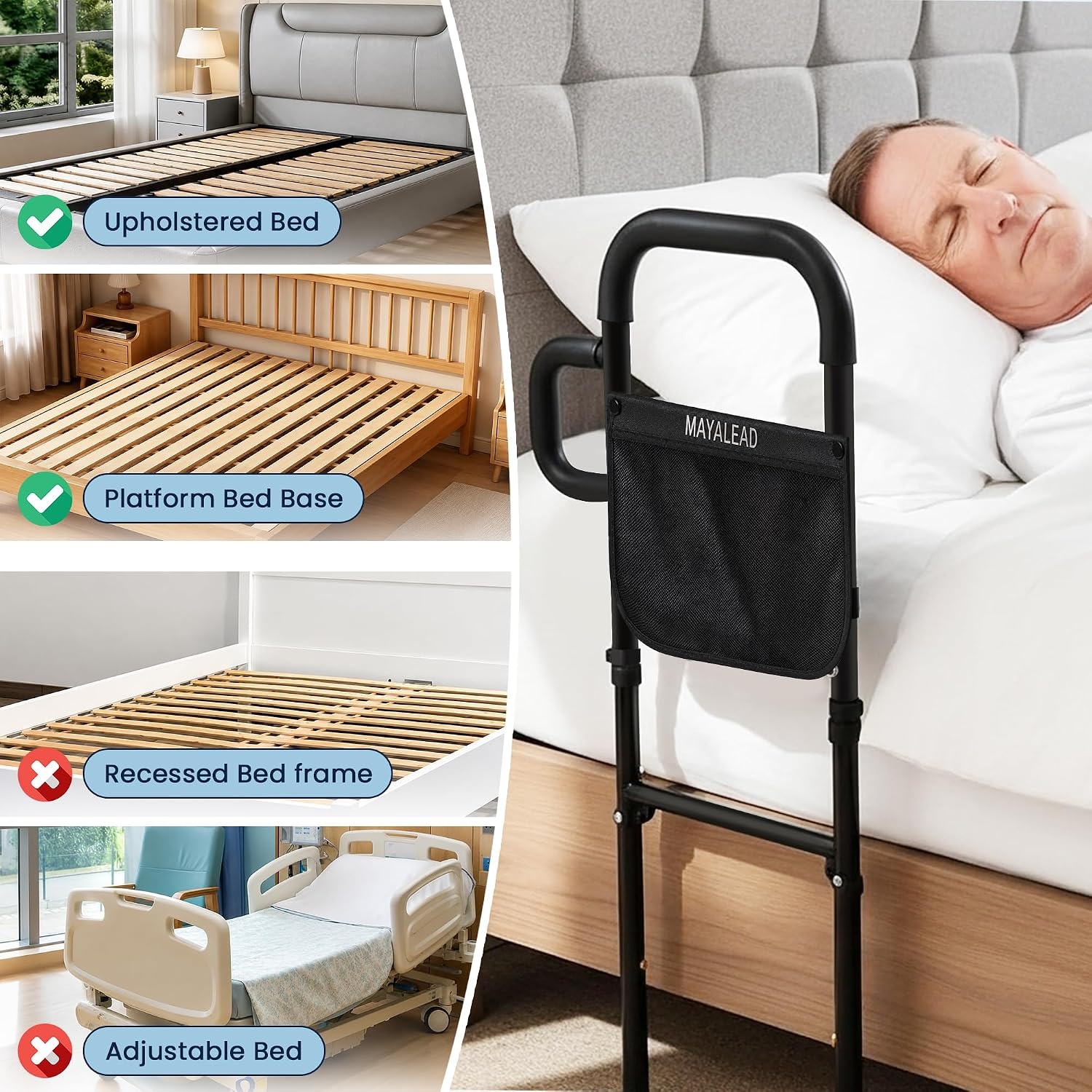
One thing to be clear about. This is a bedside grab bar, not a full-length guard. It does not enclose the side of the bed and it will not stop someone rolling out. The listing is also clear that it is for adults over 18, not for children, and not for adjustable, bunk, trundle or loft beds.
Measuring before you buy
Almost every disappointing bed rail purchase comes down to measurement, so do this part properly.
Start with the floor-to-mattress-top height. Put a tape measure on the floor beside the bed and measure to the top surface of the mattress, with the bedding off. That single number tells you more than anything else. This rail has adjustable leg heights and an adjustable frame length, so it covers a useful range, but a very low platform bed or a very tall traditional divan can sit outside it.
Next, check what is under your mattress. The base section needs a gap to slide into. A slatted frame, a box base or a flat platform usually works fine. A mattress that sits down inside a recessed frame lip does not leave the clearance this design needs.
Last, look at the side of the bed you will use. You want enough floor space for the legs to stand flat, clear of bedside furniture, rugs with curled edges and trailing cables. Give yourself room to stand up and take a step without a hazard underfoot.
Setting it up well
Assembly is by hand with no tools, and most people are done in well under ten minutes. The part worth slowing down for is the height setting.
Sit on the edge of the bed in your normal getting-up position. Reach out with your hand as if you were about to push off. Wherever your hand lands comfortably, that is roughly where the upper grip should be. Too low and you end up bending forward, which pushes your weight the wrong way. Too high and you are pulling rather than pressing, which is harder work for shoulders.
Once set, push the base fully under the mattress so the rail sits tight against the mattress edge with no gap. Fit the safety strap. Then, before you trust it, stand beside the bed and give the handle a firm shake in every direction. It should feel like part of the bed. If there is movement, the base is not far enough under or an adjustment point needs tightening.
Put the light where it covers the floor rather than shining into your eyes, and load the pouch with the things you reach for most. Glasses, phone, remote, a small torch.
Keeping it in good order
Care is minimal. Wipe the frame and grips with a damp cloth and dry them. Leave the solvents and scouring pads alone, especially near the padding. If the grips get sticky over time, warm water with a drop of washing-up liquid handles it.
The maintenance that matters is the check. Once a month, run a hand over the leg bolts and adjustment points and tighten anything loose. Look at the strap. Confirm the base is still snug under the mattress, because changing sheets or flipping a mattress often nudges it. Thirty seconds, and it keeps the rail doing its job.
If you only need it temporarily, take it apart and store the pieces flat and dry. It goes back together just as easily.
Thinking about it as part of a room
A rail works better when the rest of the bedroom supports it. A bedside lamp you can reach lying down. A clear path to the door. Rugs either removed or properly gripped. Slippers with a real sole, kept in the same place every night.
The motion sensor light on this rail covers one of the biggest gaps in that list, which is the first few steps in the dark. Lighting the floor before you move is a small thing that does a lot of work.
The short version
A bed assist rail gives you a fixed, padded handle at the edge of the bed so that sitting up and standing become controlled movements rather than hopeful ones. This one is carbon steel in black, T-shaped, 79.6 cm wide and 103.5 cm high, weighing 3.27 kg, with two non-slip padded grips, adjustable leg heights and frame lengths, a motion sensor LED light with three modes and a side storage pouch. It goes together by hand with no tools and comes apart again for storage.
Measure floor to mattress top, check there is a gap under your mattress for the base, and confirm your bed is not an adjustable, bunk, trundle or loft type. Get those three right and setup is a ten-minute job. After that it is just a handle that is always exactly where you need it.