


The complete guide
Plastic Tumbler Glasses, A Practical Buyer's Guide
The problem with glass in a real house
Glass tumblers look lovely in photographs. In an actual kitchen, with wet hands, a crowded sink, a stone bench and someone reaching across the table for the salt, they are a running cost. Most people do not break glasses because they are careless. They break them because glass is a brittle material and daily life involves a lot of small impacts.
The first crack is usually invisible. A tumbler takes a knock against a tap, nothing seems wrong, and three washes later it fails in your hand. Outdoors it is worse. Paving, decking, tile around a pool, the concrete floor of a garage: every one of those surfaces turns a dropped glass into a cleanup job with real risk attached, especially if anyone nearby is barefoot.
That is the gap plastic tumbler glasses fill. Not as a cheap substitute for proper glassware, but as the set you actually use every day while the nice glasses stay in the cabinet for the two dinners a year that call for them.
What Tritan brings to the table
Not all clear plastic cups are the same. The cheap acrylic ones you find in bargain bins look fine for a month, then go cloudy, pick up scratches and develop that slightly milky haze that makes a drink look unappetising. That is usually what people picture when they hear plastic drinkware.
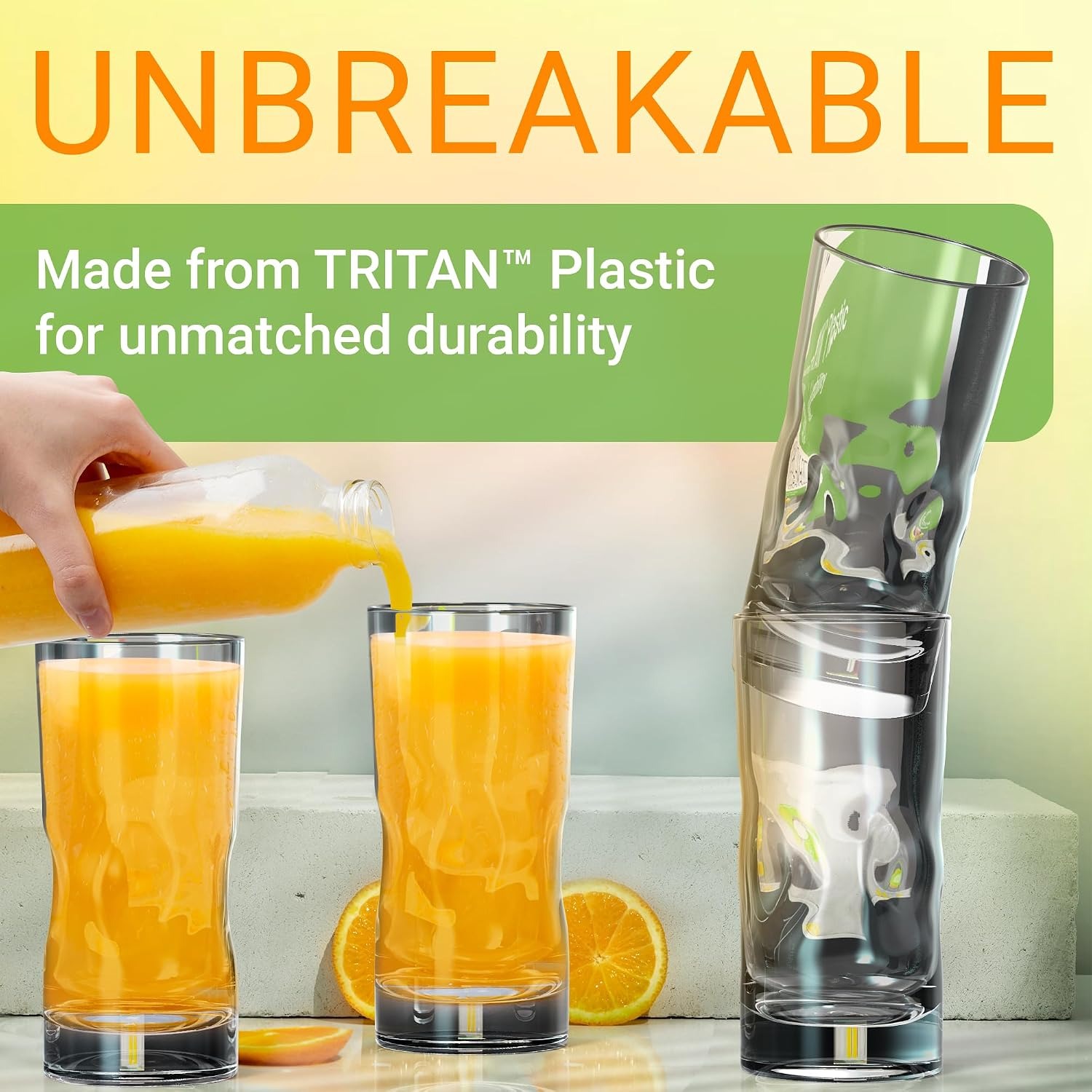
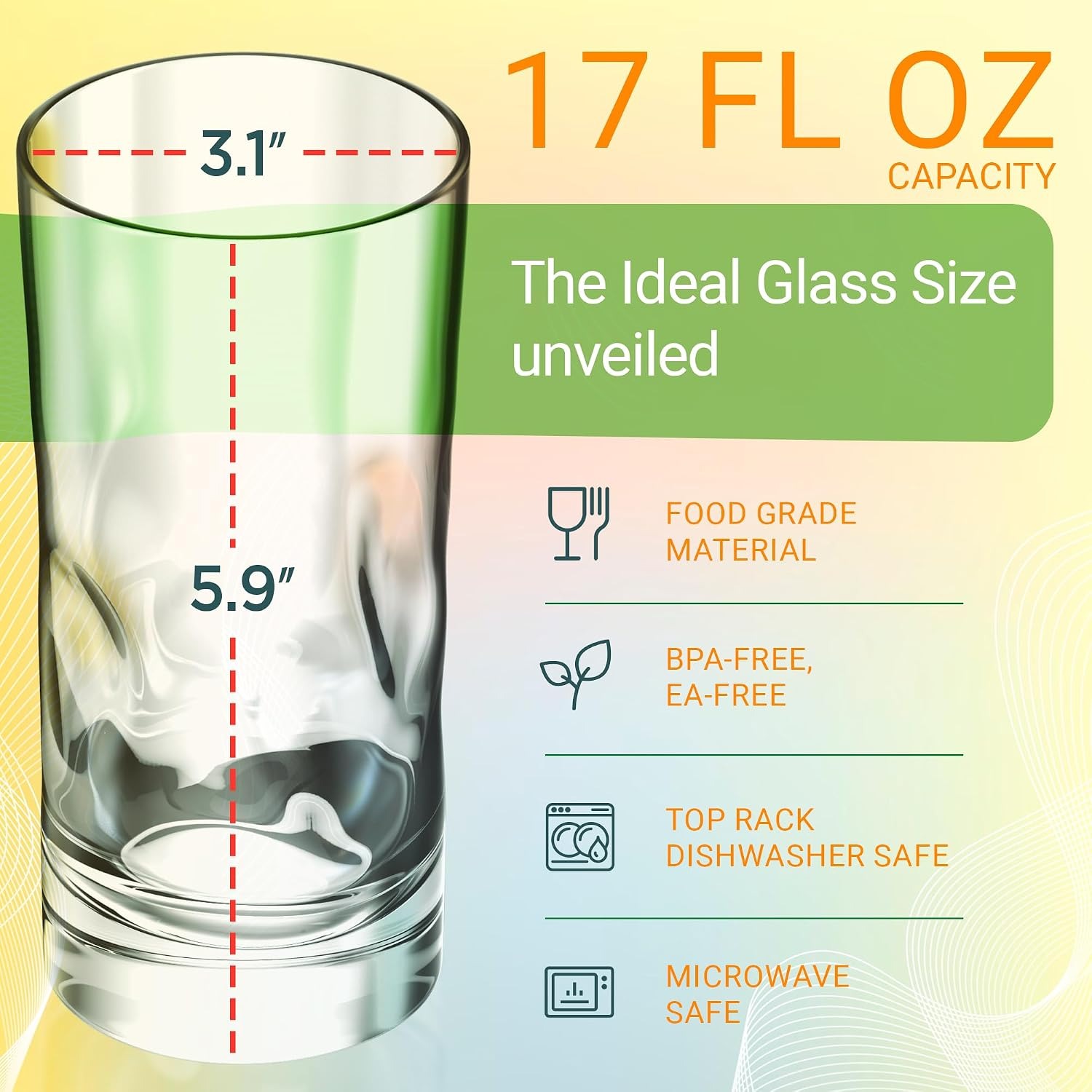
Tritan is a different proposition. It is a clear plastic used widely in reusable bottles and drinkware because it keeps its transparency and stands up to repeated dishwasher cycles. This set is made from it, and the listing describes the material as break resistant, shock resistant and heat resistant. BPA free and EA free are both stated too, which answers the question most people have before they put plastic anywhere near a drink.
The practical difference shows up over months, not days. A set that still looks clear after a hundred washes is a set you keep using. One that hazes over gets quietly demoted to the cupboard above the fridge.
The specifications that matter
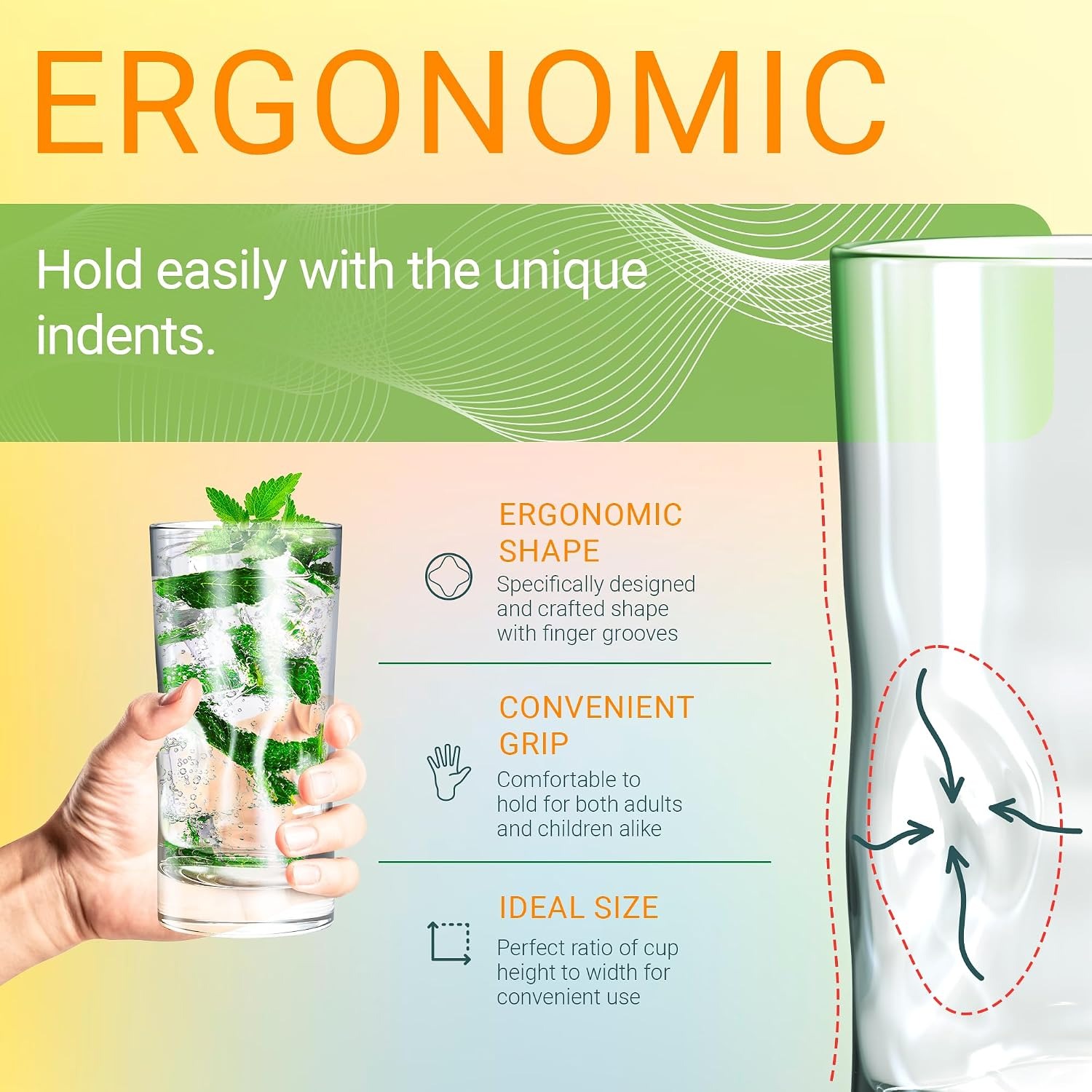
Each tumbler holds 17 fluid ounces. That is a genuinely useful everyday size, big enough for a tall water with ice, a long mixed drink or a proper glass of juice, without being so large that it is awkward to hold or slow to empty.
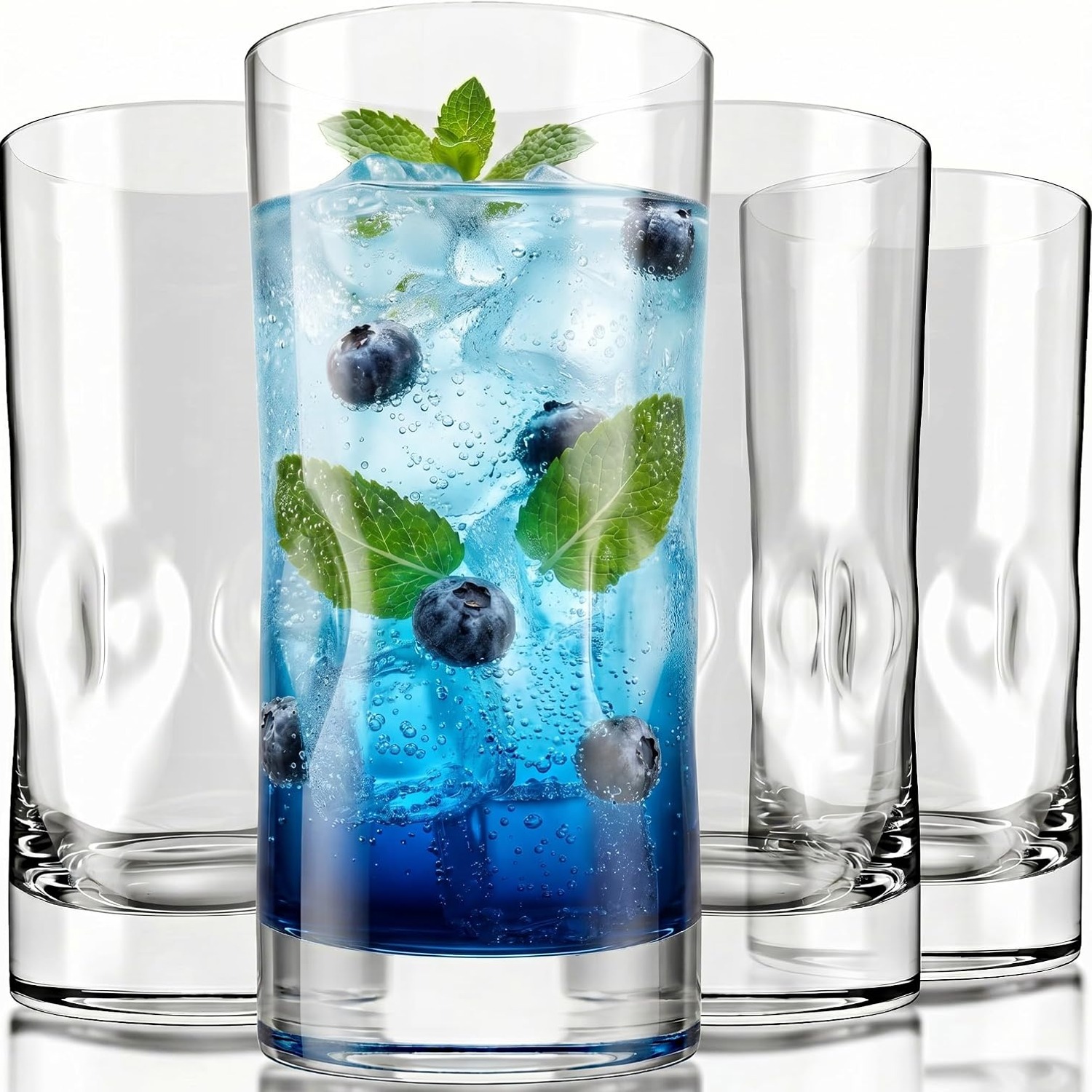
The shape is a straightforward cylinder, 7 cm wide and 12 cm high. Those numbers matter more than they sound. A 12 cm height clears most standard cupboard shelves, and a 7 cm width means four of them sit comfortably in the top rack of a dishwasher without you playing Tetris. The pattern is solid, the colour is clear, and the style is described as classic, which is the honest way of saying they will not fight with anything else on your table.
Total set weight is 880 g. Divided by four, that gives each tumbler a bit of substance. Weight is underrated in drinkware. A cup that is too light tips over on a breezy patio and feels cheap in the hand, no matter how good the material is.
Where these actually earn their keep
The recommended uses on this set cover indoor, outdoor, travel, pool and beach, and that list is a decent map of where break resistant drinkware makes sense.
Around a pool, glass is often banned outright, and for good reason. Broken glass in or near water is nearly impossible to find and remove. Plastic tumblers solve that completely. On a balcony or a deck, wind and uneven boards do the rest of the damage, so something that bounces instead of shattering is simply the smarter choice.
Travel is the other big one. Caravans, boats and camping setups all involve movement, hard surfaces and limited space for packing fragile things in padding. A set of four Tritan tumblers goes in a box and comes out intact. For anyone searching for the best camping tumblers, the question is nearly always durability first and looks second, and this set covers both.
Indoors they do the ordinary jobs. Water with dinner, orange juice in the morning, iced coffee in the afternoon. The listing also includes hot drinks among the specific uses and notes the material is heat resistant, so tea and coffee work as well.
Hot, cold and everything in between
The material features list is unusually broad: dishwasher safe, microwave safe, freezer safe, shock resistant and heat resistant. In daily terms, that means one set of cups handles jobs you would normally split across three.
You can chill a tumbler in the freezer for half an hour before a hot afternoon, which keeps a cold drink cold far longer than ice alone. You can warm something gently in the microwave. You can go straight from the garden table into the dishwasher without a thought. If you are freezing liquid rather than just chilling an empty cup, leave headspace, because liquids expand.
Microwave heating deserves one small note. The cup can stay cooler than the liquid inside it, which makes it easy to misjudge temperature. Heat in short bursts, stir, and check before you hand one to someone else.
How to choose a tumbler set
A few questions sort most buying decisions quickly.
Start with volume. Seventeen fluid ounces is a mid-to-large everyday tumbler. If you mostly drink small servings of juice or spirits neat, you may want something smaller. If you drink a lot of iced water, this size means fewer refills.
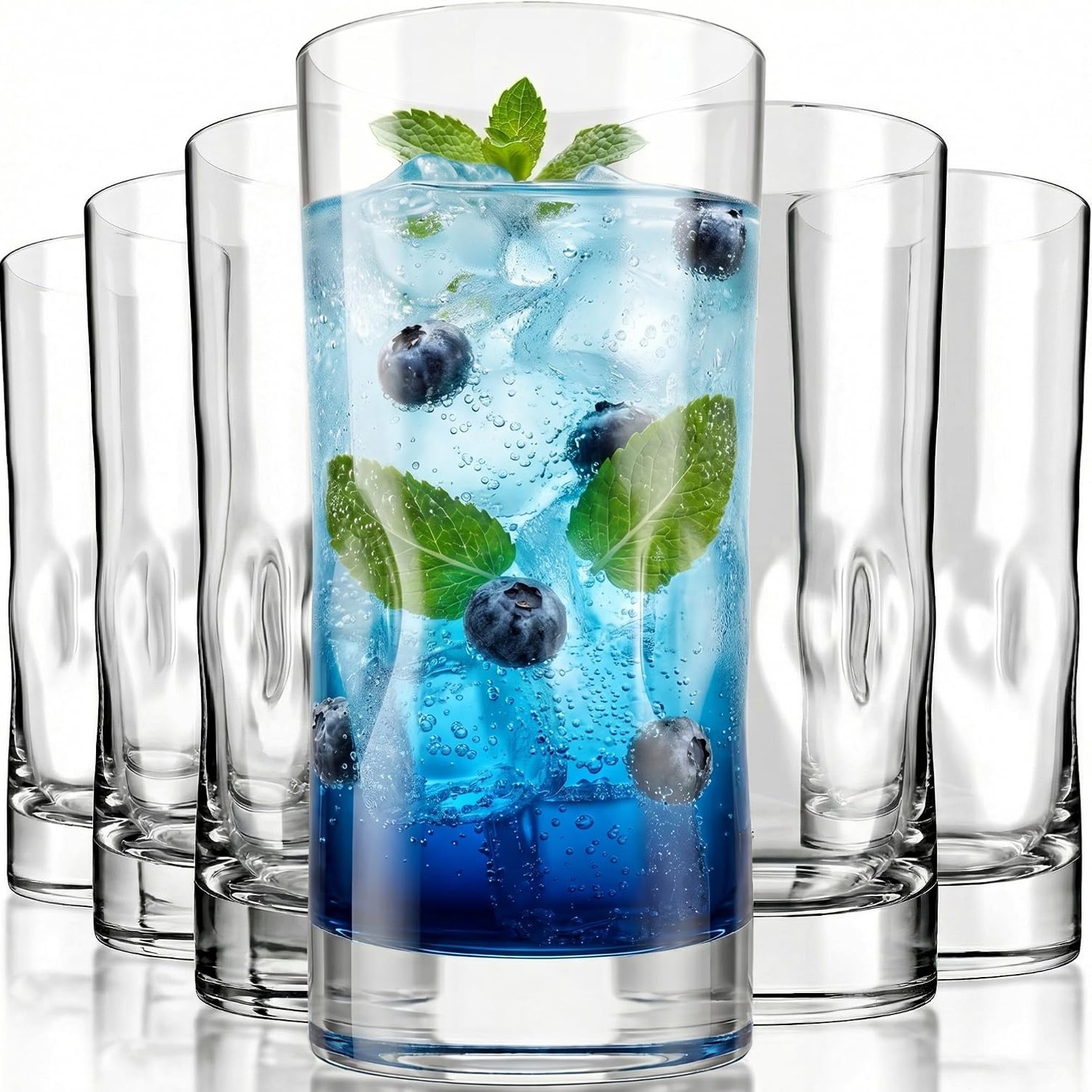
Then think about count. Four covers a couple or a small family through a normal day. Households that entertain regularly often buy two sets, so eight matching tumblers are available while half the collection is in the dishwasher. Matching is part of the appeal here, since the usual fate of glassware is a slow drift into mismatched survivors.
Consider the finish. Clear is the flexible option. It goes with any plates, any tablecloth, any occasion, and it lets you see what is in the cup, which matters more than people expect at a party where several drinks are circulating.
Finally, be honest about where they will live. If the answer includes any surface harder than carpet, break resistance moves from a nice feature to the deciding one.
Looking after them
Care is simple, and getting it right adds years.
Use the top rack of the dishwasher. Plastic drinkware on the bottom rack sits closer to the heating element, and heat plus time is what warps and clouds plastic. The top rack costs you nothing and avoids the problem entirely.
Hand washing is equally fine. Warm water, dish soap, a soft cloth or sponge. The one thing to avoid is anything abrasive. Steel wool, scouring pads and gritty cleaning powders all leave fine scratches, and enough fine scratches turn a clear tumbler into a dull one. That is the single most common reason plastic cups look tired, and it is completely preventable.
Dry them before storing, and store them upright with a little breathing room rather than jammed into each other. Damp cups packed tight can stick and mark.
If a strongly flavoured drink ever leaves a trace, a soak in warm water with a spoon of bicarbonate of soda usually clears it. Tritan is non-porous, so this is rarely needed.
The short version
If you keep replacing broken glasses, this set of four Tritan tumblers is the fix. Each one holds 17 fluid ounces, measures 7 cm by 12 cm, and the material is listed as BPA free, EA free, dishwasher safe, microwave safe, freezer safe, shock resistant and heat resistant.
They are clear enough for a dinner table and tough enough for a pool deck. They go from freezer to microwave to dishwasher without special handling. Four of them weigh 880 g in total, so they feel like real drinkware rather than disposable cups.
Buy them if you want one set that handles everything, indoors and out, without the quiet anxiety that comes with glass near a hard floor. Keep them off abrasive pads, run them on the top rack, and they should stay clear and useful for a very long time.