



The complete guide
How to Choose a Bath Grab Rail That Actually Fits Your Tub
The few seconds where things go wrong
Bathroom falls almost never happen in the middle of a bath. They happen in the handful of seconds where someone is half in and half out, one leg over the tub wall, weight on a wet foot, nothing to hold. That moment asks a lot of your balance, and it asks more of it every year.
Most people improvise. They grab the tap, which is slippery and sharp. They grab the towel rail, which was fitted with two small screws into plasterboard and is not holding anyone's weight. Or they brace a hand flat against a wet tiled wall, which does nothing at all. A bath grab rail replaces all of that with one solid handle in the right place.
The point is not that someone is frail. Plenty of perfectly steady people fit one because the bath is deep, the floor is tiled, and there is no sense in finding out the hard way.
How a clamp-on rail works
A wall-mounted grab bar is screwed into studs or solid masonry. It is strong, and it is permanent, and it needs tools, correct fixings and a wall that can take it. Plenty of bathrooms do not have a suitable wall in the right spot, and plenty of renters are not allowed to drill anyway.
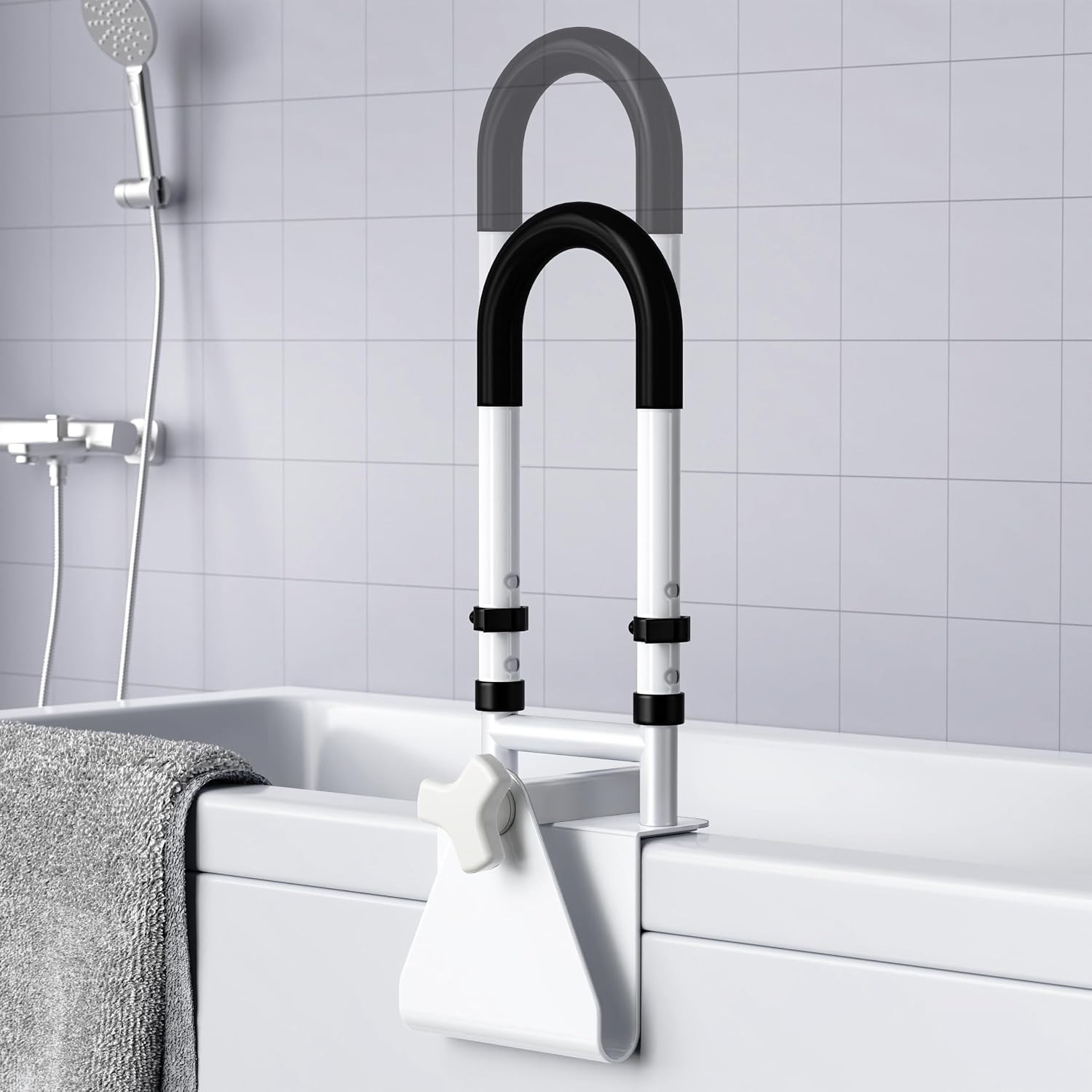
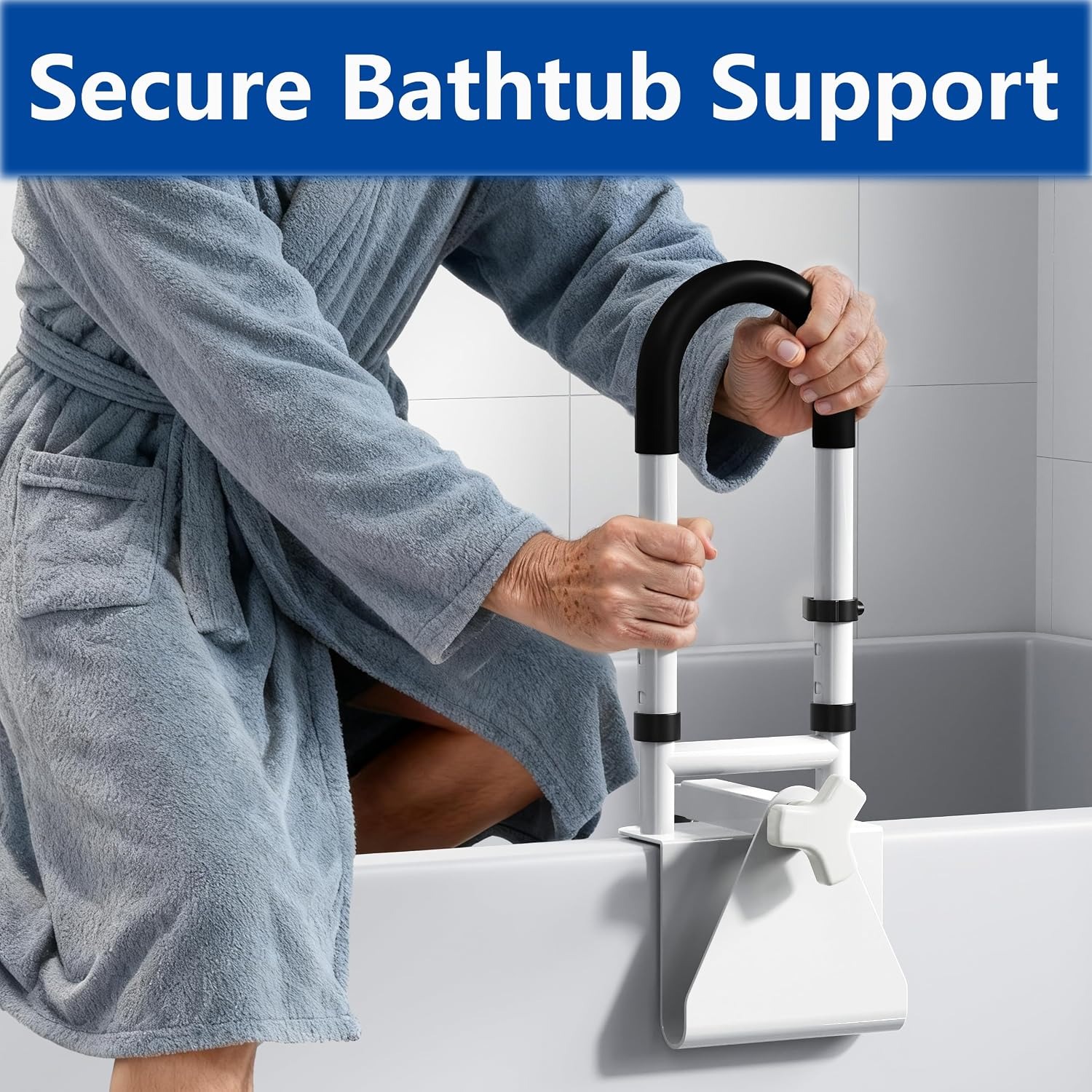
A clamp-on rail takes a different route. It grips the top edge of the tub wall itself. The clamp has an adjustable jaw that opens to fit the thickness of your bath side, and you tighten it by hand until it bites. On this rail, three non-slip rubber pads sit between the metal and the tub. They do double duty, adding friction so the clamp holds and cushioning the contact so the finish is not marked.
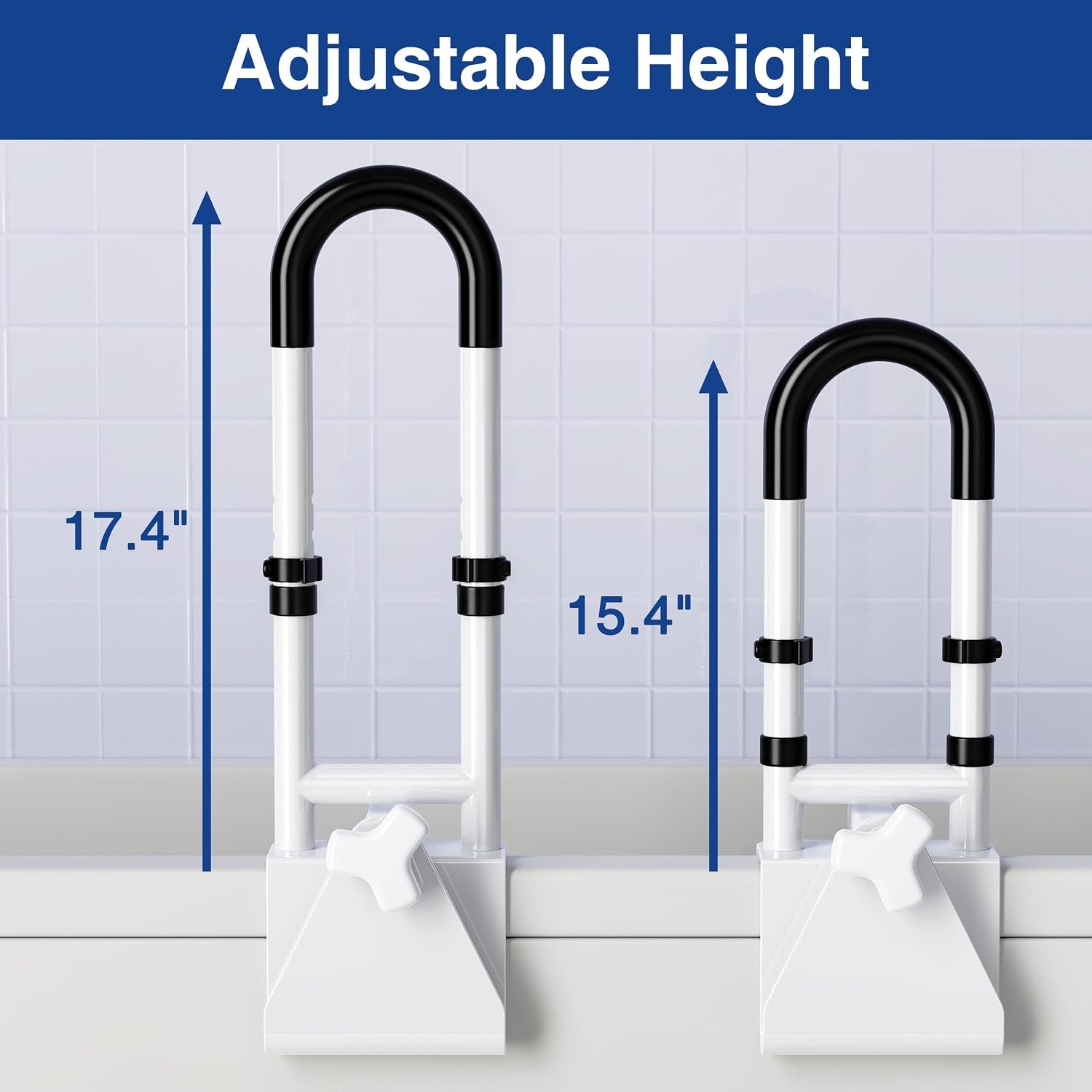
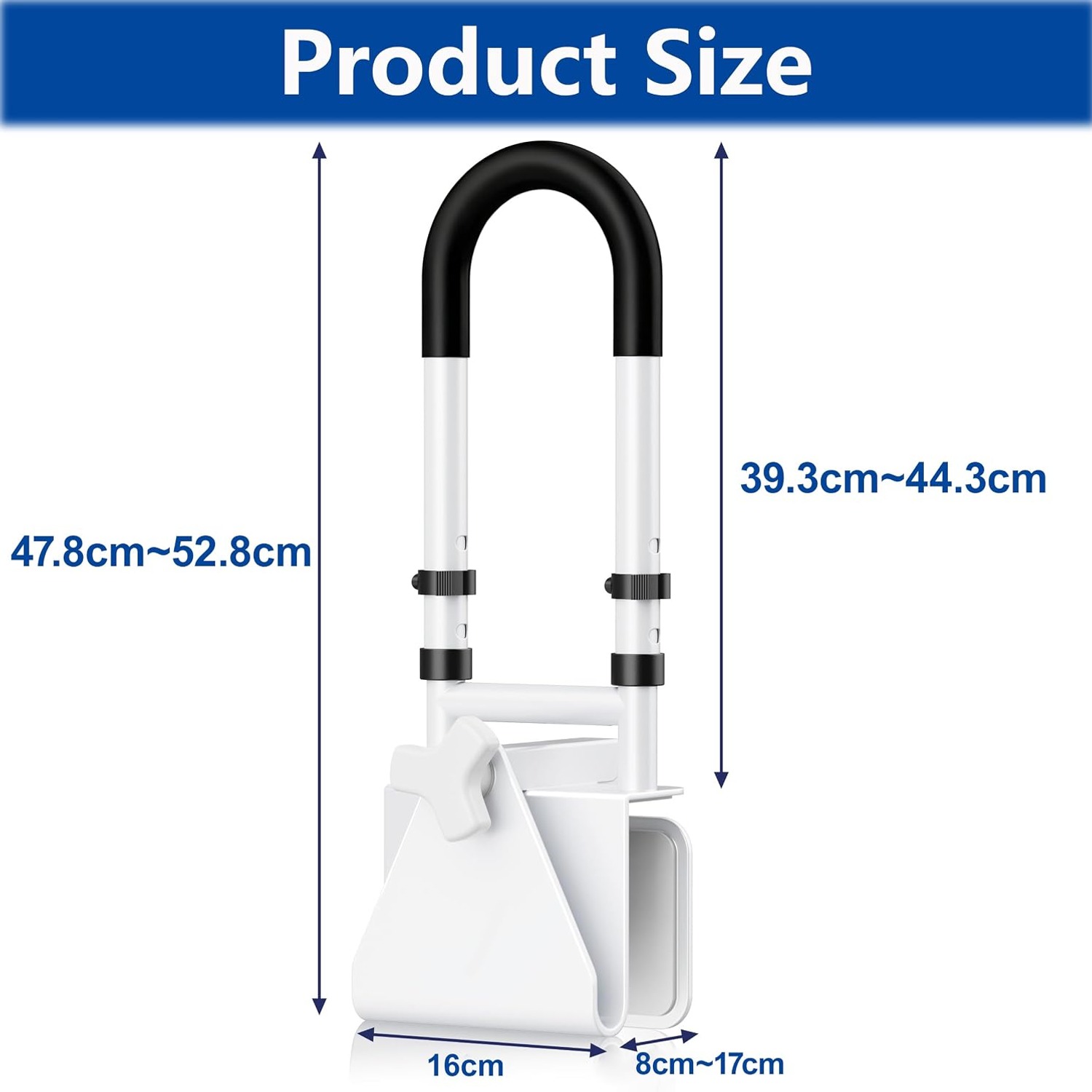
Once the clamp is seated, you set the rail height. This one adjusts from 38 to 46 cm, which the listing gives as 15 to 18 inches. That range covers most adults. The whole job takes a few minutes and leaves nothing behind when you remove it.
The measurement that decides everything
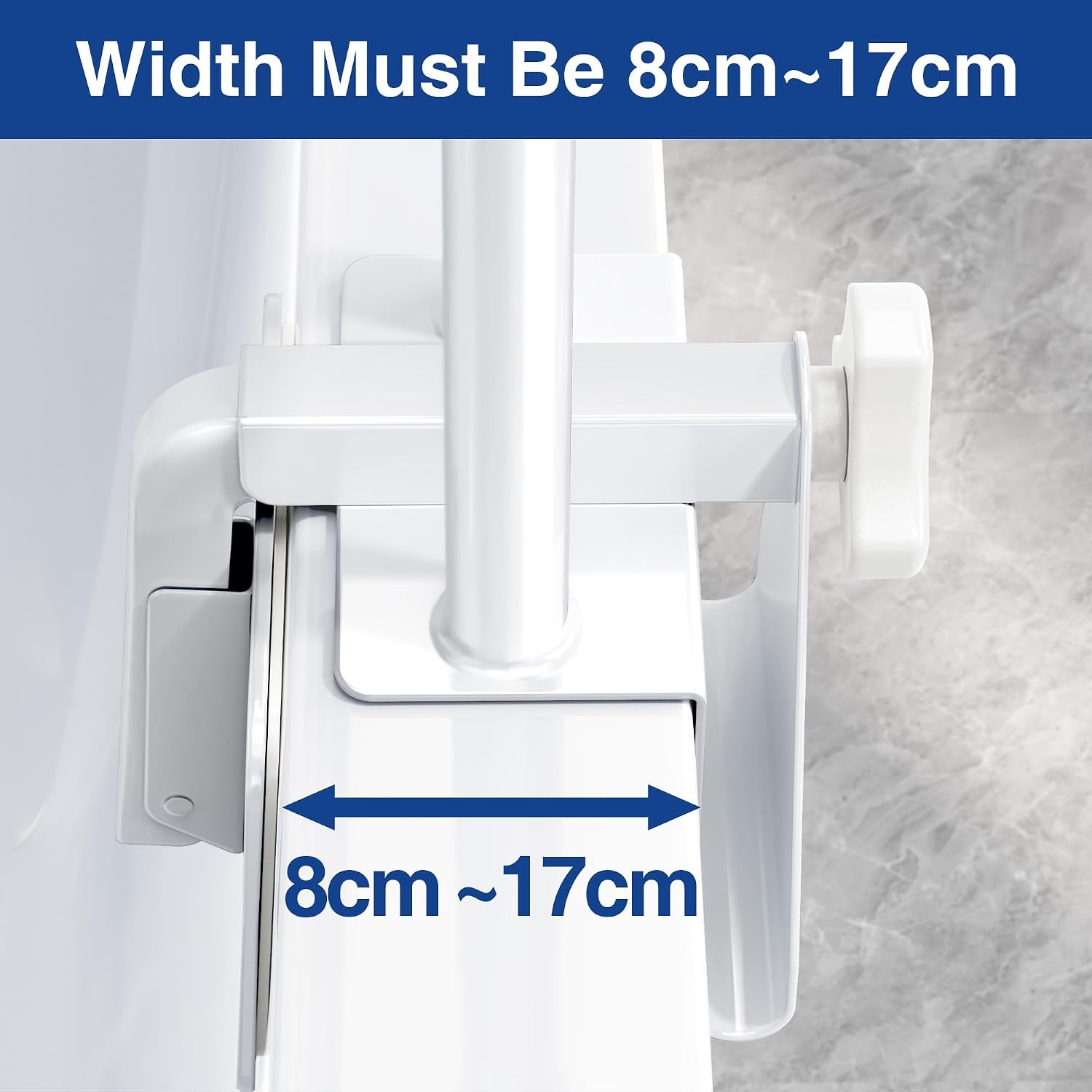
Before anything else, measure the flat top edge of your bath at the spot where the rail would go. The clamp fits tub walls between 7.9 and 17 cm thick, given in the listing as 3.1 to 6.7 inches. That is a generous range and covers most standard built-in baths, but it is not universal.
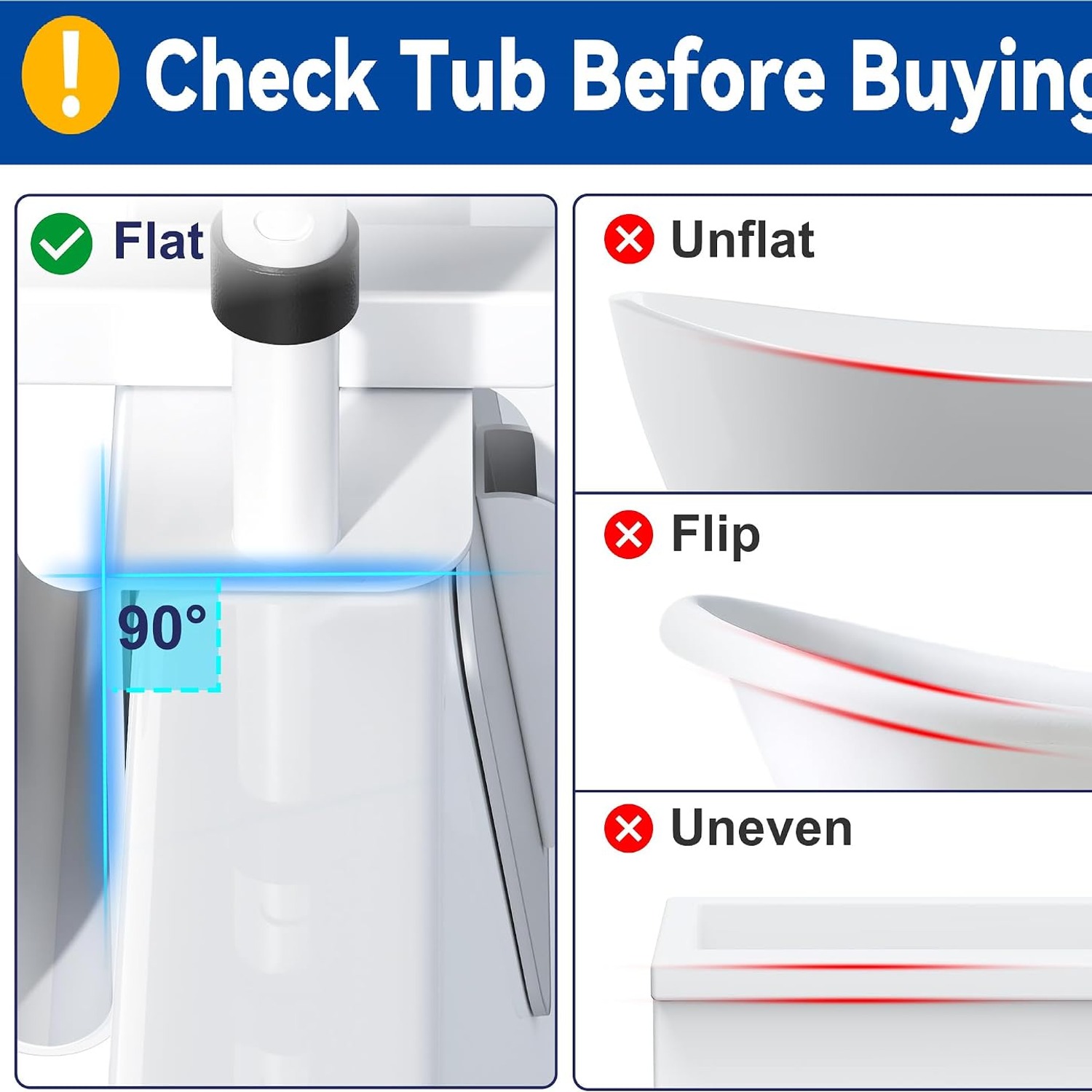
Just as important: the edge must be smooth and flat. The listing is explicit that curved, angled or textured tub walls are not compatible. This catches people out with older rolled-rim baths and with some freestanding designs where the rim sweeps outward. The clamp needs two parallel faces to squeeze against. A rim that tapers or curves gives it nowhere to sit, and a rail that is not properly seated is worse than no rail at all because you will trust it.
Take two minutes with a tape measure and a straight edge. Lay a ruler across the top of the tub wall and see whether it sits flush or rocks. If it rocks, look at a wall-mounted option or a floor-standing bath frame instead.
Who it suits
The obvious group is older adults who still prefer a bath to a shower. A bathroom safety rail does not change anything about the room, and that matters psychologically as much as practically. There is no visible renovation, no grab bars screwed into the tiles, nothing that announces a change in circumstances.
It also suits short-term needs well. Someone recovering from hip or knee surgery may need extra support for six weeks and then not need it at all. Because it clamps on and off without tools, there is no awkward hole in the tiles once the recovery is done. The same applies to a visiting parent who stays a few weeks a year.
Shared bathrooms work fine too. The rail sits on the tub edge and does not reduce the space inside the bath, so other members of the household are not stepping around it.
For anyone with significant mobility difficulty, a rail is one part of a setup rather than the whole answer. An occupational therapist can assess whether a bath board, a bath lift or a shower conversion is the better call. A rail is for people who can still manage the step but want the balance support.
What to look at when comparing rails
Supported weight. This one states 136.08 kg, which is 300 pounds. Treat that as a support figure, not a licence to hang off it. Check it against the main user with some margin.
Build. Stainless steel handles bathroom humidity better than painted mild steel. The tubing here is 3.8 cm, described as H-shaped, which is a profile chosen to resist bending. Thicker tubing also happens to be easier to grip firmly with a wet hand.
Pads. The pads between clamp and tub are the part doing the real work. Three of them, in rubber, is a sensible arrangement. Check them for wear every few months, because a flattened or soap-glazed pad loses grip long before anything else fails.
Adjustability. Height range matters more than you would think. A grip set too low makes you bend forward at exactly the wrong moment. Too high and you cannot get a pulling angle. Being able to set it once and leave it is worth paying for.
Weight of the unit. At 3.04 kg this is solid without being hard to handle. Something much lighter usually means thinner material.
Fitting it in the right place
Stand beside the bath and mime stepping in. Watch where your hand wants to go. That is the spot. For most people it is on the long side, towards the end they enter from.
Keep it clear of the taps, and if you have a shower screen or folding door over the bath, swing the screen through its full travel before you tighten anything. A rail that fouls the screen will get knocked and loosened over time.
Clean the tub edge before fitting. Grit under a rubber pad is the single most common cause of scratching. A wipe with a cloth takes seconds and saves a mark you will look at for years.
Keeping it safe over time
Treat the rail like any other clamped fitting and give it a firm push and pull before you use it. If there is any movement, tighten the clamp by hand. Build the check into your weekly bathroom clean so it is not something you have to remember.
Cleaning is simple. A soft damp cloth and mild household cleaner, then dry it off so water does not pool around the clamp. Skip bleach, scouring powder and abrasive pads. They dull the finish and, over time, wear the rubber pads that are doing all the gripping.
If the household includes children, set a clear rule that the rail is not for climbing or hanging on. It is rated for support, not for a child swinging from it.
The short version
A bath grab rail is a small fix for a genuine risk. This one clamps onto the tub edge with no tools and no drilling, adjusts from 38 to 46 cm in height, is built from stainless steel with 3.8 cm H-shaped tubing, and the listing states a supported weight of 136.08 kg.
The only thing you need to get right before ordering is the measurement. Your tub wall must be smooth and flat, and between 7.9 and 17 cm thick. Check that, and the rest is five minutes of work for a handhold that is there every single day.