


The complete guide
How to Choose Polka Dot Sheets That Actually Fit and Last
The problem with most sheet shopping
Sheets are one of those purchases people put off, then rush. The old set goes thin at the corners, a fitted sheet gives up and starts rolling off the mattress at three in the morning, and suddenly you are buying whatever is nearest in whatever size looks about right. A week later the pocket is too shallow, the colour is a bit grim under the bedroom light, and you are back where you started.
The two things that actually decide whether you are happy with a sheet set are fit and feel. Everything else is detail. Fit means the fitted sheet matches the real depth of your mattress. Feel means the weave suits how you sleep, warm or cool, crisp or smooth. Get those right and a sheet set quietly does its job for years. Get them wrong and no amount of thread count talk will save it.
This guide walks through both, using this particular polka dot queen set as the example, so you can work out whether it suits your bed before you order.
What you are actually getting
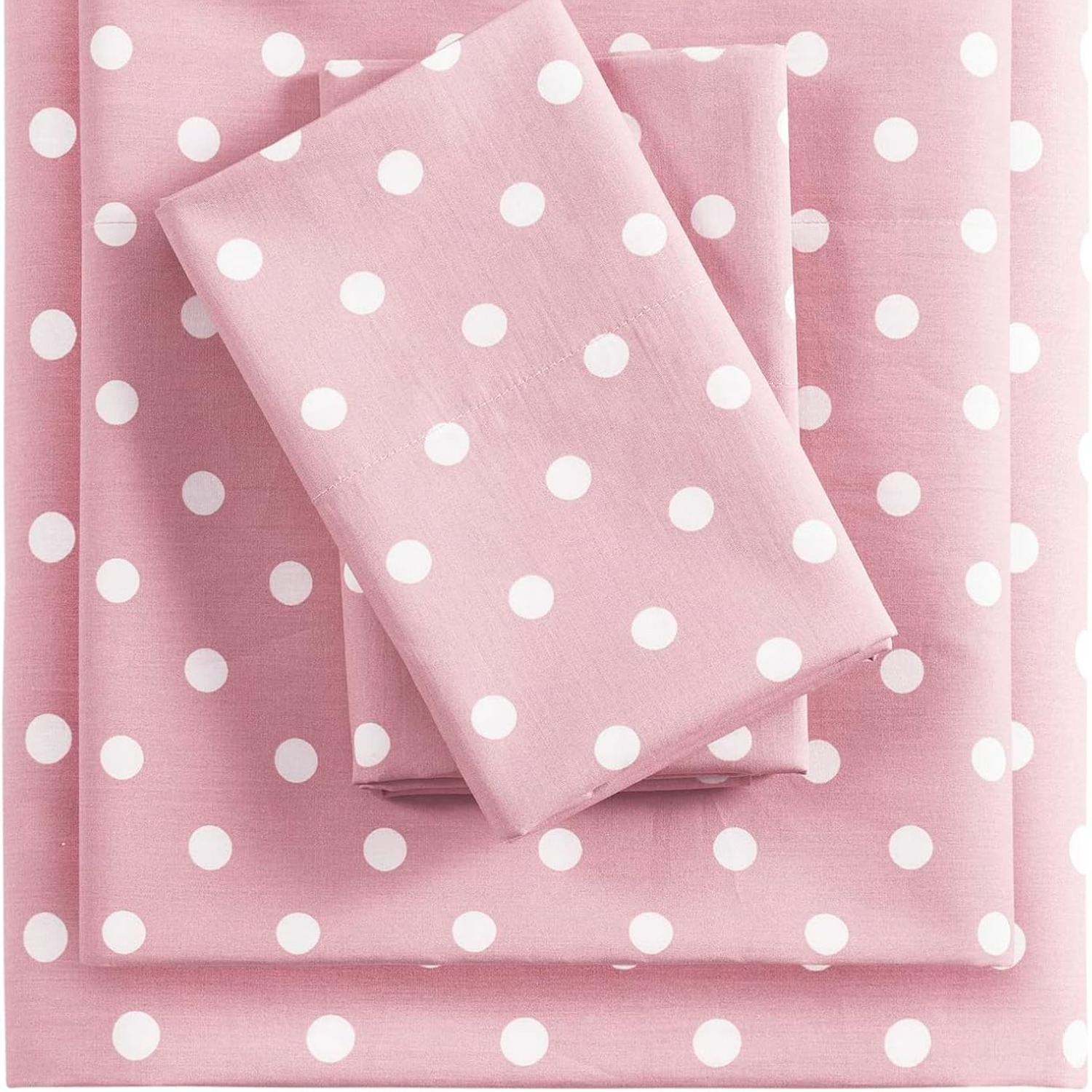
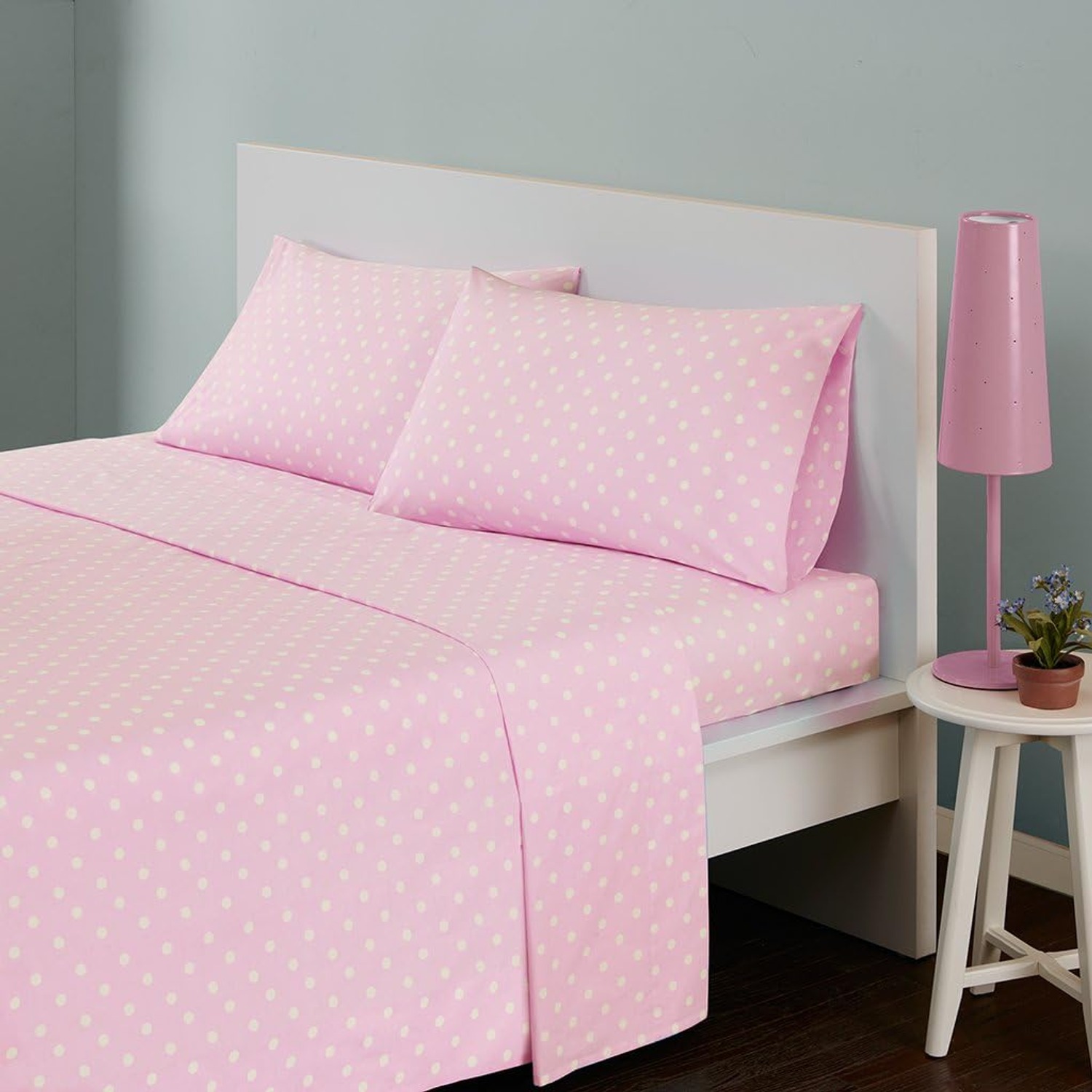
This is a four piece queen set. One flat sheet, one fitted sheet, two pillowcases. That is a complete change of bedding, which is worth noting because plenty of listings sell a fitted sheet alone and you only find out when the box arrives.
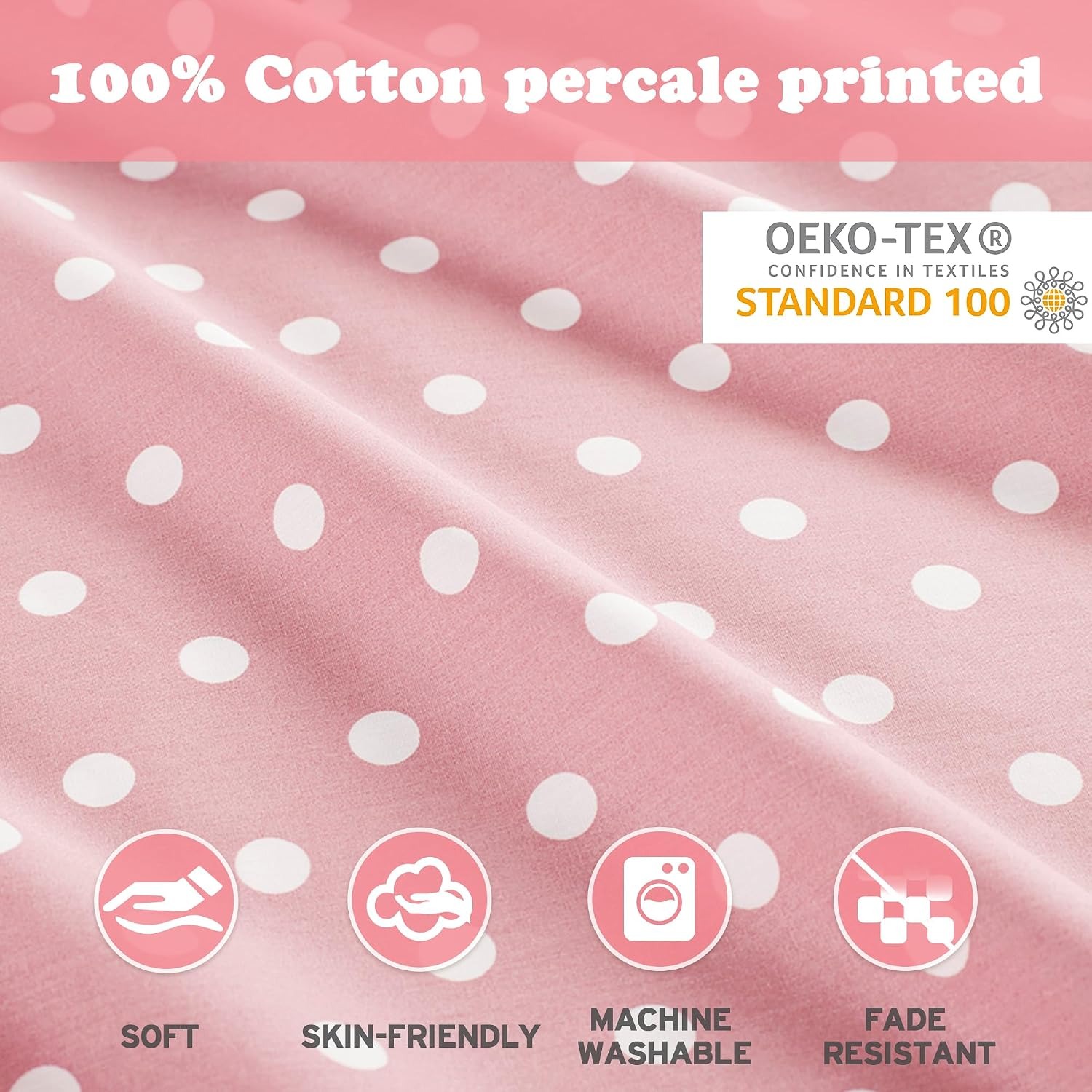
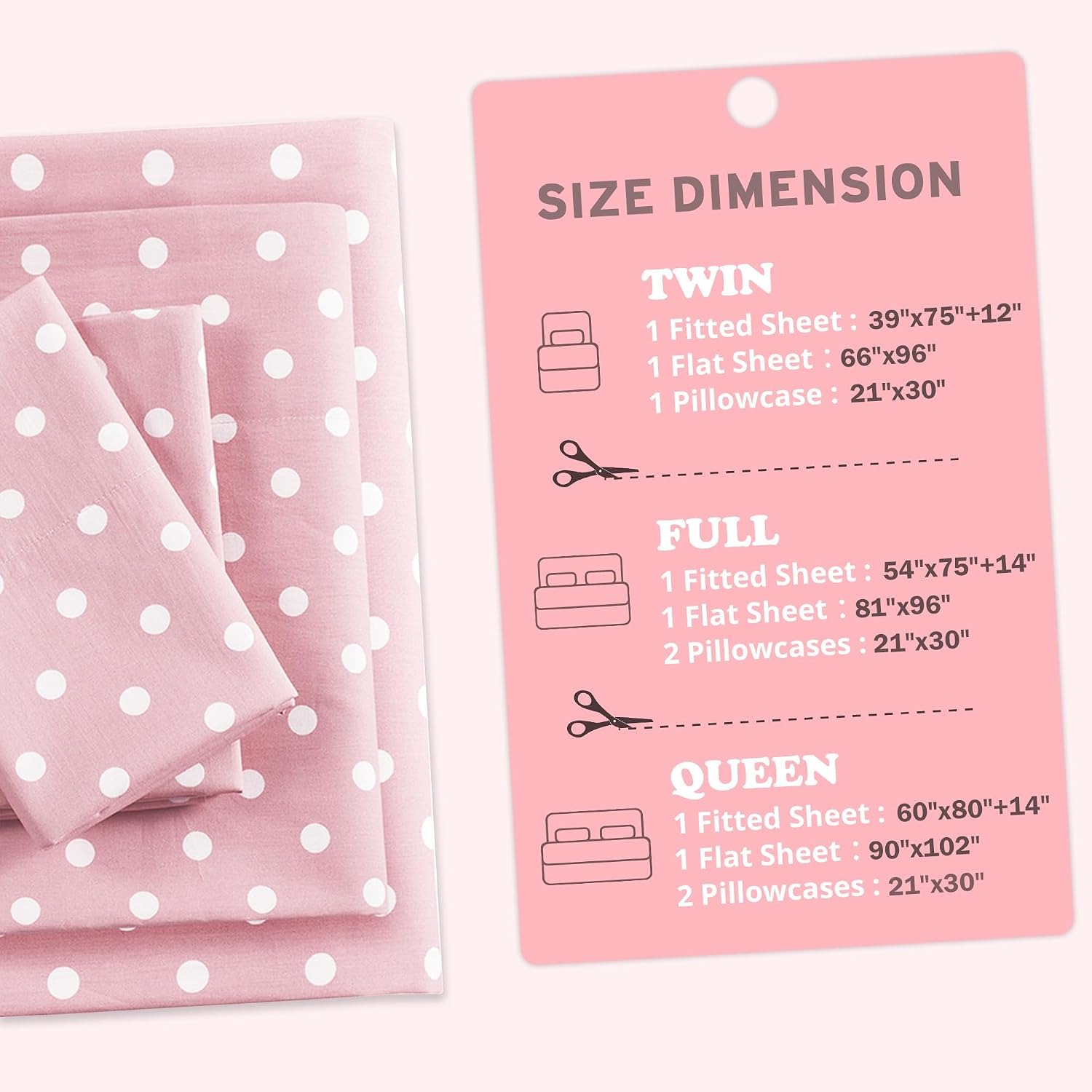
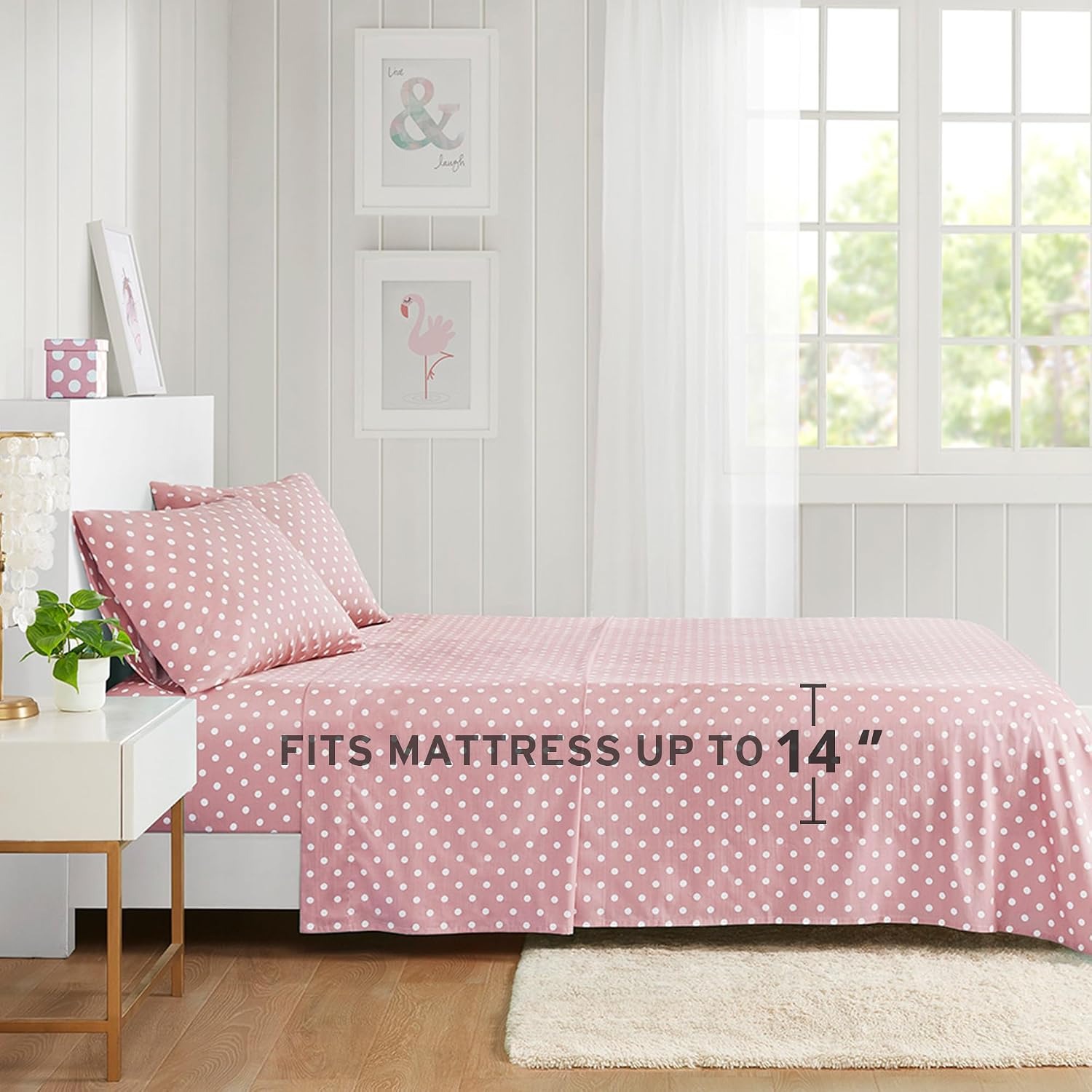
The fabric is 100% cotton in a percale weave, listed at a 200 thread count. The colour is pink, the pattern is polka dot, and the finish is printed. Pillowcases are 147 x 79 cm (58 x 31 inches). The fitted sheet has a 36 cm (14 inch) pocket depth. The whole set weighs 1.54 kg.
Those are the facts on the record. A few things are not listed, including country of origin and whether other colourways exist, so we are not going to guess at them here.
Percale, and why the weave matters more than the number
Thread count gets all the attention in bedding marketing, and it deserves about a quarter of it. The weave does more work.
Percale is the simple one. Threads cross over and under in a plain grid. The result is a fabric that feels crisp, looks matte rather than shiny, and lets air pass through easily. It is the feel most people associate with a well made hotel bed, and it is the reason percale is the standard recommendation for anyone who sleeps hot or lives somewhere humid.
Sateen is the other common option. More threads sit on the surface, which creates a smoother, slightly glossy fabric that feels warmer against the skin. Lovely in winter, sometimes a bit much in July.
A 200 thread count in percale is a normal, sturdy sheeting weight. Percale fabrics in the 180 to 300 range are the ones that tend to wear well and breathe properly. Very high counts are usually sateen, and sometimes the number has been inflated by counting multi ply threads. So a 200 count percale is not a compromise, it is just the weave doing what the weave does.
The trade off with percale is wrinkling. The crispness and the creasing come from the same place. If a slightly rumpled bed bothers you, iron the flat sheet and the pillowcases, or pull everything from the dryer while still a little damp and smooth it straight onto the mattress.
The pocket depth question
This is where most sheet purchases go wrong, so it is worth being careful.
The fitted sheet on this set has a 36 cm (14 inch) pocket depth. To know whether that works, grab a tape measure and measure your mattress from the top surface down to where it meets the base or frame. Do it at the side, not the corner. Then add the thickness of any mattress topper or protector you sleep on, because those count.
If your total comes in at or under 36 cm, you are in good shape. If you are sitting right on the line, expect a snug fit that may take a bit of tugging to get the last corner on. If you are over, the sheet will keep popping off and no amount of sheet clips fully solves it.
Mattresses have been getting thicker for twenty years, especially pillow top and hybrid models, so do not assume your bed is the same depth as the one you had before. A deep pocket fitted sheet queen listing is only useful if the number matches your actual mattress.
Who this set suits
A printed, cheerful set like this earns its place in a few specific situations.
It works in a child's or teen's room, where a bit of colour is the whole point and a plain white bed looks sterile. The listing flags a children's theme, though the sizing is standard adult queen rather than anything nursery specific.
It works in a guest room. A spare bed is the low risk place to try a pattern, because you are not looking at it every morning. A complete four piece set also means the guest bed is actually ready, not half made.
It works for anyone who wants to change the look of a bedroom without spending real money. Patterned bed linen does more for a room than most people expect, and it is reversible in one wash cycle.
It is less suited to someone who wants a strictly neutral bedroom, or who prefers the heavier, silkier feel of sateen on cold nights.
Matching it to the rest of the room
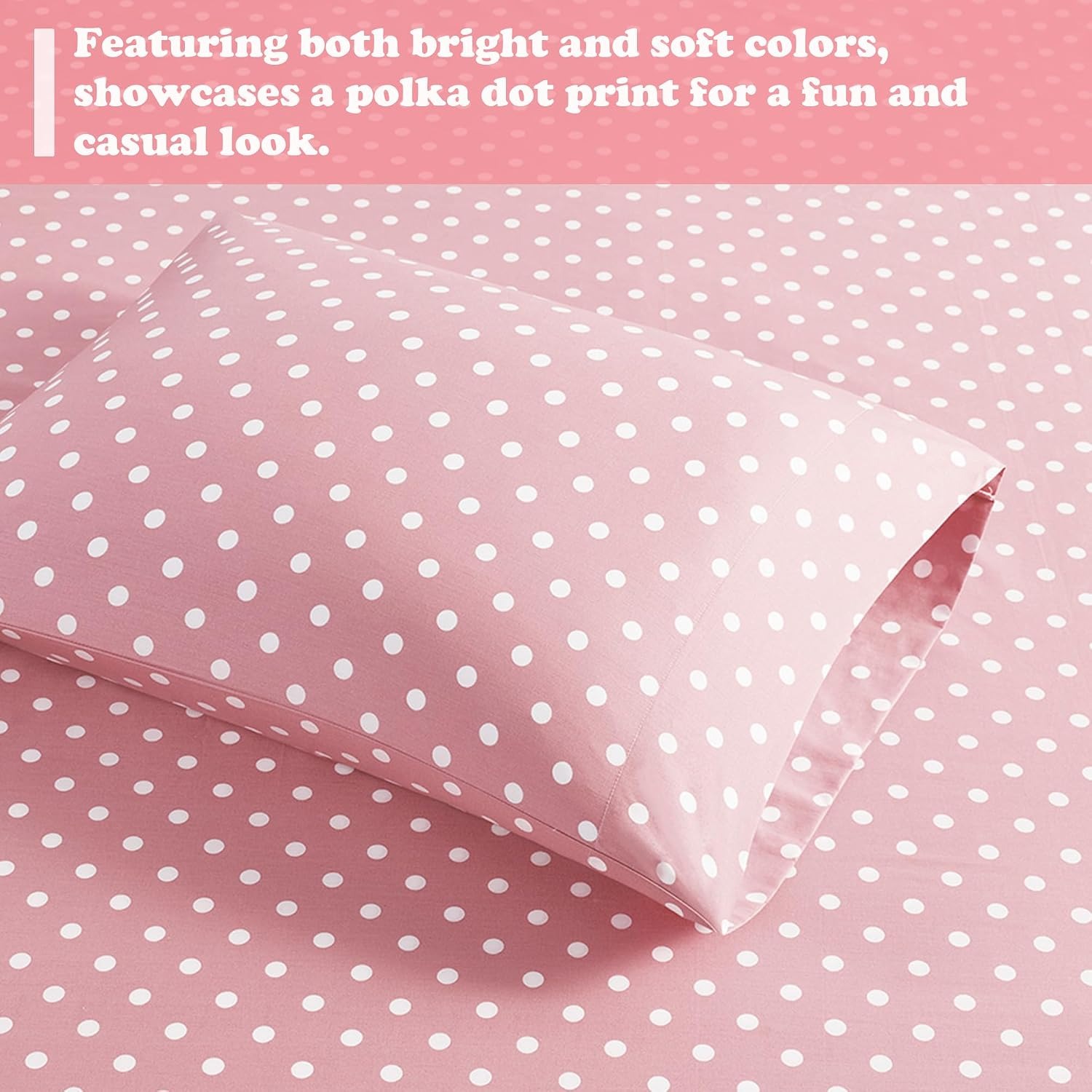
Polka dots are easier to live with than most prints because the shape is simple and regular. They sit happily next to solid colour quilt covers, plain cushions and wooden furniture.
A few approaches that tend to work. Keep the duvet cover plain and let the sheets do the talking, with the flat sheet folded back over the top so the pattern shows. Or pick one colour out of the print and repeat it in a throw or a cushion, which makes the whole thing look deliberate. Avoid pairing a polka dot set with a second busy pattern unless you are confident, because two competing prints usually just look noisy.
Looking after cotton percale
Cotton is forgiving, which is most of the reason it is still the default bedding fibre after a few thousand years.
Machine wash, which is the care instruction given for this set. Wash with similar colours rather than throwing printed bedding in with whites. A warm or cool cycle does the job and is easier on the print than a hot one. Skip chlorine bleach entirely, because it lifts colour out of patterns.
Tumble dry on low or medium. The single most useful habit is taking sheets out while they still hold a little dampness and putting them straight on the bed. Gravity and the mattress do your ironing for you. If you want a properly sharp finish, a warm iron on the flat sheet and the pillowcases takes five minutes.
Cotton may relax slightly in the first couple of washes. That is normal and the pocket depth allows for it. Over time percale softens while staying crisp, which is why plenty of people prefer a sheet set that has already been through twenty washes.
Rotating between two sets extends the life of both, because no single set is going through the machine every week. If you only own one, you are washing it twice as often as you need to.
The short version
Check the depth of your mattress first, including any topper, and make sure it fits inside 36 cm (14 inches). That one measurement decides more about your satisfaction than anything else on the spec sheet.
After that, it comes down to feel. This is 100% cotton percale at 200 thread count, so expect crisp and cool rather than silky and warm, with a bit of wrinkling as part of the deal. You get four pieces, a flat sheet, a fitted sheet and two pillowcases, so the bed is complete out of the box. It is machine washable, it weighs 1.54 kg, and the polka dot print gives a room some personality without committing you to anything permanent.
If the numbers match your bed and you like a cool, crisp sheet, this is a straightforward choice.