


The complete guide
How To Choose And Use An Electric Mosquito Swatter
The problem with a single mosquito
One mosquito in a bedroom can cost you an hour of sleep. It is not the bite that gets you, it is the waiting. You hear it, you lose it, you lie still, you hear it again. Flies in a kitchen are the same kind of problem on a different schedule, circling the fruit bowl and landing on the counter the second you turn around.
Most of the usual answers are built for a whole room over a whole evening. Sprays, coils, plug-ins and candles all work on the air you breathe, slowly, and they ask you to accept a scent or a residue in exchange. That is fine for a patio party. It is less useful when there is exactly one insect, you can see it, and you want it gone now.
A handheld electric mosquito swatter is the direct answer. You point it at the problem you can see and the problem stops. Nothing lingers in the air, nothing settles on the worktop, and nothing needs a socket. It is the simplest tool in the category, which is exactly why it has stuck around.
How the racket works
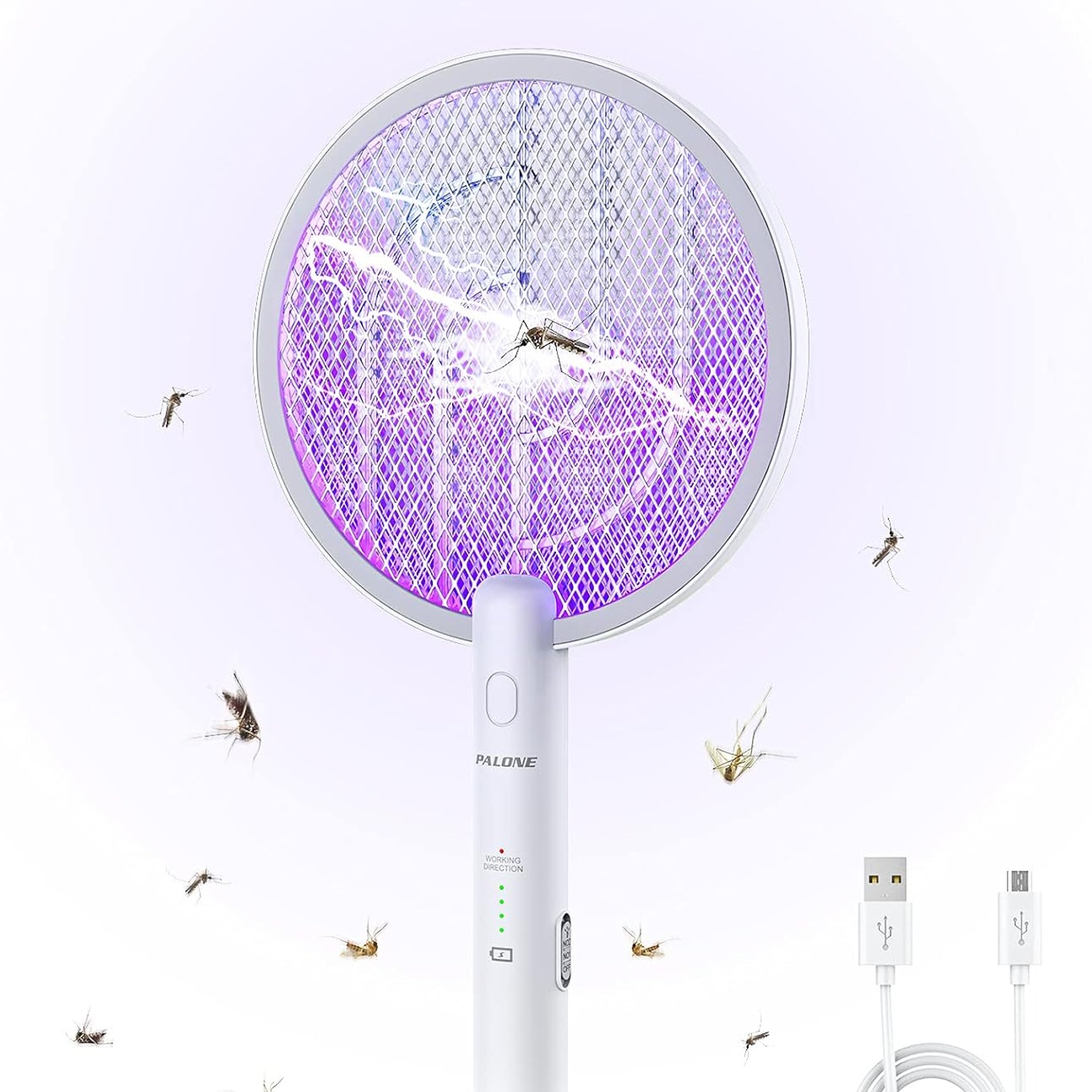
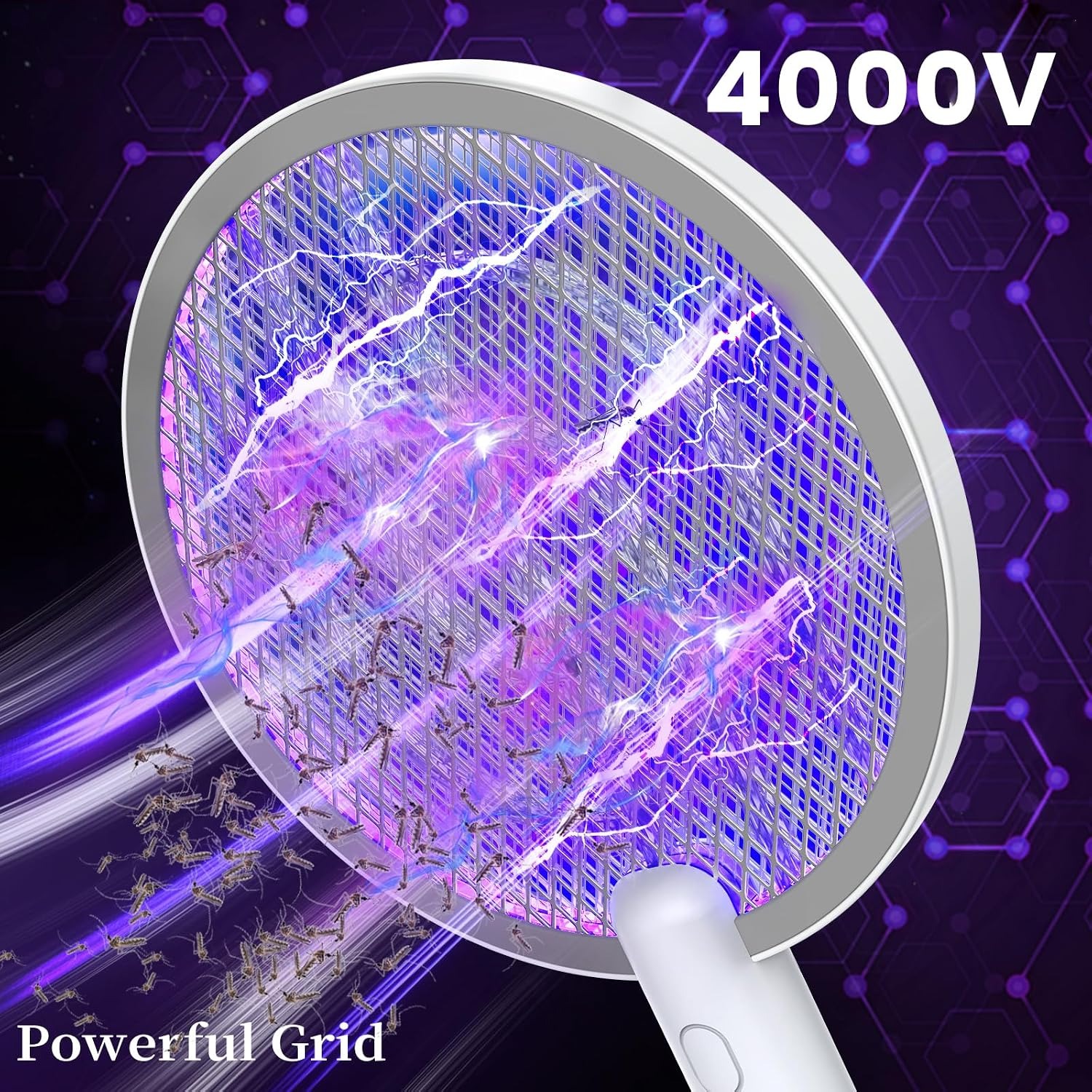
The head of the racket holds a wire grid connected to a circuit that steps the battery voltage up. When an insect bridges two wires in that grid it completes the circuit and takes a shock. The voltage is high, the available current is tiny, and that combination is what makes it lethal to something weighing a few milligrams while remaining a sharp but survivable nip to a person who touches it by mistake.
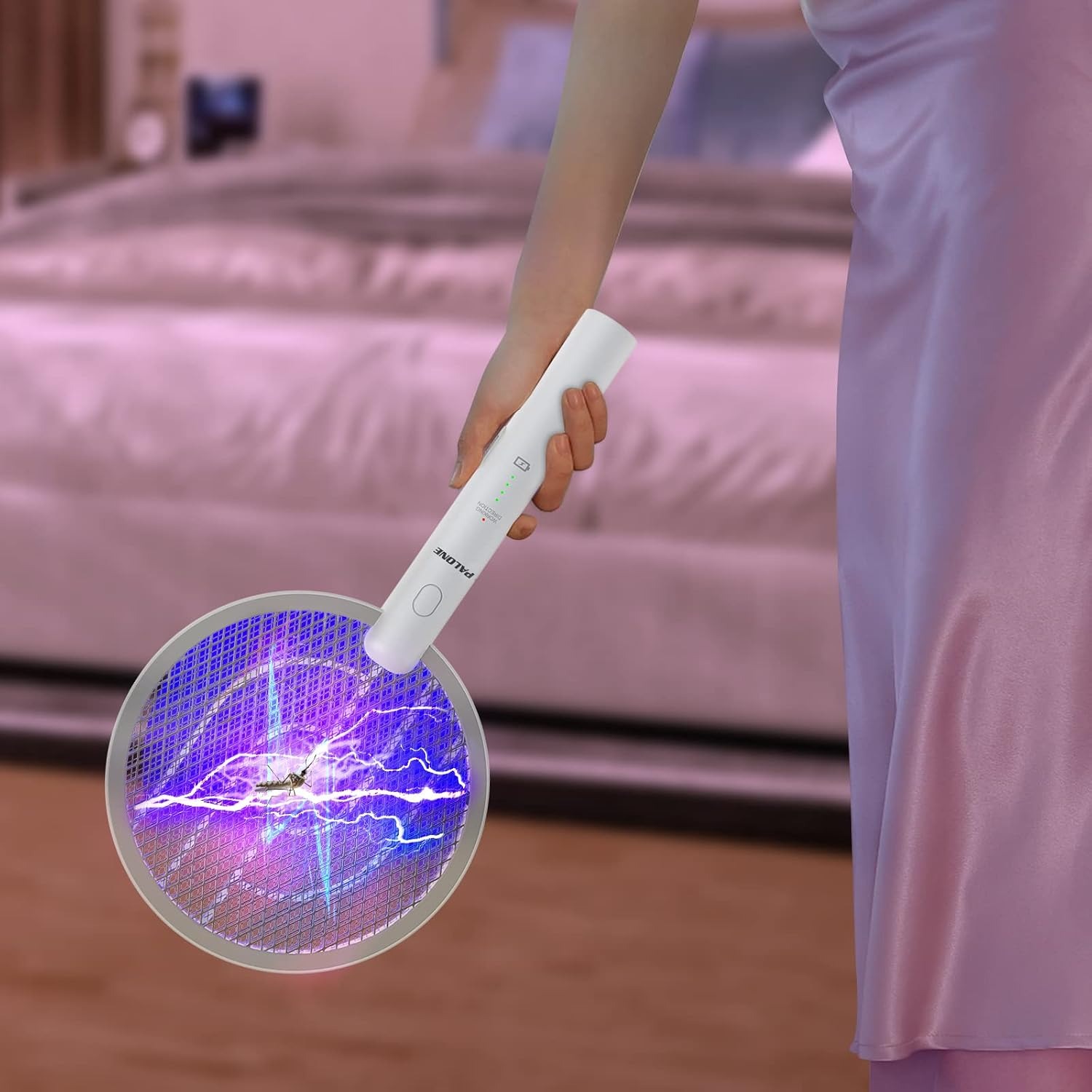
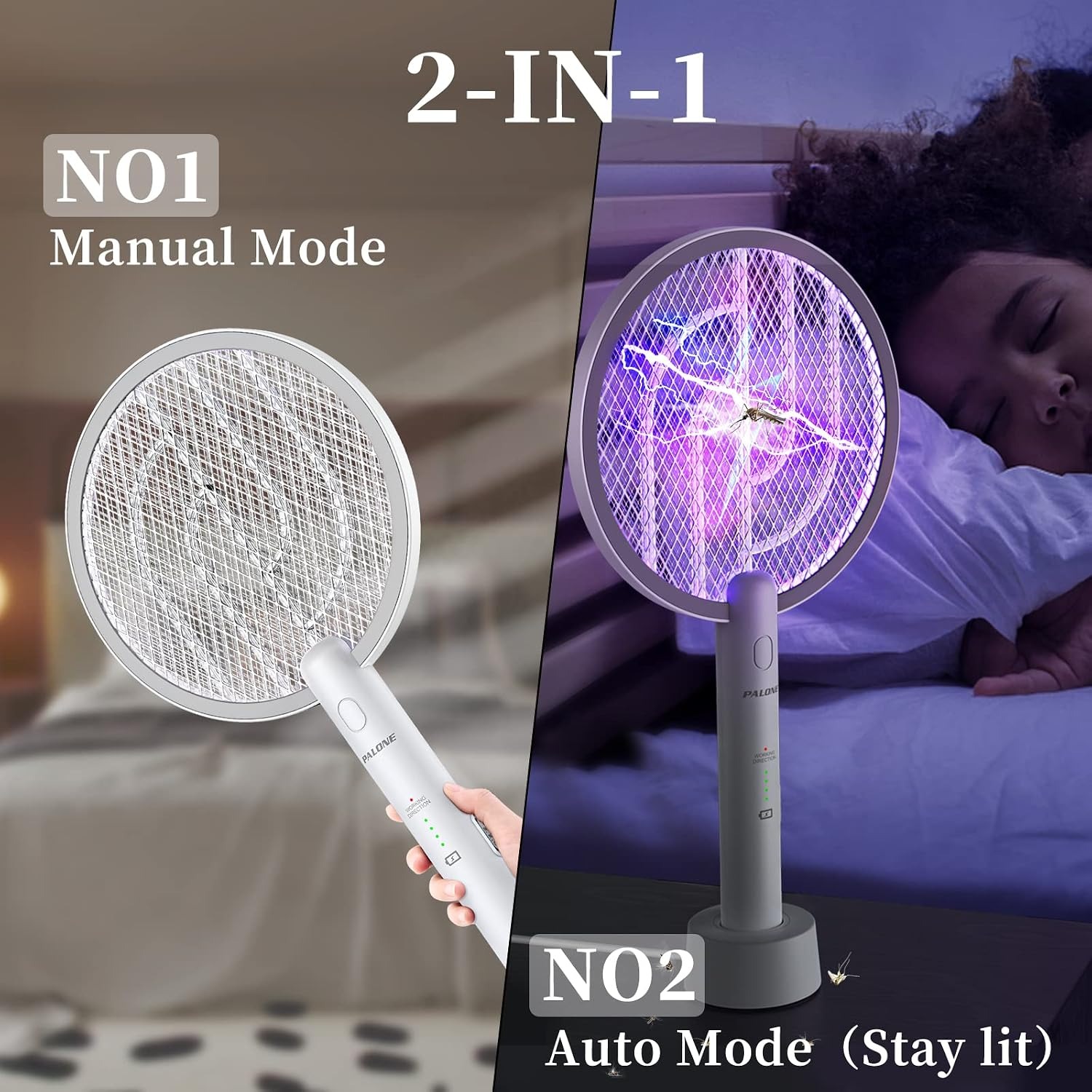
This model gives you two ways to run that grid. In manual mode you hold the grey button down while you swing. The instant you let go, the current stops. That is a sensible arrangement because it means the grid is only ever live while you are actively holding and aiming the racket, which is the safest possible moment for it to be live.
Automatic mode works the other way. The grid stays energised on its own, six purple lights come on, and the racket keeps working without any input from you. Set it down on a table near where insects are gathering and it does its job while your hands are busy. The lights are also a useful reminder that the grid is still active.
Power comes from a built-in 1200mAh rechargeable battery rather than a pair of disposable cells. That matters more than it sounds. Dry-cell swatters lose punch as the batteries fade, and they always seem to die halfway through a warm week. A rechargeable pack holds its output better and you top it up instead of shopping for it.
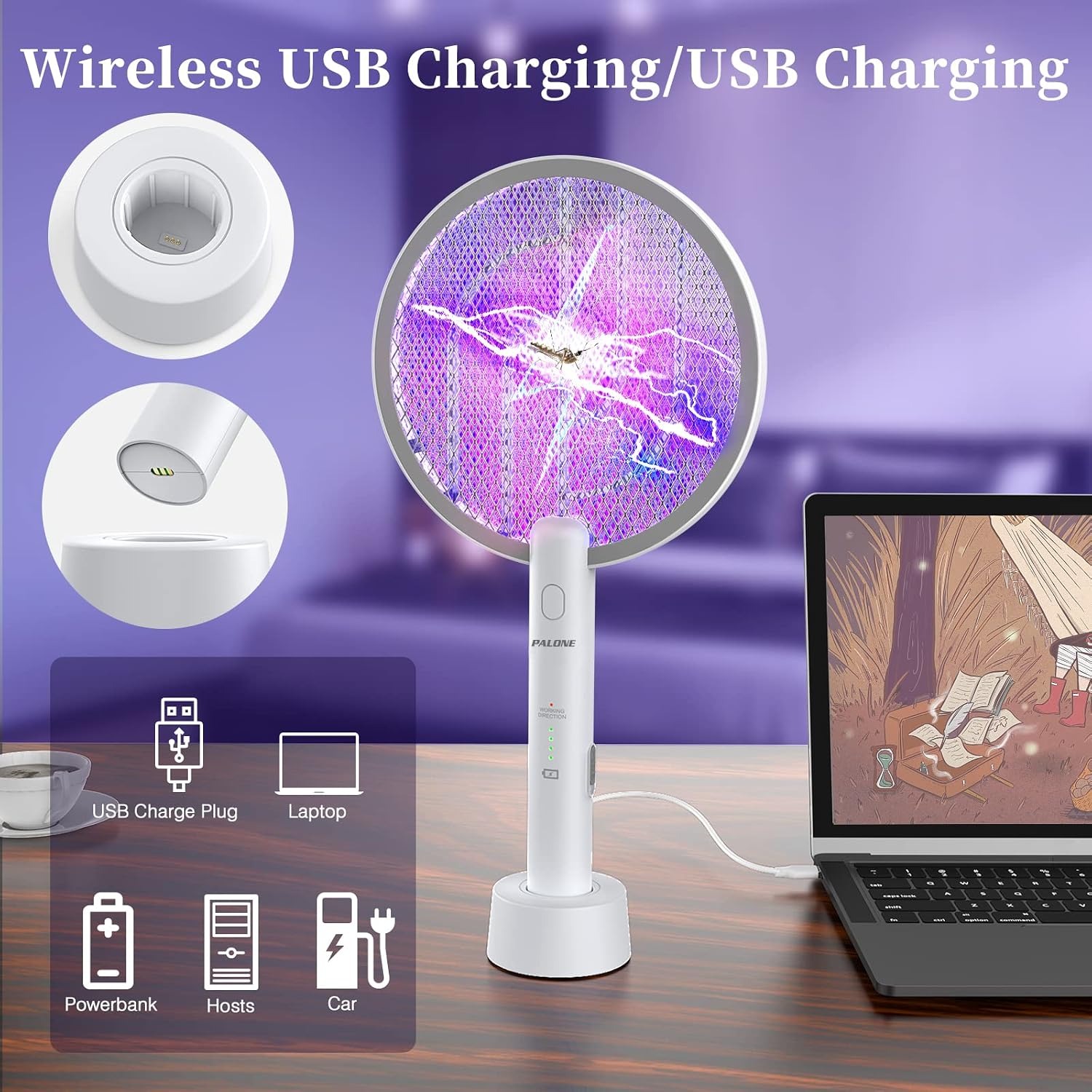
Charging is straightforward. Switch the swatter off, slot it into its base, and run the base cable to any USB source. A wall adapter at home, a laptop at the desk, a power bank in a tent. Four indicator lights show you where the battery stands, so you can glance at it before an evening outdoors instead of guessing.
Safety, honestly explained
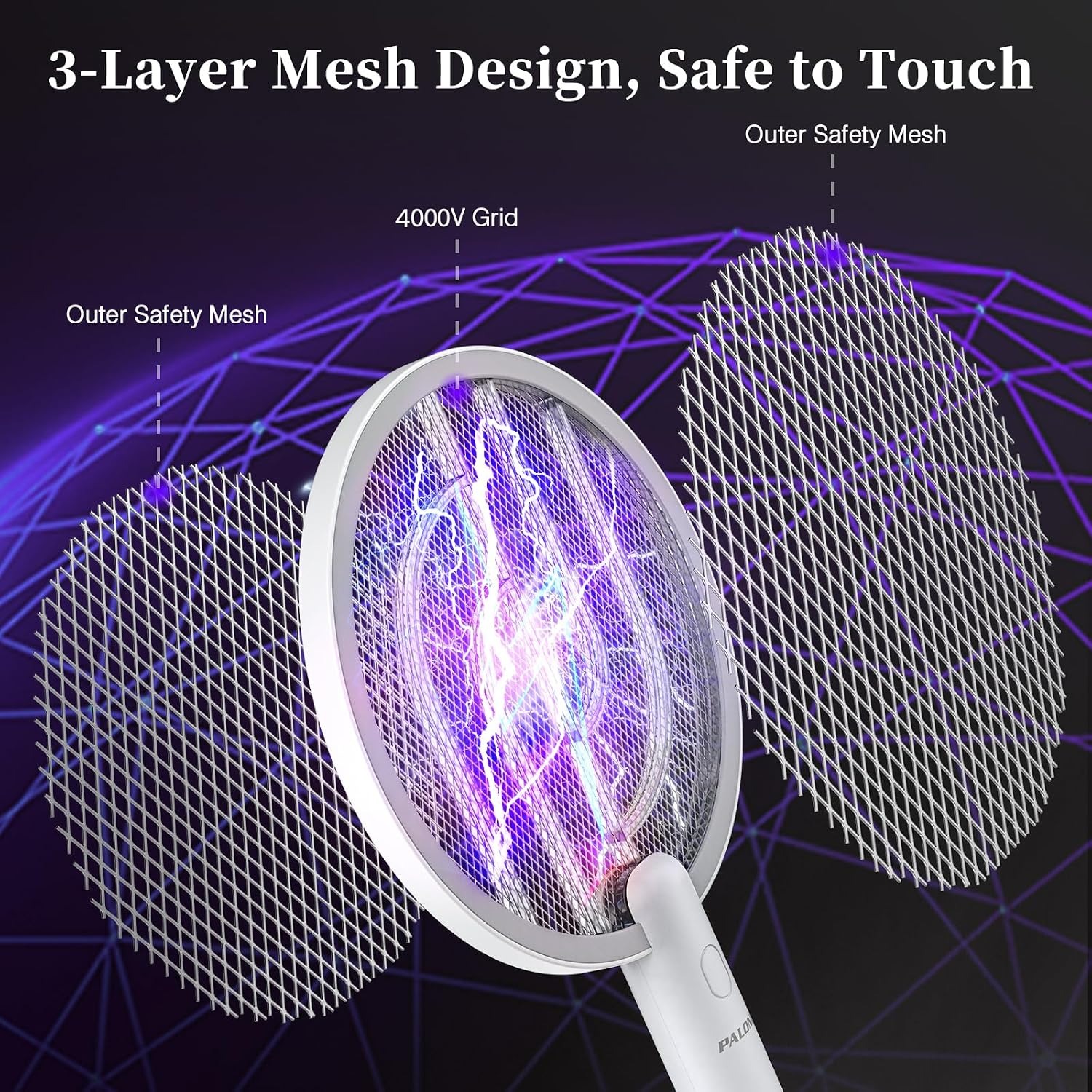
Any device with a high-voltage grid deserves a straight conversation. This one uses a three-layer mesh, meaning there are guard layers either side of the live inner grid. Fingers meet the outer layers first. That does not make it a toy, but it does mean an accidental brush during a fast swing is far less likely to reach the live wires.
The circuit includes protection against overcharging, over-discharging and short circuits, which protects the battery as much as the user. And when you flip the switch off, the racket clears the residual energy from the grid surface rather than leaving it sitting there charged. That is a small design choice that matters when the swatter lives in a drawer with other things.
There is one maintenance point in the instructions that is worth repeating, because people skip it. Clean the grid after use. Insect remains that build up and dry on the mesh are a fire hazard. A quick brush at the end of a session takes ten seconds and removes the issue entirely. Treat it like wiping a barbecue grill, a habit rather than a chore.
Who it suits
Households with small children and pets often prefer a racket precisely because it leaves no chemistry behind. You are not spraying near a cot or a food prep surface. The insect is dealt with, and that is the end of it.
Campers, caravanners and cottage owners get the most obvious benefit. No power supply is needed in the field, the unit weighs 520 g, and the USB charging means a power bank keeps it running all weekend. It is one of the best handheld bug zapper formats for anywhere off the grid.
Gardeners and anyone with a deck or a porch will use it most in the hour around sunset, which is also when mosquitoes are most active. Keep it hanging by the back door and it becomes part of the routine rather than something you go looking for.
Offices, workshops, garages and storerooms are the quieter use case. A spray is often unwelcome around equipment, paperwork or shared air. A silent, chemical-free racket is not.
How to choose between models
A few things separate a good racket from a frustrating one.
Power source is the first. Rechargeable beats dry cells on cost, on consistency and on convenience, as long as the charging method is something you already own. USB is the right answer here because it means no proprietary brick to lose.
Safety layering is the second. A single-layer grid is cheaper and considerably less forgiving. Three layers is the arrangement you want in a home where other people will pick it up.
Weight and balance come next. Anything much heavier than half a kilogram becomes tiring to swing repeatedly, and a badly balanced head makes accurate swings harder. At 520 g this sits in comfortable territory.
Finally, think about whether you want an automatic mode at all. Some people never use it. Others, especially anyone trying to work or cook while insects circle, find it the most useful feature on the device. Having both options costs you nothing.
Getting good results with it
Technique matters more than people expect. Slow, wide sweeps catch more mosquitoes than fast jabs, because mosquitoes drift rather than dart and a quick swing pushes air ahead of it that moves them out of the way. Flies are the opposite and reward a sharper movement.
Work with the light. Insects gather near lamps, screens and bright windows after dark, so that is where to sweep. Outdoors, the hour after sunset near standing water or long grass is the busiest window.
If you are using automatic mode, placement is everything. Set the racket where insects already congregate rather than where you happen to be sitting. A table near a lamp or a window ledge usually outperforms the middle of a room.
Care and storage
Switch it off before you clean it, every time. Brush the grid dry, never rinse it, and never put it under a tap or in water. There is a battery and a circuit board inside and neither forgives moisture.
Store it dry and out of direct sunlight. If it is going away for the winter, give the battery a top-up charge every couple of months so it does not sit completely flat for half a year. Lithium cells keep their health better when they are not left empty.
Keep the charging base and cable with the racket. It is the single most commonly misplaced part of any rechargeable swatter, and without it you have a nice-looking plastic racket and nothing else.
The short version
An electric mosquito swatter is a focused tool. It does not treat a room, it deals with the insect in front of you, and it does that in a second with no spray, no smell and no residue. This one adds a rechargeable 1200mAh battery, USB charging through a base, a three-layer safety mesh, circuit protection and two modes so you can swing it manually or let it run hands-free.
Charge it, keep it where you will reach for it, and brush the grid clean after use. That is the whole routine. For a kitchen, a bedroom, a deck or a tent, it is the quickest way to get your evening back.