

The complete guide
How To Choose A Silk Sleeping Mask (And Actually Use It)
The problem is almost always light
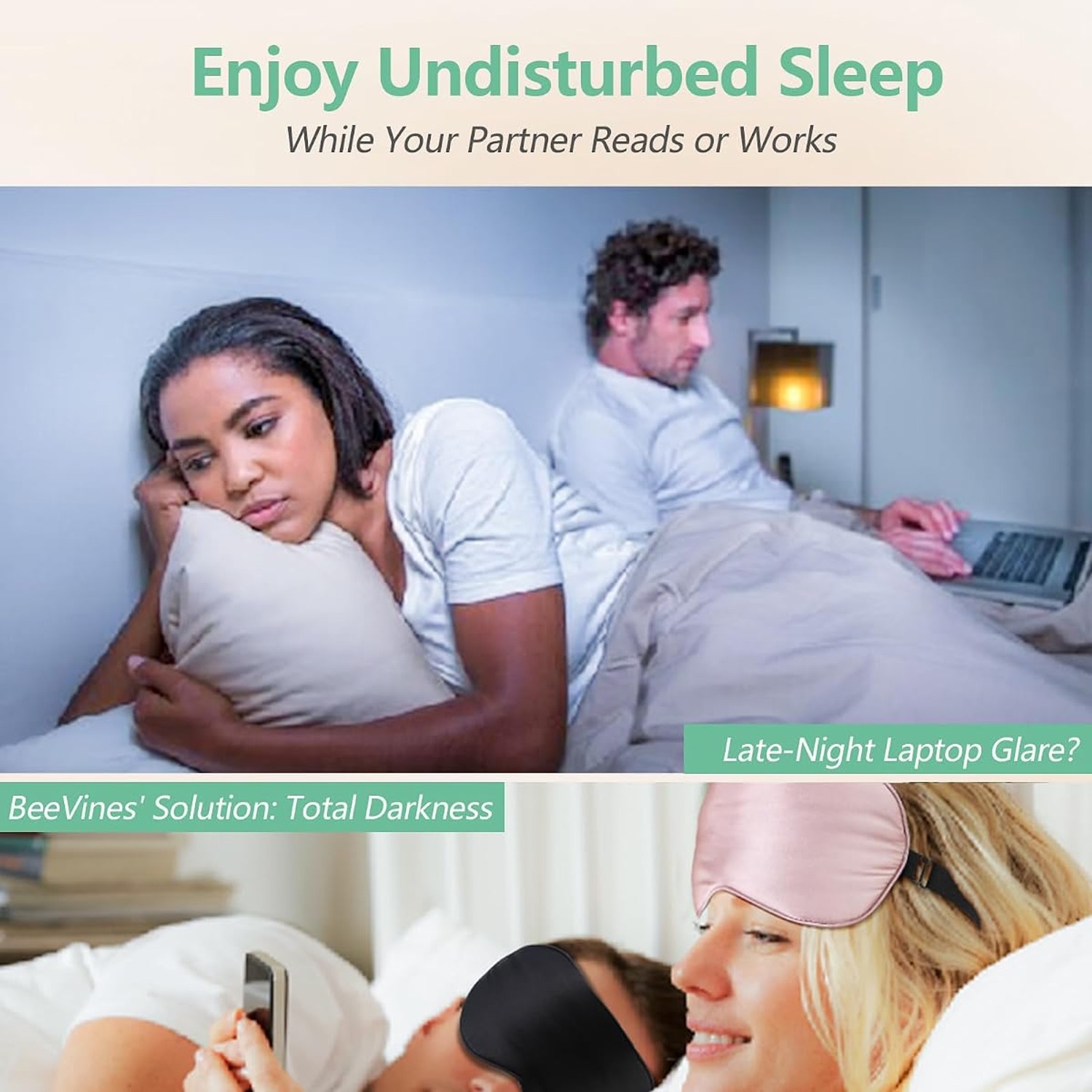
Most people who sleep badly blame noise, stress or a bad mattress. Those matter. But light is the one that quietly undoes you, because your body reads it as a signal that the day has started. A street lamp bleeding around a curtain, a partner's phone, the standby glow on a television, dawn arriving at half past four in summer. None of it feels dramatic at the time. It just means you surface more often and sleep more shallowly than you should.
The honest fix is total darkness. Blackout curtains do that, but they cost real money, they do not travel, and they are useless in a hotel room with a gap at the top of the blind. A mask solves the same problem for a fraction of the cost and fits in a coat pocket. That is the whole appeal.
What silk actually brings to the job
Any mask blocks light. Fabric is what decides whether you still have it on in the morning.
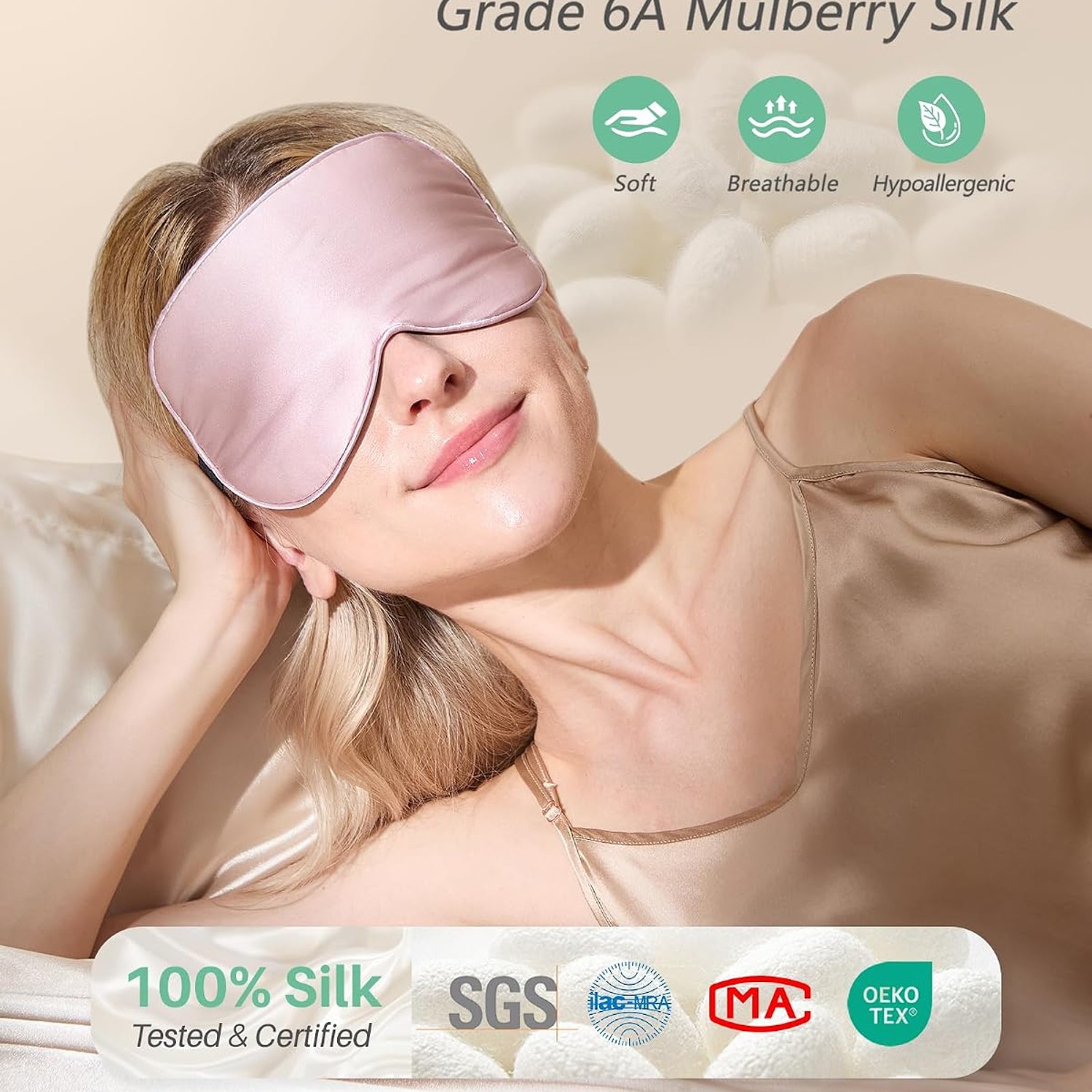
Silk is smooth, so it moves over your lashes and the thin skin around the eyes without dragging. That is why people with lash extensions or sensitive skin gravitate towards it. It is also a natural fibre that breathes, so it does not trap a warm pocket of air against your face the way a thick foam panel can. If you run hot at night, or you have ever woken up with a damp band across your forehead, that difference is the one you will notice first.
This pack is listed as 100% real silk, described as mulberry silk and specifically not satin or a silk-look synthetic. That distinction is worth caring about. Satin is a weave, not a fibre, and plenty of cheap masks are polyester satin that feels slick in the shop and clammy at 3 am.
Why two masks is the sensible number
A single mask seems fine until the day you wash it. Then it is wet, you are tired, and you are back to sleeping with the curtains fighting the street lamp. Two means one is always ready.
The other use for the pair is splitting them up. One lives on the bedside table. One lives in the carry-on and never gets unpacked, so you never have to remember it. People who travel for work tend to arrive at this system eventually. Starting there saves you a few bad flights.
Fit, depth and sleeping position
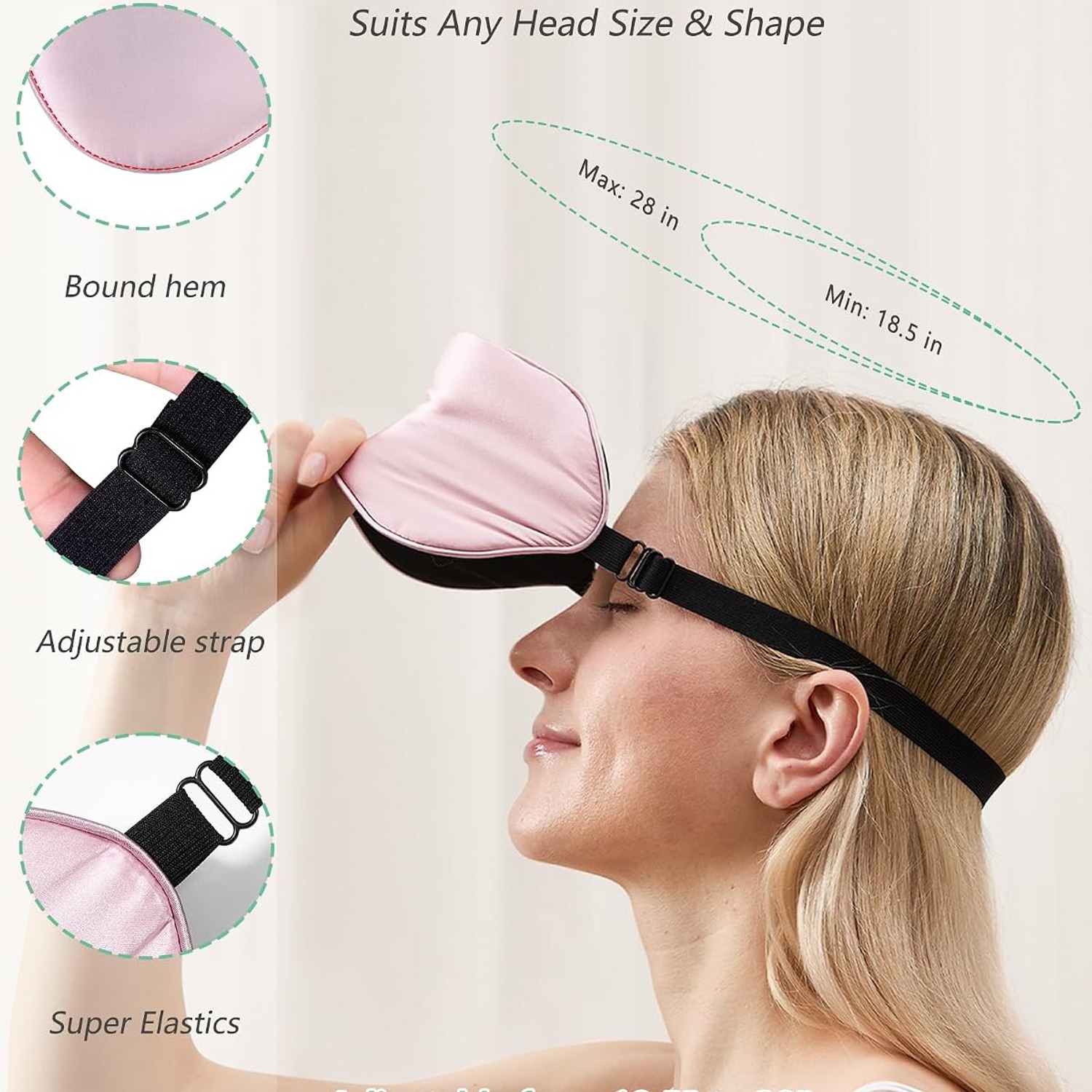
Each mask here measures about 23.98 cm wide, 13.49 cm tall and 1.57 cm deep. The depth is the figure to pay attention to.
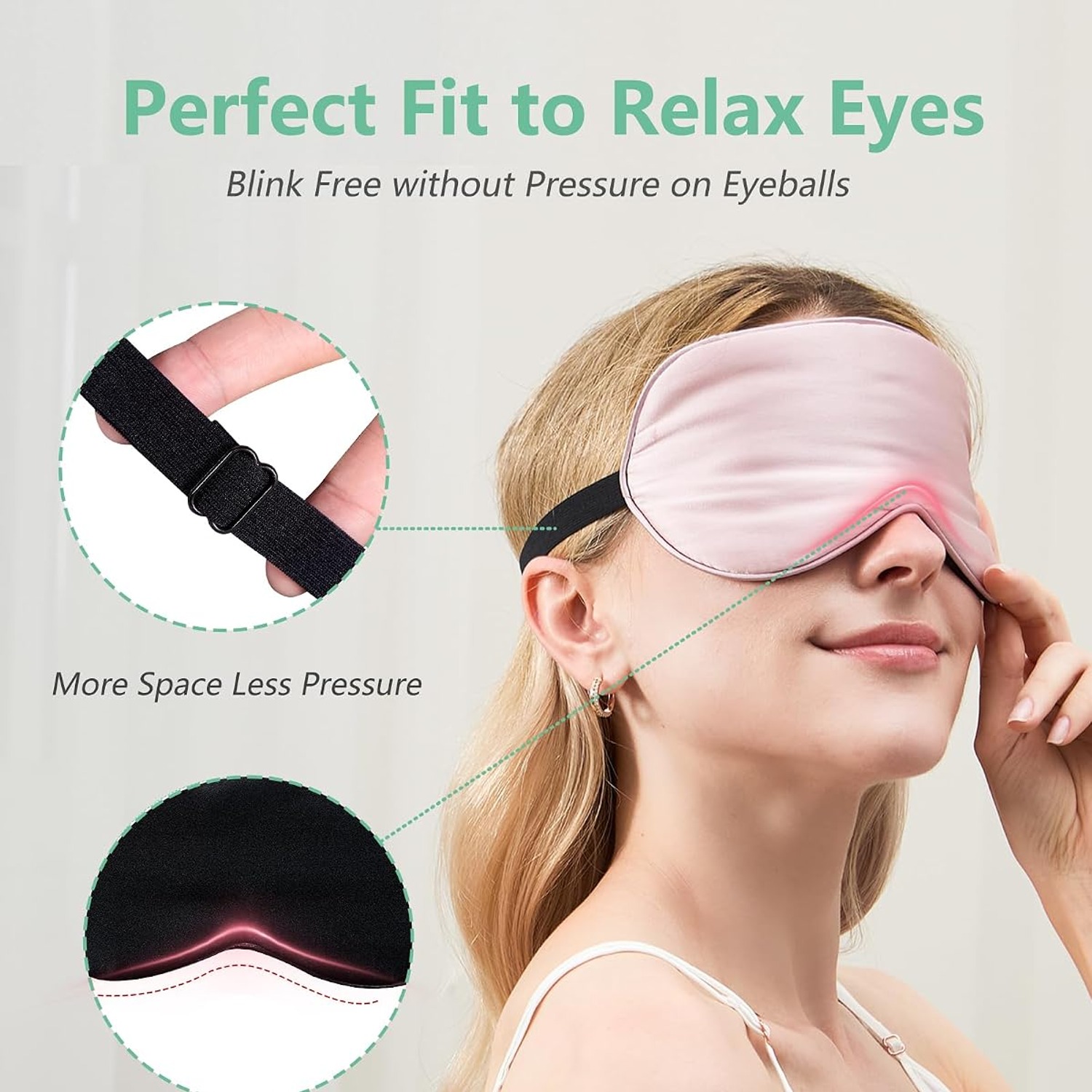
A thick, contoured mask with moulded eye cups can be lovely when you are lying flat on your back. Turn onto your side and the pillow pushes it out of place. By the middle of the night it has migrated to your forehead and the light is back. A flat mask like this one stays lower, so the pillow has less to push against. That is why a slim profile is usually the pick for the best eye mask for side sleepers, and it works just as well on your back or front.
The strap is a pull-on elastic that adjusts. The trick is to set it once, in daylight, when you are not half asleep. Snug enough that it will not shift when you roll over, loose enough that there is no red line across your temples in the morning. If you can feel it, it is too tight.
Closing the gap near your nose
Most light that gets past a mask comes in at the bottom, beside the nose. Nothing unusual about that, it is just the shape of a human face.
Two small adjustments help. Pull the lower edge of the mask down so it rests on the cheekbones rather than perching on the eye sockets, and seat the strap low on the back of the head rather than high. That angles the mask slightly down and closes the gap. Give yourself a minute to settle it properly instead of yanking it on and hoping.
Who this suits
Light sleepers in rooms with thin curtains. People who travel and want a reliable blackout sleep mask that packs flat. Shift workers trying to sleep through a bright afternoon. New parents napping whenever the chance appears. Anyone sharing a room with someone who reads later than they do.
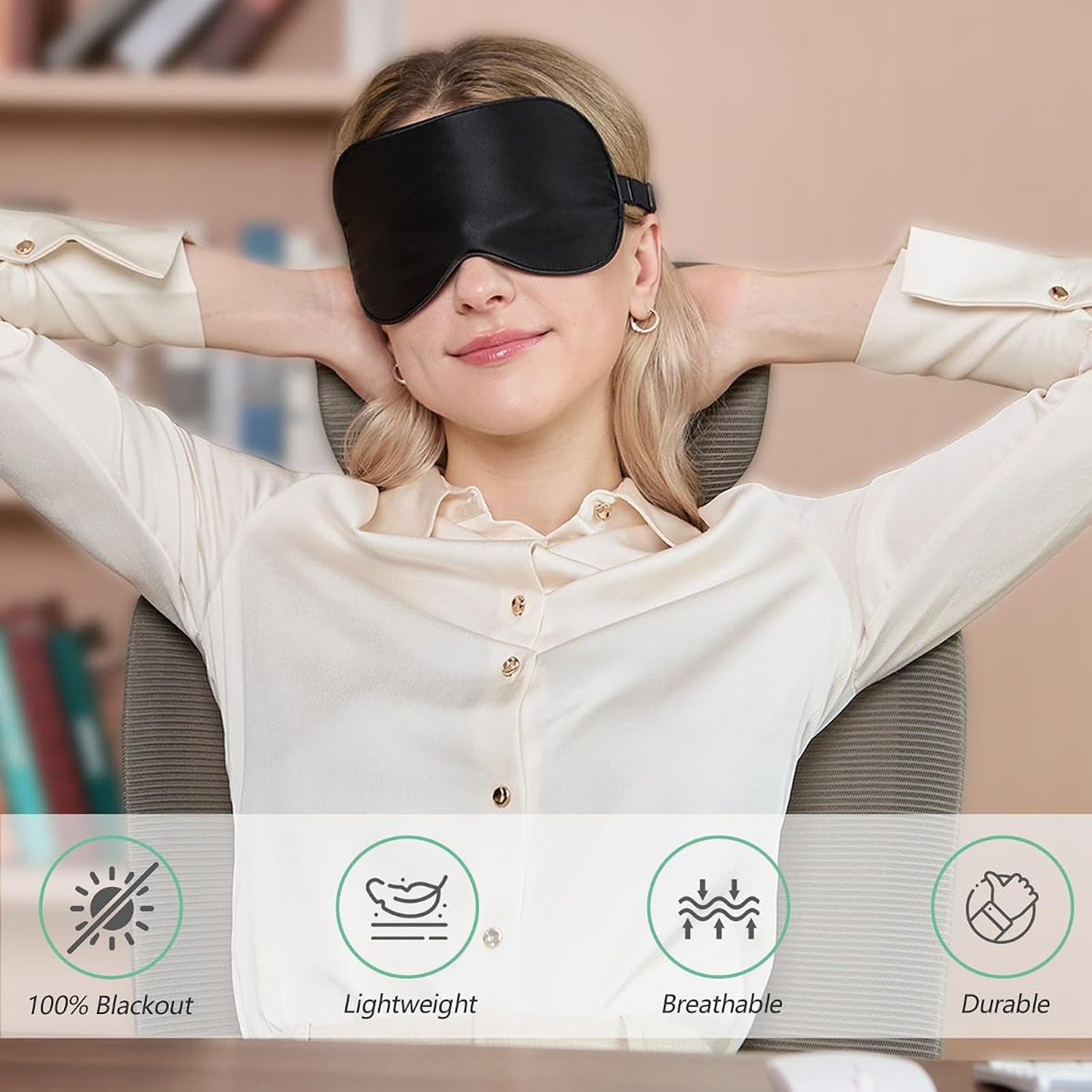
It also works outside of sleep. People use a soft eye covering for quiet sitting, breathing practice or just twenty minutes with the visual noise switched off. It is light enough to keep on for a long stretch.
The listing gives the age range as adult, so this is sized for grown-up faces. If you are buying for a child, look for something designed and sized for kids instead.
Care, which is simpler than it sounds
Hand wash only. That is the instruction on the listing, and silk rewards you for following it.
Cool water, a small amount of gentle detergent, swirl the mask through rather than scrubbing it. Rinse until the water runs clear. Do not wring or twist, because that is what breaks silk fibres and stretches elastic. Lay the mask flat in a clean towel, press down to lift out the water, then reshape it and leave it to air dry somewhere out of direct sun.
Skip the machine, skip the tumble dryer, skip bleach and strong stain removers. Heat and harsh chemicals are the only two things likely to ruin a silk mask quickly.
How often? Treat it like a pillowcase. It sits against your face for eight hours a night. Weekly is a reasonable rhythm for most people, sooner if you use night creams or go to bed with make-up on. This is where the second mask earns its keep, because one dries while the other works.
Between washes, store them flat or loosely folded rather than screwed up in a drawer. Creases will mostly fall out, but silk stays nicer when it is not crushed.
A few things to check before you buy any mask
Look at the fibre, not just the finish. Smooth and shiny does not mean silk. Check the depth, because anything much thicker will fight your pillow if you sleep on your side. Check how the strap works, since a single adjustable elastic is simpler and more reliable than buckles or velcro that catch on hair. And check the care instruction, because a mask you cannot easily wash becomes a mask you stop using.
The short version
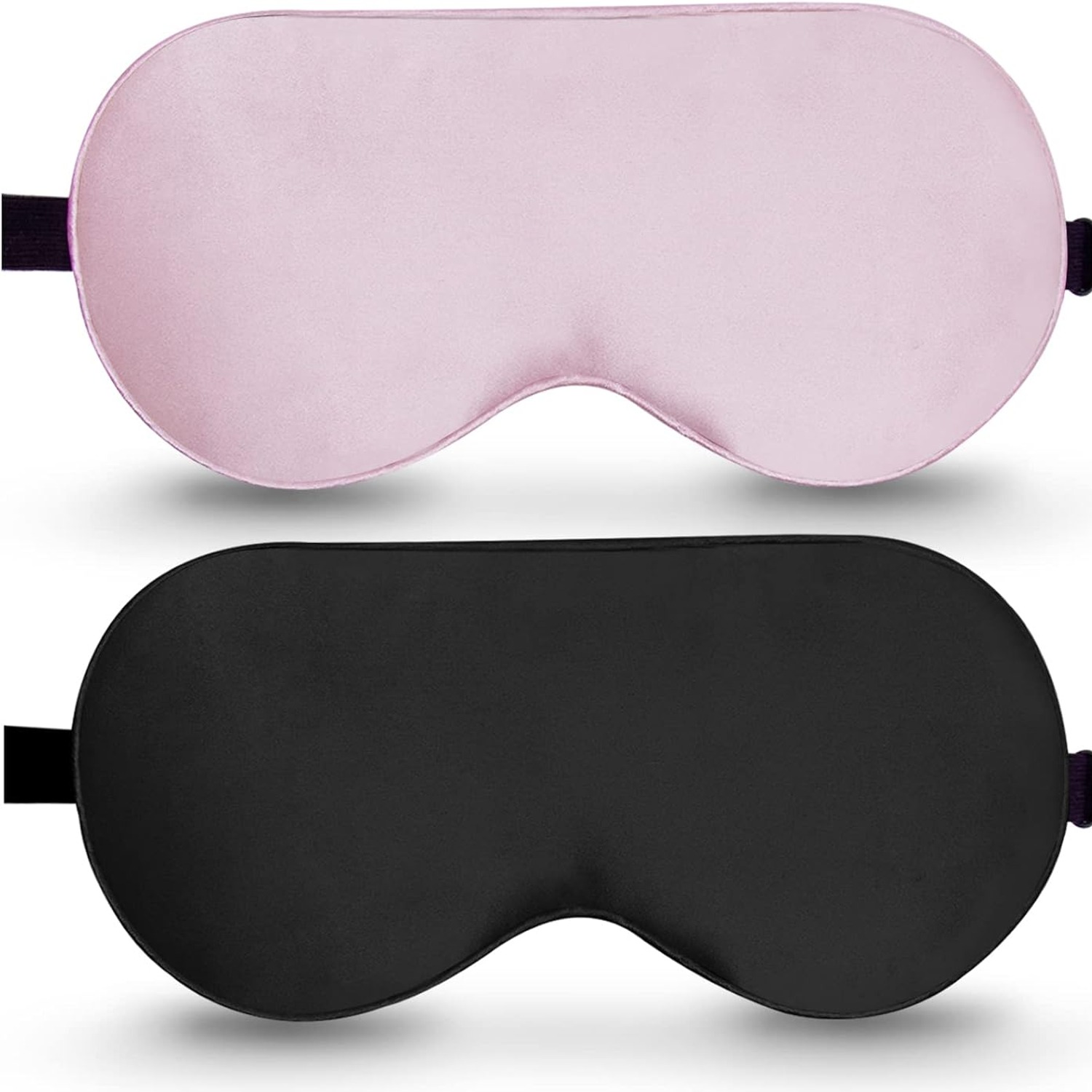
This is a pack of two 100% real silk sleeping masks, each about 23.98 cm wide and only 1.57 cm deep, with an adjustable pull-on strap. The pack weighs 850 g and comes in pink and black. The flat profile suits any sleeping position, the silk stays smooth against lashes and skin, and having two means one is always clean and ready.
Wash them by hand in cool water, dry them flat, keep them away from heat, and they will stay comfortable for a long time. Keep one by the bed, put the other in your bag, and stop negotiating with the street lamp.