

The complete guide
Drop Spreader Buyer's Guide, How to Feed and Seed a Lawn Evenly
The problem is almost never the seed
People spend a lot of money on premium grass seed and feed, then blame the product when the lawn comes up patchy. Nine times out of ten the product was fine. The way it went onto the ground was the problem.
Scattering by hand feels controllable but it is not. Your arm throws heavier at the start of a swing than at the end, and you naturally overlap where you have already walked. The result is a lawn with rich dark patches, pale thin patches, and a fence line that never quite fills in. Fertiliser makes this worse, because over application does not just waste money, it scorches the grass. A striped lawn in July usually started as a careless pass in April.
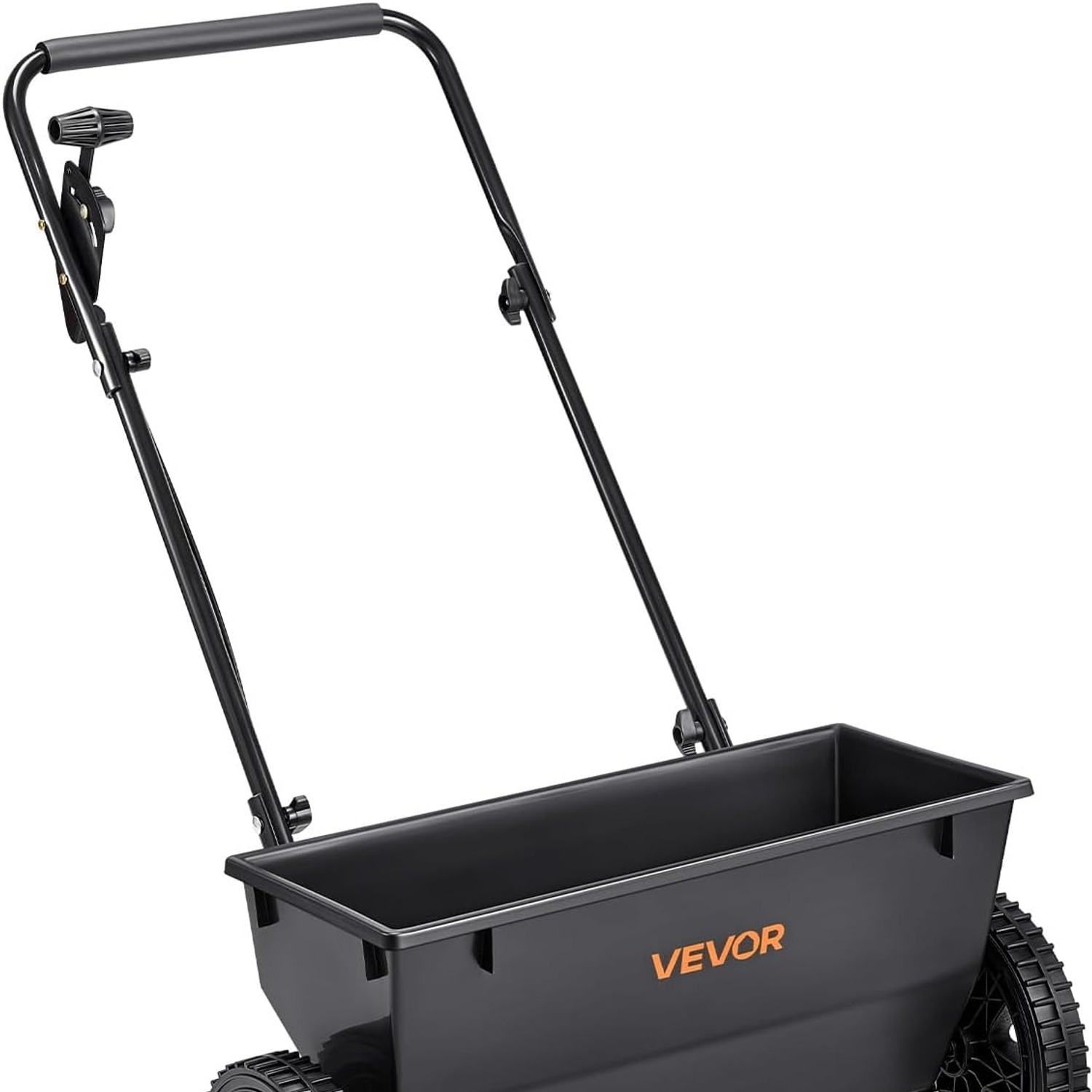
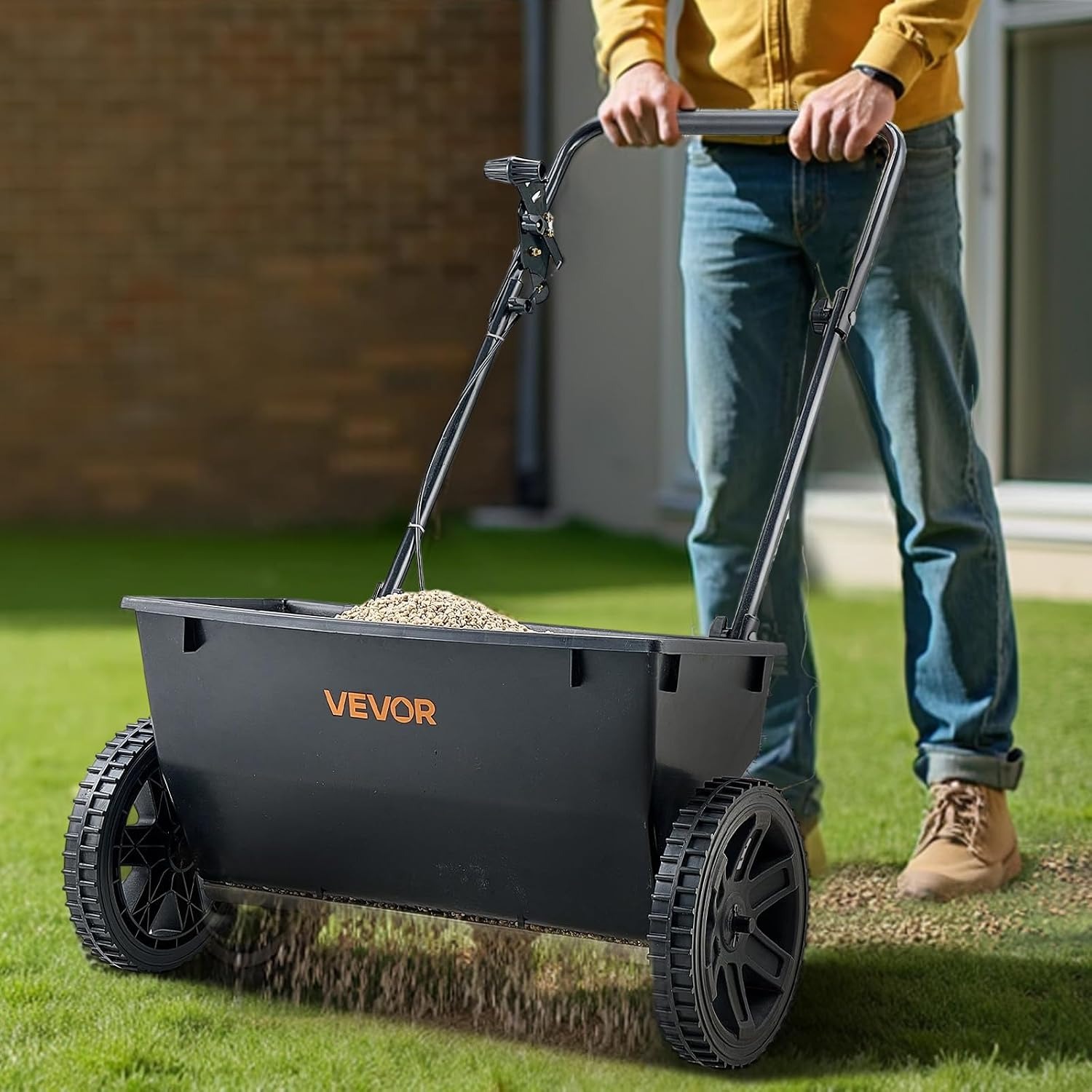
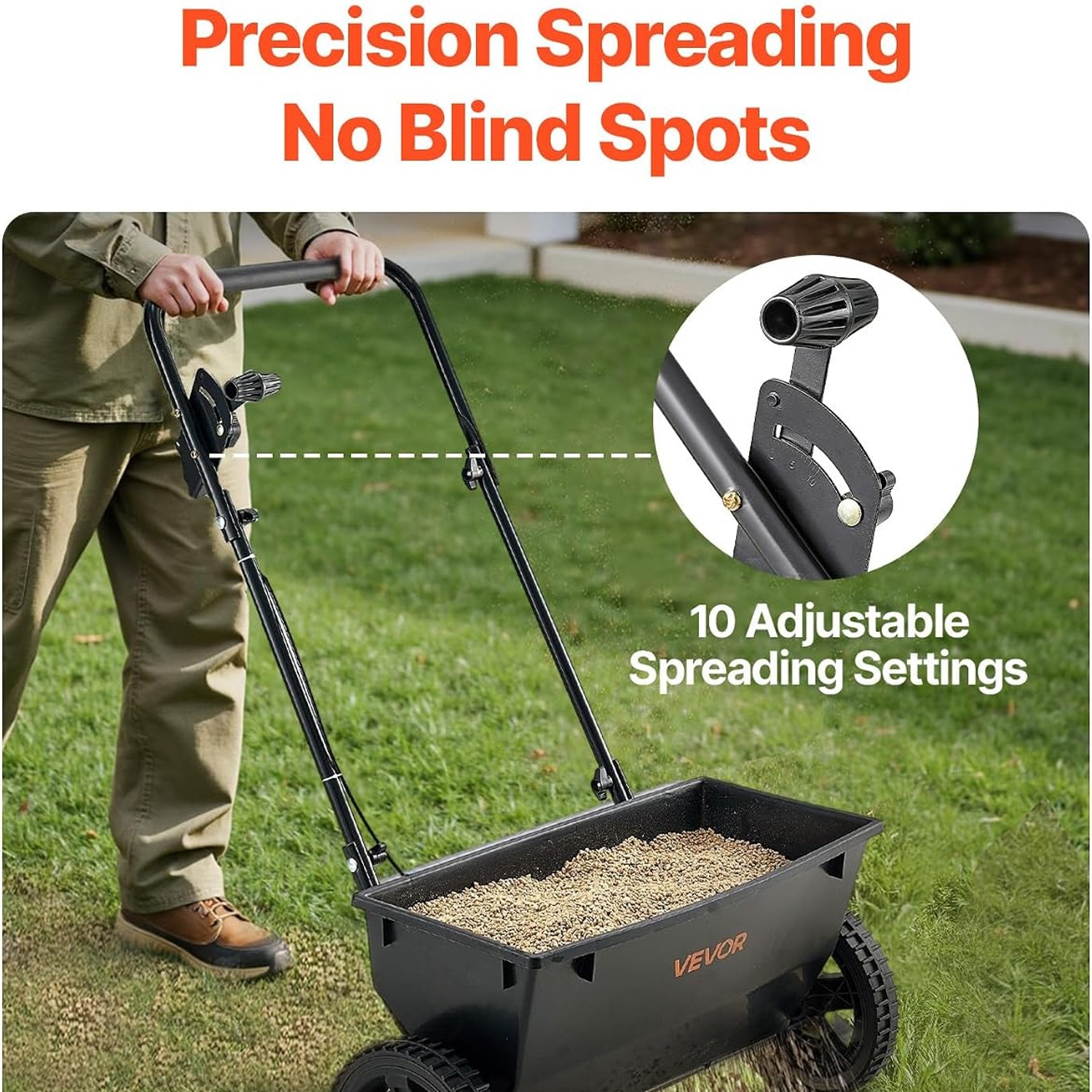
A drop spreader solves this by taking your arm out of the equation. Product falls through holes in the base of the hopper, straight down between the wheels, in a band the same width every time. What comes out is set by the gate opening and your walking pace. Control those two things and the result is consistent.
How a drop spreader works
Inside the hopper, an agitator keeps granules moving so they do not bridge over the openings. The gate lever sets how far those openings slide apart. On this unit there are ten positions, from nearly shut to wide open. The wheels drive the mechanism, so when you stop walking, the flow stops too.
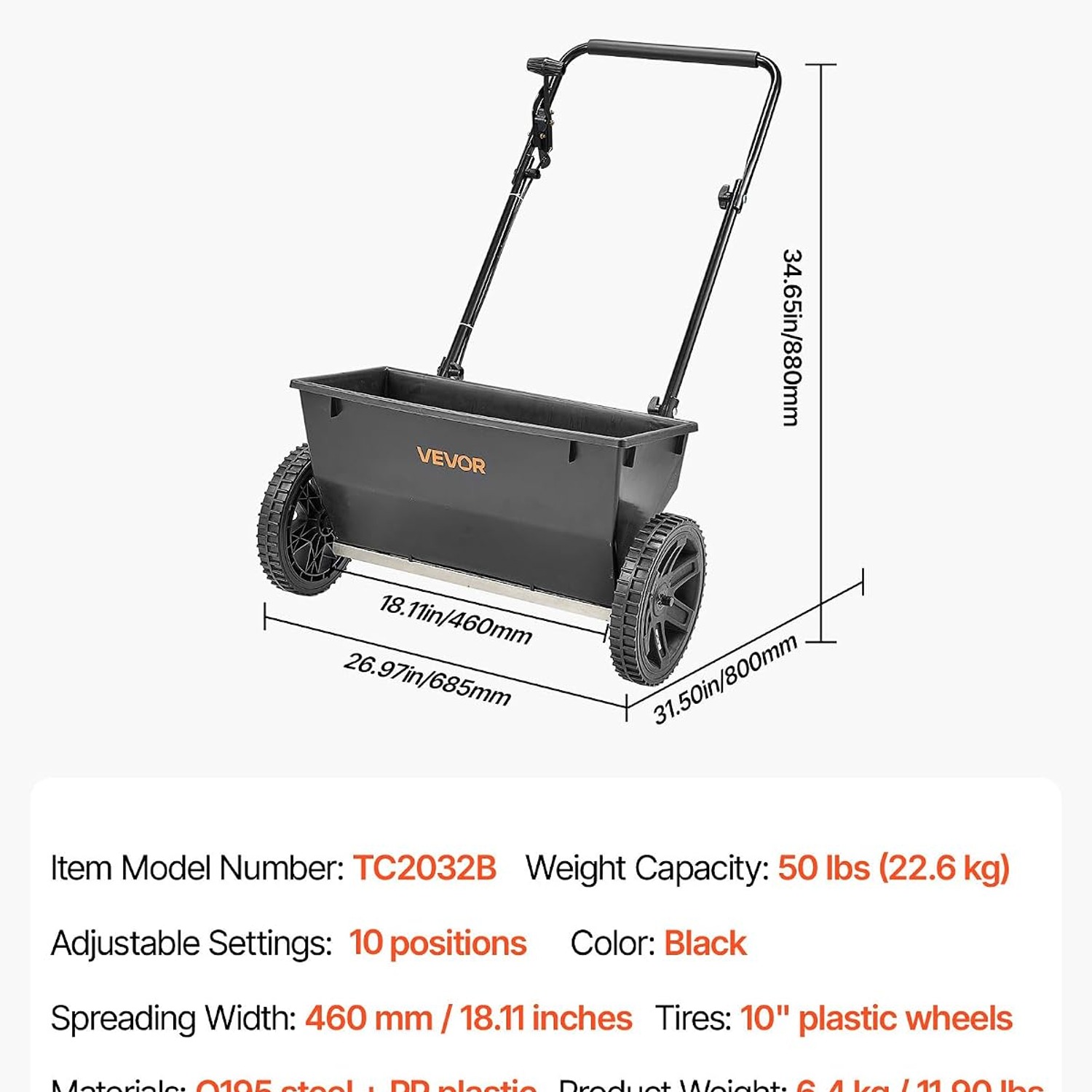
The spread width here is 46 cm, which the listing gives as 18 inches. That is the exact width of the band you lay down. Unlike a broadcast spreader, the edges are hard and clean. Stand at the end of a pass and you can see exactly where the product landed. That is why a drop spreader is the tool of choice near flowerbeds, gravel paths and anywhere fertiliser must not land.
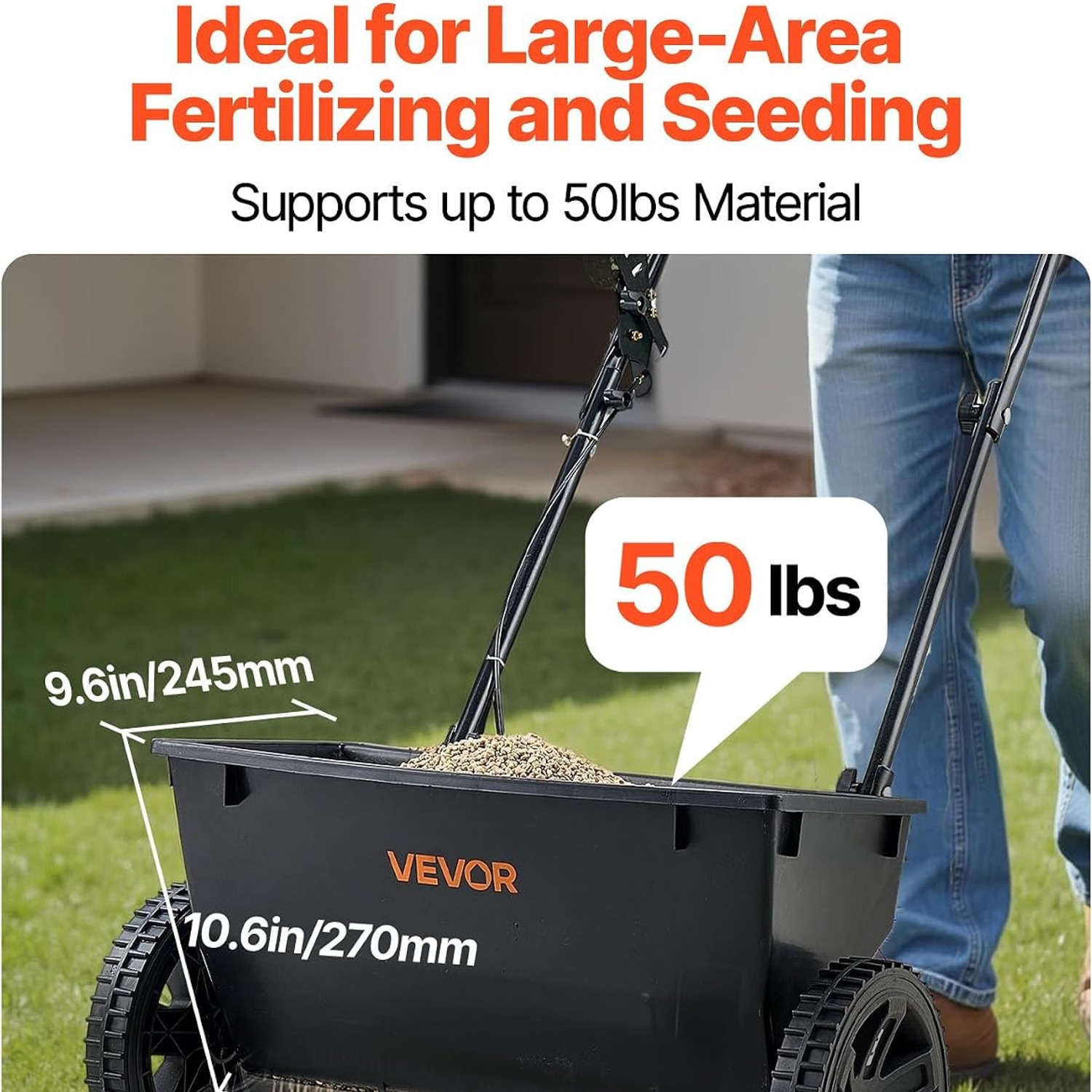
The hopper holds 22.7 kg (50 lb), which takes a full bag of most seed and granular feed. That matters more than it sounds. Every time you stop to refill, you break your rhythm, and rhythm is what keeps the application rate even.
Drop or broadcast, which one do you need
This is the question most buyers get stuck on, so here is a plain answer.
A broadcast spreader throws product out in an arc, typically two to three metres wide. It covers ground fast. The trade off is that the edges of the pattern are feathered, you have to overlap passes by feel, and you will get product on the driveway and in the borders. Fine for an open paddock. Frustrating around a detailed garden.
A drop spreader is slower because the band is narrower, but it goes exactly where you aim it. No overthrow onto paths, no fertiliser in the pond, no seed in the gravel. For a typical suburban lawn of a few hundred square metres with beds and edges to work around, the accuracy is worth the extra passes. The best drop spreader setup also wastes less product, which closes the time gap once you count the money.
If your ground is mostly open and measured in hectares, go broadcast or tow behind. If it is a lawn with shape to it, go drop.
Matching the setting to the product
The ten gate settings exist because products behave very differently.
Fine grass seed is small and light. It pours fast and a wide gate will empty the hopper in two passes. Start at the low end, around settings two or three, and test.
Granular fertiliser is larger and heavier. Mid range settings are the usual starting point, but always read the rate on the bag, because concentrations vary a lot between products.
Ice melt and grit are coarse and irregular. They need the gate well open or they will jam. A finer setting that works beautifully for seed will simply block with rock salt.
The method for finding your setting is the same in every case. Measure out a test area, maybe ten metres by the 46 cm band. Weigh what you load, spread at your normal pace, then weigh what is left. Compare that against the rate on the bag and adjust. Write the setting on the bag with a marker. Next season you will thank yourself.
Technique that makes the difference
Walk at a steady pace. Not fast, not slow, just the same from one end of the lawn to the other. Pace variation is the biggest cause of uneven coverage with any walk behind spreader.
Close the gate at the end of each run before you turn. If you leave it open through the turn, you dump a double dose on the headland, and that is where burn marks appear.
Line up your passes edge to edge. The band is 46 cm, so aim to run the wheel track of this pass right next to the last one. No overlap, no gap. Some people mark the first few passes with canes until they get their eye in.
For fertiliser, the best approach is half rate twice. Set the gate at roughly half the calculated setting and go over the lawn in one direction, then do it again at ninety degrees. Any slight gap in the first pass gets covered by the second. It takes longer but it removes stripes almost entirely, and for overseeding it is the standard method on sports turf.
Ground, wheels and weight
The unit runs on 25 cm (10 inch) pneumatic wheels. Air filled tyres do two useful things. They roll over bumpy turf without jarring the hopper, and they grip better on damp grass and packed snow than hard plastic wheels. The frame is powder coated steel, coated to resist UV and corrosion.
Empty, the spreader weighs 6.2 kg. Full, you are pushing an extra 22.7 kg, so load it where you plan to use it rather than carrying a full hopper across the garden. If pushing a full load feels like hard work, part fill and refill more often. Nothing is lost by doing that.
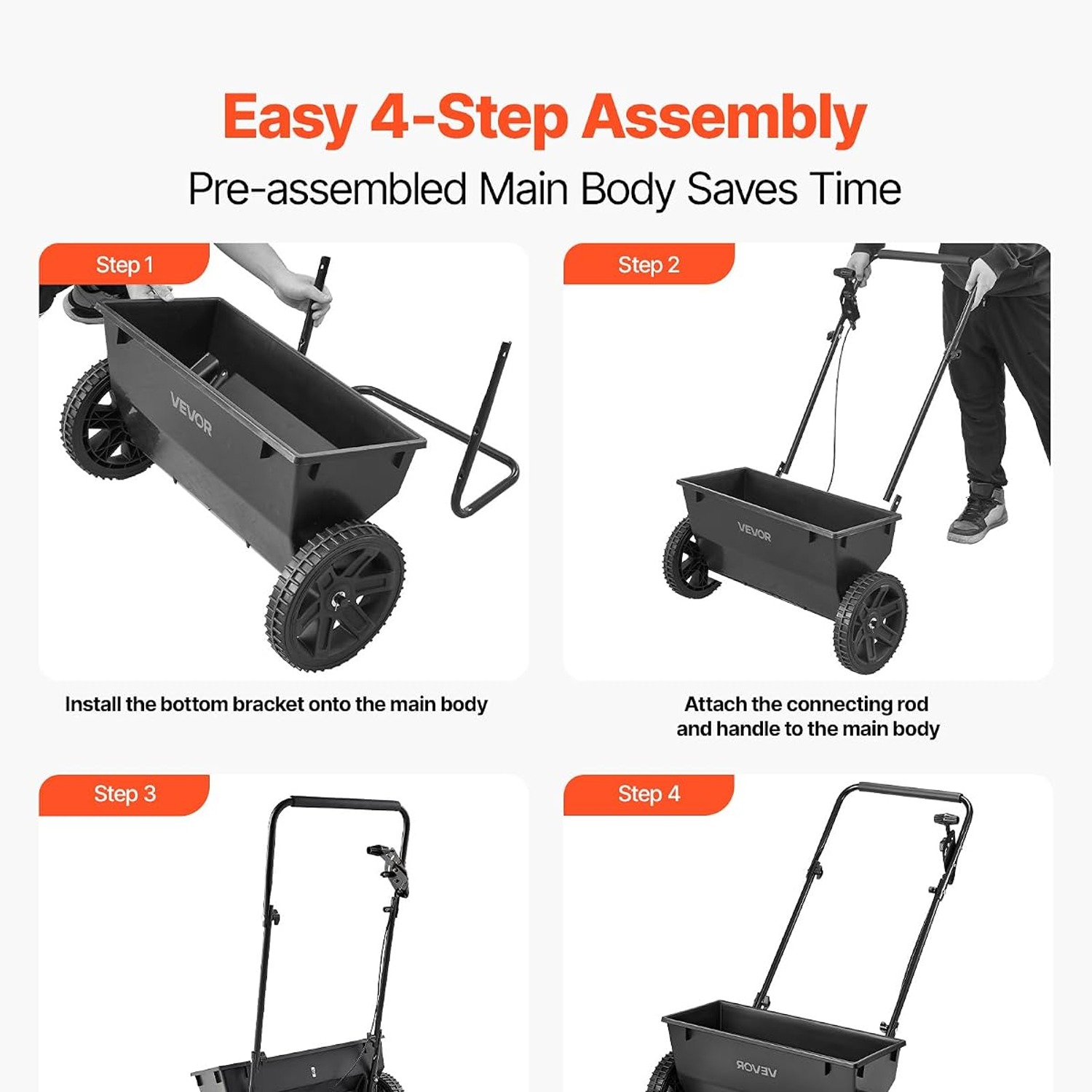
Overall size is 68.5 x 80.01 x 88.01 cm. It stores in roughly the space a small wheelbarrow takes, so a garage corner or a shed wall works. Assembly needs no tools.
Looking after it
The single most important habit is emptying the hopper after every job. Leftover fertiliser absorbs moisture from the air, turns into a damp crust and corrodes anything metal it touches. Salt is worse.
Rinse the hopper and the gate area with water, tip the unit so it drains, and leave it to dry before storing. Give the frame a wipe. Check the gate lever moves through all ten positions, and clear any caked granules out of the drop holes with a stiff brush.
At the start of each season, check the tyre pressure and give the moving parts a look over. Five minutes of maintenance keeps a spreader working for years.
A note on what we do not know
Colour, hopper material and warranty terms are not specified in this product record, so we have not claimed anything about them. Country of origin is China. The model is TC2032B. If any unlisted detail matters to your decision, ask us before you order and we will check.
The short version
A drop spreader gives you accuracy that hand scattering and broadcast machines cannot match. This one lays a 46 cm (18 inch) band, holds a full 22.7 kg (50 lb) bag, and has ten gate settings covering everything from fine seed to coarse grit. The pneumatic wheels handle grass, gravel and snow, and it assembles without tools.
Set the gate low, test on a small strip, keep your pace steady, and close the gate on turns. Do that and your lawn will come up even, which is the whole point.