


The complete guide
Choosing A Wood Burning Fire Pit For Your Garden
The problem with a garden after dark
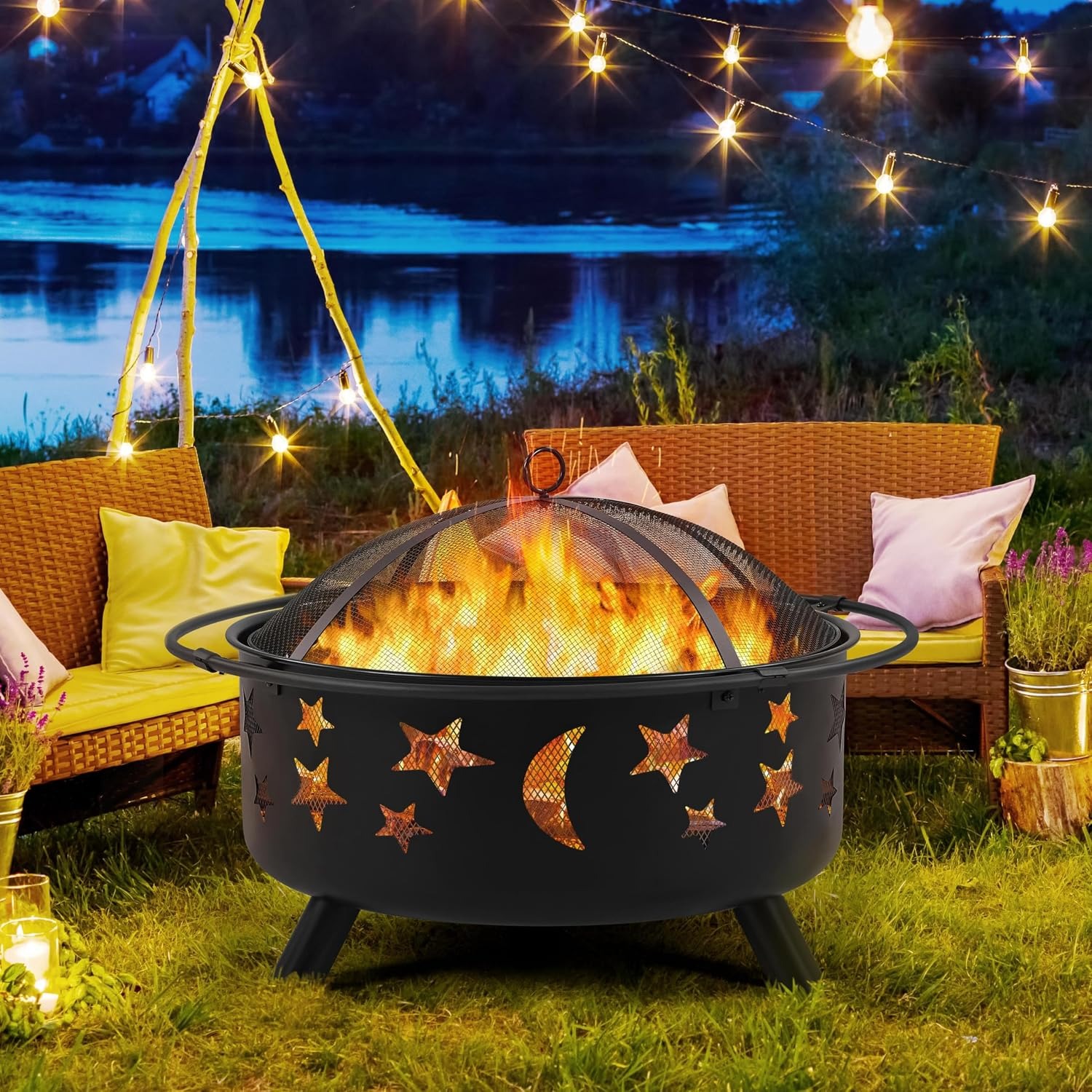
Gardens are strange spaces. People spend money on decking, plants, furniture and lights, and then the sun goes down and everybody goes inside. There is nothing wrong with the garden. There is just nothing to gather around. Outdoor furniture on its own does not hold a group. A screen does not work outdoors. What holds people in one place, reliably, is fire.
That is the whole argument for a wood burning firepit. It is not complicated technology. It is a metal bowl that keeps a fire safely contained and off the ground, with enough airflow to let it burn properly. Put one in the middle of a patio, light it at seven, and at eleven o'clock people are still sitting there with their coats on, half watching the embers. It changes how long the garden gets used, and it changes which months you use it in.
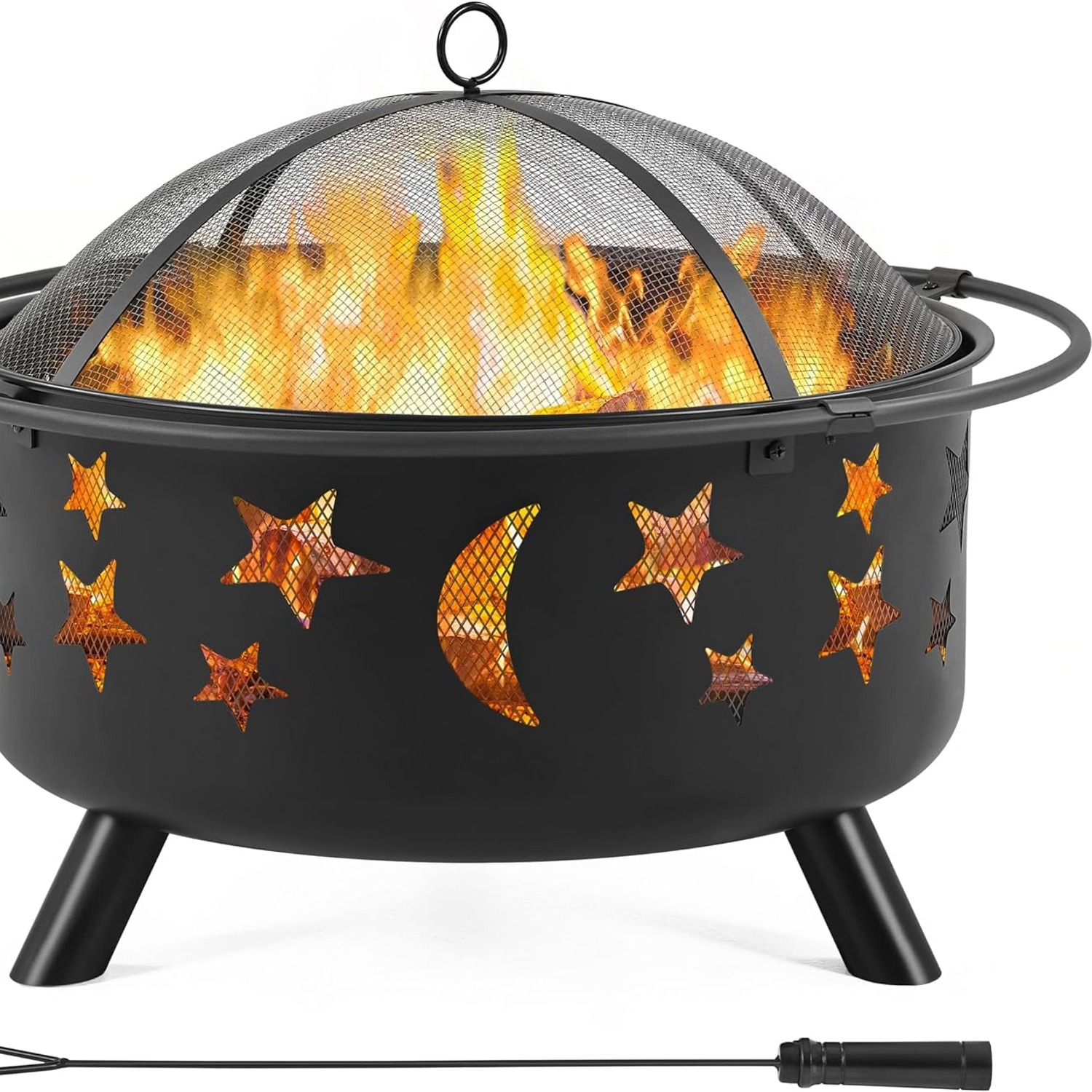
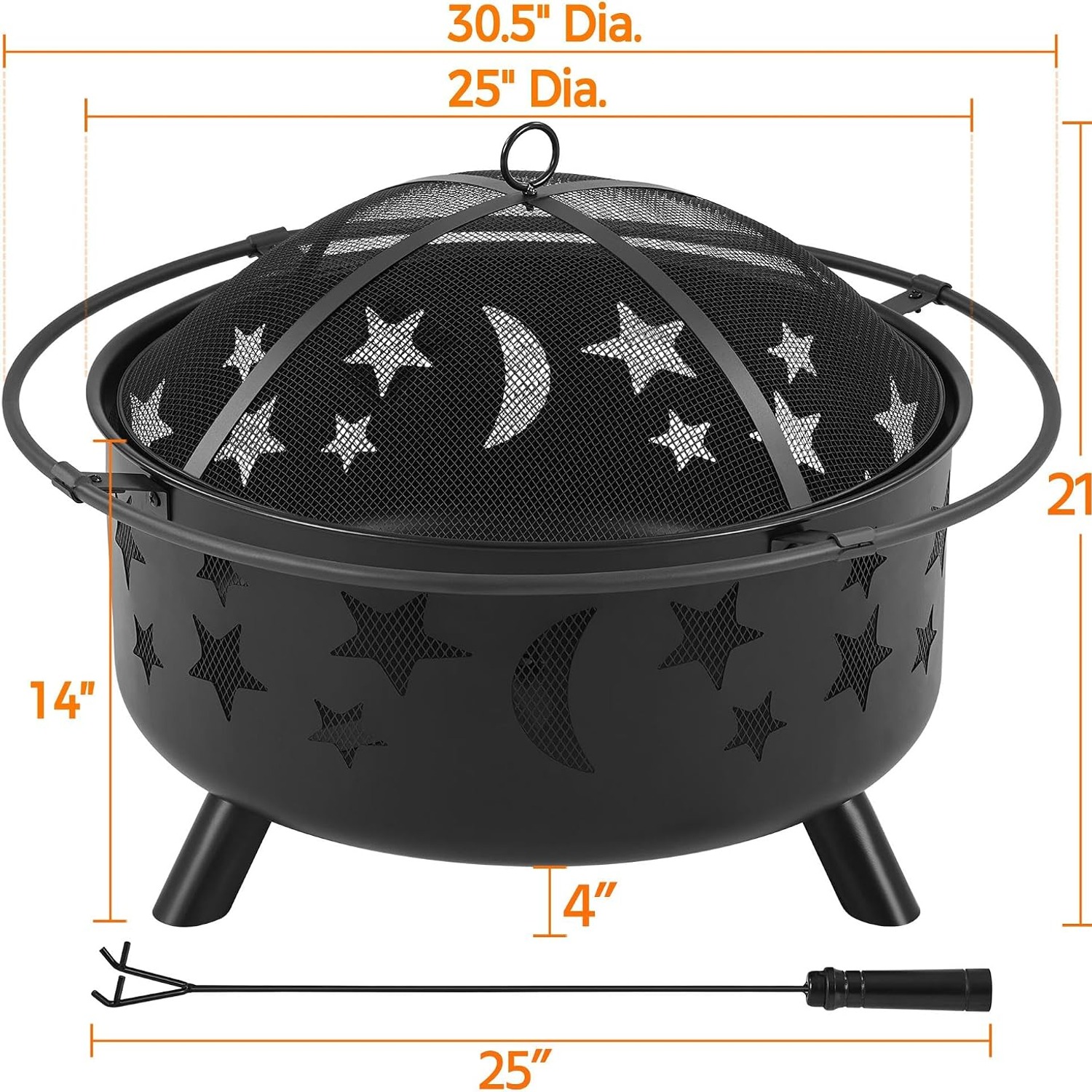
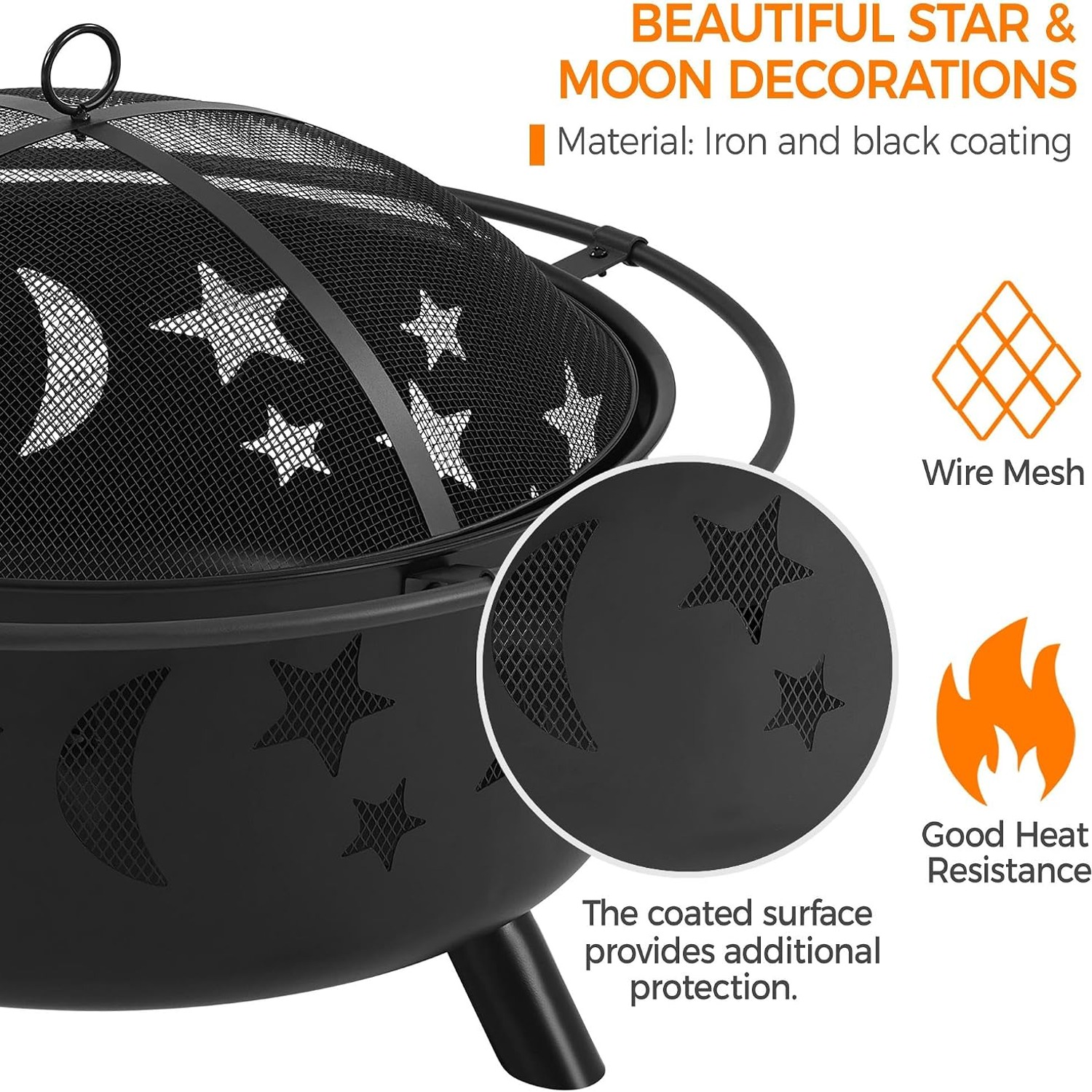
This particular one is a 76.2 cm round bowl in painted iron, standing just over 50 cm tall, with star and moon shapes cut into the wall. It weighs 7.6 kg, which matters more than it sounds like it should.
How a fire pit actually works
A fire needs three things, and only one of them is obvious. Fuel is the obvious one. Heat is the second. The third is air, and air is where most disappointing fire pits fall down.
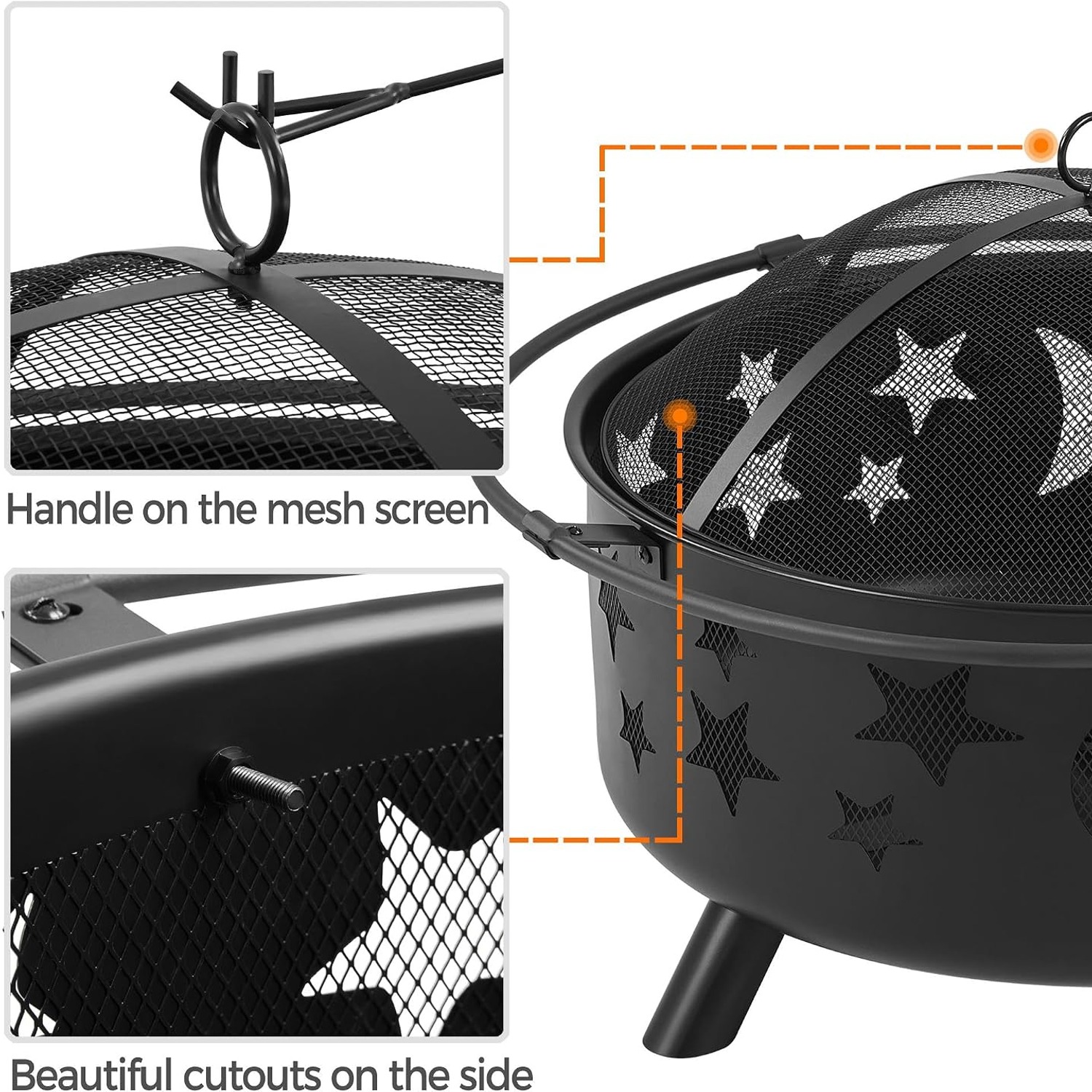
Air has to come in underneath the fuel and move up through it. If a bowl sits flat on paving with no openings, the fire gets starved from below and you end up with a smoky, sulky heap that needs constant poking. This design handles it two ways. There are six air holes punched into the base, and three risers hold the bowl clear of whatever surface it is standing on so those holes never get blocked. Air comes in at the bottom, feeds the coals, and leaves through the open top and the cutouts in the side.
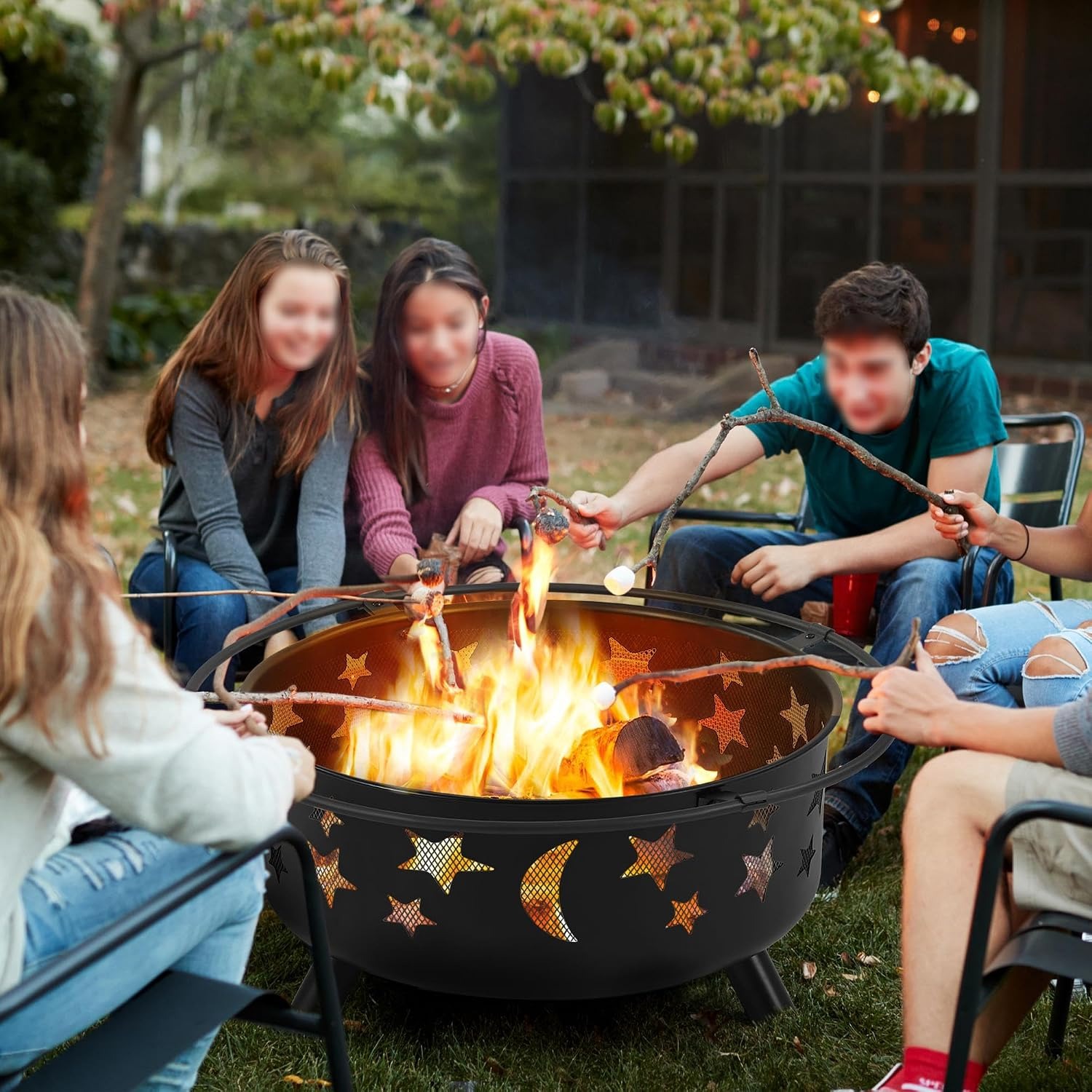
The cutouts do double duty. Functionally, they give the fire another exit for hot gases, which helps the draught. Visually, they are the reason you buy this one rather than a plain bowl. Once the fire is properly going, light pushes out through the stars and moons and lands on the paving, the fence and the faces of whoever is sitting nearby. It is a small thing, but it is the difference between a fire in a bucket and something that looks intentional. The openings are backed with mesh so they stay a light source rather than an ember escape route.
Around the outside sits a wide ring. It is a handle, so you can carry the pit around the yard. It is also a safety margin. On an open bowl, the hot metal is the first thing a hand or a trouser leg meets. With a ring standing proud of the bowl, there is a gap, and that gap is doing quiet work all evening while people move chairs around in the dark.
Who it suits
Think about how many people you normally have outside. A 76.2 cm bowl is a sociable size. The listing puts it at roughly six to eight people sitting around it, and that feels about right. Everyone can see the flames, nobody is sitting behind anybody, and there is enough fuel capacity to keep it going without feeding it every ten minutes.
If you have a small balcony or a courtyard barely bigger than a dining table, this is probably too much. You want clearance around a fire, ideally a couple of metres in every direction, and nothing flammable overhead. A big fire pit crammed into a tight space is not a bargain, it is a hazard.
If you move house or rearrange the garden a lot, the 7.6 kg weight is genuinely useful. Heavy cast fire pits are great until you want them somewhere else. This one you can pick up by the ring when it is cold and empty and put it where the party actually ended up. That portability is the main reason people pick a steel or iron bowl over a built-in brick ring.
It also suits anyone who wants the real thing rather than the convenient version. Gas burners light instantly and go out instantly, and they are fine. But they do not crackle, they do not smell of woodsmoke, and nobody feeds them. Half the pleasure of a backyard fire pit is the small ritual of building it and keeping it going.
How to choose
Size against your space. Measure the clear area you have. You want the bowl plus generous clearance around it, and nothing overhanging. Then pick a diameter that matches the group you normally host rather than the biggest one you can afford.
Material and finish. This one is iron with a painted finish. Painted metal outdoors will mark eventually, which is normal, not a defect. What you are choosing is how much maintenance you are willing to do. A quick clean after each fire and a cover between uses keeps a painted iron fire pit looking decent for years.
Airflow. Look for base holes and some kind of raised foot. If a bowl sits flat and solid, expect to work harder for a good flame.
A spark screen. Do not treat this as optional. The safety kit here includes one, and it should go on whenever the fire is live. It is the single most useful accessory for anyone with decking, dry grass or close neighbours.
Weight. Lighter means more portable, heavier means more stable in wind. At 7.6 kg this sits on the portable side, so on a very exposed site give some thought to where you place it.
Living with it
Set it up on a flat, non-combustible surface. Stone, concrete and paving are all fine. Timber decking is not, unless you put a proper heat shield or paving pad underneath and keep good clearance. Give it space from fences, sheds, furniture and anything with leaves above it.
Burn dry, seasoned wood. Wet or green timber is the single biggest cause of a smoky evening and complaints from next door. Never use treated or painted timber, and never use petrol or other accelerants to get things going. Paper or a firelighter, then thin kindling, then logs once the kindling has caught. That sequence works every time.
Keep water or sand within reach, and do not leave a burning fire unattended. When you are done, either let it die down or spread the embers and douse them, then check nothing is still glowing before you go in.
The next morning, once it is stone cold, scoop out the ash. This is the one habit that actually extends the life of the thing. Ash holds water, water sits against the metal, and that is how rust starts. Clear it out, wipe the outside dry, and put the cover on. At the start of each season, have a look for any bare spots and touch them up with a high-temperature paint made for fire pits.
The short version
A wood burning firepit is one of the few garden purchases that changes behaviour rather than just filling space. This one is a 76.2 cm round iron bowl, 50.04 cm tall, 7.6 kg, finished in black, with star and moon cutouts backed by mesh, six base air holes on three risers, a spark screen and a safety kit, and an outer ring that works as both handle and heat buffer.
It suits a group of six to eight, a patio or lawn with clearance around it, and someone who does not mind building a fire properly. Burn dry wood, use the screen, empty the ash, cover it between uses, and it will give you a lot of long evenings outside.