



The complete guide
The Practical Guide to Choosing and Fitting a Hand Bidet Kit
The problem with paper alone
Toilet paper is a dry solution to a wet problem. It does a passable job, but most people who switch to rinsing with water say they notice the difference within a day or two. Paper also drags on sensitive skin, which matters more than usual after surgery, during pregnancy, through a period, or for anyone managing haemorrhoids or a skin condition.
Then there is the other side of it. Toilet paper is one of those household costs that quietly adds up, and it is bulky to store. A handheld sprayer on the wall cuts how much you get through without you having to think about it.
The barrier for most people has never been the idea. It has been the install. Full bidet seats mean electrics near a wet area. Plumbed-in units mean a trade visit and a bill. A hand bidet kit sits in the middle: a sprayer, a hose, a valve and a holder, fitted by you in about the time it takes to make a pot of coffee.
How a handheld bidet sprayer works
The mechanics are simple on purpose. A flexible hose carries water from your supply to a sprayer head you hold in your hand. The head has a lever. Squeeze it, water flows. Release it, water stops. There is no tank, no pump and no power.
Where the water comes from is the part worth thinking about. There are two routes.
The first is the toilet cistern. You fit a T-valve on the cold inlet feeding the tank, then run the hose from that valve to the sprayer. It is quick and tidy, and the sprayer is right next to the toilet. The downside is that the water is whatever temperature the cold mains is. In winter that can be properly bracing.
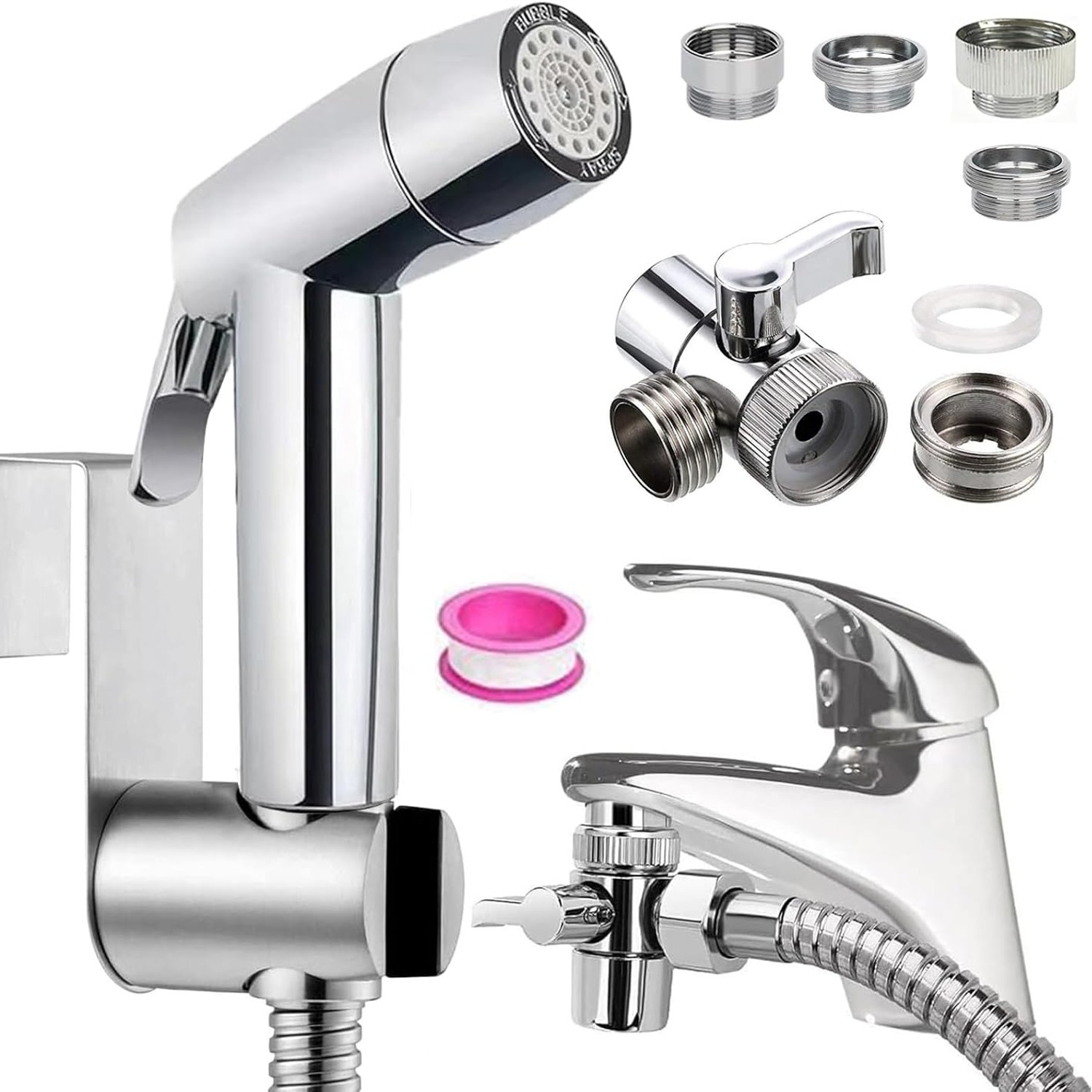
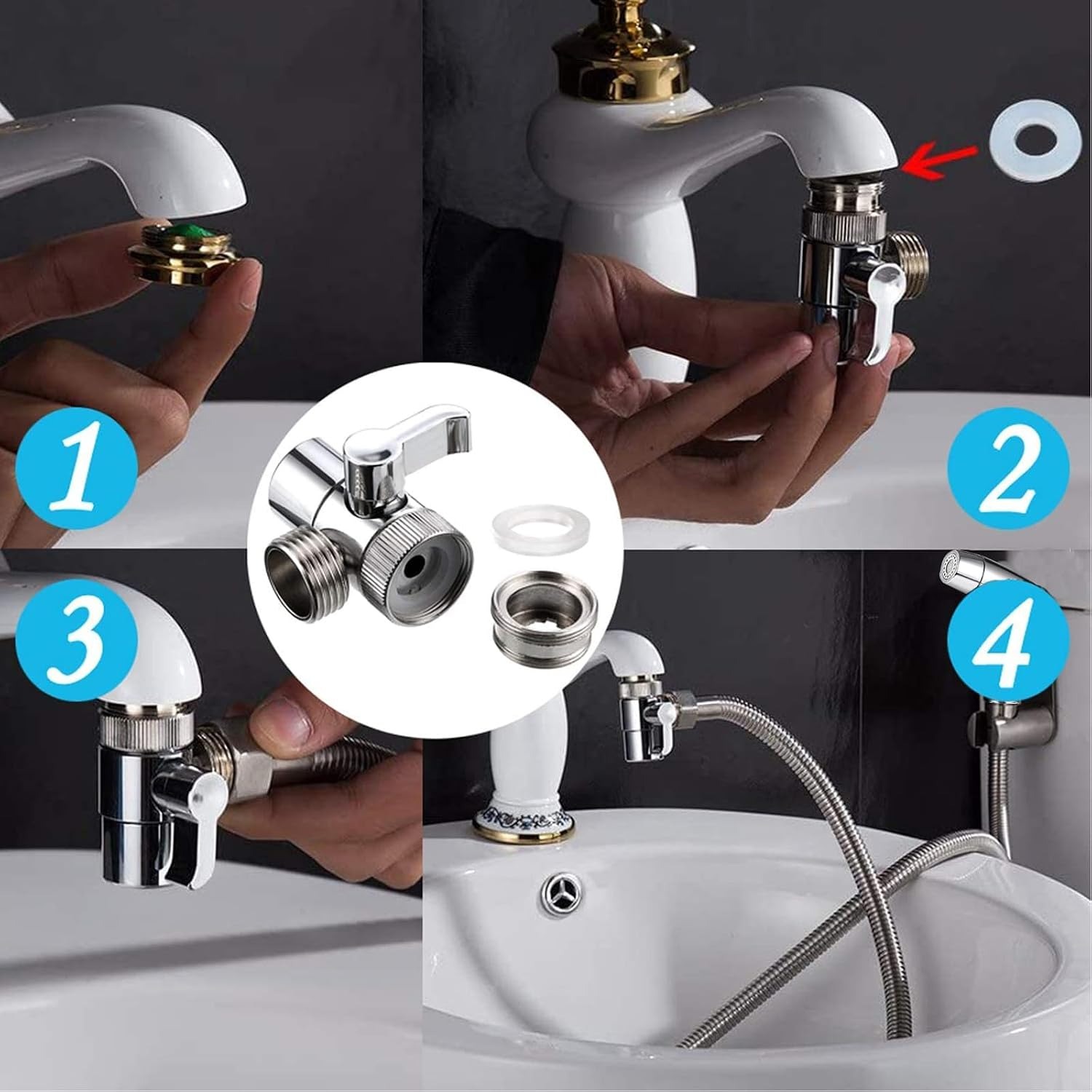
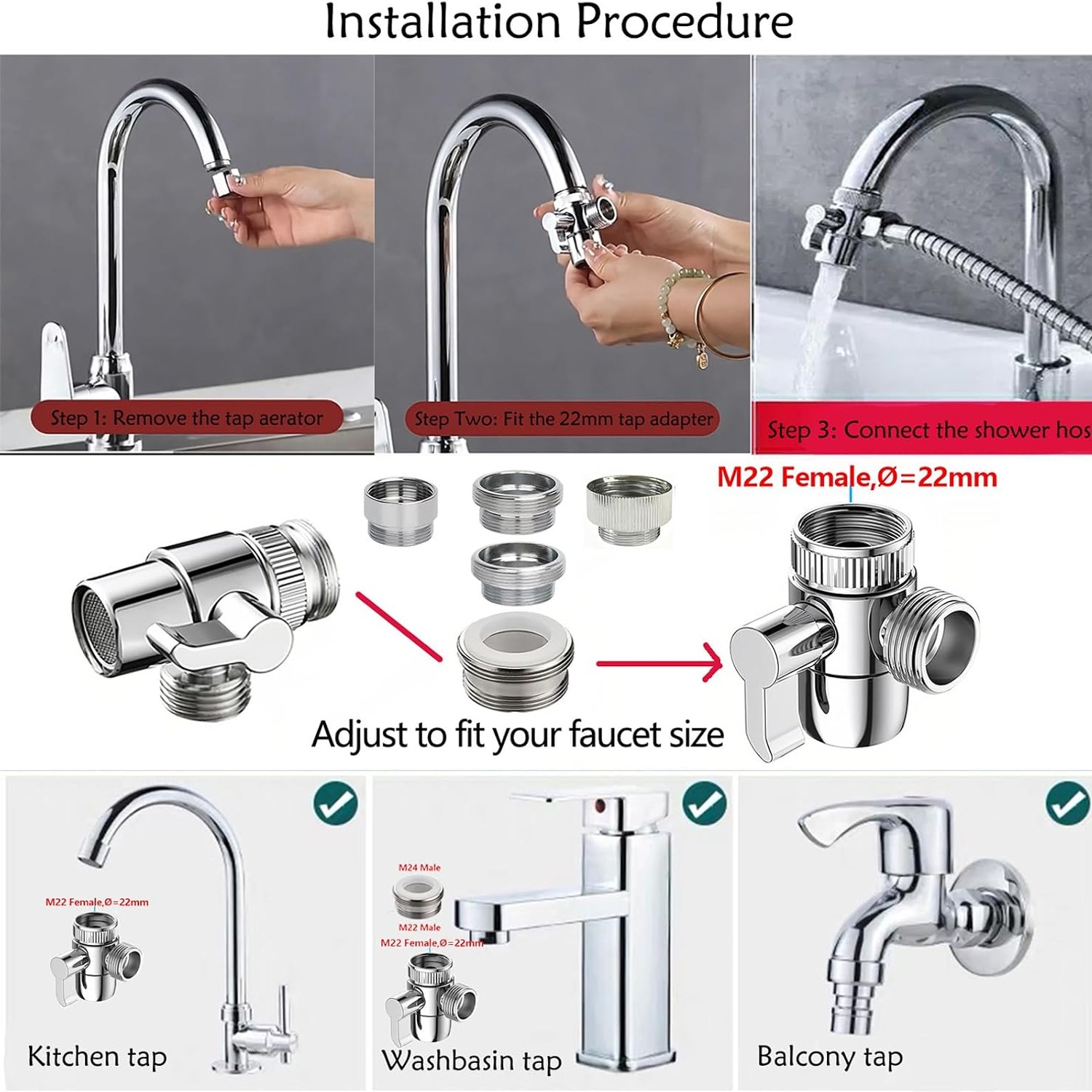
The second route is the faucet diverter, which this kit includes. The diverter screws onto the nozzle of your basin tap in place of the aerator. You run the tap, mix the temperature you want at the tap handle, then flip the diverter so the water goes to the sprayer instead of into the basin. That means warm water, every time, with no electrics and no extra plumbing. It is the reason people who have tried a cold-only sprayer and given up often get on much better with a kit like this.
The two-way hand shower valve in this set is what makes the switching work. It sits in the line and sends water either to the tap or the hose.
Two spray modes and when to use each
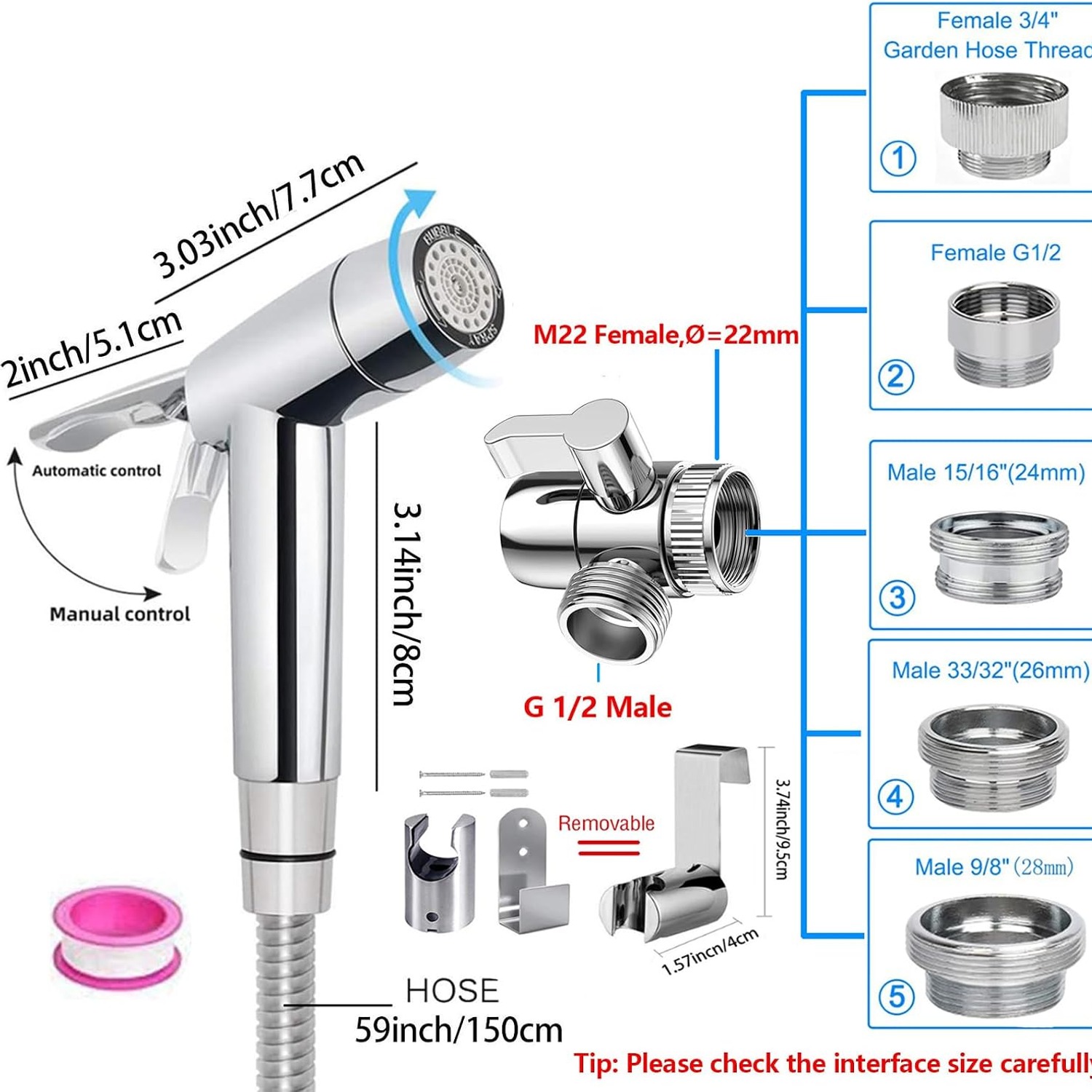
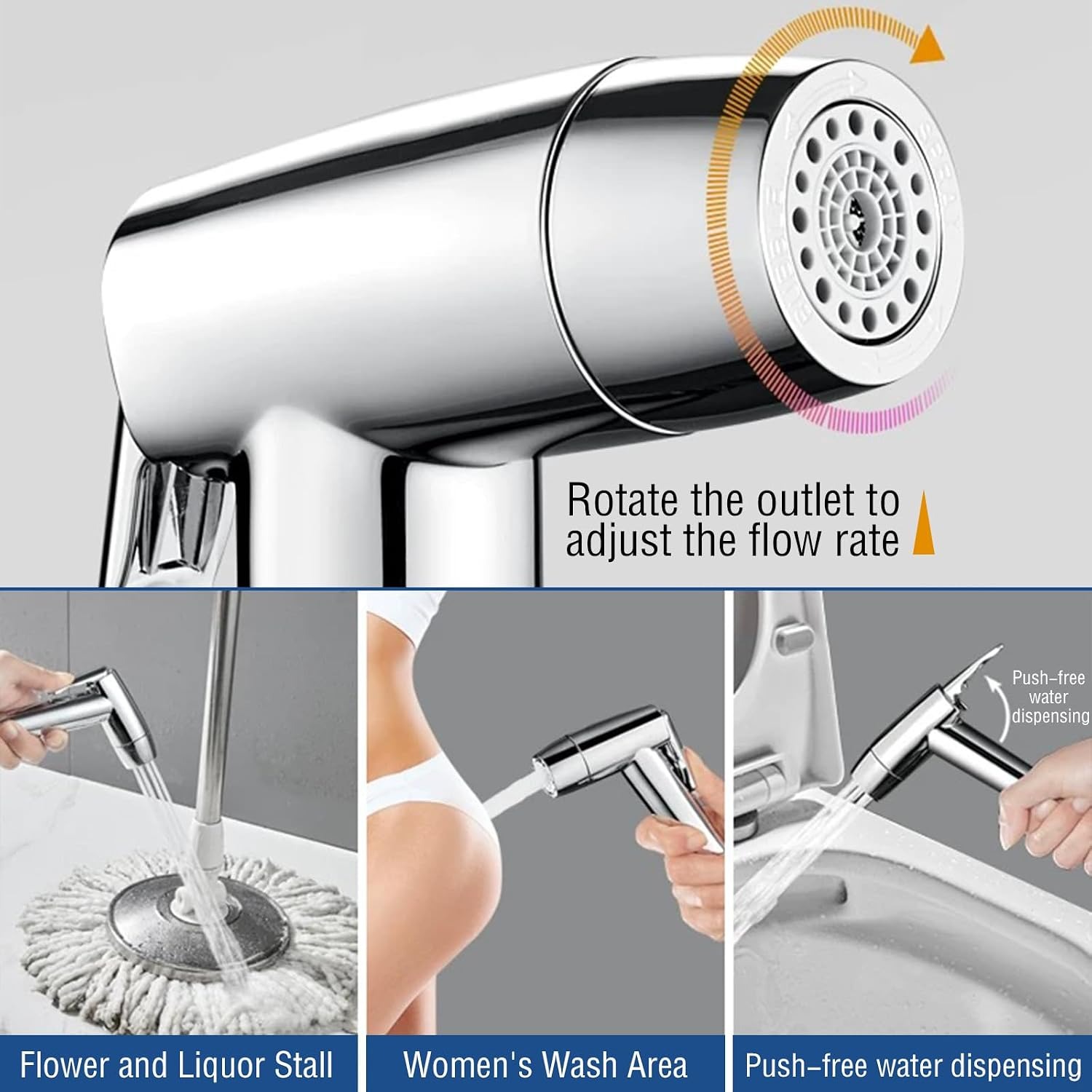
The sprayer runs a jet mode and a soft mode, changed with the lever.
Soft mode spreads the water across a wider area with less force. This is the everyday personal-washing setting. It is the one to use during pregnancy and menstruation, and the one to start children on.
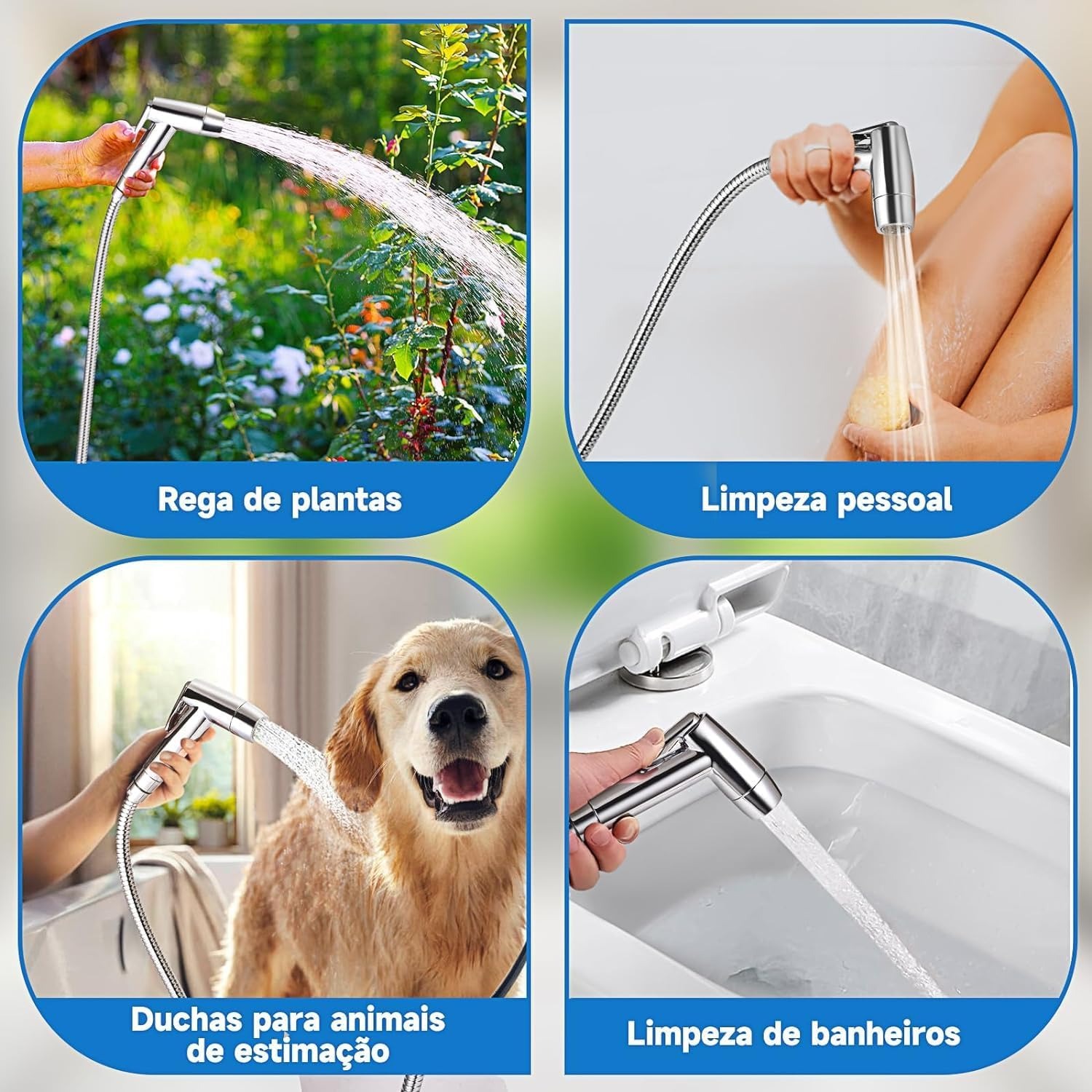
Jet mode concentrates the stream and hits harder. It is useful for rinsing the bowl after use, blasting out a potty or a training seat, dealing with cloth nappies before they go in the wash, or rinsing a pet's muddy paws over the tub. Household jobs the sprayer handles once it is on the wall tend to multiply.
The wide-mouth waterfall spout on this head shapes the soft spray. It is a small design detail that makes the gentler mode feel genuinely gentle rather than just quieter.
Who this suits
New parents using cloth nappies get a lot out of a sprayer, since pre-rinsing over the toilet is far less unpleasant than the alternatives. Anyone recovering from childbirth or surgery in that area usually finds water far kinder than paper.
Renters do well with it because of the cistern-hung holder option and the tap-mounted diverter. Nothing is cut and nothing is permanent, so you can unscrew it and take it with you.
People with small bathrooms benefit too. This whole kit weighs 485 g and the sprayer head is only 6.4 by 7.6 by 11.4 cm, so it takes up a sliver of wall and nothing on the floor. There is no bulky seat replacement and nothing that needs a socket nearby.
It also suits households where several people have different preferences, because handing control to the person holding the sprayer solves the problem of fixed-nozzle units that only spray one place at one pressure.
How to choose and what to check before you order
Measure your tap nozzle first. The diverter's top connector seats on a 22 mm (55/64 inch) nozzle, and five adapters are supplied to cover G1/2 smooth hex, G3/4 external threaded round, M22/24, M22/26 and M22/28 mm. Most standard basin taps land in that range. Highly decorative spouts, pull-out sprays and some older fittings may not. A ruler across the end of your tap takes ten seconds and saves a return.
Next, check hose reach. The 1.5 m hose covers a normal gap between basin and toilet. If your basin is on the far side of a large bathroom, a cistern feed may be the more sensible route for you.
Think about the holder position. You want the sprayer within easy reach while seated, with the hose free to move and no sharp kink where it leaves the wall. Sit on the toilet, hold your hand out where you would want the sprayer, and mark that spot.
Finally, decide on wall versus cistern mounting before you start. Wall mounting is neater and more secure, but needs a drill and the right plugs if you are going into tile. The cistern hook is instant and reversible.
Fitting it
Shut off the water to whichever supply you are tapping. For the faucet route, unscrew the existing aerator from your tap nozzle, pick the adapter that matches the thread, and fit the diverter. For the cistern route, close the isolating valve, disconnect the inlet, fit the T-valve and reconnect.
Attach the hose to the valve and the sprayer to the other end of the hose. Make sure every washer is seated flat before you tighten. Hand-tight plus a light nip with a spanner is usually enough; overtightening is a more common cause of leaks than undertightening.
Turn the water back on slowly and watch the joints. A damp tissue wrapped round each connection shows up a slow weep that your eye would miss. Then mount the holder and hang the sprayer.
Most people are done inside ten minutes.
Keeping it working
Maintenance is light. Wipe the head and handle with a damp cloth and dry them, which stops water marks on the plated finish. Avoid bleach, scouring pads and solvent cleaners, as those are what wreck plating over time.
If you live in a hard water area, the spray face will eventually fur up and the pattern will go uneven. Unscrew the face, rinse it under the tap, and clear the holes. A soft brush helps.
Give the hose connections a check every few months. A quarter turn by hand is usually all a slightly loosened fitting needs.
The short version
A hand bidet kit is a cheap, low-commitment way to get a cleaner bathroom routine. This one comes as four pieces: the sprayer, a 1.5 m stainless steel hose, a two-way valve and a holder, plus a faucet diverter with five adapters so you can draw warm water from the basin tap.
Two modes cover both jobs, personal washing on soft and household rinsing on jet. The ABS body with a stainless steel handle keeps it light in the hand. Mount it on the wall or hang it on the cistern, depending on whether you can drill.
Measure your tap nozzle, pick your water source, and set aside ten minutes. That is the whole project.