



The complete guide
How To Choose And Use Plastic Edging Spikes
The problem with edging that will not stay put
You spend a weekend laying a crisp border. The strip sits flush, the fabric is tucked, the turf edge looks sharp. Three weeks later the end of the strip has crept out, the fabric has peeled back at a corner, and there is a wavy gap where the lawn meets the bed.
Nothing failed, exactly. The edging just moved. Soil swells when it rains and shrinks when it dries. Frost pushes things upward. A lawnmower wheel nudges the strip. A dog runs the same line every morning. All of that adds up, and the only thing standing against it is whatever you used to pin the edging down.
That is the whole job of a ground stake. It is not glamorous, and it is cheap compared to the edging it protects, but it decides whether the work you did holds for a season or for years.
How a snake-bend spike holds
Most cheap pins are straight. Straight pins work fine on day one and then quietly fail, because a straight shaft leaves a straight channel in the soil. Anything that lifts the edging also lifts the pin, with nothing in the way.
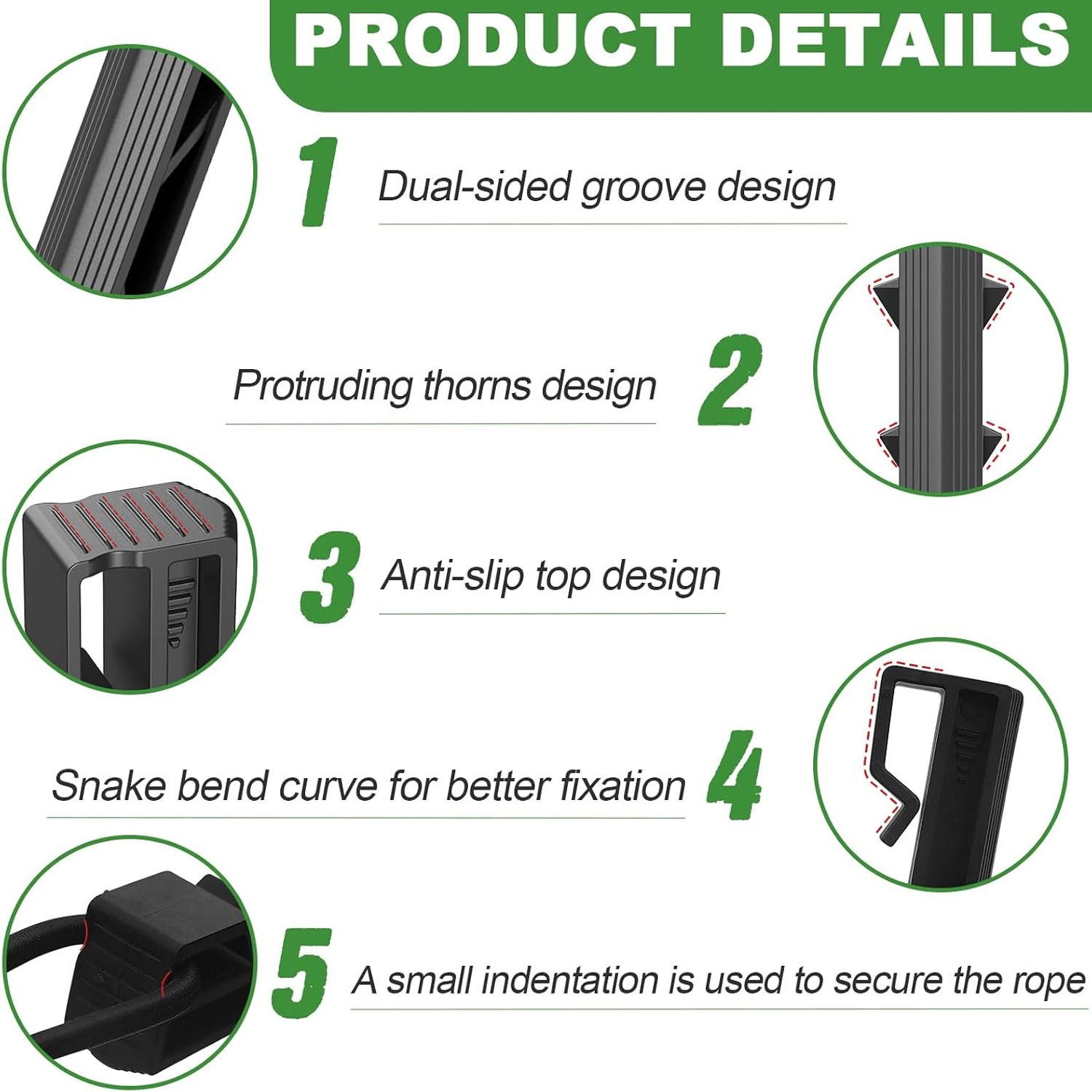
These spikes take a different approach. The body curves through a snake-bend shape, so the stake cannot travel upward without forcing soil out of the way. On top of that, there are thorns protruding from the shaft and grooves running down both sides. Every one of those features gives packed soil something to catch on.
The result is more holding power from the same length of plastic. It is a simple bit of design and you can feel the difference the first time you try to pull one back out of settled ground.
There are two more details worth knowing about. The tip is pointed enough to enter soft soil cleanly but is smooth to the touch, so you are not handling 24 little blades. And the top has an anti-slip texture, which matters more than it sounds. A mallet skidding off a smooth plastic head is how people end up hitting their knuckles.
Getting them in the ground
There are really two scenarios.
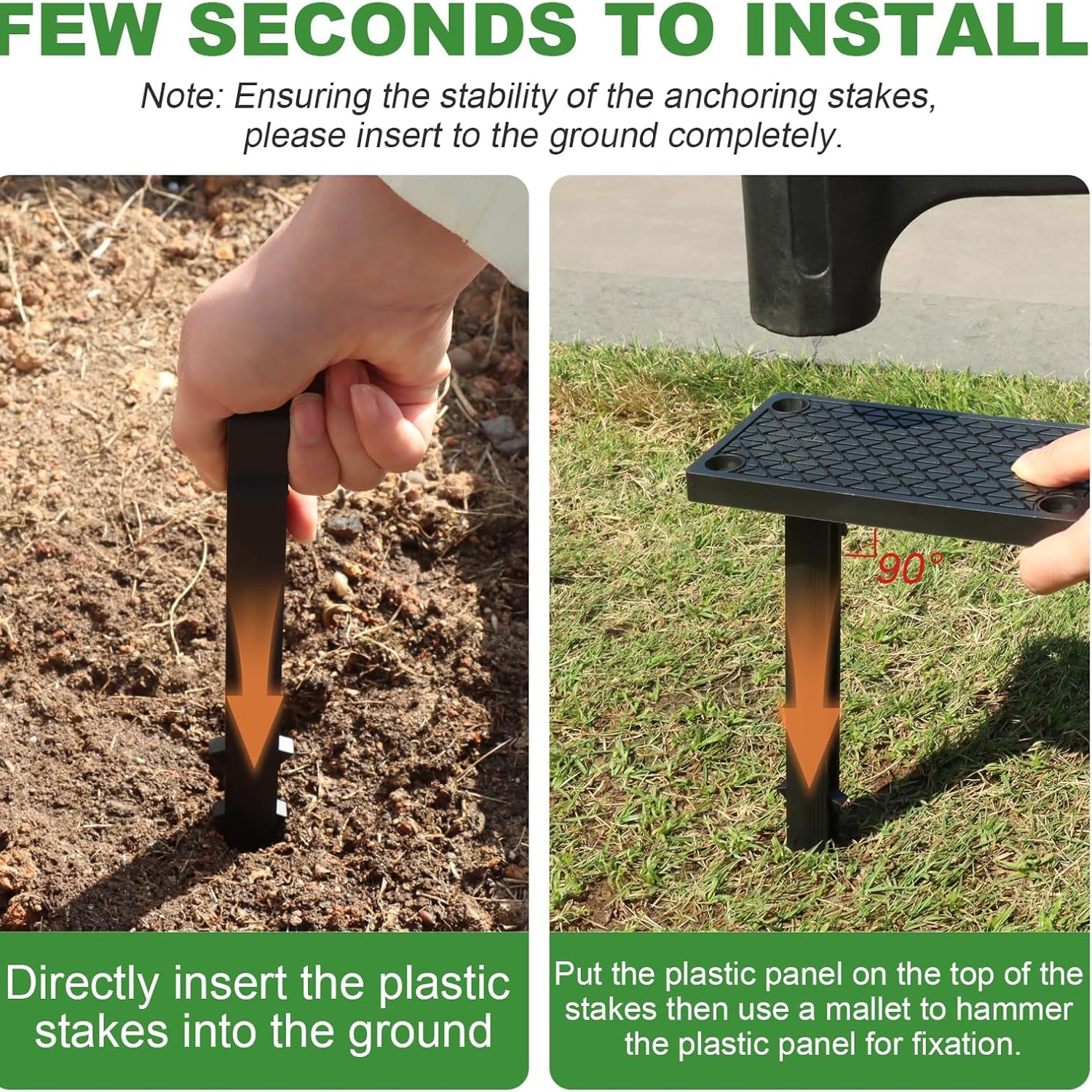
Soft ground is straightforward. Hold the stake square to the surface and tap it down with a mallet, or lay a plastic panel over the top and hammer that. Drive it until it is fully in. Leaving the head proud is the single most common reason a stake works loose later, because every bit above ground is leverage for the soil to push against.
Hard or compacted ground needs a bit more patience. Dig a small hole first. Lay the stake in it, backfill with soil, and press the soil down firmly so it packs around the thorns and grooves. Then put a plastic panel over the top and tap it with a mallet to seat everything.
Two safety notes, both from the product information. Keep whatever you are striking with perpendicular to the stake, because angled blows and excessive force are what break plastic. And wear gloves. Not because the tip is dangerous, but because driving two dozen stakes bare-handed is a quick route to blisters.
Who these suit
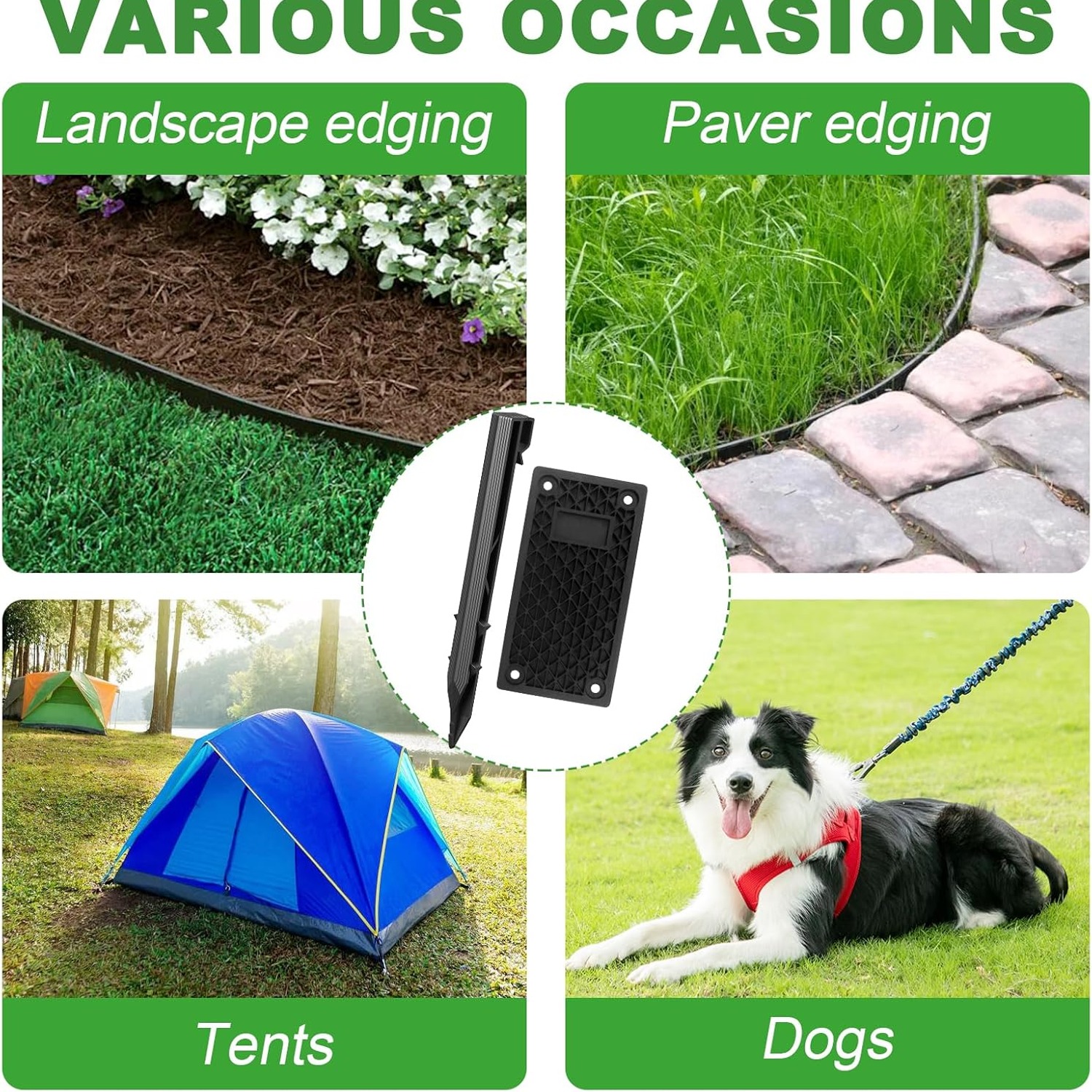
Anyone running plastic or rubber edging strip along a bed will get the most obvious use out of them. Pin at intervals and the strip stops bowing.
Landscape fabric and weed membrane is the second big one. Fabric lifts at the edges and overlaps first, so those are the places to concentrate your stakes. Artificial turf and lawn liner behave the same way, which is why people hunt for the best turf staples for lawns when a seam starts to curl.
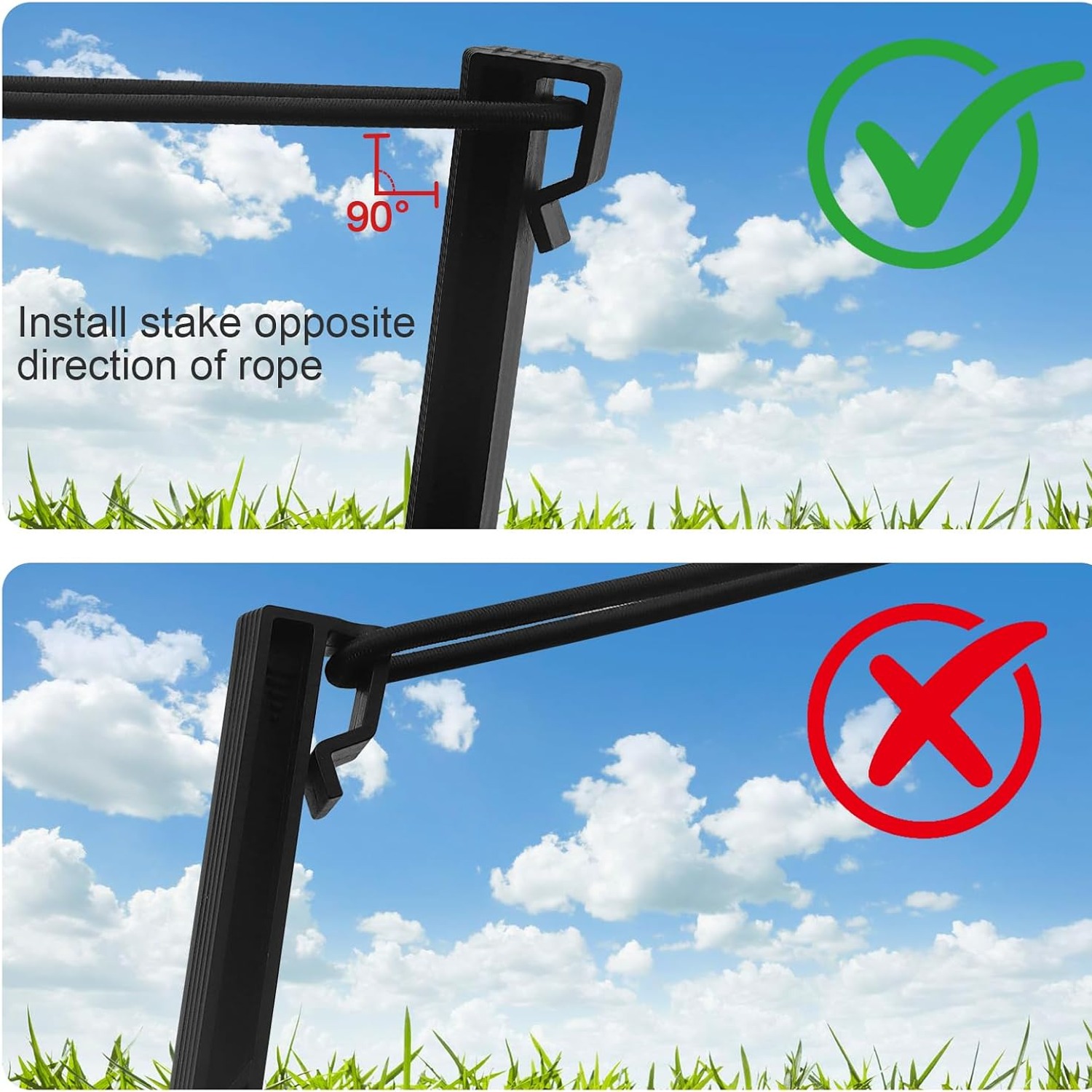
Then there is everything with a rope on it. The groove at the snake-bend is there specifically for fixing rope, which opens up tent guy lines, tarp corners, soft pet fencing, netting and seasonal inflatable displays. If you have ever watched an inflatable snowman tip over in the wind, a few extra anchor points are the fix.
Where these are not the right tool: very rocky ground, heavy clay that has baked solid, or anything where you need serious pull-out resistance in rough conditions. Plastic has limits. A steel stake is the honest answer for those jobs.
Working out how many you need
Measure your border in metres. For edging strip, a stake roughly every 60 to 90 cm is a sensible starting point, with extras on curves and at the ends where strips join. Curves want more than straight runs, because the strip is actively trying to spring back.
For fabric, think in terms of area rather than length. Pin the perimeter first, then add a few rows through the middle on wide beds. Overlaps between sheets want a stake each, or wind gets underneath.
A 24 pack covers a border of about 15 to 20 metres with spares, or a decent sized fabric bed, or several small anchoring jobs around the garden. If you are doing a whole front yard, work out your run before ordering so you are not stopping halfway through.
Looking after them
This is a short section because there is not much to do.
Plastic does not rust, which is the main advantage over metal staples in damp beds, around pond edges or under irrigation. The material is described as UV resistant, and once a stake is driven flush most of it is underground anyway.
When you pull them out, loosen the soil around the head first with a trowel and lift straight up with a slight twist. Levering sideways is what snaps them. Hose off the soil, clear anything packed into the grooves with a stiff brush, and let them dry before they go back in the box.
Store them somewhere shaded and dry. Before reusing, run your eye over each one and set aside any with cracks or visible splits. A stake with a hairline crack will fail at the worst moment.
If the ground is frozen, leave them alone. Frozen soil grips hard and plastic does not forgive that. Wait for a thaw.
A few things that go wrong
People drive stakes at an angle, thinking it will grip better. It usually does the opposite, because the curve is designed to work with vertical soil load. Keep them square.
People space them too far apart on curves. The tension in a curved strip is much higher than on a straight run, so halve your spacing there.
People leave the head sticking up. Flush is the goal, both for holding power and so nobody catches a foot or a mower blade on it.
And people buy one pack for a job that needs two, then stretch the spacing to make it work. That is a false economy. The run fails at the widest gaps.
The short version
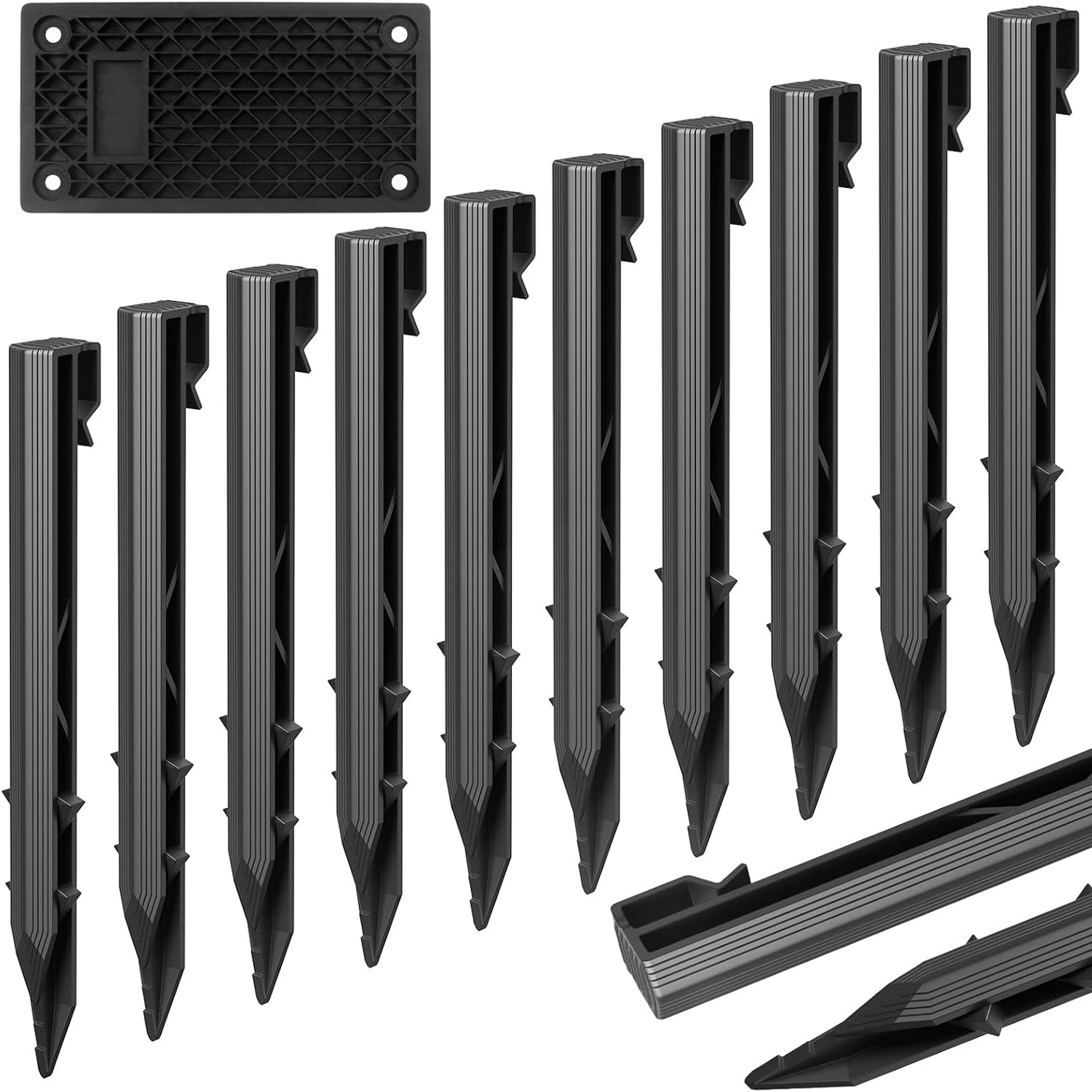
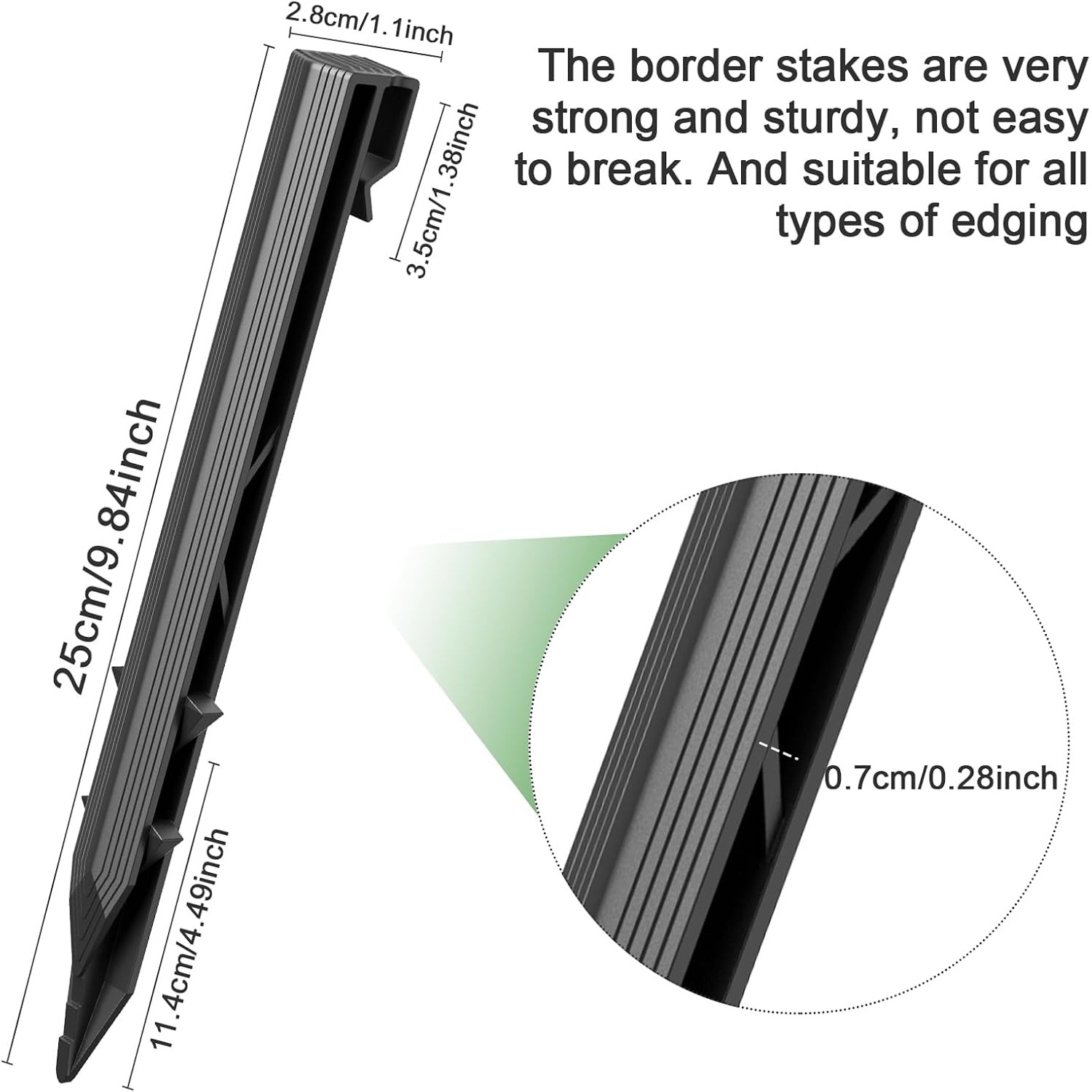
These are 24 black plastic edging spikes, each 25.4 cm long, with a snake-bend body, protruding thorns, dual-sided grooves and a rope groove at the curve. The pack weighs 1.36 kg.
They hold garden edging, landscape fabric, turf and liner in place, and the rope groove extends them to tents, pet fencing and inflatable decorations. They go in with a mallet in soft ground, or by digging and backfilling in hard ground. Keep your strikes square, wear gloves, and drive them fully down.
For damp beds and ordinary soil, they do the job and they will not corrode. For rock and baked clay, reach for metal instead.