



The complete guide
How To Choose Christmas Bedding That Still Looks Good On The Fourth Year
The room everyone forgets
Most houses decorate from the front door inwards. Tree in the lounge, wreath on the door, maybe something on the dining table. Then December the twenty-third arrives, your sister and her two kids pull into the driveway, and the spare room is still wearing the same beige sheets it has worn since Easter.
That is the gap Christmas bedding fills. It is one of the few decorations that is also useful, because a bed has to be made anyway. You are not adding clutter to a shelf. You are swapping something you already use for a version of it that happens to have deer and snowflakes on it.
The problem with most seasonal bedding is that people buy it in pieces. A comforter one year, sheets the next, and then nothing matches and half of it goes missing in the linen cupboard. A bed-in-a-bag set solves that by giving you everything in one box, in one print, in one go.
What seven pieces actually gets you
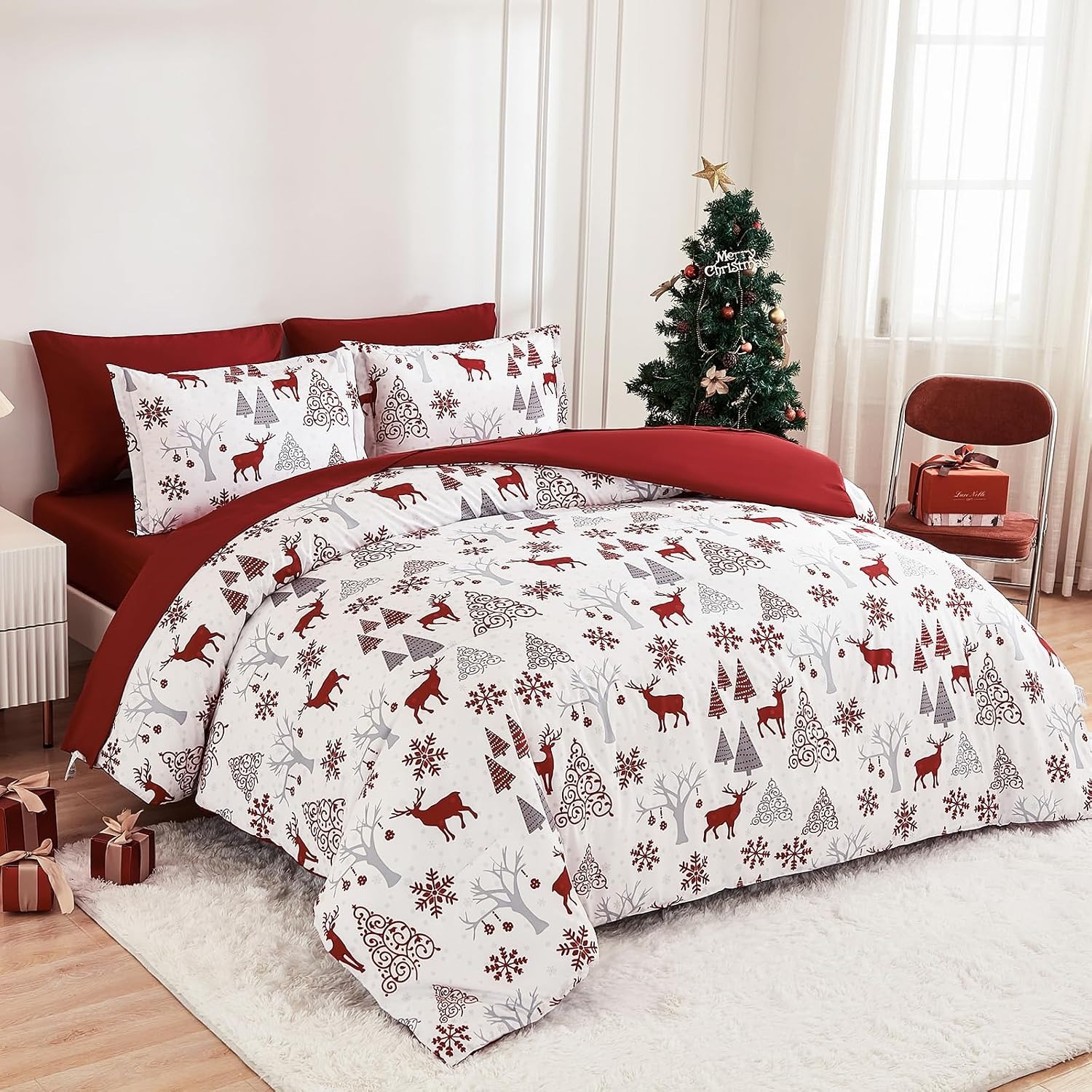
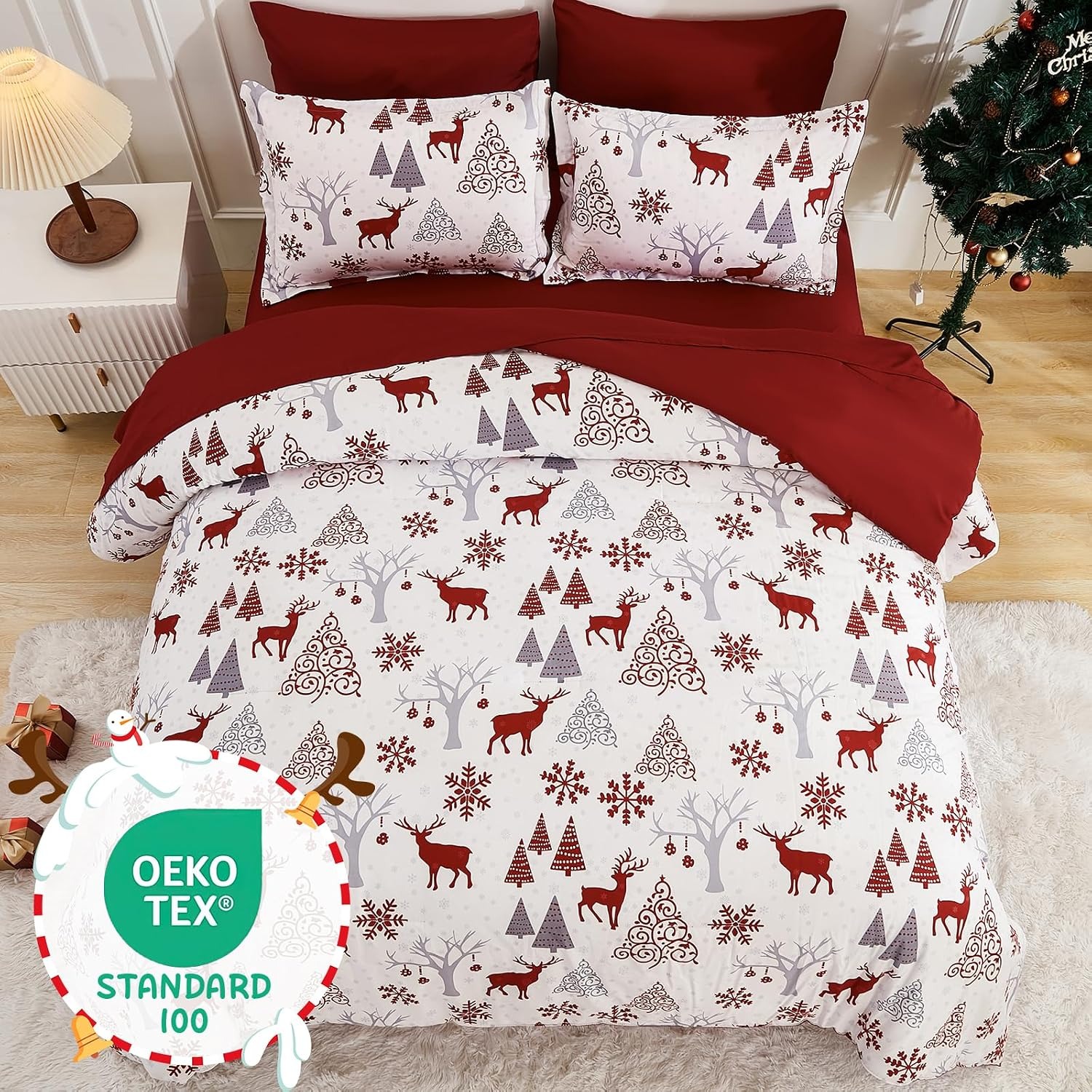
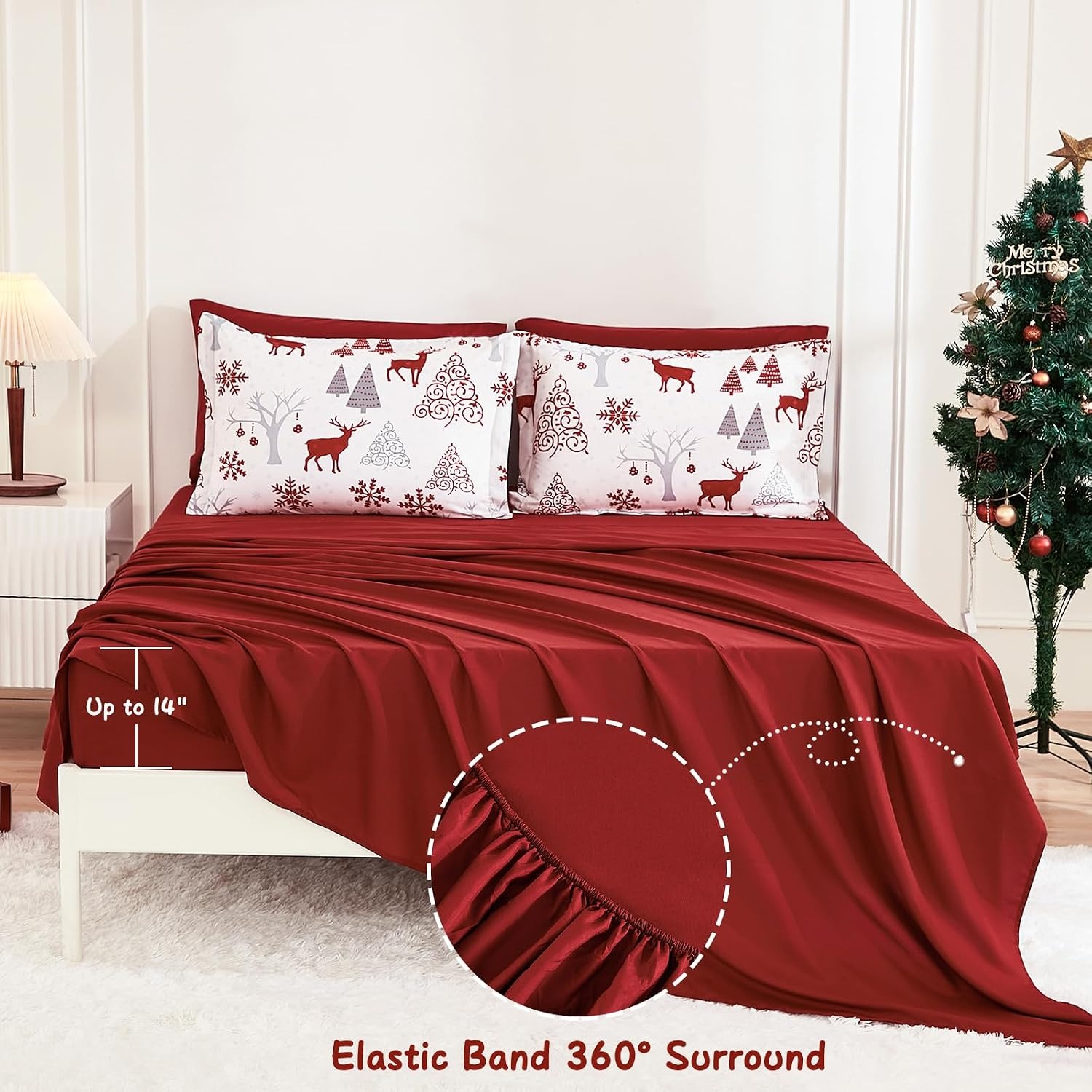
This set includes a comforter, a flat sheet, a fitted sheet, two pillow shams and two pillowcases. Worth understanding what each one does, because the sham-versus-pillowcase thing confuses a lot of people.
The fitted sheet goes on the mattress. The flat sheet goes over you. The comforter sits on top. The pillowcases are what your head touches at night. The shams are the decorative covers that go over the pillows during the day, usually propped up against the headboard so the bed looks finished.
The practical upshot is that you can make the bed look styled without sleeping on the fancy pillows. Shams off at bedtime, cases underneath, everything matches either way. On a queen bed that is a complete set with nothing left to buy.
Down alternative versus the real thing
The comforter here is filled with a down alternative. That is a polyester fill engineered to behave like down, trapping air to hold warmth while staying light.
Three things make it a sensible pick for seasonal bedding. It costs less than real down, so you are not spending big money on something that lives in a cupboard eleven months of the year. It washes at home in a normal machine, where real down usually wants specialist cleaning. And nobody reacts to it, which matters when you do not know whether your December guests are sensitive to feathers.
The trade-off is that down alternative does not compress quite as small as down and it can shift around inside the shell over time. Low heat drying with a couple of dryer balls keeps the fill distributed. That is about the extent of the maintenance.
Microfiber, and why it suits a set like this
The fabric is polyester microfiber. Cotton people sometimes turn their noses up at this, and for everyday sheets that is a fair debate. For seasonal bedding, microfiber has real advantages.
It does not crease the way cotton does. A set that spends eleven months folded in a cupboard comes out looking presentable rather than needing an hour with an iron. It dries fast, so a late wash in December does not leave you with a damp comforter the night before guests arrive. It is also easy on the wallet, which matters for something used a few weeks a year.
It feels smooth rather than crisp. If you love the cool, papery feel of high-thread-count cotton percale, microfiber will feel different. Warmer, softer, a bit more like brushed fabric. In winter, most people prefer that anyway.
Thinking about where it will live
Before you order, work out which bed this is going on and measure it. Queen sizing is reasonably consistent but not identical everywhere, and mattress depth varies a lot more than width and length do. A pillow-top mattress or one with a thick topper eats into the depth a fitted sheet has to cover.
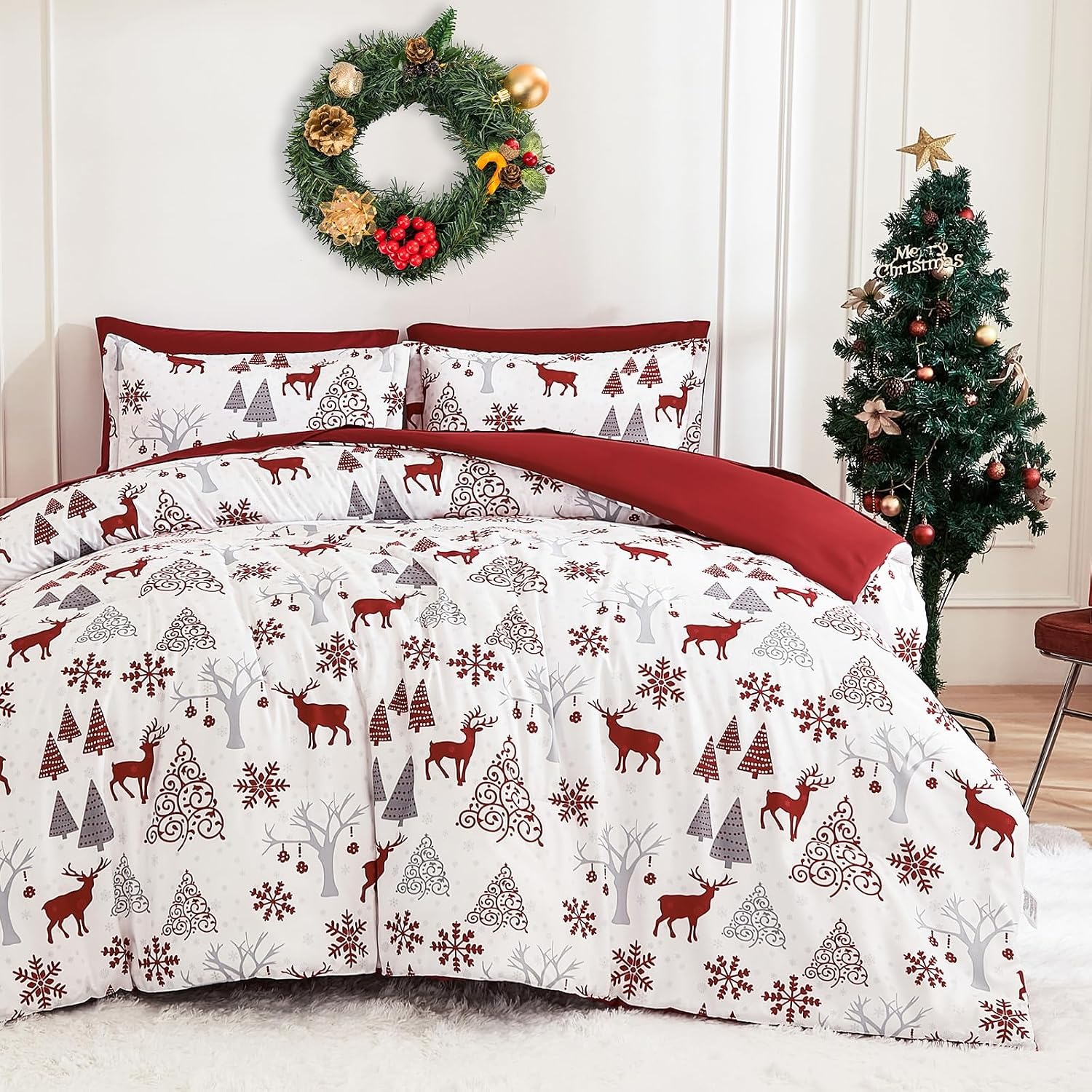
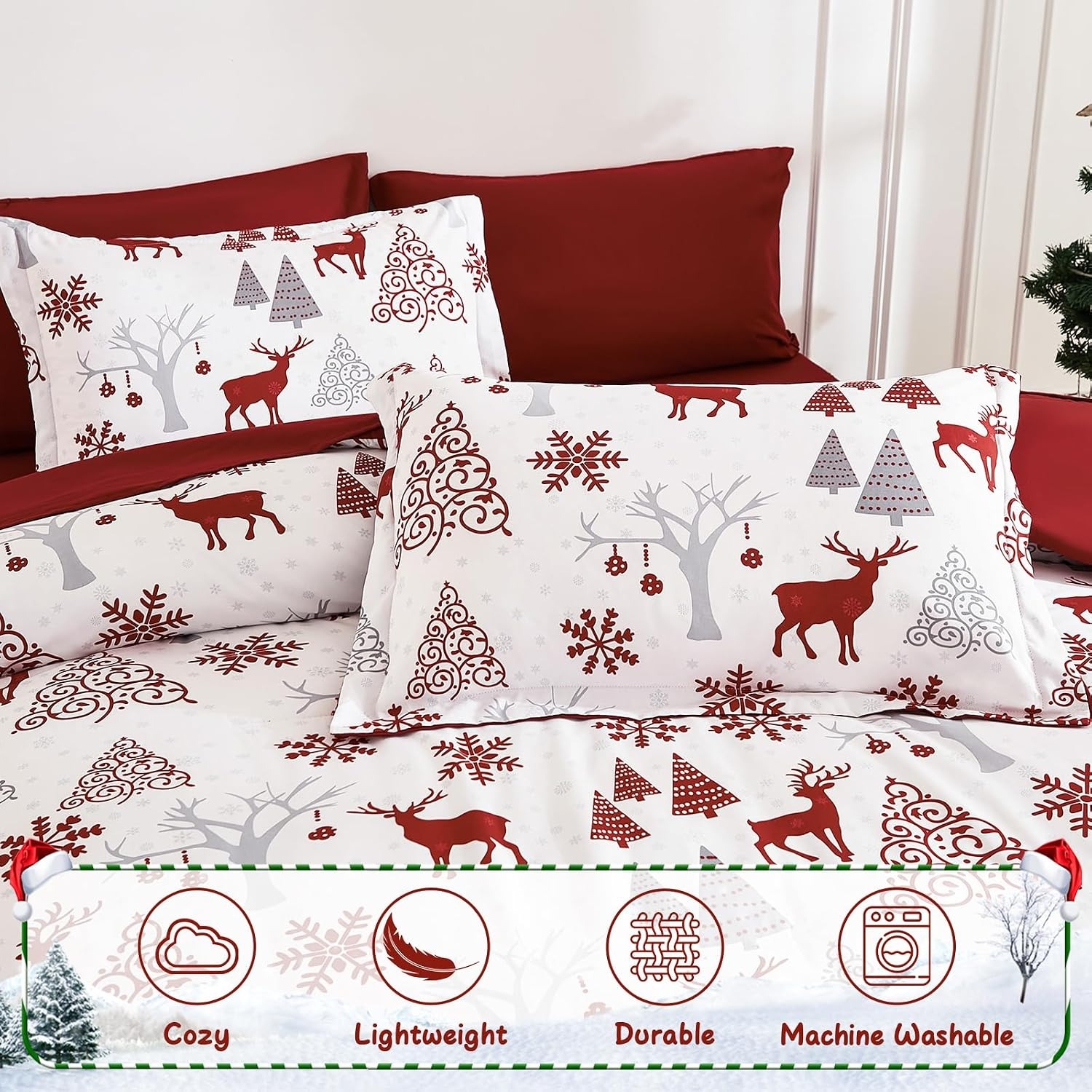
Also think about the room it lands in. A red lodge-style print with trees and deer is a strong look. In a room with white or pale walls it stands out and does the whole decorating job on its own. In a room that is already busy with pattern, you may want to pull back on other seasonal bits so the bed is clearly the main event.
Guest rooms are the obvious home for it. They are usually plainer to start with, and dressing one properly is the cheapest way to make visiting family feel looked after. Main bedrooms work too, if you are a household that goes all in on December.
Getting it out of the bag
Expect a flat, dense brick when the parcel arrives. Compression packing is standard for bedding, and the comforter will look disappointing for the first hour.
Open it as soon as it lands. Pull everything out, shake the comforter hard a few times, and drape it over a chair or a clothesline somewhere with airflow. A few hours in sunlight helps. Pat it down the length of the quilting with your hands to break up any compressed patches. By that evening it should look like the photos.
If it still feels dense, a short tumble on low with dryer balls finishes the job. Do not rush this step by cranking the heat. Polyester fill does not like high temperatures.
Washing and storing it so it lasts
Cold water, gentle cycle, no bleach. That is the whole rule.
Wash the comforter by itself. A queen comforter in a full machine has nowhere to move, which means it does not rinse properly and the fill ends up bunched. The sheets, shams and pillowcases can all go in together on a normal load.
Dry on low with dryer balls. If you line dry, hang the comforter over two lines rather than one so the weight is spread and it does not stretch through the middle.
Storage is where most seasonal bedding gets ruined. Make absolutely sure every piece is bone dry, then fold it into a breathable bag. A cotton laundry bag, an old pillowcase, a canvas tote. Not a sealed plastic tub, which traps any trace of moisture and produces that unmistakable musty smell in July. Keep it off concrete floors and out of damp basements. Done right, a set like this sees out plenty of Christmases.
The short version
You get seven matching pieces for a queen bed, a down-alternative comforter that washes at home, microfiber that comes out of the cupboard without a fight, and a red deer-and-snowflake print that does the decorating for you. It weighs 3.47 kg all in, the pillowcases run 76 cm (30 inches), and care is cold and gentle with no bleach.
Order it early, air it out properly when it arrives, and the spare room stops being the room nobody bothered with.