


The complete guide
Fence Spikes Buyer's Guide, Choosing and Fitting a Boundary Deterrent
The problem starts at the top edge
Almost every boundary complaint traces back to the same strip of timber or brick. The top rail of a fence is flat, stable and the perfect width for a cat to walk along. The gutter edge is the same for pigeons. For a person looking to get over a fence, that top edge is the handhold that makes the whole thing possible.
You can make the fence taller, which is expensive and often not allowed. You can plant something prickly, which takes a few years. Or you can make the existing top edge an unpleasant place to be. That is what fence spikes do. They are not clever and they do not need to be. They take the one comfortable surface on your boundary and turn it into something nobody wants to use.
How a spiked strip actually works
The deterrent is physical and passive. There is no sensor, no battery, no ultrasonic noise and nothing to reset. A strip of spikes sits along the edge, and anything that tries to land, perch or grip there finds an uneven, uncomfortable surface instead of a flat one.
This matters more than it sounds. Motion-activated deterrents work until the animal learns the pattern, or until the battery dies in February. A spiked strip works at three in the morning in a rainstorm exactly as well as it does on a dry afternoon. That reliability is the main reason people who have tried sprays, sonic devices and gels end up here.
The second thing worth understanding is that animals and people take the path of least resistance. A cat that finds your fence rail uncomfortable does not spend a week trying to solve it. It goes along the neighbour's fence instead. Birds move four metres down the gutter. That is the mechanism, redirection rather than confrontation.
What you are buying here
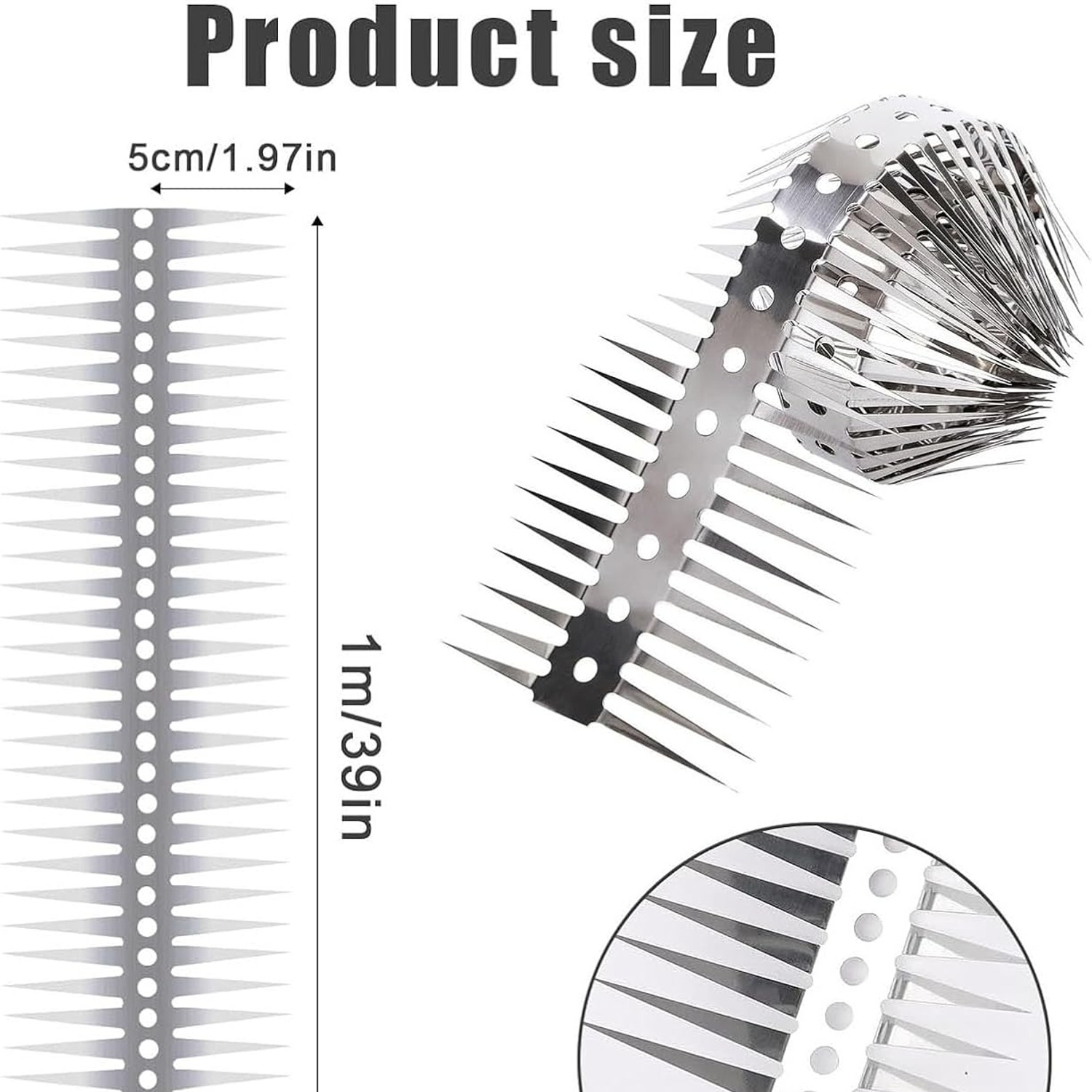
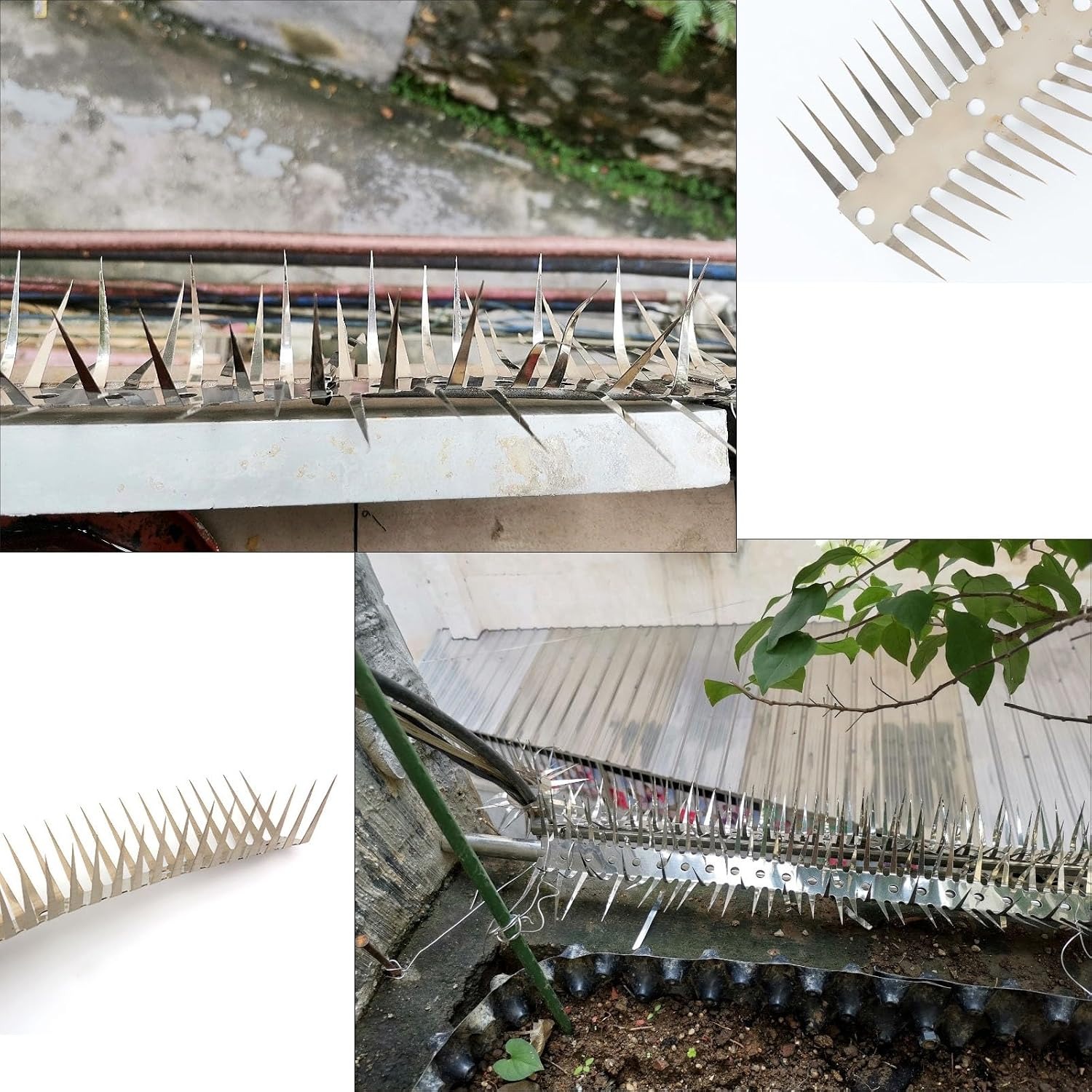
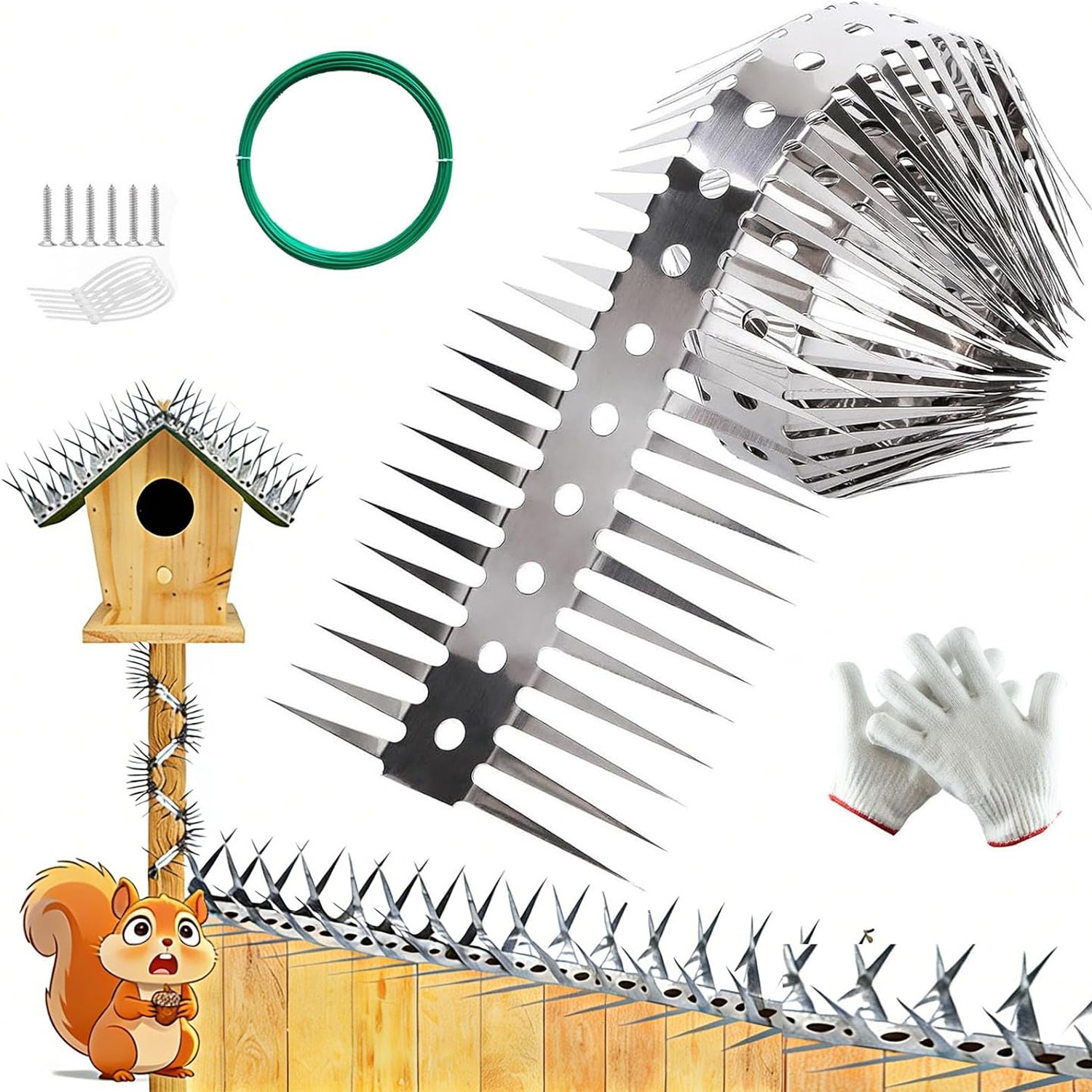
Each strip is 99.06 cm long, 7.62 cm wide and 5.08 cm in profile, weighing 272.16 g. Stainless steel is the material, which is the standard choice for anything that lives outdoors permanently. Rain, snow and strong sun are all expected conditions.
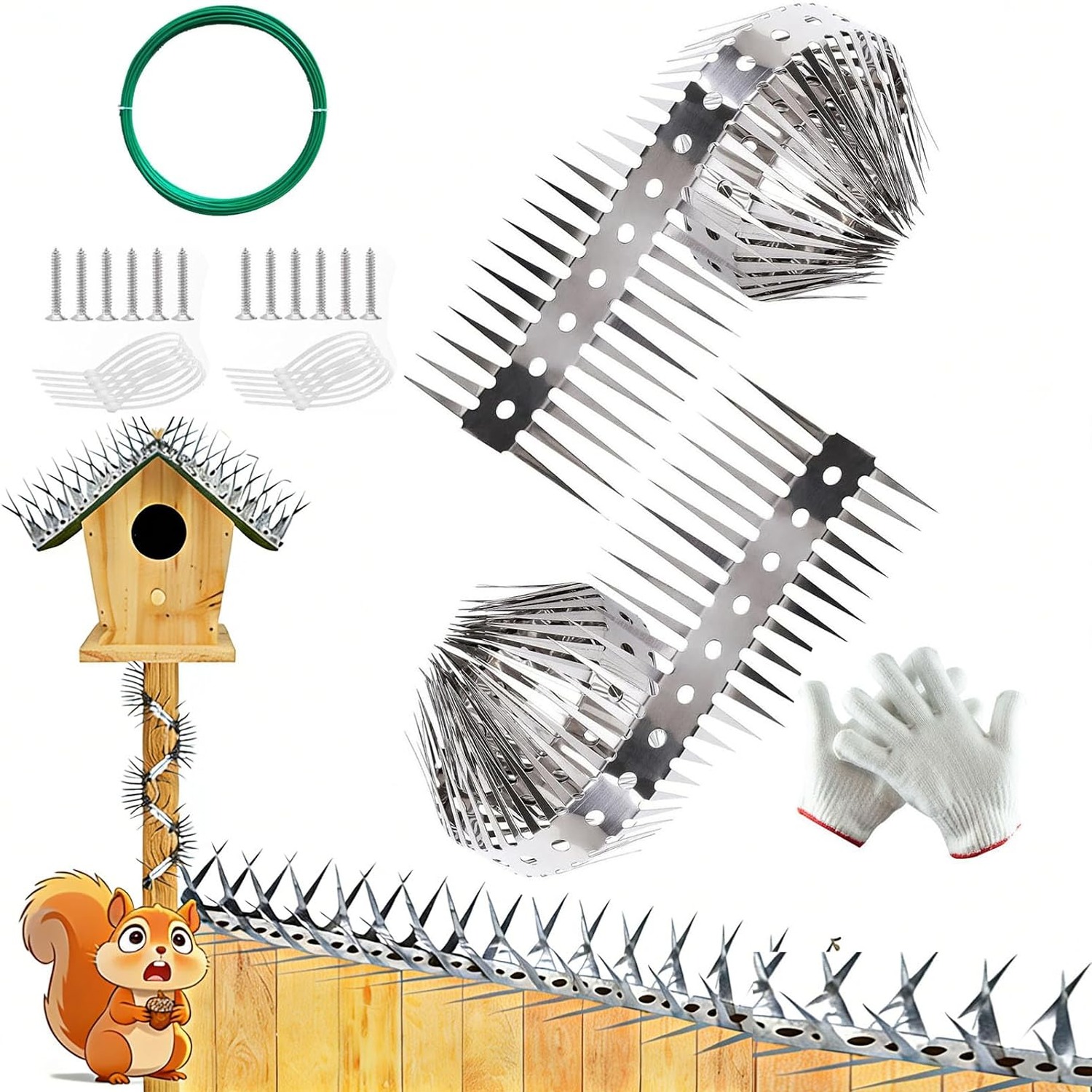
Self-locking ties, wires and screws come pre-attached. That combination is deliberate. Ties handle mesh and railings, wires handle brackets and posts, and screws handle timber. Between the three, most fence and shed situations are covered without a trip to the hardware shop.
The length is useful. Just under a metre per strip means working out quantities is simple arithmetic rather than a conversion exercise. Six metres of fence top is six or seven strips, and you can see at a glance whether a job is a small one or a weekend one.
Who this suits
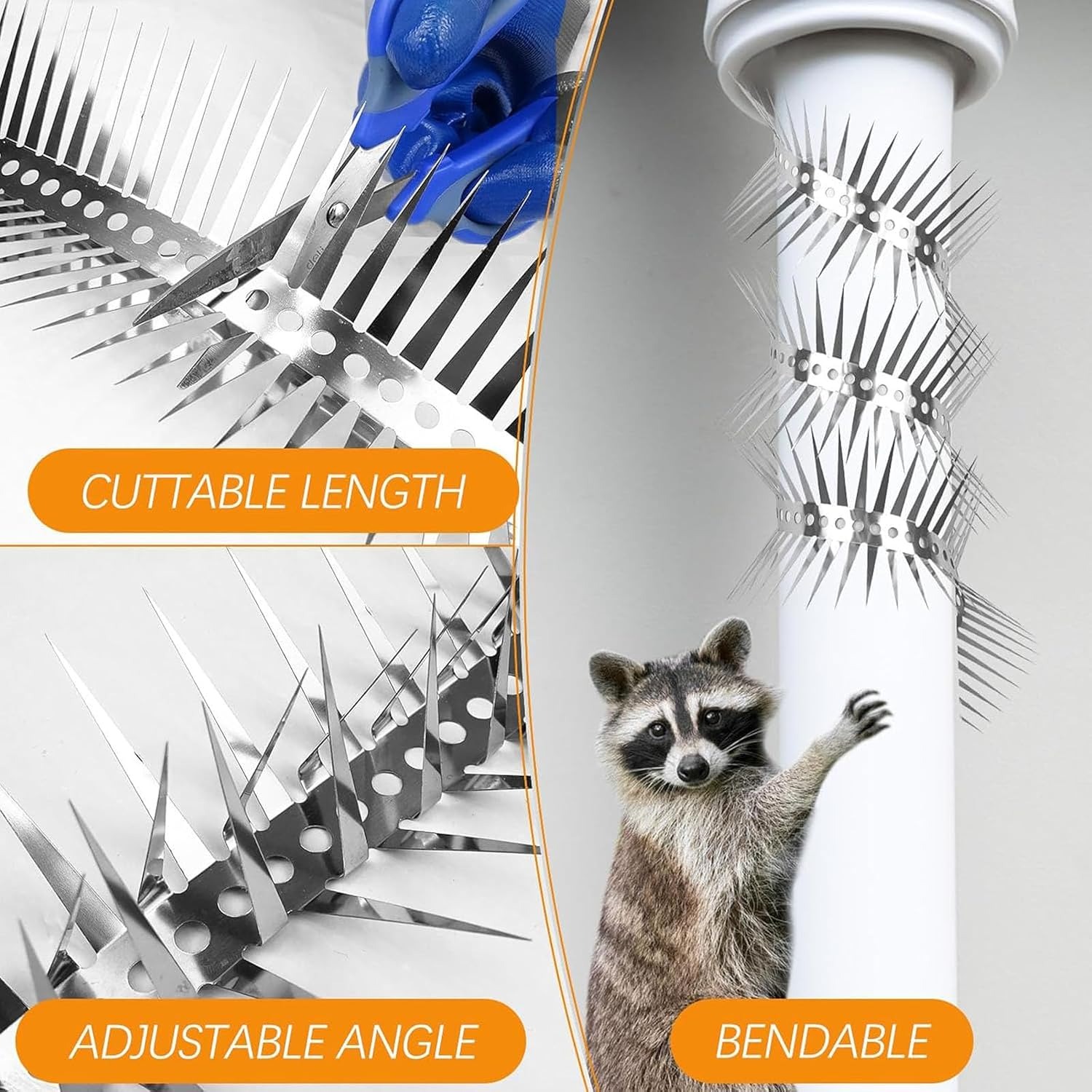
Households with a cat problem are the biggest group. It might be your own cat getting out, or a neighbourhood cat using your garden as a route and your vegetable bed as a toilet. Cat deterrent spikes along the specific rail the cat uses solve this more reliably than anything you can spray on the soil.
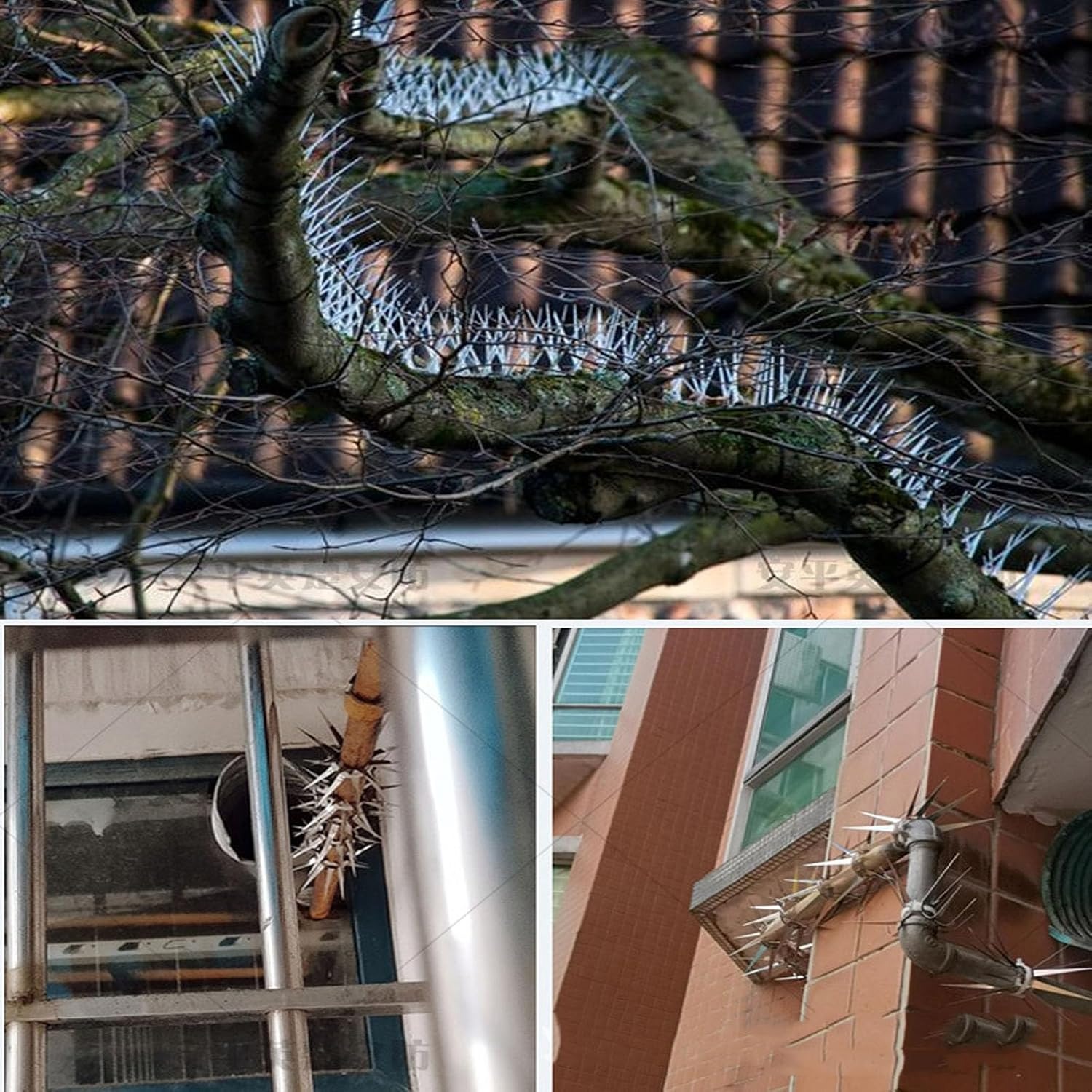
Then there are bird problems. Pigeons on a gutter, gulls on a flat roof edge, crows on a shed ridge. Bird deterrent spikes work on the same principle, remove the perch and the birds relocate. Anyone who has cleaned bird mess off a car or a patio knows the value of that.
Security is the third group. Anti climb fence spikes on the rear boundary of a property, especially one backing onto an alley or open land, make the easy route harder. They are one layer among several. Nobody should think a spiked fence replaces a lock, but as a visible signal that this boundary is not the soft option, they do a job.
Allotment holders, smallholders and anyone with outbuildings make up the rest. Barn edges, feed store roofs and shed lines all get the same treatment.
Choosing how many and where to put them
Start by watching, not buying. Spend a few days noticing where the traffic actually happens. Cats use a specific jump-on point and a specific route. Birds favour one section of gutter. People climbing a fence pick the spot with a bin or a shed next to it. Spiking the whole boundary when only four metres matters is money you did not need to spend.
Once you know the hot spots, measure them in metres and round up. Buy a strip or two more than the calculation suggests. You will almost always want to extend the run slightly once you see how the animal responds, because gaps get exploited quickly.
Placement matters as much as quantity. A continuous line beats scattered strips every time. A cat that finds a 30 cm clear section between two strips will use that 30 cm. Butt the strips together or overlap them a little at the joins.
Height is the other consideration. Fit high, fit on the inside face of the boundary where you can, and keep spikes well away from gates, letter slots, handles and anywhere a child or passer-by might brush against them. Local rules on boundary deterrents differ from place to place, particularly near public paths, so check what applies before fitting at low level on a street-facing fence. A small warning sign is good manners and costs very little.
Fitting them without drama
Put gloves on before you open the packaging. The points are sharp and the strips are genuinely easier to handle when your hands are protected. This is the single piece of advice people skip and then regret.
Lay out your strips along the run first, dry, before fixing anything. It takes two minutes and it shows you where the joins will fall, whether you need an overlap at one end, and whether you miscounted.
For timber rails, screws are the neatest option. Pilot holes help if the timber is old or prone to splitting. For mesh and railings, the self-locking ties are fastest. Trim the tie tails flush afterwards so nothing catches. For brackets and posts, the wires give you more adjustment.
On brick or block walls, you have two routes. Screw into wall plugs, or fix a timber batten along the coping first and screw the strips to that. The batten approach is often tidier and means you can remove everything later with minimal patching.
Work along the run in one direction rather than jumping around. You will get noticeably faster after the second strip.
Keeping them working
Maintenance is light. Rinse them with clean water a few times a year to clear leaves, dust and bird mess, then leave them to dry. Avoid scrubbing hard with a wire brush, which scratches the surface for no benefit.
Check the fixings seasonally. Ties can perish slowly in strong sun, screws can back out of timber as it moves through wet and dry cycles, and wires can loosen. Tightening anything loose takes a few minutes during a normal garden tidy-up.
In snowy areas, clear heavy build-up so the points are not buried. Buried spikes are just a flat surface again, which is the thing you were trying to avoid.
If you ever remove them, store the strips flat with the points facing down, somewhere dry and out of reach of children and pets. Tie and wire fixings come off cleanly, so strips can be moved to a new fence or a new house without issue.
What they will not do
Worth being plain about this. Spikes discourage casual use of an edge. A determined person with a ladder and a blanket is not stopped by a spiked rail, and no honest seller will tell you otherwise. Think of garden fence spikes as the thing that makes your boundary a worse option than the one next door, not as an impenetrable barrier.
They also will not solve a problem on a surface you have not covered. If a cat has three ways into your garden and you spike one, you have changed which route it takes. Deal with all the entry points or accept partial results.
The short version
Fence spikes work because they remove the flat, comfortable top edge that cats, birds and climbers depend on. These strips are 99.06 cm long, stainless steel, and come with ties, wires and screws already attached, so most fences, walls, sheds and gutters can be fitted in minutes.
Watch where the traffic actually happens, measure that run in metres, round up, and buy a strip or two spare. Fit high, fit continuously, wear gloves, and check the fixings a couple of times a year. Do that and you have a quiet, weather-resistant deterrent that keeps working without you thinking about it again.