


The complete guide
Satin Sheets Buyer's Guide: Fit, Feel And Keeping The Shine
The problem with most sheets
Most people put up with their bedding. The fitted sheet pings off a corner sometime around 2am. The fabric feels warm and a bit grabby when you first get in. Hair ends up in a nest on one side. None of that is dramatic, but it adds up, and you only really notice how much it was bothering you once you fix it.
Satin fixes a decent chunk of it. Not because it is fancy, but because of how the fabric is built.
What satin actually is
Satin is a weave, not a material. In a plain weave the threads cross over and under each other evenly, which makes a surface with a lot of texture. In a satin weave, the threads float over several others before dipping under one. That means more unbroken thread sits on the face of the fabric.
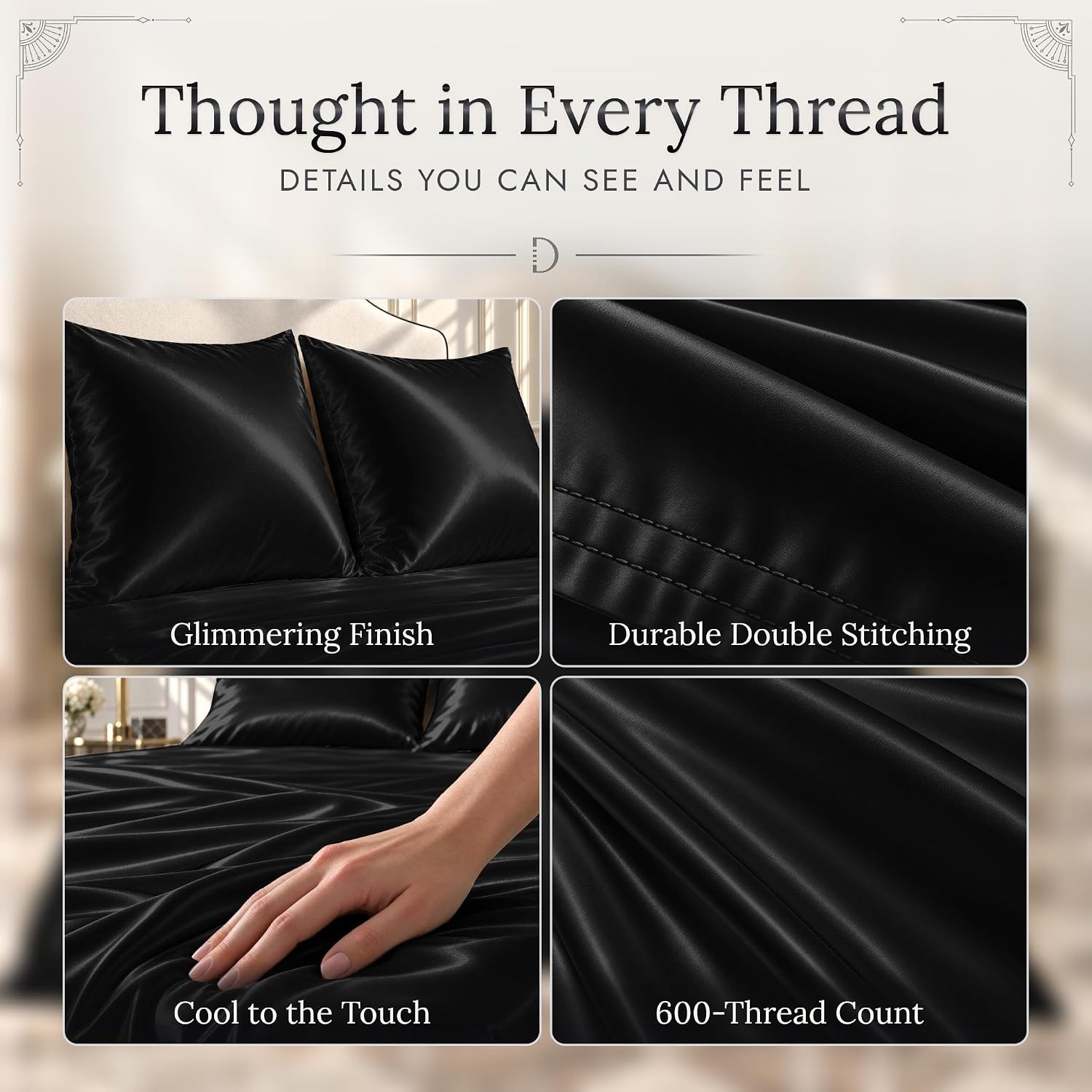
Two things follow from that. The surface reflects more light, which is where the shine comes from. And there are fewer crossing points, so there is less texture to catch on skin and hair. That smooth, cool, slightly slippery feel is a direct result of the weave structure.
Silk is something different. Silk is a fibre spun by silkworms, and it can be woven in all sorts of ways, including a satin weave. People use the words interchangeably in everyday speech, which causes confusion. If a set is described as satin, you are being told about the weave.
Who satin suits
Hot sleepers tend to like it. That first contact when you slide into bed is noticeably cooler than cotton flannel or jersey, and for people who dread getting into a warm bed, that matters.
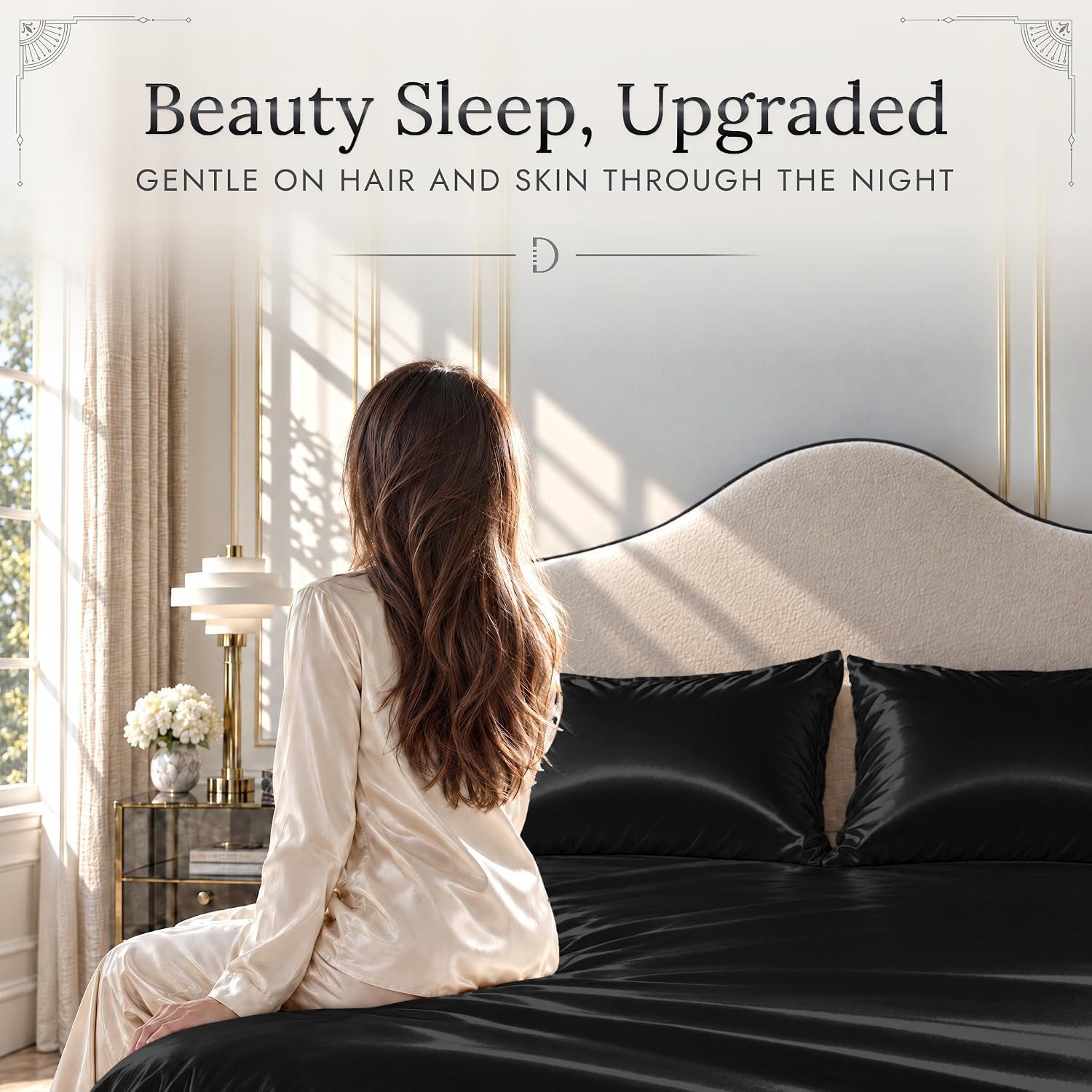
People who care about their hair are the other big group. Hair slides across a satin pillowcase instead of snagging, so there is less friction through the night. If you have curls, extensions, or you have just paid for a blow dry, that is the reason to switch. It is a comfort thing, not a treatment, but it is a real and noticeable difference.
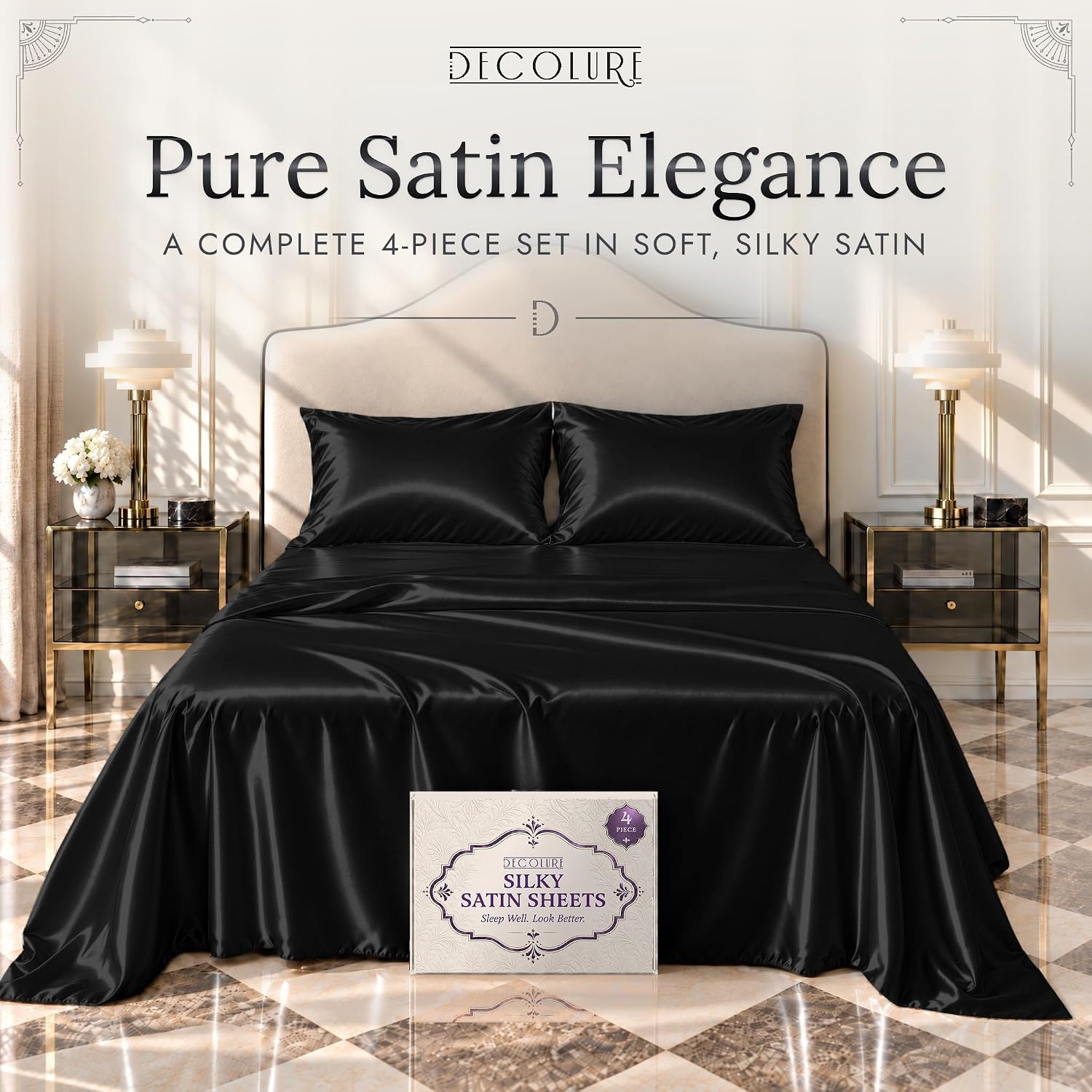
Anyone who wants the bed to look done without any styling effort will get on with this too. Satin has a natural sheen that reads as finished even when the bed is only half made. Black especially. It is the colour that behaves itself in almost any room.
And then there is the practical group: people who are just sick of their fitted sheet coming off. Which brings us to the most important part of buying sheets.
Getting the fit right
This is where most sheet purchases go wrong, and it is entirely avoidable.
Go and measure your mattress depth. Not the size on the label, the actual depth from the bottom edge to the top surface, with your hand flat so you are not squashing it. Then add the depth of any topper you use. That combined number is what the fitted sheet has to cover.
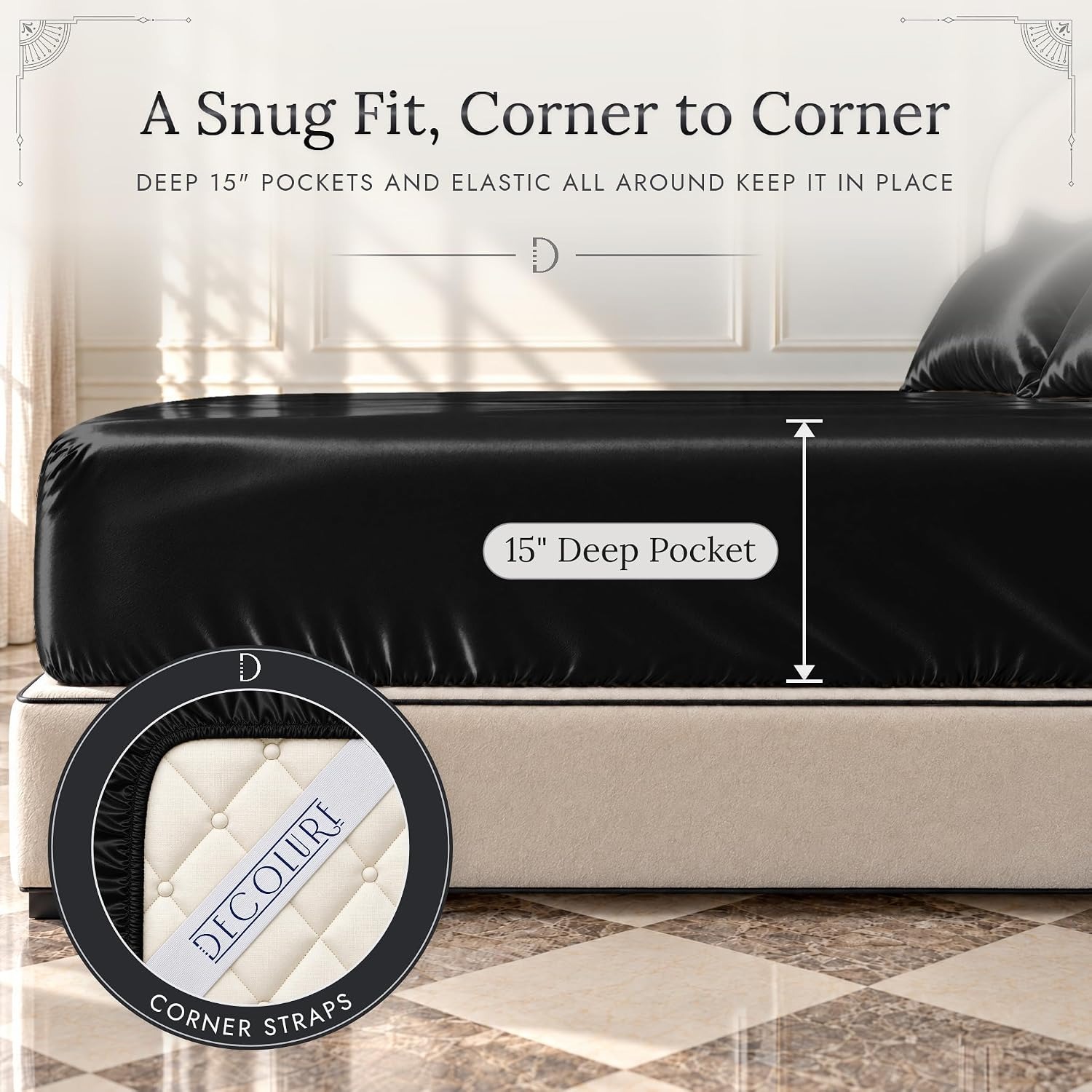
This set is built for queen mattresses up to 38 cm (15 inches). That covers a standard queen comfortably and leaves room for a topper on most beds. If your total comes in over that, the corners will pull and you will be back to the 2am ping.
The fitted sheet here has elastic running the full way around the hem rather than just gathered at the four corners. That is the detail worth paying attention to. Corner only elastic grips in four spots and leaves the sides loose, which is exactly where sheets work themselves free. Full perimeter elastic pulls evenly along every edge.
Size is the other half of it. Queen, double and king get muddled constantly, and bed names vary between countries. Check your mattress dimensions rather than trusting what the previous owner called it.
What you get in a four piece set
Buying pieces separately is a nuisance. You find a fitted sheet you like, then the matching top sheet is out of stock, then the pillowcases are a slightly different black. Six months later nothing matches.
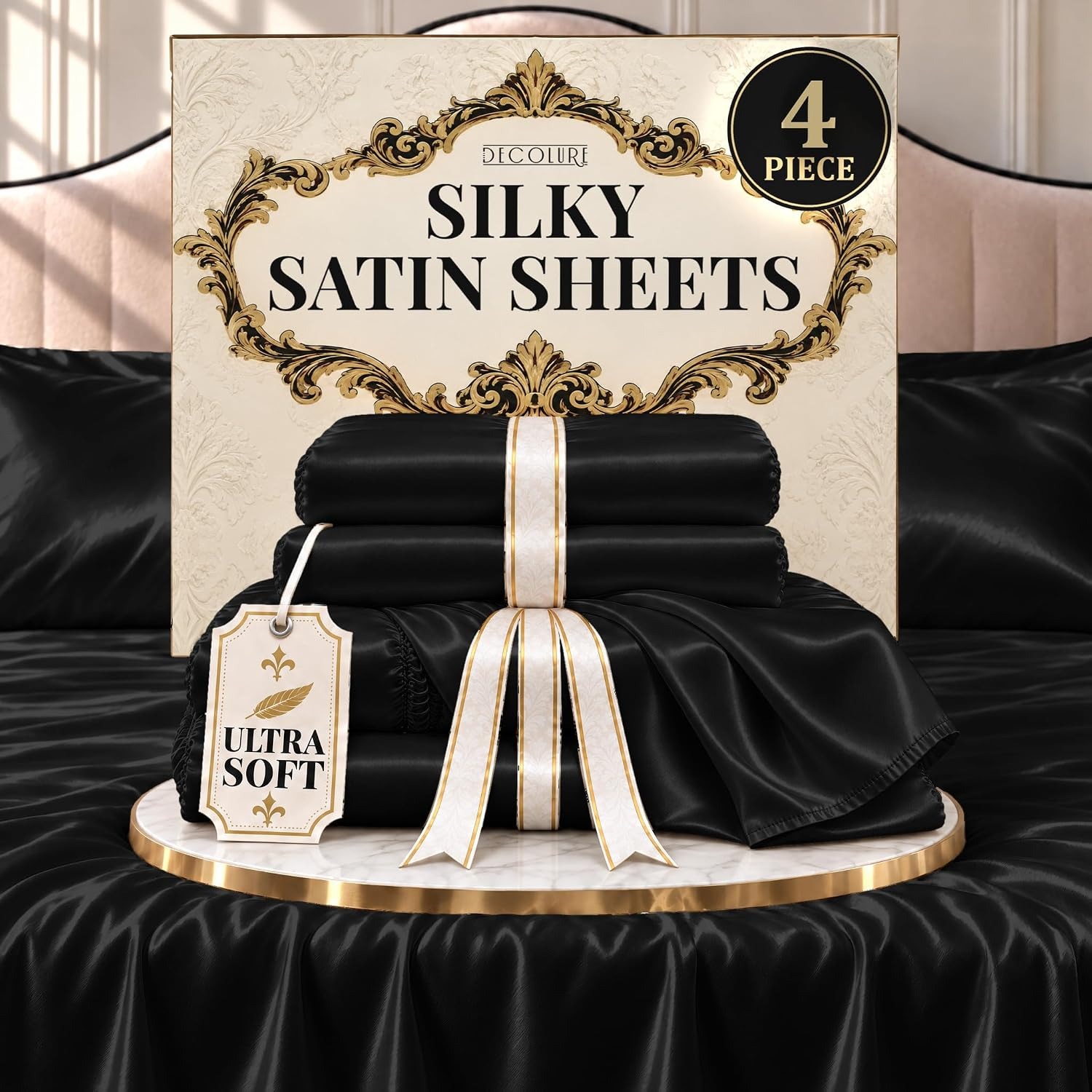
A four piece set skips all of that. Fitted sheet, top sheet, two pillowcases, identical fabric, identical colour, arriving together. For a queen bed that is the complete setup. You can add a duvet cover over the top in whatever you like, and the satin underneath does the work.
Two pillowcases is the right number for a queen. If you keep a spare set for washday, you would need a second pack, but for everyday use this is the full kit.
Living with satin
Satin is not delicate, but it does reward a bit of care. Here is the short version of looking after it.
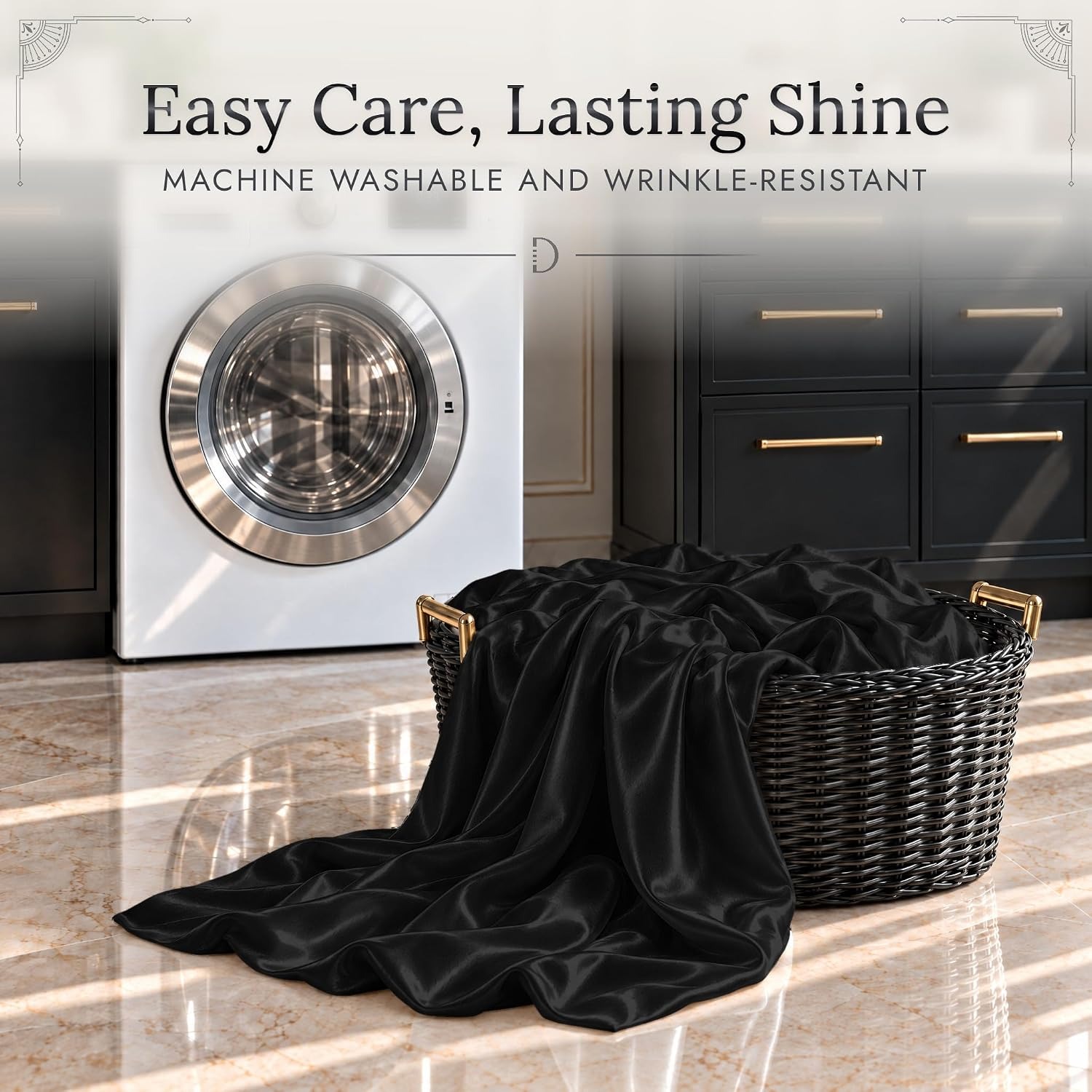
Wash cold on a gentle cycle with a mild detergent. Hot water is the enemy of both the shine and the colour. Skip the fabric softener entirely, because it coats the fibres and takes the gloss off, which is the exact opposite of what you want. Skip bleach too.
Wash it with similar colours and, ideally, on its own. Towels shed lint that clings to smooth fabric. Anything with a zip, hook or button can catch the surface during the wash cycle. A separate load takes five extra minutes and saves a lot of annoyance.
Dry on low heat or hang it out of direct sun. Strong sunlight is hard on dark dyes. Pull the sheets out of the dryer while they are still a little damp and smooth them straight onto the bed, and most creasing settles overnight. If you want them properly pressed, iron on a low setting on the reverse side, never hot on the glossy face.
Wash weekly, same as any bedding. Pillowcases can go more often if you use heavy skincare or hair products.
One last practical note. Keep an eye on rough nails, rings and pet claws. Any smooth weave can snag, and a snag is the one thing that genuinely spoils the look. It is not fragile, it just does not forgive a sharp catch.
Black as a choice
Worth a quick word, because colour choice gets treated as purely aesthetic when it is also practical.
Black hides the everyday marks that make pale bedding look tired long before it is worn out. It works with almost any duvet, throw or headboard you already own, so you are not committed to redecorating around it. And the combination of a dark colour with a glossy finish gives depth that flat matt black does not have.
The one trade off is that pale hair and lint show more clearly. Washing separately from towels handles most of that, and a quick pass with a lint roller handles the rest.
The short version
Satin is a weave that puts more smooth thread on the surface, so it shines, feels cool at first touch and creates less friction against hair and skin. This is a queen set with four pieces, the fitted sheet has full perimeter elastic and deep pockets for mattresses up to 38 cm (15 inches), and black is the easiest colour to live with.
Measure your mattress depth including the topper before you order. Wash cold, dry low, no softener. Do that and you will have a bed that looks sorted and feels good to get into, which is really all anyone wants from sheets.