


The complete guide
Vertical Bike Storage: How to Pick a Floor Stand That Actually Fits
The problem with a bike on the floor
A bike lying against a wall is a slow nuisance. It eats a metre of hallway, you clip the pedal with your shin on the way past, and sooner or later the handlebar grip leaves a grey smear on the paint. Lean it the other way and the derailleur takes the hit. Stand it on a kickstand and the first door slam sends it over.
None of this is dramatic. It is just friction, every single day, in the places where you have the least room to spare. Flats, dorms, narrow hallways, a garage where the car already fills most of the floor.
A vertical bike stand fixes it with geometry rather than cleverness. Stand the bike on its back wheel and the footprint shrinks to roughly the size of a doormat. The bike stops being an obstacle and starts being a thing parked in a corner.
How a vertical floor stand works
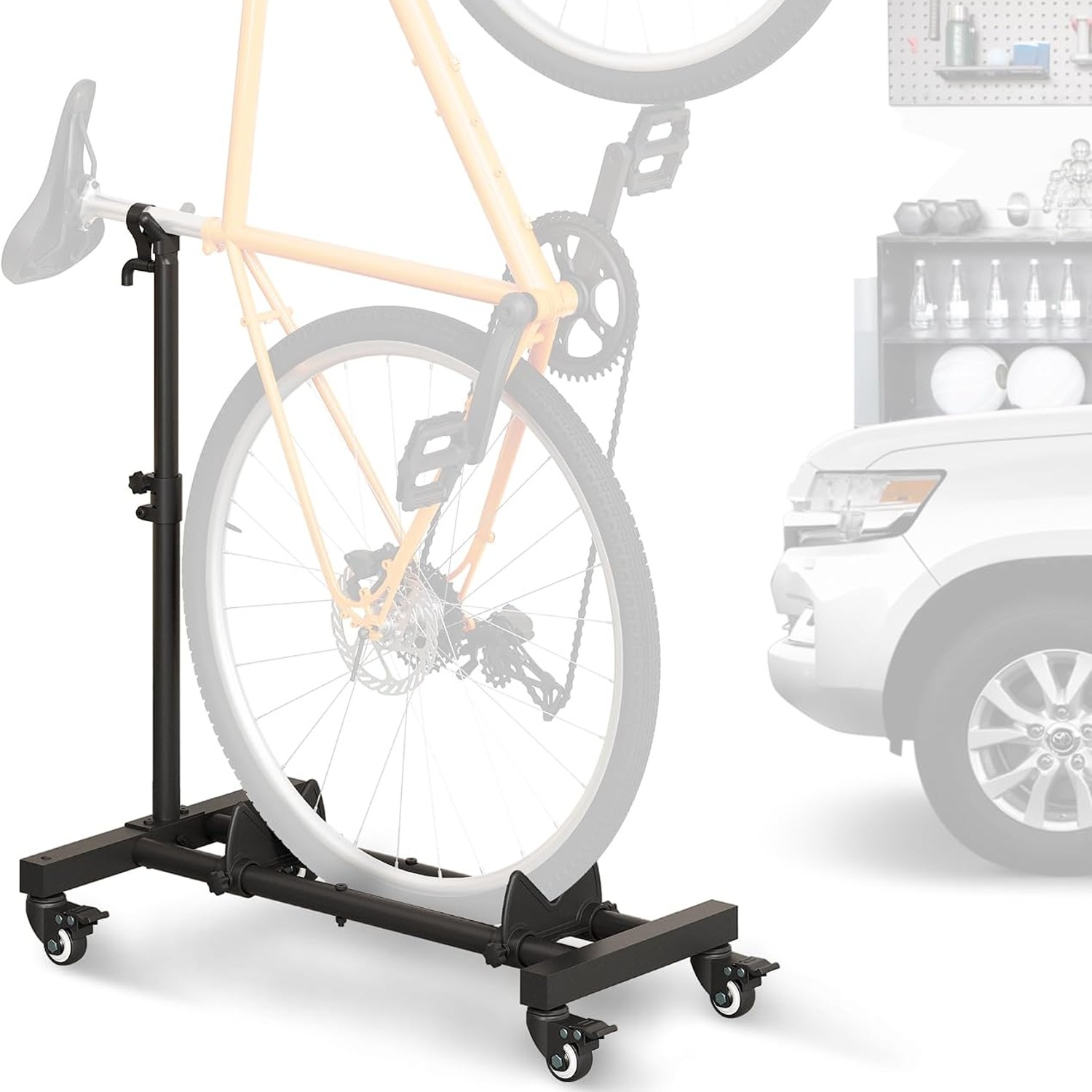
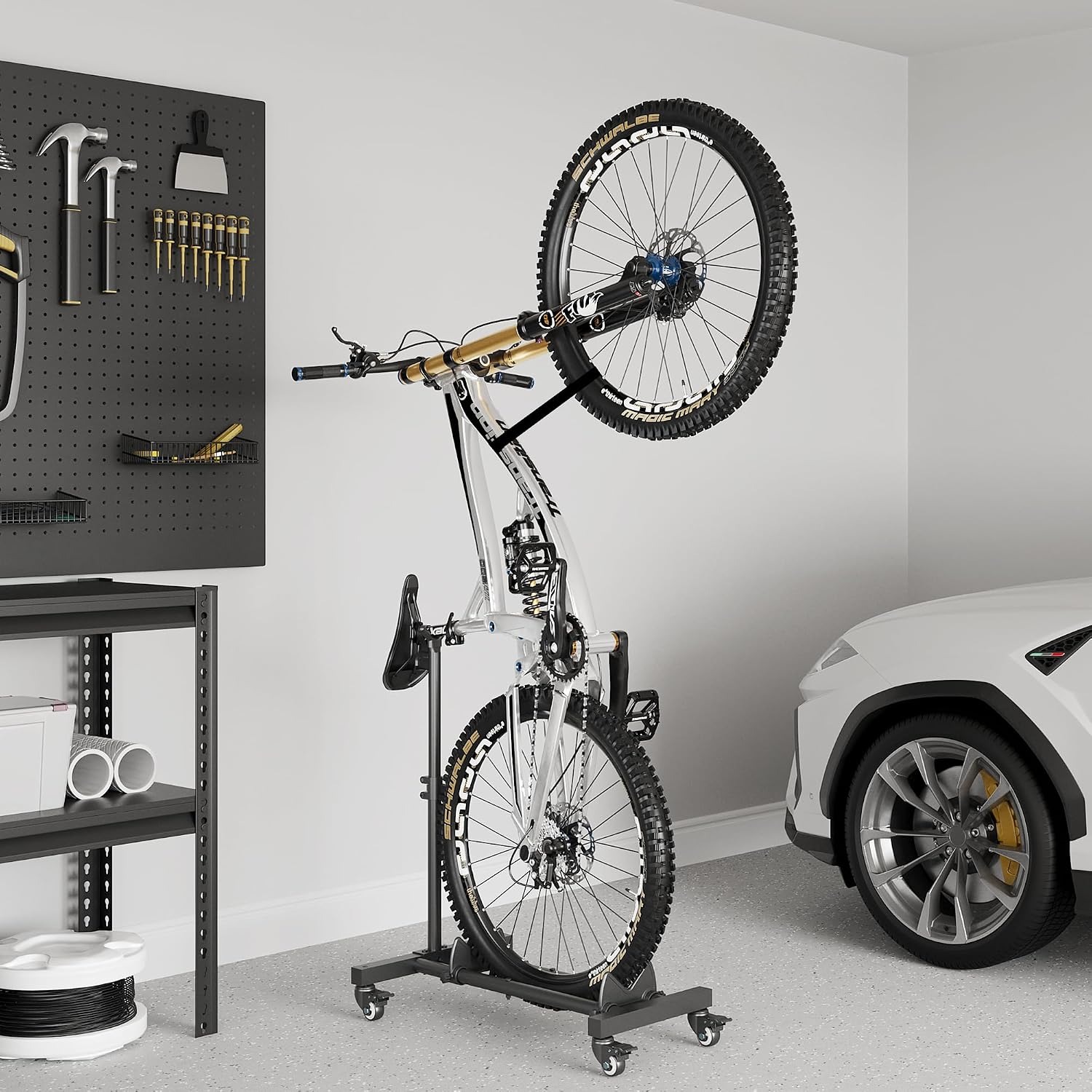
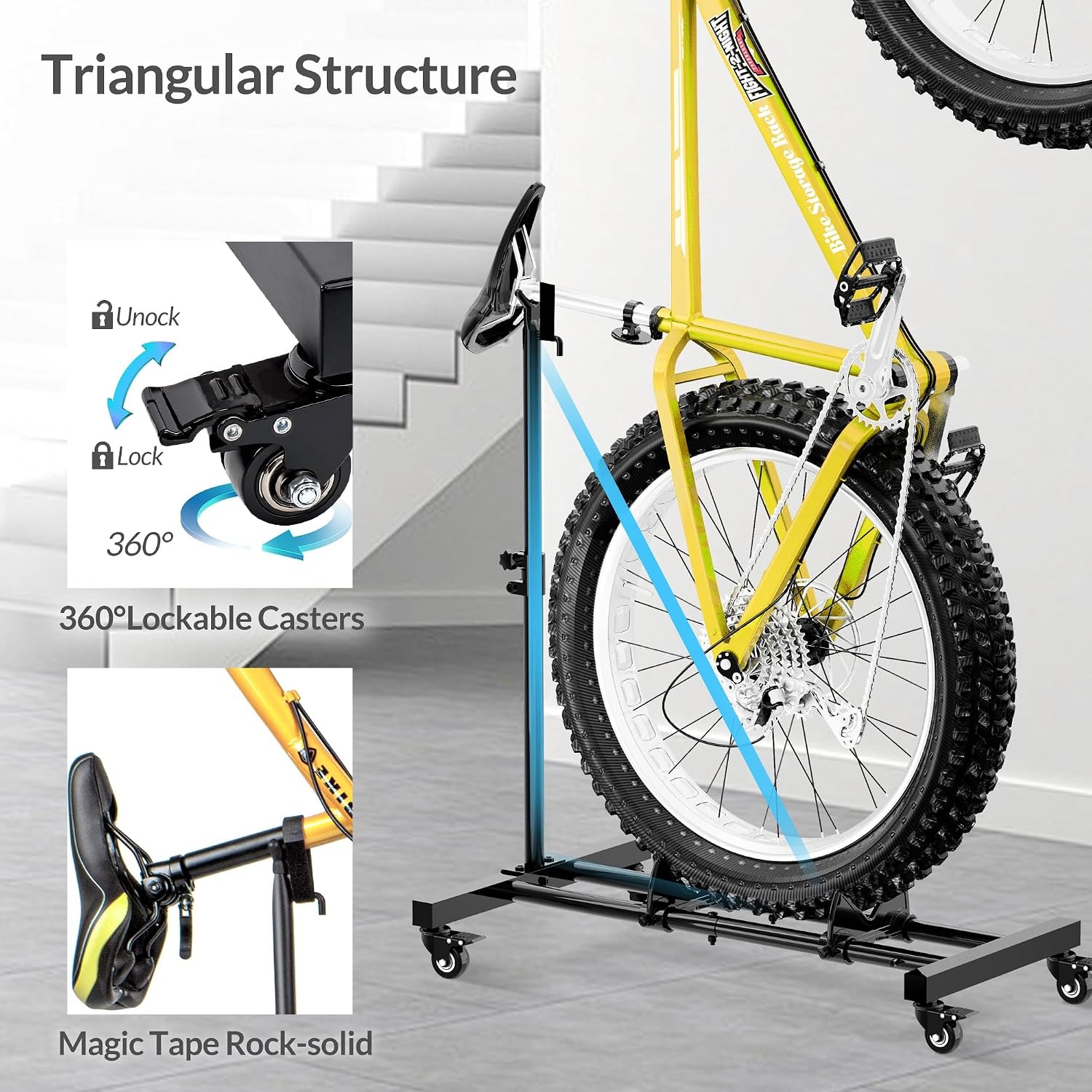
The principle is simple. The rear wheel drops into a cradle at the base, the frame tips upright, and a rod coming up from the base makes contact near the seatpost. That gives you three points of contact instead of two, and three points in a triangle do not wobble the way two do.
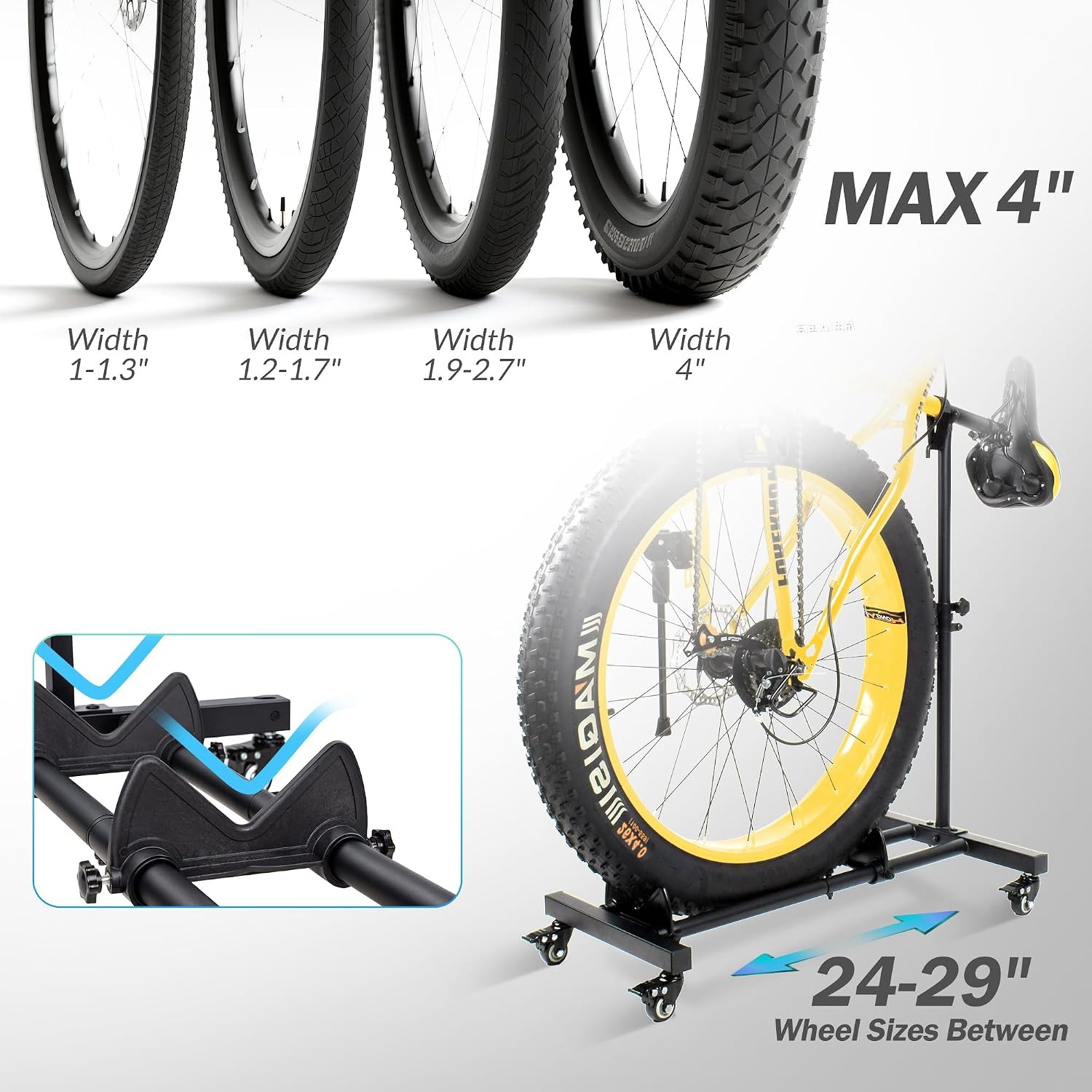
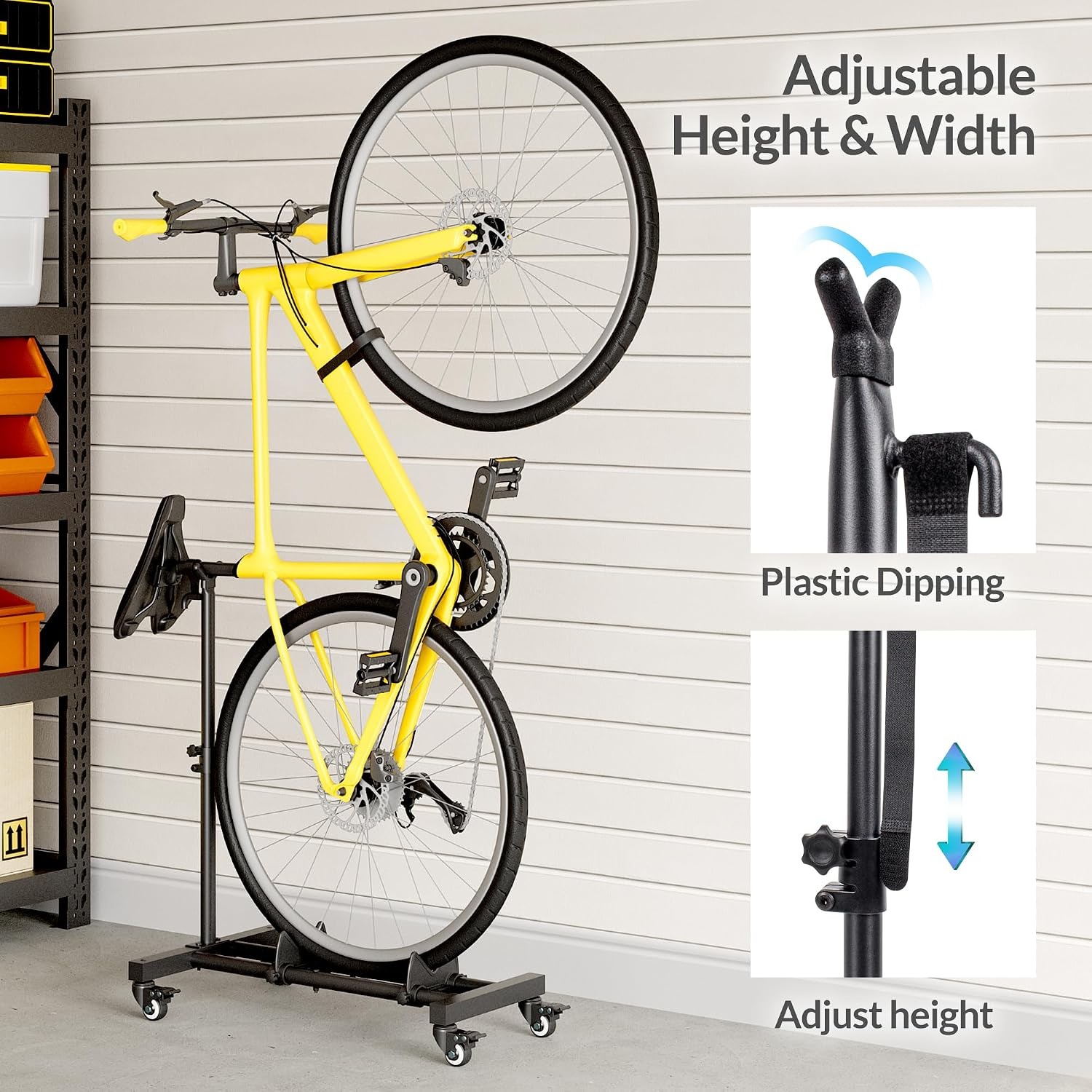
On this stand the rear wheel sits between two V-shaped plastic brackets. The gap between them adjusts, which matters more than it sounds. A 4 inch mountain bike tyre and a 25 mm road tyre are completely different objects, and a fixed-width cradle only ever really suits one of them. Plastic rather than metal at the contact point is deliberate too, so the tyre sidewall is not pressed against a hard edge.
The upper rod slides for height and is not limited to preset notches. That means you set it to your bike rather than picking the nearest hole and hoping. Two hook-and-loop fasteners then secure the front wheel and the seatpost so the bike cannot swing or roll out while it is parked.
Underneath, four casters swivel through a full circle and each one locks. Unlocked, you can push the whole assembly across a smooth floor. Locked, it stays where you put it. The casters carry the weight, so repositioning the stand does not mean dragging a loaded frame across the tiles.
Who this suits
Renters get the most obvious benefit. Wall-mounted hooks are a great storage solution right up until you have to explain the holes at the end of a tenancy. A freestanding bike rack indoor option has no fixings, no anchors and no patching.
Students and anyone in a shared house are in the same boat. A dorm room bike rack needs to be movable, because the furniture layout is never permanent and the bike has to come with you when the year ends.
Garage users like it for a different reason. The bike can live against the wall when the car is in, then roll out of the way when you need the workbench. A rolling bike storage rack beats a fixed hook if your garage changes shape depending on what is parked in it.
It also suits households with one bike per person. The stand holds one bike. Two stands side by side still take less floor than two bikes lying down, and you can split them up when you need the space.
Checking it will fit your bike
Three numbers matter.
The first is weight. The stated capacity is 25 kg. Most road bikes, hybrids, kids bikes and standard mountain bikes sit comfortably under that. Heavier e-bikes often do not, and a big battery pushes the number up fast. Check before you buy rather than after.
The second is tyre width. The listing covers tyres up to 4 inches, which takes in most mountain bike setups along with everything narrower. The adjustable brackets do the work here.
The third is wheel size. The listing names 20 to 24 inch kids bikes, 26 to 27 inch mountain bikes and 650c to 700c road bikes. That is a broad span and covers the large majority of bikes in a normal household.
Then there is the space itself. The stand is 68.1 cm long, 42.7 cm wide and 85.3 cm tall. The bike standing on top of it goes higher than that, so measure your ceiling clearance if you are putting it under a sloped roof, a staircase or a low basement beam. A tall mountain bike on end needs more headroom than people expect.
Setting it up well
Assembly takes a few minutes with the supplied instructions, and the stand arrives as a single pack. Be sensible with the metal parts while you work, the same way you would with any flat-packed frame.
Pick a level spot. A stand on a sloping garage floor is working against you before you even load it, and casters on a slope want to roll. Once the stand is positioned, lock all four wheels. Make that a habit, not an occasional thing.
Load the bike rear wheel first, slide it between the brackets until the tyre is properly seated, then bring the frame upright and bring the rod to the seatpost. Fasten both straps. Give the bike a gentle nudge. If anything shifts, the bracket spacing or the rod height needs another small adjustment.
If you are on carpet, check the base sits level before you load. Deep pile can let one caster sit lower than the others. On delicate timber floors, a thin mat under the base is worth the few dollars.
Looking after it
There is not much to it. Wipe the frame with a dry or lightly damp cloth and dry it off. Powder coating is tough but it does not enjoy scouring pads or strong solvents, so leave those alone.
Every few weeks, check the fasteners and retighten anything that has backed off. Vibration and repeated loading will loosen hardware eventually on any assembled frame. Test the caster locks at the same time and make sure they still bite.
Keep grit out of the wheels. A caster packed with garage dust rolls badly and can scratch whatever it is rolling over. A quick brush now and then is all it takes.
The stand is described as suitable for moving indoors or outdoors, and the coating is there to resist rust, but it is sold as an indoor holder. Leaving it out in the rain month after month is not what it was built for.
Things worth knowing before you buy
It holds one bike. There is one level and no shelf, no hook and no second tier. If you want somewhere for helmets and panniers, plan that separately.
Anything you leave hanging on the bike counts towards the 25 kg. A loaded pannier is not a trivial amount of weight.
Colour is listed as orange. Weight of the stand itself is 3.69 kg, which is light enough to carry up a flight of stairs without complaint.
And because it is freestanding, you can change your mind. Move it to a different corner, a different room or a different house, and nothing has to be unscrewed or filled in.
The short version
If your bike currently lives on the floor and that floor is in short supply, a vertical stand is the cheapest fix available. This one takes a single bike up to 25 kg, adjusts for tyre width and height, and runs on four lockable casters so you can move it without lifting anything.
It needs no drilling, which makes it a straightforward choice for a rented flat, a dorm or an office. It assembles in minutes. It suits kids bikes, mountain bikes and road bikes across the common wheel sizes.
Check your bike's weight and your ceiling clearance, lock the casters before you load, and the bike stops being something you walk around.