



The complete guide
How to Choose an Ear Wax Removal Cleaner with a Camera
The problem with cleaning ears blind
Almost everyone has done it. You feel a bit blocked up on one side, so you reach for a cotton bud and have a dig. Sometimes it helps. Often it does not, and a week later the ear feels worse than before.
The reason is simple. The ear canal is a dark, slightly curved tube about 25 mm long, and you cannot see into it. When you push something in without looking, you are as likely to compact wax against the eardrum as you are to pull any out. That compacted wax is what causes the muffled hearing, the pressure and the occasional ringing that sends people to a clinic in the first place.
An ear wax removal cleaner with a camera fixes the one thing that was always missing. It lets you look first. Before you touch anything, you can see whether there is actually wax there, where it sits, and whether it looks loose or stuck. Half the time the answer is that nothing needs doing at all, and that is a genuinely useful result.
How a camera otoscope works
The idea is straightforward. A very small camera sits at the end of a slim tip, ringed by LED lights. The tip goes a short way into the canal, the lights fill the space, and the camera sends the picture out to a screen.
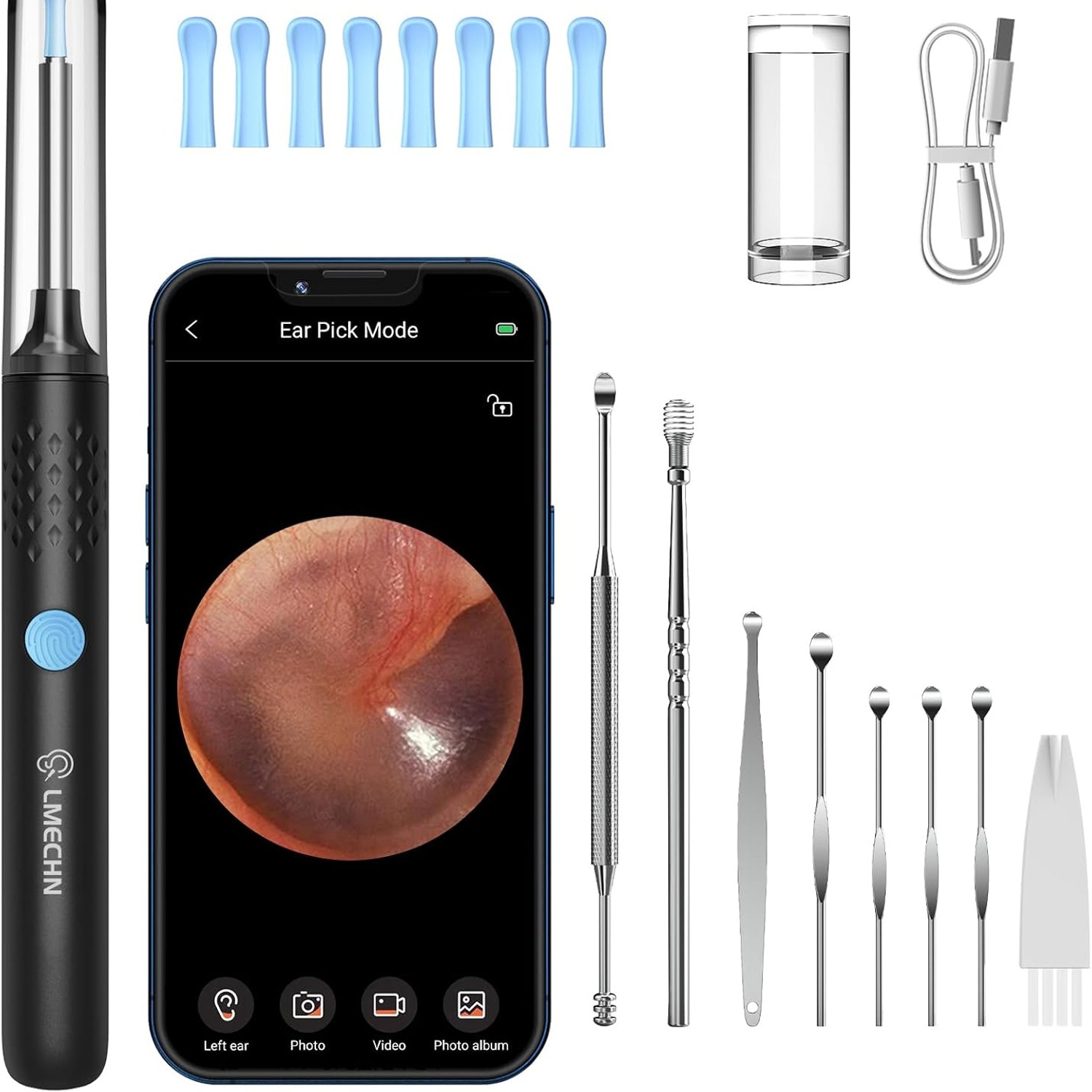
On this model the lens has a 3.5 mm inner diameter and shoots in 1080p full HD. Six high-brightness LEDs surround it. Those two numbers do different jobs. The 3.5 mm width means the tip fits comfortably rather than stretching the canal. The 1080p resolution plus the six lights means the picture is sharp enough to be worth looking at.
Lighting deserves more credit than it usually gets. Wax and canal skin sit in a similar yellow-brown range, so if the light is weak or coming from one side only, everything on screen merges into a vague smudge. Spread the light evenly from six points around the lens and shadows disappear, edges appear, and suddenly you can tell wax from wall.
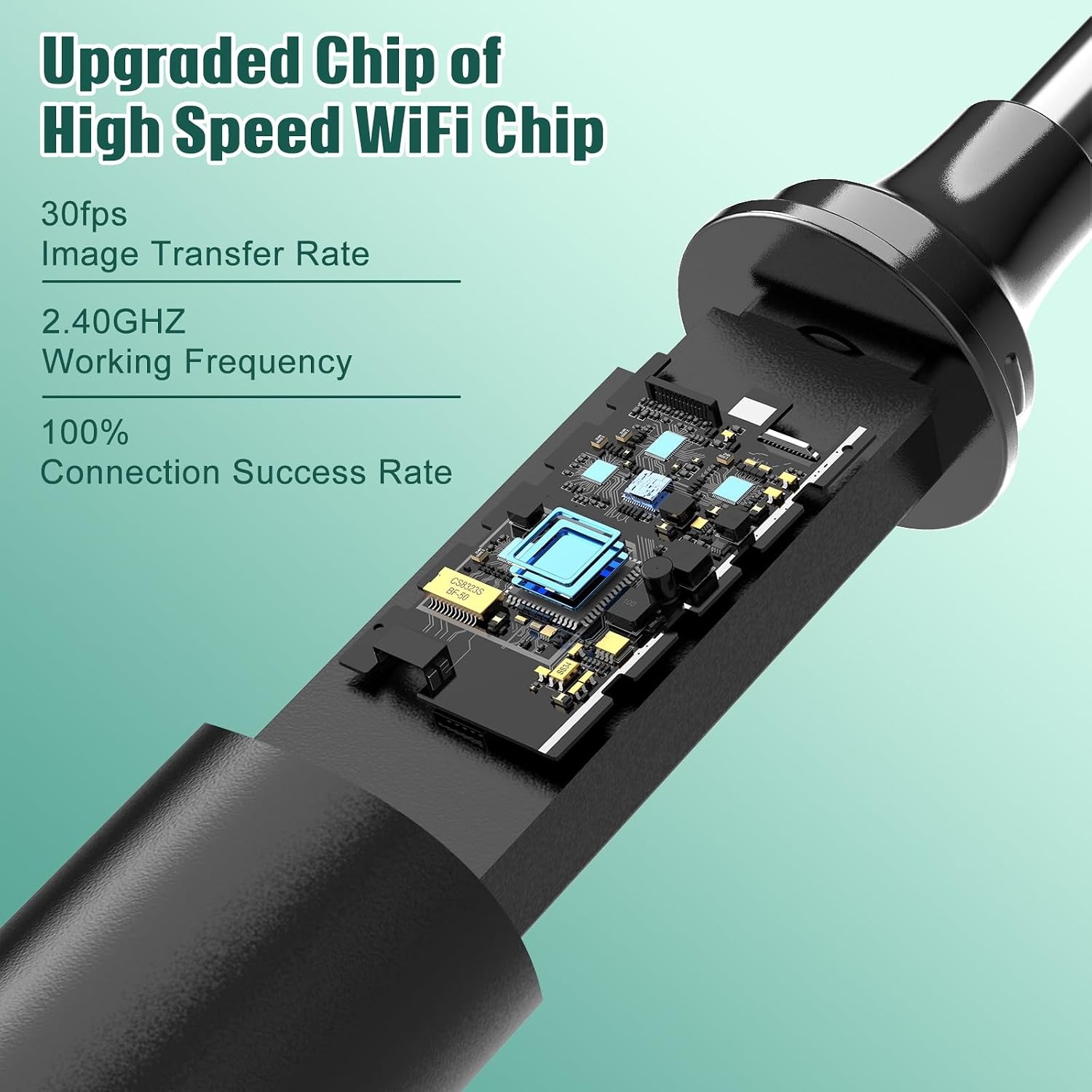
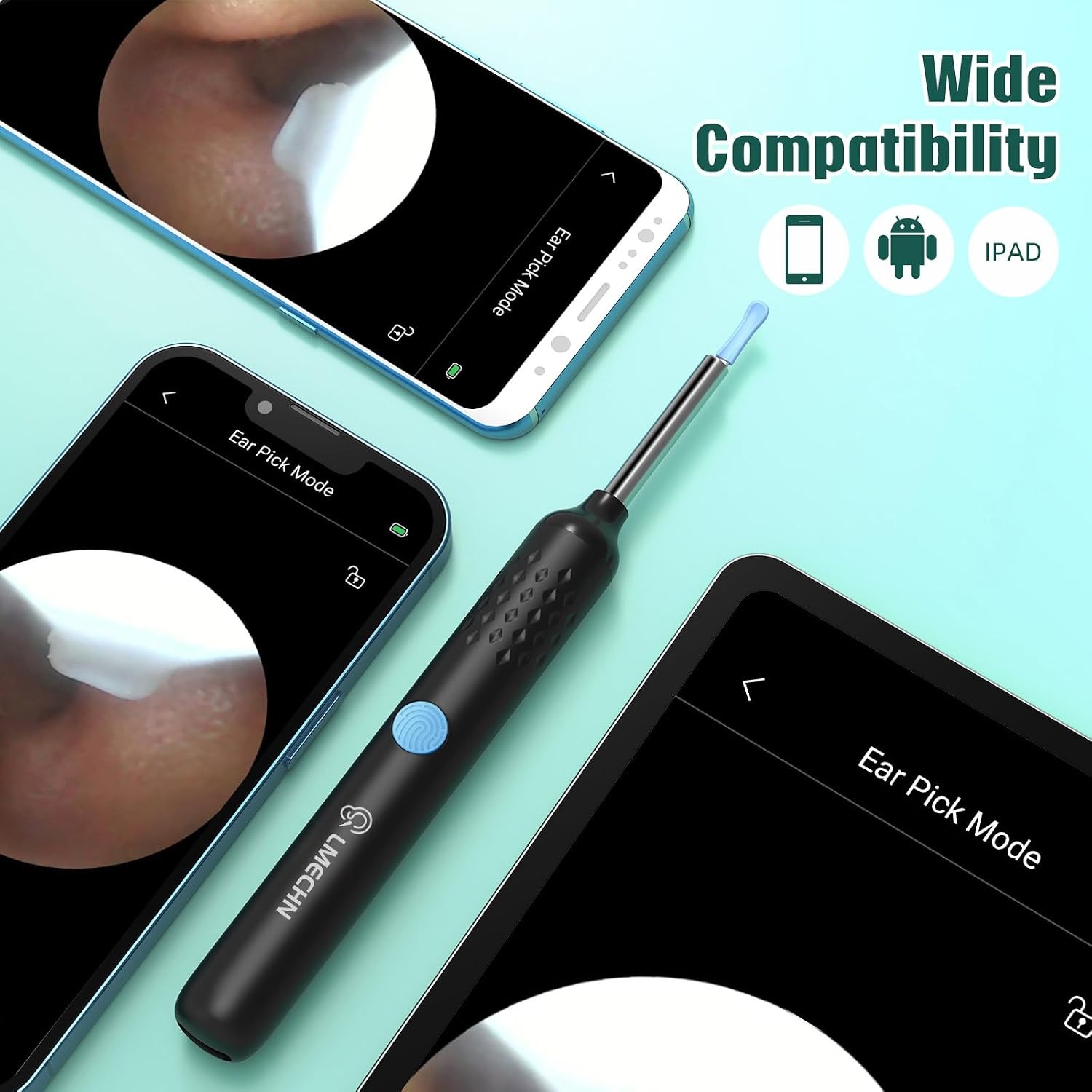
The picture travels wirelessly. The handle broadcasts its own WiFi signal, and your phone joins it like any other network. Once connected, the companion app shows the live feed. Setup runs to four steps: install the app, long press the switch to power the unit on, connect to its WiFi, then open the app. The QR code in the manual takes you to the download.
Who it suits
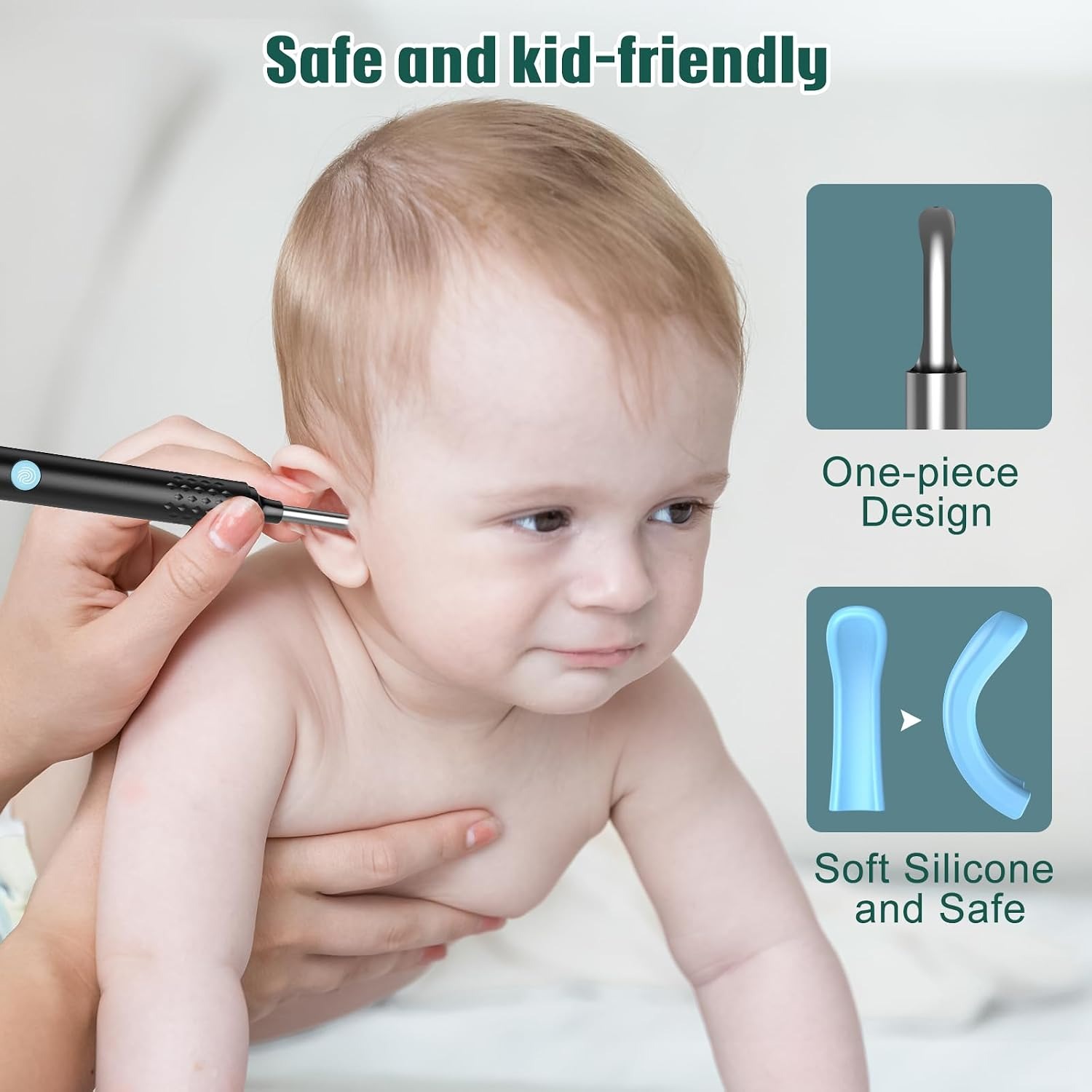
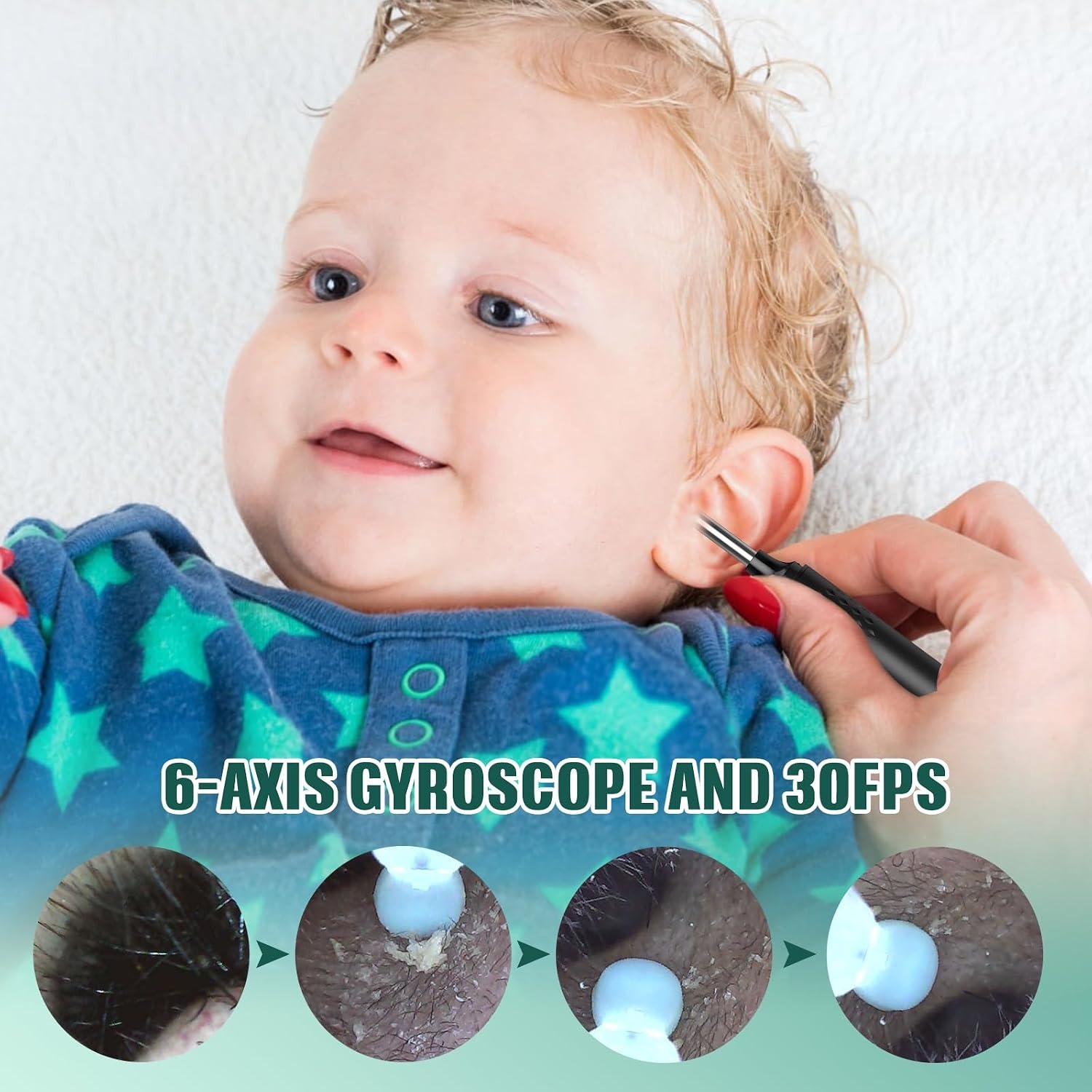
Households with kids get a lot of use from one. Children complain about ears constantly, and often it is nothing. Being able to look and confirm that the canal is clear saves a trip to the doctor. Being able to look and see that it clearly is not clear tells you to book that appointment.
Older adults are another group. Wax production changes with age and hearing aids can push wax deeper, so regular checks make sense. Having someone else hold the phone while you handle the device works well here, since two sets of hands make the job easier.
Anyone who wears earbuds for hours a day will also find it useful. Sealed in-ear tips trap wax and move it around. A quick look every few weeks tells you whether a clean is due.
Then there are people who simply want to see. The camera also works on teeth, the nasal passage, throat, scalp and hair roots, and plenty of owners point it at their dog's ears. It is an inspection camera with a good light, so anything small and shallow is fair game.
What to look for when comparing
Lens diameter. Anything much above 4 mm starts to feel intrusive in an adult canal and will not work at all for a child. The narrow 3.5 mm tip here is in the right zone.
Resolution and lighting together. A listing that shouts about 1080p but says nothing about lights is telling you half the story. You need both. Six LEDs is a sensible count for even coverage without glare washing out the centre of the frame.
Connection type. Wireless means no cable fighting your phone case and no worrying about whether you have the right port. It also means the device needs charging, which is a fair trade. Check the compatibility floor, which here is Android 4.4 and newer or iOS 8.0 and newer, a low enough bar that almost any working phone qualifies.
Tip design. This is where cheap kits fall down. A rigid metal pick gives you no margin for error. The soft ear spoon supplied with this unit is made to sit between stiff and floppy, firm enough to lift wax but willing to flex if it meets the canal wall. That flex is the safety feature.
Cleanability. The rear camera lens section is rated IP67 waterproof, so it can be rinsed under water or wiped down with alcohol. The body cannot be washed. Knowing which part tolerates water and which does not saves you from an expensive mistake.
Using it well
Start by charging the unit and installing the app before you need it. Fumbling with a QR code while holding a device in your ear is nobody's idea of a good time.
Work in decent room light with the phone propped where you can see it without craning. If someone can hold the phone for you, better still. Go slowly. Slide the tip in a few millimetres, pause, let the image settle, then look. The camera focuses for close range, so fast movement just blurs the feed.
Only remove what you can see and reach easily. Wax in the outer third of the canal is fair game. Anything deeper sits close to the eardrum and belongs to a professional with suction and proper training. If you meet resistance, stop. If there is pain, stop and book an appointment.
Hard, dry, impacted wax is not a job for scraping. Softening drops used over a few days usually loosen it, and the camera is genuinely handy for checking whether they are working. If it still has not moved after a week, a clinic will clear it in minutes.
Keeping it in good shape
Wipe the tip after every single use. Wax hardens on a lens and ruins the picture faster than anything else. Rinse or alcohol-wipe the camera section, which is rated for it, and let it dry before putting it away.
Wash reusable scoops in warm soapy water, rinse and air dry. Keep the whole kit in a dry drawer rather than on a steamy bathroom shelf. Give the battery a top-up every couple of months if the device is sitting unused, since batteries left flat for long periods do not age well.
Never run water over the handle, the switch or the charging port. The IP67 rating covers the rear lens section only.
The short version
An ear wax removal cleaner with a camera is not a medical device and will not replace a doctor. What it does is remove the guesswork from something people have been doing blind for decades.
This one gives you a 3.5 mm tip, a 1080p camera, six LEDs for even light, a wireless link to Android 4.4+ or iOS 8.0+ devices, photo and video capture, and a soft scoop that flexes instead of digging. The parcel is small, 16.3 x 10.4 x 1.9 cm and 100 g, so it stores anywhere and posts easily.
Use it gently, stay in the outer canal, clean the tip every time and leave anything stubborn to a clinic. Do that and you have a sensible, genuinely useful tool rather than a gadget that gathers dust.