



The complete guide
How to Choose a Kitchen Compost Bin That You Will Actually Use
The problem with good intentions
Almost everyone agrees composting is a good idea. Far fewer people keep it up past the first month. The reason is rarely laziness. It is friction.
Think about what happens when you chop vegetables. You have a pile of ends and peelings on the board, your hands are wet, and the compost heap is at the bottom of the garden in the rain. So the scraps go in the rubbish bin, because the rubbish bin is right there. Do that four times and the habit is broken before it formed.
A countertop compost bucket removes that friction. The scraps go into something within arm's reach of where you cook, the lid closes, and you deal with the trip outside once every few days instead of five times a day. That is the whole concept. It is not clever, but it works, and it is the difference between a compost heap that gets fed and one that sits empty.
What this bin actually is
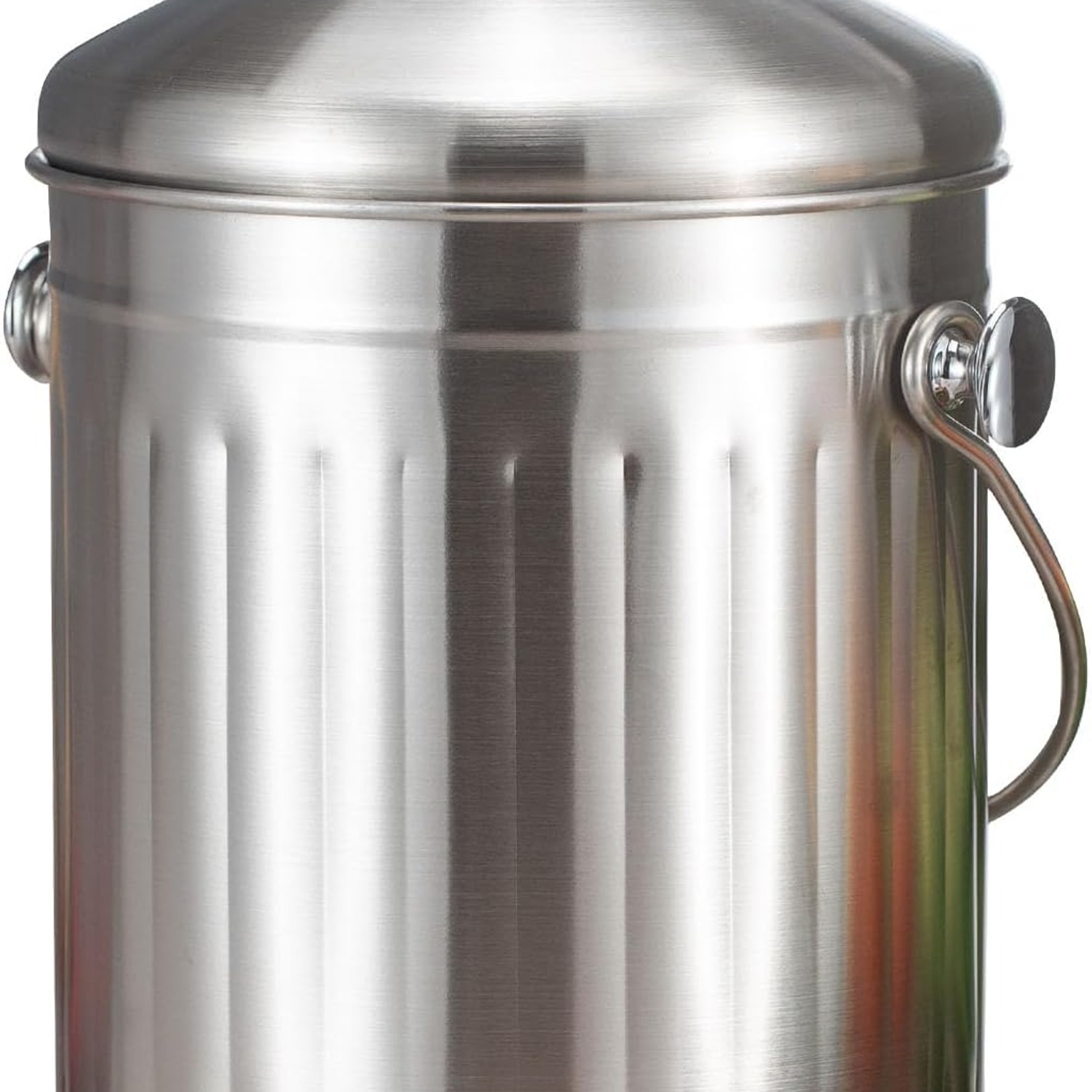
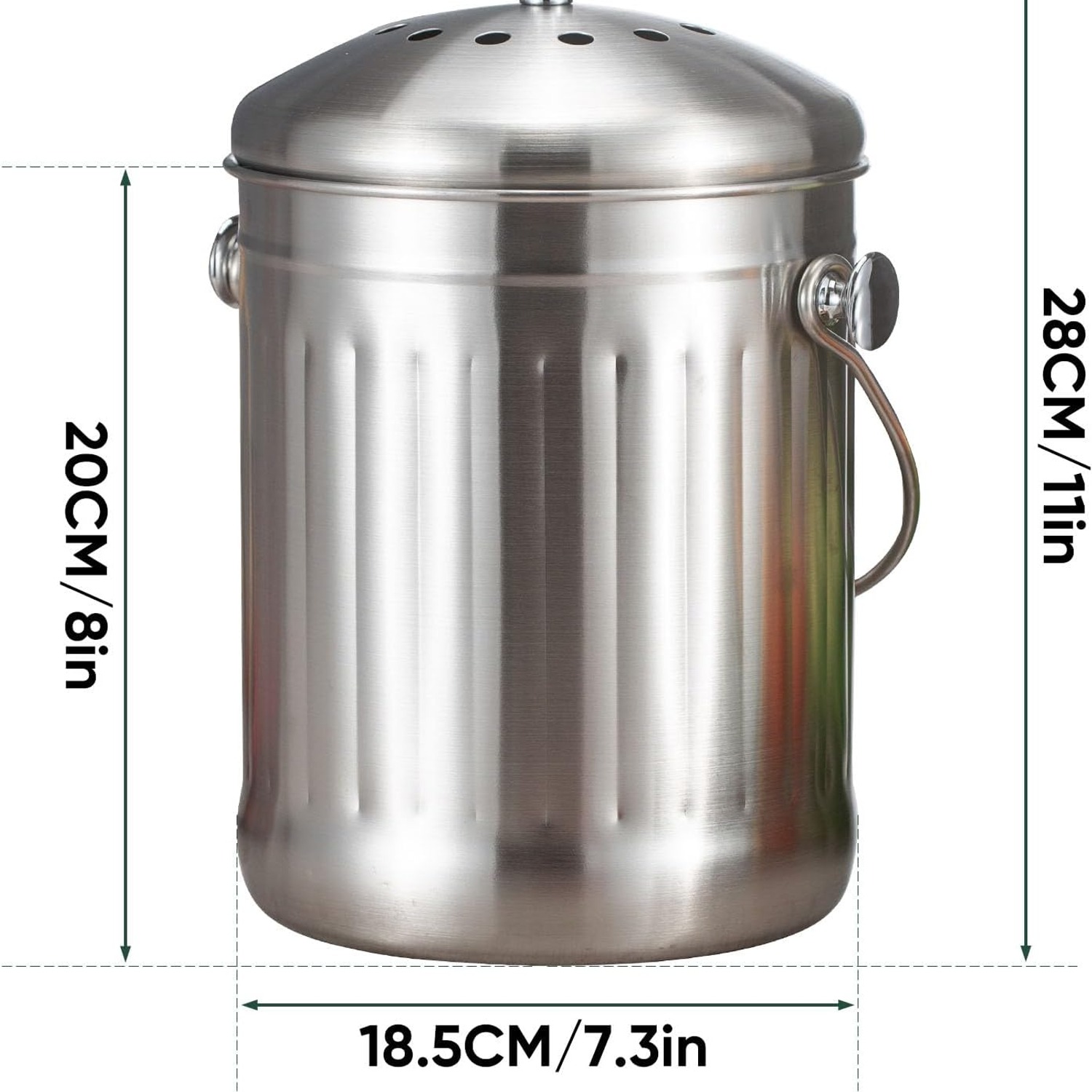
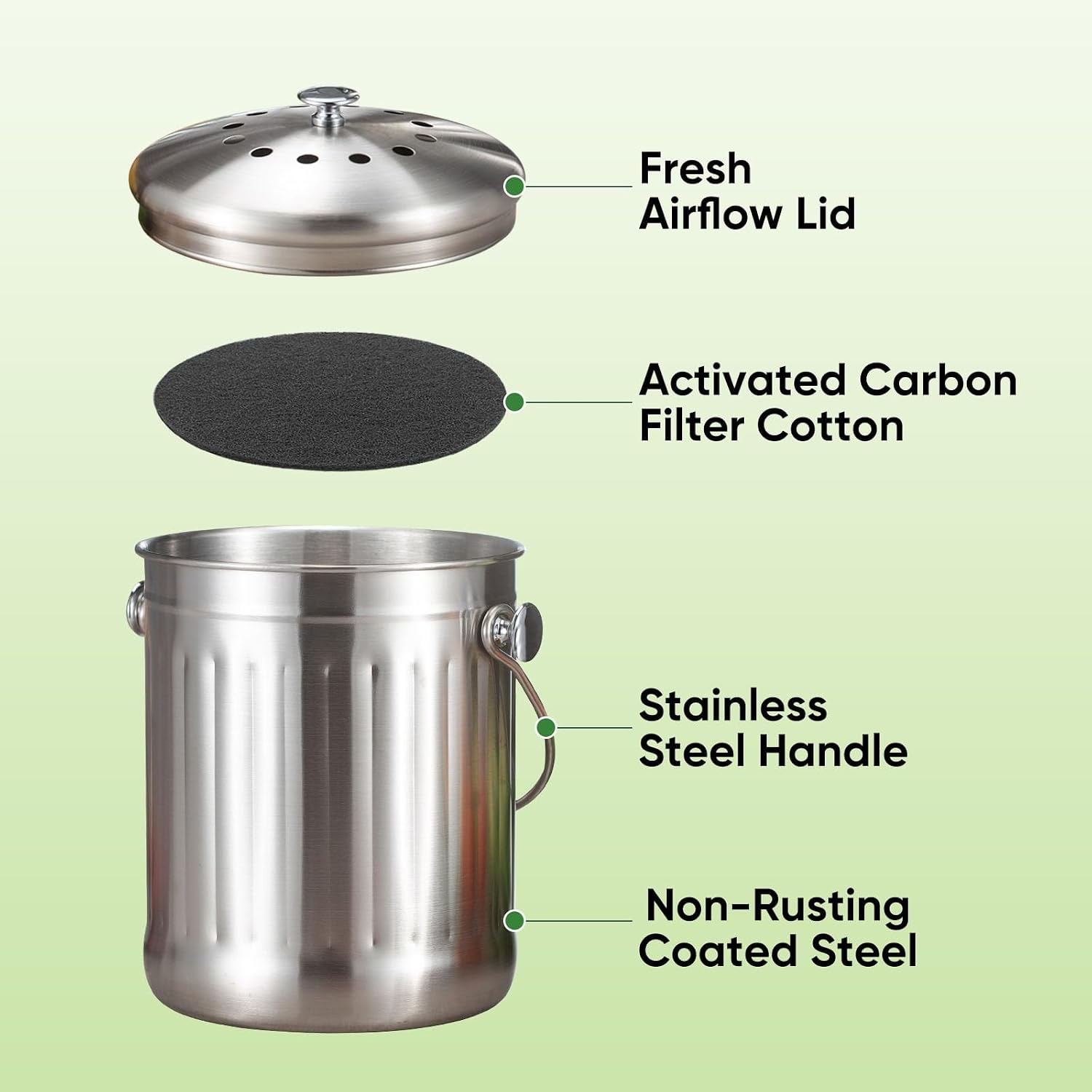
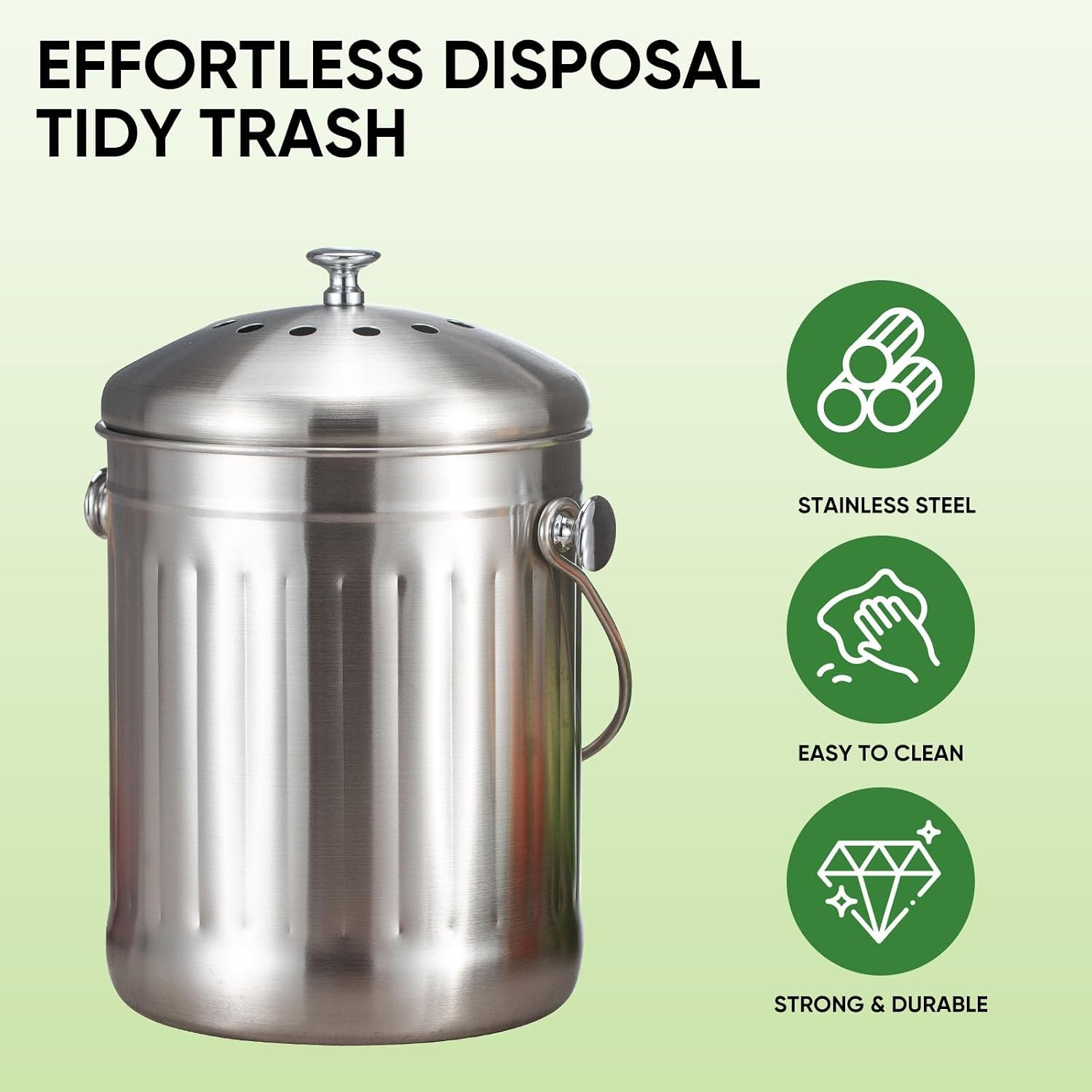
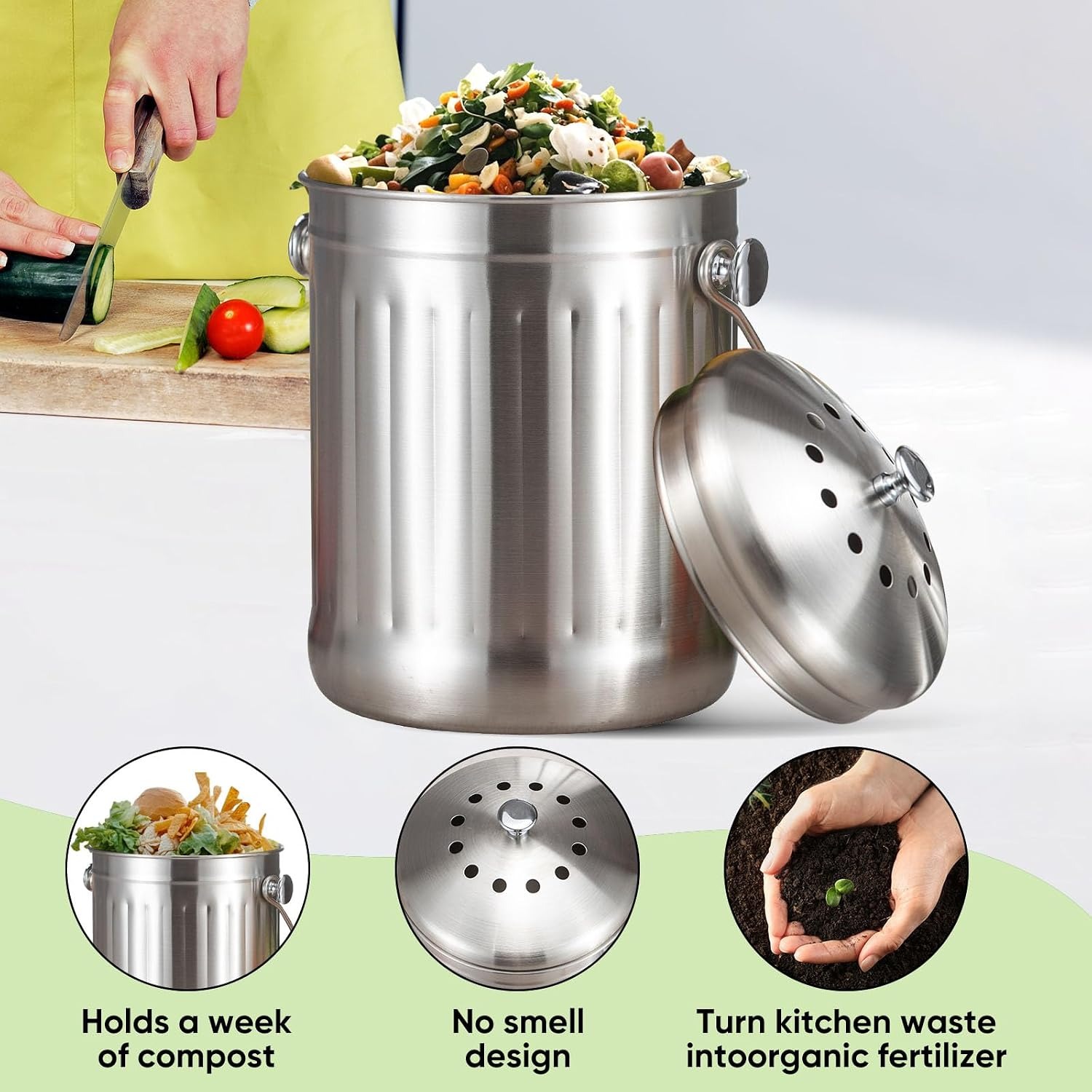
This is a 5 litre stainless steel bucket with an airtight lid and a charcoal filter fitted inside that lid. It measures 18.5 cm across and 28 cm tall, weighs 1 kg empty, and has a carry handle.
That is worth being clear about, because the word "compost bin" gets used for two very different things. Outdoor compost bins are large, open to the ground, and full of worms and microbes doing the slow work of turning waste into soil. A kitchen compost bin like this one does not break anything down. It holds scraps. The actual composting happens wherever you empty it, whether that is a backyard heap, a tumbler, a worm farm or a council green bin.
Once you understand that, choosing one gets a lot simpler. You are not buying a composting machine. You are buying a container that keeps smells in and looks acceptable on a bench.
Why stainless steel
Kitchen caddies come in plastic, ceramic, bamboo composite and steel. Each has a case, but steel has the most practical advantages.
Plastic is cheap and light, and after one summer of tomato skins and turmeric it will be permanently stained. It also holds smells in the material itself, so a deep clean only gets you partway back. Ceramic looks lovely and chips when you knock it against a tap. Bamboo composite sits somewhere in between and often does not love repeated washing.
Steel rinses clean and stays clean. Colour does not soak into it. It handles being dropped on a tiled floor better than ceramic, and it does not warp or discolour. This one uses a thicker gauge, which matters because thin steel bins dent if you look at them wrong, and a dented rim stops the lid sealing. The silver cylindrical shape also reads as a kitchen object rather than a bin, which helps if bench space is on display.
The one honest downside is weight. At 1 kg empty, it is heavier than a plastic equivalent. Full of wet scraps it has real heft. For most people that is a fair trade for a bin that lasts.
Odour, the thing that decides everything
If a kitchen compost bin smells, it gets moved to the garage, and then it gets forgotten. Every other feature is secondary to this one.
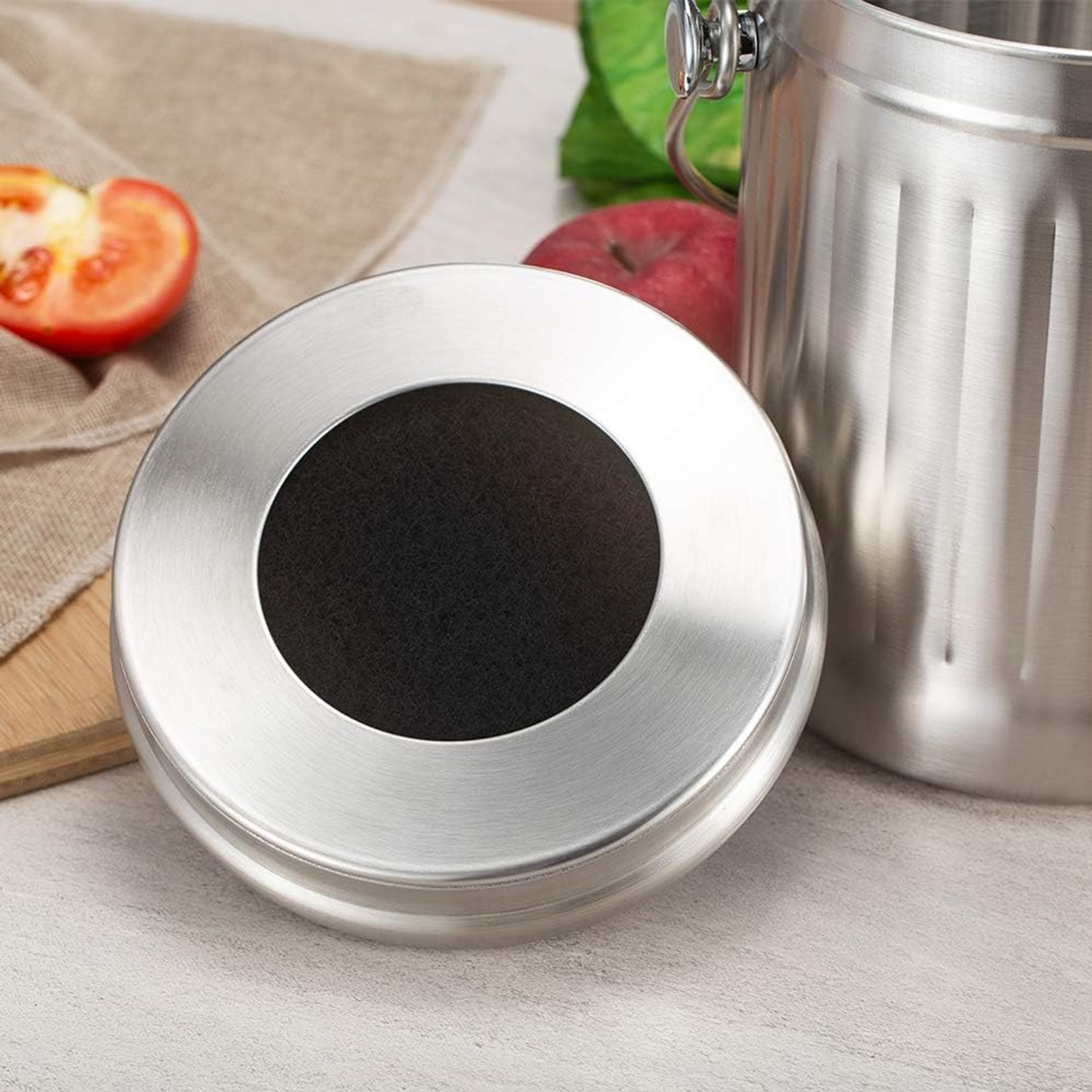
Two things control smell here. The first is the airtight lid. Odour molecules need air movement to travel, and a sealed lid stops that. The second is the charcoal filter inside the lid, which absorbs what does escape when you open and close it during the day. Activated charcoal has an enormous amount of surface area relative to its size, and food odour compounds stick to it.
Filters are consumable. They do not last forever, and they stop working gradually rather than all at once, so the first sign is usually a faint smell creeping back when you lift the lid. That is your cue to swap it. How long a filter lasts depends on how wet your scraps are and how often you empty, so there is no fixed schedule. Keeping it dry is the main thing you control. If liquid soaks the filter, it loses effectiveness quickly.
The other half of odour control is behaviour, not hardware. Drain liquids before scraps go in. Empty every few days rather than waiting until the bucket is full. Rinse after emptying so residue does not build up in the base. Do those three things and even a modest bin stays inoffensive.
Is 5 litres the right size
Capacity is the question people get wrong most often, usually by buying too big.
A 5 litre bin holds roughly two to four days of scraps for a couple or a small household. That is a sensible rhythm. Scraps go out before they get interesting, the bin never gets so heavy that carrying it is annoying, and it stays small enough to live on the bench.
Bigger bins sound like better value until you use one. An 8 or 10 litre caddy left to fill completely is holding week-old food waste, which no filter is going to fully manage, and it is heavy and awkward when you finally carry it out. A smaller bin emptied often beats a larger bin emptied rarely, every time.
Scale up only if your situation genuinely demands it. A family of five doing heavy fresh cooking will fill 5 litres daily. That is fine if the outdoor bin is just outside the back door. If it is a long walk or down three flights of stairs, you might prefer more capacity and fewer trips.
Where to put it
The bench beside the sink is the standard spot, and it is standard for a reason. It sits in your line of sight while you prep, which is when you need it, and it is next to the tap for rinsing.
Under the sink is the other common choice. At 28 cm tall this bin clears many under-sink cupboards, but plumbing varies wildly, so measure before you commit. Out of sight does mean out of mind for some people, which is worth being honest with yourself about.
What to avoid is anywhere warm. Beside the oven, in direct afternoon sun on a windowsill, or near a radiator all speed up the breakdown process you do not want happening inside the bucket. A cool corner is best.
Living with it
The routine is simple enough that it becomes automatic in a week. Scraps go in while you cook. Lid closes. Every two or three days you carry it out, tip it into the outdoor system, rinse it under the garden tap or in the sink, and bring it back.
Wipe the lid rim whenever you empty. Food residue in the seal is the most common reason an airtight lid stops being airtight, and it takes half a minute to prevent.
Avoid steel wool and bleach on the body. Warm soapy water and a cloth handle everything a kitchen compost bin encounters. If something has dried on, let it soak rather than scrubbing hard. A bicarbonate paste works on stubborn spots without scratching.
For what goes in, follow your outdoor system rather than any general rule. Backyard heaps and worm farms generally want fruit and vegetable waste, coffee grounds, tea, eggshells and bread, and want you to leave out meat, bones, dairy and oil. Council green bin programs are often more permissive. Check once, then stop thinking about it.
The short version
A kitchen compost bin succeeds or fails on whether you can be bothered to use it. That comes down to three things: it has to seal properly, it has to be easy to clean, and it has to be the right size for how often you want to walk outside.
This one is 5 litres of stainless steel with an airtight lid, a charcoal filter and a carry handle, at 18.5 x 18.5 x 28 cm. That is a sensible specification for a household of two or three feeding a compost heap, a tumbler or a green bin. It will not compost anything on its own, and it is not meant to. It makes the step before composting easy enough that you keep doing it.
If you are unsure about size, think about distance. Close outdoor bin, smaller caddy, more trips. Far outdoor bin, bigger caddy, fewer trips. Get that match right and the rest takes care of itself.