


The complete guide
How to Choose and Use a Crack and Crevice Weeding Tool
The weeds you cannot get at
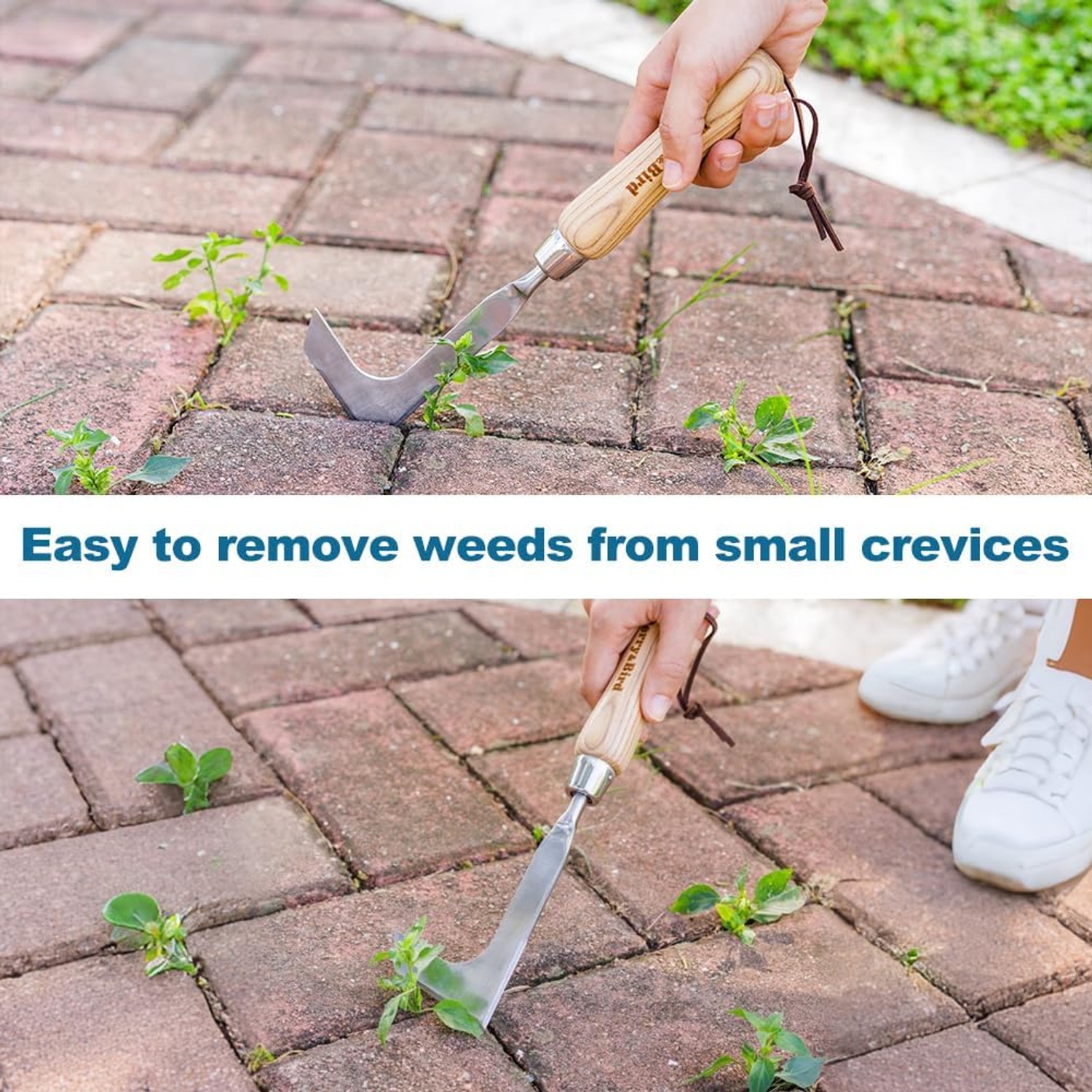
Most garden weeding is straightforward. You see a weed, you get a fork or a trowel under it, and out it comes with the root attached. The problem starts when the weed is not in soil at all, but wedged into a 4 mm gap between two paving slabs.
Nothing fits. A trowel is far too wide. A hoe skims the surface and takes the leaves off, which looks fine for about ten days. A screwdriver reaches but has no cutting edge, so you are essentially poking at the thing. Most people end up on their knees with an old kitchen knife, which works badly and ruins the knife.
That narrow gap is also an excellent place for a weed to live. Over a season or two, dust, leaf litter and sand collect in the joint and turn into a thin strip of genuinely good growing medium. It holds moisture after rain because the slabs on either side shade it. Seeds blow in and settle. By the time you notice green in the joint, there is a root system down in there with nowhere to go but deeper.
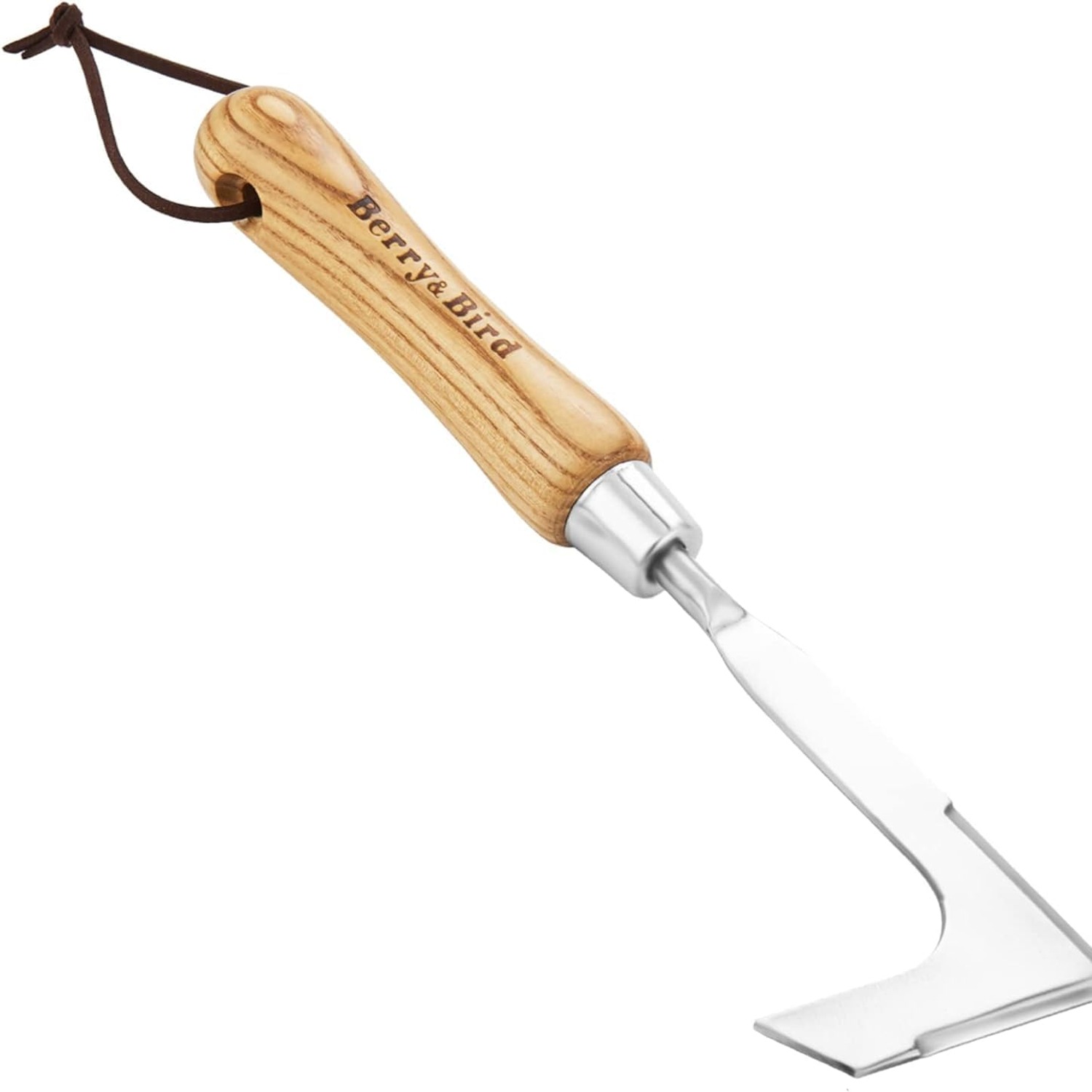
A crack and crevice weeding tool is a response to that specific problem. It is not a general-purpose weeder. It is a narrow blade on a handle, shaped so it can get down into a gap and cut sideways once it is in there.
How the L-shape actually helps
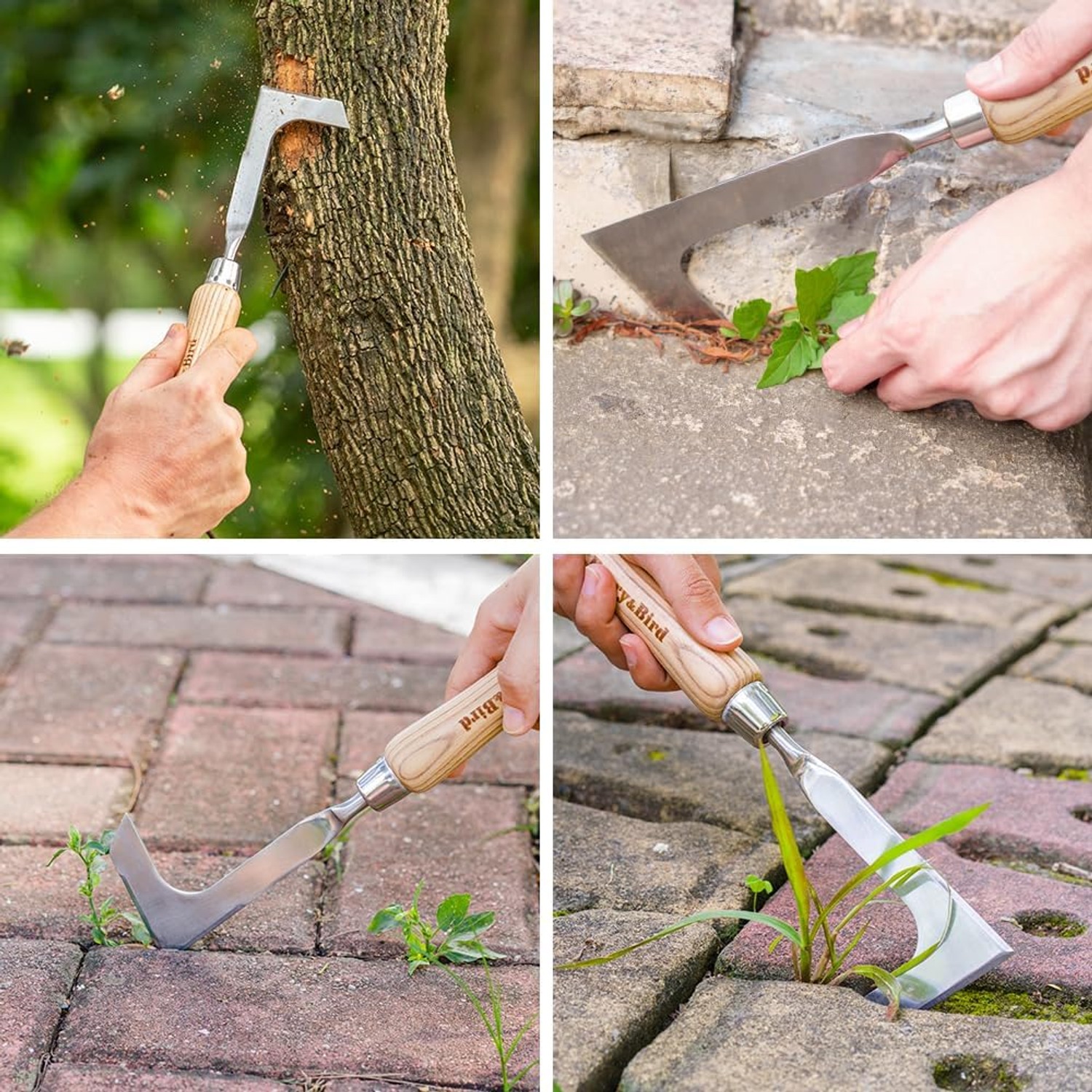
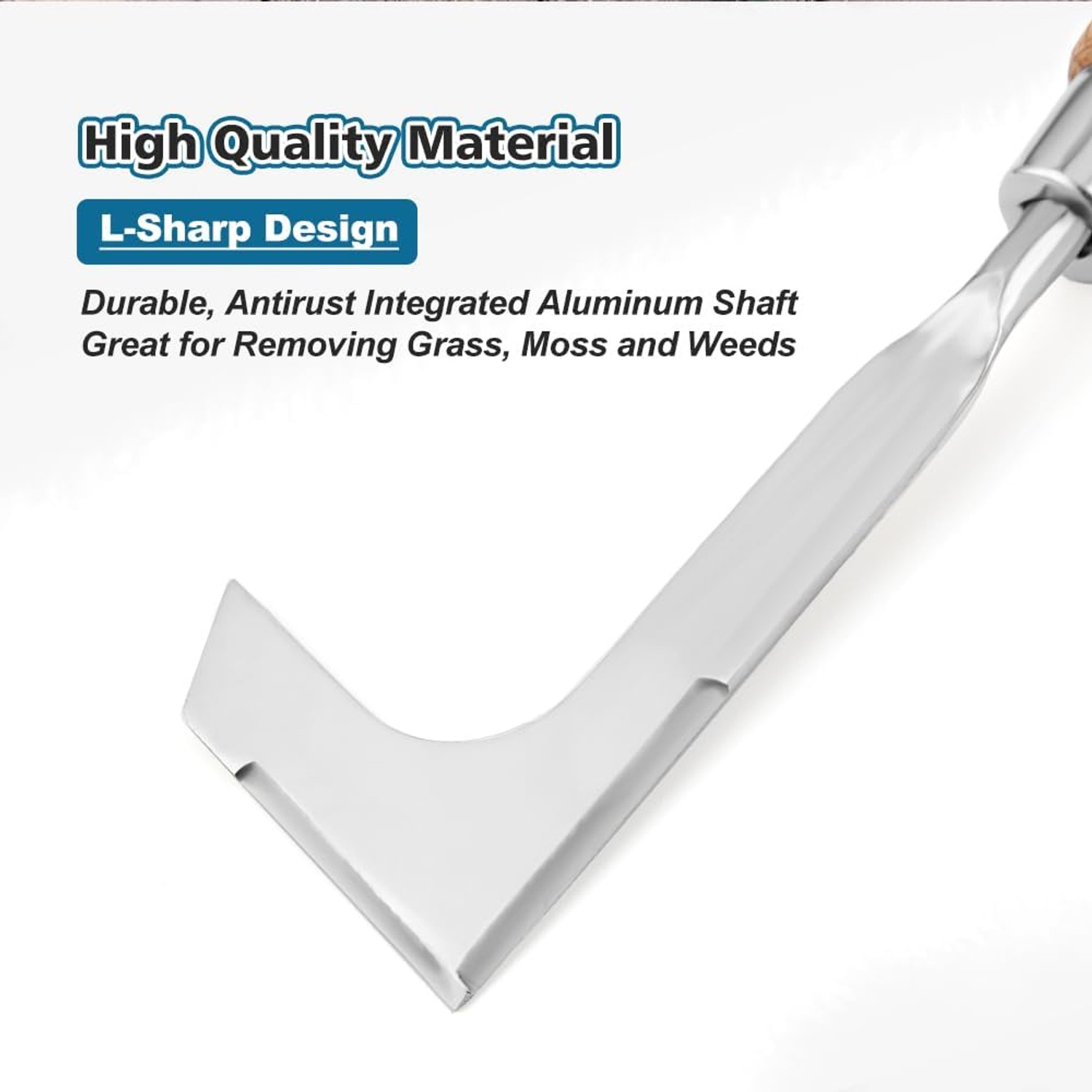
The defining feature is the bent cutting head. One short leg points down and sits inside the joint. The longer leg runs along the direction of travel. Because there are two cutting faces at right angles, the blade bites whether you pull it toward you or push it away.
In practice this changes the rhythm of the job. With a straight blade you are making lots of small stabbing movements, lifting and repositioning constantly. With the L-shape you drop the head in at one end of a joint and draw it along in a steady pull, letting the edge shear through roots as it goes. You can clear a metre of joint in one movement and then sweep the loose material away.
The second advantage is corners. Where a path meets a wall, or where a slab butts up against a step riser, a straight blade can only reach one surface. The bent head lets you get into the angle and clean both faces at once.
Stainless steel is the sensible choice for a head doing this work. The material inside a paving joint is abrasive, full of grit and sand, and in dry summer weather it can set almost like mortar. A thin, soft blade rolls its edge or bends within a few sessions. A stiff stainless head resists bending while you lever and holds a usable edge for far longer.
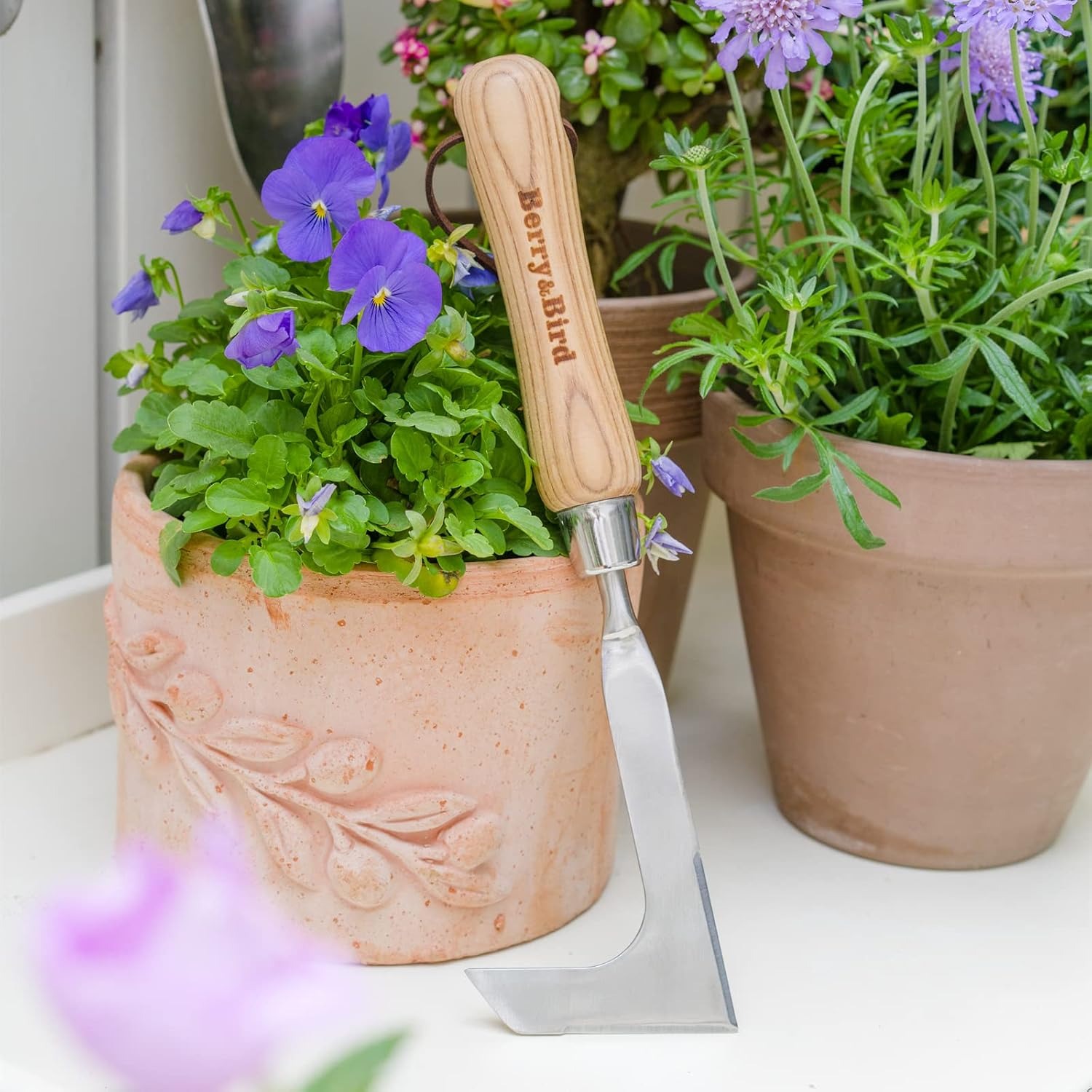
The handle on this one is ash. Ash has been the standard timber for hand tools for a long time for good reasons. It is strong along the grain, it takes shock without transmitting all of it to your hand, and it warms up rather than staying cold and slippery the way a steel or plastic handle does.
Who this suits
If you have a paved patio, a block-paved drive, a concrete path or a gravel edge that meets a hard surface, this is a tool you will use regularly. The same goes for anyone maintaining a courtyard, a set of steps or the strip of paving along the front of a house.
It also suits people who would rather not spray. Weedkiller works, but it means waiting before the area is safe to use, keeping pets off, and being careful about run-off into beds and drains. A hand tool has none of those complications. You weed, you sweep, you are done.
It is less suited to anyone who cannot comfortably crouch or kneel. This is a short tool, so you work close to the ground. If standing is a requirement, look for a long-handled weeder instead. It is also not the tool for clearing a whole bed or a large area of open soil; a hoe will beat it every time out there.
Choosing the right weeder for your surface
Joint width matters more than anything. Block paving with tight 3 to 5 mm sand joints wants a genuinely slim blade. Older stone flags with 15 mm mortar gaps give you a lot more room and are more forgiving. Measure a couple of your joints before you buy anything, because a blade that will not enter the gap is useless no matter how well made it is.
Think about what is growing. Surface moss and liverwort respond to a scraping action, so any reasonably stiff narrow blade will do. Grass creeping in from a lawn edge needs cutting through a mat of runners. Taprooted weeds like dandelion and plantain need a blade that can get past the crown and lever the root up, which is where the L-shape earns its keep.
Finally, consider how much paving you have. For a small patio almost any hand weeder works. For a long driveway, comfort becomes the deciding factor, because you will be at it for an hour at a time. A shaped wooden handle and a light tool are worth more over that hour than any clever blade geometry.
Getting good results
Weed after rain if you can. Damp soil in a joint releases roots with almost no resistance, while the same joint in August can feel like concrete. If you have to work dry ground, a watering can over the joints twenty minutes beforehand makes an enormous difference.
Work in one direction along each joint rather than wandering about. Clear a run, sweep the debris out with a stiff brush, then move to the next. Leaving the pulled material in the joint just gives the next round of seeds something to root into.
Timing beats effort. Ten minutes every two or three weeks through the growing season will keep paving looking tidy with very little work. One enormous session in late summer, after everything has flowered and set seed, is much harder and far less effective. Catching weeds while they are small also means the roots are small, and small roots come out whole.
After you have cleared block paving, consider brushing fresh kiln-dried sand into the joints. A full joint gives new seeds much less room to settle, and it helps lock the blocks together too.
Looking after the tool
Nothing complicated here. Rinse the soil off the head when you finish, dry it, and put it away somewhere dry. Wooden handles hate being left out in the rain, and even stainless steel will spot if it sits wet in a bucket for a month.
Every so often, run a sharpening stone or a fine file along the cutting edge. It takes a minute and it restores the clean slicing feel the tool had when it was new. A dull blade makes you push harder, which is how handles get broken and backs get sore.
Store it hanging up or blade-down in a bucket rather than loose in a drawer with other tools. The edge stays better and you are less likely to grab it by the wrong end.
The short version
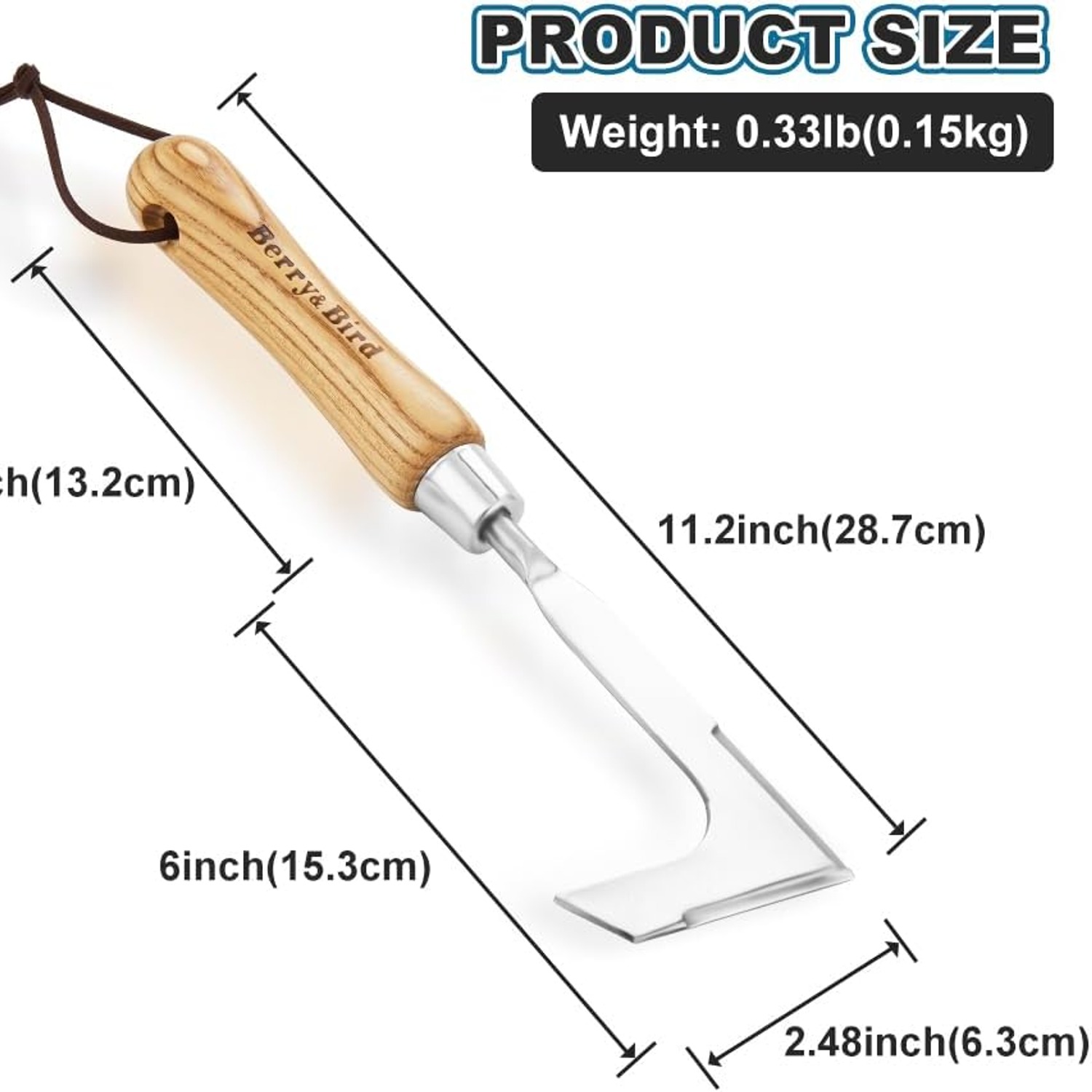
Weeds in paving joints are a specific problem that needs a specific tool. A crack and crevice weeding tool has a narrow L-shaped stainless steel blade that fits into gaps other tools cannot enter, cuts on both the push and the pull, and lifts small taprooted weeds out with the root rather than snapping them at the surface. This one measures 28.7 x 8 x 6.5 cm and weighs 168 g, with an ash handle.
Measure your joints, weed when the ground is damp, work in short regular sessions, and rinse and dry the blade afterwards. Do that and a paved area stays tidy with surprisingly little effort, and without a drop of chemical anywhere near it.