


The complete guide
Rolling Lawn Aerator Buyer's Guide
The problem with a lawn that will not drink
You water the grass and the water runs sideways. You spread feed and it sits there. You seed a bare patch and nothing comes up. In most gardens the cause is not the seed or the fertiliser. It is the soil underneath, which has been squeezed flat by feet, bikes, dogs, mower wheels and a few years of rain hammering down on it.
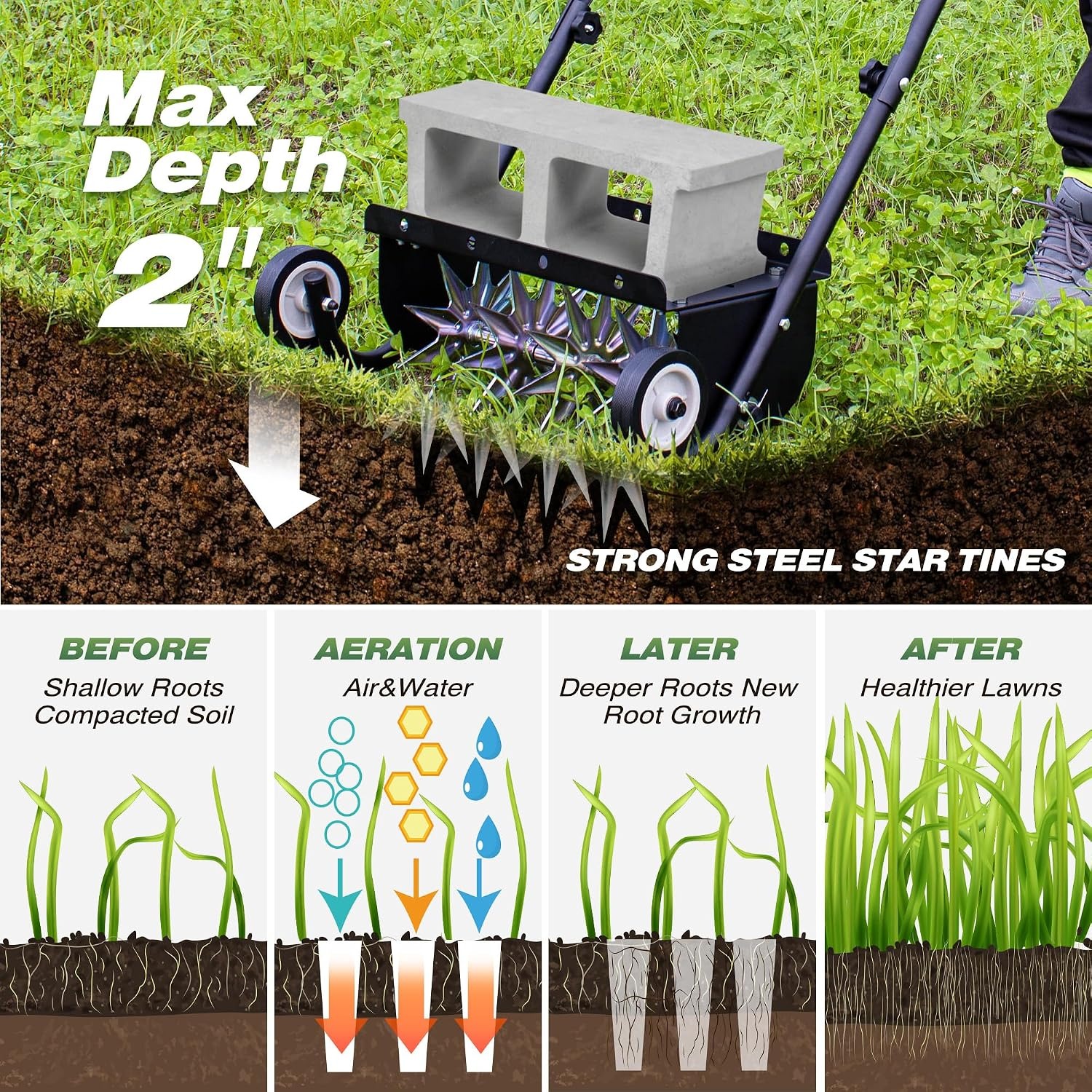
Compacted soil is dense. The tiny air pockets that roots need get crushed out, and water cannot find a way in. Grass responds by keeping its roots shallow, which makes it more prone to drying out, more likely to thin, and much easier for moss and weeds to invade. It looks like a grass problem. It is a soil problem.
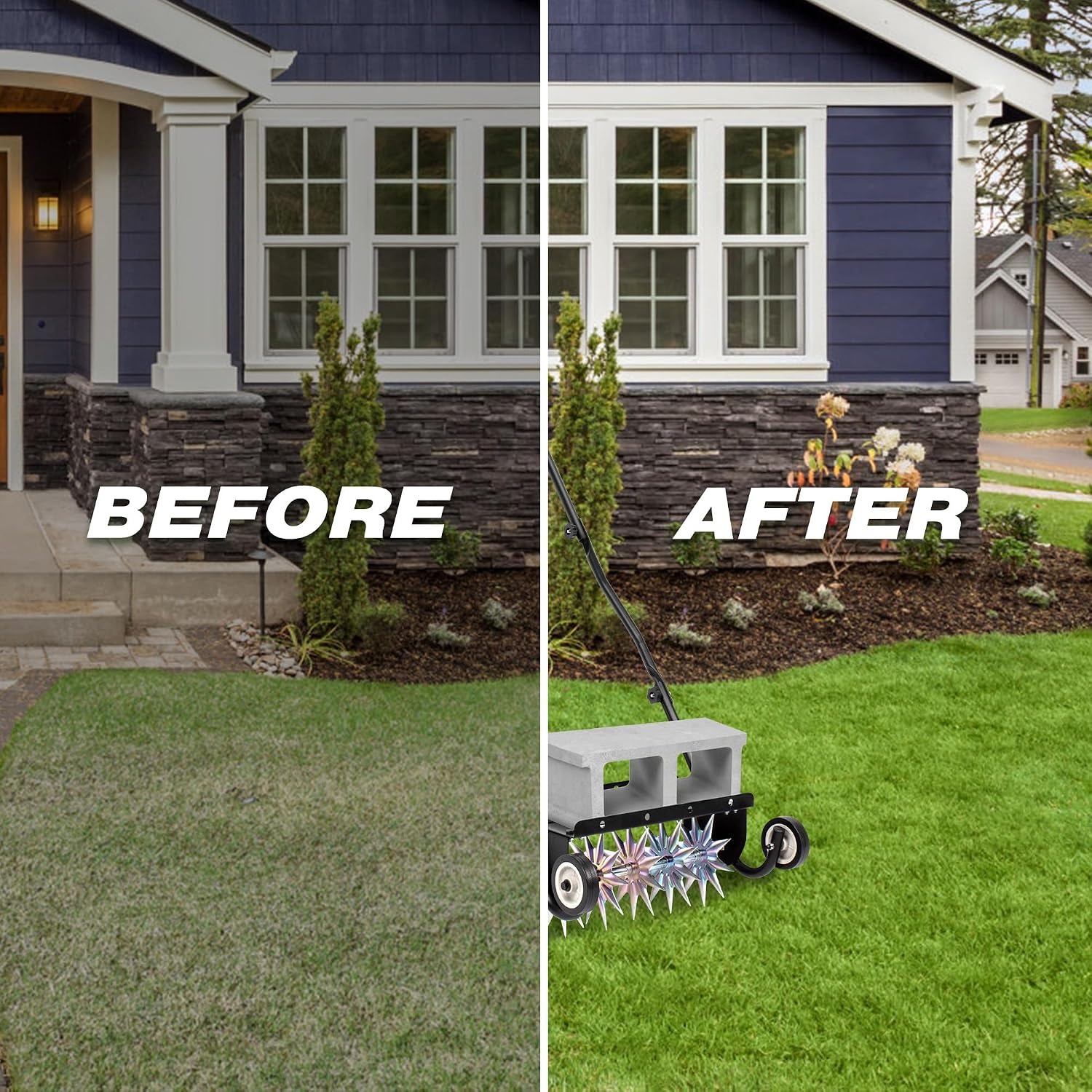
Aerating fixes the cause rather than the symptom. Punch holes through that packed layer and you give water, air and nutrients somewhere to go. A rolling aerator is the simplest way to do it on a normal garden lawn, and you do not need a hire shop, a fuel can or a trailer to make it happen.
How a rolling spike aerator works
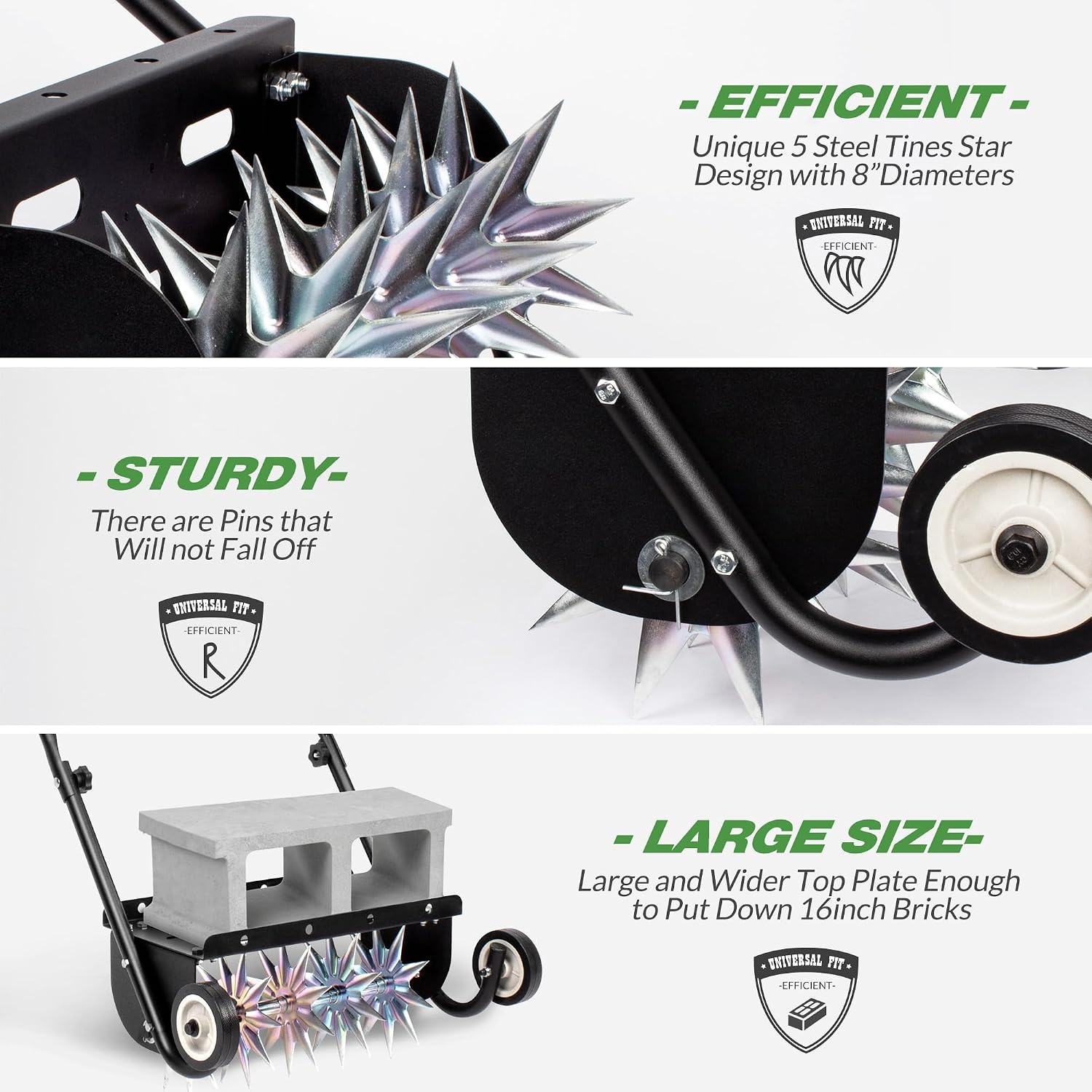
The idea is older than most garden gadgets and it has lasted because it works. Steel tines are arranged in star shapes along an axle. You push the frame forward, the stars roll, and each tine presses into the turf, opens a hole, and lifts back out as the star keeps turning. Keep walking and you leave a pattern of holes across the whole strip.
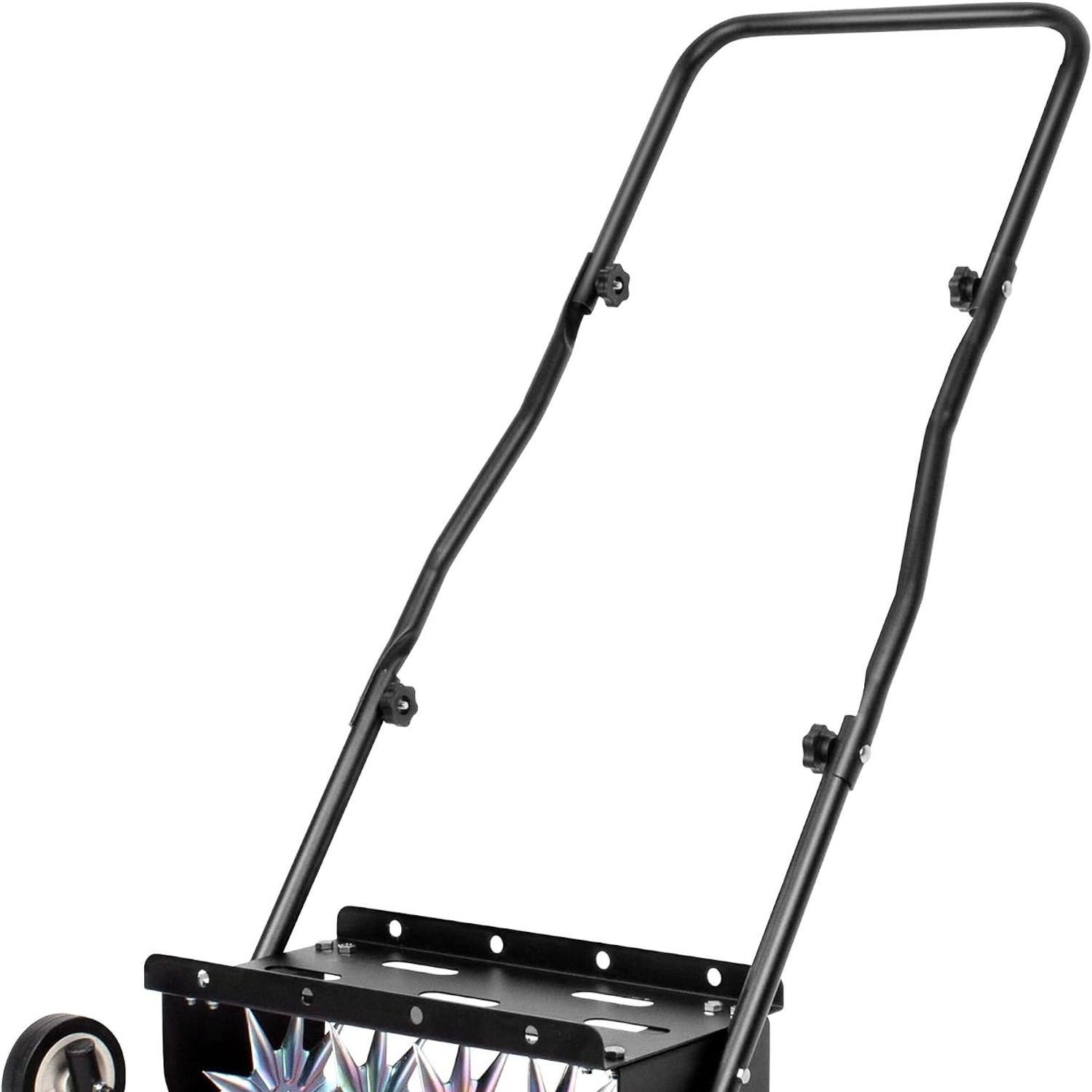
This model carries five spike stars across an 18 inch working width, roughly 45.7 cm. The stars rotate independently of each other rather than being locked together. That matters more than it sounds. When you steer around a flower bed, the inside of the turn travels a shorter distance than the outside. Locked stars would have to skid, and skidding tines tear grass. Independent stars just turn at their own pace.
Plastic rollers carry the frame on either side. They let the tool run smoothly across turf, over a path and back again, and they stop the spikes sinking in and sticking when you stop for a breather.
Penetration is described as up to about 2 inches, close to 5 cm. That is the layer where most compaction sits and where the bulk of grass roots live, so it is the useful zone. Depth varies with conditions. Soft, damp soil swallows the tines. Dry summer ground resists them.
The weight tray and why it earns its place
A plain spike roller only ever has its own mass to work with. That is fine on good soil and frustrating on anything firm. The steel tray on this aerator lets you change the equation.
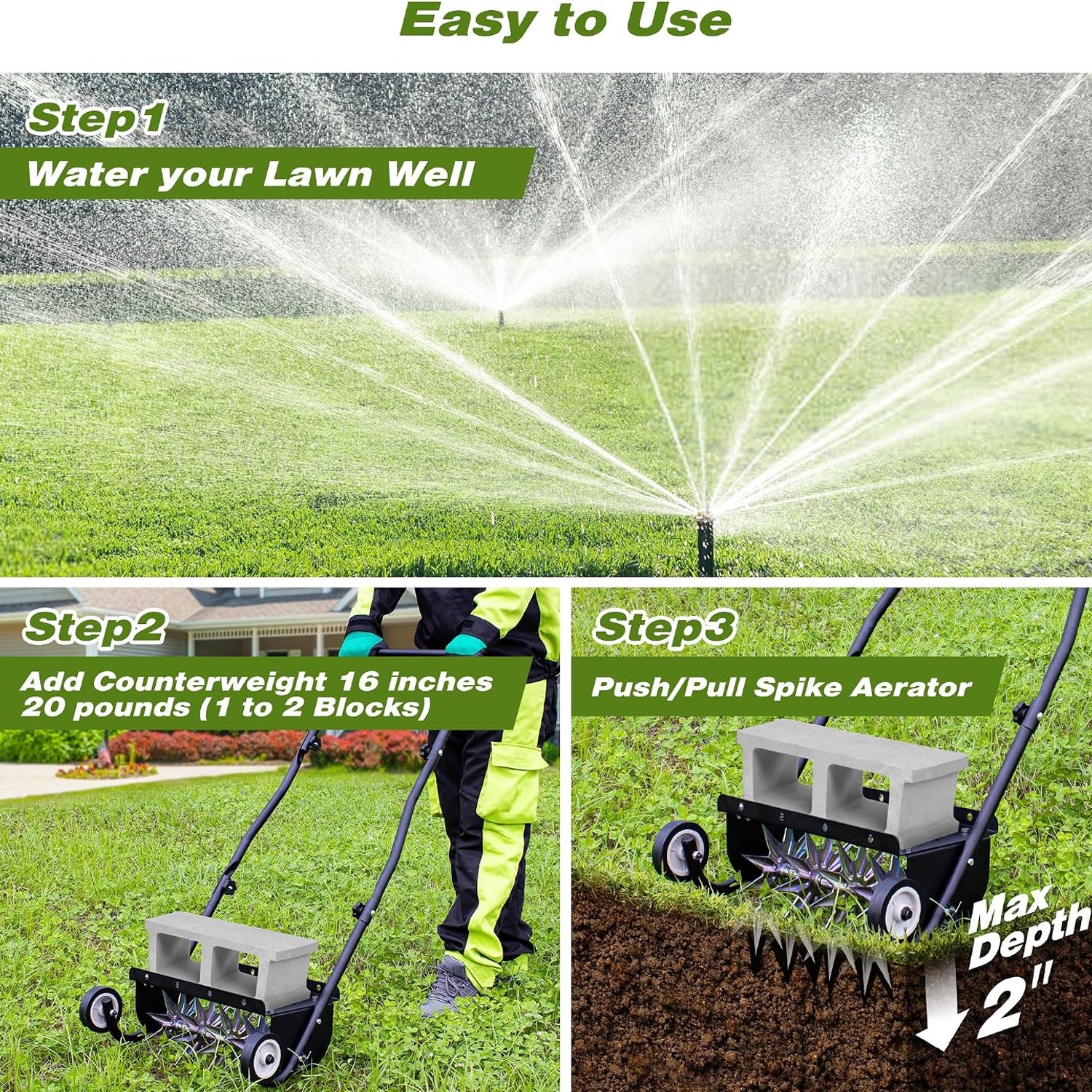
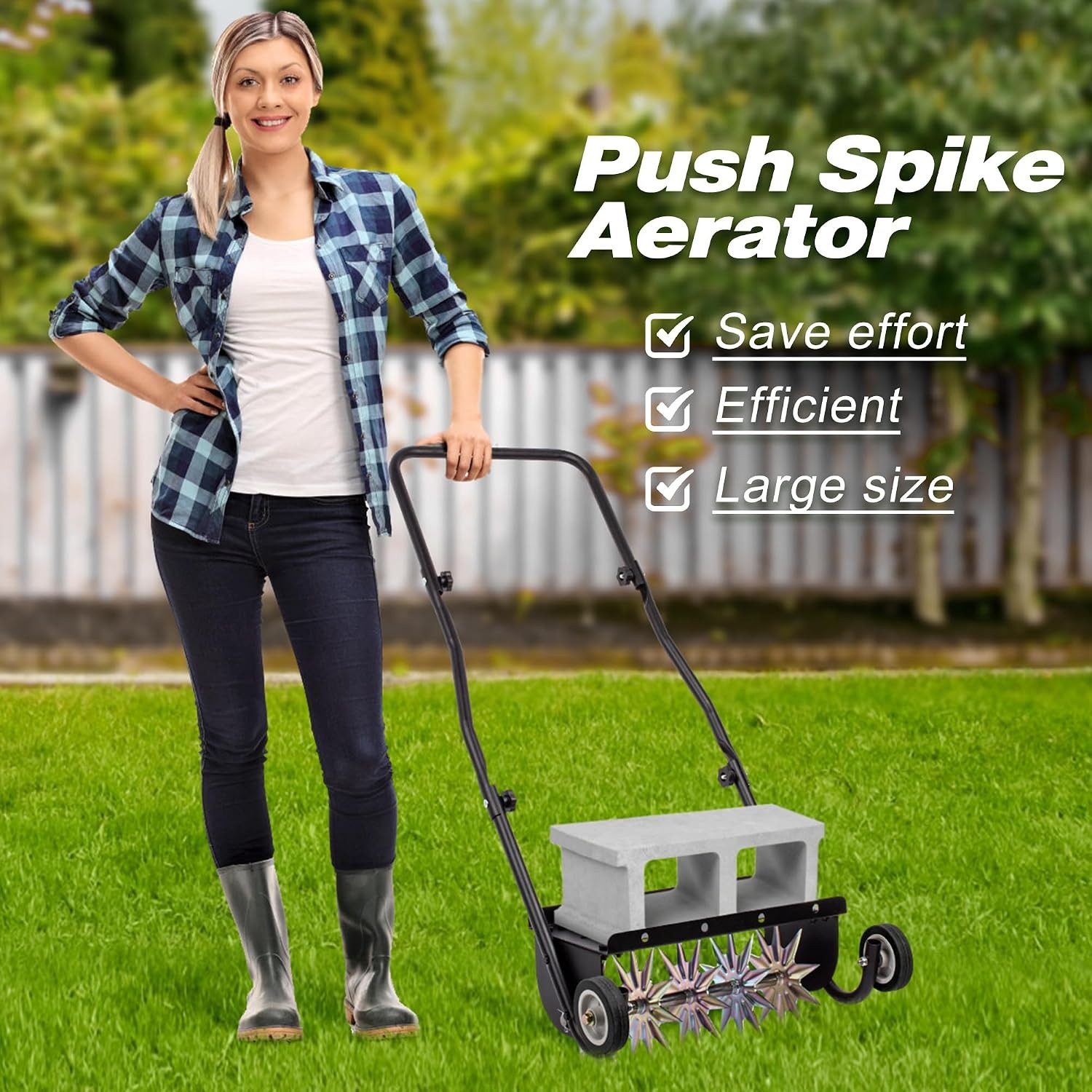
Drop a couple of bricks or a paving block onto the tray and the tines press in harder. The listing mentions bricks as the obvious choice, and they work well because they sit flat and do not roll about. On heavy clay or on a lawn that has not been touched in years, the extra weight is often the difference between scratching the surface and genuinely opening the ground.
The flip side is that weight makes the tool harder to push, especially uphill. Start light. If the holes look shallow, add a brick. There is no prize for struggling behind a fully loaded frame when half the weight would have done the same job.
Always take the weights off before you lift the unit or hang it up. The empty tool is 8.75 kg, which is manageable. Loaded, it is a different proposition.
Who this suits
A rolling aerator makes sense if you have a domestic lawn somewhere between a courtyard patch and a decent back garden, and you are prepared to spend twenty minutes walking it once or twice a year.
It suits households with kids or dogs, where the same strips of grass get trampled every day. It suits anyone on clay. It suits gardeners who overseed, because holes give seed a protected place to sit and touch soil. And it suits people who would rather own a simple tool than book a hire machine every season.
It is less suited to very large areas, where a towed or powered unit saves real time, and it is no good at all on artificial grass. Spikes and synthetic backing do not mix.
If you need actual soil plugs removed, for example on a sports surface with a serious thatch problem, a core aerator does a different job. For normal garden use, spiking is the practical choice and the one most people actually get around to doing.
Choosing well
A few things separate a tool you keep from one you regret buying.
Build material comes first. Alloy steel with a powder-coat finish, as used here, handles damp grass and wet storage far better than bare or painted mild steel. Check the finish on arrival and touch up any chips before they become rust spots.
Independent star rotation is the second thing. Fixed drums are cheaper and they drag on corners.
Look at whether you can add weight. A tray turns one tool into several, because you can match the pressure to the soil on the day.
Handle height and rigidity matter more than people expect. A steel handle that lets you walk upright means you can do the whole lawn without a sore back. That is the real reason a push model beats a hand spiker for anything bigger than a few square metres.
Finally, consider storage. This unit measures 43.18 x 30.48 x 13.46 cm, so it stands against a shed wall rather than taking over the floor.
Getting a good result
Aerate when the grass is growing and can heal quickly, so spring or early autumn for most climates. Avoid frozen ground and avoid the dead of a dry summer.
Damp soil is your friend. If the ground is hard, water it the day before or wait for rain, then go out when it is moist but not soggy. Mow first so you can see what you are doing.
Walk in straight overlapping lines, then if the lawn is badly compacted do a second set of passes at right angles to the first. Do not drag the tool sideways with the tines buried, as that tears turf.
Feed, seed or top dress straight afterwards while the holes are open. This is the single biggest reason to aerate on a schedule rather than at random. The holes are a delivery route, and they close up over a few weeks.
Looking after it
Hose the mud off the spikes and rollers when you finish, and let it dry before it goes away. Caked clay sets like concrete and makes the next session harder.
Store it under cover. A shed, a garage, even a corner under the eaves is better than standing in the rain.
At the start of each season, run a spanner over the bolts. Vibration and bumpy ground loosen things gradually. A light spray of oil on the axle keeps the stars spinning freely.
Keep it somewhere children cannot reach. Those tines are sharp, which is the whole point, and they deserve the same respect you would give a garden fork.
The short version
Compacted soil is why so many lawns look tired no matter what you pour on them. A rolling aerator opens that soil up so water and feed actually reach the roots.
This one gives you five independently rotating steel spike stars across an 18 inch width, a weight tray so you can match the pressure to your ground, alloy steel construction with a black powder-coat finish, and a steel handle that keeps you upright while you work. It weighs 8.75 kg, packs down small and needs assembling from illustrated instructions.
Use it once or twice a year, time it with your feeding and seeding, rinse it off afterwards, and it will quietly do more for your lawn than most of the products on the shelf next to it.