


The complete guide
The Practical Guide to Hanging Bird Deterrent Discs
The problem with a quiet, sunny ledge
Birds are not being difficult. They are doing exactly what makes sense to a bird. A gutter edge, a porch beam, a pergola rail, the top of a fruit tree nobody walks under, these are all sheltered, high up and undisturbed. From a bird's point of view that is a perfect place to sit, nest or dig into your cherries.
The mess arrives quickly. Droppings on the deck chairs, on the car, on the pool surround. Nesting material in the gutter. Fruit pecked open a few days before it was ready. And once a spot has been claimed for a season, birds come back to it, because birds have excellent memories for safe places.
The useful question is not how to punish a bird. It is how to make a spot feel less safe than the next one along. That is the whole idea behind a hanging bird deterrent disc.
How reflective discs change a bird's mind
Two things make a perch feel risky to a bird. One is sudden light. The other is movement it cannot predict.
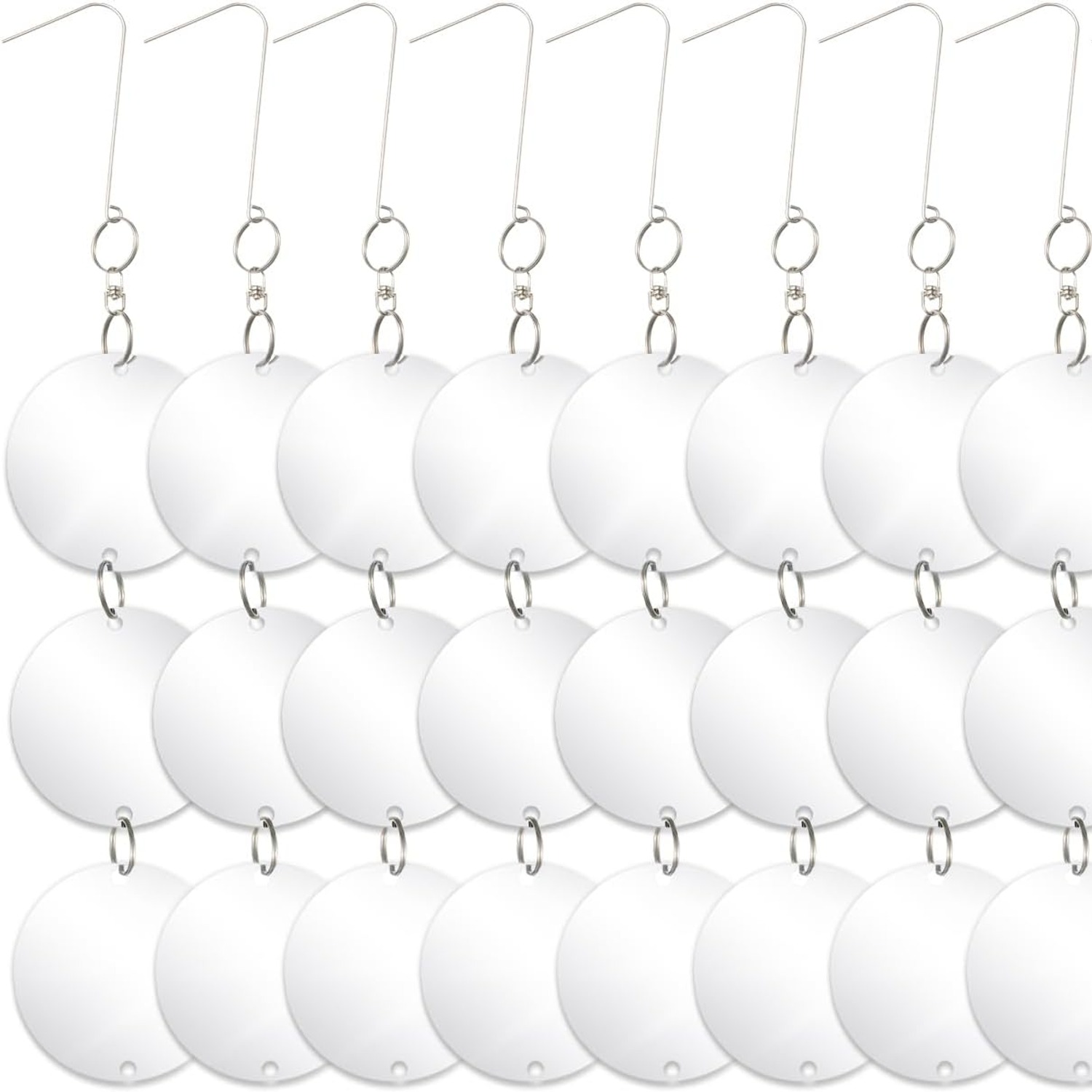
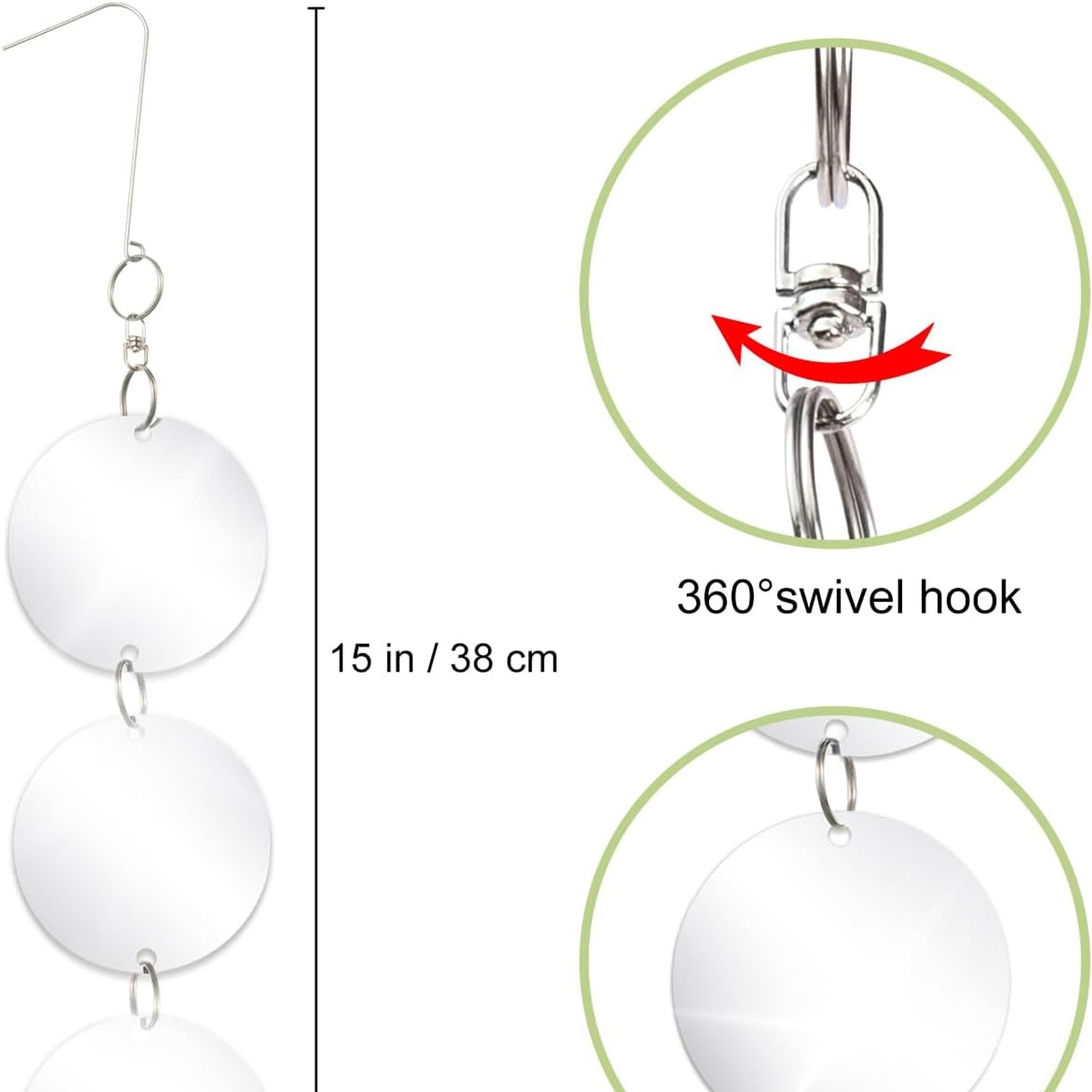
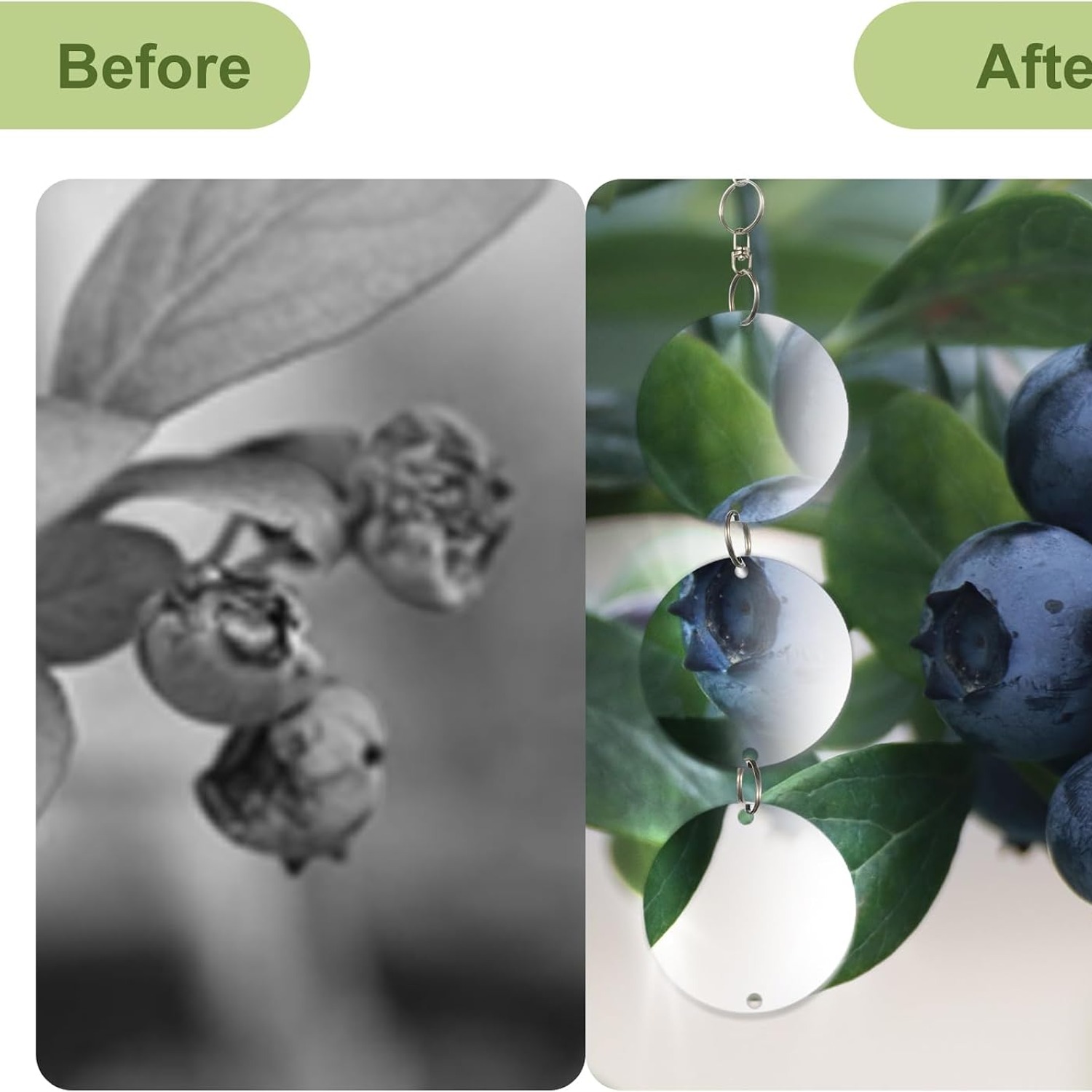
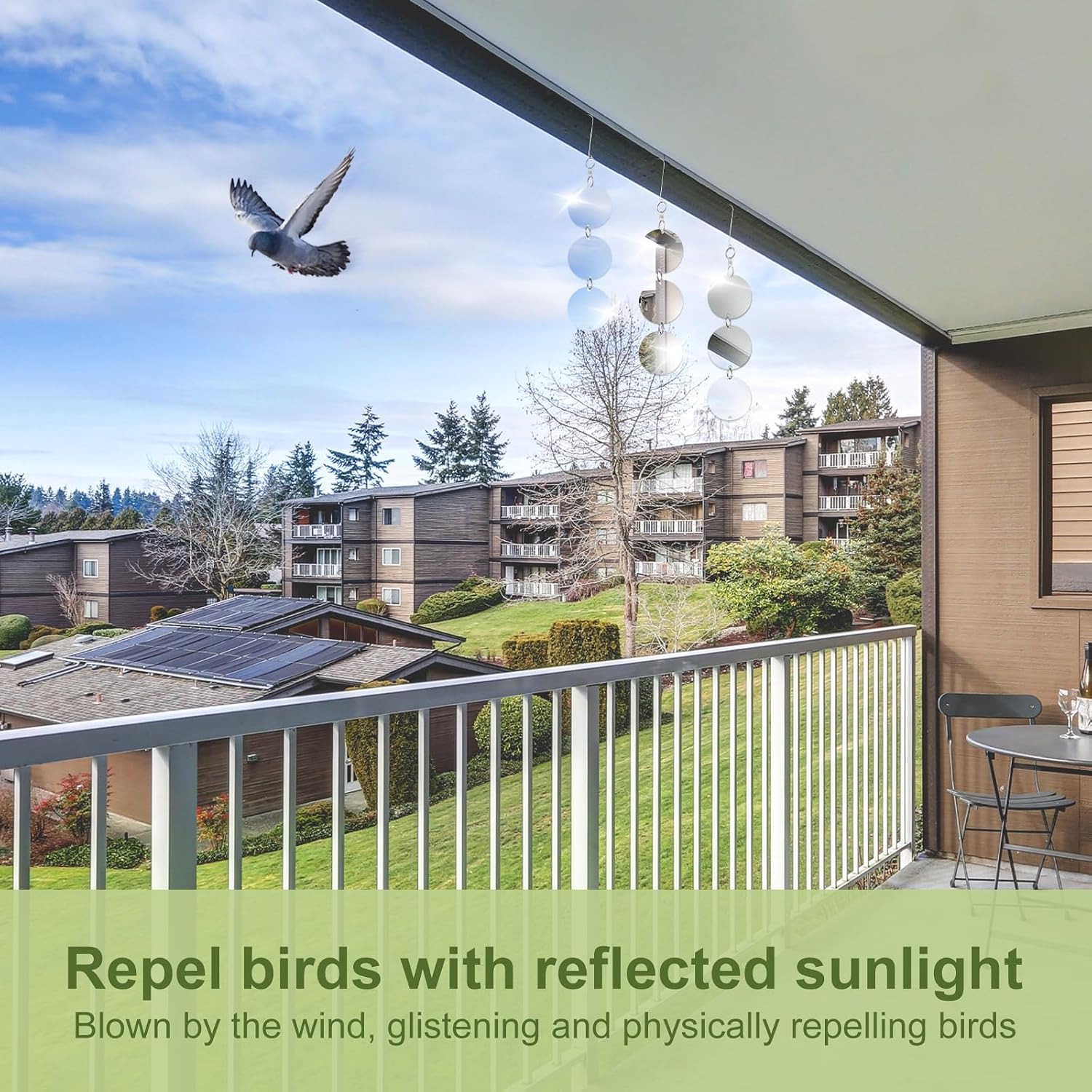
These discs give both. Each one carries a mirror on both faces and hangs loose so it spins freely through 360 degrees. A breeze starts it turning, sunlight hits a face, and a bright flash sweeps across the area. Then the disc keeps rotating and the next flash lands somewhere slightly different.
The double-sided build matters more than people expect. A reflector with only one mirrored face goes dark for half of every turn, which gives a steady on-off rhythm. Birds are good at spotting rhythms and ignoring them. Mirrors on both faces keep the reflection going whichever way the disc is pointed, so the pattern stays messy and harder to tune out. The listing also notes the double-sided design gives a wider reflective surface and a larger area of effect.
Nothing here touches the bird. There is no spike, no net, no sound box, no chemical. The discs simply make one location less appealing than the alternatives, and birds do the rest by moving on.
Who this set suits
Anyone with an outdoor space getting regular, unwanted bird traffic. The listing names gardens, houses, porches, yards, parks and swimming pool areas, and in practice the set gets used in a lot of similar places.
Gardeners with soft fruit are a big group. Cherries, berries and figs disappear fast, and hanging discs through the canopy is one of the simplest things you can try. Vegetable growers use them over seedling beds, where a handful of discs on short canes keeps birds from pulling up new shoots.
People with decks, patios and pool surrounds use them for the cleaning problem rather than the crop problem. Fewer droppings on the furniture means less time with a hose. Balcony dwellers like them because no drilling is involved, which keeps a landlord happy.
They are less of a fit if your problem is indoors, in a fully shaded spot with no daylight, or at night. Reflection needs light. If the troublesome ledge sits under a solid roof in permanent shade, a physical barrier will serve you better.
Choosing how to place 27 discs
Getting a full set of 27 is useful, because placement is where most people either succeed or give up.
Spread, do not stack. Twenty-seven discs in one corner cover one corner. The same 27 split across the fruit trees, the deck rail, the shed eave and the pool fence cover your whole property. Birds that get pushed off one perch should find the next nearby perch equally unsettling, otherwise they just shuffle sideways.
Think about where the sun travels. A disc on a north-facing wall in the southern hemisphere will do less than one catching full afternoon light. Walk the space at morning and again mid-afternoon and note where the light actually lands. Hang discs where they can catch it.
Mind the reflection path. Bright flashes are the point, but you do not want them hitting a neighbour's bedroom window or dazzling someone reversing down the drive. Watch where the light goes for a few minutes and shift anything awkward half a metre.
Vary the heights. Birds use different levels for different reasons. Discs at eye level on a rail, higher ones under an eave and a few mid-canopy in a tree make the whole space feel busy rather than leaving a quiet band for them to drop into.
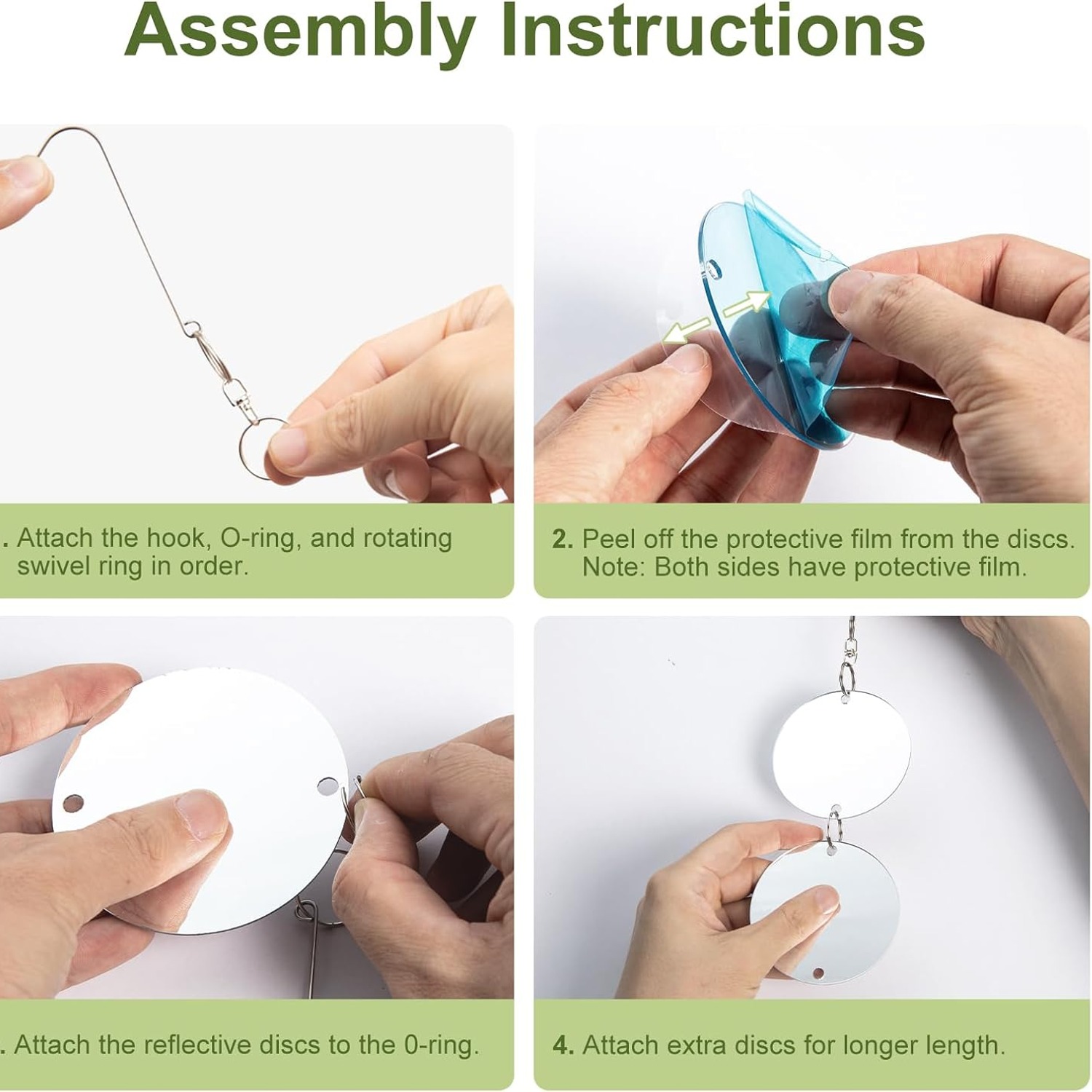
Link them where it helps. The listing notes that multiple discs can be connected together for extended coverage, which is handy under a long eave or along a pergola beam where single discs would leave gaps.
Installing them
This part is quick. Peel the protective film off both mirror faces, attach the supplied O-ring, and hang the disc on whatever you have. A branch, a cup hook, a nail, a wire, a railing, a cable tie through a fence panel. No tools are needed for the basic job.
If you want a neater permanent setup, small screw hooks in a soffit or pergola beam give you clean fixing points you can reuse each season. Leave a little slack so the disc can swing and spin rather than sitting pinned flat against a surface.
Give each disc room. A disc jammed between two branches cannot rotate, and a disc that cannot rotate loses most of its effect. Fifteen or twenty centimetres of clearance in every direction is a reasonable rule of thumb.
Keeping them working through the season
Two habits make the difference between a set that keeps working and a set that becomes garden furniture.
The first is cleaning. Mirrors dull with dust, pollen and water spots, and a dull mirror throws a weak flash. Wipe the faces with a soft damp cloth whenever they look cloudy, then dry them off. Avoid abrasive pads and solvent cleaners, which will scratch or haze the surface for good.
The second is moving them. Birds adapt. The spinning motion slows that process down a lot, but it does not stop it forever. Every couple of weeks, relocate four or five discs to new positions. It takes five minutes and it resets the surprise. This is the single most common reason people say reflective deterrents "stopped working", and it is entirely fixable.
Also check your hanging points after storms. O-rings work loose, branches move, hooks pull. A quick walk round after bad weather catches anything that has shifted before a disc ends up in the pool or on the lawn.
A note on combining methods
No single deterrent solves every bird problem, and the honest answer is that layering works better. Light and movement from the discs do their part. Alongside that, clear away food sources like spilled seed and fallen fruit, net anything truly precious, and block off sheltered ledges where birds want to nest.
Birds weigh up risk against reward. Reduce the reward and increase the perceived risk at the same time, and you make a much stronger case than either one on its own.
What is in the pack
The set contains 27 hanging bird deterrent discs with O-rings. The package measures 20 x 19 x 1.28 cm and weighs 320 g, so it stores easily in a shed or garage between seasons. Country of origin is China.
Delivery is tracked across Canada, free on orders of $75 or more and $25 below that.
The short version
These discs use daylight and a breeze to make a perch feel unsafe, with mirrors on both faces and free 360 degree rotation so the flash pattern never settles into something a bird can ignore. Hanging one takes about a minute. Nothing gets hurt, nothing gets plugged in, nothing gets refilled.
Twenty-seven discs is enough to treat several problem areas properly, which is really the point. Spread them out, hang them where the sun reaches, keep the mirrors clean, and shift a few every fortnight. Do that, and a set of reflective bird scare discs will hold its ground through a whole season.