



The complete guide
How to Choose a Shower Chair with Back That Actually Gets Used
The problem nobody talks about
Most people do not announce that showering has become frightening. They just shower less. They stretch two days into four, switch to a flannel at the sink, or wait until someone is in the house before they go in. It is a quiet change and it often happens months before anyone in the family notices.
The reason is simple. A shower floor is wet, often slick, and you are standing on it with your eyes closed, head tipped back, arms up, reaching for something. Every one of those actions pulls your balance point around. If your legs are already weaker than they were, or a hip hurts, or you get dizzy when you stand too long, that combination is genuinely risky. Bathroom falls are one of the most common serious accidents at home, and the shower is where a lot of them happen.
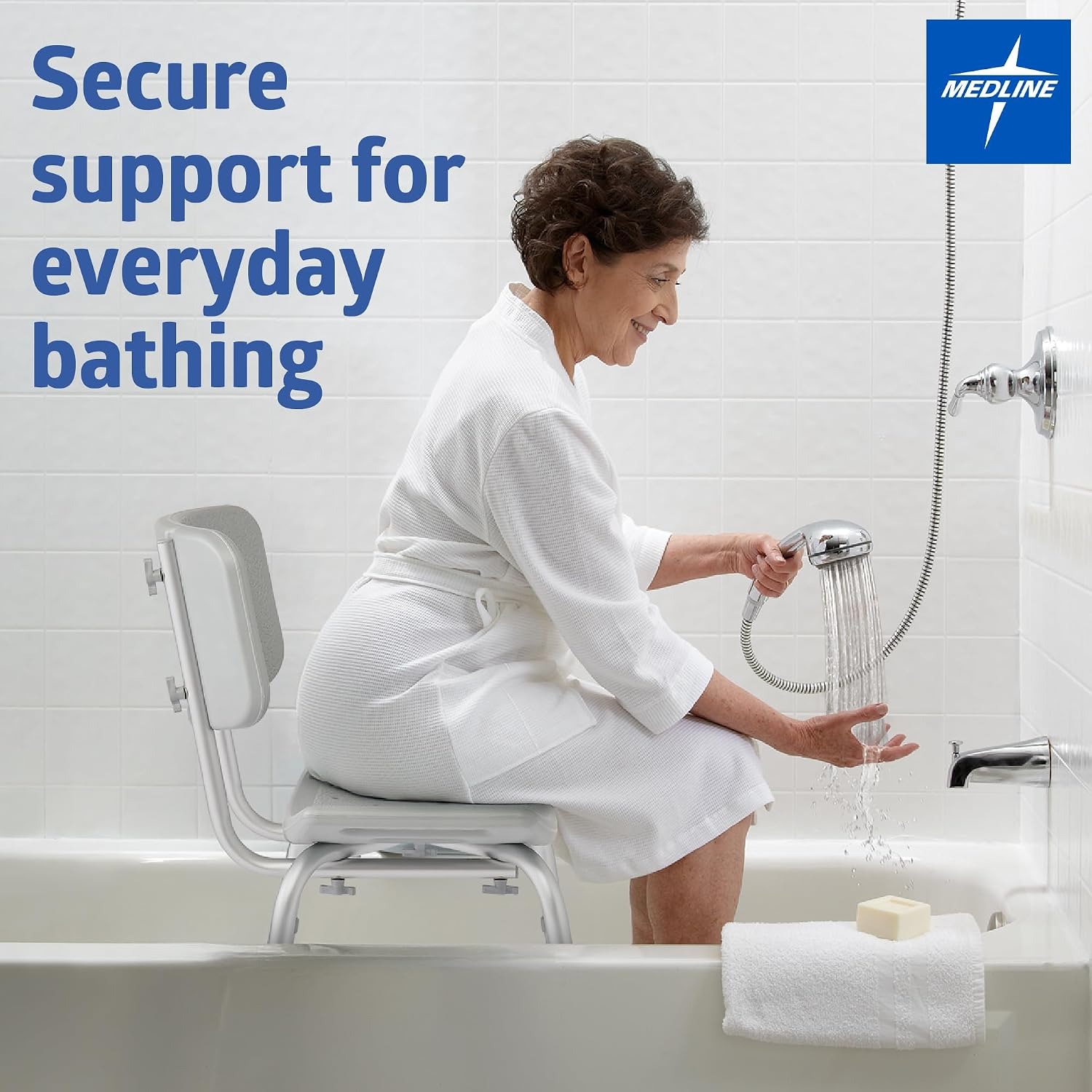
A chair in the shower removes the hardest part of the job. Once you are sitting, washing is just washing. You can take your time. You can rest halfway through. You can wash your feet without lifting one leg off a wet surface. That one change often brings daily showering back for people who had given it up.
How an adjustable shower chair works
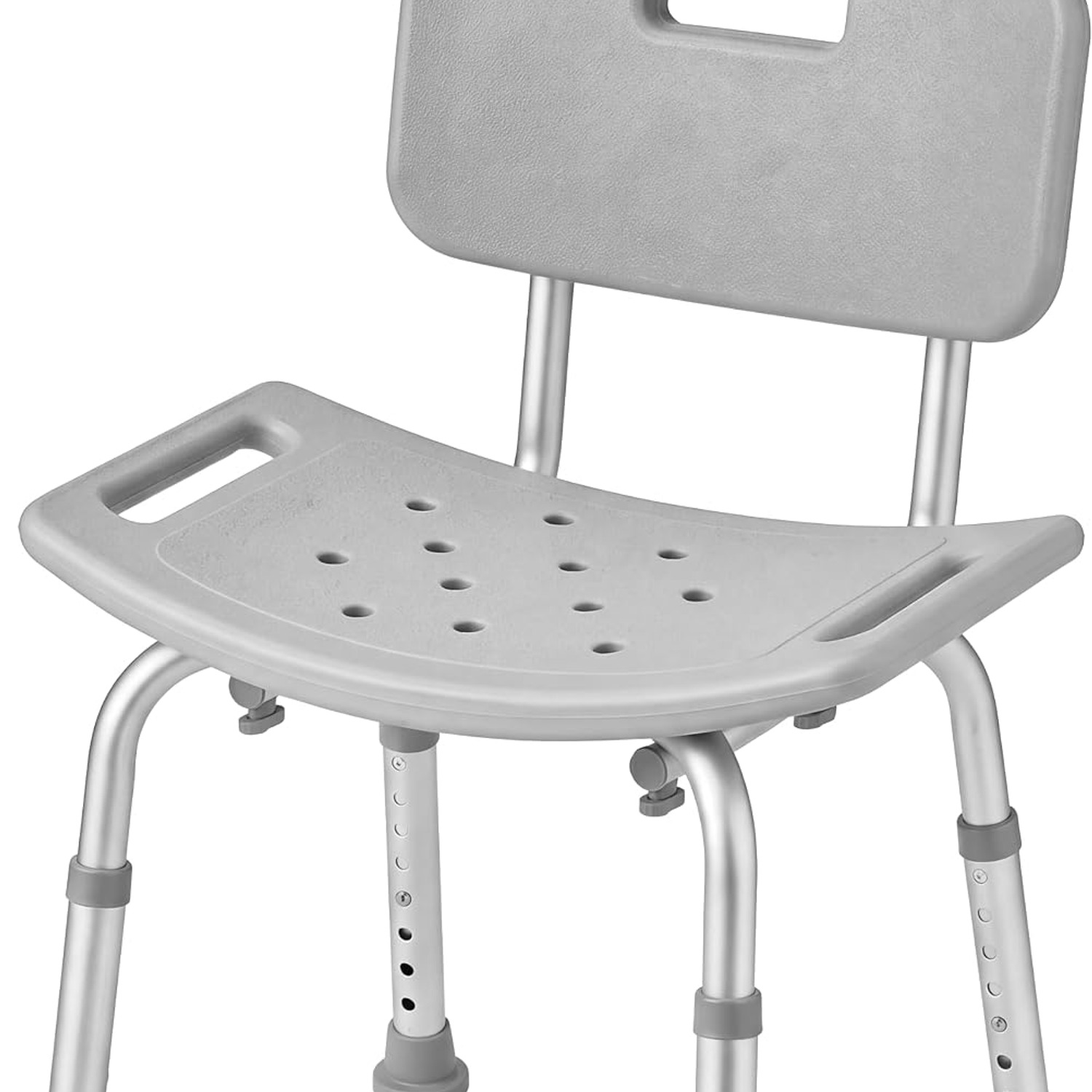
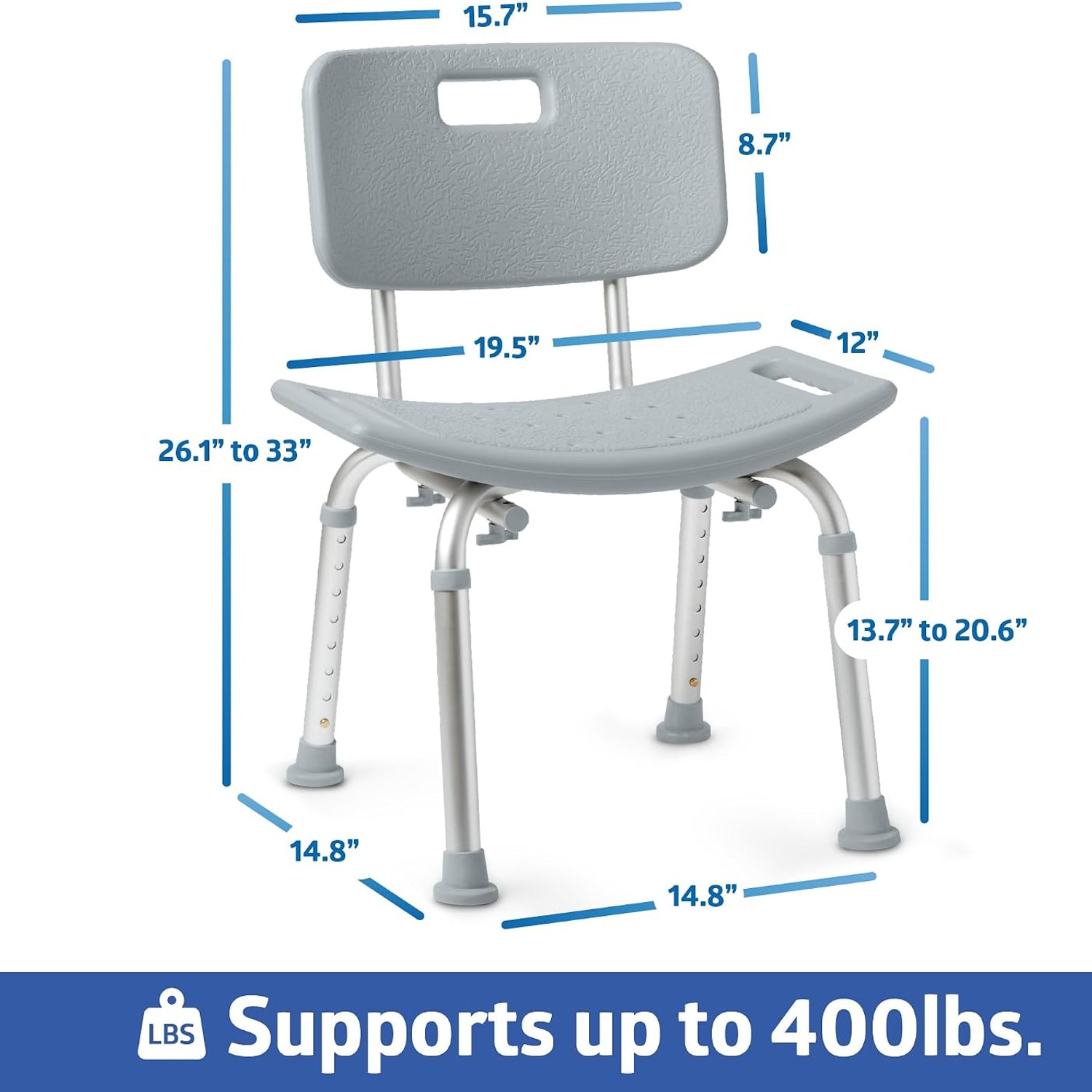
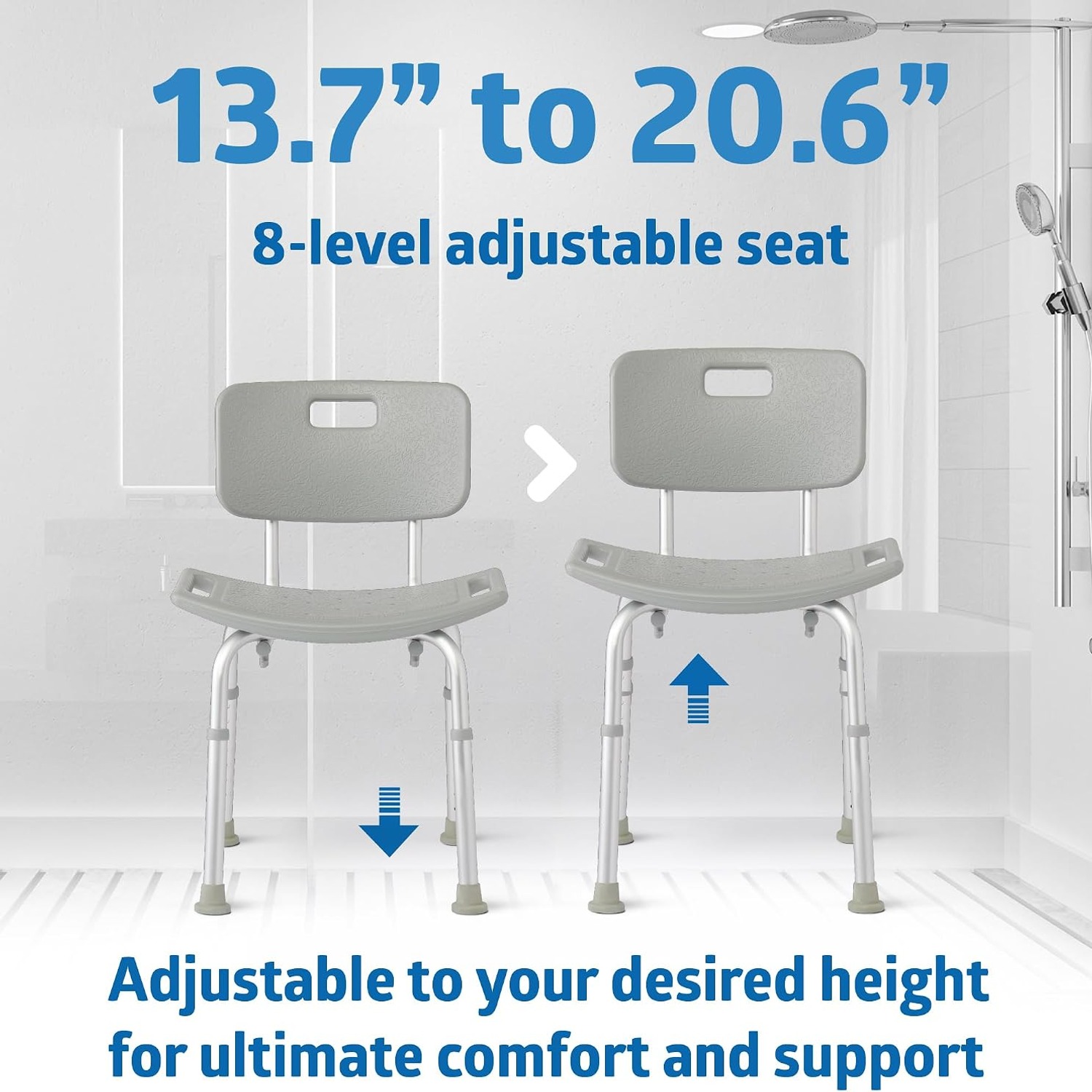
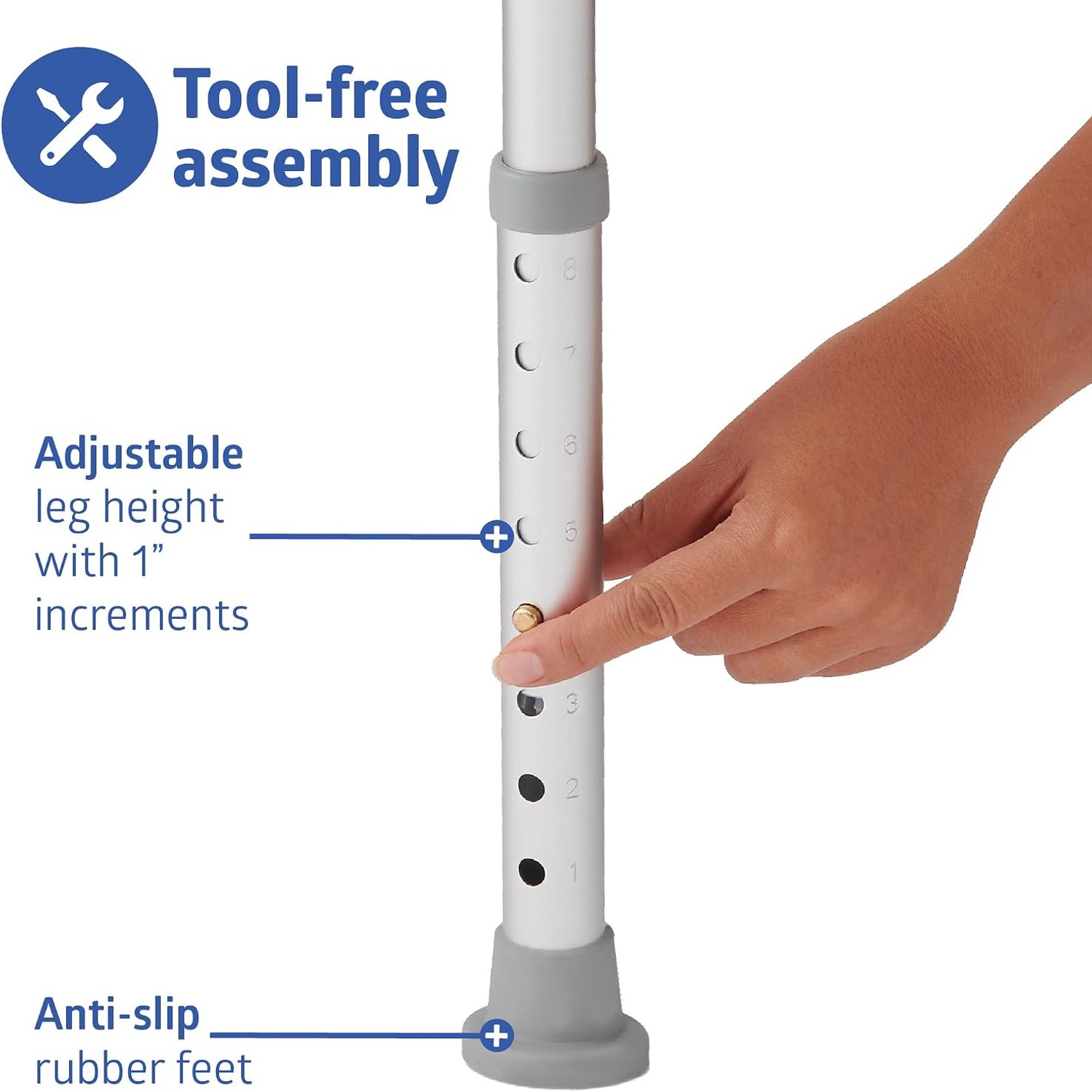
The build is deliberately simple, because complicated things fail in bathrooms. You have a plastic seat and back mounted on four aluminium legs. The legs telescope, and each one locks at your chosen height with a spring-loaded push button. On this chair the adjustment moves in 2.5 cm (1 inch) steps, running from a minimum height of 14.5 inches up to a maximum lifting height of 20.5 inches.
Aluminium is used instead of steel for a reason. It does not corrode the way bare steel does in a room that is wet twice a day, and it keeps the weight down. The whole chair comes in at 2.81 kg, which means one person can lift it over the lip of a bathtub without strain.
The feet are rubber and shaped to grip rather than slide. The legs splay out slightly, which widens the base and makes the chair harder to tip sideways. There are hand grips built into the seat so you have something to hold as you lower yourself, and the seat is drilled with drainage holes so water runs through instead of sitting in a pool.
Maximum weight recommendation is 181.44 kg. That covers most users comfortably, and the angled-leg design is part of how it gets there.
Who it suits
The clearest fit is anyone recovering from surgery. After a hip replacement, knee work, abdominal surgery or a long hospital stay, standing in a shower is tiring and sometimes against medical advice. A seat gets you clean without testing a joint that is still healing.
The second group is older adults who have noticed their balance change. Not people who have fallen, necessarily. People who have started holding the wall. That instinct to reach for something is worth listening to, and a bath chair for seniors answers it before anything goes wrong.
Then there are people living with conditions that drain energy, including MS, arthritis, heart and lung conditions, and chronic fatigue. For them the issue is not balance so much as stamina. Standing for six minutes costs more than they have to spend. Sitting down means a shower no longer eats the whole morning.
Carers benefit too, sometimes more than the person they are helping. Washing someone who is standing means holding their weight while you work. Washing someone who is seated means both of your hands are free and neither of you is braced on a slippery floor.
Choosing the right height
This is the thing people get wrong, and it is the main reason a shower chair ends up unused in a corner.
Too low and you cannot stand back up without a struggle. Your knees bend past the point where your thigh muscles have leverage, and you end up rocking forward and grabbing at things. Too high and your feet do not reach the floor properly, so you have nothing to push off and nothing anchoring you while you lean to wash.
The target is thighs roughly parallel with the floor, or hips a touch above knee level, with both feet flat. To get the measurement, sit on an ordinary dining chair with feet flat and measure from the floor to the crease behind the knee. That number is the seat height you want. Compare it to the range on the chair and you will know straight away whether it fits.
If you have had hip surgery, your surgeon or physiotherapist may have given you a minimum seat height to protect the joint. That instruction wins over everything written here.
Fitting it into your bathroom
Measure your shower floor before you order. Product dimensions are 12 cm deep by 50.8 cm wide by 52.1 cm high, with a seat 30.5 cm deep and 19.5 inches wide. You need the chair to sit flat with all four feet down and still leave space for the person to step in, turn, and sit.
In a bathtub, the question is the tub floor. Many tubs have a slight curve or a textured base, and you want all four feet landing on a flat stretch. If getting over the tub wall is the real obstacle, a chair that sits inside the tub does not solve that. A transfer bench that spans the rim is the right tool for that job.
Think about the shower head too. A seated person needs the water to reach them. A handheld hose on a slide rail is the usual answer and is a cheap addition if you do not already have one.
A grab bar on the wall is a good companion to any non slip shower seat. The built-in hand grips help, but a fixed bar at the right height gives a much stronger pull point for standing up.
Keeping it safe over time
Care is not complicated, but it does need to be regular.
Rinse the chair after use and wipe it down with warm water and a mild bathroom cleaner once or twice a week. Avoid bleach and gritty scouring products. They scratch the plastic, and scratched plastic holds grime and gets slippery.
Pay attention to the rubber feet. They are the single most important safety part on the chair, and soap film is what ruins their grip. Clean them properly and let them dry. If a foot cracks, splits, or wears smooth, stop using the chair until it is replaced.
Once a week, press down firmly on different parts of the seat and check for wobble. Confirm all four legs are locked at the same setting and that every push button has popped fully through its hole. A leg that is one notch out makes the whole chair rock.
The manufacturer lists a limited lifetime warranty on the frame and six months on the remaining components.
The short version
If showering has become something to dread, a shower chair with back is one of the cheapest and most effective fixes available. Sitting takes away the balance problem, the fatigue problem and most of the fear.
Look for a height range that matches the user, a frame that will not rust, feet that genuinely grip, and a weight rating with room to spare. This one adjusts in 2.5 cm (1 inch) steps between 14.5 and 20.5 inches, runs on a rust-resistant aluminium frame, weighs 2.81 kg, and is rated to 181.44 kg.
Measure the floor to the back of the knee, measure your shower, and buy the chair that matches both. Get those two numbers right and it will be used every day rather than pushed into a corner.