


The complete guide
Reusable Lawn Garden Bags, 4 Pack, A Buyer's Guide
The problem with bagging up a garden
Anyone who has spent an afternoon clearing leaves knows the real bottleneck is not the raking. It is the bagging. You get a tidy pile going, then you reach for a plastic sack and the sides fold inward. You hold it open with one hand and rake with the other, which works badly. Half the pile goes on the grass. You put a brick in the bottom. The brick falls over. Twenty minutes later you have one sack filled and four piles waiting.
Then there is the tearing. Thin sacks give up fast once a woody stem or a rose cane finds the seam. They also blow across the garden the moment you set one down empty, and on a breezy autumn day that is most of the time.
Reusable lawn garden bags fix the mechanics of the job rather than the job itself. Each one stands up by itself. Each one holds a very large volume. And each one goes back in the shed afterwards instead of in the bin.
How these bags work
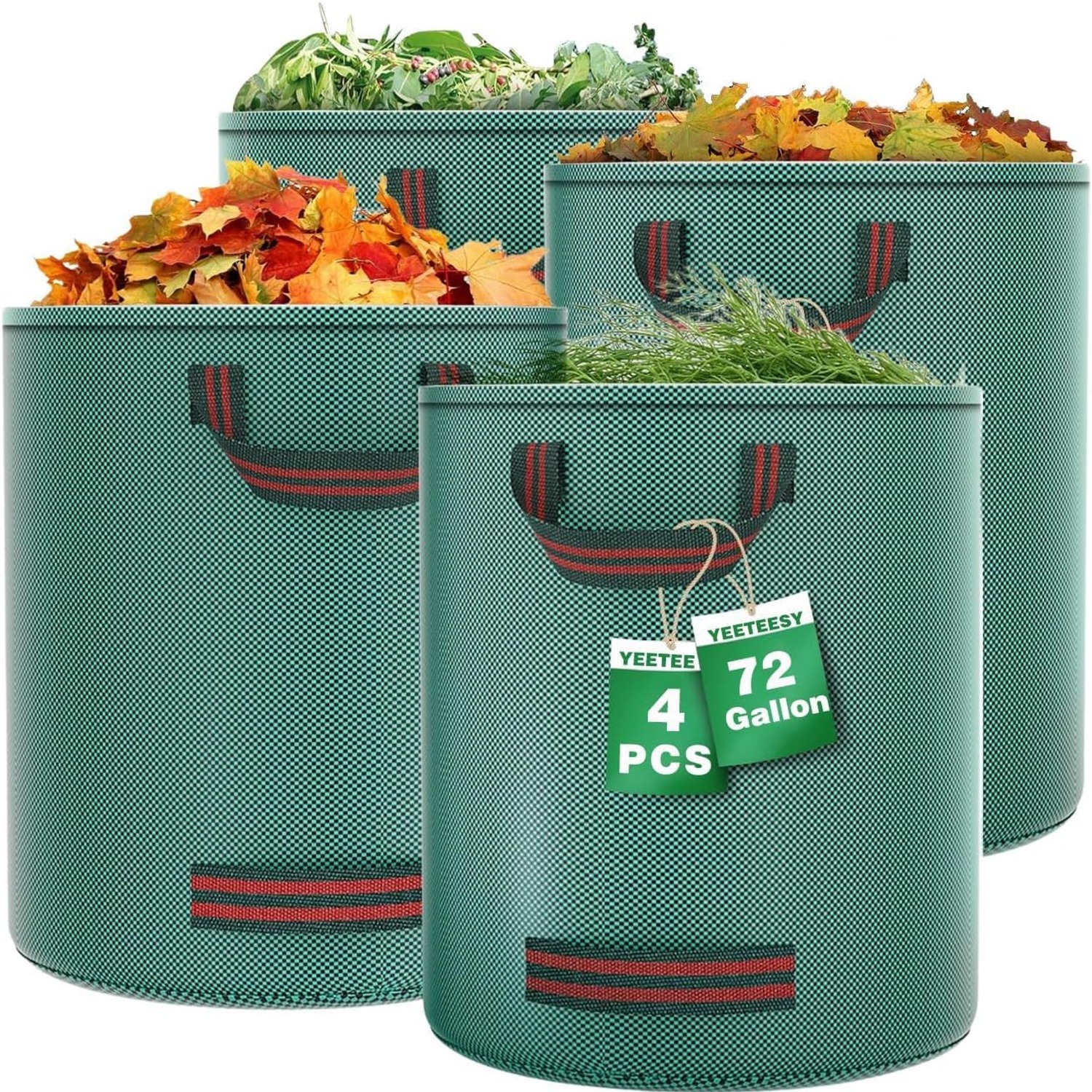
This is a pack of four. Every figure on this page refers to the complete set, not a single bag, which matters when you are comparing prices against single-bag listings elsewhere.
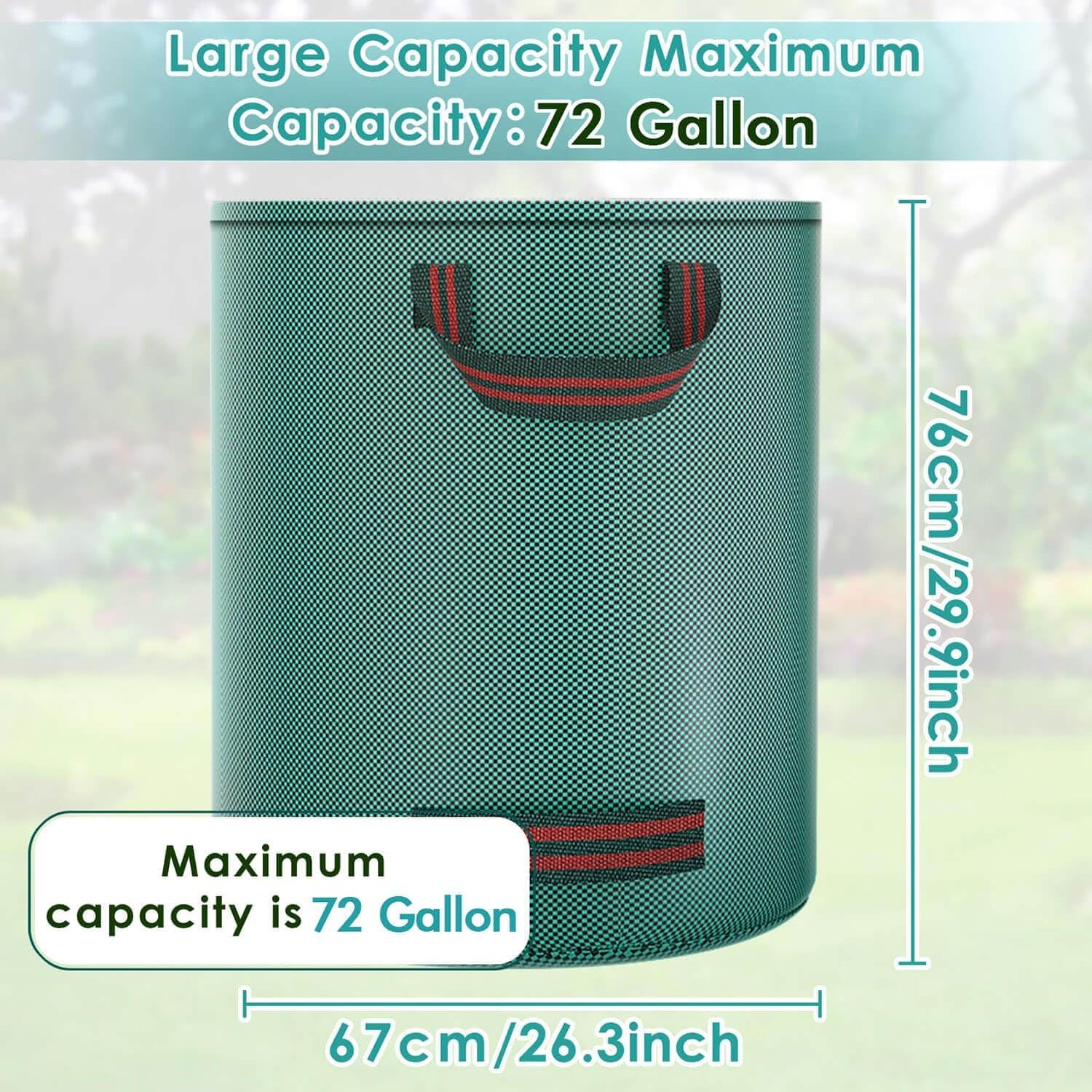
Each bag measures 67 x 67 x 76 cm when open and holds up to 272 litres, listed as 72 gallons. For scale, that is more than three standard wheelie bin loads of light leaf litter per bag. Four of them will swallow a serious autumn clear-out before you have to start emptying.
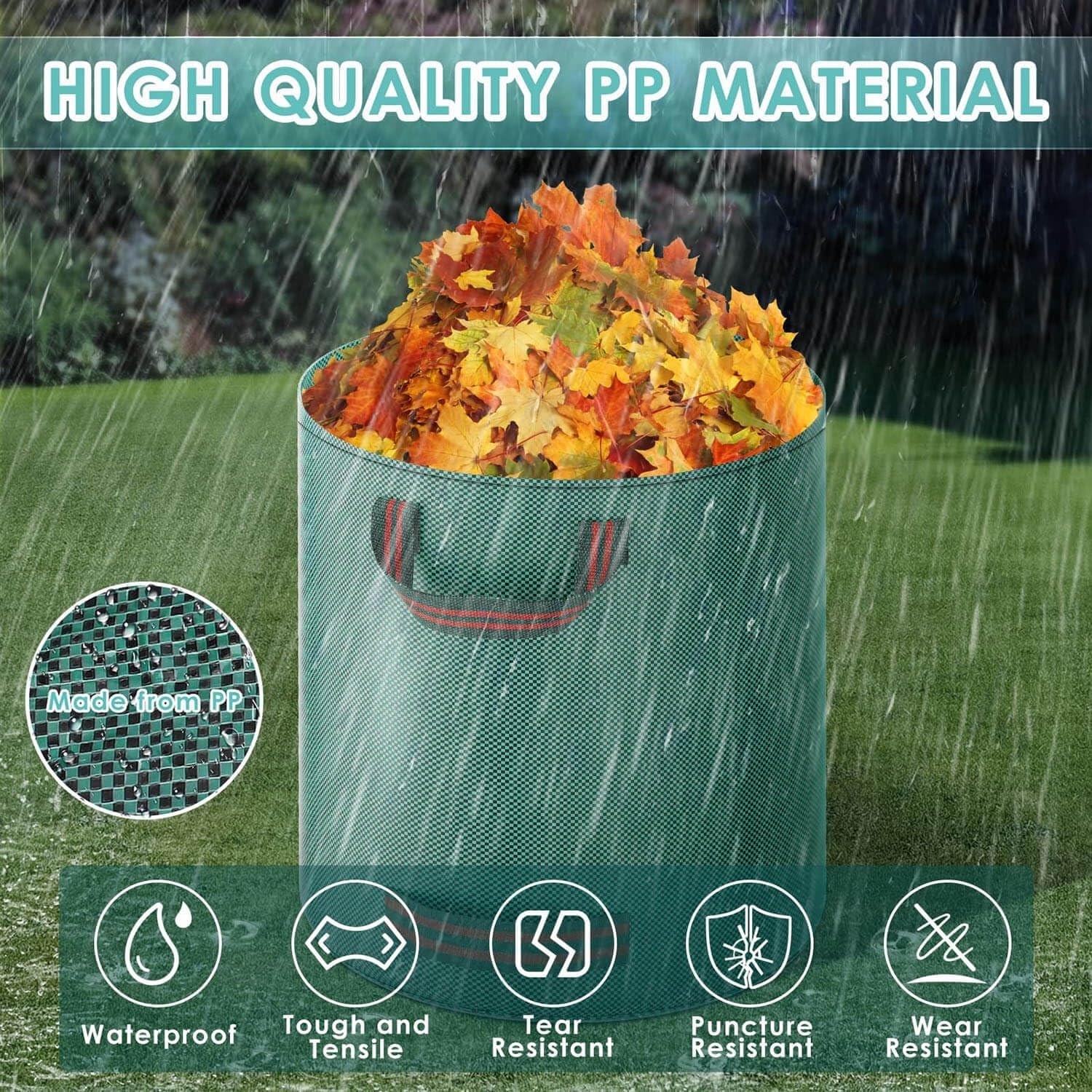
The fabric is polypropylene, a woven synthetic used for builders' bags, shopping totes and bulk sacks. It resists scuffing better than film plastic and it does not go brittle in cold weather the way cheap bin liners do. The seams use double-stitched webbing, and the listing states each bag can carry garden waste weighing up to 100 kg. That is the maker's stated figure. In practice, you will hit the limit of what you want to lift long before you hit the limit of what the bag will hold.
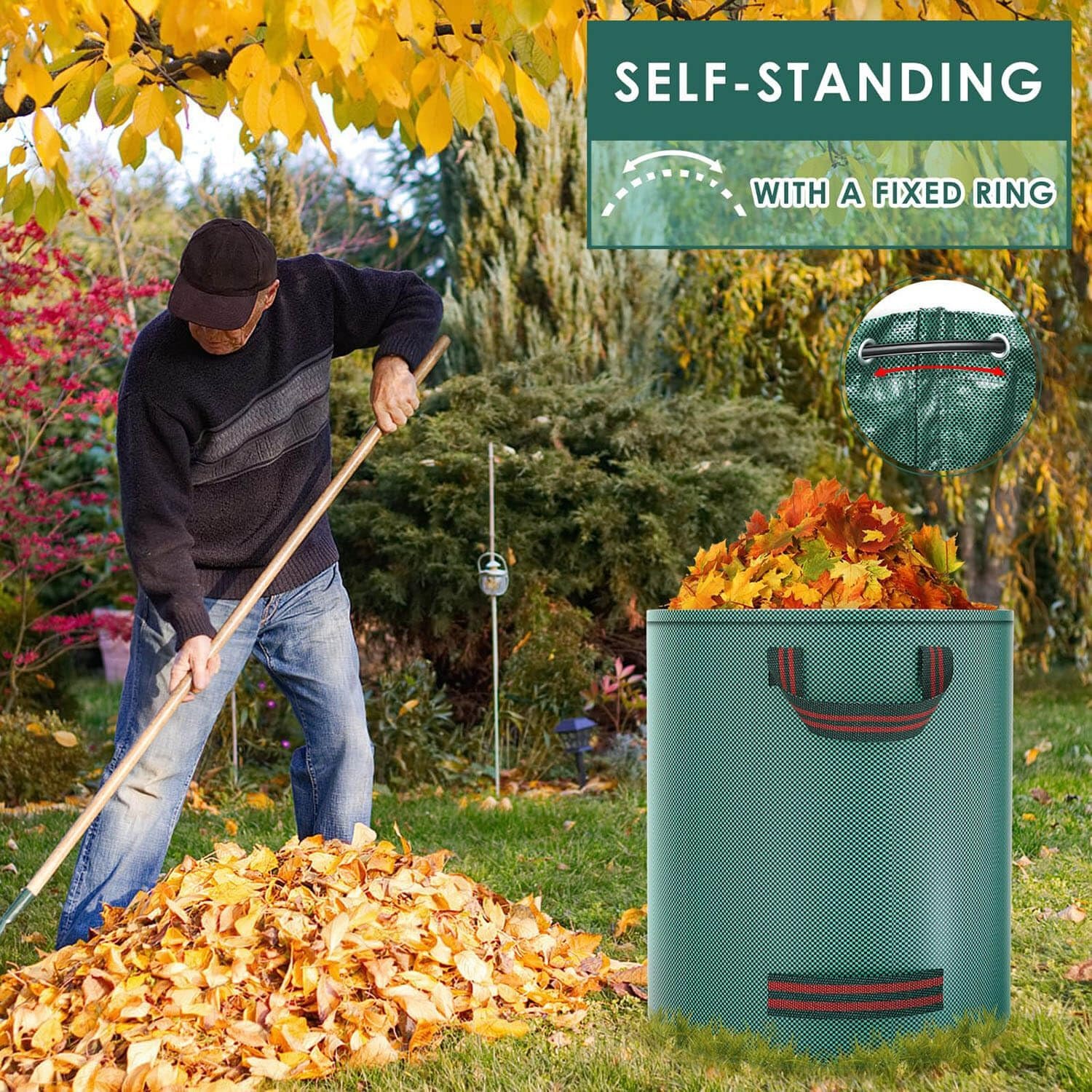
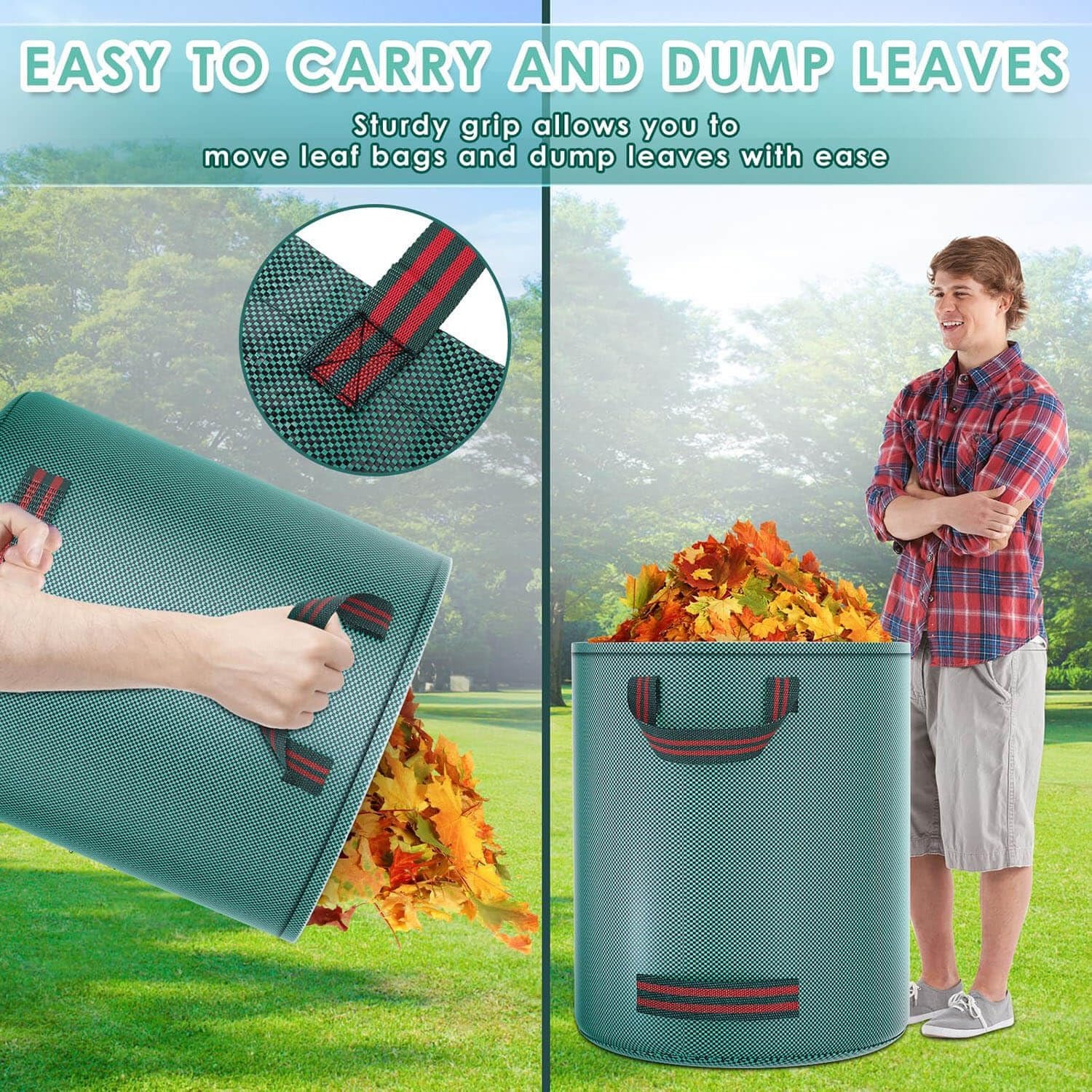
The small detail that does the most work is the plastic ring around the opening. It keeps the mouth wide and round, and it keeps the bag standing upright on its own. No helper, no brick, no frame. You rake straight in with both hands, which roughly halves the time the job takes.
When you are done, the ring and fabric collapse flat. The whole four-pack weighs 1.41 kg, so it hangs on a nail in the shed or lives in a car boot without anyone noticing.
Who they suit
They suit anyone with deciduous trees. If you spend two or three weekends every autumn chasing leaves around a lawn, this is the obvious tool.
They suit people with hedges. Hedge trimming produces an enormous volume of very light clippings, which is exactly what a 272 litre bag is for. Weight is never the issue with hedge waste; volume is.
They suit allotment holders and anyone who gardens somewhere other than where they live. A rigid bin cannot travel. A folded bag can go in a pannier, a rucksack or a small hatchback.
They suit renters and anyone short on storage. There is no permanent footprint. Four bags take up less shelf space than a pair of wellies.
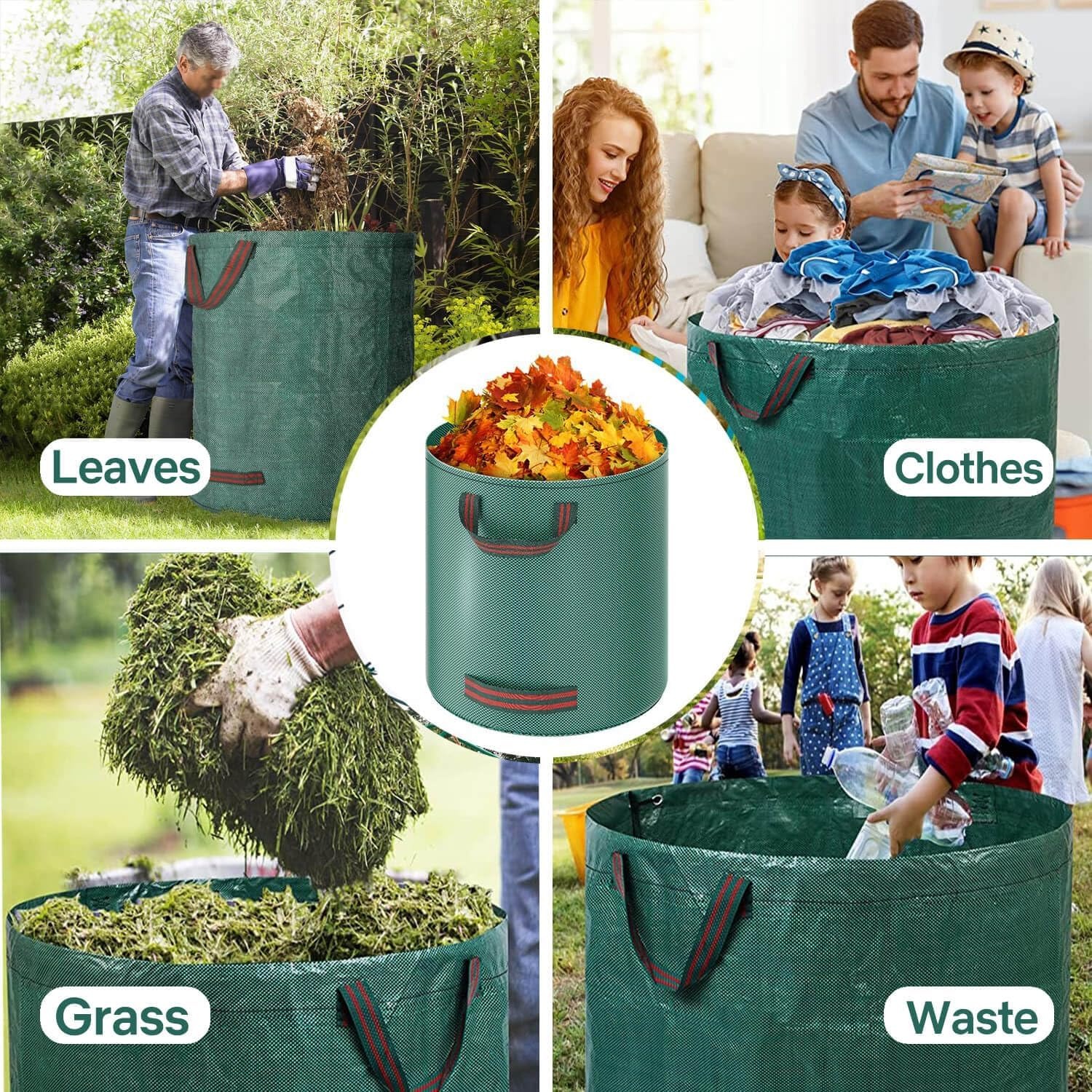
They also suit people who do not garden much at all. Plenty of buyers use them for moving house, for storing winter bedding, for hauling kit to a campsite or for carrying firewood from a stack to the door. If you are comparing the best heavy duty garden bags against plain storage totes, the bags win on packing down and lose on stacking, so it depends which problem bothers you more.
How to choose
A few things separate good reusable bags from frustrating ones.
Does it stand open? This is the single most important feature and it is the reason the ring exists. A bag that needs holding is barely better than a plastic sack. Anything described as self-standing or pop up will save you real time.
Capacity versus liftability. Big bags are better for light waste and worse for heavy waste, because a 272 litre bag filled with wet soil becomes impossible to move. The trick is to match the bag to the material. Leaves, clippings and hedge trimmings, fill it up. Soil, turf and wet compost, fill it a third of the way.
Seam construction. Look for stitched webbing rather than heat-welded plastic. Webbing spreads load across the fabric instead of concentrating it at a single bonded line. These use double-stitched webbing.
Pack size. One bag means constant emptying. Four means you clear a section, carry them all to the bin at once, and get on with your day. For most households the best garden clean up bags are the ones you own enough of.
Folding. If it does not fold, you will eventually stop using it, because the shed corner it occupies is more valuable than the bag. Collapsible is listed as a material feature here.
Using them well
Set the bags out before you start raking, spaced around the area you are clearing. Working to a bag three metres away is much faster than walking to one bag by the gate.
Keep woody material short. Cut canes and branches down before they go in, so sharp ends are not pressing against one point in the fabric. This is the main way people damage otherwise fine bags.
Do not overfill with wet material. Wet leaves roughly double in weight. Fill to what you can lift comfortably, not to the top edge.
When you carry, use both webbing points and keep the load against your body. Short drags across grass are fine. Dragging a loaded bag over concrete or gravel is the quickest way to wear through a base.
Care and storage
Empty the bag fully and shake out the loose soil. If it is muddy, hose it down. Then stand it open or hang it somewhere airy until it is completely dry.
Dry is the whole thing. A folded damp bag will smell musty within a week and can grow mildew on the fabric. Five minutes of air drying saves the bag.
Keep them away from barbecues, fire pits and anywhere hot. Synthetic fabric and open flame do not mix. Store them away from secateurs, shears and anything with a blade, since a loose cutting edge in the same crate will nick the fabric over time.
Beyond that there is nothing to maintain. No zips, no moving parts, no liner to replace.
Beyond the garden
A lot of buyers end up using them for things the listing never mentioned. They are useful as laundry hampers in a utility room, as toy bins that disappear when guests arrive, as kit bags for sports gear, and as soft crates when you are moving house and want something that squashes into gaps a cardboard box cannot. Because they fold, there is no cost to keeping a couple around for whatever comes up.
The short version
This is a four-pack of collapsible polypropylene yard waste bags. Each one holds 272 litres (72 gallons), measures 67 x 67 x 76 cm, and has a plastic ring that keeps it standing open while you rake. The seams use double-stitched webbing, and the listing states each bag can carry up to 100 kg of garden waste. The pack weighs 1.41 kg and folds flat.
If you buy disposable sacks every season and spend half of every clear-out wrestling with them, this is a simple swap that pays for itself. Fill, empty, rinse, dry, fold, done.