
Clearance Warehouse Canada
Company
Shop By Category
T&Cs
Shop Online
  • Free delivery across Canada on orders of $75 or more
  • Lawn and garden, home improvement, bedding, car, kids and health lines in one place
  • Dispatch within 2 working days, then delivery in up to 7 working days by tracked courier
  • Tracking number emailed as soon as your order ships

Plastic Lawn Edging | Landscape Edging Roll | Garden Border Edging

Give your garden borders a tidy outline

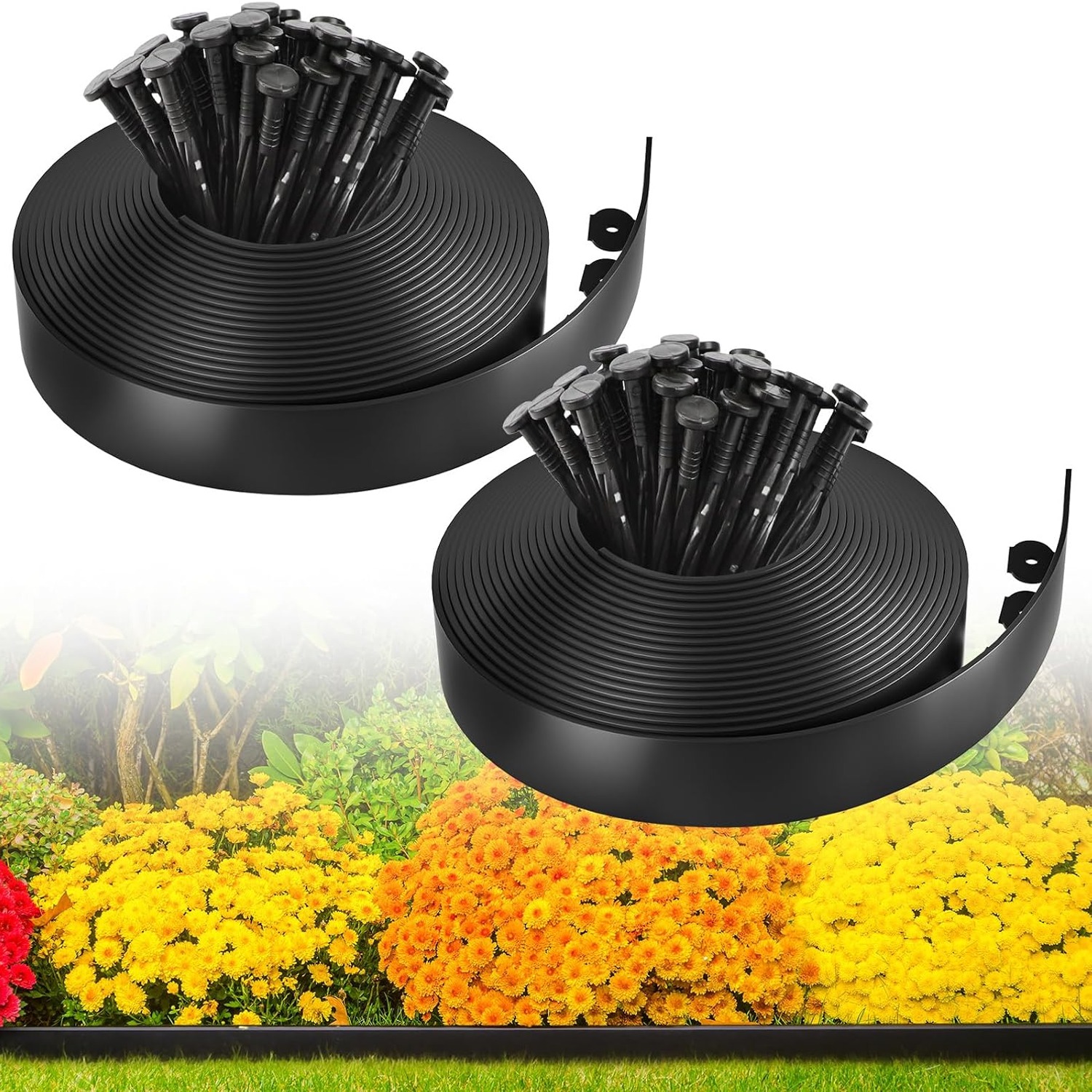
Plastic Lawn Edging, 100 ft Roll

$92.63 $111.16 Save $18.53
  • 100 ft Single Roll
  • 150 Stakes Included
  • Bends For Curves
  • No Digging Needed

Price: $92.63 $111.16

  • Delivery time: up to 7 working days by tracked courier, after dispatch within 2 working days
  • Free delivery on orders $75+, otherwise a flat $25
  • Pay by card or PayPal, handled by the payment provider
  • 15 days from delivery to return an unused item, plus your statutory rights
Product specifications
Product Style100 ft roll
Pack Contents1 roll plus 150 stakes (151 items)
Number Of Packs1
ColourBlack
MaterialRubber
Item Dimensions (L x W)25.4 cm L x 5.1 cm W
Product Dimensions25.4 x 5.08 x 0.25 cm
Item Weight5.5 kg
ConditionNew
Weight5.5 kg
Shipping & returns

Tracked delivery across Canada. It is free on orders of $75 or more, and a flat $25 below that. Allow up to 7 working days in transit after dispatch within 2 working days.

You have 15 days from delivery to return an unused item in its original packaging for an exchange or a refund. You cover the cost of shipping it back.

If it arrives faulty, damaged or not as described, tell us right away and our customer service team will sort it.

Shipping details · Refunds and returns

100 ft Single RollOne continuous 30.5 m length, so fewer joins around long beds.
150 Stakes IncludedSpiral anchoring stakes at 15 cm (6 in) each for dense, secure fixing.
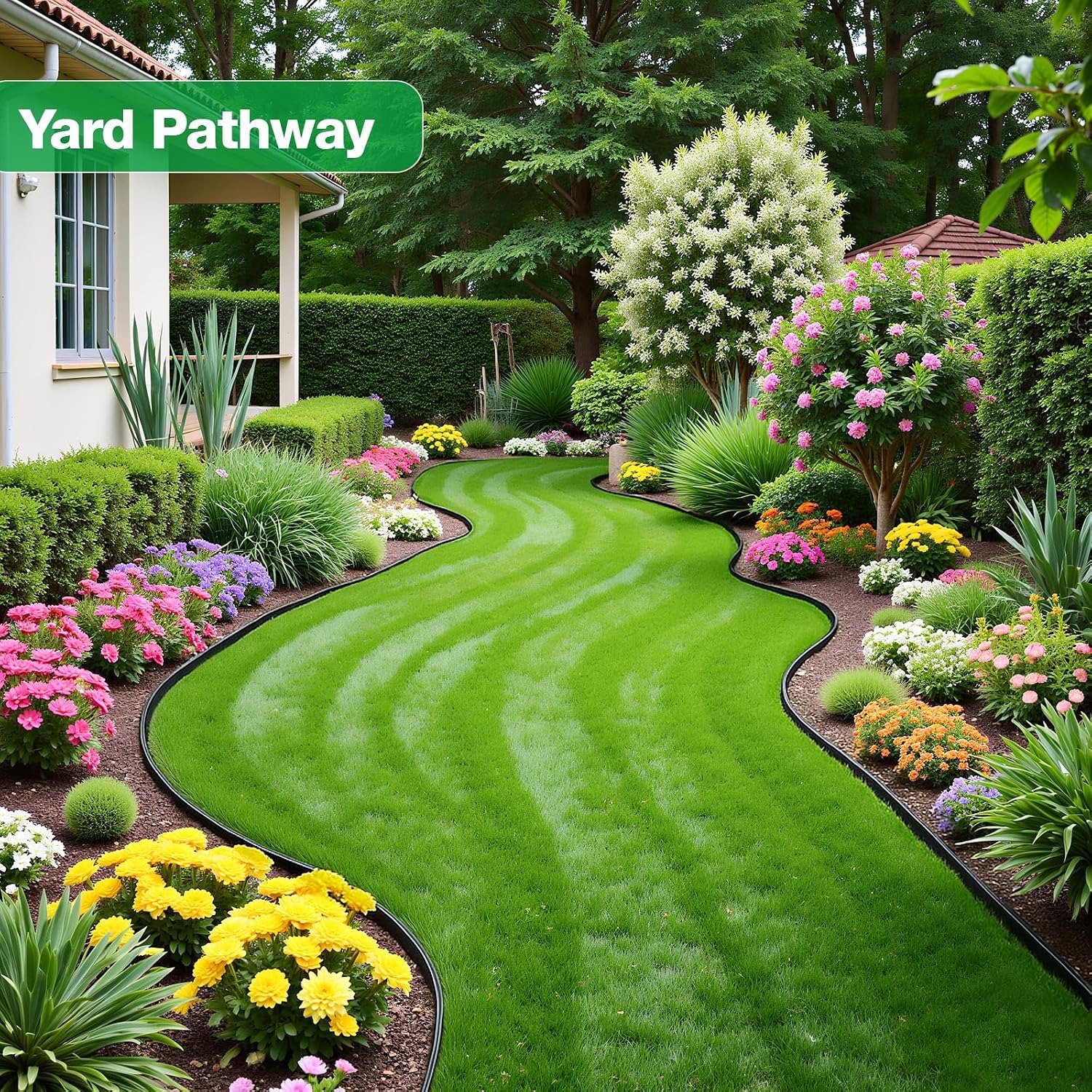
Bends For CurvesFlexible enough to shape around circles, corners and tree rings.
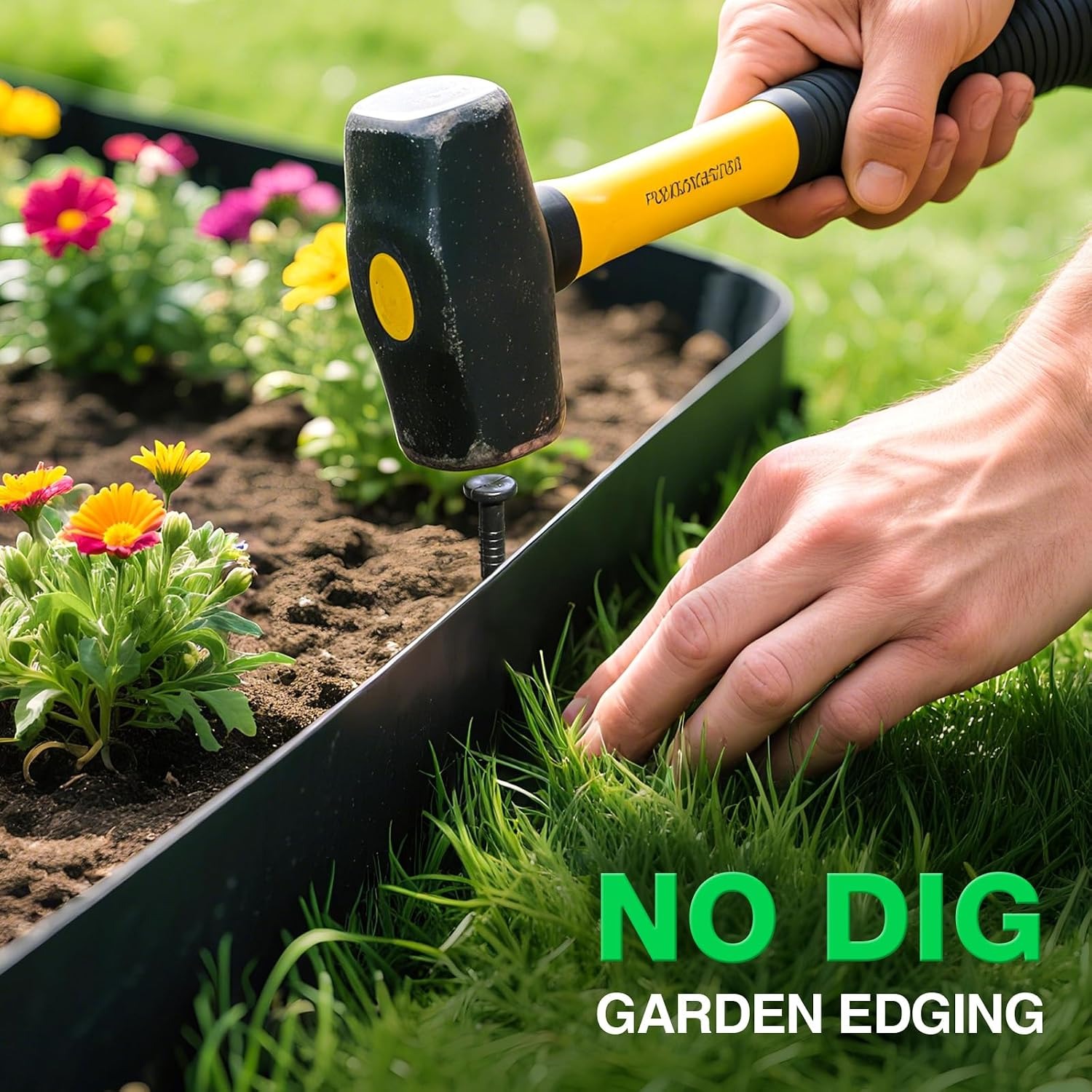
No Digging NeededUncoil, shape, then tap the stakes in with a rubber mallet.

Give every bed, path and tree ring a clean finish with plastic lawn edging that bends where you want it and stays put once it is in.

One 100 ft (30.5 m) black roll plus 150 spiral anchoring stakes, flexible enough for curves and circles, trimmable to length, and installed by hand with a rubber mallet.

A single 100 ft (30.5 m) roll of black garden border gives you enough length to edge several beds, a path and a tree ring from one pack.

The strip stands 2 in (about 5 cm) high, which is enough to hold mulch and soil back without looking like a wall around your planting.

One hundred and fifty spiral stakes are included, so you can space them closely in soft or uneven ground instead of rationing them.

The material flexes, so straight runs, gentle curves and full circles are all possible from the same roll with no special fittings.

Installation is hand tools only, which makes it a realistic weekend job rather than something you need to book a landscaper for.

Plastic Lawn Edging, 100 ft Roll

Lawns do not stop at the edge of a bed on their own. Grass creeps into mulch, mulch washes onto the path, and the line you cut so carefully in spring is gone by midsummer. A physical border fixes that, and this plastic lawn edging is the simple version of a physical border. It is a flexible black strip you lay on the surface and pin down, rather than a concrete kerb you have to dig a trench for.

Plastic Lawn Edging, 100 ft Roll

The pack is one 100 ft roll, which is about 30.5 metres. That is a generous amount for most suburban gardens. It is usually enough to ring two or three beds, run a line along a driveway, and still have a few metres left for a tree ring. Because it comes as one piece, you can keep a long run unbroken and only cut where you actually want the border to end.

Plastic Lawn Edging, 100 ft Roll

One hundred and fifty spiral anchoring stakes come in the box, each 15 cm (6 in) long. The spiral shape is there to grip soil as it goes in, which matters more than stake length in loose ground. Having that many means you are free to place them every 30 to 60 cm on straight runs and tighter through curves, where the strip wants to spring back.

Plastic Lawn Edging, 100 ft Roll

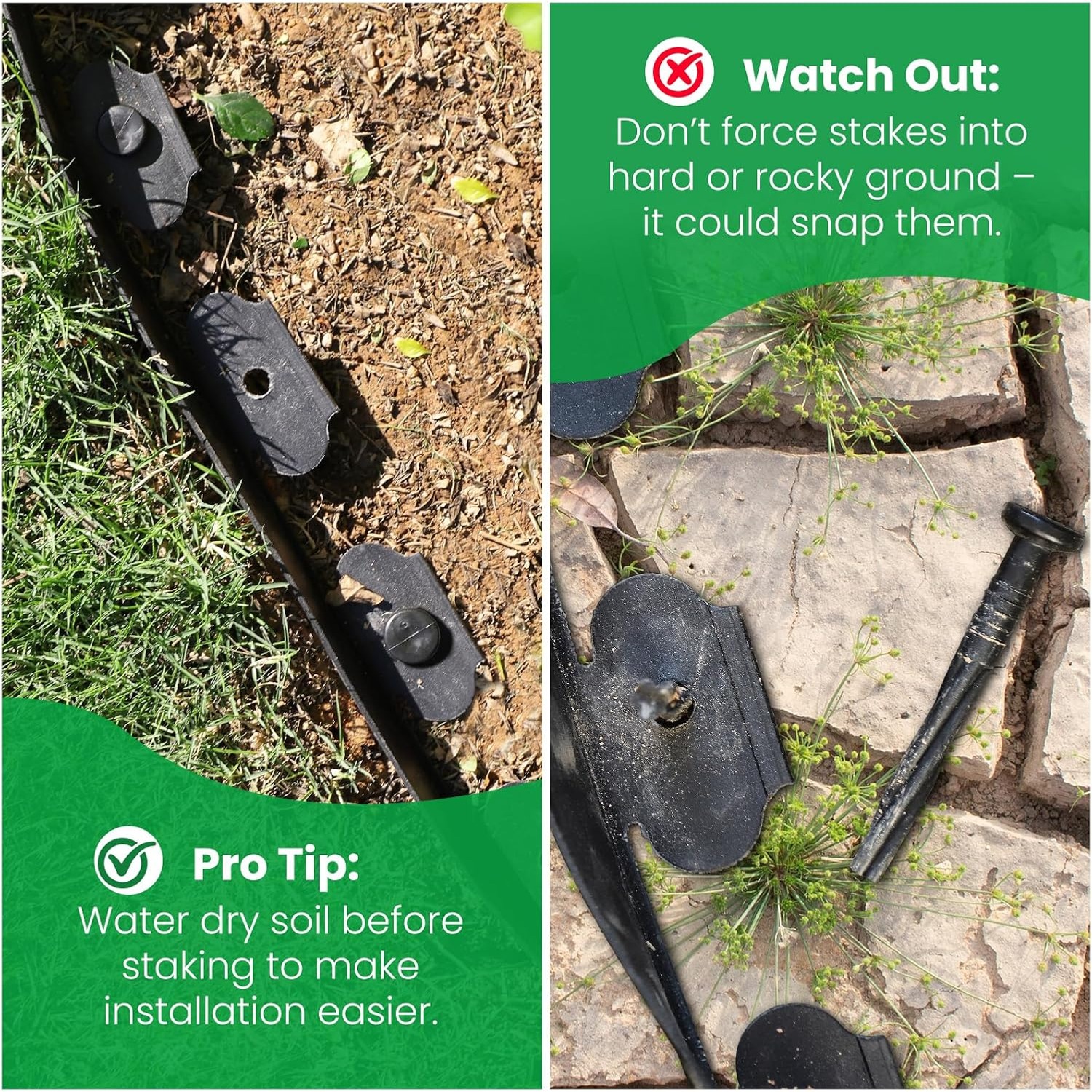
Fitting it is a surface job. Unroll the edging and leave it in the sun for a while so it relaxes, lay it along the line you want, then tap the stakes through the strip and into the soil with a rubber mallet. If the ground is dry and hard, soak it the day before and come back once it has softened. No trench, no cement, no hired plant.

Plastic Lawn Edging, 100 ft Roll

The strip stands roughly 5 cm (2 in) tall, so it is a divider rather than a retaining wall. That is the right height for separating grass from mulch, holding back gravel in a rock garden, keeping bark chips off a walkway, or marking out the shape of a new bed before you plant it. On flat ground and on gentle slopes it follows the contour, as long as you stake it closely enough.

Not sure yet? That is fine.

You can change your mind. You have 15 days from delivery to return an unused item in its original packaging for an exchange or a refund. You cover the cost of shipping it back.

If it turns up faulty, damaged or not as described, tell us and our customer service team will sort it. Read the full detail on our refunds and returns page, or ask us anything before you order.

Frequently Asked Questions

What exactly comes in the pack?

You get one continuous roll of black garden border edging measuring 100 ft (about 30.5 m), plus 150 spiral anchoring stakes. The listing counts that as 151 items in total. Everything in this listing is priced and shipped as the complete kit, not as individual pieces.

How long is the roll in metres?

One hundred feet works out to roughly 30.5 metres. That is a single unbroken length, so you can run it around a large bed without needing joining pieces. Cut it only where you want a run to finish.

How tall does the edging stand?

The strip is described as 2 in high, which is about 5 cm. That height is enough to separate grass from mulch and hold back loose material at the surface. It is not a retaining wall and will not hold back a raised bank of soil.

How many stakes come with it and how long are they?

There are 150 stakes included and each one is 6 in, or roughly 15 cm. They are spiral shaped so they bite into soil as they go in. With 150 of them you have enough to space generously through curves where the strip pulls hardest.

What is the edging made from?

The product details list the material as rubber. It is a flexible weather-resistant strip rather than a rigid board.

What colour is it?

The edging is black. Black tends to disappear against soil and dark mulch once it is in, which is why it is the most common choice for a garden bed border.

Do I need to dig a trench to install it?

No. This is a surface-fixed system, so you lay the strip on the line you want and pin it with the stakes. That is the main reason people pick a no dig lawn edging over a buried kerb.

What tools do I need?

A rubber mallet for the stakes and a pair of strong scissors, snips or a utility knife to trim the roll. A garden hose is handy too, for softening hard soil before you stake. Nothing specialist is required.

How far apart should the stakes go?

On straight runs, every 45 to 60 cm is usually fine. Through curves and tight circles, drop that to every 25 to 30 cm because the strip wants to spring back to straight. With 150 stakes in the pack you have room to be generous where it matters.

Can it follow curves and circles?

Yes. The strip is designed to bend, which makes it suitable for tree rings, kidney-shaped beds and winding path edges. Warm it in the sun first and it will take a curve more willingly.

Will it work on uneven ground?

It follows gentle dips and rises as long as you stake it closely through the changes. Sharp steps or steep banks are harder, since the strip bridges rather than drops. For those spots, more stakes and a slower pace help.

Can I cut it to length?

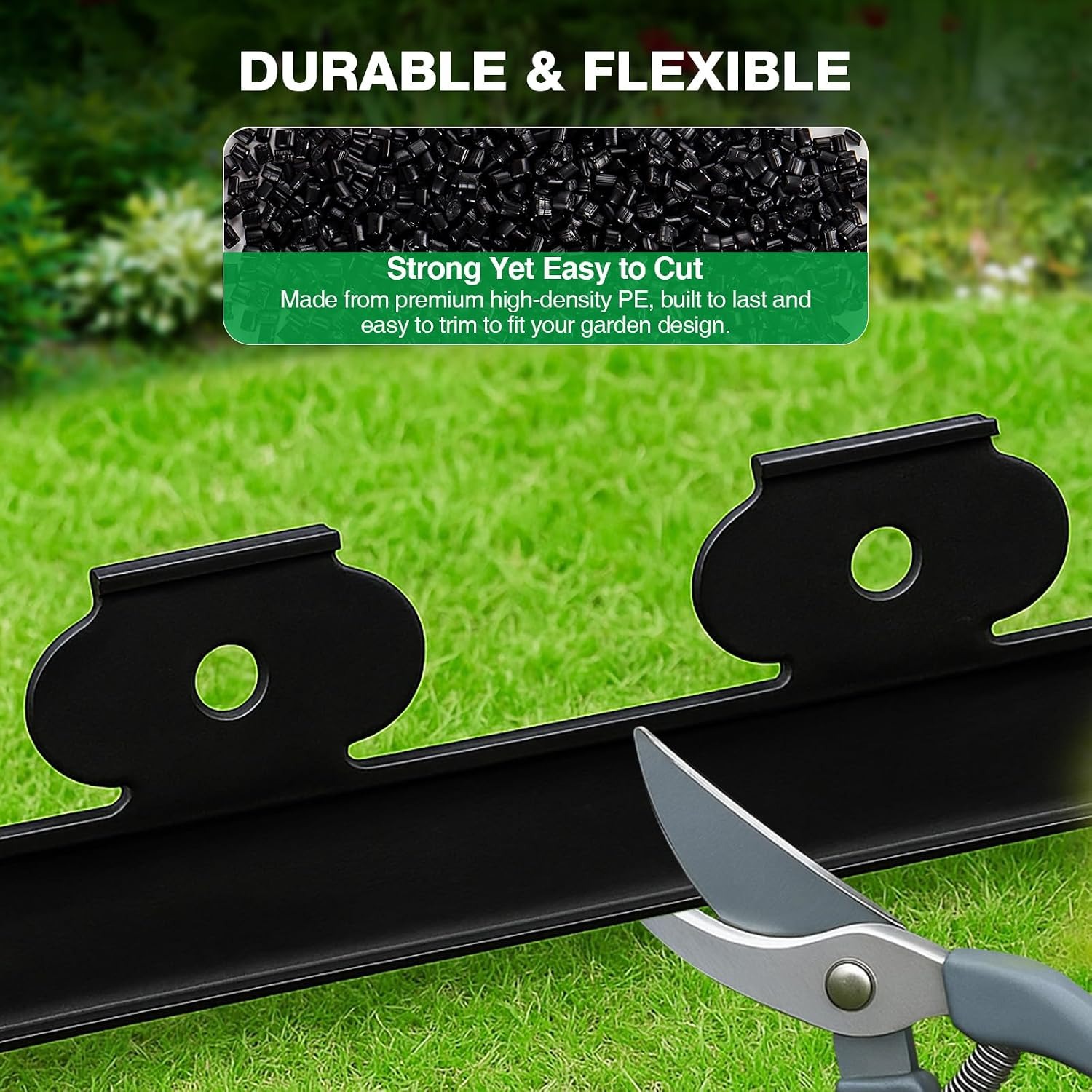
Yes, the roll can be trimmed as needed. Cut with snips or a sharp knife on a board, not freehand. Measure the run first and cut slightly long, since it is easier to take more off than add it back.

Is this a good flexible garden edging for mulch beds?

It is a sensible fit. A 5 cm lip is enough to keep bark chips and compost from spilling onto grass or a path after rain. Top the mulch up to just below the top of the strip rather than over it.

Can I use it as tree ring edging?

Yes, circles are one of the easier shapes for flexible edging. Mark the circle with a hose or rope first, then lay the strip to that line and stake every 25 to 30 cm. Overlap the ends slightly and pin through both layers.

Will a lawn mower damage it?

Once it is staked down flat along the line, a mower wheel can usually run alongside without catching it. Keep the top edge level with or just above the turf so the blade passes over. Repeated strikes with a string trimmer will scuff any plastic edging over time.

Does it stop grass creeping into my beds?

It creates a physical line that slows surface runners and stops mulch migrating. Deep-rooted or seeding grasses can still travel under or over any shallow border. Treat it as a tidy edge and a maintenance saver rather than a total barrier.

How does it handle rain, frost and sun?

The listing describes it as weather resistant and suitable for outdoor use through the seasons, including rain, snow and direct sun. Ground movement after frost can work the odd stake loose. Walking the line each spring and tapping stakes back down is the usual bit of upkeep.

Can I install it in winter?

You can, but cold makes the strip stiffer and frozen ground makes staking hard. If you must do it in cold weather, store the roll somewhere warm beforehand and water the soil to soften it. Spring and autumn are easier.

What if the stakes will not go into my soil?

Water the ground thoroughly and wait for it to soften, then try again. In stony soil, shift the stake position a few centimetres rather than forcing it. A rubber mallet gives better control than a steel hammer.

Is one roll enough for my garden?

Measure your beds and paths with a tape or a length of string before you order. Around 30.5 m covers a typical front bed, a side path and a tree ring in many suburban gardens. If you are edging a whole perimeter, measure twice.

Can I join two rolls together?

Yes, overlap the ends by 10 to 15 cm and drive a stake through both layers at each end of the overlap. That keeps the line continuous and stops a gap opening up. Place the overlap on a straight section rather than mid-curve.

Does it work as a gravel or rock garden border?

It does. The strip holds loose stone back from grass and keeps a rock garden border looking defined. Gravel is heavier than mulch, so space the stakes closer on those runs.

Can I use it along a driveway or paved path?

It works well as a driveway border edging where there is soil on at least one side to take the stakes. You cannot fix it to concrete or paving with the included hardware. Run it along the soil side of the hard surface.

How heavy is the pack?

The listed item weight is 5.5 kg for the complete roll and stakes. That is manageable for one person to carry out to the garden. It arrives coiled.

What are the listed product dimensions?

The product details give item dimensions of 25.4 cm long by 5.1 cm wide, with product dimensions of 25.4 x 5.08 x 0.25 cm and a weight of 5.5 kg. Those figures describe the coiled and packed product rather than the unrolled length. The unrolled run is 100 ft, about 30.5 m.

How do I clean and maintain it?

Hose off soil or mulch that builds along the top lip. Press the strip back down and reseat any loose stakes after a hard winter. That is about the extent of it.

Can it be lifted and moved later?

Yes. Pull the stakes out, lift the strip, and recoil it loosely. Garden layouts change, and surface-fixed edging is much easier to relocate than anything set in concrete.

How is delivery handled?

Delivery is tracked across Canada. Orders of $75 or more ship free, and orders under that amount are $25. You will get tracking once the order is on its way.

Would this make a reasonable gift?

It suits anyone redoing a front garden or starting new beds, especially a keen DIY gardener. It is a practical present rather than a decorative one, so pair it with mulch or plants if you want it to feel like a gift. The pack arrives as a single roll, so it is easy to wrap or present as is.

What if it is not right when it arrives?

Get in touch with our team and we will walk you through the return or exchange. Keep the roll coiled and the stakes together in their packaging until you are sure the length and height suit your beds. If you are unsure before ordering, send us your measurements and we will tell you honestly whether one roll is enough.

Plastic Lawn Edging Buyer's Guide, How to Choose and Fit a Garden Border That Holds

6 min read Clearance Warehouse

The problem with a hand-cut edge

Anyone who has cut a crisp line between lawn and flower bed with a spade knows two things. It looks superb for about a fortnight. Then the grass starts leaning over, the mulch starts sliding out, and the line you spent an afternoon on goes soft and vague.

That is not a failure of effort. It is just what happens when two loose materials sit next to each other with nothing between them. Grass sends runners sideways. Rain moves bark chips downhill. A mower wheel shaves a few millimetres off the edge every week. By late summer, the bed has a fuzzy border instead of a clean one, and the only fix is to cut it all again.

A physical border stops the drift. It gives the grass something to stop at and the mulch something to lean on. Plastic lawn edging is the easiest version of that idea, and a 100 ft roll with stakes is about the most useful amount to buy at once.

What this kit actually is

One roll, 100 ft long, which is roughly 30.5 metres of continuous black strip. The listing describes the material as rubber, and the strip stands 2 in (about 5 cm) tall. Alongside it come 150 spiral anchoring stakes, each 15 cm (6 in) long. That is 151 items in the box, and the pack weighs 5.5 kg.

The important word there is continuous. A lot of cheaper borders come in short interlocking sections, which means a join every half metre and a join is a place where the line can kink or lift. A single roll lets you edge a long bed in one unbroken sweep and only cut where you choose to.

The second important thing is the stake count. One hundred and fifty stakes across 30.5 metres works out to roughly one stake every 20 cm if you used them all evenly. In practice you will space them wider on straights and tighter on curves, but you are not rationing. That matters, because almost every complaint about flexible edging comes down to it not being pinned often enough.

How it holds the line

The strip does not hold anything back with mass. It works because it is anchored at intervals and because it is flexible enough to sit flush against the ground along its whole run.

Spiral stakes are a bit different from plain spikes. The twist in them grips soil as they go in and resists being pulled straight back out, which is what frost heave and curious dogs tend to do. Once a stake is in to its full 15 cm, it is holding both the strip and itself.

The flex in the strip is what lets you do interesting shapes. Warm plastic bends more willingly than cold plastic, so leave the roll out in the sun for an hour before you start. It will relax, lose some of its coil memory, and behave much better when you ask it to follow a curve.

Because the strip stands only about 5 cm proud, it reads as a line rather than a wall. That is usually what people want. A tall border around a small bed makes the bed look boxed in. A low one just makes the shape legible.

Who it suits

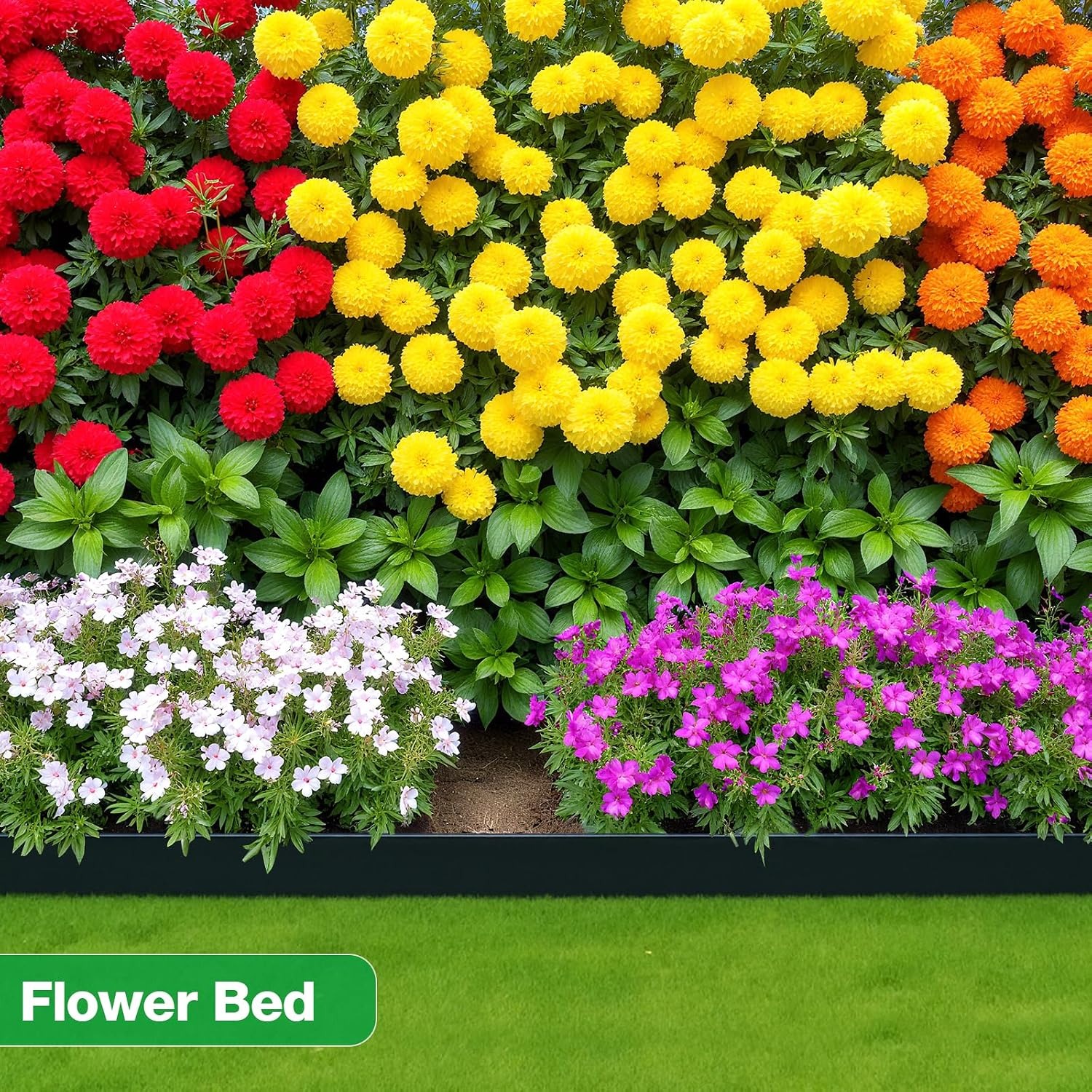
This is a good fit if you have beds with defined shapes and you are tired of recutting them. It is also useful if you have just laid mulch or gravel and want it to stay where you put it.

Tree rings are one of the clearest wins. A circle of mulch around a trunk keeps the mower away from the bark, but it needs an edge or it spreads into an irregular blob. Flexible edging takes a circle easily.

Gravel paths and rock gardens are another. Loose stone travels further than mulch and is more annoying to rake back. A garden border edging strip along both sides of a path saves a surprising amount of weekend work.

It is less suited to a few situations. If you need to retain a bank of soil at a change of level, this is the wrong product, you want a timber or block retaining edge. If you need to fix a border onto concrete or paving with nothing soft on either side, the included stakes have nothing to grip. And if your soil is almost pure stone, staking will be slow and frustrating.

How to choose and how much to buy

Measure before you order, with a tape or a length of string laid along the route. Walk the actual line, including the curves, because a curved run is always longer than it looks from the patio door.

As a rough guide, a typical suburban front bed takes 8 to 12 metres. A tree ring around a mature tree takes 4 to 6 metres. A path edged on both sides takes twice the path length. Add 10 percent for overlaps and mistakes. Most gardens come in well under 30 metres for a first project, which is why a single 100 ft roll is a sensible amount to start with.

Think about height too. Five centimetres is right for separating lawn from mulch. If you want something that reads as a raised kerb from across the garden, you want a different product.

Fitting it without making it hard work

Start by marking the line. A garden hose laid on the grass is the oldest trick there is, and it is still the best, because you can stand back and look at the shape before you commit.

Water the soil along the line the day before if the ground is dry. Hard summer soil will fight every stake. Damp soil takes them with one or two taps.

Unroll the edging and leave it in the sun. Then lay it to your marked line, starting at one end, and tap the first stake in to hold it. Work along, keeping the top of the strip level with or slightly above the turf. Space stakes every 45 to 60 cm on straights, every 25 to 30 cm on curves.

Use a rubber mallet rather than a steel hammer. A rubber face spreads the blow and is far less likely to crack a stake head. If a stake hits a rock, pull it out and move along a few centimetres rather than hammering harder.

Where two lengths meet, overlap by 10 to 15 cm and drive a stake through both layers at each end of the overlap. Put that join on a straight section if you can.

Trim the ends with snips or a sharp knife against a board. Measure, then cut slightly long. You can always take more off.

Looking after it

The maintenance list is short. Hose off any soil or mulch that piles up on the top lip, mostly for appearance. After winter, walk the line and tap back down any stake the frost has lifted. That is about it.

Keep string trimmer line off the top edge where you can. A trimmer will eventually scuff any plastic edging, and the top lip is where it shows. Mowing alongside is fine once the strip sits flat.

Mulch should come up to just below the top of the strip, not over it. Over-filling defeats the point and lets material wash straight across.

If you redesign the bed in two years, pull the stakes, lift the strip, and coil it loosely for reuse. Surface-fixed borders are easy to move, which is a genuine advantage over anything set in concrete.

The short version

A 100 ft roll of flexible black edging with 150 stakes is a practical, low-fuss way to give beds, paths and tree rings a line that stays put. It is a surface job with hand tools, no trench and no cement. The strip bends for curves, cuts to length, and comes off again if you change your mind.

Measure your runs first, warm the roll in the sun before you start, and put stakes closer together through the curves than you think you need to. Do those three things and the line you install this weekend will still look deliberate next summer.

Browse the shop

Not sure how much edging you need?

Send us the rough length of your beds and paths and we will tell you whether one roll covers it.

Ask us a question

Page summary

Plastic Lawn Edging, 100 ft Roll is a flexible black garden border kit supplied as one continuous roll of edging plus 150 spiral anchoring stakes, 151 items in total. The listed material is rubber. Item dimensions are given as 25.4 cm long by 5.1 cm wide, with product dimensions of 25.4 x 5.08 x 0.25 cm and a shipped weight of 5.5 kg. The edging is designed to be shaped into straight runs, curves or circles and trimmed to length, then anchored at the surface using the included stakes and a rubber mallet, with no digging required. Typical uses include flower beds, tree rings, mulched areas, gravel gardens, path edges and lawn perimeters.