

The complete guide
Choosing a Folding Baby Playpen, A Practical Buyer's Guide
The problem a playpen actually solves
There is a window of about a year where your baby becomes mobile before they become sensible. They can cross a room, pull themselves up on a bookshelf and get a finger into a plug socket, all in the time it takes you to answer the door. Most parents hit this stage and respond in one of two ways. Either they baby-proof the entire house, which is expensive and never quite finished, or they carry the child everywhere, which is exhausting.
A playpen is the third option. It creates one small patch of floor you have already made safe, and then it stays safe. You put your child in it when you need both hands for five minutes, or twenty. You are still in the room. They are still watching you. But you are not tracking them every second.
That is the honest job description. A folding baby playpen is not a babysitter and it is not somewhere to leave a child alone. It is a way to buy yourself short stretches of attention for something else while your baby plays within arm's reach.
How this one works
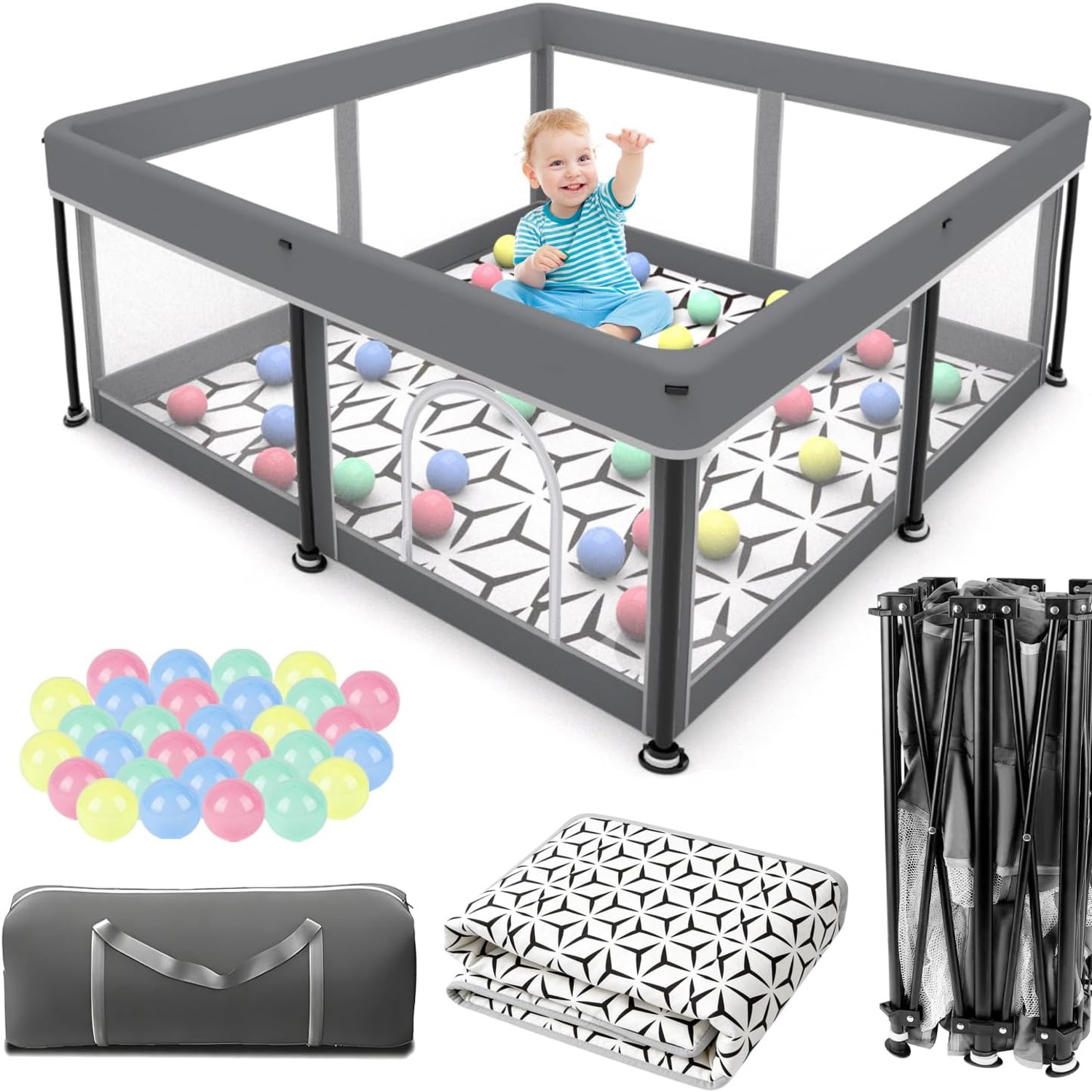
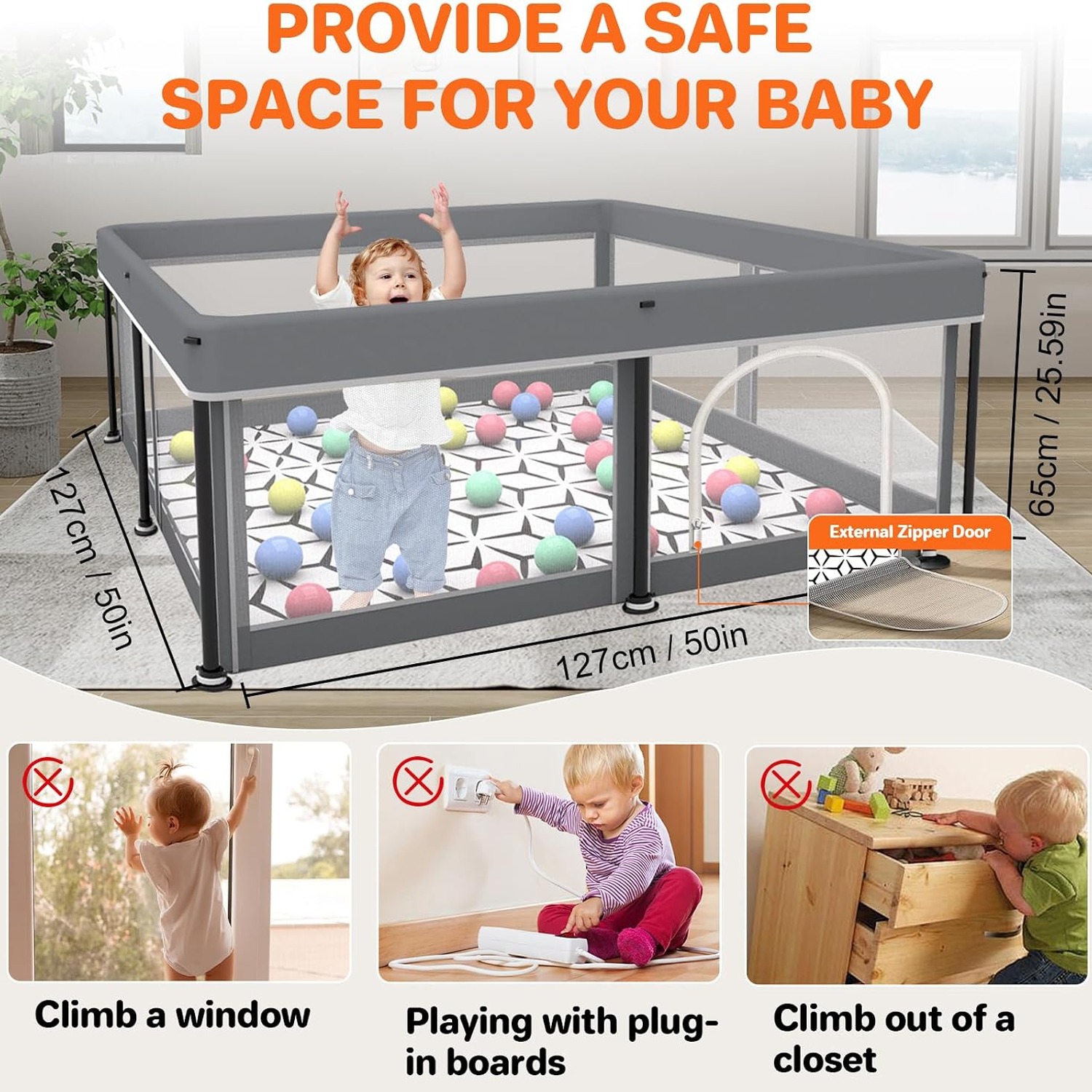
The pen opens into a square measuring 120 x 120 cm, with sides 65 cm high. That works out to 1.44 square metres of floor. In practice that is enough for a crawling baby to go around a small circuit, sit in the middle with a pile of toys, and haul themselves upright on the rail without the whole thing feeling like a box.
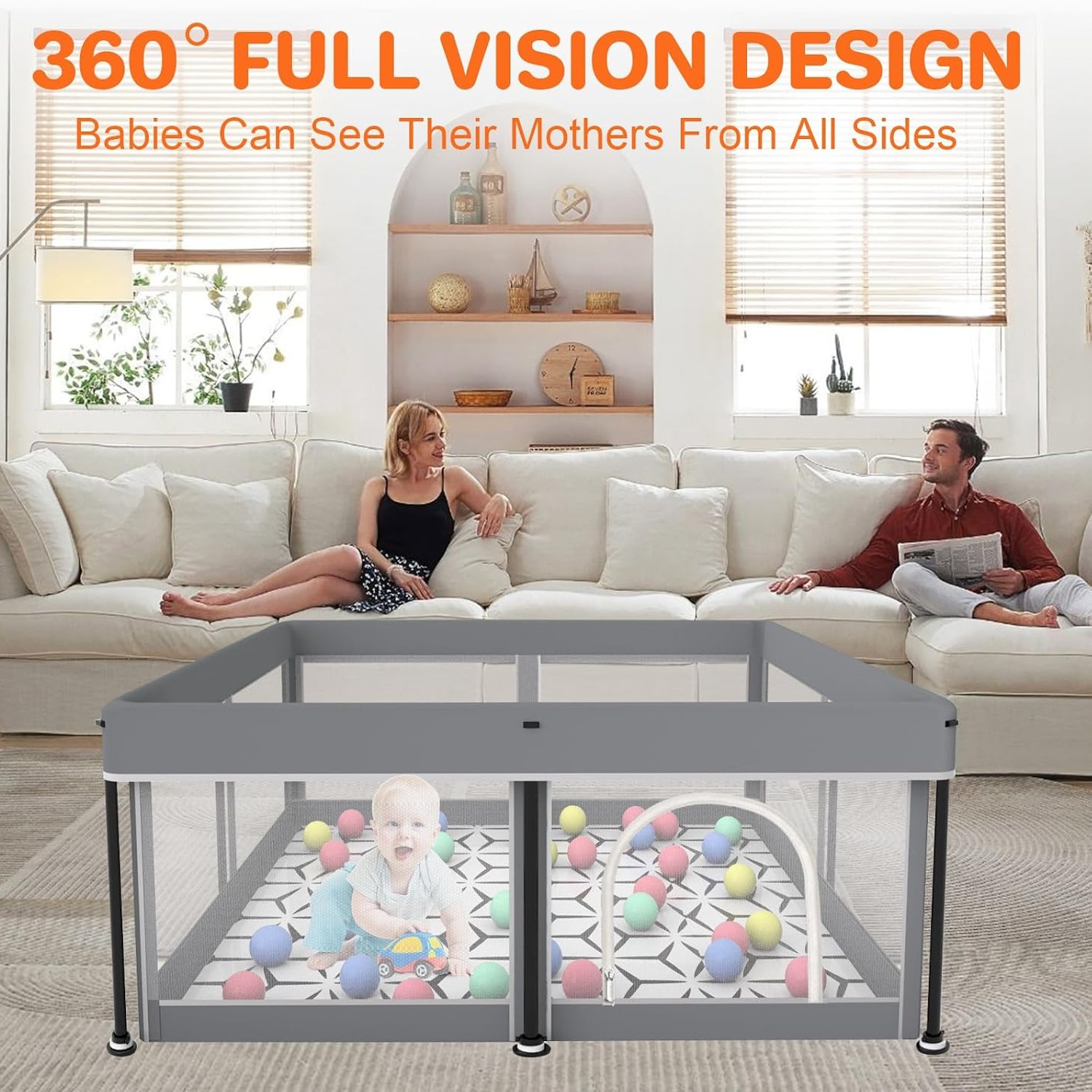
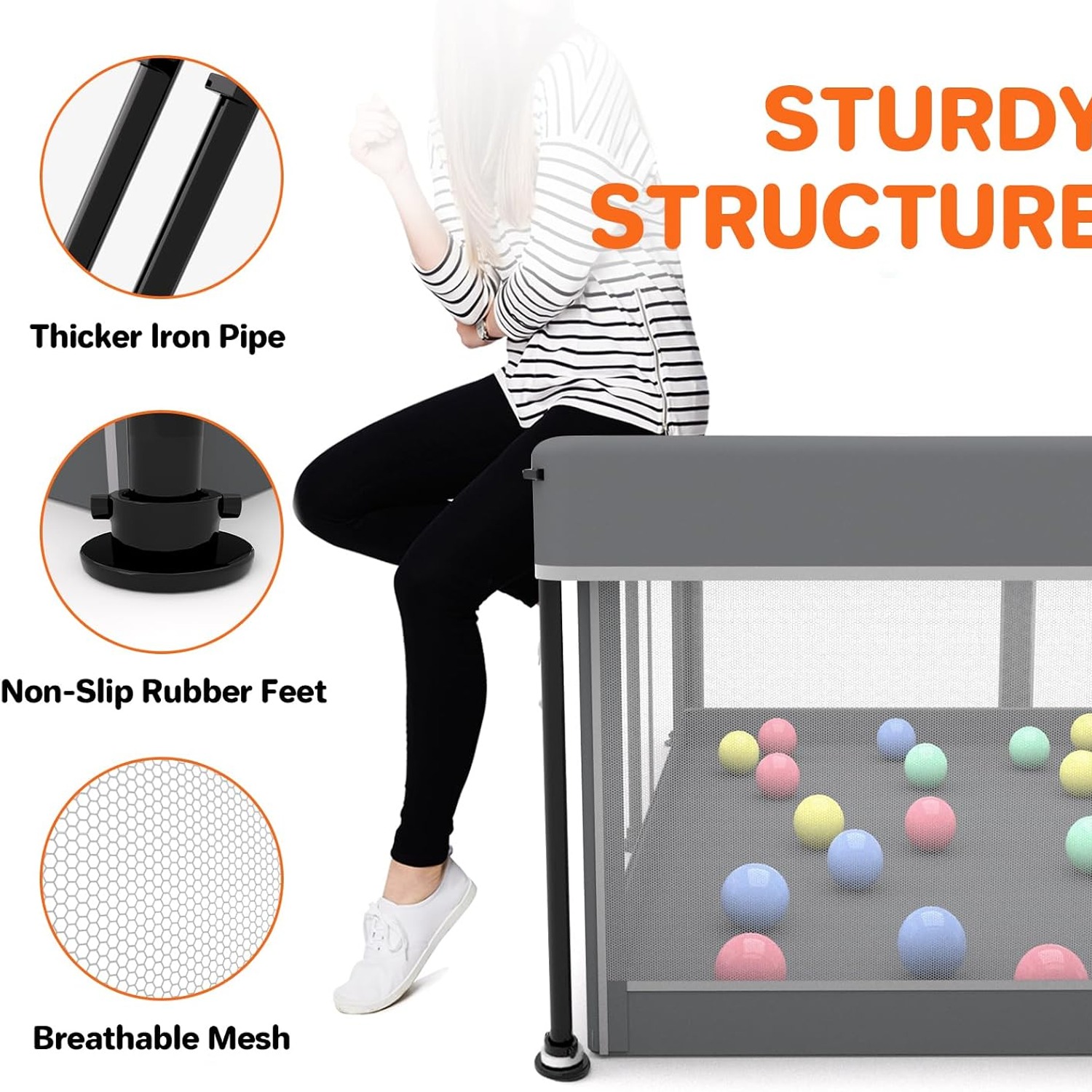
All four sides are mesh. This is the main thing I would look for in any play yard. Solid-sided pens trap heat and block the view, and babies who cannot see their parent tend to protest about it. Mesh does the opposite. Air moves through, you can see your child from across the room, and they can see you. On a warm day that airflow is not a minor detail.
The door is a zippered mesh panel, and the latch sits on the outside. That is a deliberate design choice. The opening stays in adult hands, and a curious toddler on the inside is not working out the mechanism. You unzip it when you want them out, and not before.
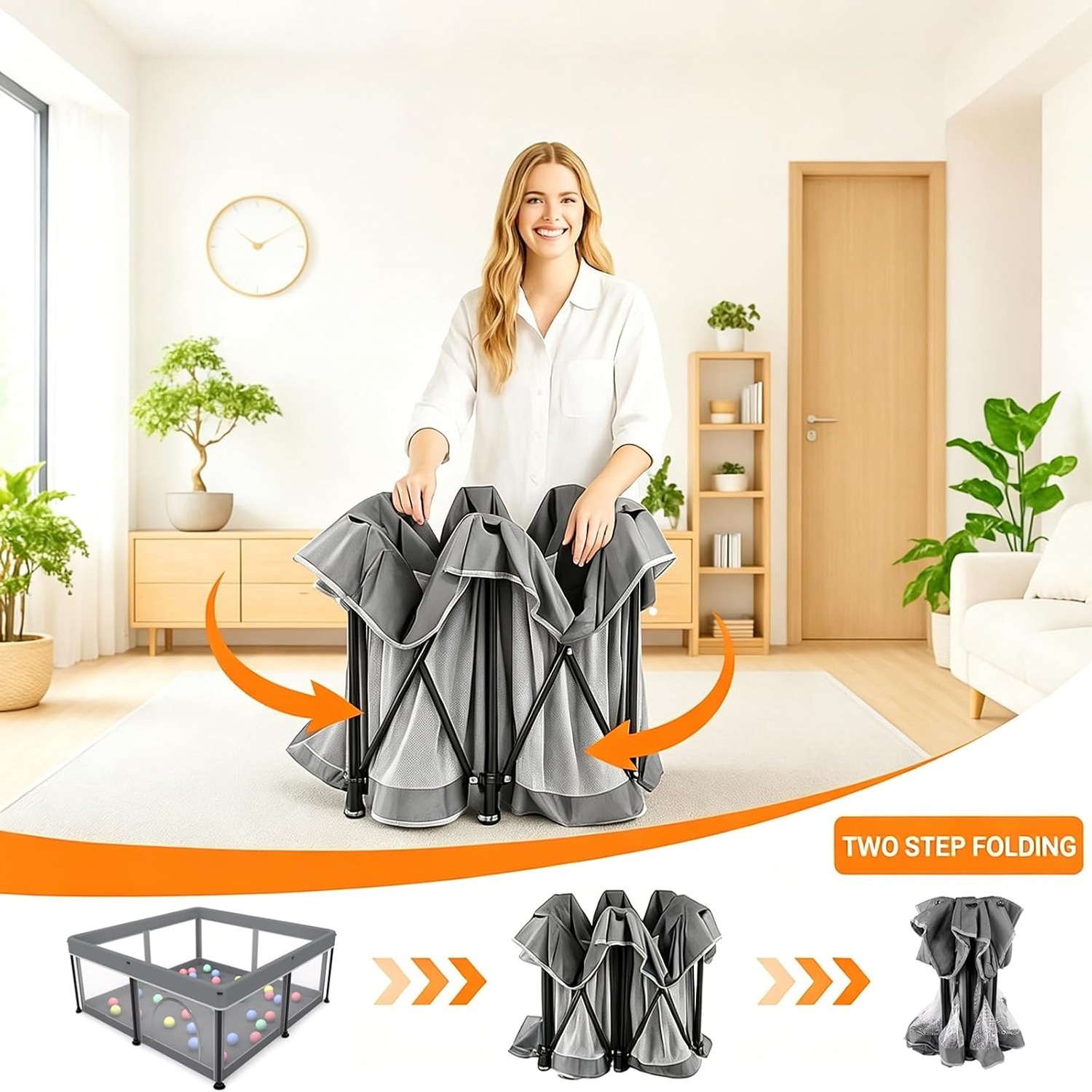
Setup needs no tools. The frame opens out and locks, and it folds back the same way. Once you have done it a couple of times it is close to a one-minute job. Folded, the listed size is 12 x 6 x 2 inches, roughly 30 x 15 x 5 cm. That is unusually slim for a pen this size, and it is the reason a portable play yard like this gets used rather than left in a cupboard. At 7.2 kg, one adult can carry it out to the car.
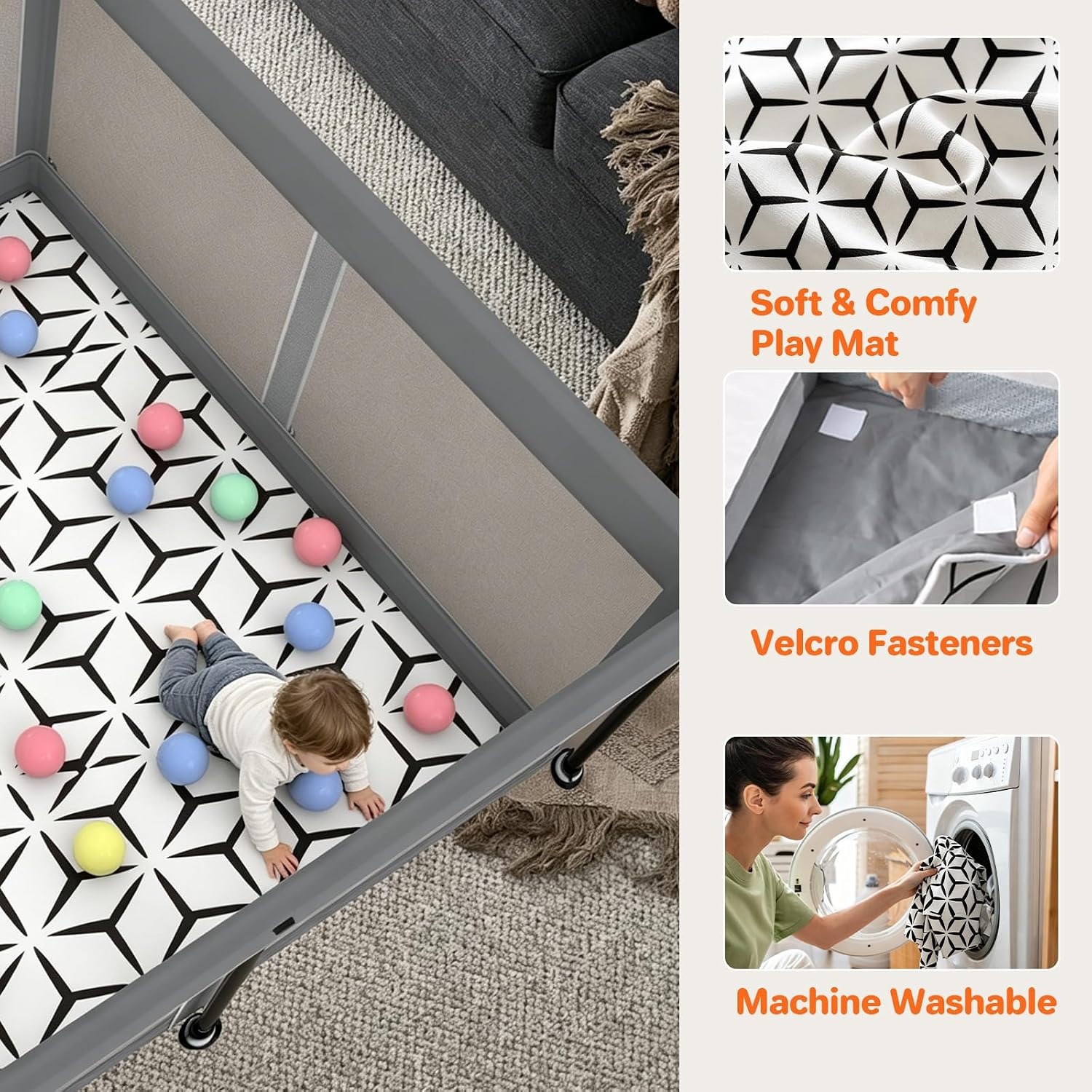
The frame material is listed as iron. The box also includes a play mat and 30 play balls, which means the pen is ready to use the day it arrives.
Who it suits
Families in smaller homes get the most out of a folding design. If your lounge doubles as a dining room in the evening, a pen that folds flat and tucks behind the sofa is worth far more than one that takes up a permanent corner. The same logic applies to anyone who moves it between rooms through the day, say the kitchen in the morning and the lounge in the afternoon.
It also suits households with a lot of back-and-forth. Grandparents' houses are rarely baby-proofed, and asking someone to rearrange their living room is awkward. Bringing your own contained play space solves that in one trip. The best travel playpen for a grandparent's house is simply the one you will actually carry in from the car, and folded size decides that more than any other feature.
Parents working from home find a use for it too. Twenty minutes on a call is a long time to improvise with a toddler. A known, safe square of floor with the ball pit set up makes that twenty minutes a lot less fraught.
Age-wise, this suits babies from sitting and crawling through to younger toddlers. The 65 cm sides are right for that range. Once a child is tall enough and determined enough to climb over, a play yard stops being the right tool and you move on to gates and proper room-level baby-proofing. Most families get a good year or more out of one.
How to choose between playpens
A few things actually matter, and a lot of the marketing does not.
Measure your floor first. A 1.2 metre square sounds abstract until it is in your lounge. Put masking tape down and live with it for an afternoon. If it blocks a doorway or a walking route, you will resent it within a week.
Check the folded size, not just the fact that it folds. Plenty of pens technically fold but end up as an awkward bundle the size of a suitcase. A slim flat pack is what makes a foldable playpen for small spaces genuinely practical. If you cannot picture where it goes when it is down, it will stay up permanently.
Look at the sides. Mesh beats solid for airflow and for visibility in both directions. It also means you can reach in quickly, which matters more than you would think when a baby gets upset.
Check where the door latches. Outside-latching is the point of a zipper door. If a child can work it from the inside, the door is just a feature on the box.
Think about weight. Light enough to carry one-handed with a baby on the other hip is a different product from something that needs two adults. 7.2 kg sits in reasonable territory for a pen of this size.
See what comes with it. A mat and balls included means you are not spending another evening shopping for accessories. The mat in particular is worth having on hard floors, where knees take a beating.
Setting it up well
Flat ground, always. A pen on an uneven surface will rock, and a toddler leaning on one side will find that out before you do. Before each use, run a hand round the frame to confirm everything is locked open.
Keep the inside simple. Soft toys and the balls are fine. What you want to avoid is anything tall or firm enough to be stood on, because that turns a 65 cm side into a 40 cm side. Boxes, upturned buckets and large firm cushions all fall into that category.
Position it where you can see it from wherever you usually are. The kitchen doorway, the end of the sofa, a clear sightline from the desk. The whole value of mesh sides evaporates if the pen is round a corner.
Keeping it clean
Wipe the mesh and frame with a damp cloth and a mild soap, then let it dry fully before folding. Folding a damp pen and shutting it in a cupboard is how mesh picks up a musty smell. Spot clean the mat and dry it flat rather than putting it in a machine or a dryer.
The balls are worth a rinse every few weeks in warm soapy water. They live on the floor and get chewed, so they pick up more than you would guess. Dry them properly before they go back in.
Store it somewhere dry. An iron frame in a damp shed will not thank you for it.
The short version
A folding baby playpen buys you something specific, which is a safe square of floor you do not have to re-check every day. This one gives 1.44 square metres, has mesh on all four sides for air and visibility, zips closed with the latch on the outside, and folds to a slim 12 x 6 x 2 inches when you are done. It weighs 7.2 kg and comes with a mat and 30 balls, so there is nothing else to buy.
Measure your floor, decide whether you need it to travel, and check the folded size against wherever you plan to put it. If those three answers line up, this is a straightforward piece of kit that will do a year or more of quiet, useful work.