

The complete guide
Choosing Dinosaur Bedding for a Kid's Twin Bed
The bedtime problem nobody warns you about
Moving a child into a proper bed sounds like a milestone. In practice it is a shopping trip that never quite ends. You buy a mattress, then a fitted sheet that turns out to be the wrong depth, then a comforter in a colour that clashes with the sheet, then pillowcases that are a slightly different white. Three trips later the bed looks like a jumble sale and the child still will not stay in it.
A bed-in-a-bag set exists to short-circuit all of that. One pack, five pieces, everything designed together. You open it, you make the bed, you are finished. For a twin bed in a kids room, that is usually the right answer, and if your child is deep in a dinosaur phase it is an easy win on top of that.
What you actually get
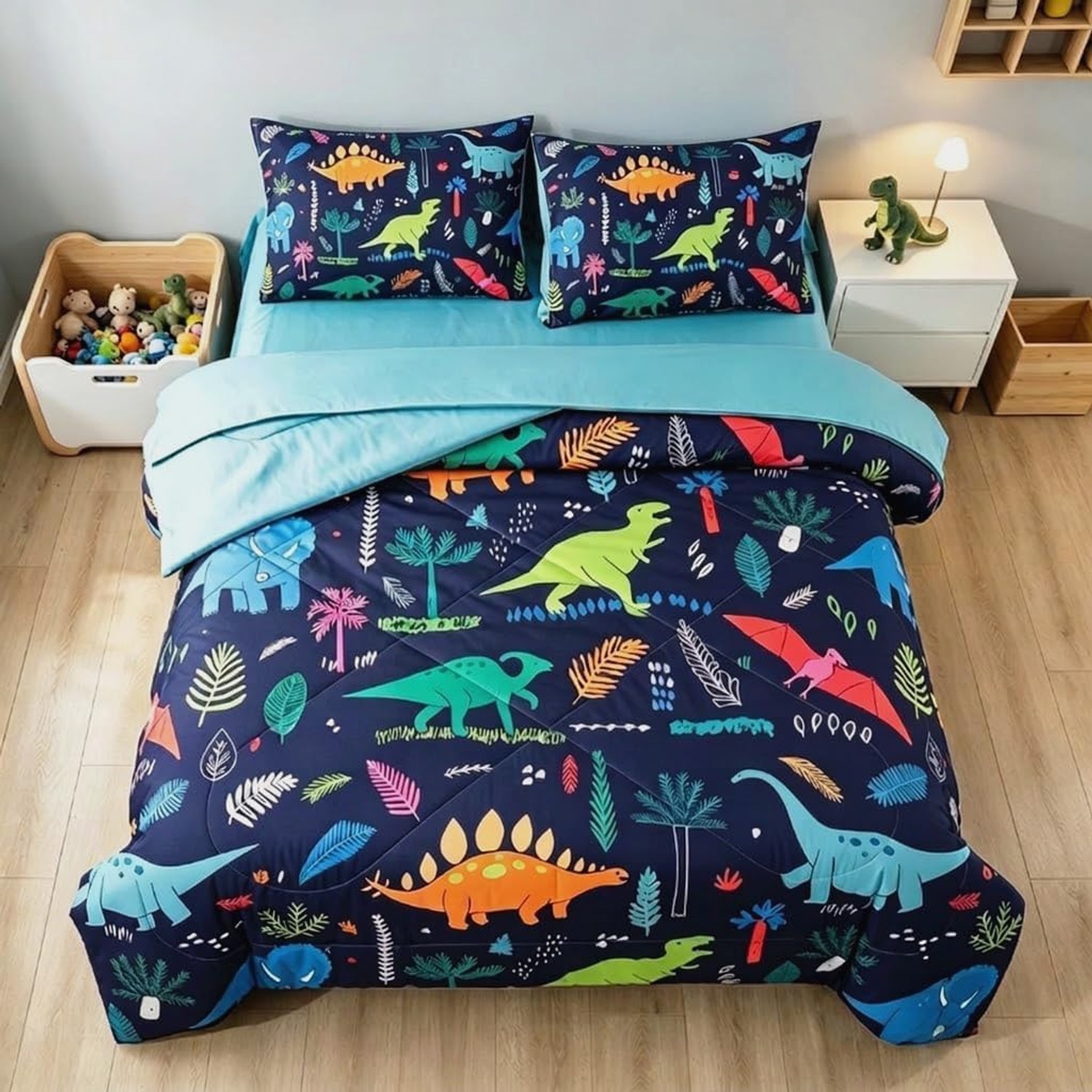
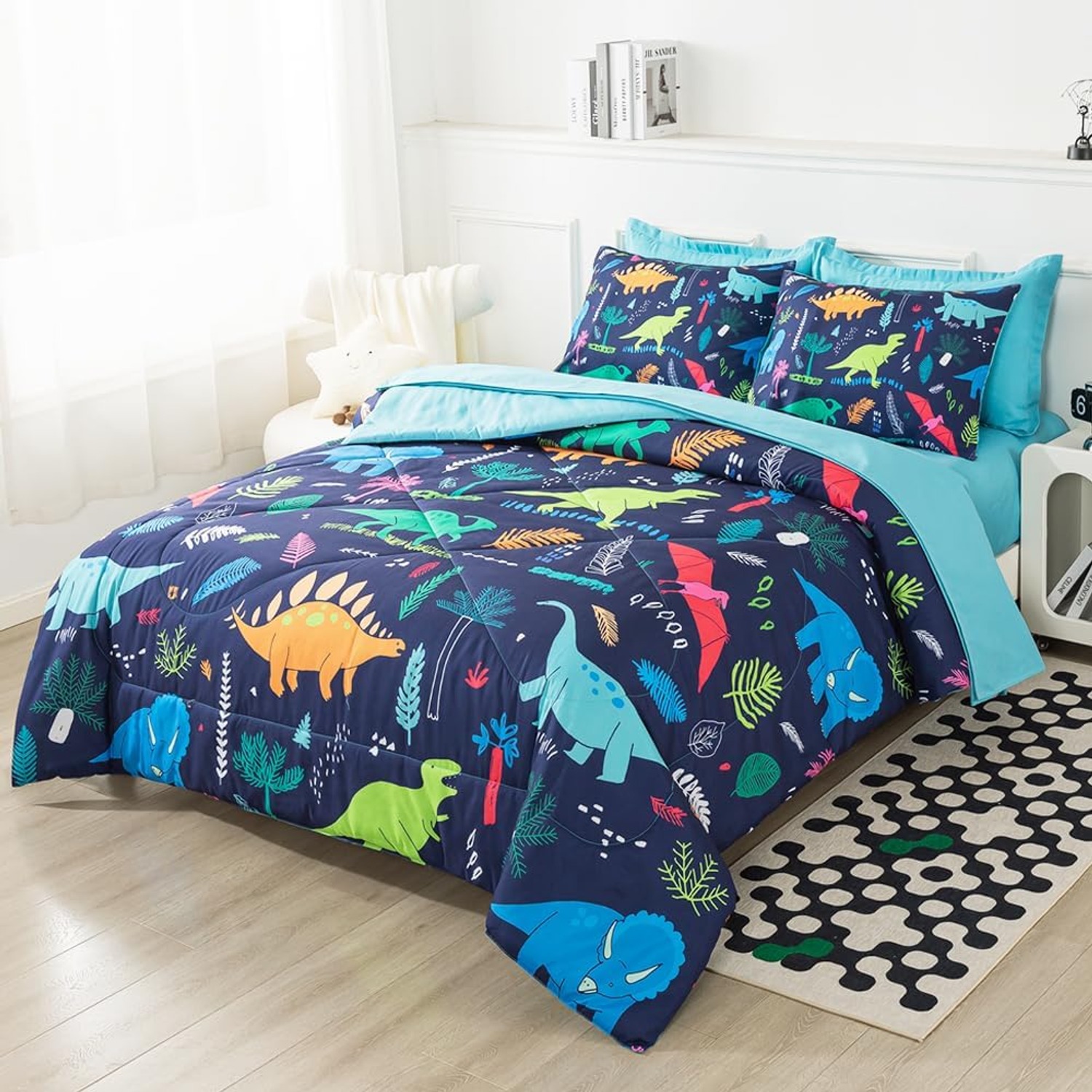
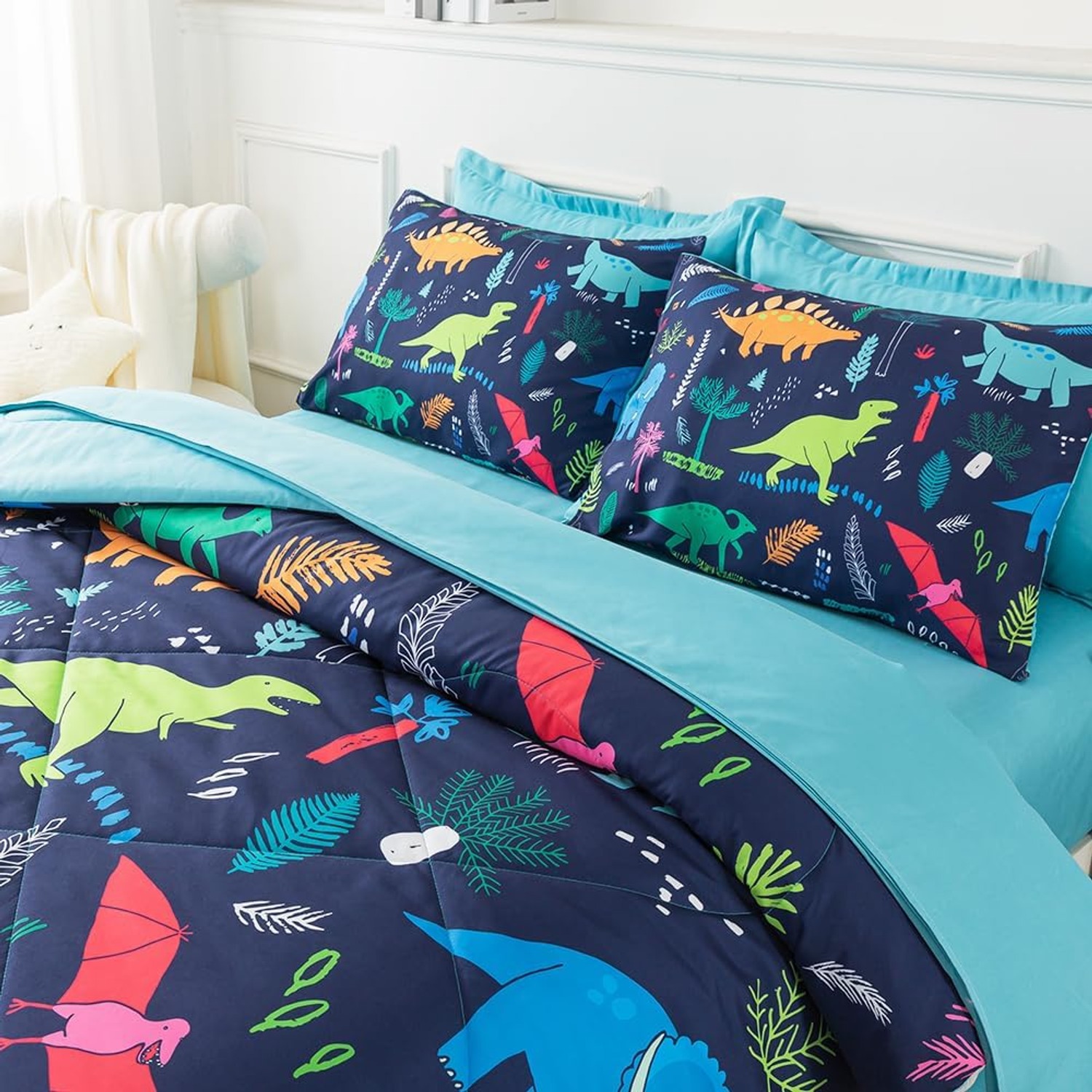
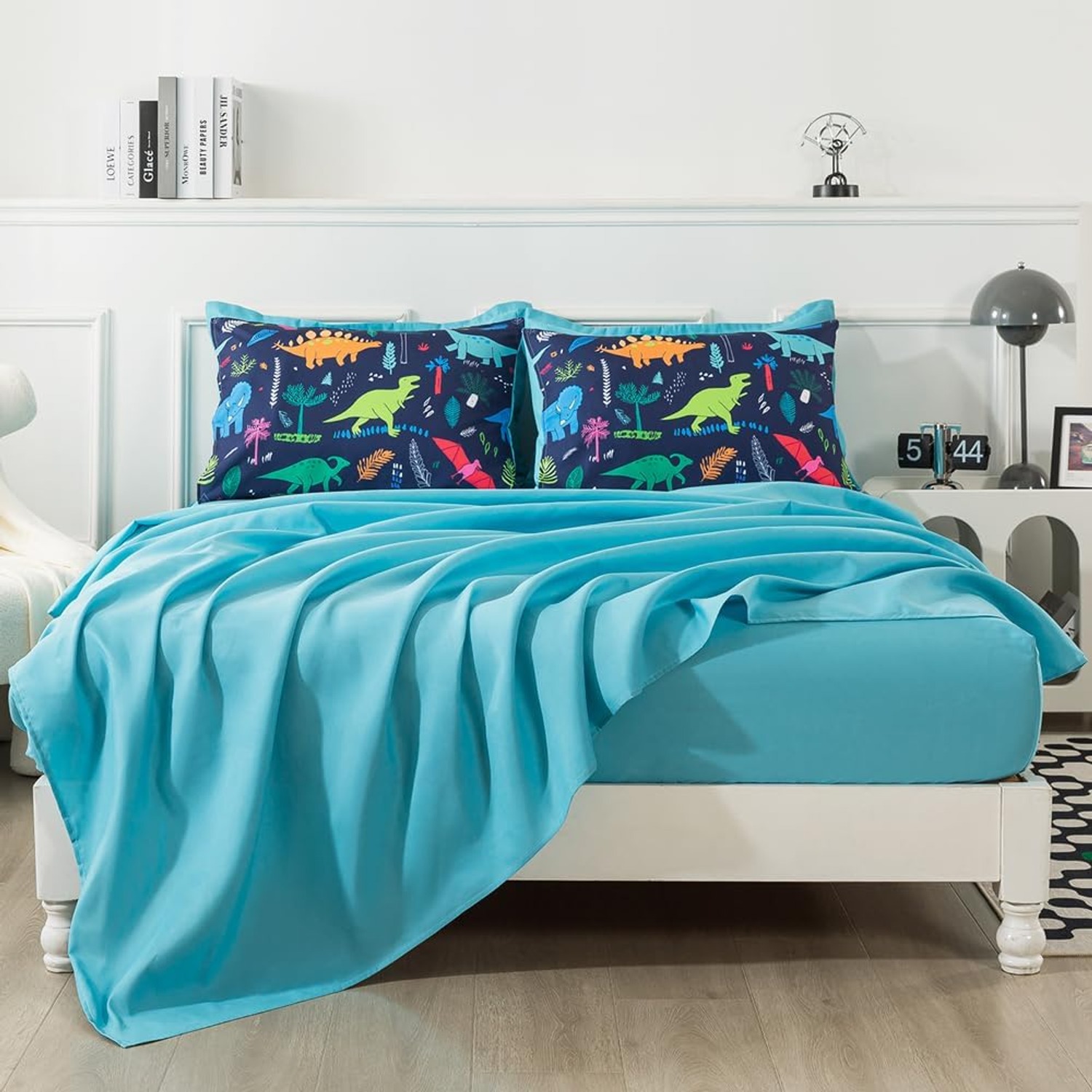
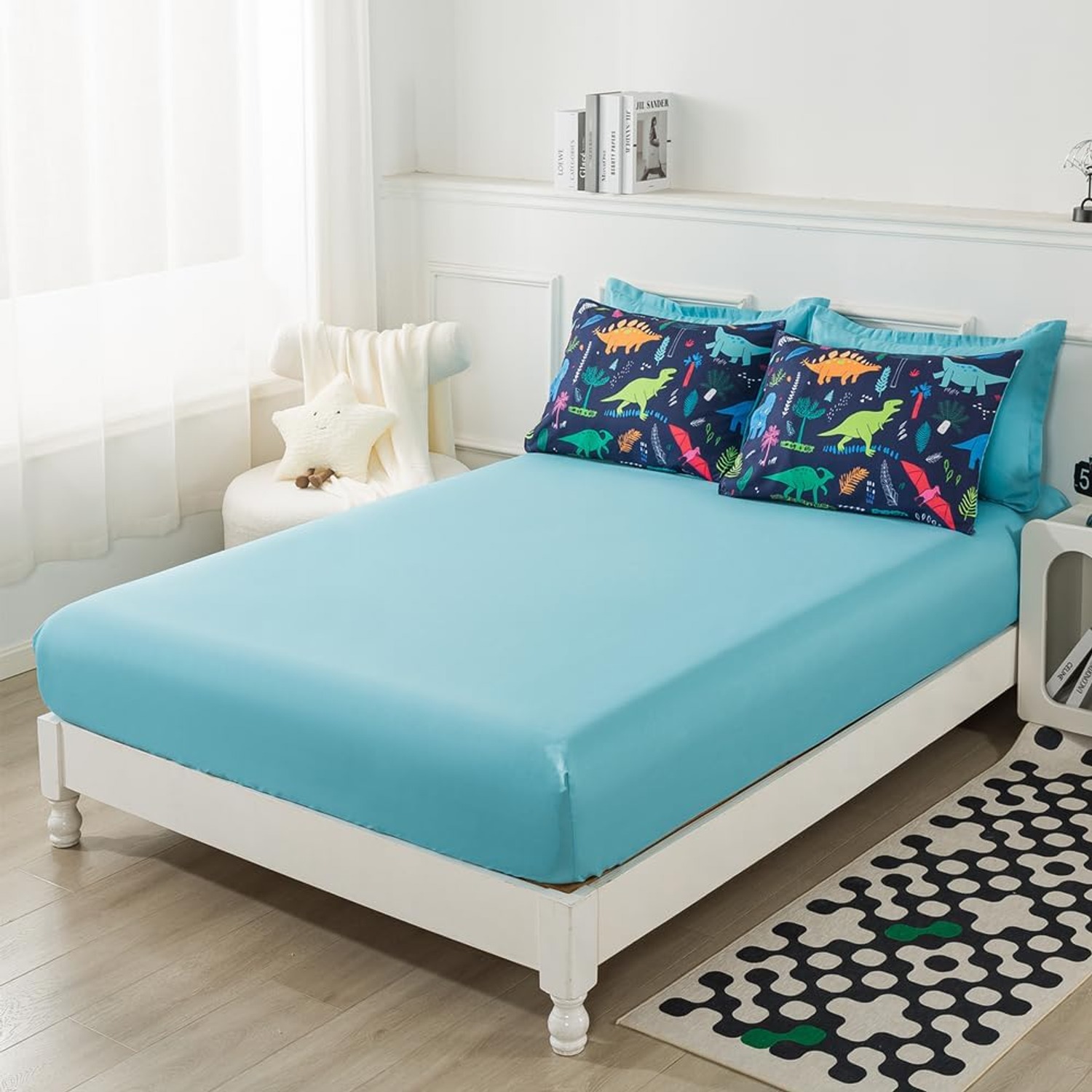
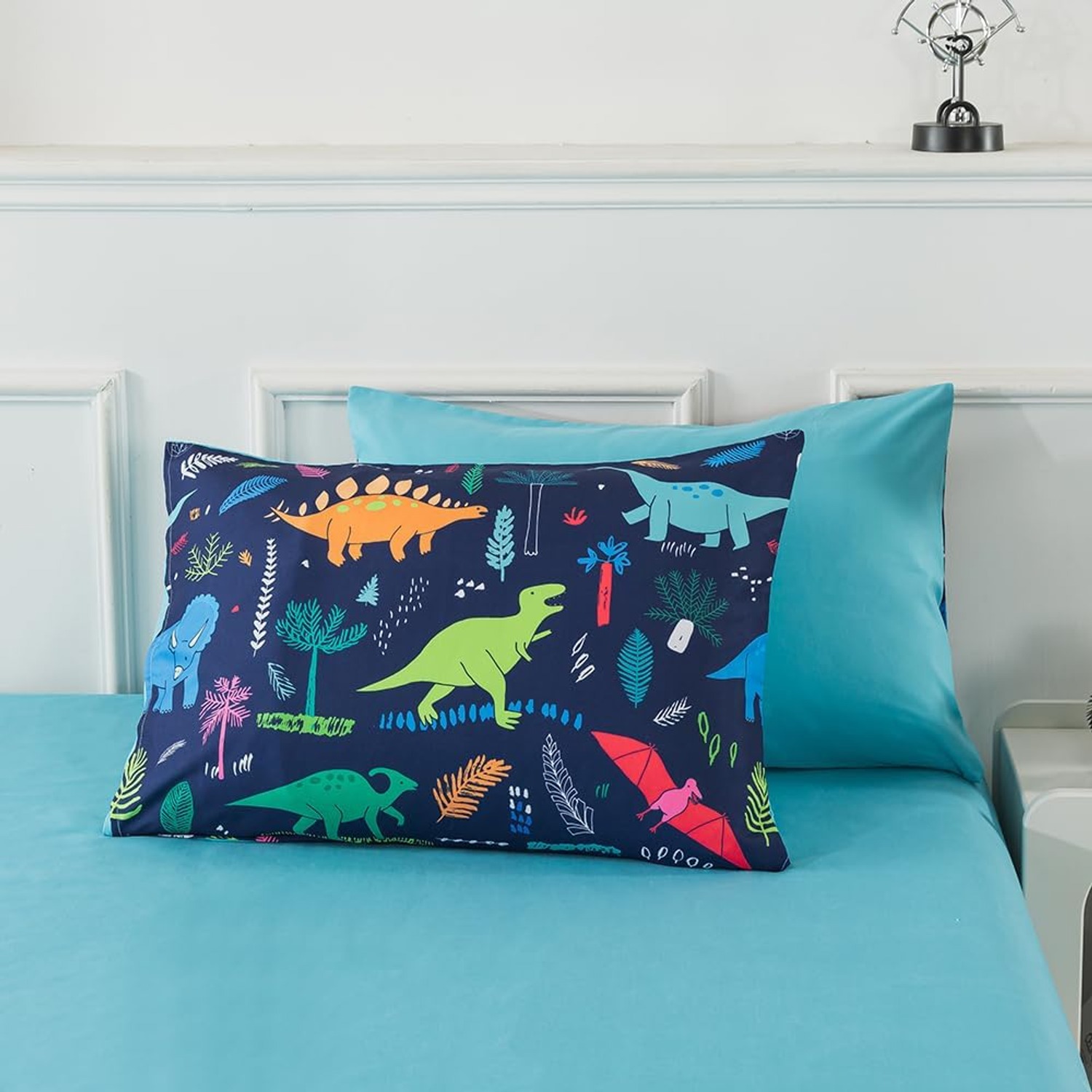
This set has five pieces. There is a comforter at 173 x 218 cm (68 x 86 in), a fitted sheet at 99 x 190 cm (39 x 75 in) with a 35.56 cm pocket, a flat sheet at 168 x 244 cm (66 x 96 in), and two pillow shams at 51 x 76 cm (20 x 30 in). The whole thing weighs 2.61 kg.
The comforter front carries a colourful dinosaur print mixed with leafy jungle shapes. The reverse is plain blue. That second side is more useful than it sounds. Kids rooms accumulate pattern quickly, between toys, posters and a rug someone's grandmother picked out, and being able to flip the bed to a solid colour gives the room somewhere to breathe.
Everything is 100% microfiber polyester, including the fill in the comforter.
Why microfiber works for a kid's bed
Microfiber is made from very fine synthetic fibres, much finer than a standard thread. That gives it a smooth, slightly soft surface and keeps the fabric light. On a child's bed the lightness is the real selling point.
Think about how a six year old handles bedding. They do not tuck. They burrow, kick, roll, and at some point the comforter ends up half on the floor. A heavy comforter stays on the floor until morning. A light one gets dragged back up without anyone really waking. Microfiber fill is fluffy without being heavy, which is exactly the combination you want.
Polyester also dries fast. That matters more than any softness rating when you are dealing with a spilled drink at 8pm or a stomach bug at midnight. A cotton comforter can take most of a day to dry properly. This one can often be washed and back on the bed within hours.
The honest trade-off is breathability. Natural fibres move moisture a little better, so in a very warm bedroom a child who runs hot might prefer the flat sheet alone in summer. The set includes a flat sheet partly for that reason.
Getting the size right
Twin is the standard first big-kid bed size and the standard bunk mattress size, which is why so much kids bedding is made for it. Before ordering, measure three things on the mattress: length, width and thickness.
Length and width should come close to 190 x 99 cm. A couple of centimetres either way is fine, since fitted sheets have elastic. Thickness is where people get caught out. This sheet has a 35.56 cm pocket, which handles most twin mattresses comfortably and leaves room for a thin protector. If your mattress is unusually thick, or if you have a deep topper on it, check the total height before you commit. If your mattress is very thin, as some bunk mattresses are, the sheet will still fit but may sit slightly loose at the corners.
The comforter at 173 x 218 cm gives you decent drape on both sides of a twin and enough length to tuck at the foot. On a raised bunk you may want to let it hang rather than tuck, so there is less to catch on the rail.
Making the bed look finished
Three pieces make a functional bed: fitted sheet, comforter, one sham. Five pieces make a bed that looks like someone thought about it.
Use the flat sheet between child and comforter. It takes the daily wear, so the comforter needs washing less often, and in warm weather it can be the only cover. Stand both shams at the head of the bed and put the everyday sleeping pillow in a plain pillowcase behind or underneath them. That is the small trick that makes kids bedding look like a proper made bed instead of a pile of fabric.
If you want the room to feel pulled together, pick up the blue from the comforter reverse somewhere else. A plain blue cushion, a green plant pot, a neutral rug. You do not need more dinosaurs. The bed is already doing that job.
Unpacking, and why patience helps
The set arrives vacuum compressed. This is standard for bed-in-a-bag packing and it keeps the parcel small enough to ship sensibly, but it does mean the comforter comes out looking disappointingly flat.
Take it out of the bag, give it a few good shakes, and leave it somewhere open for about 24 hours. The microfiber fill expands back to its proper loft on its own. If you are giving it as a gift, unpack it a day early or at least warn whoever opens it, because first impressions of a compressed comforter are not fair to the product.
A short run in the dryer on low with a couple of dryer balls speeds the process up if you are impatient.
Washing it without wrecking it
The care instructions are simple. Cold water, gentle cycle, tumble dry low or air dry, no bleach.
Wash the comforter by itself. It needs room to move in the drum, and crowding it means the fill clumps to one side. Sheets and shams can go together in a normal load. Cold water protects the print, and skipping bleach protects both the colour and the fibres.
For drying, low heat is important. Polyester does not like high heat and the print likes it even less. Dryer balls help the fill redistribute. Pull the comforter out and shake it once or twice during the cycle if you want the fluffiest result.
Most families find a second set pays for itself during the years when accidents are still a possibility. Being able to strip a bed and remake it immediately, rather than waiting for a wash cycle, is worth a lot at 3am.
Who this suits
It fits a specific situation well. A child aged roughly three to ten, in a twin bed, who likes dinosaurs. Parents who want one purchase rather than four. A spare room that needs to look welcoming when cousins visit. A bunk that needs matching bedding on both levels.
It suits less well if you want all-natural fibres, if your child sleeps very hot in an unairconditioned room, or if you prefer a duvet-and-cover system where you can change the cover seasonally. Those are all reasonable preferences, just not what this set is built for.
The short version
Five pieces, twin size, 100% microfiber polyester, dinosaur print on one side and plain blue on the other. Comforter 173 x 218 cm, fitted sheet 99 x 190 cm with a 35.56 cm pocket, flat sheet 168 x 244 cm, two shams at 51 x 76 cm. Total weight 2.61 kg. Machine wash cold on gentle, tumble dry low, no bleach, and give it a day out of the bag before you expect it to look its best.
Measure your mattress, check the pocket depth, and you are most of the way to a bed your child will actually want to get into.