


The complete guide
How to Choose a Lap Desk That Actually Works
The problem with a laptop on your lap
A laptop on bare legs is uncomfortable within about ten minutes. The base runs warm, the edge digs into your thighs, and the whole machine tilts forward every time you shift. So you adjust. You hunch. You cross your legs the other way. Twenty minutes later your neck aches and you have typed three sentences.
There is a second problem that gets less attention. Most laptops pull cooling air from underneath. Put one on a duvet, a cushion or a pair of tracksuit bottoms and you block those vents. The machine throttles itself to stay cool, the fan screams, and performance drops. None of that is dramatic enough to notice in the moment, but it adds up over months.
A lap desk solves both issues with one simple idea. Put something firm and flat between you and the laptop. The board carries the weight, the foam underneath handles the shaping, and your legs stop being load-bearing furniture.
How a cushioned lap desk works
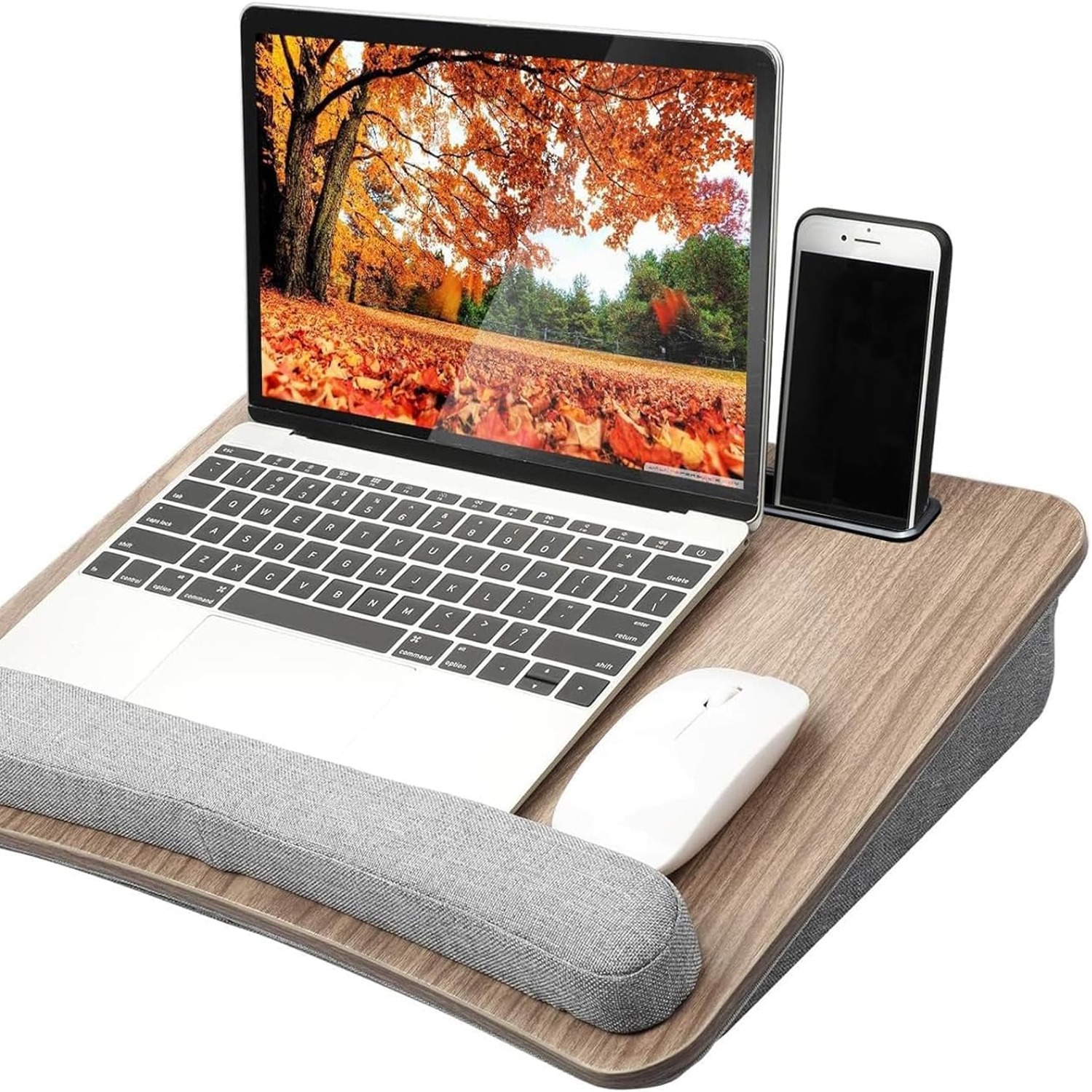
There are two families of lap desk. The first is a hard tray on folding legs, which is really a miniature table you set down on a bed. The second, which this one belongs to, is a rigid platform bonded to a fabric-covered foam base.
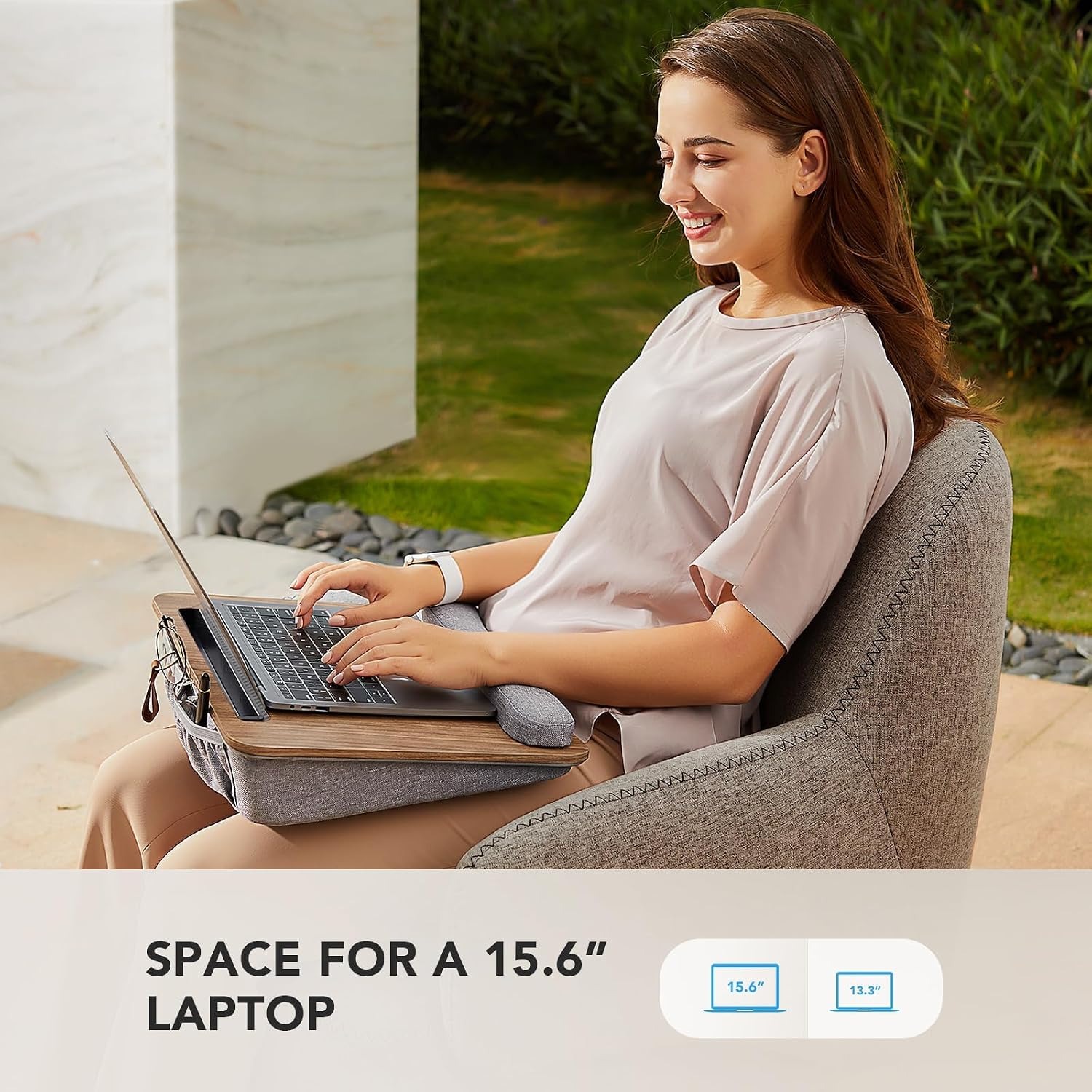
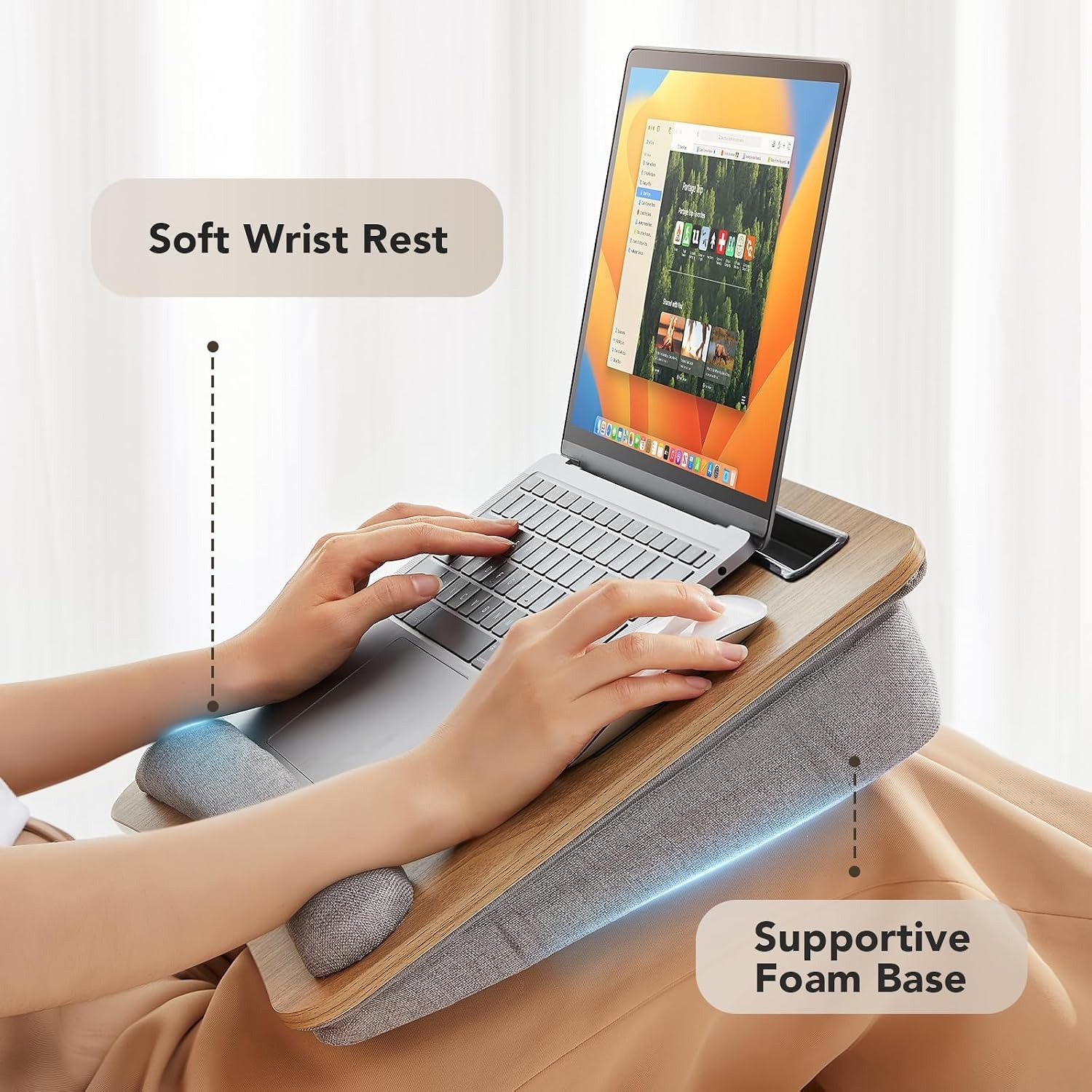
The foam does the clever part. It is soft enough to fill the gaps between your knees and thighs, but dense enough not to squash flat under the weight of a laptop. That means the top surface stays close to level even when your legs are not. On a sofa, where your knees sit lower than your hips, that difference between level and tilted is what decides whether you can actually work or whether you spend the whole time catching your laptop.
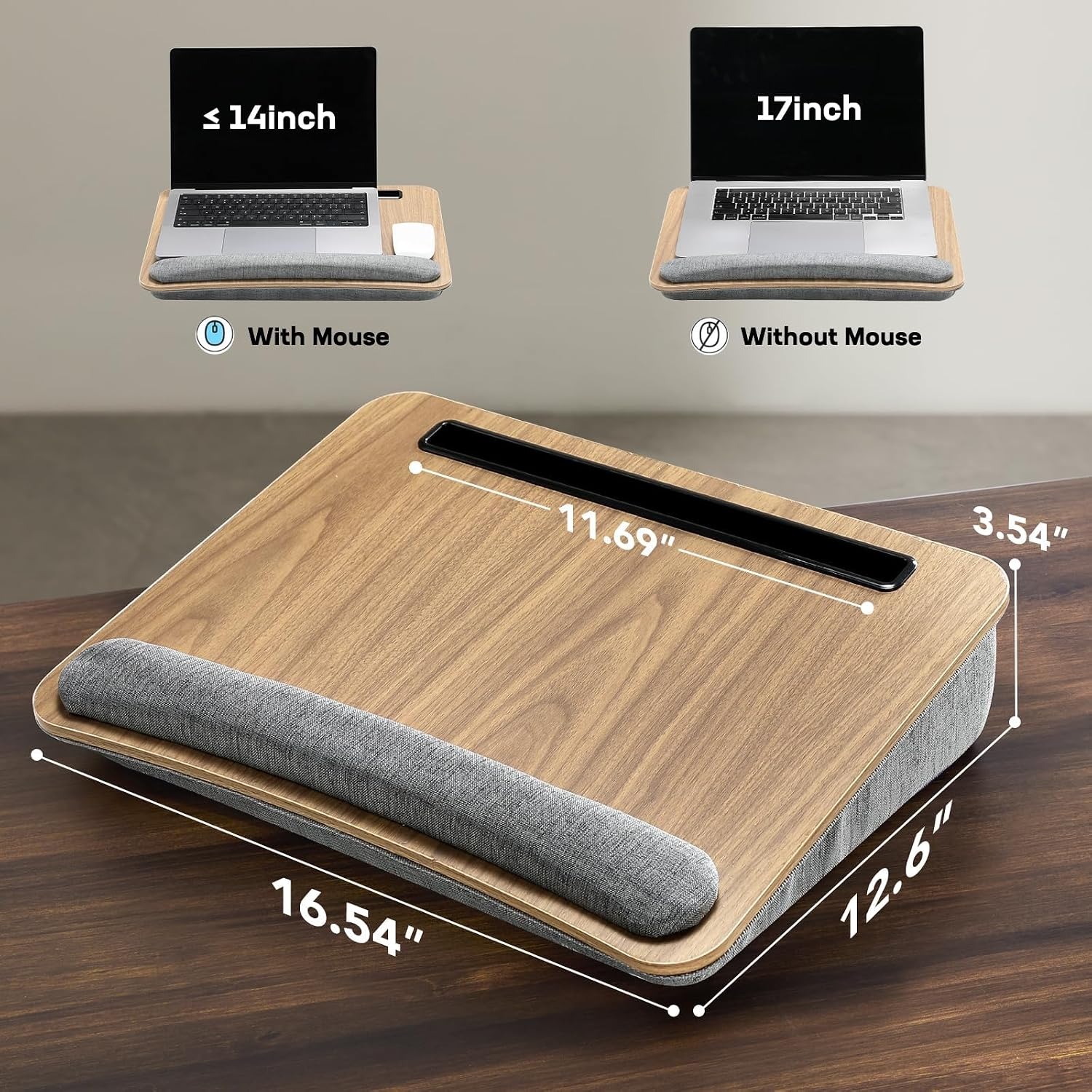
The platform on top measures 42 cm deep by 32 cm wide, with a total height of 9 cm including the cushion. That raise does two useful things. It lifts the screen a little closer to eye level, which takes some strain off your neck, and it keeps the underside of the laptop clear of soft bedding so air can move.
Along the front there is an anti-slip wrist pad. This is the feature people underrate before they own one and then miss immediately when they use a lap desk without it. It gives your wrists a soft landing instead of a hard board edge, and the grippy surface slows the laptop from creeping forward as you type.
Who it suits
Remote workers who do not have a dedicated office get the most from it. If your working day moves between the kitchen table, the sofa and occasionally the bed, a portable laptop desk keeps your setup consistent even when your location is not.
Students are the other obvious group. Dorm rooms and shared flats rarely have good desk space. Being able to work from the bed without wrecking your posture or cooking your laptop is worth a lot during exam season.
It also suits anyone spending extended time in bed, whether that is through illness, recovery or just preference. The cushioned base is far kinder to legs than a hard tray with metal legs digging into a mattress.
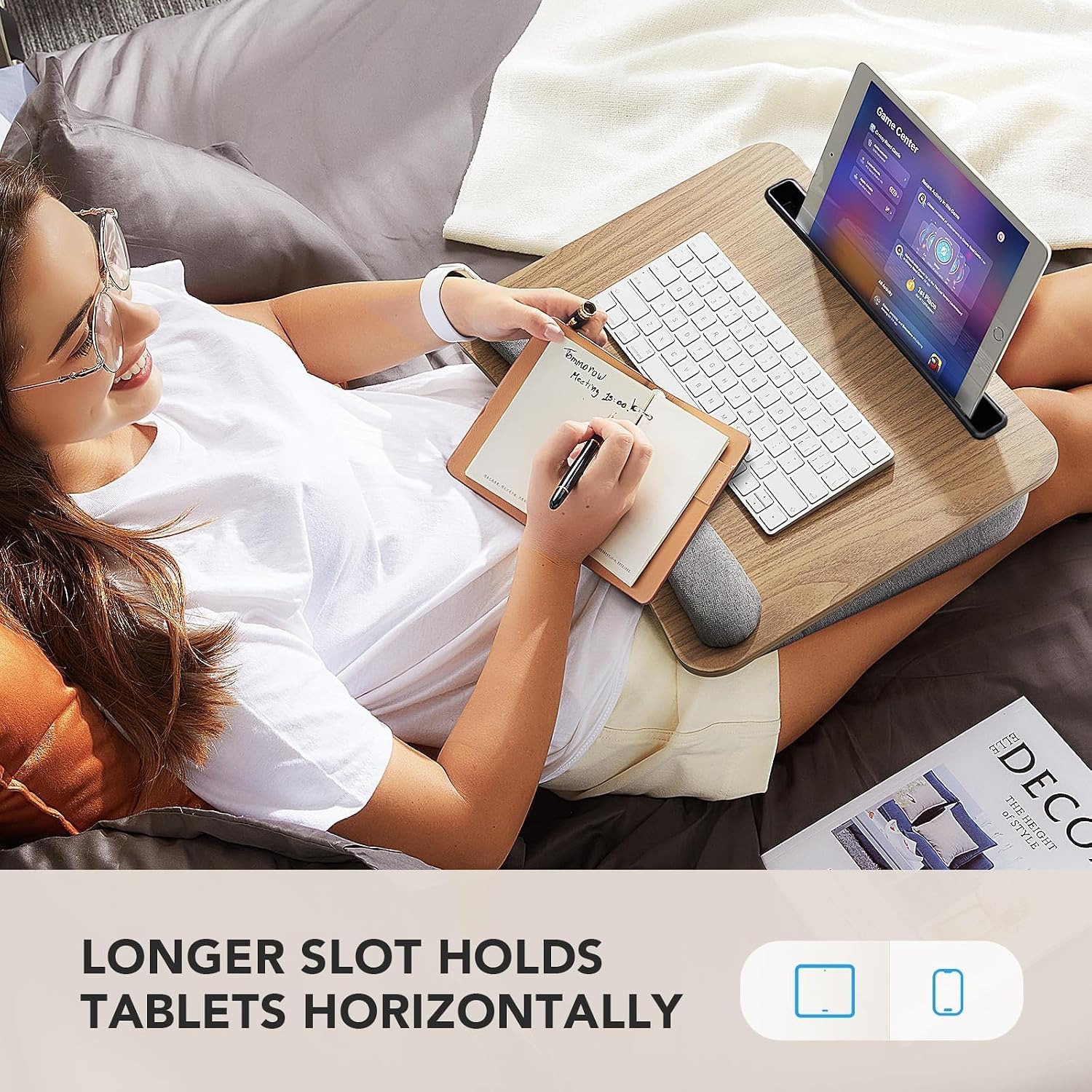
Gamers and people doing video calls from the couch benefit from the tablet slot. Having a second screen propped up for chat, notes or a reference document while the laptop handles the main task is genuinely useful, not just a spec-sheet extra.
Getting the size right
This is where most people go wrong, so be honest about your laptop.
The desk takes laptops up to 15.6 inches. If yours is at the top of that range, the laptop will fill most of the surface and you will be using the trackpad. That is fine for plenty of work, but do not expect spare room.
If your laptop is 14 inches or smaller, you get meaningful space beside it for a mouse. For anyone who does spreadsheets, design work or anything precise, that gap is the difference between a tool you use daily and one that ends up in a cupboard. Measure your laptop diagonally across the screen before ordering if you are unsure.
Also think about your body. The desk spans 42 cm front to back, which suits an adult lap comfortably. On a smaller frame it will overhang slightly at the front, which is not a problem but is worth picturing.
The details that matter day to day
Weight is 1.21 kg. Light enough that moving it is not a decision, heavy enough that it does not feel like cardboard. Anything much lighter tends to flex under a laptop, and flex is the enemy of a stable typing surface.
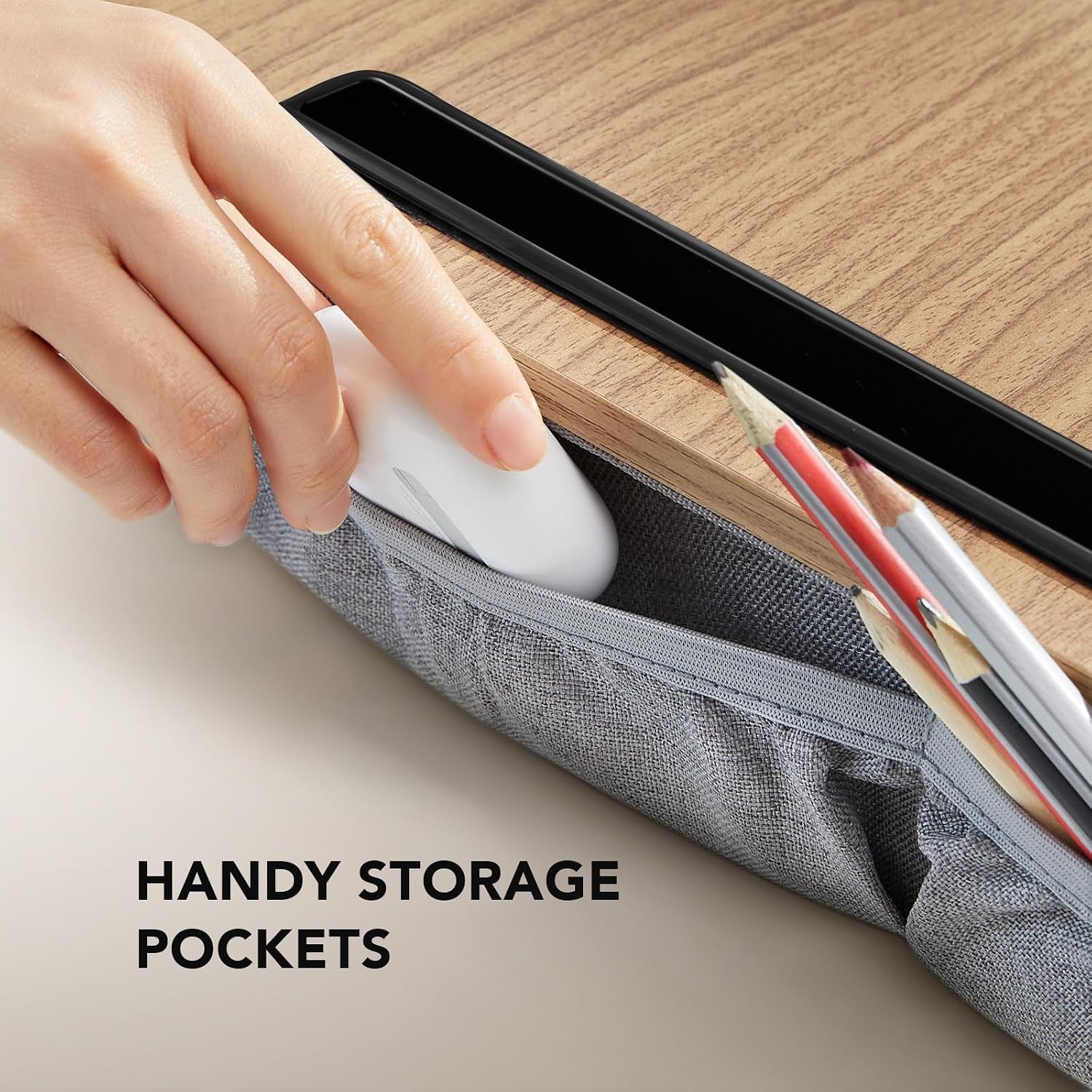
The storage pocket does double duty. On its own it holds a charger, earbuds, a phone or a few pens. More importantly, it is built to work as a handle. When you decide to move from the sofa to the kitchen, you lift the desk by the pocket with everything still on it. That single detail is what keeps a lap desk in daily use rather than parked behind an armchair.
Alongside the tablet holder there are spots for a pen and a phone. Small things, but they stop the usual problem of items rolling off the edge every time you adjust.
The look is deliberately low-key. A dark brown woodgrain top paired with a grey fabric base reads as furniture rather than tech accessory, so leaving it out in a living room does not bother anyone.
Looking after it
Care is straightforward. The hard top wipes clean with a soft, slightly damp cloth, and you should dry it immediately rather than letting water sit on the finish. For the fabric cushion, spot clean with a little mild soap and cool water, then let it air dry completely before using it again.
Do not soak the foam. Do not put any part of it in a washing machine or a dryer. Foam that gets thoroughly wet takes days to dry properly and can hold a smell afterwards.
Storage matters more than people expect. Lay it flat or stand it on edge against a wall. Leaving heavy objects sitting on the cushion for weeks will compress the foam in that spot, and compressed foam does not fully recover. Keep it out of long stretches of direct sunlight too, which fades fabric and can dry out finishes.
Use a coaster if you drink at your desk. The surface handles normal use well, but a hot mug left on a finished board for an hour is asking for a mark.
The short version
A lap desk is one of those purchases that looks unnecessary until you own one, then quietly becomes part of your routine. This one gets the fundamentals right. A rigid 42 x 32 cm platform that takes laptops up to 15.6 inches, a foam base that shapes to your legs instead of fighting them, an anti-slip wrist pad along the front, and a pocket that works as a handle.
Check your laptop size first. Under 14 inches and you get mouse room as well. Up to 15.6 inches and it still fits, just without the extra space. At 1.21 kg it moves with you, which is the whole reason to buy a portable laptop desk rather than a second table.
If you work from the sofa, study from your bed, or just want to stop balancing a warm laptop on your knees, this is a small fix for a problem you have probably been putting up with for years.