

The complete guide
Portable Bidets, A Practical Buyer's Guide
The problem nobody talks about
Dry paper does not clean skin. Most of us have simply accepted that, because the alternative involves plumbing, and plumbing is not something you can carry.
Then you hit the situations where it really matters. A sixteen-hour travel day. Recovery after childbirth. A hot week of camping. A period that arrives on a day packed with meetings. Haemorrhoids, which are extremely common and extremely unpleasant to manage with paper. Reduced mobility that makes reaching awkward. In all of those, a splash of water changes the day.
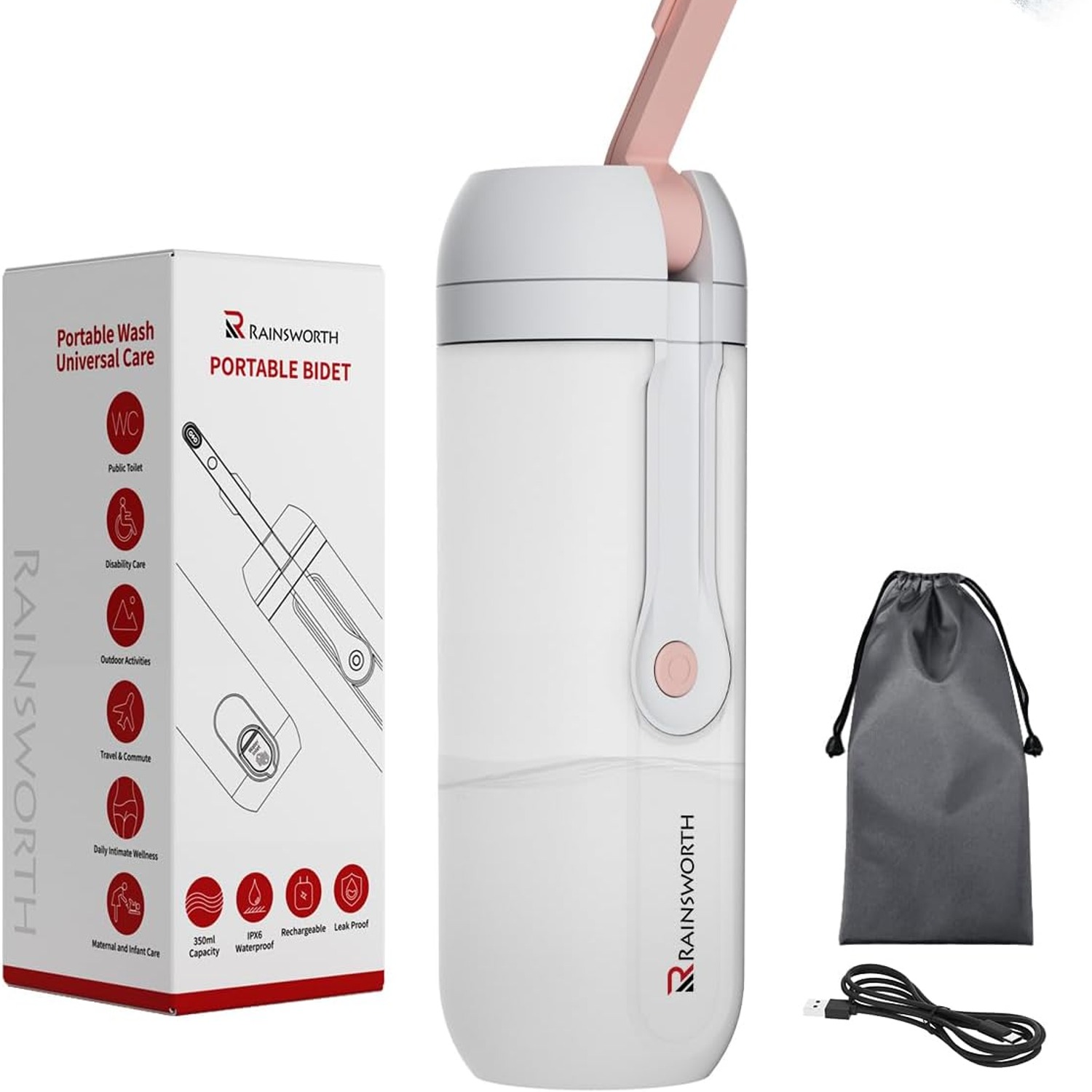
A portable bidet is the answer to that gap. It is a small tank with a pump and a nozzle. You fill it, press a button, and get the same kind of rinse a plumbed bidet gives you, in whatever bathroom you happen to be standing in.
How a powered one actually works
There are two families of handheld bidet. The first is a squeeze bottle with an angled spout. It costs very little and it works, up to a point. The point is your hand. Pressure comes entirely from your grip, so it fades as you squeeze, drops off as the bottle empties, and becomes genuinely hard work if your hands are weak or sore.
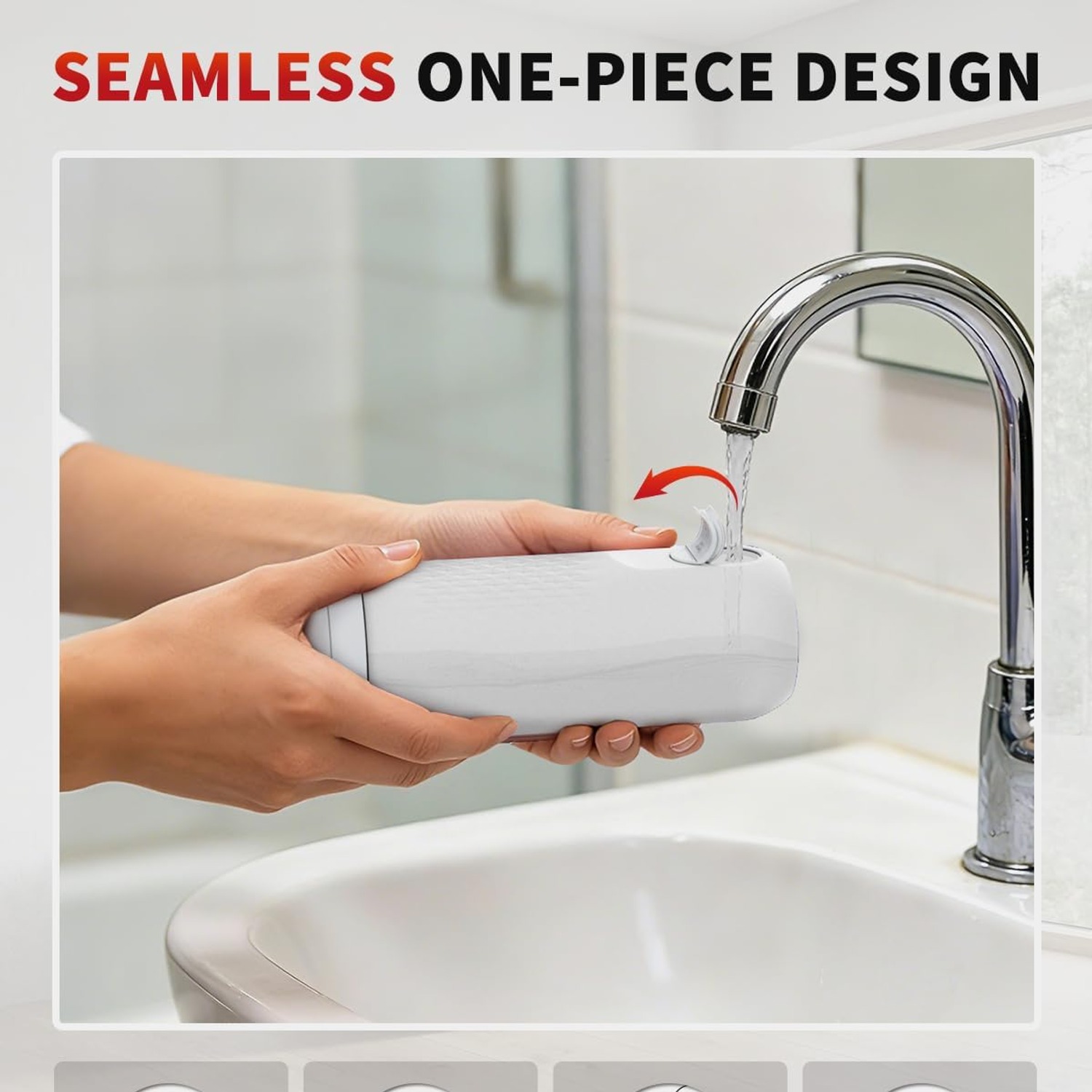
The second family puts a small electric pump inside. That is what this unit is. You fill the 350ml tank, switch it on, and the pump delivers water at a set rate regardless of how you are holding it or how full the tank is. The first second and the last second feel the same.
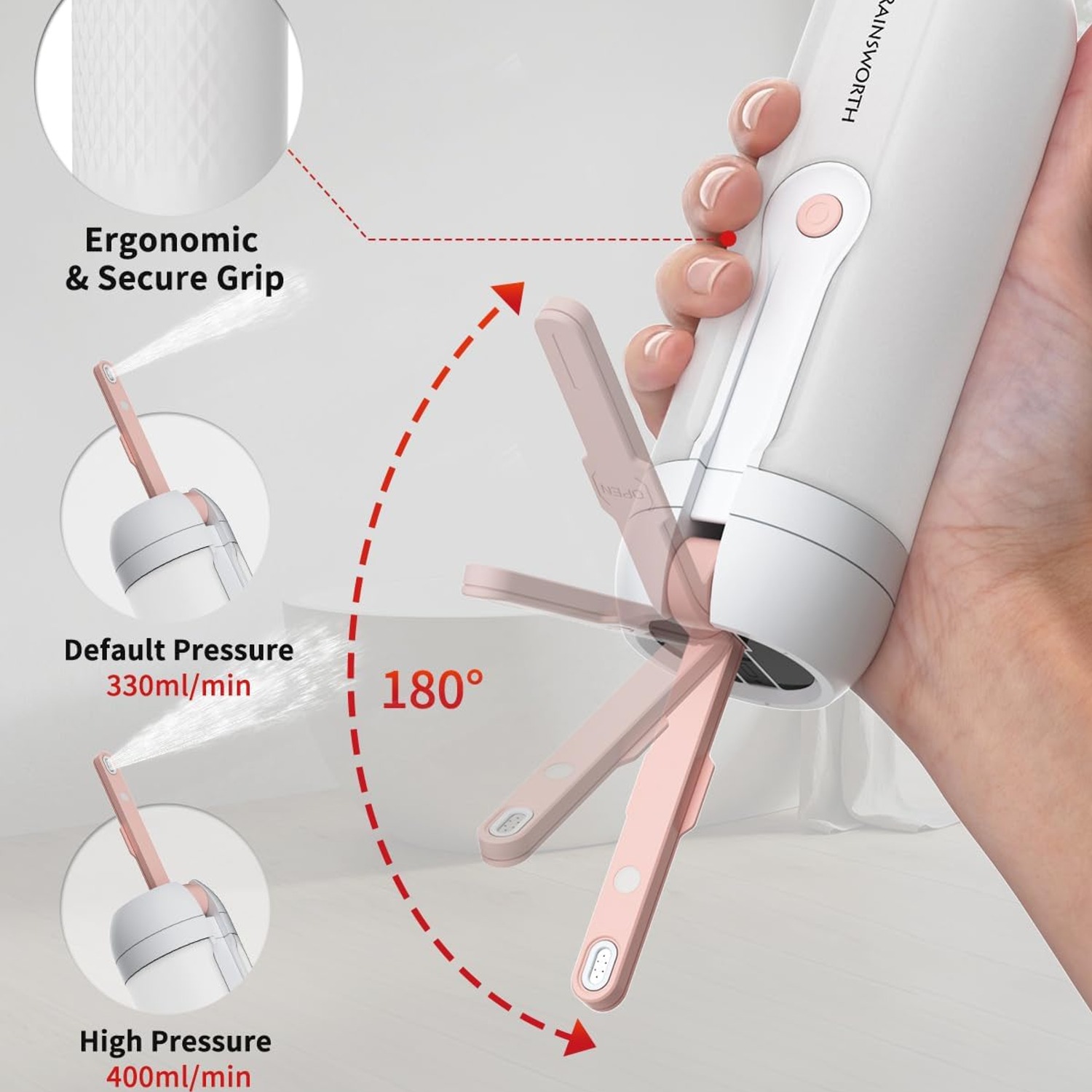
This model gives you two rates. The lower one runs at 330ml per minute, the higher at 400ml per minute. In practice the lower setting is for sensitive moments, period care, postpartum recovery, irritated skin, and the higher one is for a quicker, more complete rinse. Being able to switch mid-use matters more than the numbers suggest. Plenty of people start gentle and finish stronger.
The nozzle rotates through 180 degrees. This is the feature that separates a comfortable experience from an awkward one. With a fixed nozzle, you have to move your body to match the spout. With a rotating one, you set the angle once and then hold the device however is actually comfortable. For anyone with a stiff back, a recent surgery, or a pregnancy bump in the way, that is the whole ballgame.
Why one-piece construction is worth caring about
Lots of travel bidets fold, collapse or screw together. They are impressively small when packed. They also have seals at every joint, and seals are the first thing to fail.
When a joint seal starts weeping, you do not usually notice at the bathroom basin. You notice when you open your bag three hours later. This unit is moulded as a single body, so there are no joints in the water path to go soft. Nothing to assemble on day one, nothing to lose, nothing to reassemble wrong at 2am in a hotel bathroom.
It also makes cleaning quicker. Rinse the tank, let it dry with the cap off, done.
Power, water and sensible expectations
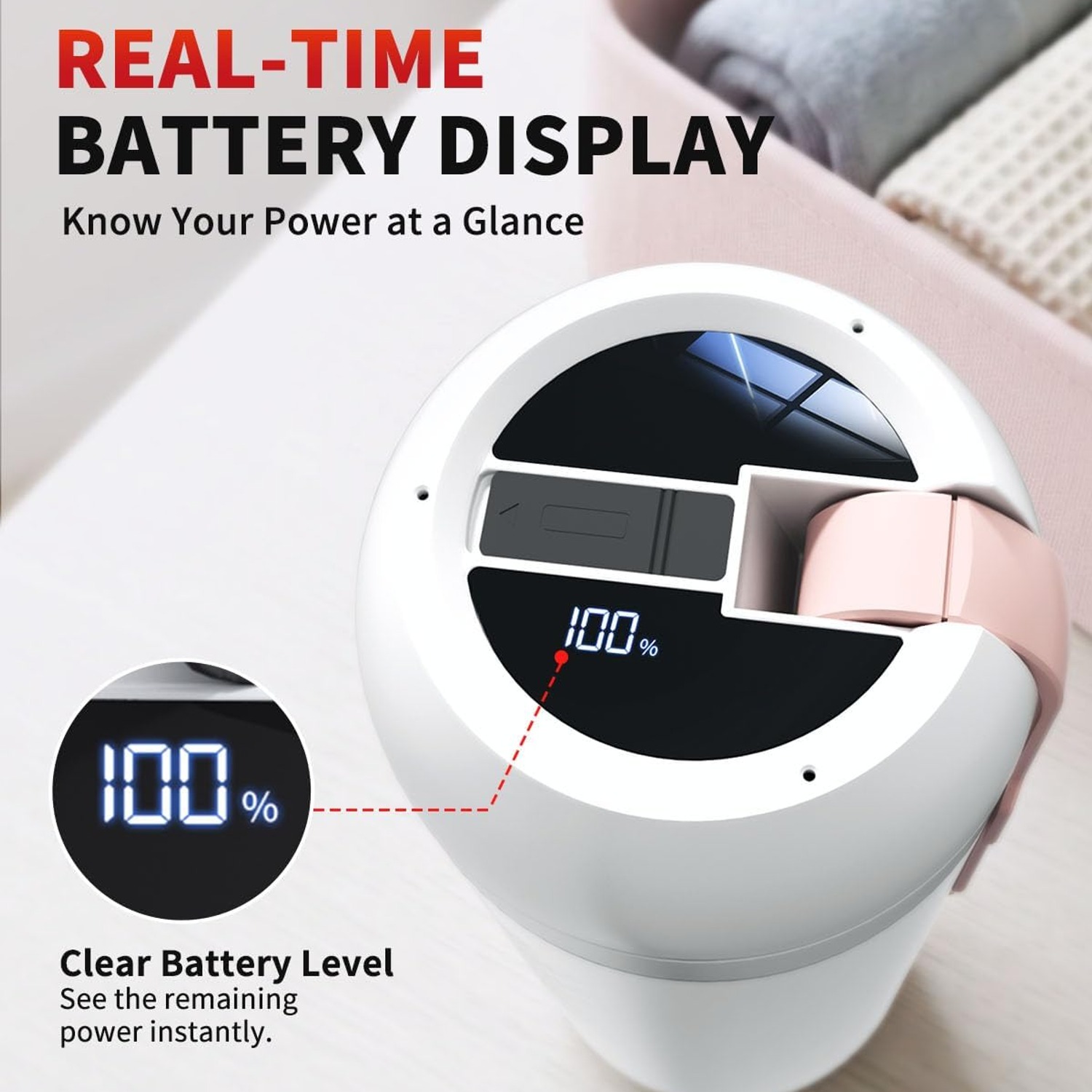
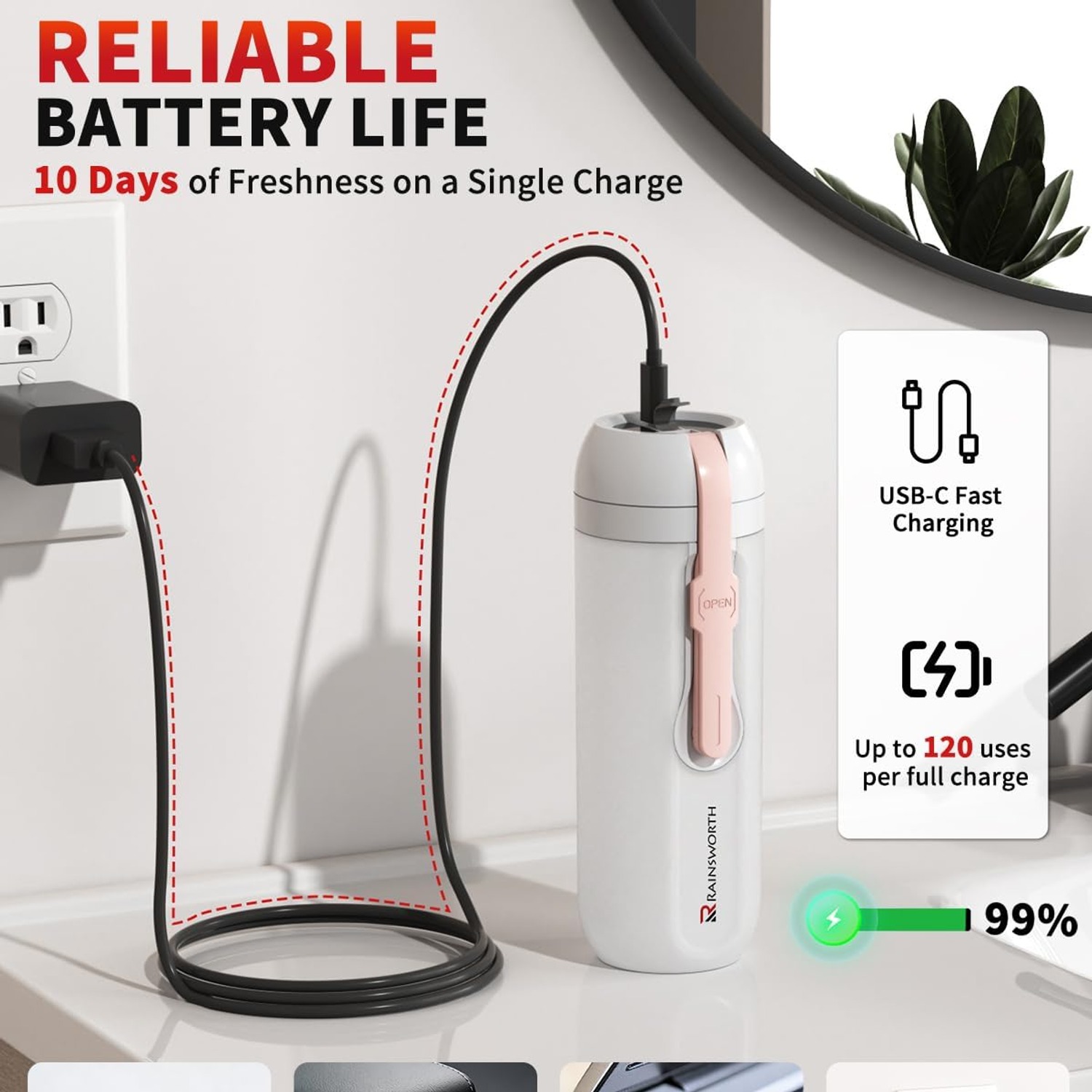
The battery is a 1600mAh lithium ion cell, included, charged over Type-C. That is the same cable as most current phones, which means a power bank, a laptop port or a car adapter will all do the job. The listing describes weeks of use per charge under normal conditions. Heavy daily use on the higher setting will naturally shorten that.
A note on flying. Lithium batteries generally need to travel in carry-on rather than checked bags. Empty the tank before you pack and check your airline's current policy, because carriers vary.
The unit is rated IPX6. That covers strong water jets from any direction, so shower splash, wet countertops and rainy campsites are all fine. IPX6 does not mean submersible. Do not drop it in a sink full of water and expect it to shrug that off.
Who tends to buy one
New parents, often before the baby arrives. A pump-driven rinse is far easier than squeezing a bottle when you are sore and tired, and the gentle setting exists for exactly this.
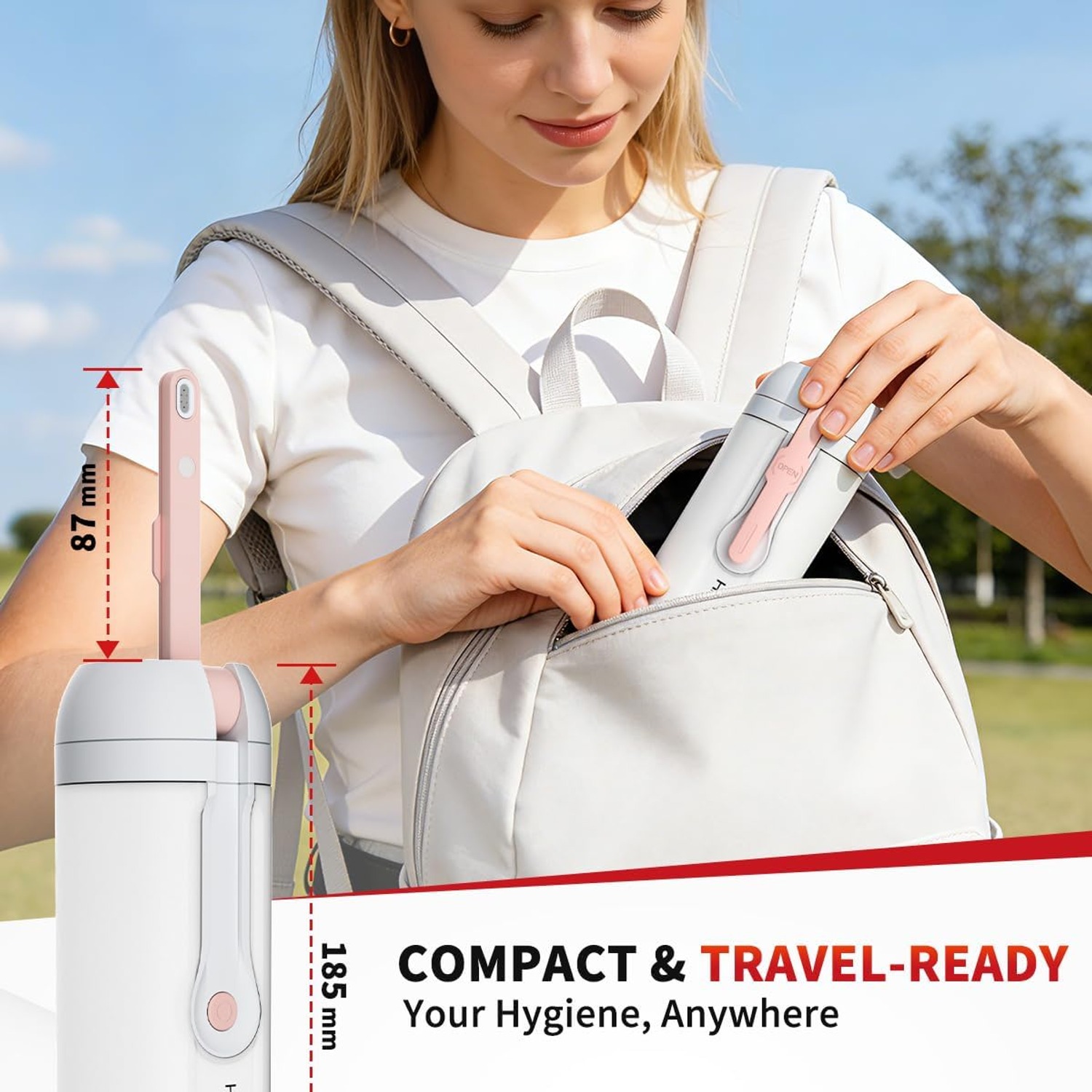
Travellers, particularly anyone heading somewhere with squat toilets or inconsistent paper supplies. If you have been looking at the best travel bidet for flights, the deciding factors are usually size, battery life and whether it stays discreet in a bag. All three are covered here.
Campers and road-trippers, where the nearest tap might be a jerry can. A 350ml tank goes a long way when water is something you carried in.
People managing haemorrhoids, fissures, IBS or recovery from surgery, where paper is genuinely painful.
Older users and anyone with reduced reach or grip, where the rotating nozzle and powered pump remove most of the physical effort.
Choosing between models
Four things actually matter when you compare portable bidets.
Tank size sets how long you can rinse before refilling. 350ml is a sensible middle ground. Much smaller and you are refilling mid-use, much larger and it stops fitting in a handbag.
Pressure control decides comfort. A single-speed unit is either too weak or too strong depending on the day. Two rates covers far more situations.
Nozzle movement decides whether you have to contort. Fixed nozzles are cheaper. Rotating nozzles are the reason people keep using the thing after week two.
Build decides whether it survives your bag. One-piece beats folding, every time, if you have room for it.
Battery and charging are the tiebreaker. Type-C is now standard, and anything else means carrying an extra cable.
Looking after it
Empty the tank after every use. Water left sitting in a warm bag for a week is not something you want to spray on yourself.
Rinse the tank with clean water and leave the cap off so the inside dries out. Once a week, or more if you use it daily, run a full tank straight through with the pump on. That flushes the nozzle and the internal water path.
Wipe the outside with a soft damp cloth. Skip bleach, skip solvents, and keep it out of the dishwasher.
Only clean water goes inside. Soap, antiseptic and oils all clog nozzles and most of them irritate the skin they are meant to soothe.
Keep it in its pouch when it is not in use, and give the battery a top-up every few months even if the device is sitting idle. Lithium cells prefer not to sit flat for long stretches.
The short version
A portable electric bidet gives you a proper water wash in places that were never plumbed for one. This one is 6.35 x 6.35 x 18.54 cm and 300 g, holds 350ml, sprays at either 330 or 400ml per minute, rotates its nozzle through 180 degrees, charges over Type-C from a 1600mAh battery, and carries an IPX6 rating. The body is one moulded piece, so there are no joints to leak, and a pouch is included to keep it clean and discreet.
If you travel, you are recovering from something, or you simply think paper alone has always been a compromise, this is the kind of small purchase people end up wondering why they waited on. Delivery is tracked across Canada, free on orders of $75 or more and $25 below that.