

The complete guide
How to Choose and Use a Stand Up Weed Puller
The problem with pulling weeds by hand
Anyone who has spent a Saturday morning on their knees knows how this goes. You grab a dandelion at the base, pull, and the leaves come away in your hand. The root stays put. A fortnight later there is a fresh rosette of leaves in exactly the same place, and you are back on the ground doing the same job again.
Taproot weeds are built for this. A dandelion sends a single thick root straight down, sometimes 20 cm or more. Thistle and burdock do something similar. Snap the top off and the plant simply regrows from what is left underground. Meanwhile your knees are sore, your back is stiff, and the lawn looks much the same as it did before you started.
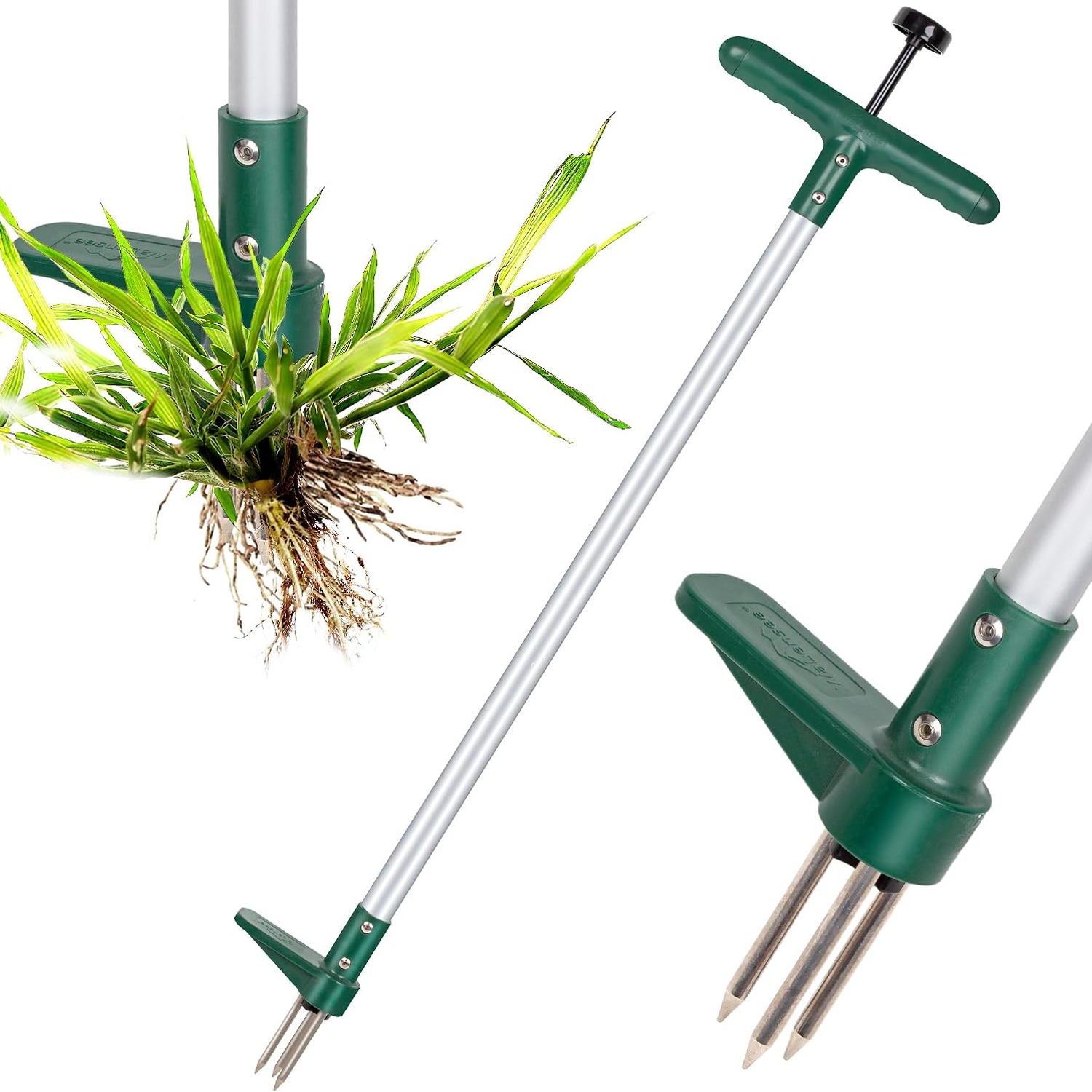
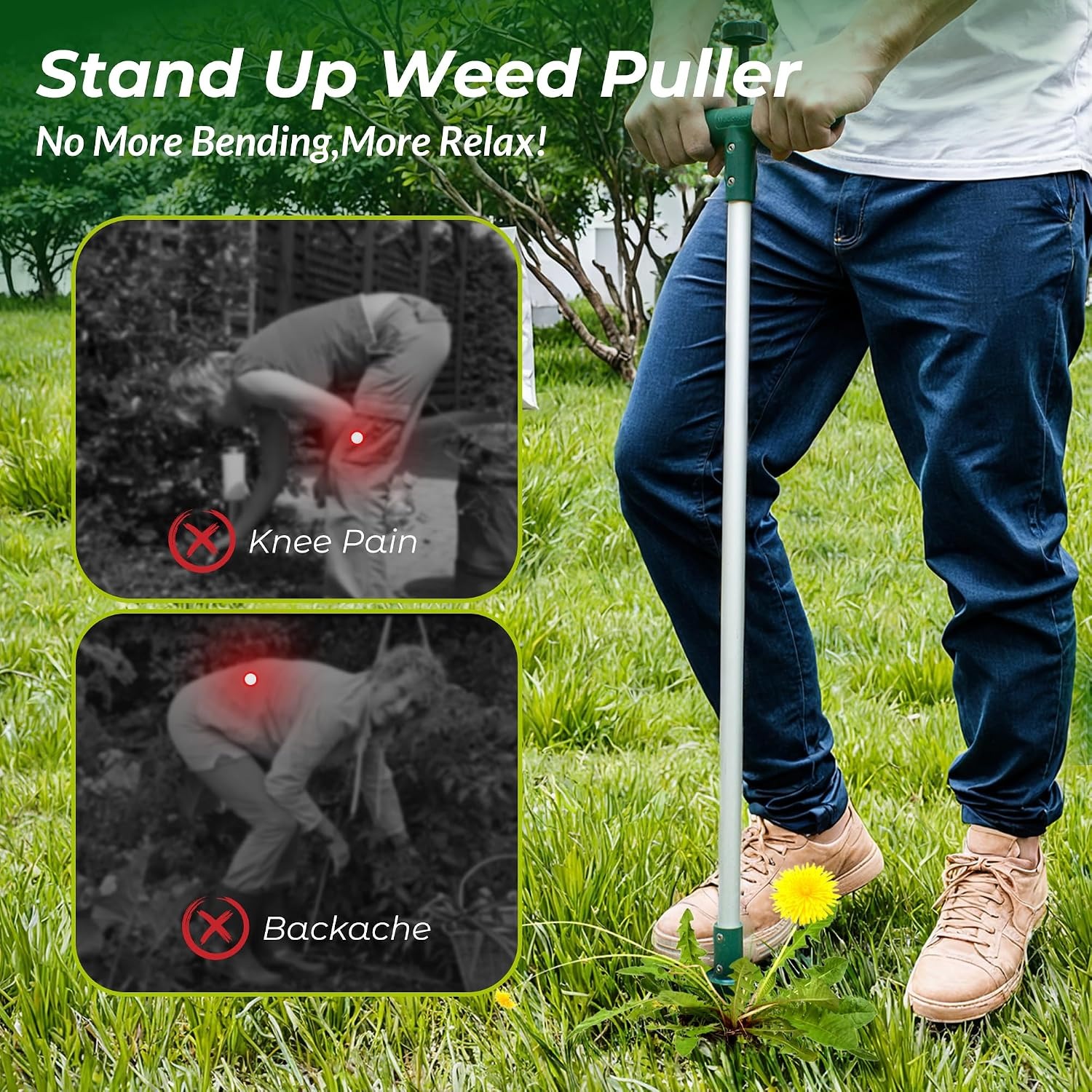
That is the gap a stand up weeding tool fills. Rather than reaching down with your fingers, you bring a set of steel claws down from standing height, drive them past the crown of the plant, and lift the root out whole.
How the tool works
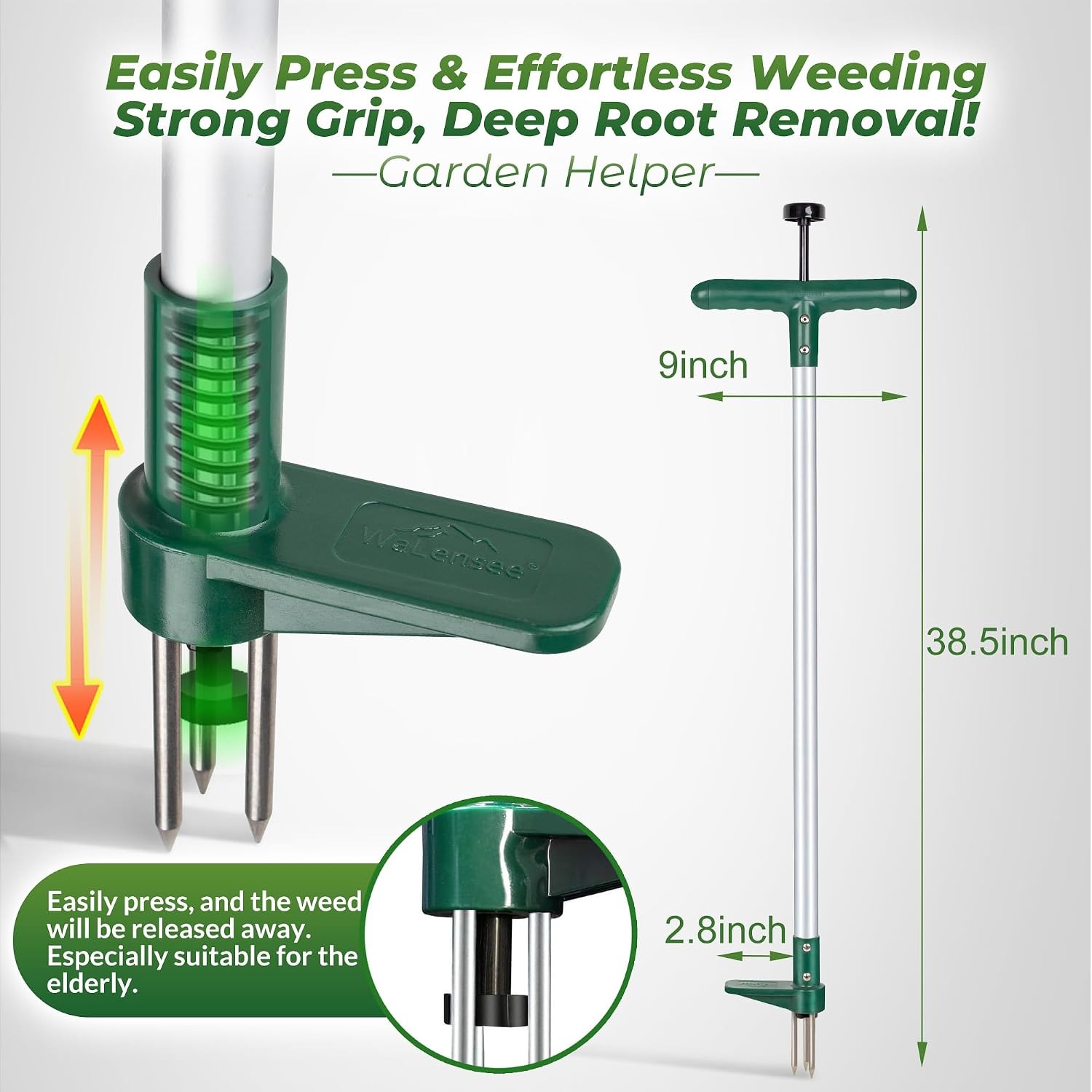
This portable weed puller is 100.33 cm long. At that height the grip sits roughly between waist and chest for most adults, so you can work with your back straight. The head is 24.13 cm across and 6.35 cm deep, and the entire thing weighs 454 g.
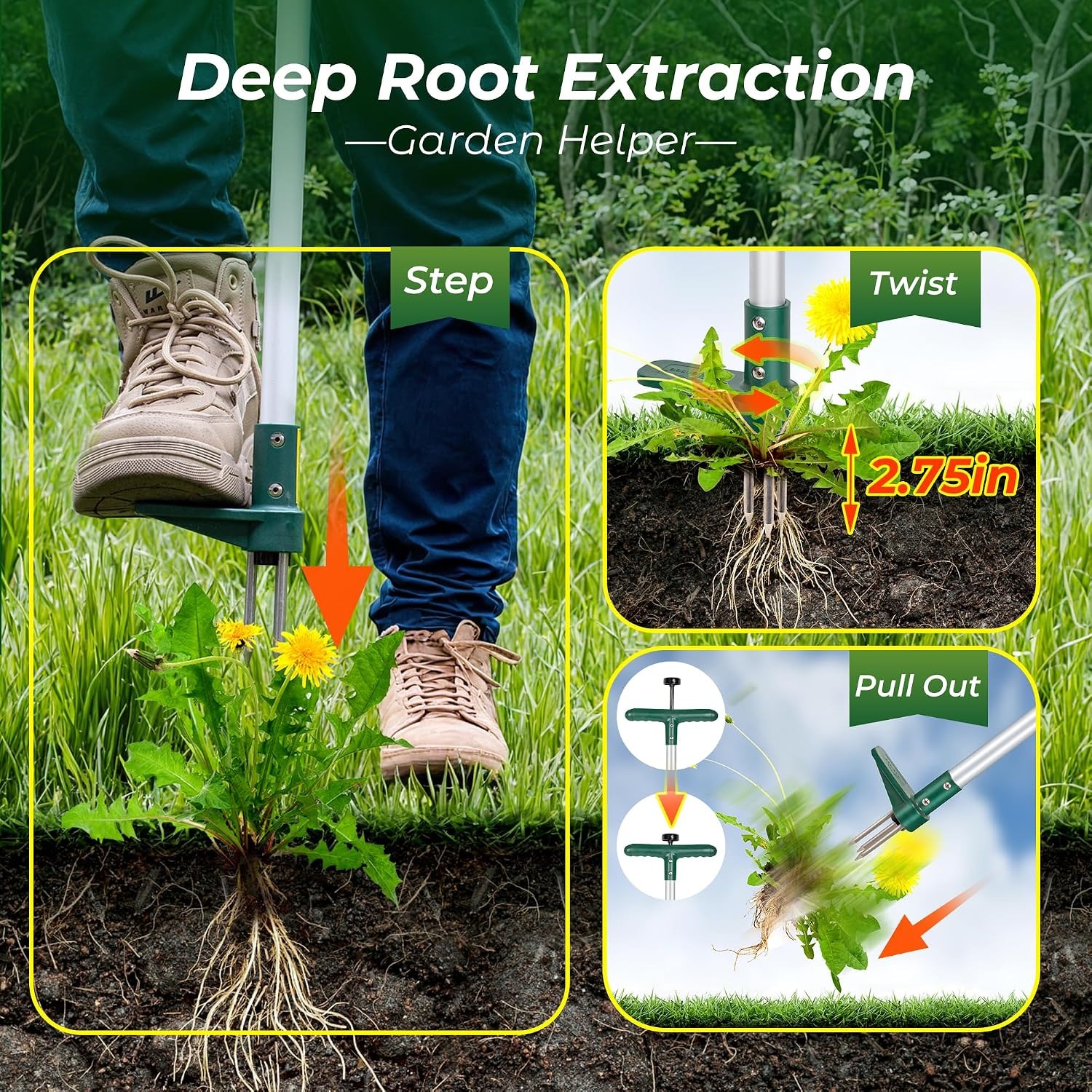
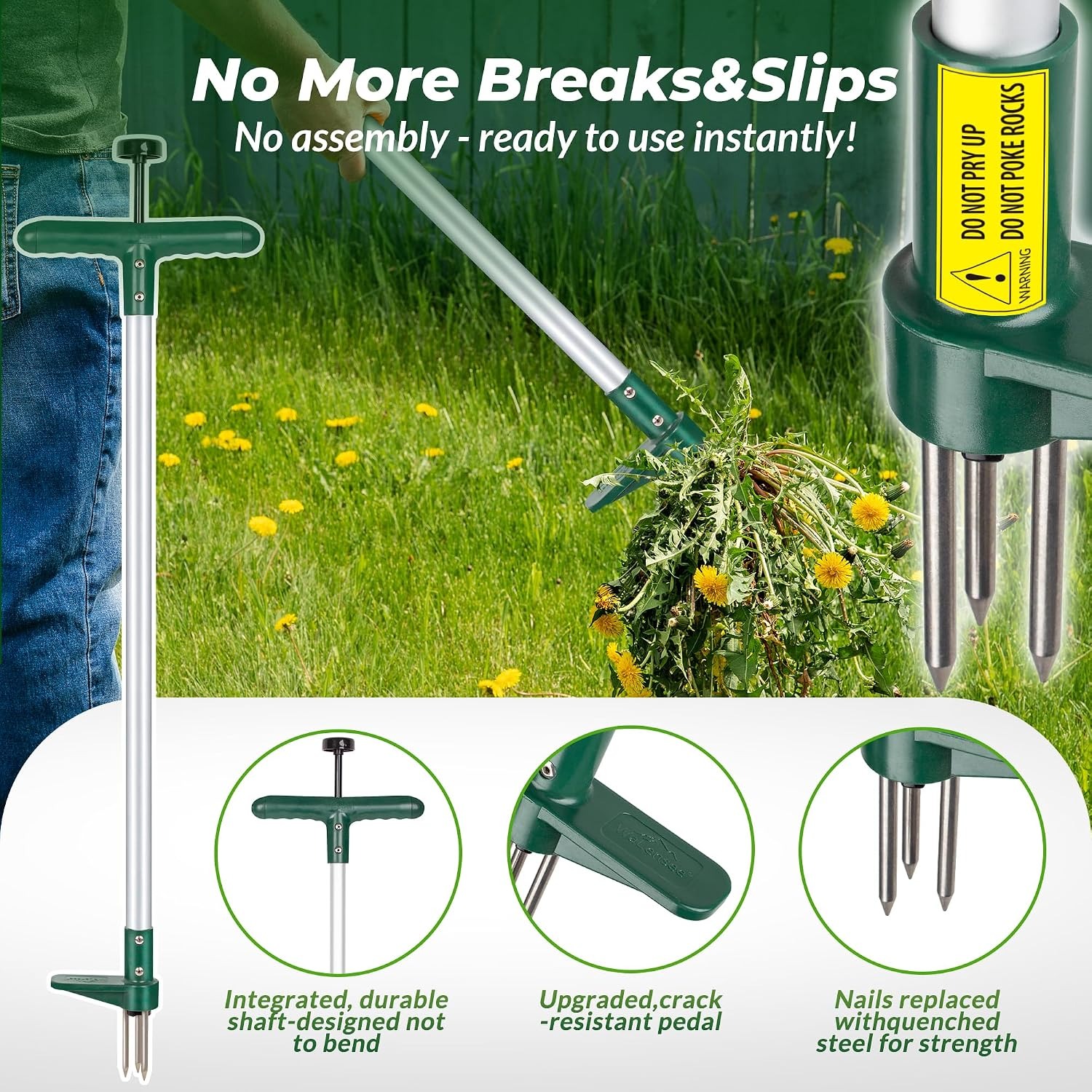
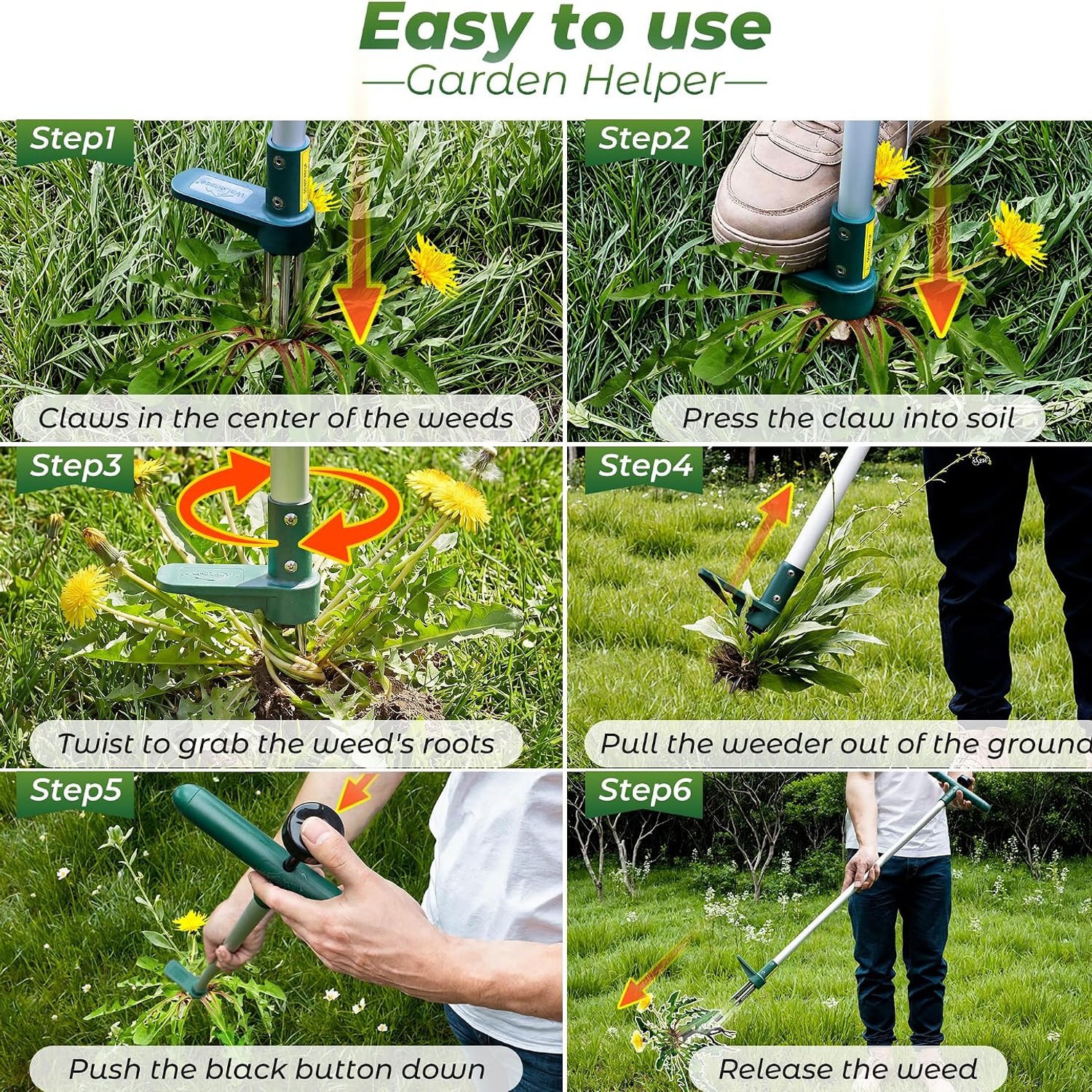
There are three steel claws at the business end. Near the base there is a foot pedal. The sequence is simple once you have done it a few times. Line the claws up so the weed sits in the middle of them. Put a foot on the pedal and press down, using your body weight rather than your arms to push the teeth into the soil. The claws are listed at 2.75 inches long, which is deep enough to get under the crown of most common lawn weeds.
Then comes the part that catches people out the first time. You tilt the handle to one side. That tilting motion is what makes the claws close inward and grip the root, while the length of the shaft acts as a lever and lifts the plant free. Pull the tool up and the weed comes with it. Tilt back upright or shake the head, and the weed drops out.
Both the shaft and the claws are stainless steel. The listed colour is green.
Soil matters more than technique
If there is one thing to take away from this guide, it is this. The condition of your soil does more for your results than anything else.
The supplier is direct about it. Keep the ground moist before you use the tool, and do not try to weed gravelly soil. Those two notes are worth following. In damp soil the claws slide in cleanly and the root releases with the plug of earth around it. In dry, baked clay the claws struggle to get past the surface and the root tends to snap halfway down, which puts you right back where you started.
The practical approach is to weed the morning after rain, or to give the area a good soak the evening before. Ten minutes with a hose costs you nothing and changes the job completely.
Gravel is a different issue. Stones get wedged between the claws and stop them closing, so the grip never happens. If you have weeds coming up through a gravel path, this is not the right tool for that spot.
Who it suits
The obvious group is anyone whose knees or back have had enough. A no bend weeding tool means no kneeling pad, no crouching, no pushing yourself back up off the lawn twenty times in an afternoon. That is why this style of tool is so often bought as a gift for a parent or grandparent who still enjoys gardening but has started to find the ground further away than it used to be.
It also suits people avoiding herbicide. If you grow vegetables, have a dog that lies on the lawn, or just prefer not to spray near the kids, a manual weed puller does the job with no chemicals involved.
And it suits anyone with a decent patch of lawn who wants to stay on top of things. Because you never stop to kneel, you can walk the garden with a bucket and clear what you see in a few minutes. That regular habit keeps a lawn tidy far better than one big weeding session a month.
Where it is less useful is in dense planting. With a head 24.13 cm wide, you need a bit of clear space around the weed. For picking seedlings out of a crowded seed tray, a small hand weeder is still the better choice. Plenty of gardeners own both and reach for whichever fits the job.
What to look for when comparing tools
If you are weighing up a few options, a handful of things actually matter.
Length is first. A tool that is too short defeats the whole purpose, because you end up stooping anyway. Around a metre is the sweet spot for most adults, and 100.33 cm sits right in that range.
Then there is the pedal. A foot pedal is what separates a tool you can drive into firm ground from one that needs you to lean on it with your arms. It uses your leg and body weight, which is far more force than your shoulders can comfortably supply.
Materials come next. Stainless steel in both the claws and the handle gives the tool a solid feel and holds up to being rinsed off after every use. Thin pressed metal bends at the claw tips over a season.
Weight is a quieter consideration. Heavier is not better here. At 454 g you can carry this around the garden without it becoming a chore, and the pedal supplies the force that weight would otherwise have to.
Finally, think about the claw count and spread. Three claws closing inward tends to hold a taproot better than a two-prong fork, which is more likely to slice through than grip.
Looking after it
Maintenance is minimal but worth doing. Rinse the claws off at the end of each session so soil does not dry in the mechanism. Dry the head before you put it away. Store it somewhere covered, hanging by the handle if you can, so the claws stay off a damp floor.
Once a season, check that the pedal and any joints are still tight, and run a light wipe of oil over the moving parts. Stainless steel is forgiving, but a tool that lives outside in all weather will always age faster than one that gets a shed.
If the claws start feeling stiff, it is almost always dried soil rather than a fault. A scrub with an old brush usually sorts it.
A few habits that help
Work in damp conditions, as covered above. Keep a bucket or tarp beside you so pulled weeds go straight in rather than back onto the grass, where seeds can shake loose.
Press the turf back down with your foot after each pull. The tool lifts a small plug of soil with the root, and flattening that straight away helps the grass knit over within a week or two.
Get the weed centred in the claws before you step on the pedal. An off-centre push usually catches part of the root and leaves the rest behind. A second of aiming saves a repeat visit.
The short version
This is a 100.33 cm stainless steel weeding tool with three claws and a foot pedal, weighing 454 g. You stand, step on the pedal, tilt the handle, and the weed lifts out with its root. It is made for taproot weeds like dandelion, crabgrass, thistle, plantain, clover and burdock.
Water the ground first and keep it off gravel. Rinse and dry it after use. Do those things and you have a straightforward lawn care hand tool that saves your knees and actually stops the weeds coming back in the same spot.