


The complete guide
How To Choose And Use A Car Tow Strap Without Making Things Worse
The day you wish you had one
Nobody buys a tow strap on a good day. It gets bought after the day a car would not start at the bottom of a sloping driveway, or the day a wheel slipped off the edge of a gravel track, or the day a boat trailer stalled halfway up the ramp with a queue behind it. On all three of those days the fix takes about four minutes if somebody has a strap in the boot, and about ninety minutes if nobody does.
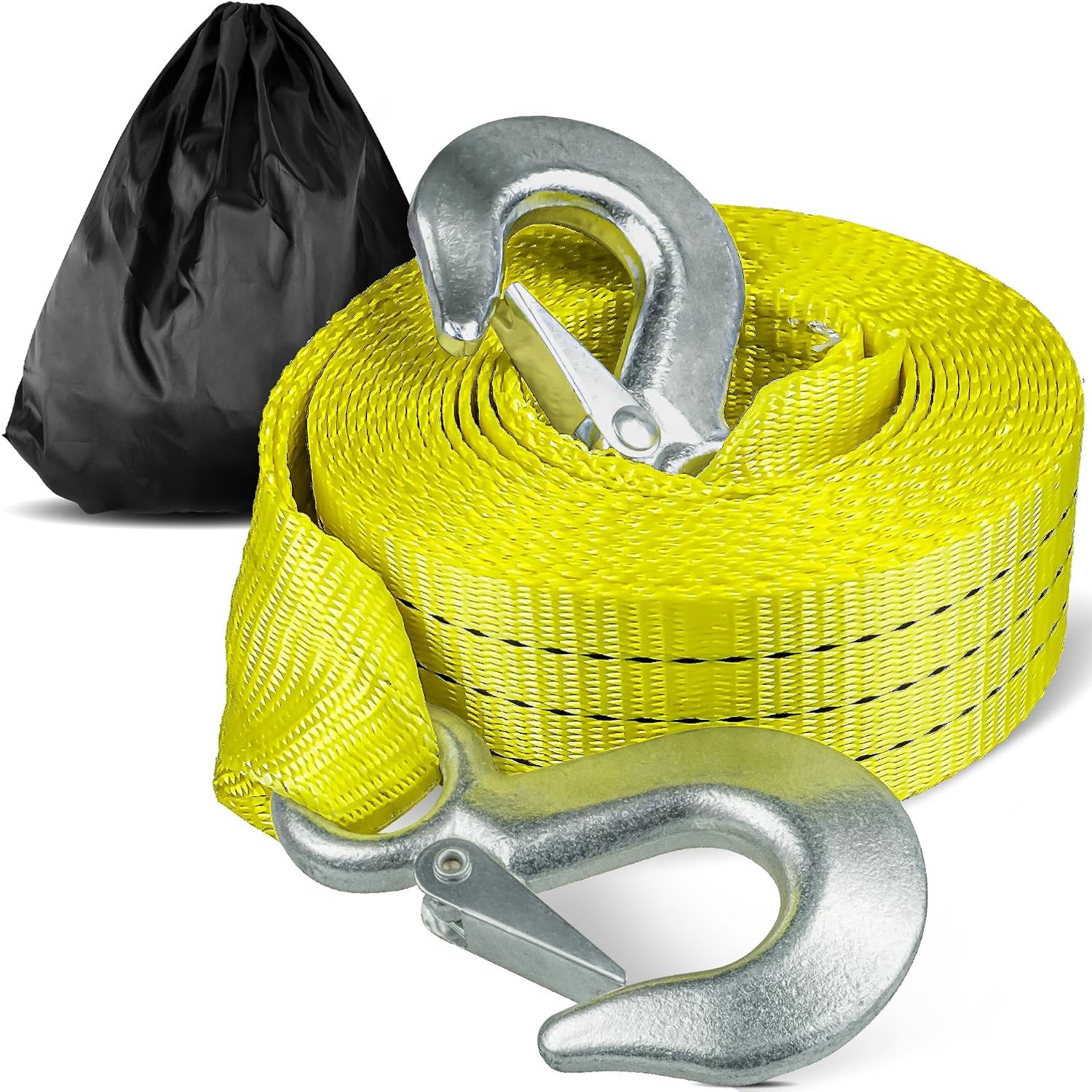
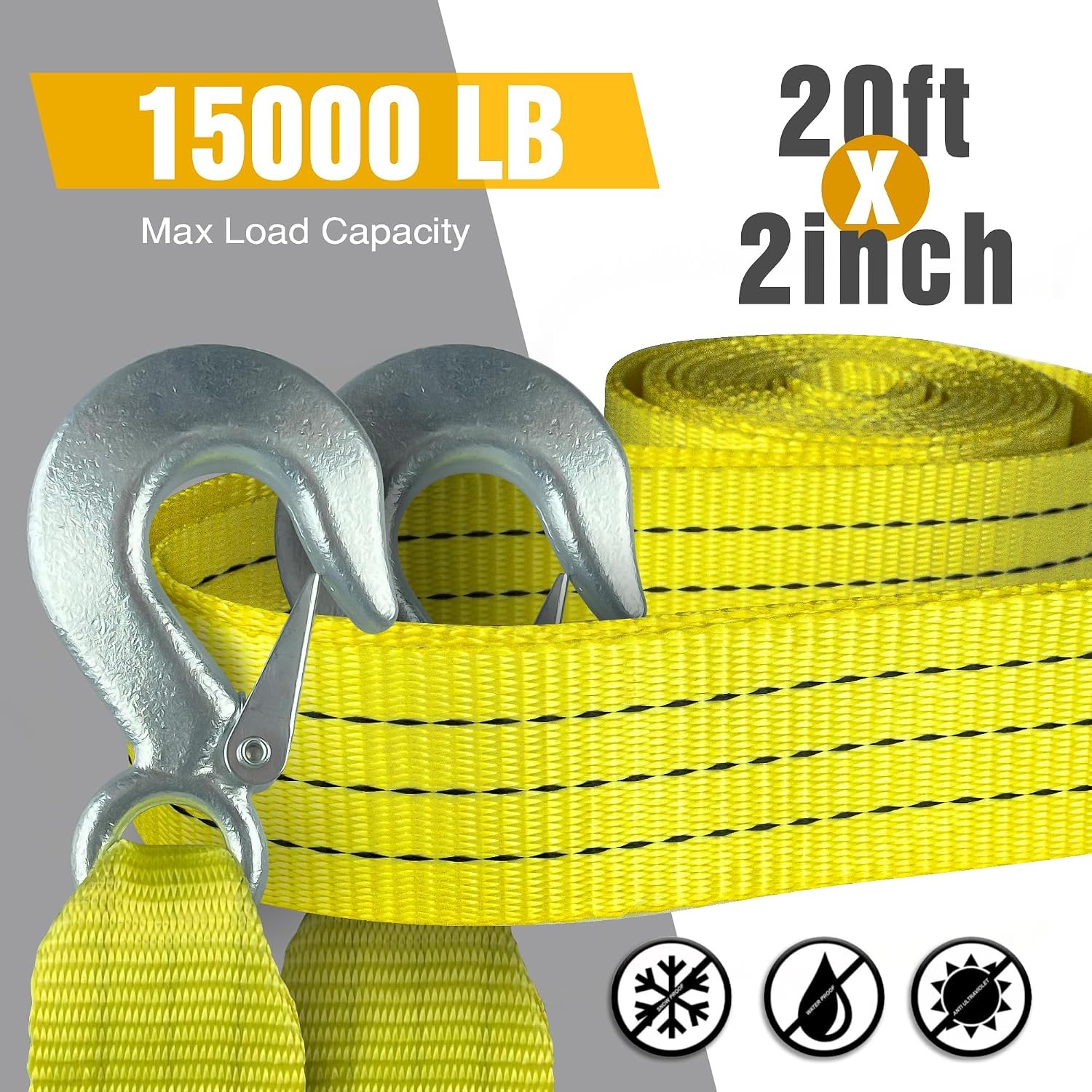
That is really the argument for keeping one. This is a 2 in x 20 ft strap, roughly 5.08 cm wide and 6 m long, with a hook already fitted at each end. It folds to about 50.8 x 5.08 x 0.1 cm and weighs 930 g, so it slides under the boot floor next to the spare and stays out of the way. You will forget it is there until the week you need it.
What the numbers actually mean
The listing gives a load capacity and tensile strength of 6803.89 kg, which the original wording also writes as 15,000 lb. Those are rating figures for the strap. They are not a statement that you should tow 6.8 tonnes with your hatchback.
The real limit in any recovery is the weakest part of the whole chain. That might be the recovery eye on the car. It might be the towing car's gearbox. It might be the ground under the tyres. A strap rated well above the job gives you margin, and margin is what you want. If the strap is the strongest thing involved, nothing good or bad happens to it.
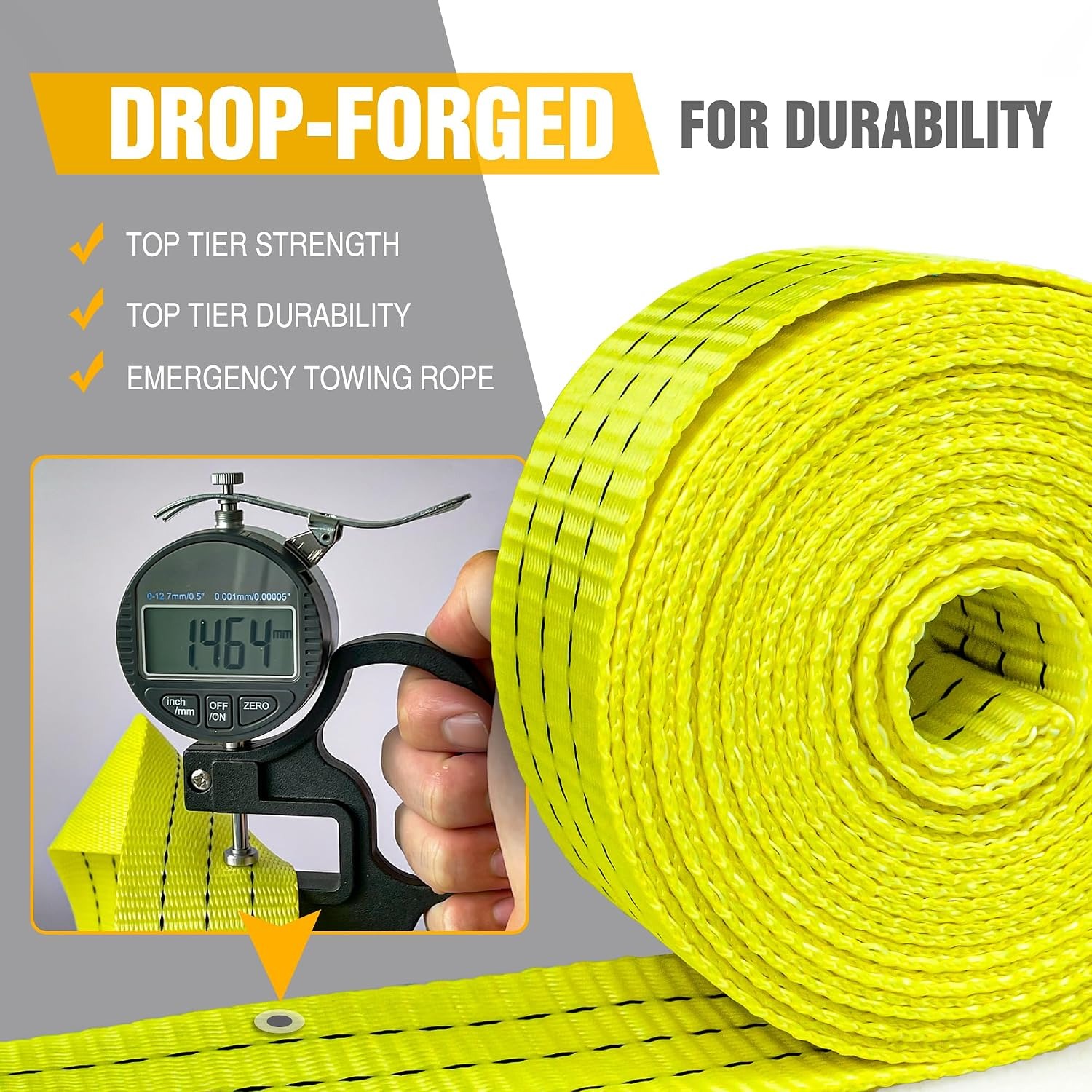
The webbing is listed as high-level polyester. Polyester matters here because it stretches less than nylon. Low stretch is what you want for towing, where you need the two vehicles to move together in a predictable way. High stretch belongs in a snatch strap, which is a different tool for a different job. Treat this one as a tow strap and you are using it the way it is built to be used.
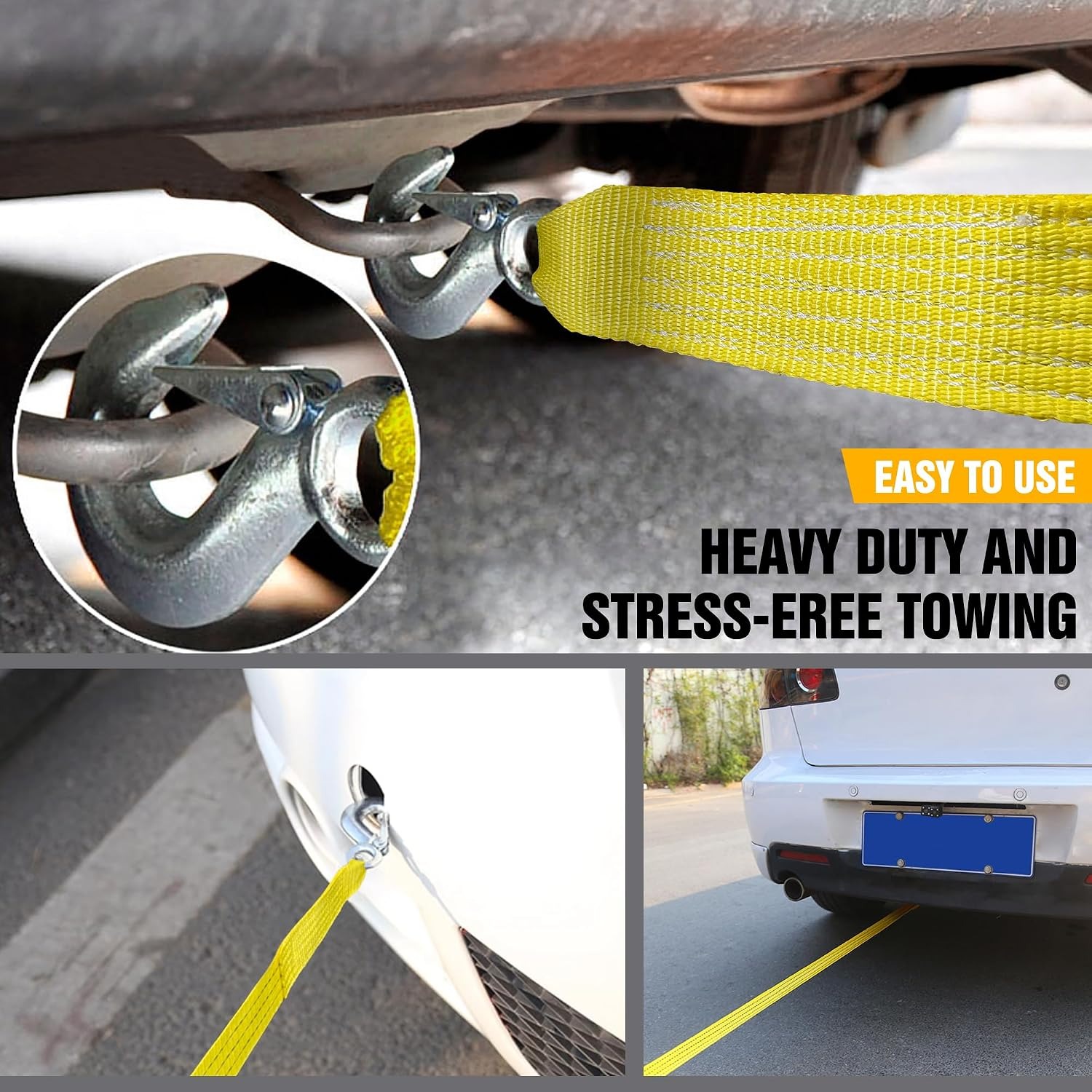
The hardware is zinc, and the fastener type is a chain hook. Each end has a hook with a safety buckle, so once it is seated it stays seated while tension builds. Hooks are quicker than loops in cold weather and awkward angles, which is usually when you are using it.
Who it suits
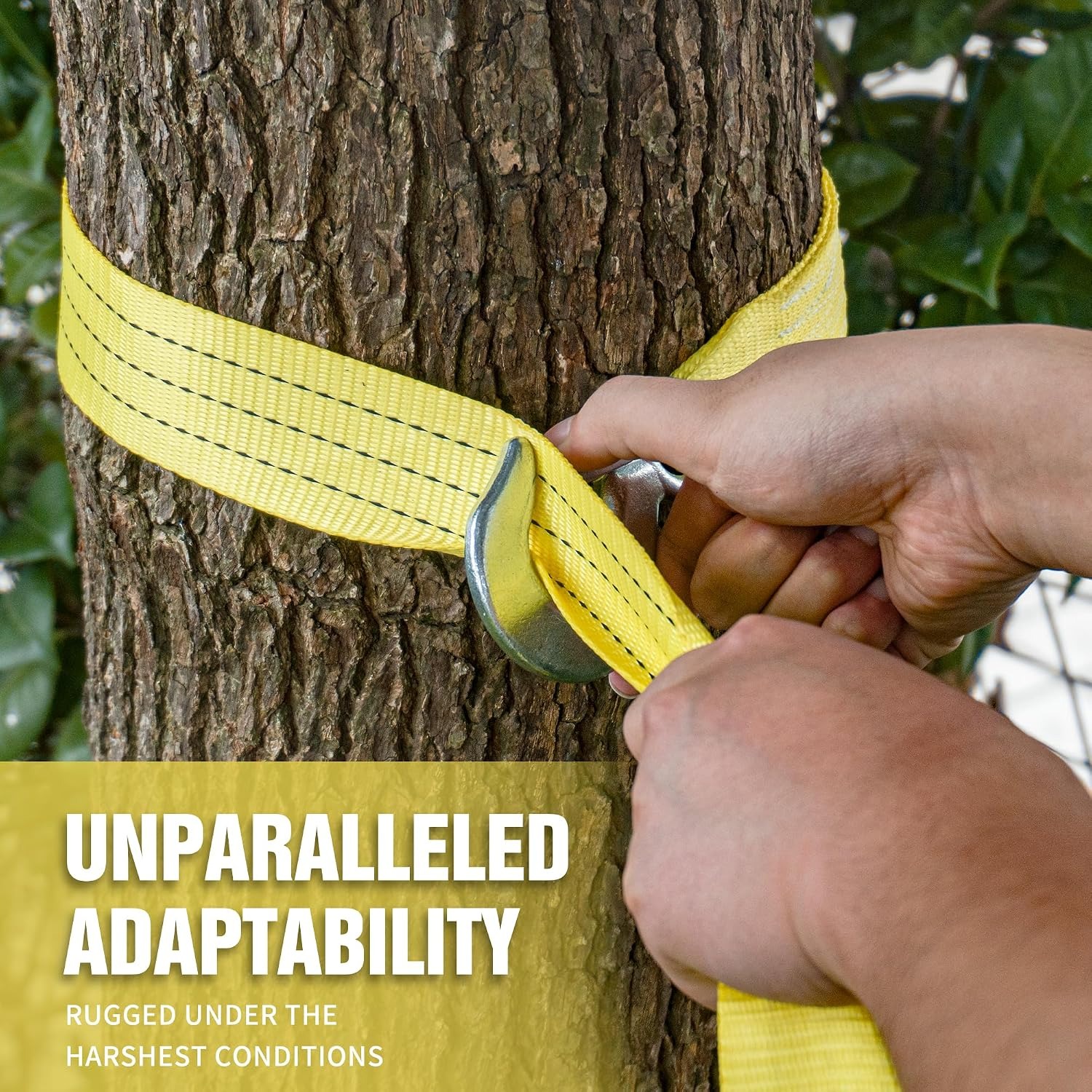
The listing is specific about this. It suits most family cars and it does not apply to heavy goods vehicles. That is a sensible line to draw. Named uses include farm work, clearing trees and shrubs, and towing a boat, and the compatibility field records watercraft.
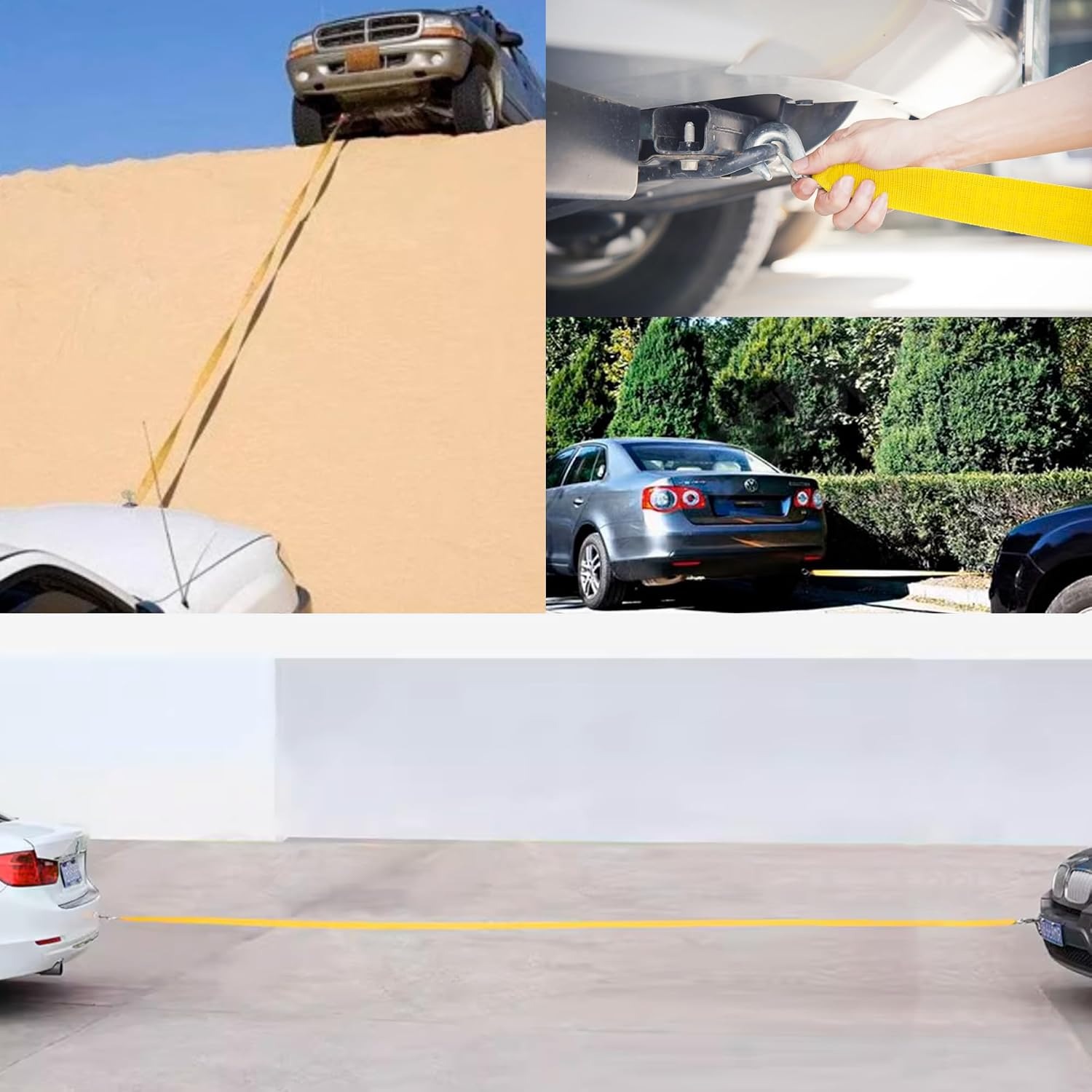
So the fit is light recovery. A car that will not start and needs to move thirty metres. A small trailer that needs repositioning in a yard. A boat on a ramp. Pulling a stump or a shrub out of a flower bed with a slow, steady load. If you regularly pull heavy loaded vehicles, run a commercial yard, or do serious off-road recovery, buy gear specified and certified for that work instead. The best heavy duty tow strap for one person is the wrong strap for another, and matching the tool to the job is the whole point.
Finding the right attachment point
This is where most towing jobs go wrong, and it has nothing to do with the strap.
Modern cars have designated recovery points. Often there is a screw-in towing eye stored with the jack and wheel brace, and a small plastic cover in the bumper that pops out to reveal the threaded socket. Your owner's manual will show you. On some vehicles there are fixed eyes under the chassis at the front and rear.
Use those points and nothing else. Do not hook onto a bumper, a suspension arm, a steering component, an axle, a tow ball or anything that looks vaguely strong. Bumpers are plastic over foam on most cars. Suspension and steering parts are designed for loads in one direction and will bend in another. A hook that tears free under load becomes a projectile.
If you cannot find a proper point on either vehicle, stop. Call a recovery service. That is not a failure, it is the correct decision.
How to do the actual pull
Get both drivers talking before anything is connected. Agree on hand signals, agree on where you are going, and agree who stops first. Once engines are running and the strap is tight, nobody can hear anything.
Connect the hooks, check both buckles are seated, and then walk the strap out so almost all the slack is gone. You want maybe a small amount of droop, not three metres of loose webbing lying in the grass. A running start into a slack strap creates a shock load that can snap something, and whatever snaps travels fast.
The towing driver pulls away gently in a low gear. The towed car's driver steers, keeps the ignition on so the steering lock is off, and brakes lightly to keep the strap from going slack and snatching. If the towed car has no engine running, the brakes and the steering will both be much heavier than usual. Expect that before you start moving.
Everyone else stands well clear and well to the side. Never stand over a loaded strap, and never let children or dogs near the working area.
Speed stays low. This is a move-it-to-safety tool, not a way to travel. Hazard lights on both vehicles, and get off the live road as soon as you reasonably can. Towing rules differ by province and country, and some roads do not allow it at all, so check your local regulations before you plan anything on a public route.
Looking after it
Care is simple and it genuinely extends the life of the strap. Shake out loose dirt after use. If the webbing is muddy, rinse it with clean water, because trapped grit works like sandpaper on the fibres every time the strap flexes. Let it dry fully in the shade and then fold it back into the bag. Damp storage leads to a musty strap that nobody wants to handle.
Keep it out of long periods of direct sun. UV weakens synthetic webbing over time, and a strap left hanging on a shed wall for two summers is not the strap you bought. The bag solves this for free.
Check it before every use. Run it through your hands and look for cuts, fraying, burn marks, stiff or glazed patches, and any hook that is bent, cracked or has lost its buckle. Any of those and the strap retires. A strap that has taken a severe shock load should also be retired even if it looks fine, because damage inside the weave does not always show.
Keep it away from fuel, oil and solvents in the boot. Store it separately from jerry cans.
Two or one?
Plenty of households end up with more than one. One lives in each car, or one in the car and one in the shed for yard work. Each pack here is a single complete strap with two hooks, so the quantity you order is the number of straps you get. If you tow a boat often, having a dedicated yard strap means the car strap stays clean and in good condition.
The short version
This is a 6 m polyester tow strap, 5.08 cm wide, with two zinc-hardware hooks and a rated capacity of 6803.89 kg. It is yellow, it weighs 930 g, and it folds flat enough to forget about. It is built for family cars and light jobs like boat towing, farm work and shrub clearing, not for heavy goods vehicles.
Use proper recovery points, take up the slack before you pull, keep it slow, keep bystanders clear, and rinse and dry it afterwards. Do that and a cheap piece of kit turns a bad afternoon into a short one.
Delivery is tracked across Canada, free on orders of $75 or more and $25 under that. If you are not certain it suits your vehicle or the job you have in mind, message us first and we will tell you straight.