


The complete guide
How To Choose A Car Seat Cover For Dogs
The problem with driving a dog around
Dog hair is not the real issue. Hair is annoying, but you can vacuum hair. The problems that cost money are the ones that happen in a second and stay for years: a wet dog shaking off next to a leather bolster, a claw dragged across a seat base during a sharp corner, a chewed walk that comes back up on the way home. Fabric seats absorb that. Leather seats scar.
Most people deal with it the slow way. An old towel on the bench, a blanket folded over the middle, maybe a bath mat on the floor. Those work for about ten minutes, which is roughly how long it takes a dog to push them into a heap. Then the dog is sitting on the seat anyway and you have an old towel in the footwell.
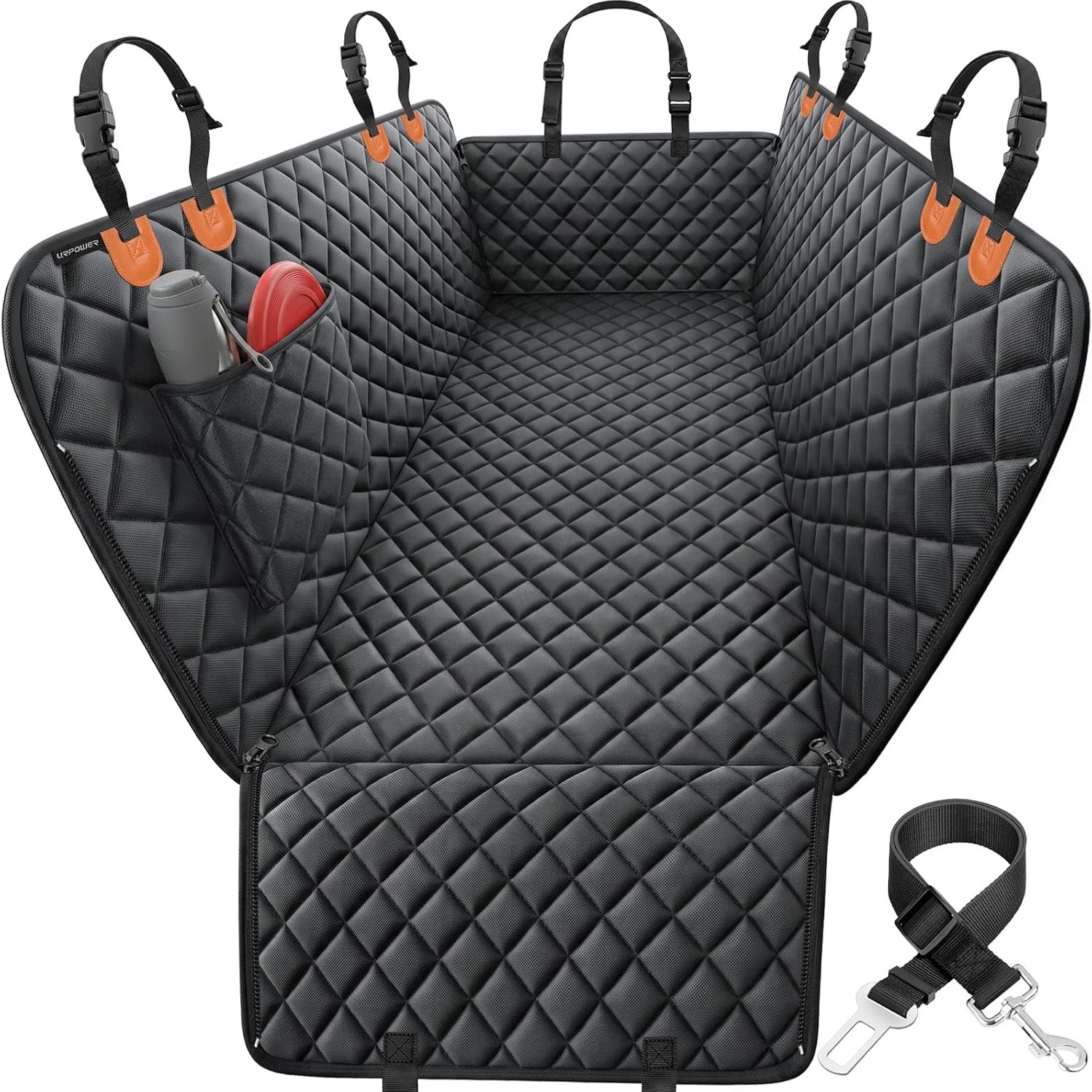
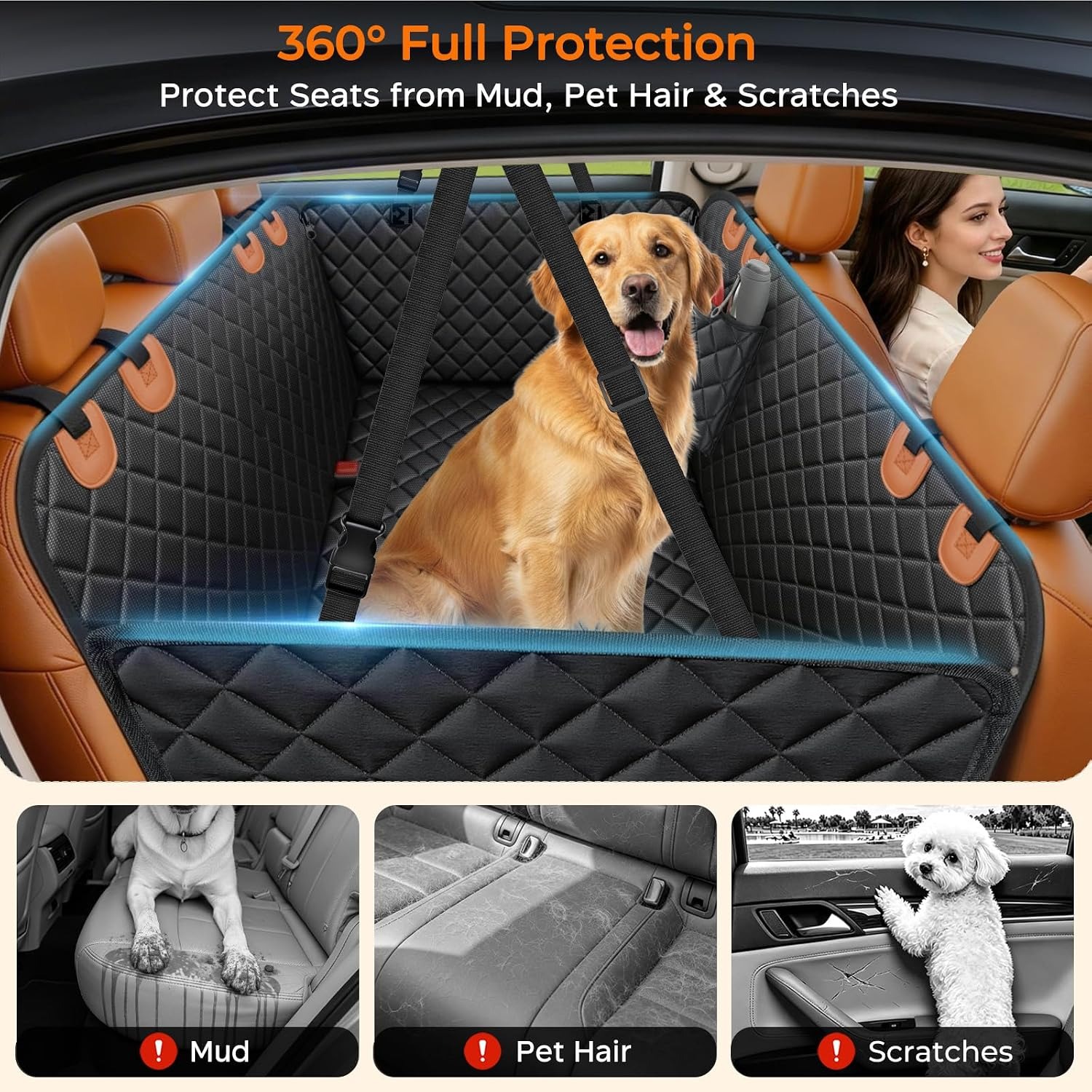
A proper car seat cover for dogs solves the problem differently. Instead of covering part of the seat loosely, it anchors to the headrests and the seat crease and covers the whole bench, the seat back and, with this one, the inside of the doors too. The dog gets a defined space. You get a layer you can pull out and throw in the machine.
How this cover works
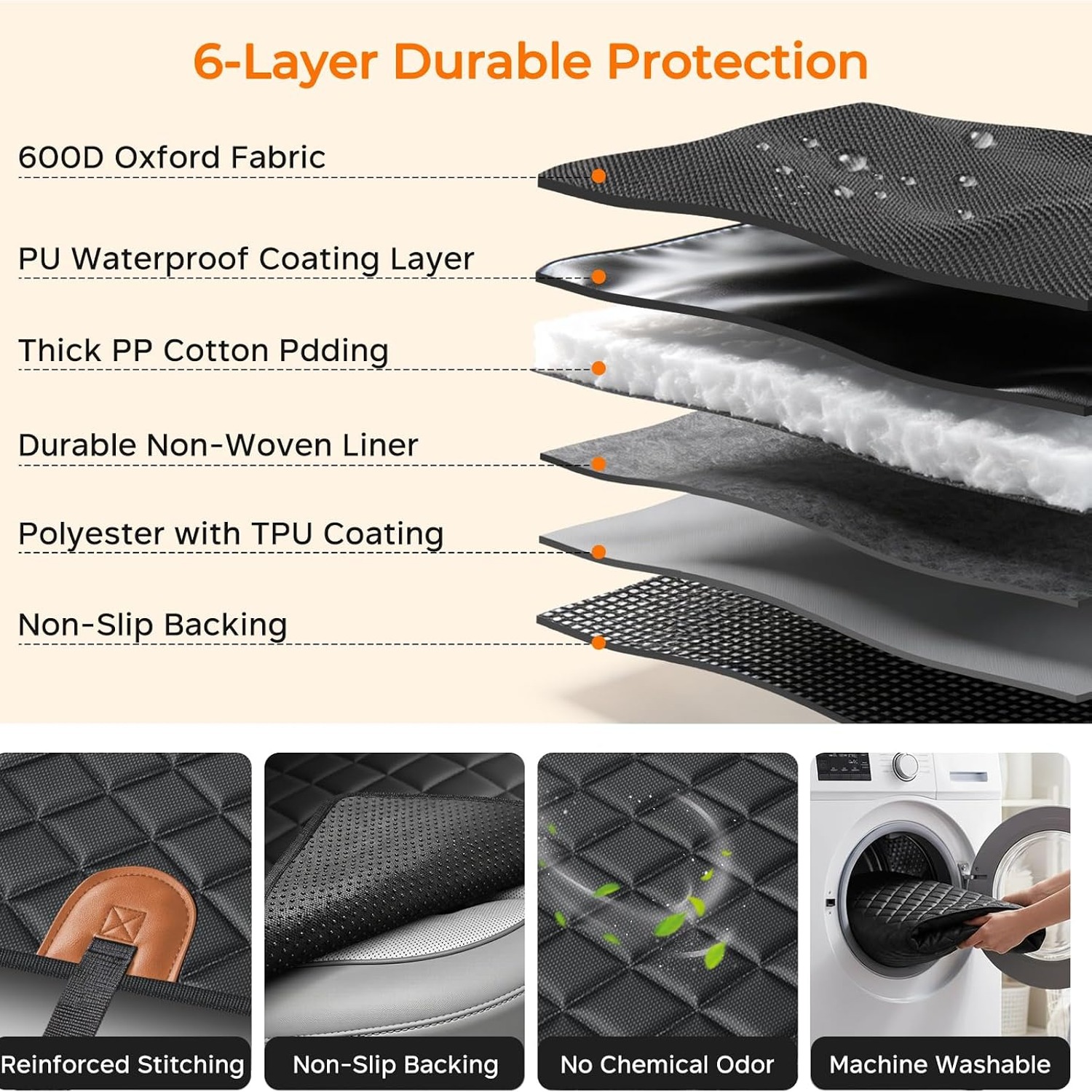
The body is 600D Oxford fabric in a four-layer build. The 600D number refers to the thickness of the yarn, and it is the sort of fabric you find in luggage and work bags rather than in soft furnishings. The listing describes it as waterproof and scratch resistant, which is the pairing you want: water needs to sit on the surface long enough for you to wipe it, and claws need to slide rather than catch.
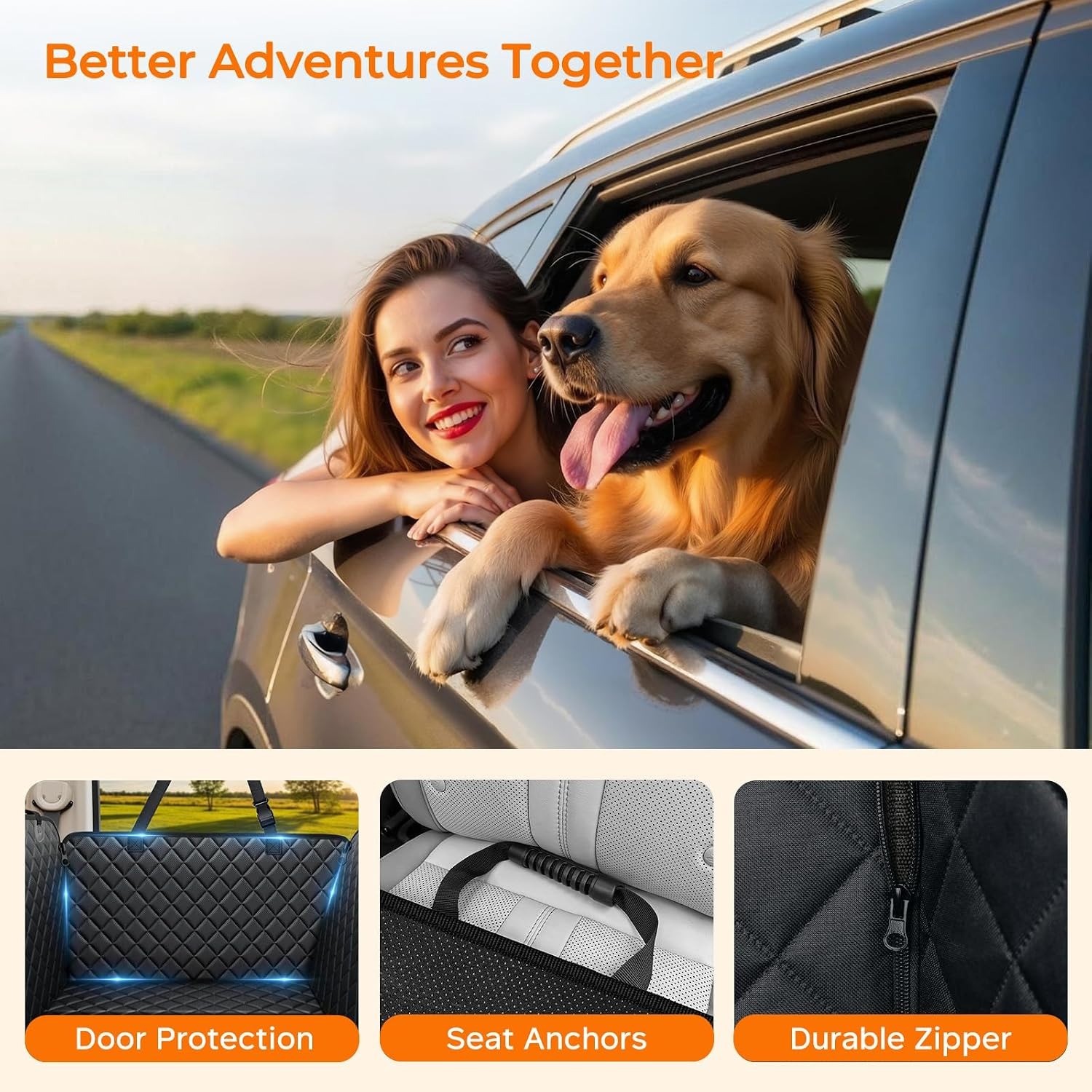
Four anchoring points hold it in place. Adjustable straps loop over the front and rear headrests, seat anchors push into the gap between the base and the backrest, a non-slip backing grips the upholstery, and two hook-and-loop openings let seat belts pass through. The listing calls this four levels of protection, and the practical effect is that the cover does not creep forward every time you brake.
Then there are the side flaps. These hang down over the door cards, which is the part of the car most dog covers ignore. A dog standing up to look out the window puts its front paws straight onto the door trim, and that trim is usually soft plastic or cloth. The flaps take that abuse instead.
The zipper detail that matters more than it sounds
Each side flap has an up and down zipper. On paper that reads like a minor feature. In practice it changes who can use the cover.
A deep hammock has a raised side. For a fit young dog, that is nothing. For a twelve-year-old Labrador with stiff hips, or a short-legged breed, or a dog recovering from surgery, it is a wall. The usual workaround is lifting, which is unpleasant for both of you and not always possible.
Unzip the flap and the side drops open. Your dog steps in at bench height, you zip it back up, and the hammock is a hammock again. If you have an older dog, this is the single best reason to pick a cover with zippered flaps over a plain one.
Three setups, one cover
The hammock setup clips the front edge to the front headrests, so the cover slopes from the back of the front seats down to the rear bench. The middle sags into a shallow trough. Dogs stay on the bench and cannot slide into the footwell when you stop. This is what most owners use for a single dog on a long drive.
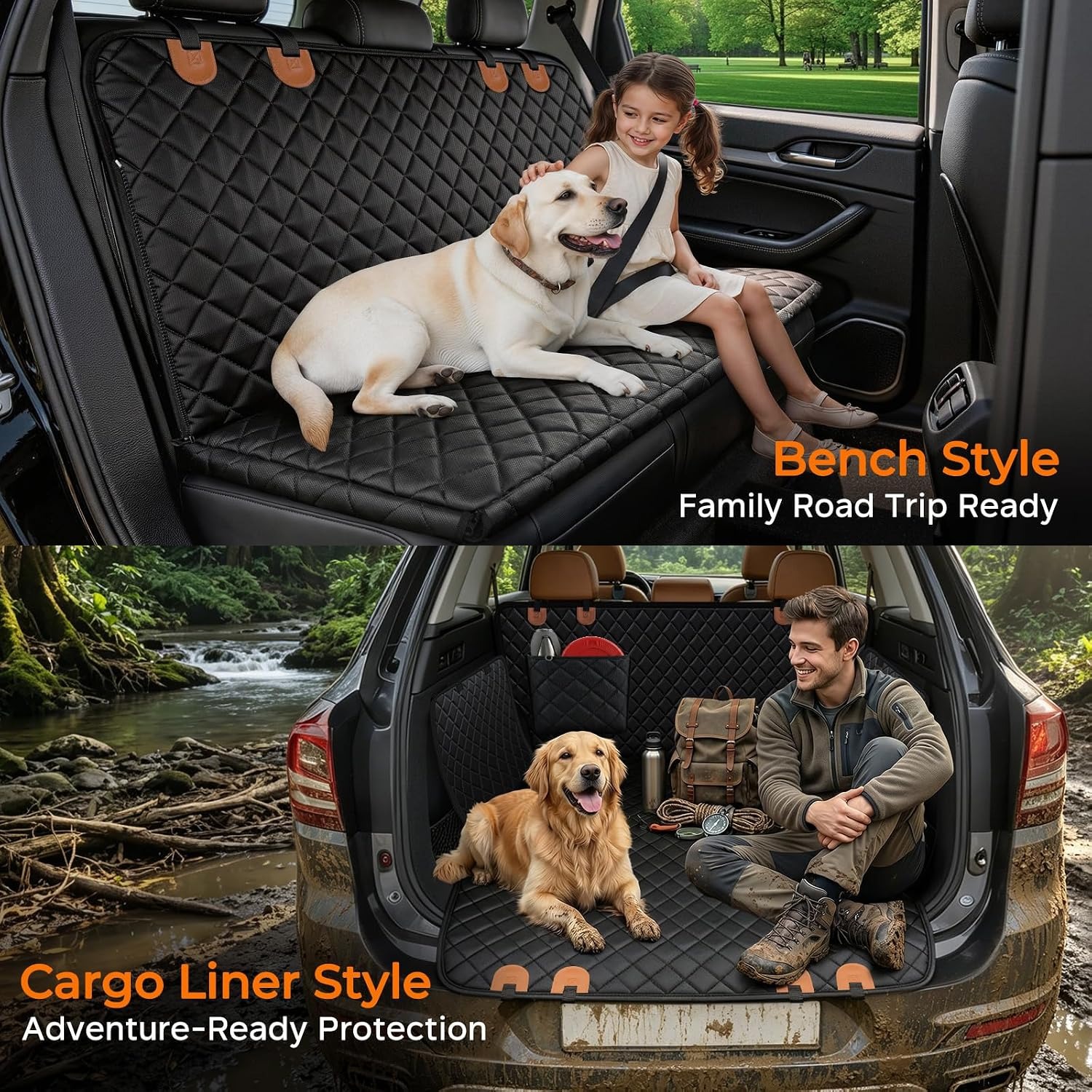
The flat bench setup drops the front clips so the cover lies across the seat like a fitted blanket. You lose the footwell protection but gain room. This suits two dogs, a big dog who likes to stretch, or a nervous dog who does not like the enclosed feeling of a hammock. It is also what you want when a human needs to sit in the back, with a belt threaded through one of the hook-and-loop openings.
The cargo liner setup moves the cover into the boot. In an SUV or estate, that is often where the dog travels anyway. The same waterproof fabric does the same job behind the rear seats.
Being able to switch between these without buying a second product is the quiet value here. Needs change. A puppy who travels in the boot at six months is a different proposition at four years.
Who it suits
If you have a dog and a car, you are the target. More specifically, it earns its keep fastest for people with leather or light-coloured upholstery, people who do beach or forest walks, people with a dog who drools or gets car-sick, and anyone who sells cars and cares about resale condition.
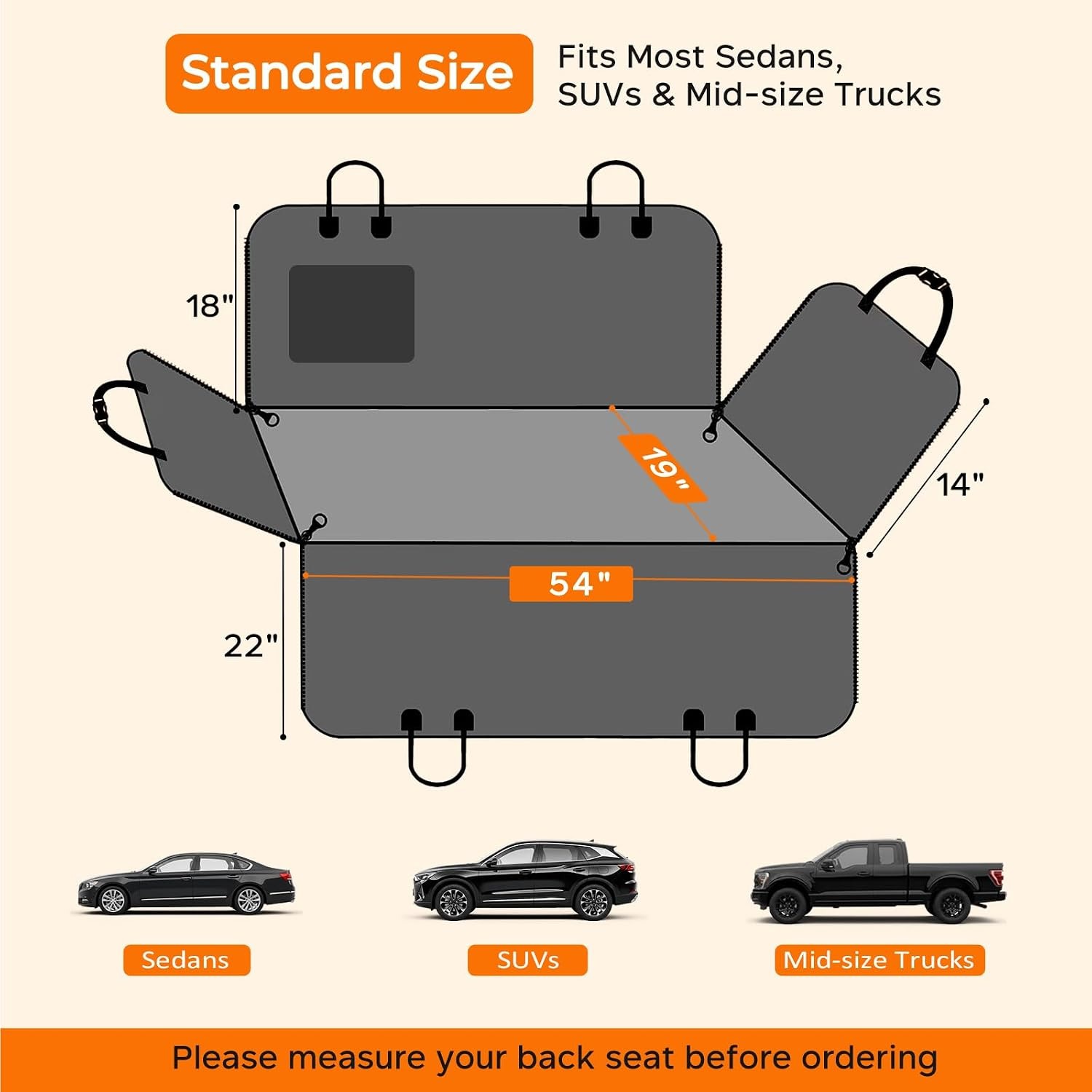
It is a universal fit, but universal has limits. The listing asks you to confirm your back seat length is close to 137 cm (54 in). Most sedans and mid-size SUVs land in that range. Very small city cars will have excess fabric bunching at the sides, and full-size trucks with wide benches may leave gaps at the edges. Measure before you order. It takes thirty seconds with a tape measure across the bench from door to door.
How to choose between covers
A few things separate a cover that lasts from one you replace in a season.
Fabric weight is the first. Thin polyester covers feel fine in the packet and go thin at the seams after a few washes. A heavier Oxford weave handles repeated washing and claws better.
Anchoring is the second. A cover with only headrest straps will slide. You want something gripping the seat crease as well, plus a backing that does not skate on leather.
Door protection is the third, and it is the one people forget. Seat damage is visible, so everyone thinks about it. Door card damage happens at nose height and nobody notices until the scratches are set in.
Washability is the fourth. If a cover cannot go in a machine, you will clean it less often than you should. This one is machine washable, which is the realistic standard.
Looking after it
Treat it like a piece of outdoor gear and it will last. Shake it out after muddy trips, vacuum the hair before it works into the weave, and wipe wet mess straight away rather than letting it sit against the backing.
For washing, use a gentle cycle with cold water and a mild detergent. Avoid bleach, and avoid fabric softener, which coats fibres and can interfere with how water beads on the surface. Hang it to dry rather than putting it through a hot tumble dryer, and let it dry fully before it goes back in the car. Damp fabric folded into a boot is how smells start.
The cover is 1.17 kg and folds down to around 40 x 38 cm packed, so storing a spare or keeping it in the boot between uses is easy.
The short version
A car seat cover for dogs is one of the cheapest ways to protect a much more expensive thing. This one uses 600D Oxford fabric in a four-layer waterproof build, anchors at the headrests and seat crease with a non-slip backing, and adds side flaps with zippers so the doors are protected and older dogs can get in without being lifted. A dog seat belt is included. It switches between a hammock, a flat bench cover and a cargo liner, and it goes in the washing machine.
Check that your back seat is close to 137 cm (54 in) wide, pick the setup that suits your dog, and you can stop thinking about the back seat entirely.