



The complete guide
Lawn Levelling Made Simple: How to Use a Lawn Level Rake
The problem with a bumpy lawn
A lawn can be green, healthy and still unpleasant to walk on. You step into a dip you did not see, the mower scalps a high spot down to brown stubble, and puddles sit for days in the same two places after rain. None of that is a grass problem. It is a ground problem, and no amount of fertiliser will fix it.
Unevenness creeps in slowly. Soil settles after building work. Worms and ants push up casts. Roots rot out and leave a hollow. Pets wear tracks in the same lines. Freeze and thaw cycles heave the surface in winter. Over a few years, all of it adds up to a surface that reads flat from a distance and feels like a bad road underfoot.
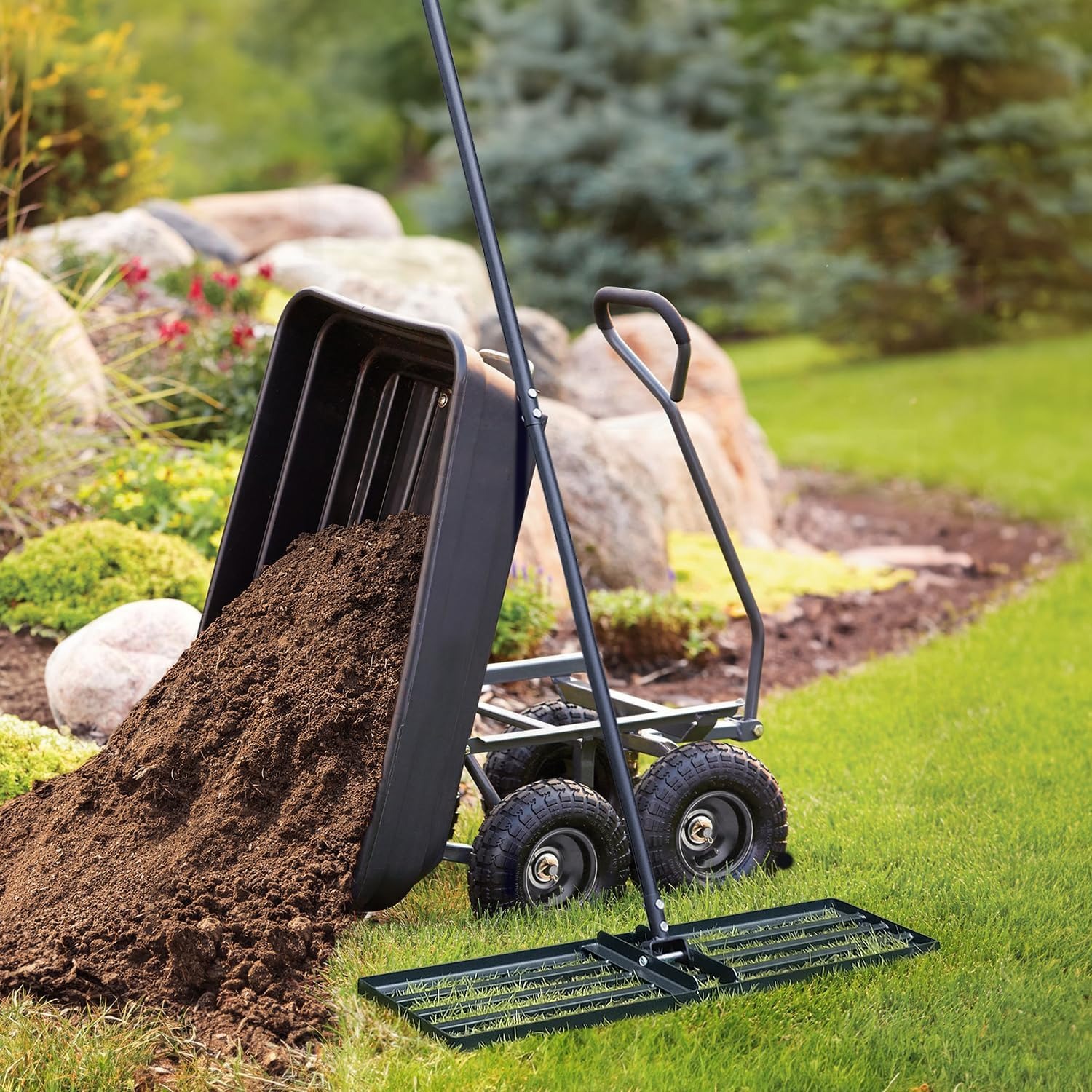
The fix is topdressing and levelling. You spread a thin layer of sand or a sand and soil mix over the lawn, then work it in so it drops into the hollows and leaves the high points alone. That is the whole job. The tool that does it properly is a lawn level rake.
How a levelling rake works
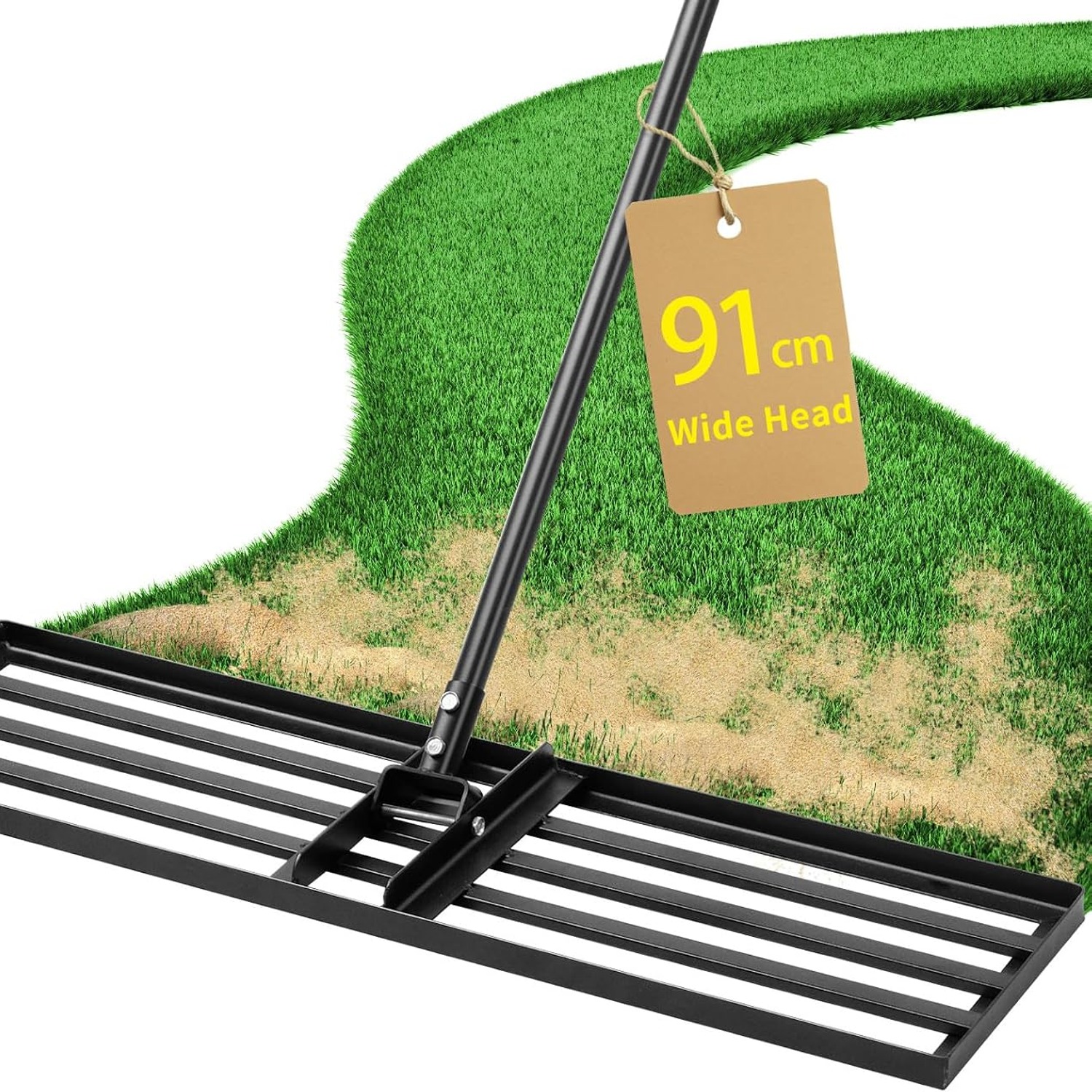
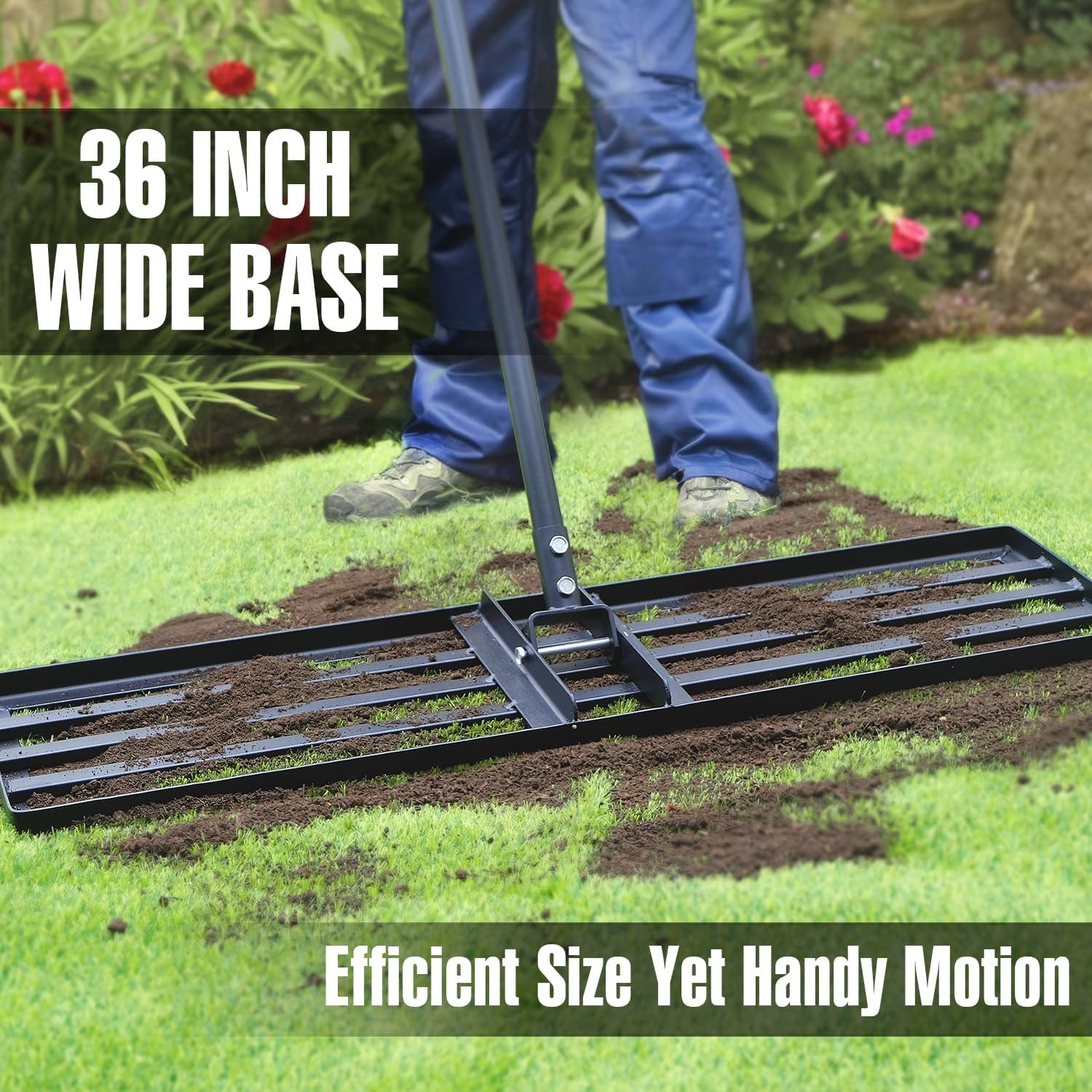
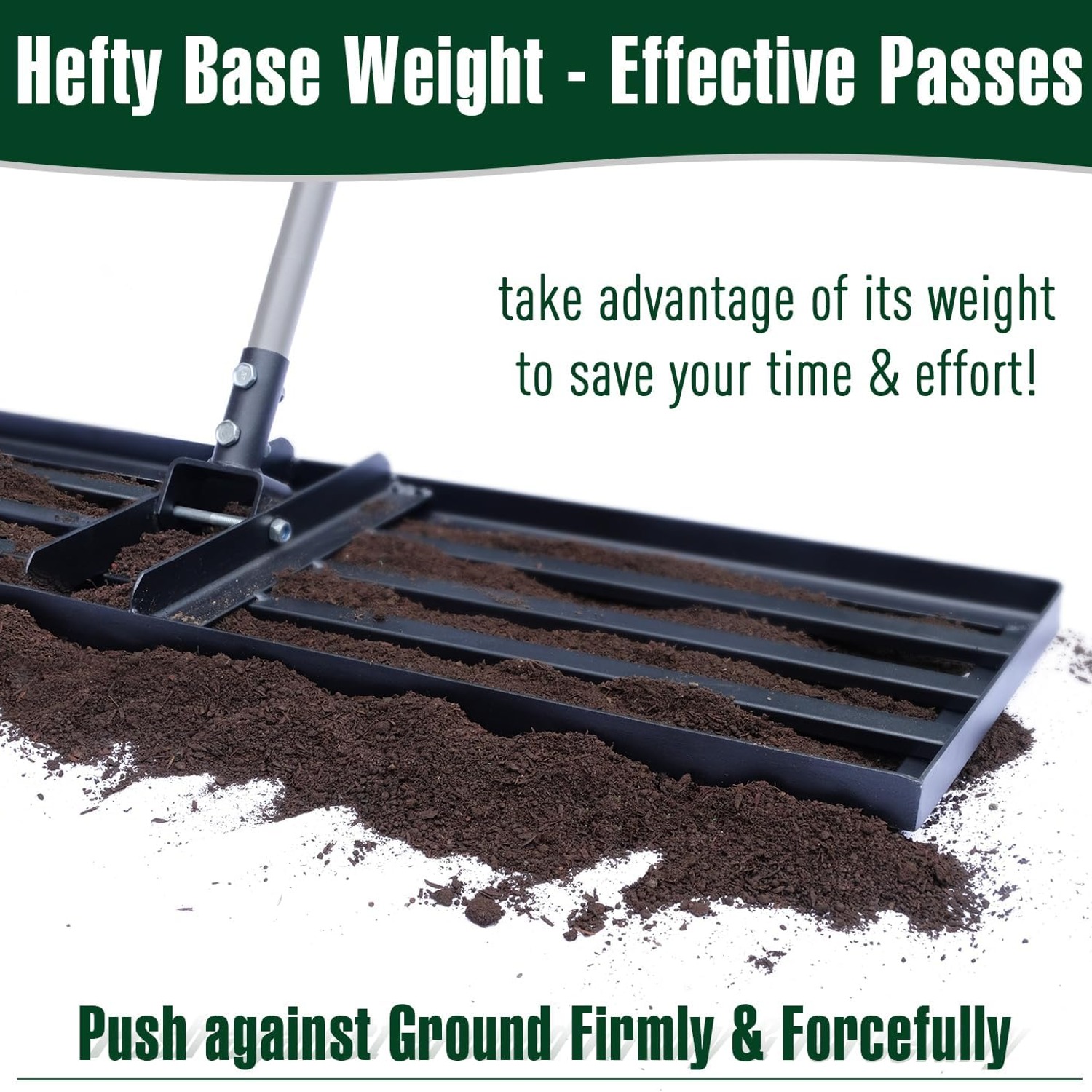
It looks simple, and it is. A flat steel plate, usually a grid, on the end of a long handle. You push and pull it over the lawn, and the plate does two things at once. It shears off the top of any pile of material you have dumped, and it vibrates the loose material down between the grass blades.
That second part matters more than people realise. You are not trying to cover the grass. You are trying to get sand into the gaps at soil level while the leaf stays visible on top. A light rake just slides over the canopy. A heavy one sits down into it and shakes material through.
This is where the weight of the tool earns its place. At 5.63 kg, most of it in the steel base, this rake presses down on its own. You guide it rather than force it. That saves your lower back, which is the part of you that usually gives up first on a levelling job.
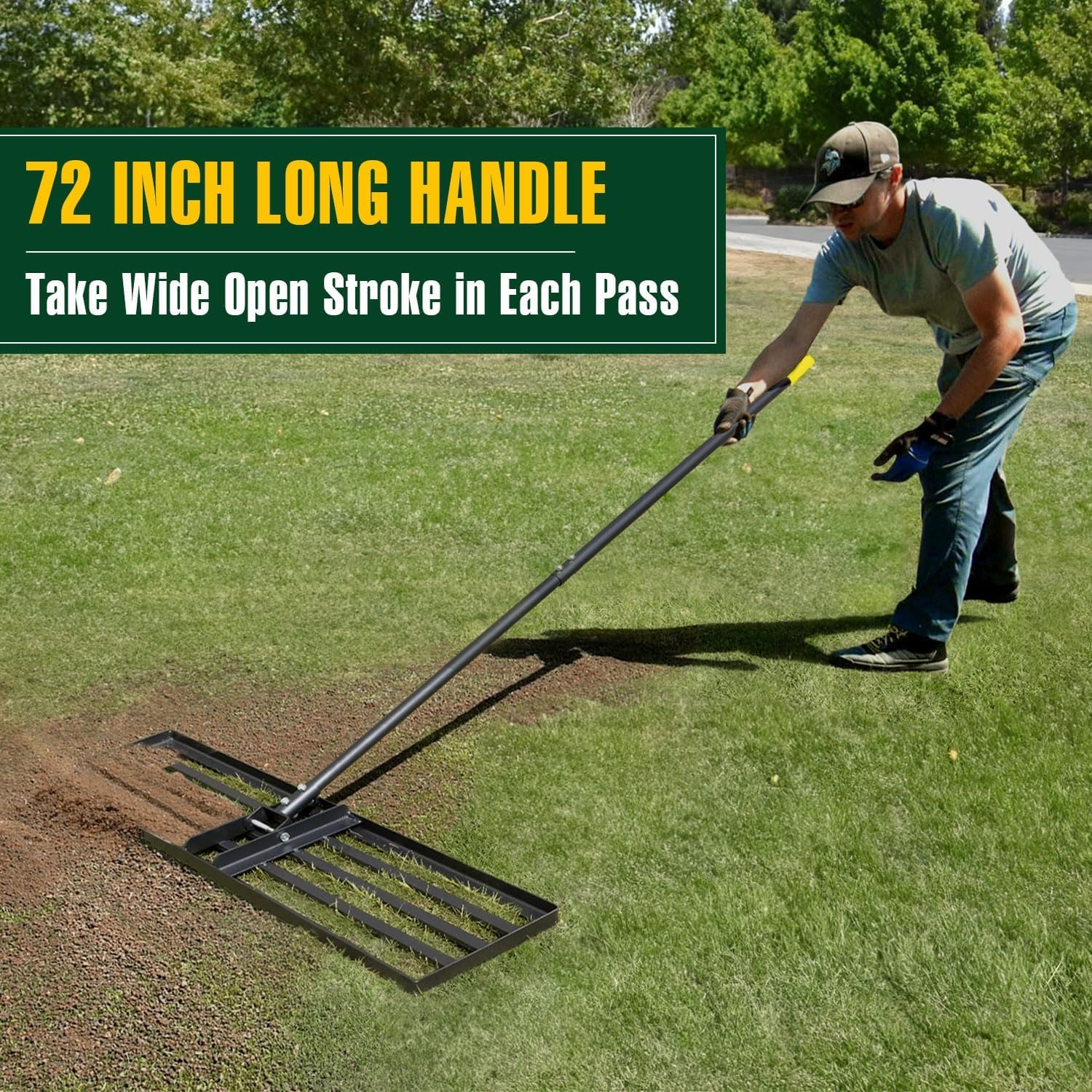
The head width is the other lever. At 90 cm (36 inches), you clear a wide strip each pass. Fewer passes means fewer seams between passes, and seams are where ridges form. It is a genuine difference in both time and finish quality compared to a narrow garden levelling rake.
Who this suits
If you have a small courtyard lawn and one or two shallow dips, a stiff landscape rake and some patience will probably get you there. This tool starts paying off once you have real area to cover or real unevenness to deal with.
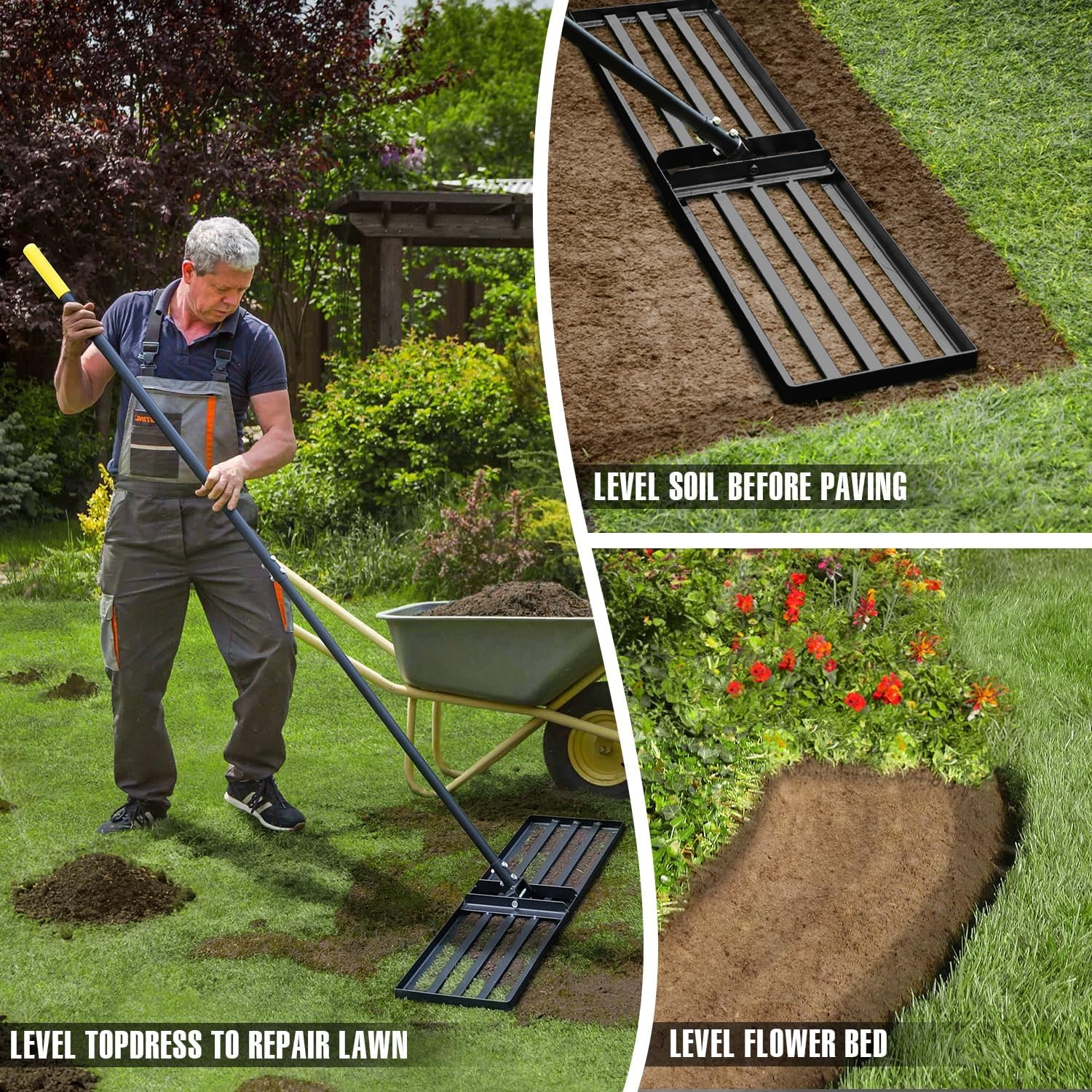
It suits homeowners who topdress every year as part of a routine, people repairing a lawn after trenching or building work, anyone growing a fine turf lawn where a smooth surface is the whole point, and people who maintain a putting green or a cricket strip at home. Groundskeepers and landscapers use the same tool for the same reasons, just more often.
It also suits anyone building a new lawn from scratch. Levelling soil before you lay turf or sow seed is far easier than levelling it afterwards, and the flat plate gives you a reference surface that a tined rake never quite manages.
How to choose the right one
Three things separate a good levelling rake from a frustrating one.
Width comes first. Too narrow and you spend the afternoon walking laps. Too wide and you cannot turn in a normal garden or steer around a tree. The 90 cm size sits in the practical middle of that range for home use.
Weight comes second. A light aluminium head is easier to lift into the ute, but it skims. You end up pushing down with your arms the whole time, and that is exhausting. A heavy steel head does the pressing for you. The trade-off is that it is a two-hand tool and it is not something you swing around casually.
Build quality comes third, and it shows up at the joints. The connection between the handle and the plate takes every bit of force you put through the tool. Thin, thin-welded joints flex and eventually fail. This one uses thickened connecting joints and a powder coated surface over alloy steel, which addresses both the flex and the rust.
Handle length and grip round it out. A long handle lets you stand straighter and take a wider stroke. A rubber grip stops your hands sliding when they are damp, which they will be.
Getting the job done
Start by mowing short. The listing recommends grass at 4 cm (1.5 inches) or less, and that is good advice. Long grass traps sand on top of the leaf where it does nothing useful.
If you can, aerate first. Core aeration leaves holes that the topdressing drops into, which improves drainage and root depth at the same time as levelling the surface. It is extra work, but it turns a cosmetic job into a structural one.
Then spread. Tip small piles of your mix around the area rather than one big heap. Washed sand is the usual choice for levelling because it does not compact into a crust. A sand and soil blend adds a bit of organic matter if your soil is poor.
Now rake. Work one section at a time, pushing and pulling the plate over the piles until they flatten and disappear into the turf. Then come back across that same section at roughly a right angle to your first direction. Cross-raking is what catches the ridges you cannot see from directly above.
Keep each application thin. The grass tips should still be showing when you finish. If the lawn looks beige rather than green with a dusting, you have put down too much, and you need to rake more off before it smothers the plant.
Water lightly afterwards to settle everything in. Then leave it alone. Give the grass two or three weeks to grow up through the layer before you mow again, and longer before you consider a second round.
Deep hollows need patience. You cannot fill a 5 cm dip in one go without killing the grass in it. Do a thin layer, wait for recovery, do another. Two or three rounds across a growing season will bring most dips up without ever leaving a bare patch.
Looking after the tool
Sand and wet soil are hard on steel. The good news is that care takes about two minutes.
Hose the head down before the material dries. Wet soil comes off with water, dried clay needs a scraper. Let the tool dry fully, then store it under cover. Hanging it on a wall beats leaning it in a damp corner.
At the start of each season, check the joints where the handle meets the plate and tighten anything that has worked loose. If you find a chip in the powder coating, dry it off and touch it up so moisture cannot get underneath and start lifting the rest.
That is the whole maintenance routine. A steel levelling rake that is kept dry and clean will outlast several plastic garden tools.
The short version
A lawn level rake fixes the one problem fertiliser and watering cannot touch: a surface that is not flat. You spread a thin layer of sand or topdressing, work this 90 cm steel head back and forth, and the material settles into the dips while the grass keeps growing through.
The width means fewer passes. The 5.63 kg weight means the tool presses down instead of you. The long handle and rubber grip mean you finish the job without a sore back. Mow short first, keep each layer thin, cross-rake every section, and repeat over a season if the dips are deep.
Do that once a year and you end up with a lawn that is as good to walk on as it is to look at.