


The complete guide
Door Stop Alarms, A Practical Buyer's Guide
The problem with a locked door
A lock is binary. It holds or it fails, and you only find out which when it matters. That is fine most of the time at home, where you know the door, the frame and the hardware. It is less fine in a hotel room you walked into two hours ago, in a short-stay apartment where you have no idea how many keys are floating around, or in a ground-floor flat where the front door has seen better decades.
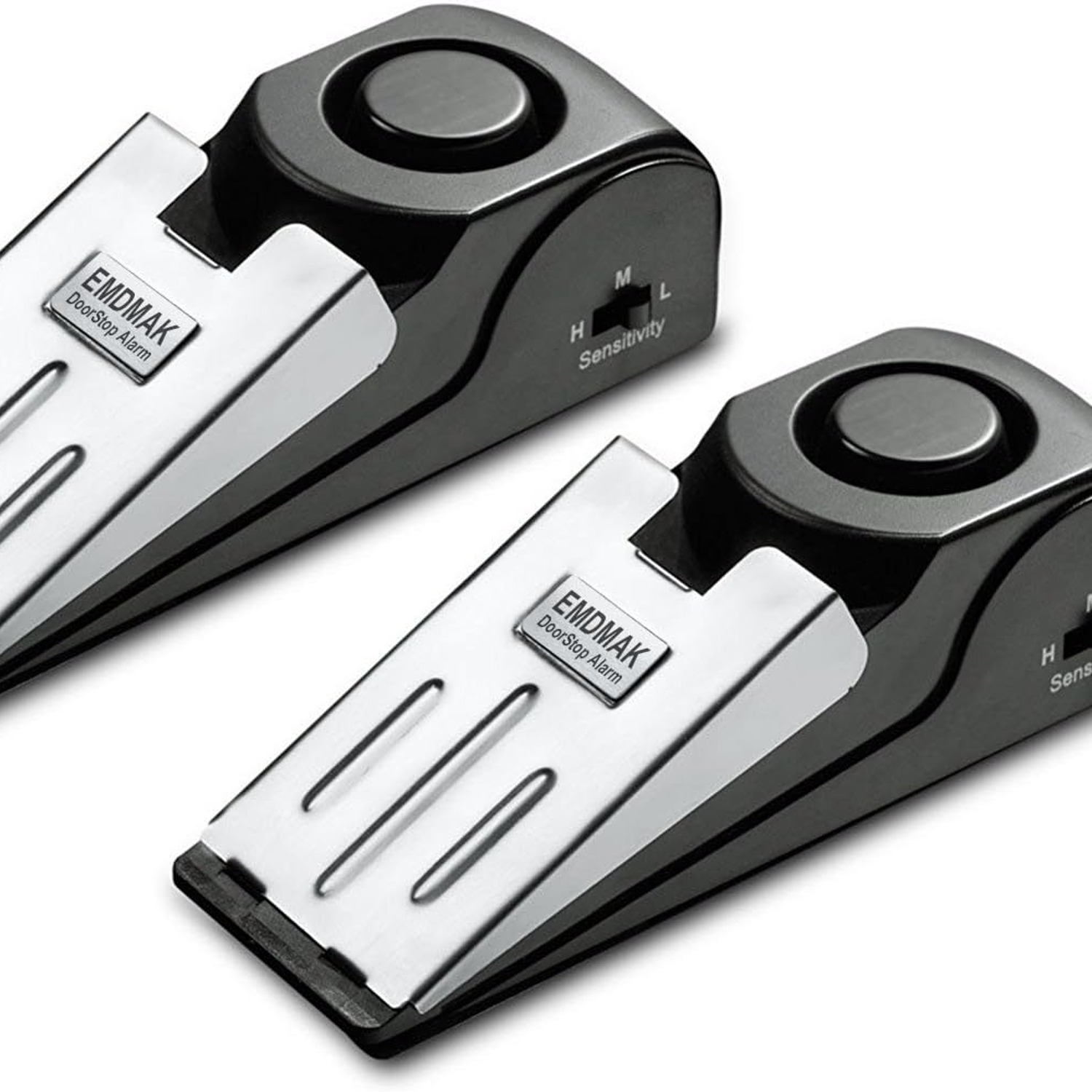
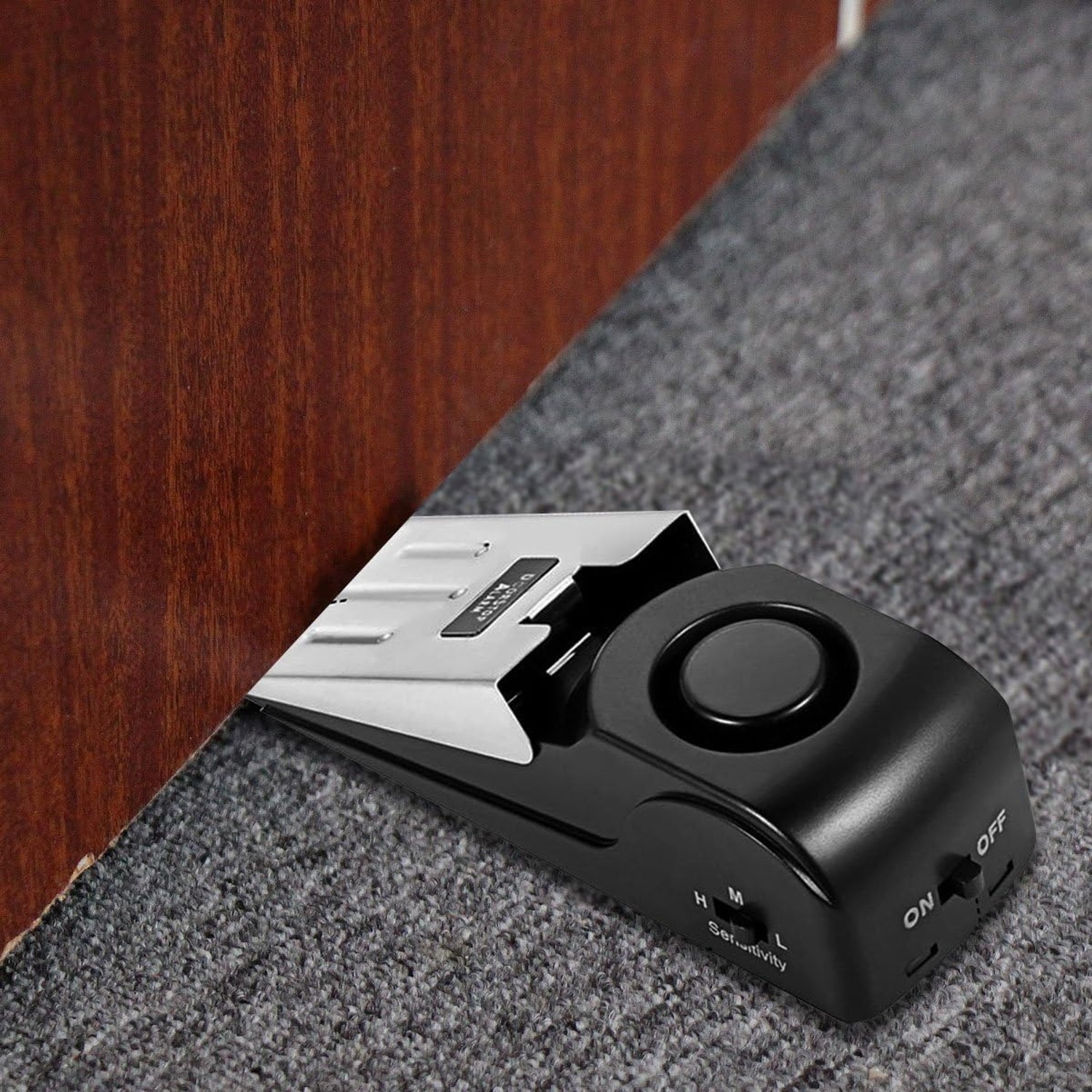
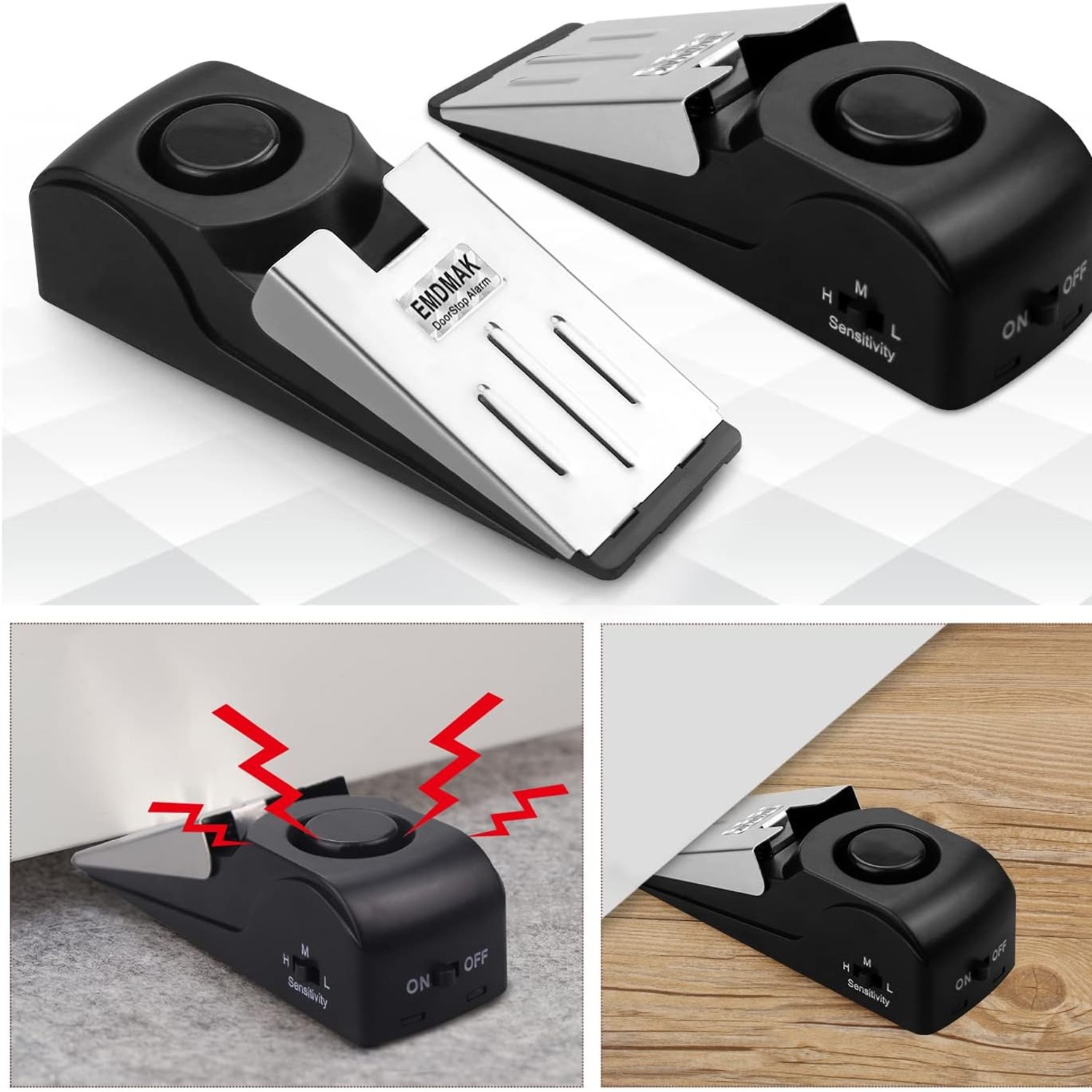
What is missing in all those situations is warning. Not a smart camera, not a monitoring contract, just something that tells you the second a door starts to move. A door stop alarm does that in the dumbest, most reliable way possible. It is a rubber wedge with a siren inside. Push it under the door, switch it on, and if the door moves against it you get a 120db noise and about one second of head start instead of none.
How a door stopper alarm actually works
There are two things going on at once, and both matter.
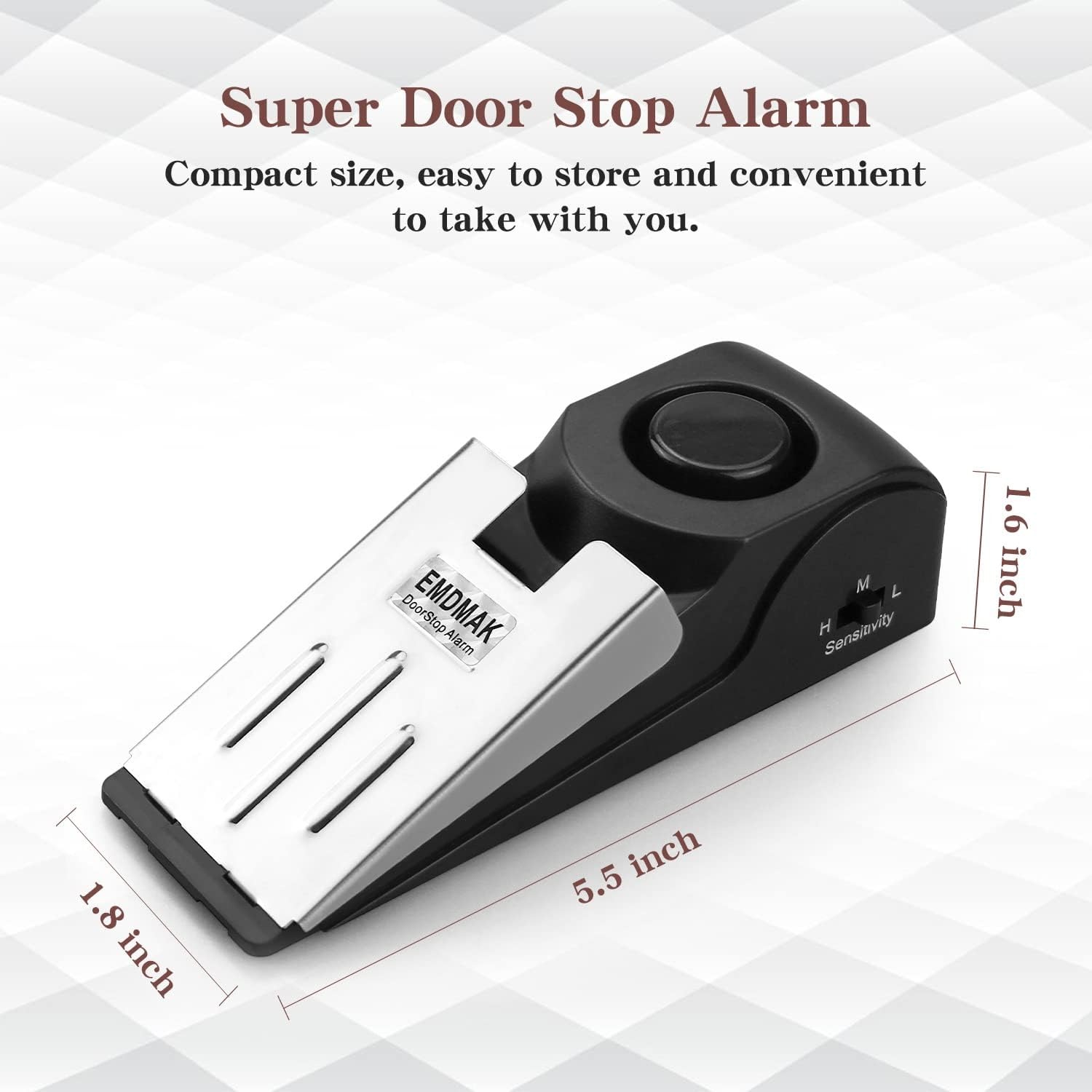
The first is mechanical. The wedge is a tapered rubber block, 14 cm long, 4.6 cm wide and 4.1 cm thick at the back. When you slide it under a closed door, the taper forces the top of the wedge up against the bottom edge of the door and the base down against the floor. The harder someone pushes, the harder the wedge jams. The underside uses high damping rubber, which is the part that stops the whole thing just sliding across a polished tile floor.
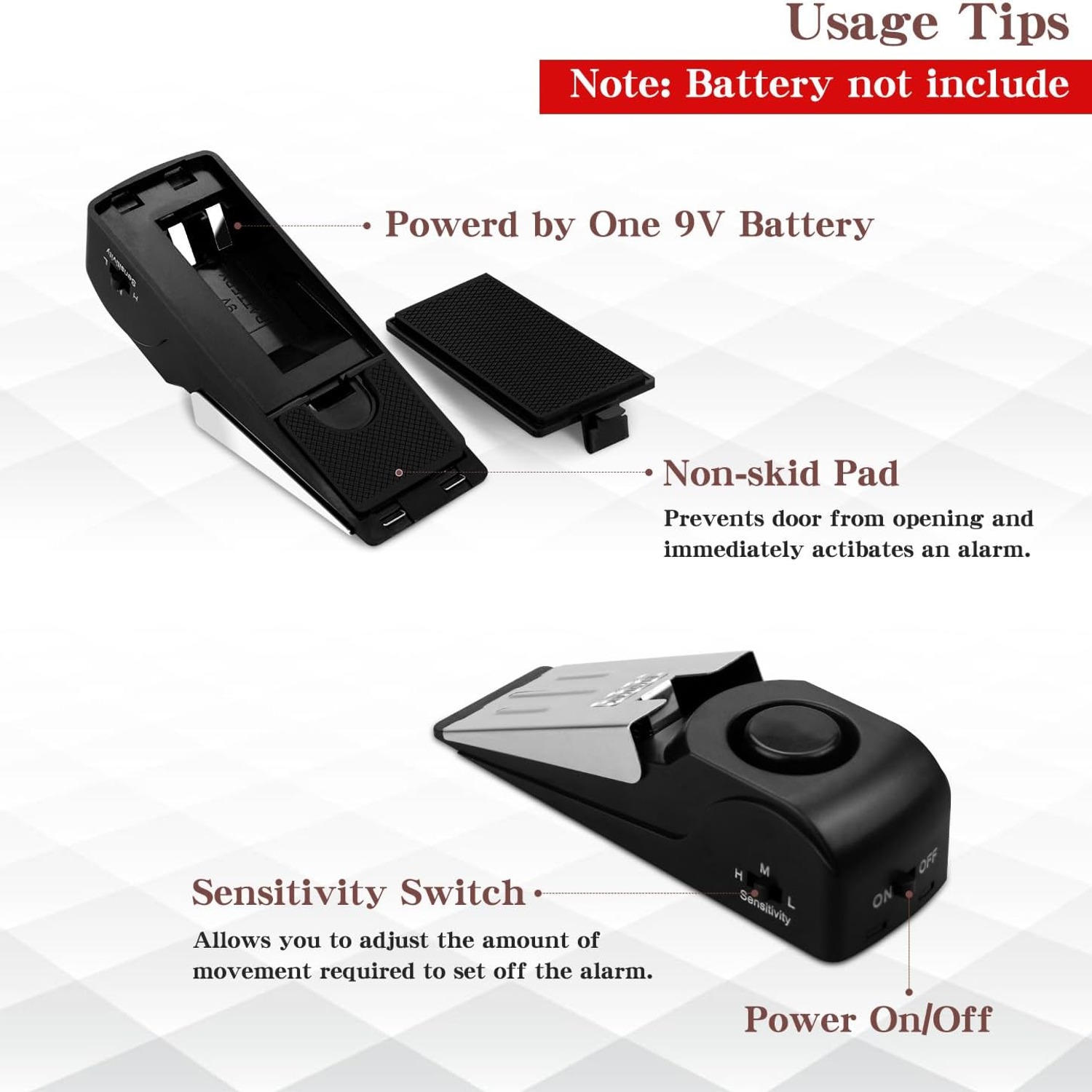
The second is electronic. Inside the body is a trigger that detects movement, plus a siren rated at 120db. When the door shifts, the alarm sounds. There is no delay, no code to enter, no phone involved. One 9V battery runs the unit, and the listing says that battery lasts about a year in normal use. It is not supplied, which is the one thing people forget, so buy a pair with the pack.
Three sensitivity levels sit between those two functions. High fires on the smallest movement. Low needs a real push. That range exists because doors are wildly different. A heavy, well-sealed hotel fire door barely moves when someone tests the handle, so it needs a sensitive setting. A hollow bedroom door in a draughty house shifts on its own, so it needs a duller one.
Who this suits
Travellers are the obvious group. Two wedges weigh under 200 g together and pack flat beside a charger. If you stay in unfamiliar rooms often, a travel door security alarm is one of the few genuinely useful bits of kit that does not need setting up each time.
Renters are the second group. Anything that involves drilling, screwing or sticking to a frame is off the table in most tenancies. This needs none of that. Same for students in halls and anyone in a shared house who wants a bedroom door that reports back.
People who live alone benefit in a different way. It is less about intruders and more about sleeping properly. Knowing that the front door cannot be nudged open without waking you is worth something on its own.
And then there is the plain practical use. Switch the alarm off and it is a door stopper. A decent one, because the rubber grips. Propping open a kitchen door on a hot day and arming a hotel door at midnight are not jobs you would normally give the same object, but here they are.
Choosing one, and what to check first
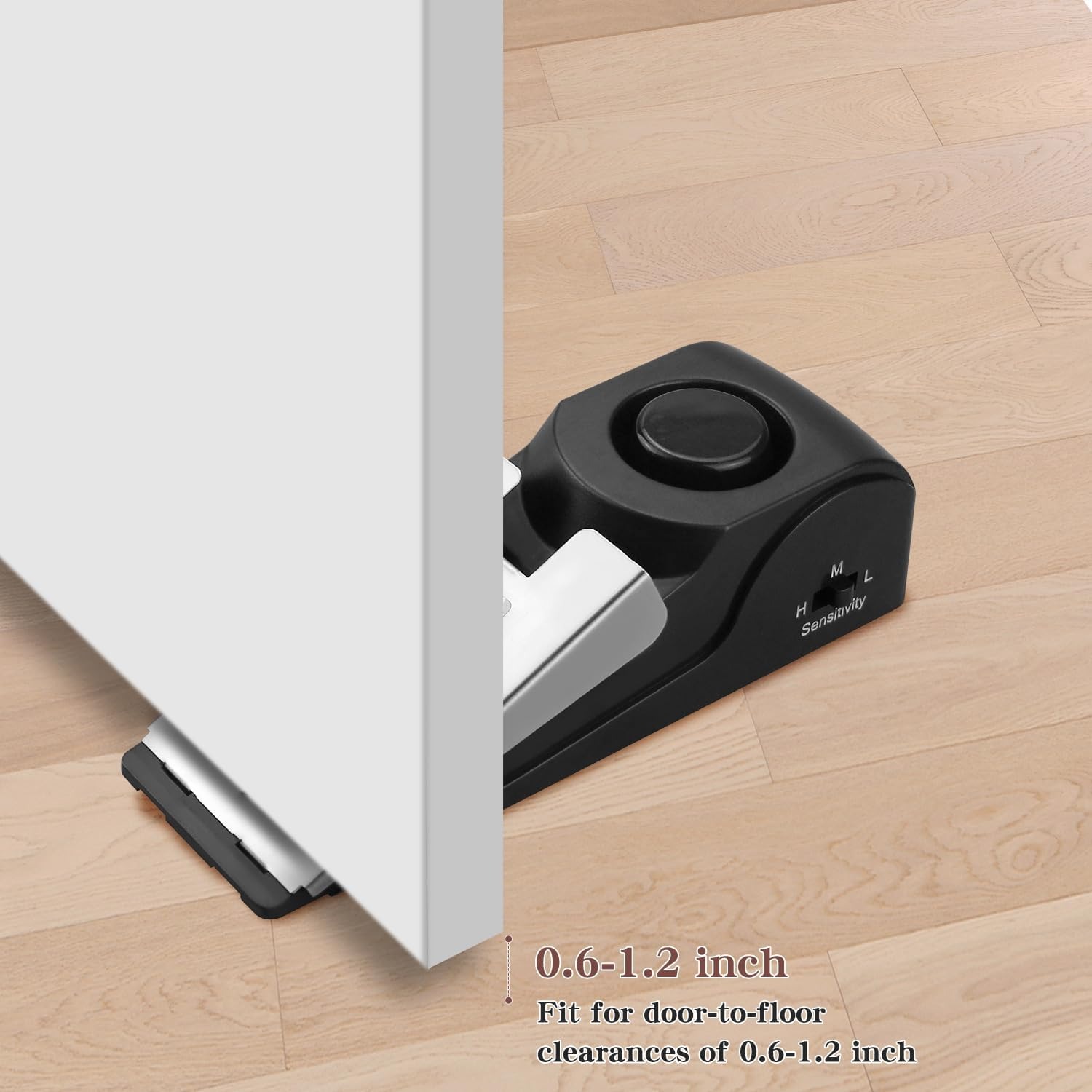
Measure the gap under your door before anything else. This design fits a gap between 0.6 in and 1.2 in, roughly 1.5 cm to 3 cm. Lay a ruler flat and slide it under the closed door. If the gap is under 1.5 cm the wedge will not go in far enough to bite. If it is over 3 cm the wedge slides too far under and loses its angle.
Check which way the door opens. Wedges only work on inward-opening doors, because you need to be on the side the door swings towards. Most front doors in apartments and almost all hotel doors open inward, so this is rarely a problem, but it is worth two seconds of thought.
Look at the floor surface. Smooth tile, timber, vinyl and short loop carpet all work well with a damping rubber base. Very deep pile carpet is the one to watch, because the pile compresses and changes the wedge angle. Push the wedge in firmly, then pull the door towards you to test the hold.
Think about how many doors you want covered. This comes as a two-pack, which quietly solves a problem most single units leave open. One wedge covers one door. Houses and apartments usually have more than one route in.
Finally, consider noise tolerance. 120db is very loud in a small room. That is the point, but if anyone in the household is noise sensitive, or if you are in a thin-walled building, know in advance what setting it off actually sounds like. Test it once with the door closed and the alarm on low before you rely on it.
Setting it up properly
Switch the alarm off first. Open the compartment, fit a 9V battery, and close it. Slide the wedge under the closed door with the thin edge first, pushing until it feels snug and the door will not swing. Then turn the alarm on and choose a sensitivity level.
Test it. Have someone outside push the door gently, or push it yourself from the inside. If it fires on a light touch and you want that, you are done. If it fires when nobody is touching it, step the sensitivity down. If it stays silent under a firm push, step it up.
Learn where the off switch is in the dark. This sounds trivial and it is not. A siren that loud in a dark hotel room with you half asleep is a genuinely disorienting thing, and fumbling around the floor for thirty seconds is nobody's idea of a good time.
Care and upkeep
There is not much to it. Wipe the rubber with a slightly damp cloth now and then, mainly to get grit off the base so it does not scratch a soft floor. Dry it before you put it back. Never submerge it, and keep water away from the battery compartment.
If a wedge lives behind a door permanently, check the battery every few months. A year is the stated life, but cold, heat and frequent triggering all shorten it. If you are storing the pack for a season, take the batteries out.
When the wedge is in a bag, leave the alarm switched off. Otherwise every bump on a luggage belt is a potential 120db surprise for an airport handler.
Being honest about what it is
This is a wedge with a siren. It is not a lock, not a replacement for one, and nobody should treat it as making a door impossible to open. Enough force beats any wedge. What it does reliably is make the attempt loud and slow, and those two things together are what deters most opportunistic attempts and what buys you time in the rest.
Used with the existing lock and chain, it adds a real layer. Used instead of them, it is a false sense of security. Keep that distinction clear and you will get the right value out of it.
The short version
Two black rubber wedges, 14 x 4.6 x 4.1 cm each, 95.2 g apiece. They jam an inward-opening door with a floor gap of 0.6 in to 1.2 in, and sound a 120db alarm if the door moves. Three sensitivity settings, one 9V battery each (not included, lasting about a year), no installation of any kind.
If you travel, rent, live alone, or just want a bedroom door that tells you when it is being opened, it is a small amount of money for a layer you can set up in ten seconds and carry anywhere. Measure your door gap first, buy the batteries at the same time, and test it once before you need it.