

The complete guide
Garden Kneeler Buyer's Guide, How To Pick One That Actually Saves Your Knees
The real problem with gardening
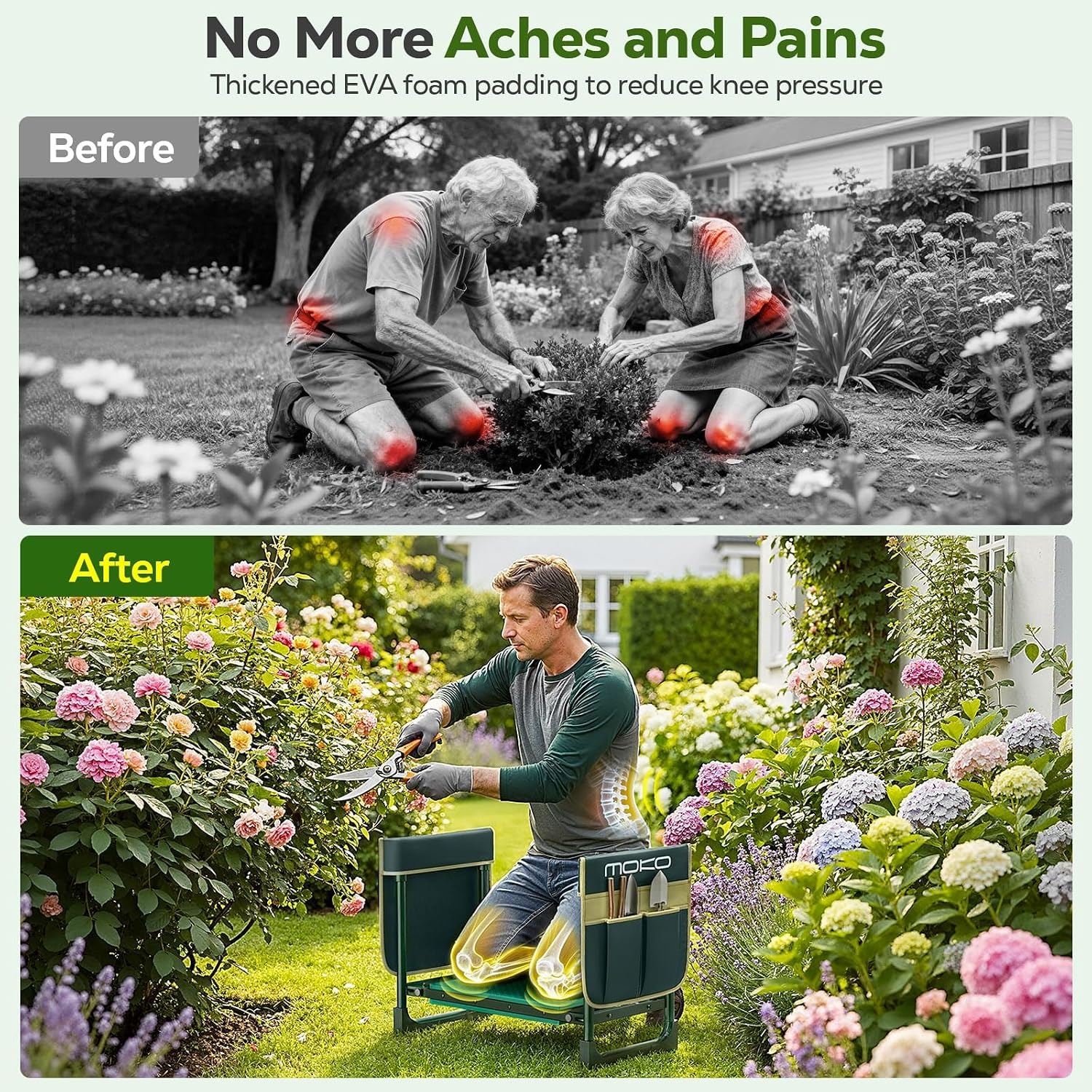
Nobody quits gardening because they stop enjoying it. They quit because of the first ten seconds after standing up. The knees, the lower back, the hips. You go out to pull a few weeds, lose an hour, and then spend the evening regretting it.
Most of that comes down to two postures. Kneeling puts your full upper body weight onto two small joints pressed against cold, hard, often damp ground. Squatting spares the knees a bit but loads the hips and calves, and it is almost impossible to hold for more than a few minutes. Neither one is sustainable for a whole afternoon.
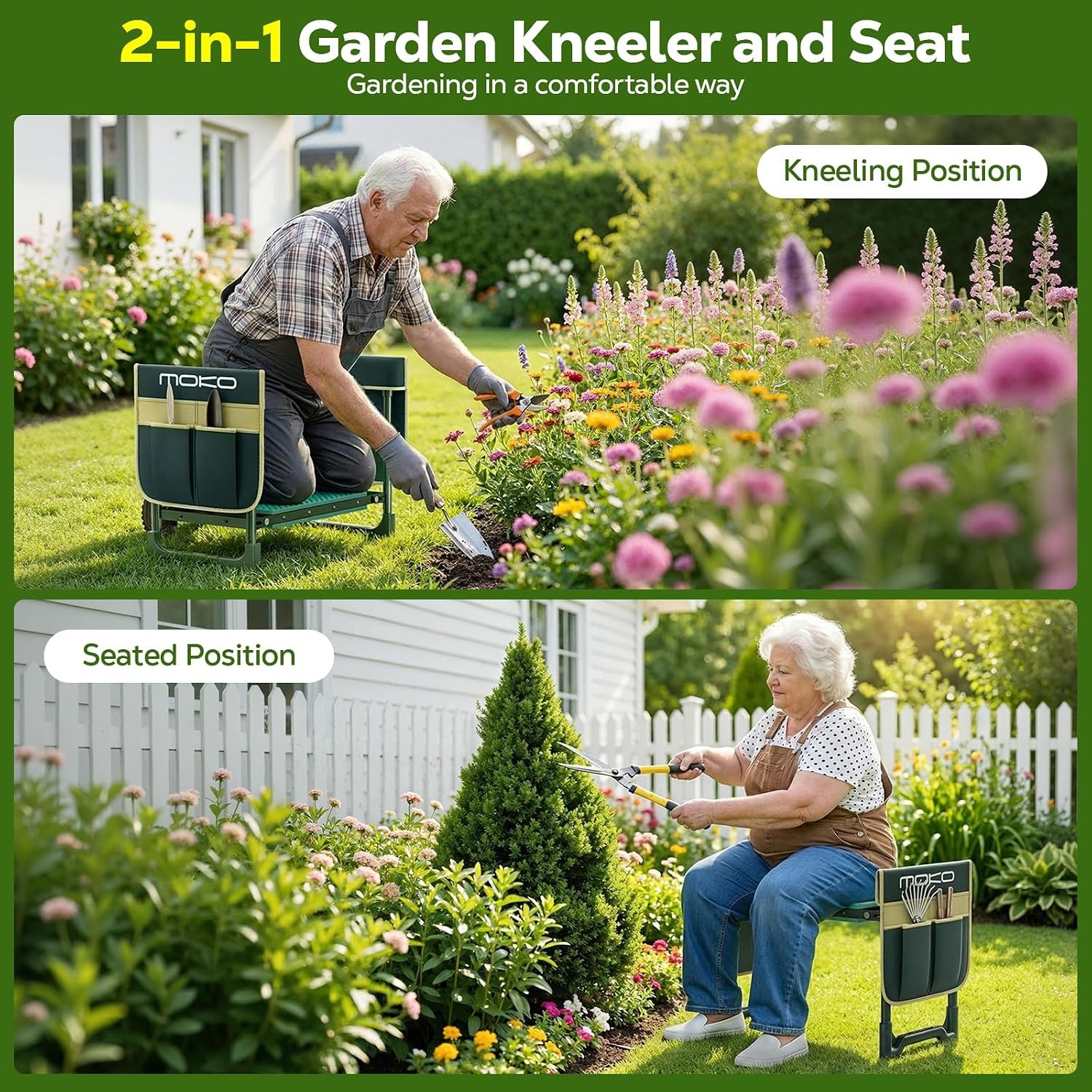
A gardening kneeler fixes this by giving you a third option, and a fourth. You get a cushioned surface to kneel on, and you get a seat at the same working height when kneeling has run its course. Switching between the two is what keeps you out there longer.
How a two-in-one kneeler works
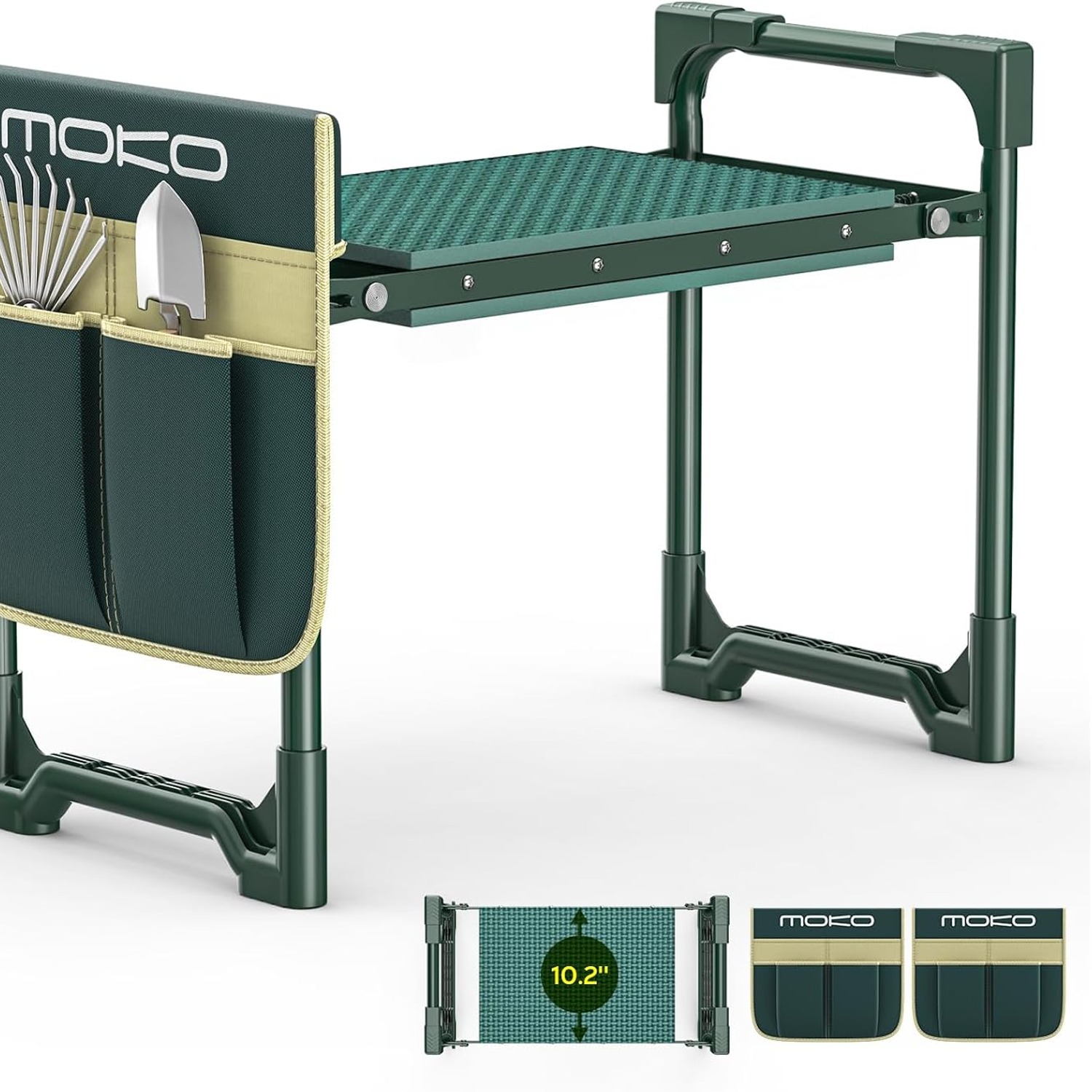
The design is simple once you have seen it. A folding frame holds a padded panel. Set it up one way and the panel sits low to the ground with two arms rising on either side. That is kneeler mode. The arms are your handles for lowering yourself down and, more importantly, for pushing yourself back up.
Turn the whole frame over and the same panel becomes a seat around 46 cm off the ground, with the former feet now acting as a low backrest or armrests depending on how you sit. The working height is similar, so you can carry on with the same job without stretching or crouching.
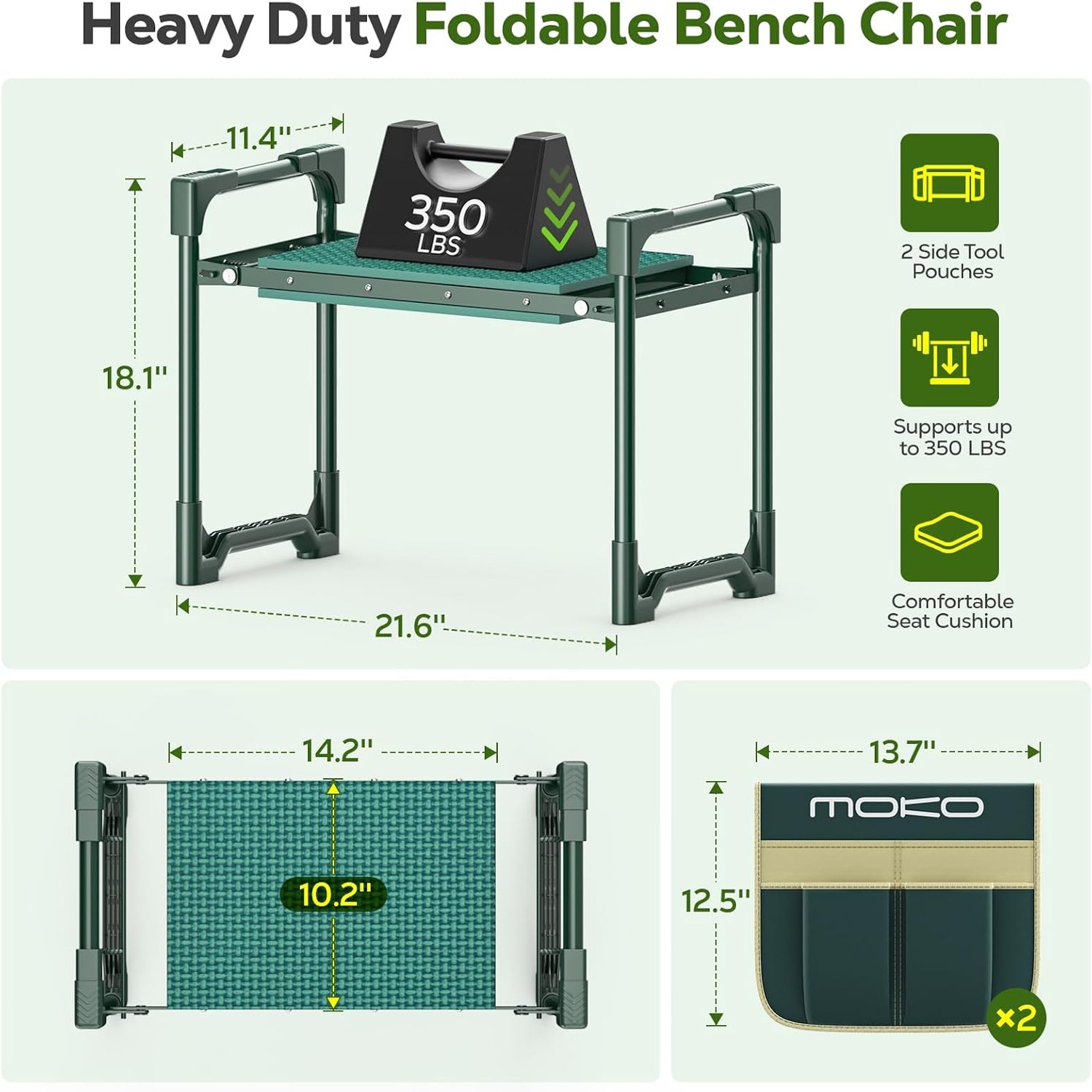
This model measures 55 x 29 x 46 cm when it is open and weighs 2.8 kg. The frame material is iron, the seat material is listed as metal, and the padded surfaces are EVA. The maximum recommended weight is 158.76 kg.
Why the padding material matters
EVA foam is the same closed-cell material used in gym mats and running shoe midsoles. The important word is closed-cell. Water sits on the surface instead of soaking through, so a wet morning does not leave you with a sponge full of cold water the next time you use it.
Thickness and width both count. A narrow pad means you are constantly shuffling to stay on it. The maker lists the seat pad on this one at 14.1 by 10.2 inches, which is a wide surface by the standards of this kind of product. You can shift your weight, lean to one side to reach further into a bed, and stay supported.
A padded kneeling pad for gardening on its own is cheaper, obviously. What it does not give you is the frame, the handles or the seat, which is the whole reason people move up to a kneeler.
The handles do more than you think
Ask anyone with sore knees what the hardest part of gardening is and they will not say the digging. It is getting up. The movement loads your knees at their weakest angle while your hands have nothing to push against except the ground or a fence post.
Side arms change that. You put a hand on each one, take some of your weight through your arms, and your knees do far less work. Over a session where you get up and down a dozen times, that adds up to a meaningfully easier day. It is the single biggest reason a garden kneeler with handles beats a flat mat.
The arms on this model also carry the two storage pockets, so they are doing two jobs at once.
Storage you will actually use
Two pockets hang from the sides, made from 600D Oxford fabric and listed at 12.6 by 13.7 inches each. Oxford fabric is a tough woven polyester, and 600D refers to the yarn weight, which is on the heavier end for this sort of pouch.
What goes in them is up to you. Secateurs, a hand fork, twine, plant labels, a packet of seeds, your phone, a pair of spare gloves. The point is that they move with the frame. Everyone who gardens has lost a trowel in a border and found it three weeks later. Having the tools hanging on the thing you are kneeling on more or less ends that.
Who this suits
It is most obviously useful for anyone with stiff knees, a sore back or reduced strength, which is why so many people buy one as a garden stool for seniors or for a parent who is slowing down a bit but not ready to give up the garden.
It also suits allotment holders and anyone who plants in quantity. Setting out a hundred leeks is a long time at ground level. Being able to kneel for a while, then sit for a while, then kneel again changes what your body feels at the end.
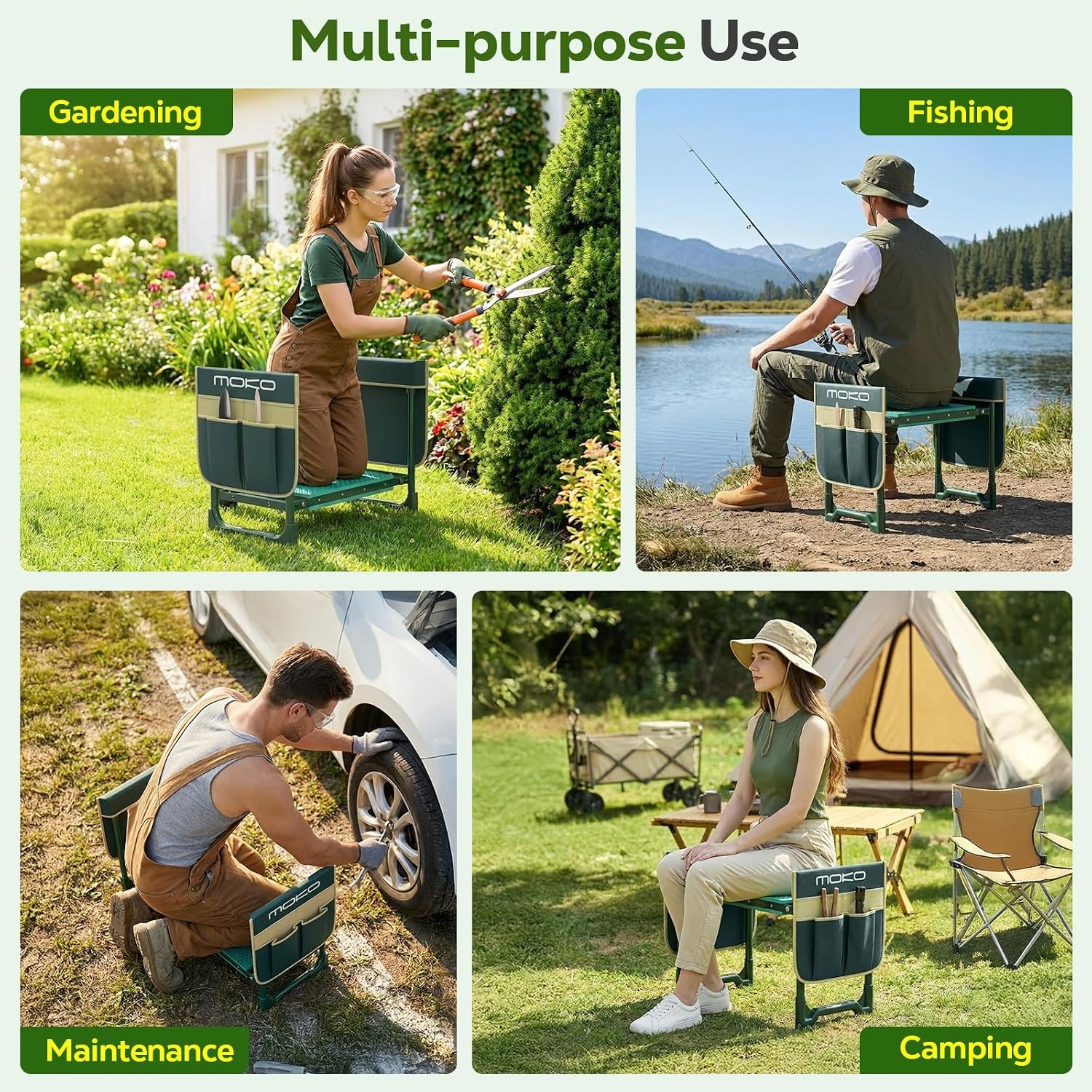
Beyond the garden, the same folding frame works as a low seat at a fishing swim, beside a tent, or in the garage when you are working on something at floor level. A portable garden seat that weighs 2.8 kg is easy to justify taking along.
How to choose
Start with weight capacity. This one has a maximum recommended weight of 158.76 kg, and you want real margin over your own weight because you will sometimes drop onto it rather than lower yourself gently.
Then look at the frame. Iron is heavier than aluminium and that is not a bad thing in a seat. Light frames skid on grass and feel skittish when you lean. At 2.8 kg this sits in a sensible middle, substantial enough to feel planted and light enough to carry one-handed across the lawn.
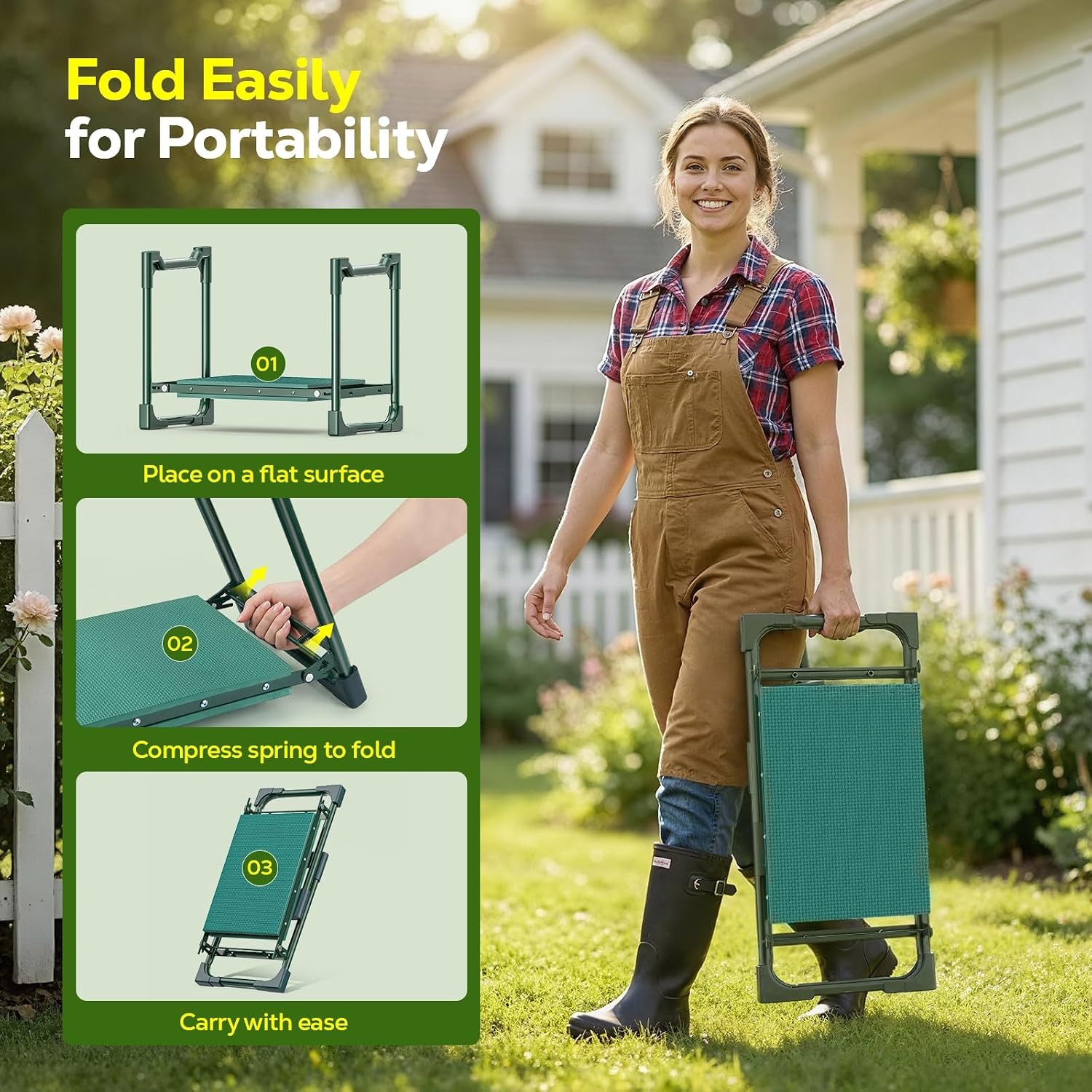
Check that it folds, and check how flat. Garden kit that does not store easily ends up in the way, and then it ends up unused. A foldable garden seat that hangs on a hook in the shed will get picked up far more often than one that leans in a corner.
Finally, think about the pad width. Narrow pads are a false economy. You spend the whole time adjusting.
Looking after it
The care routine is short. Wipe the frame and pad with a damp cloth and mild soapy water after a muddy session, then dry it before folding. Damp metal stored folded is the one thing that will shorten its life.
Spot-clean the Oxford pockets separately and let them dry fully in the air rather than in a hot cupboard. Keep the folding joints clear of grit, because dried soil in a hinge makes it stiff and eventually chews the mechanism.
Store it under cover. A shed, garage, porch or utility room is fine. Leaving any iron-framed item out through a wet winter is asking for rust, whatever the finish.
A note on what it is not
It is a gardening aid, not a mobility aid. It helps with kneeling and rising, but it is not a substitute for a proper support if you have significant balance or joint problems. If you have had knee or hip surgery, have a word with your physio before you start kneeling again at all.
It is also built for one person at a time, at or under the stated maximum recommended weight. Do not stand on it to reach a shelf.
The short version
This is a two-in-one gardening kneeler, 55 x 29 x 46 cm, 2.8 kg, with an iron frame, EVA padding and a maximum recommended weight of 158.76 kg. It flips from a padded kneeling pad to a low seat, has handles that take the strain out of standing up, carries two 600D Oxford tool pockets, and folds flat for storage.
If your knees are the reason you cut gardening sessions short, this is the piece of kit that buys you the extra hour. Delivery is tracked, free on orders of $75 or more, and $25 below that.