


The complete guide
The Honest Buyer's Guide to Silk Pillowcases
The problem nobody talks about
You spend around a third of your life with one side of your face pressed into fabric. Nobody thinks about it. We agonise over mattresses and pillows and then throw a cheap cotton case over the top and call it done.
That cotton case is doing more than you realise. Under magnification, a standard cotton weave looks like rough ground. Every time you turn over, your hair drags across it. Your cheek drags across it too. Multiply that by eight hours and three hundred and sixty five nights, and you start to understand why long hair knots at the back of the neck, why curls collapse by morning, and why one side of your face arrives at breakfast with a crease running through it.
Cotton is also thirsty. It pulls moisture out of whatever touches it, which is great for a bath towel and less great for the conditioner you combed through your ends before bed. Half of it ends up in the pillowcase.
A silk pillowcase addresses the surface rather than the pillow. It is a small change with an outsized effect on how your mornings go.
How silk actually works
Silk fibre is one continuous filament, spun by the silkworm rather than cut and twisted from short staples the way cotton is. Mulberry silk, which is what this pillowcase is made from, comes from silkworms raised on a diet of mulberry leaves. That controlled diet produces unusually long and even fibres, and even fibres make a smoother cloth.
Smooth cloth means less friction. Hair slides over the surface instead of catching on it. Skin does the same. You are not getting a treatment or an active ingredient, you are just getting out of your hair's way for eight hours.
The listing also describes the material as OEKO-TEX certified, which relates to testing textiles for harmful substances. Take that as a statement about the fabric used, which is what the listing claims, and nothing beyond it.
One detail worth flagging here. This pillowcase is silk on both faces. That sounds obvious, but a surprising number of silk cases on the market are silk on one side and cotton or polyester on the other to bring the price down. You then have to remember which way up it goes, and if you flip your pillow at 3am you have undone the point of it. Double-sided removes the guesswork.
Who this suits
People with long hair notice the difference fastest. If you currently wake up and spend five minutes working a brush through a knot at the nape of your neck, that is friction damage from your bedding. Less dragging means less knotting.
Curly and wavy hair is the other obvious group. Curls get flattened and roughed up by a cotton surface, and a lot of people find their pattern survives the night better on silk. It is one of the first things recommended in curly hair communities, along with a loose pineapple and a silk bonnet.
People who are careful about their skin tend to get on with it too. Less tugging at the thin skin around the eyes means fewer of those deep morning creases that take an hour to fade. Your night cream also stays on your face rather than soaking into absorbent cotton.
Warm sleepers should pay attention as well. Silk breathes and does not hold heat the way polyester satin does, so it feels cool on contact. If you are the person who keeps flipping the pillow looking for the cold side, a breathable pillowcase is worth trying.
And it suits gift buyers. It is boxed, it is useful every night, and almost nobody buys it for themselves until someone else shows them it exists.
How to choose one
A few things actually matter, and a lot of the marketing noise does not.
Check it is real silk, not satin. Satin is a weave, not a fibre. Polyester satin looks shiny and costs very little, but it does not breathe and it will sleep hot. If a listing says satin without naming the fibre, assume synthetic. This one specifies 100% mulberry silk.
Check both sides. As mentioned, single-sided cases are common at lower price points. Double-sided costs more because there is more silk in it.
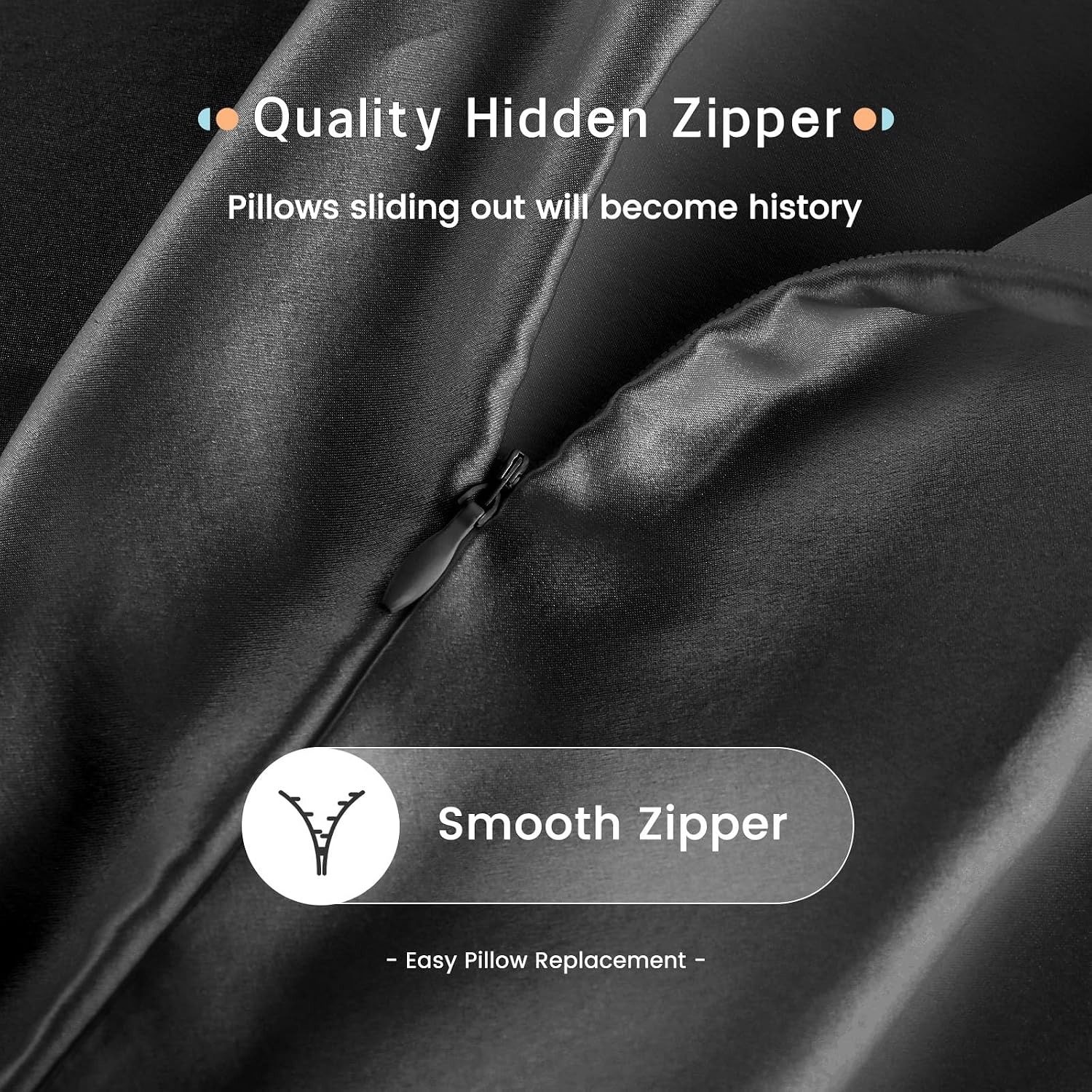
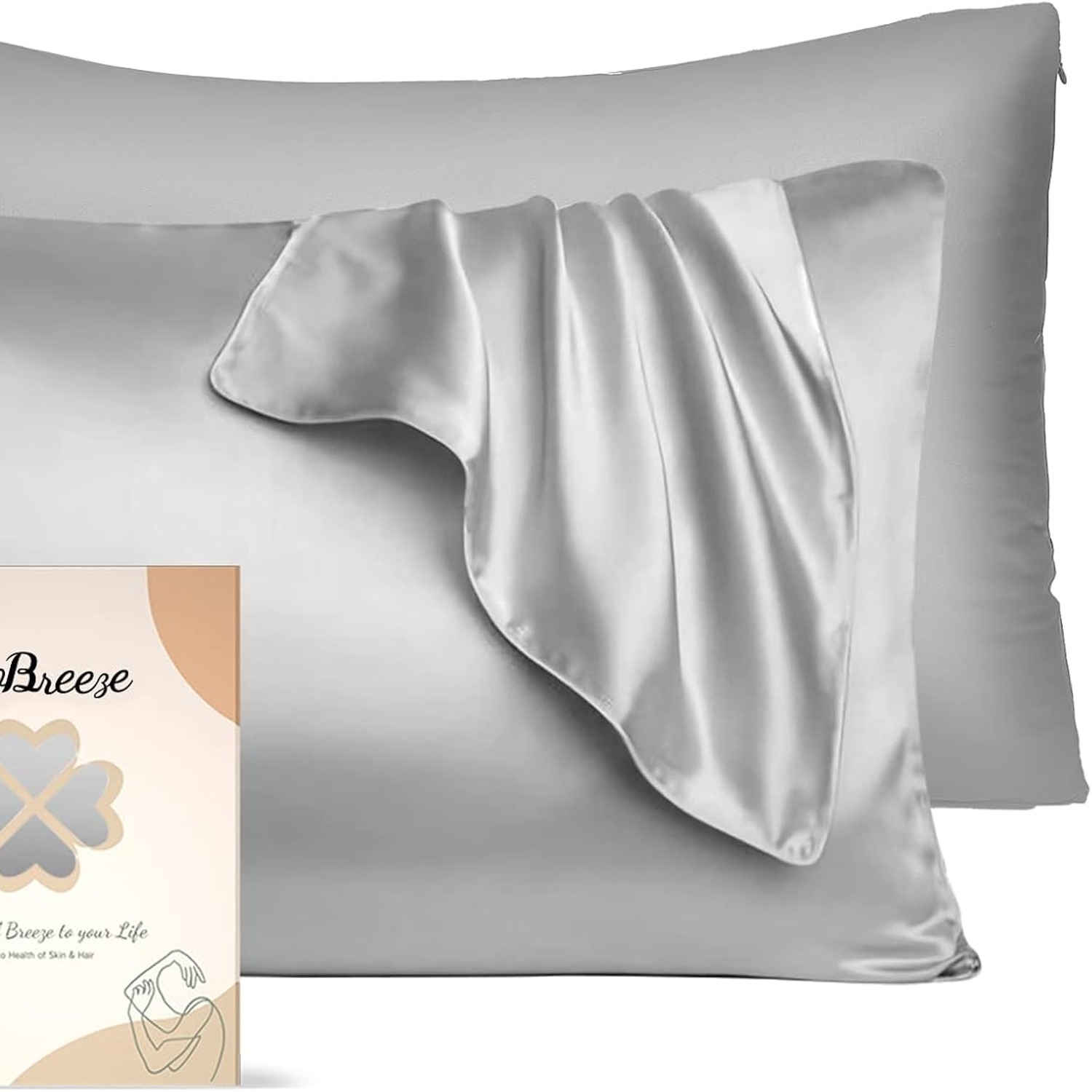
Think about the closure. Envelope flaps are cheaper to make and they work loose. By morning the pillow has usually squirmed halfway out and you are sleeping on bare pillow. A hidden zipper holds the pillow in place for the whole night and keeps the closure tidy. This is a zipper silk pillowcase, and once you have used one it is hard to go back.
Measure your pillow. Pillow sizes vary more than people expect between countries and brands. Take a tape measure to the one you own before you order rather than guessing.
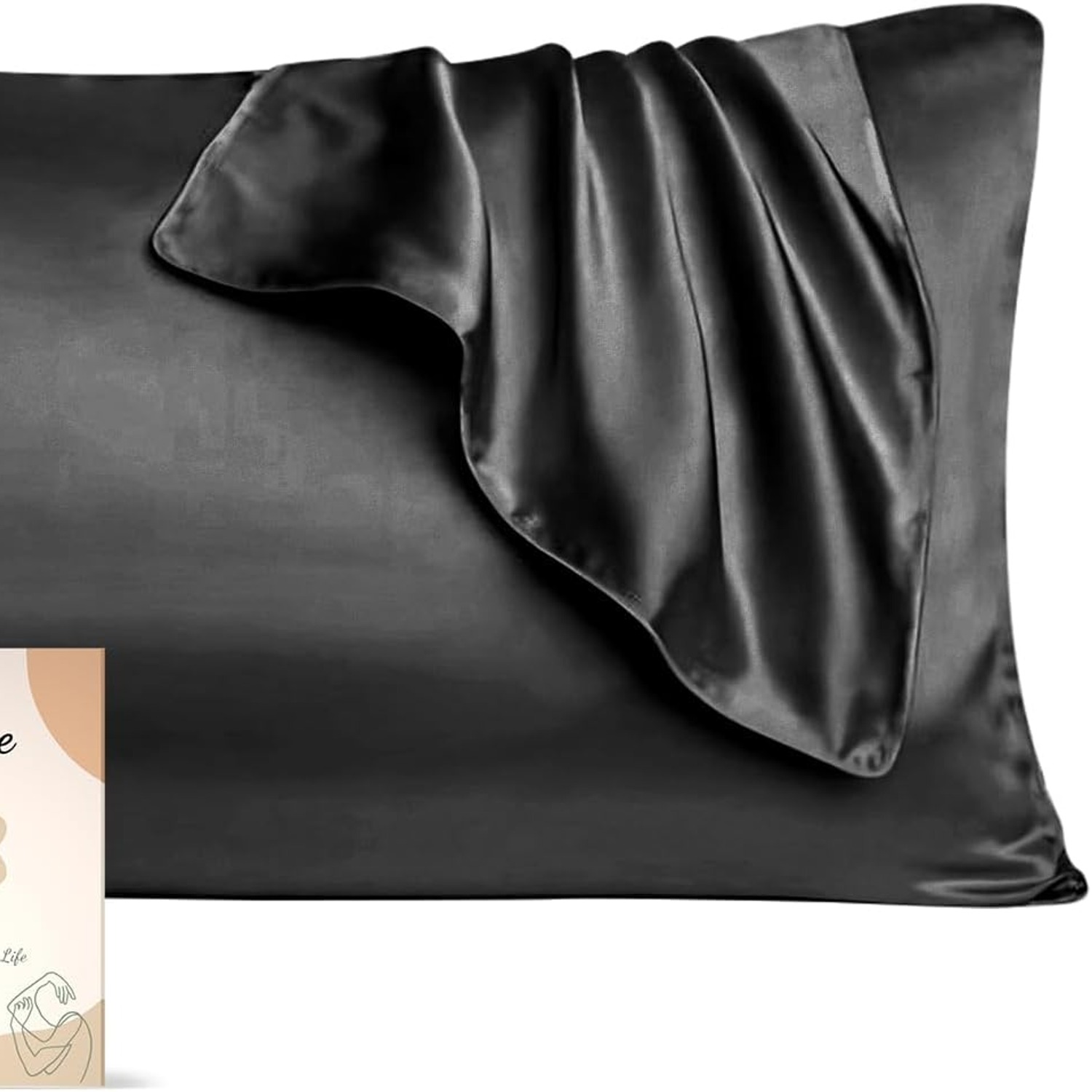
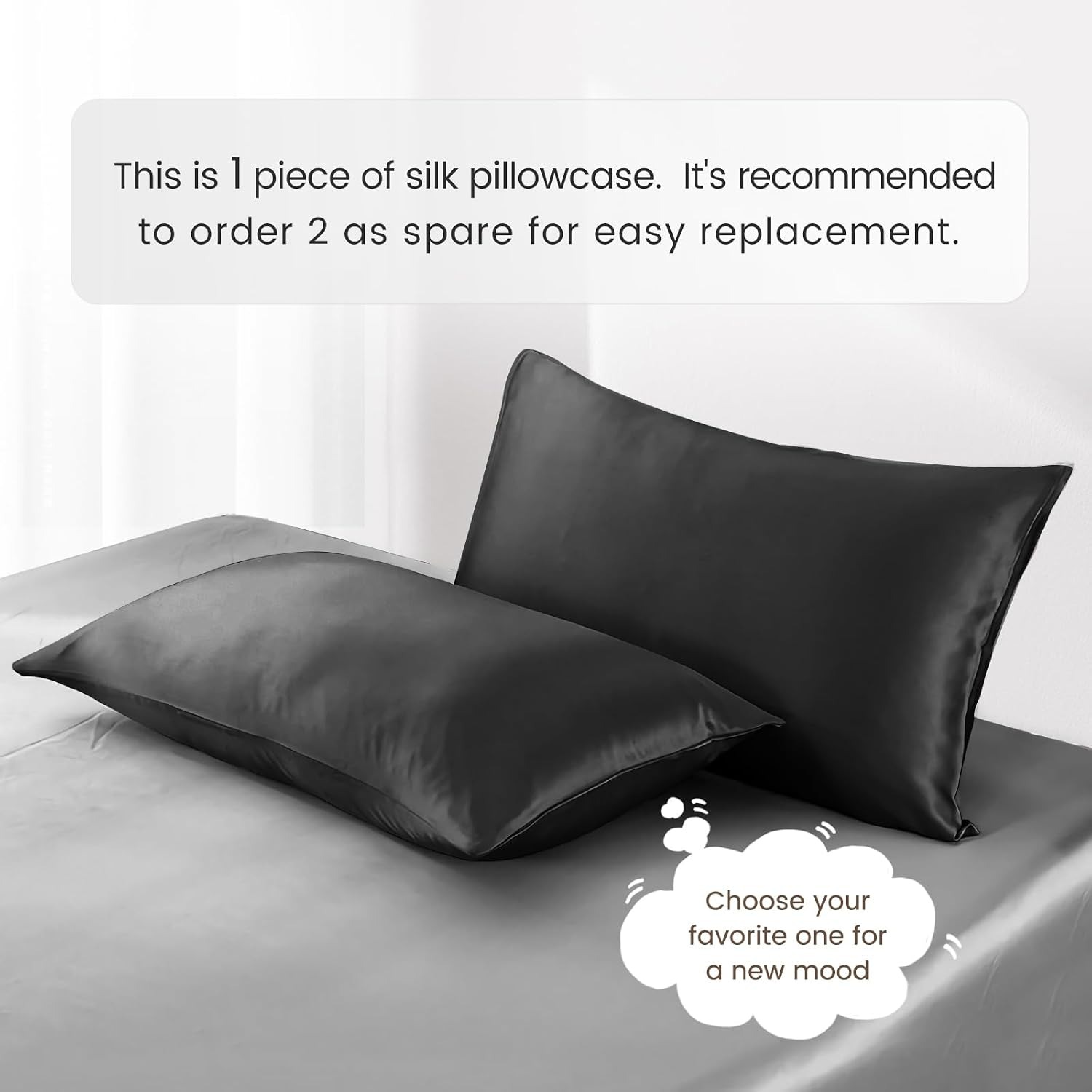
Pick a colour you will not fuss over. Black is the practical choice if you use hair oil, leave-in conditioner or night cream. Marks that would be glaring on ivory simply do not show. It also goes with almost any bedding without needing to coordinate.
Living with it
Silk needs a bit more thought than a cotton case, but not much.
Wash it in cool water. Hand washing is gentlest, but a gentle machine cycle inside a mesh laundry bag works fine and is what most people actually do. Use a mild detergent intended for delicates. Skip the fabric softener entirely, since it coats the fibres and takes away the exact slip you paid for. Keep bleach and spot removers away from it.
Do not wring it out. Press the water out between your hands or roll it in a towel, then hang it or lay it flat somewhere out of direct sun. Radiators and dryers are the two fastest ways to age silk, so avoid both.
If it needs pressing, use a low setting on the reverse side while the fabric is slightly damp. Most of the time it does not need it.
Wash it every week or two, sooner if you use heavy products at night. Buying two is the sensible move, because then there is always a clean one on the bed. A lot of people do this after the first wash cycle teaches them the lesson.
What to expect, honestly
Give it a week. The first night can feel odd if you have slept on cotton your whole life, because the surface is noticeably more slippery. That passes quickly.
What you should notice within a few mornings is less of a fight with your hair. Fewer knots, less static roughness, curls holding their shape better. Skin creases that fade faster. A pillow that feels cool when you lie down rather than warm.
What it will not do is fix hair damage caused by heat styling, bleach or diet. It reduces one source of mechanical wear, which is useful, but it is one habit among several. Nobody should buy a pillowcase expecting it to work like a treatment.
The short version
A silk pillowcase changes the surface your hair and face spend the night against. Smoother fabric means less dragging, which means fewer tangles, less frizz and softer morning sleep lines.
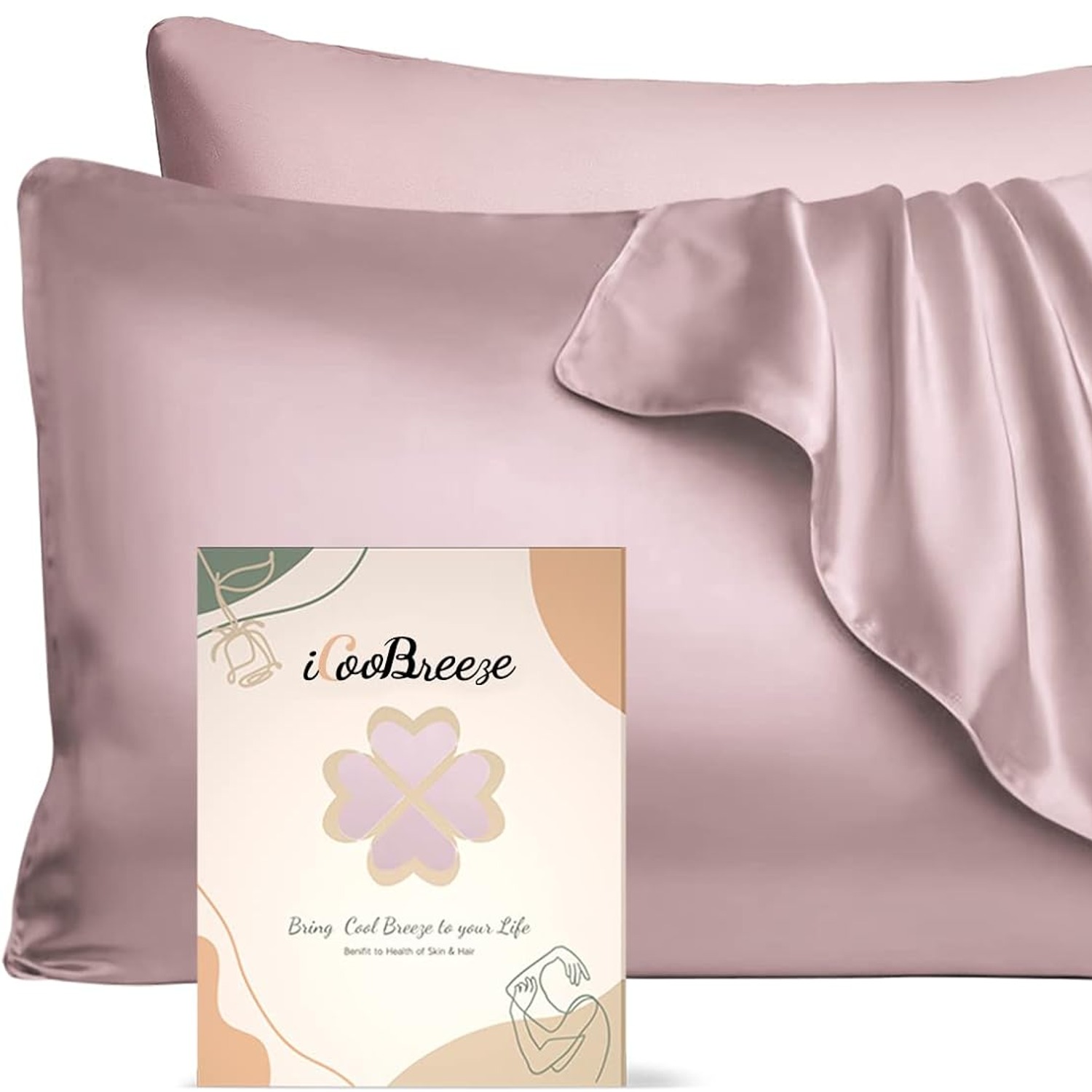
This one is 100% mulberry silk on both sides, in black, with a hidden zipper that keeps the pillow where it belongs. It arrives in a box, which makes it an easy gift. Wash it cool, dry it flat, and leave the fabric softener in the cupboard.
Buy two if you can. You will want a clean one on laundry day.