





The complete guide
How To Choose And Fit A Ceiling Curtain Track
The problem with straight poles in rooms that are not straight
A curtain pole assumes two things. It assumes you have a flat wall, and it assumes you have space above the window to screw into. Plenty of rooms give you neither.
Bathrooms often have a window tucked right under the ceiling line. Shower recesses curve. Caravan and RV walls bow outward. Bay windows turn two corners in the space of two metres. Open-plan rooms have no window at all where you want the curtain, just an empty line of ceiling you would like to hang a divider from.
In all of those cases a rigid pole either will not fit or will look wrong. You end up with three short poles in a bay, a curtain that snags at every join, and a gap at each corner where light and cold both get through.
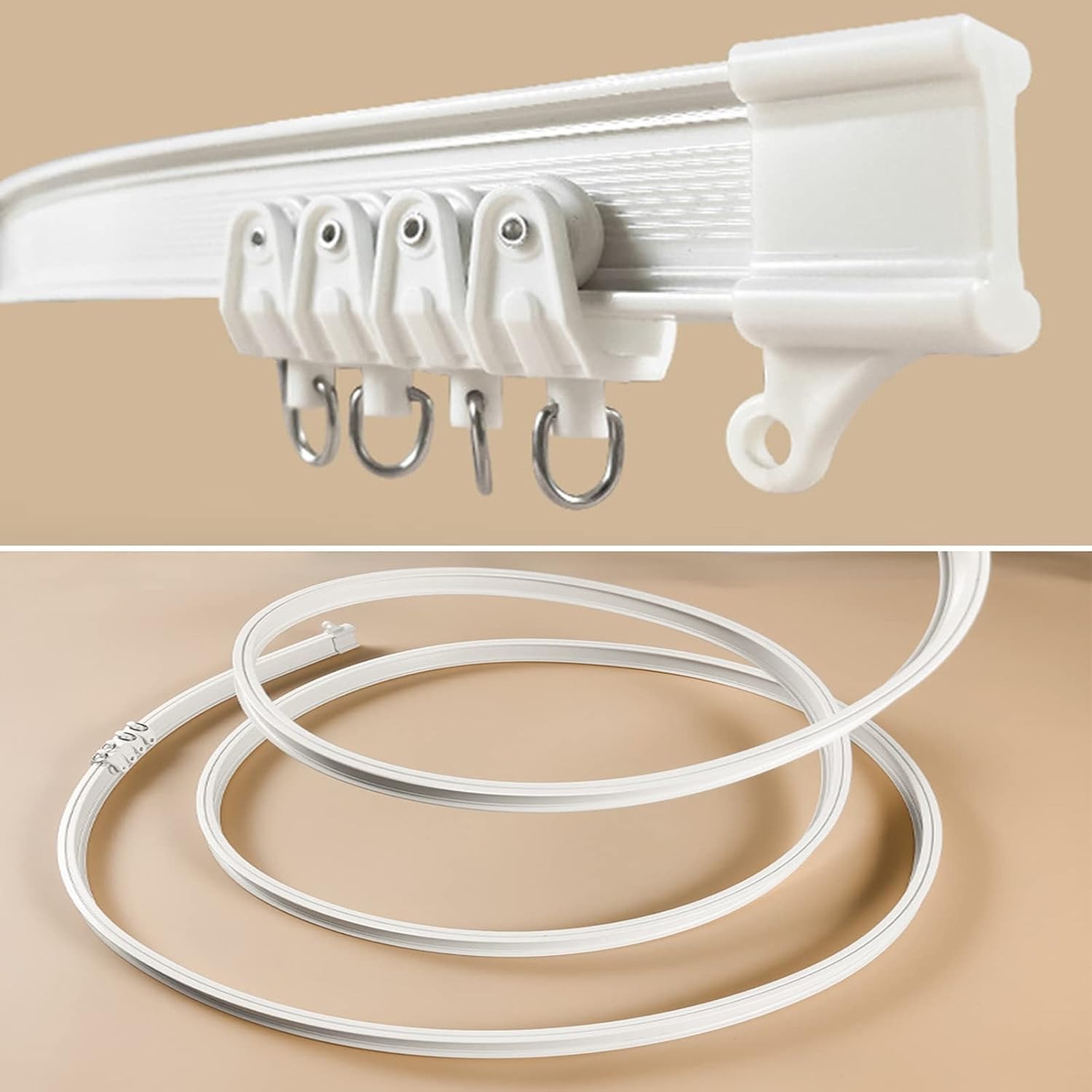
A ceiling curtain track solves it differently. The rail fixes overhead, so wall space stops mattering. And because this one bends, a single 3 m run can follow a shape instead of fighting it.
How a flexible track actually works
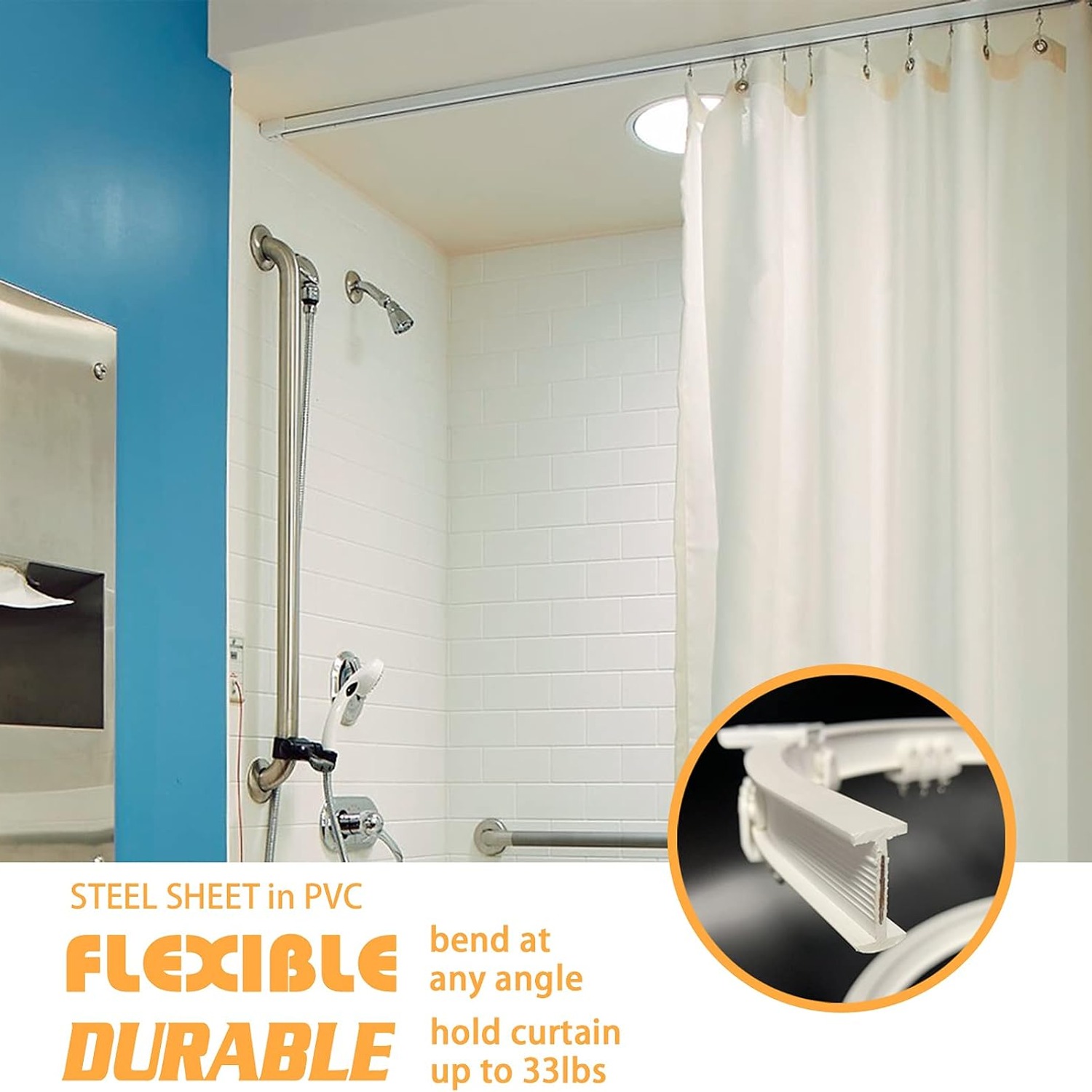
The rail is a PVC channel with a metal plate embedded inside it. That combination is the whole trick.
PVC on its own would bend easily but would not hold the bend, and it would flex under the weight of a curtain. A metal rail on its own would hold a shape but you would need a machine to bend it, and it would be heavy and prone to corrosion in a steamy bathroom.
Put the metal inside the plastic and you get a rail you can shape by hand that stays where you put it. The listed maximum recommended load is 15 kg across the length, which is plenty for a privacy curtain, a blackout panel or a room divider.
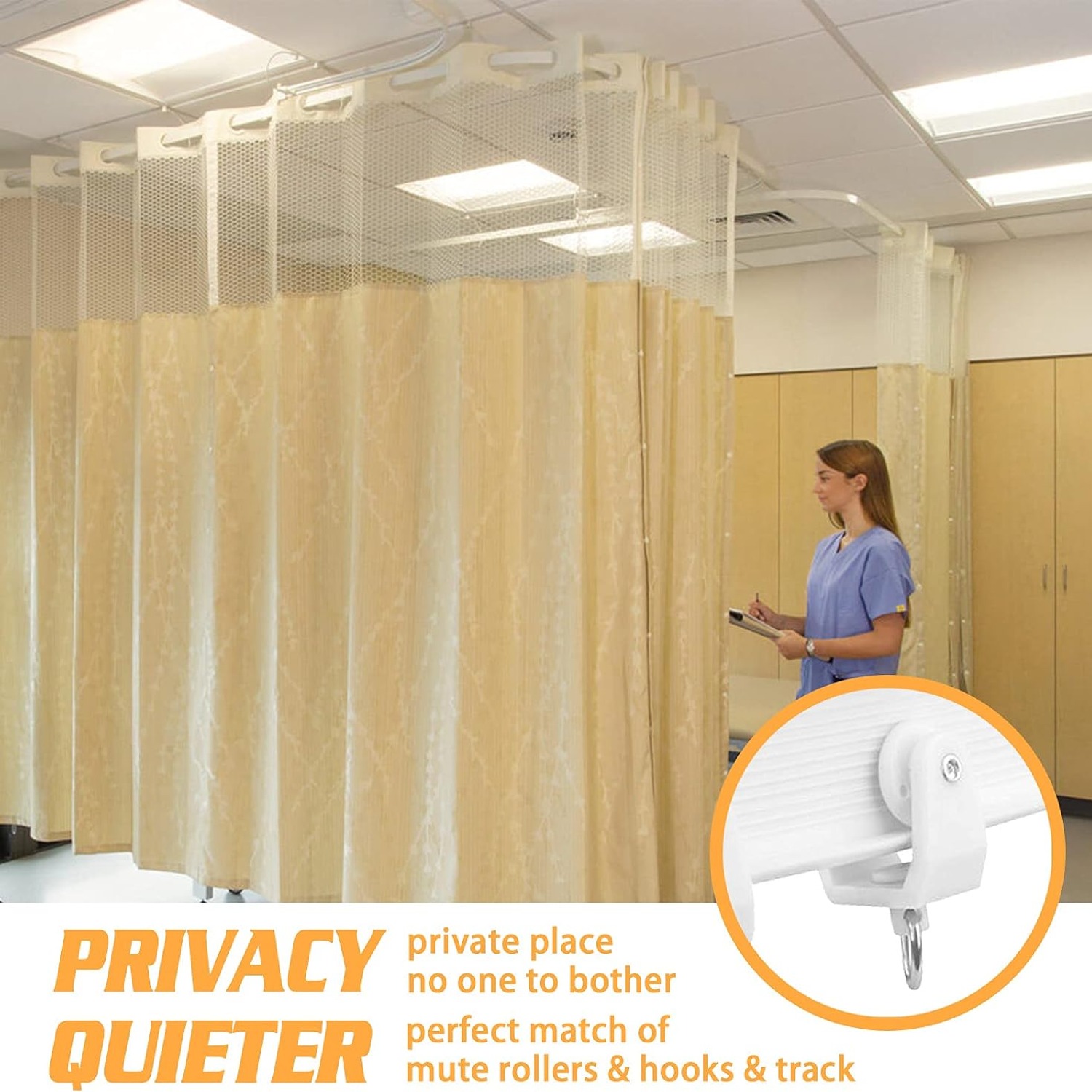
Rollers sit inside the channel and run along it. Curtain hooks connect those rollers to the heading tape on your curtain. Because the rollers, hooks and channel are all made to work together, the slide is smooth rather than snagging, which is what you want in a bedroom or a clinic where noise matters.
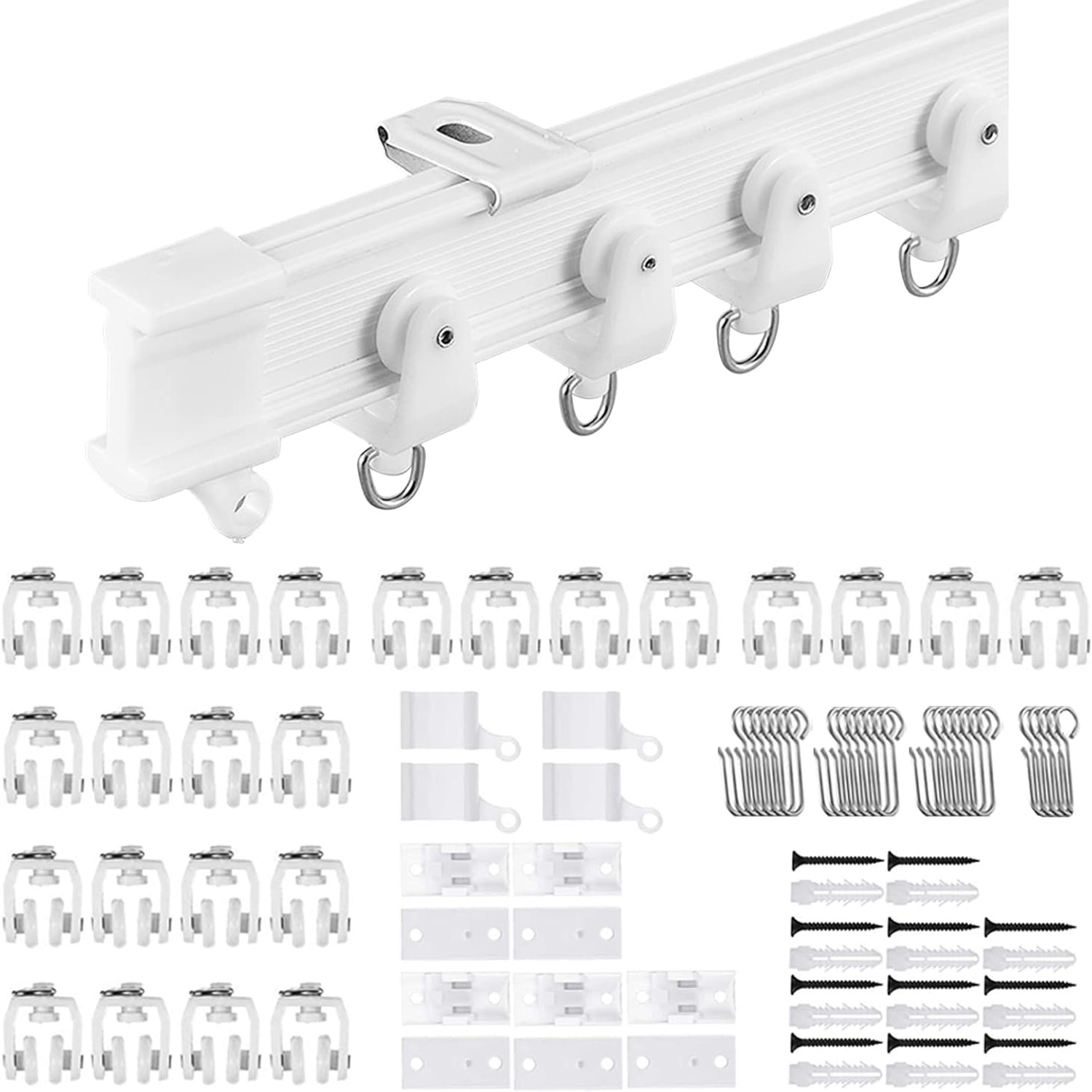
The pack gives you 24 rollers, 26 hooks, 4 end caps, 10 mounting brackets and 11 sets of anchors and screws. That is a complete kit for a 3 m run, with a couple of spares.
Who this suits
Think about anyone whose curtain run is not a simple rectangle.
People fitting out a bathroom or a wet room use a bendable shower curtain track to follow a curved recess, so the curtain seals against splashes instead of leaving a gap at the corner. People converting vans use an RV curtain track because a vehicle wall is almost never flat and a rigid pole will not sit flush against it.
Then there are room dividers. If you share a bedroom, run a business from a corner of the living room, or live in a studio, a ceiling track lets you add a wall you can slide away. No fixings in the walls, no furniture rearrangement, just a line across the ceiling and a curtain that closes when you need it to.
Offices, hotels, clinics and hospitals all use ceiling-tracked privacy curtains for the same reasons. The track stays out of the way, the curtain moves quietly, and the run can turn a corner around a bed or a desk.
And of course, bay windows. A flexible curtain rail for a bay window gives you one continuous run from one end of the bay to the other, so a single curtain draws smoothly across the whole thing.
How to choose and measure
Start with length. This track is 3 m. If your run is shorter, you can trim it, though you will be cutting through both PVC and the metal plate inside, so use a tool that handles both and tidy the cut end before you fit a cap. If your run is longer, you will need more than one track.
Next, weigh up your curtain. Lined curtains are heavier than they look. A thick blackout panel can easily approach several kilos per metre. The 15 kg figure is for the full track, so keep your fabric comfortably under that, and if you are close to the limit, add bracket support rather than hoping for the best.
Then check your ceiling. This is the part people skip, and it is the part that causes trouble. Anchors and screws are supplied, but no single fixing works in every material. Plasterboard needs a fixing designed for plasterboard, ideally hitting a joist. Concrete needs the right drill bit and plug. A caravan roof is a different problem again. Work out what you have before you buy a drill bit.
Finally, think about the shape. Sketch your run. Where does it turn? How tight is the turn? A gentle curve lets rollers glide through. A sharp angle makes them hesitate. Give yourself a wider radius than you think you need.
Fitting it without drama
Mark your line first. Measure down from the ceiling at both ends and in the middle, and snap or draw a line you trust. A line that is 5 mm out over 3 m shows up badly once a curtain hangs from it.
Space the brackets along the run. Ten brackets over 3 m is roughly one every 30 cm. Tighten that spacing through curves and anywhere the curtain is heaviest. Brackets are what hold the bend, so a curve with only two brackets will drift.
Drill, fix the brackets, then clip the track up into them, shaping it as you go. Feed in all 24 rollers while both ends are still open. Only then fit the end caps, or you will be taking one back off.
Hang the curtain last. Attach hooks to the heading tape, clip each hook to a roller, and draw the curtain back and forth a few times to find any tight spots.
The whole job is an afternoon for most people. The listing describes a step-by-step manual and ordinary household tools, a drill, a screwdriver and a ruler. No trade help required.
Keeping it running well
PVC is easy to look after. A soft damp cloth with a little mild soap handles marks. Dry it afterwards. Skip bleach, solvents and abrasive pads, all of which dull or scratch the surface.
The one maintenance job worth doing is clearing the channel. Dust, lint and hair collect inside it over time, and that is almost always the reason a smooth track starts to feel sticky. Slide the rollers along the full length every few months and wipe out what has gathered.
Resist the urge to spray lubricant in there. Oil attracts more dust and makes the problem worse within weeks.
Check the screws once or twice a year. Fixings in ceilings loosen slowly, especially in a vehicle or anywhere with vibration. A quick turn with a screwdriver keeps everything tight.
In a damp room
Bathrooms are listed among the intended uses, and PVC has a clear advantage there over bare metal, since it will not rust. Still, a few habits help. Run the extractor fan or open a window after showers. Wipe soap splashes off the track before they dry. If the curtain itself gets mildew spots, wash it rather than letting it transfer onto the rail.
The short version
If your curtain run bends, or there is nowhere on the wall to mount a pole, a ceiling curtain track is the straightforward answer. This one is 3 m of white PVC with a metal plate inside, so it bends to the shape you need and stays there.
It carries up to 15 kg, mounts overhead, and arrives with the rollers, hooks, caps, brackets and fixings already in the box. It suits bathrooms, bay windows, vans, offices, clinics and any room that needs dividing without building a wall.
Measure your run, check what your ceiling is made of, and give yourself an afternoon. That is most of the job.