


The complete guide
Choosing a 12V Electric Impact Wrench for Wheel Nuts
The problem with wheel nuts
Wheel nuts are tightened by machine, usually by someone in a hurry, and then left alone for months or years while road salt and rain do their work. By the time you need them off, they are not just tight. They are seized.
That is the moment most people meet the limits of the wrench that came with the car. It is short, it is stamped steel, and it gives you maybe half a metre of leverage if you are lucky. You end up standing on it, bouncing on it, or hunting for a length of pipe to slide over the end. On a wet verge with traffic going past, none of that is fun and some of it is genuinely risky.
An electric impact wrench solves the problem from a different direction. Instead of asking you to apply more leverage, it applies a lot of small, very hard hammer blows in quick succession. The nut gets hit hundreds of times a minute with a sharp twisting shock, and shock is what breaks corrosion loose. Steady pressure often will not. A series of hits usually will.
How the impact mechanism works
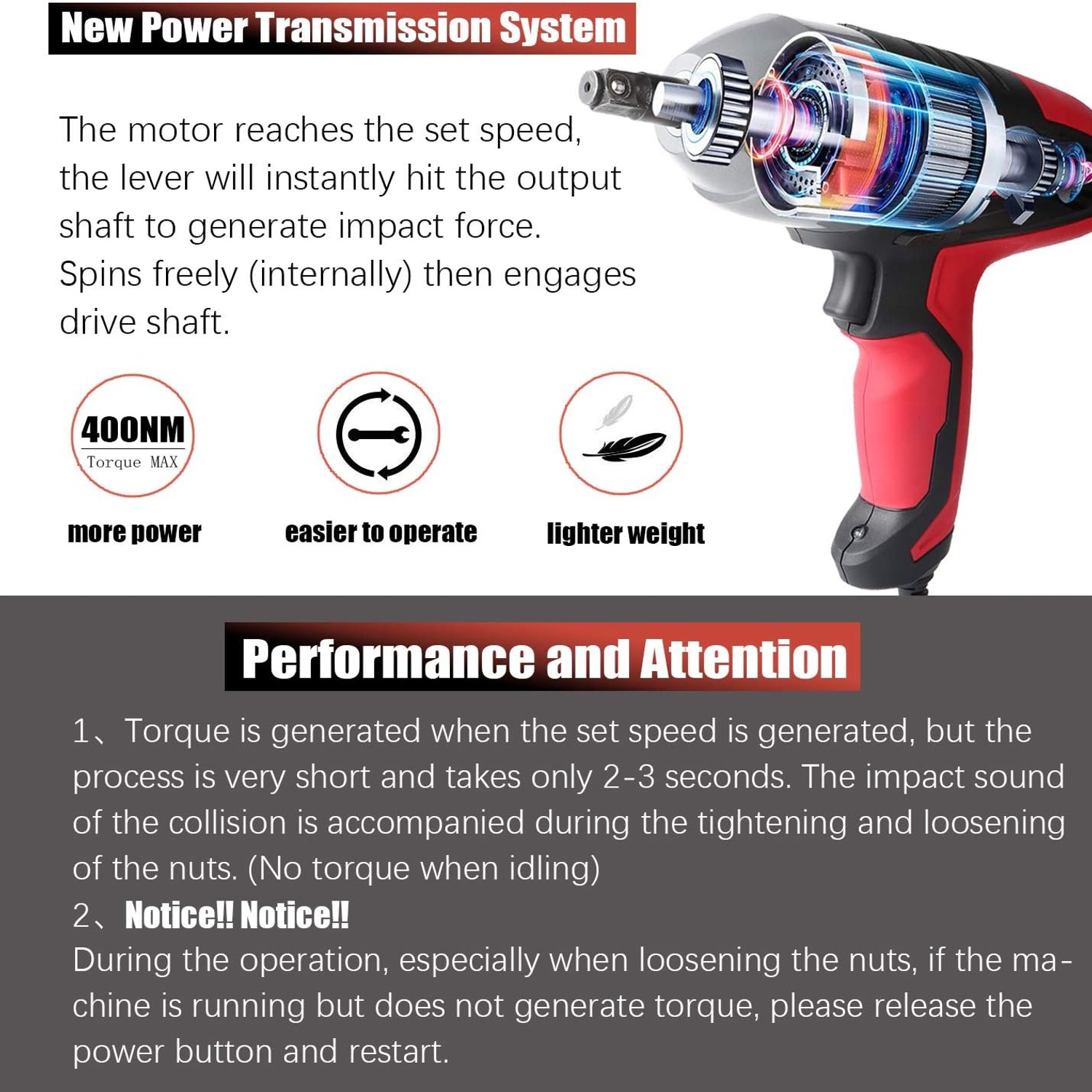
Inside the head there is a spinning weight, sometimes called a hammer, and an output shaft with an anvil on it. When you pull the trigger, the motor spins the hammer up freely, with almost nothing resisting it. Once it has built up speed, a cam lets it swing round and strike the anvil. That strike is a burst of torque. The hammer then disengages, spins up again, and hits once more.
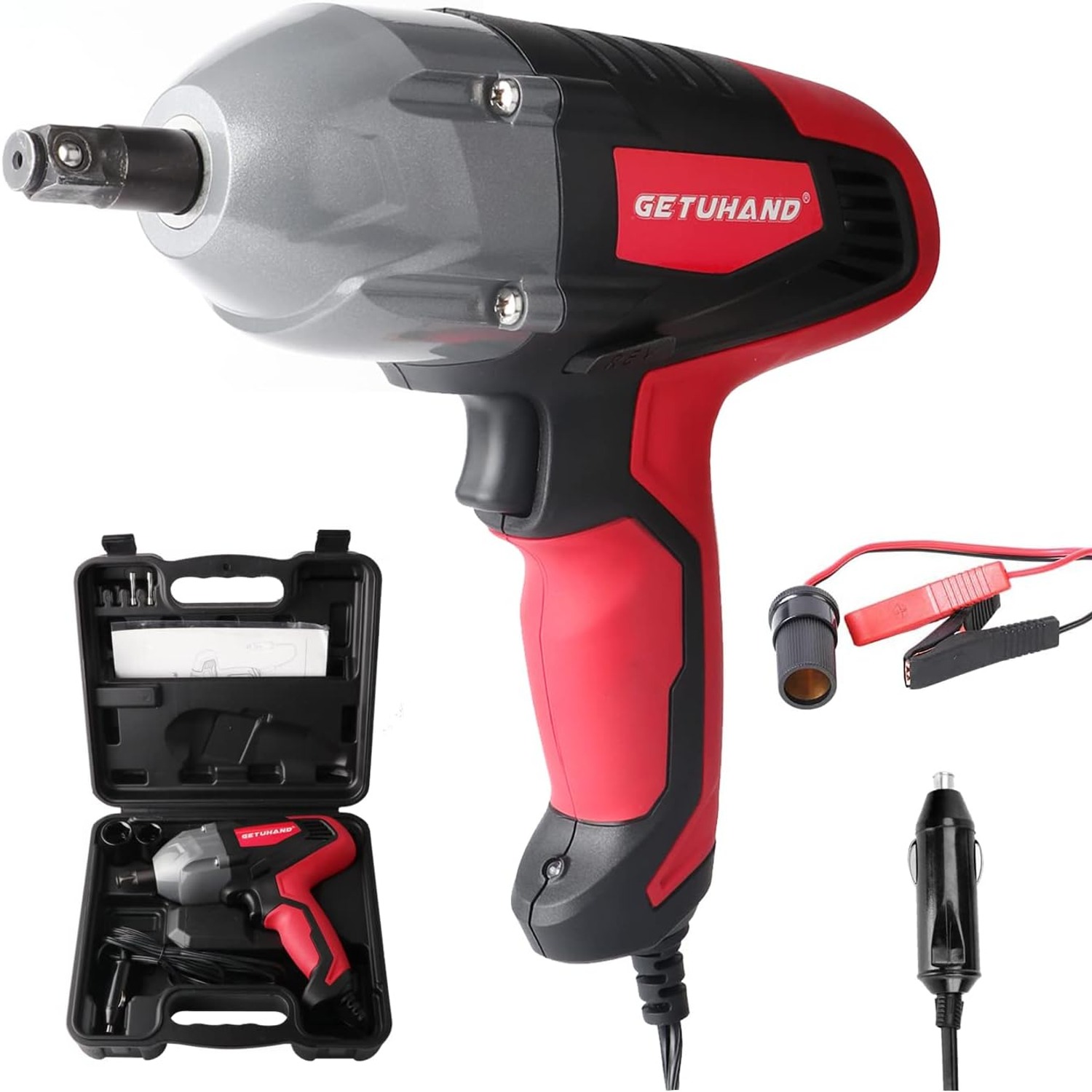
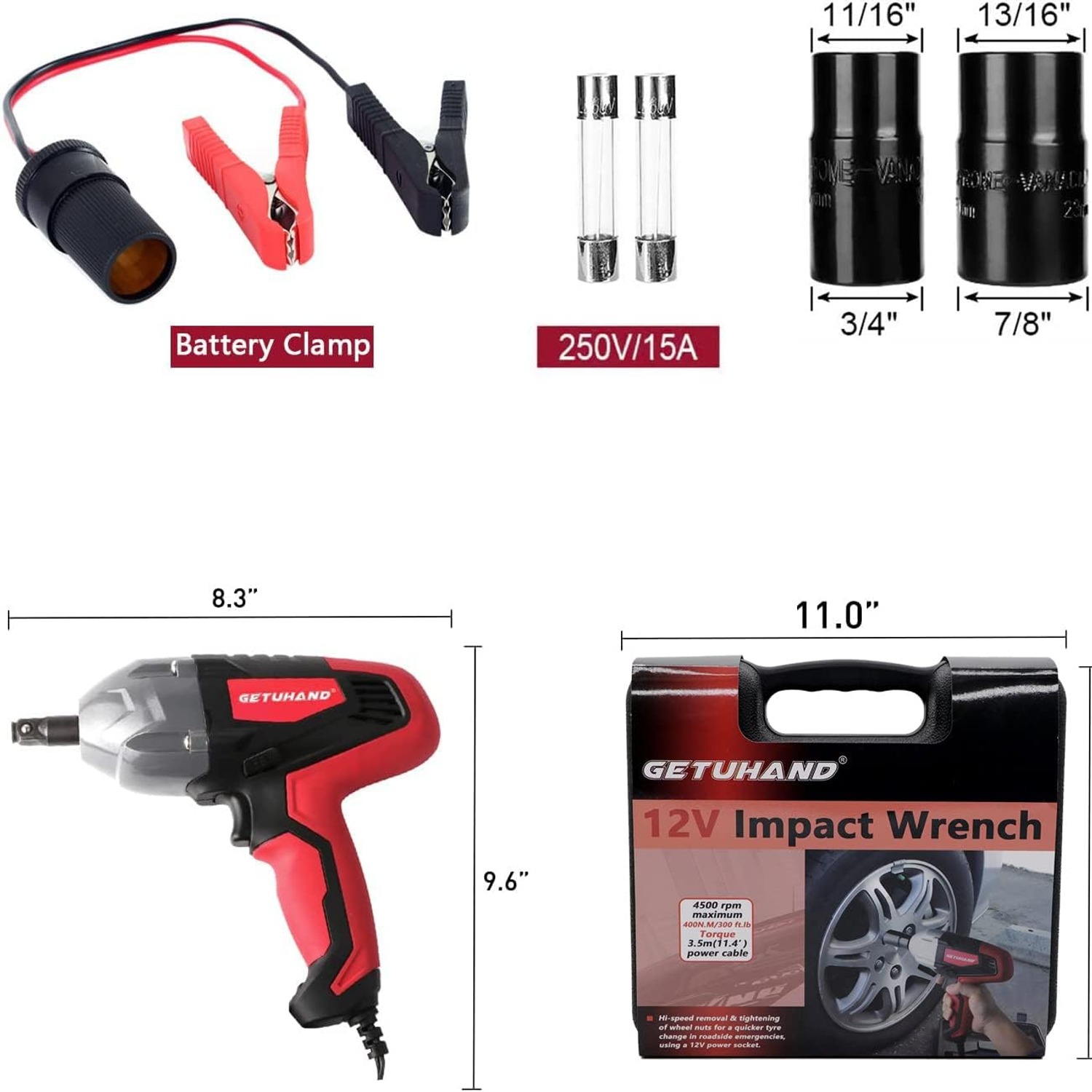
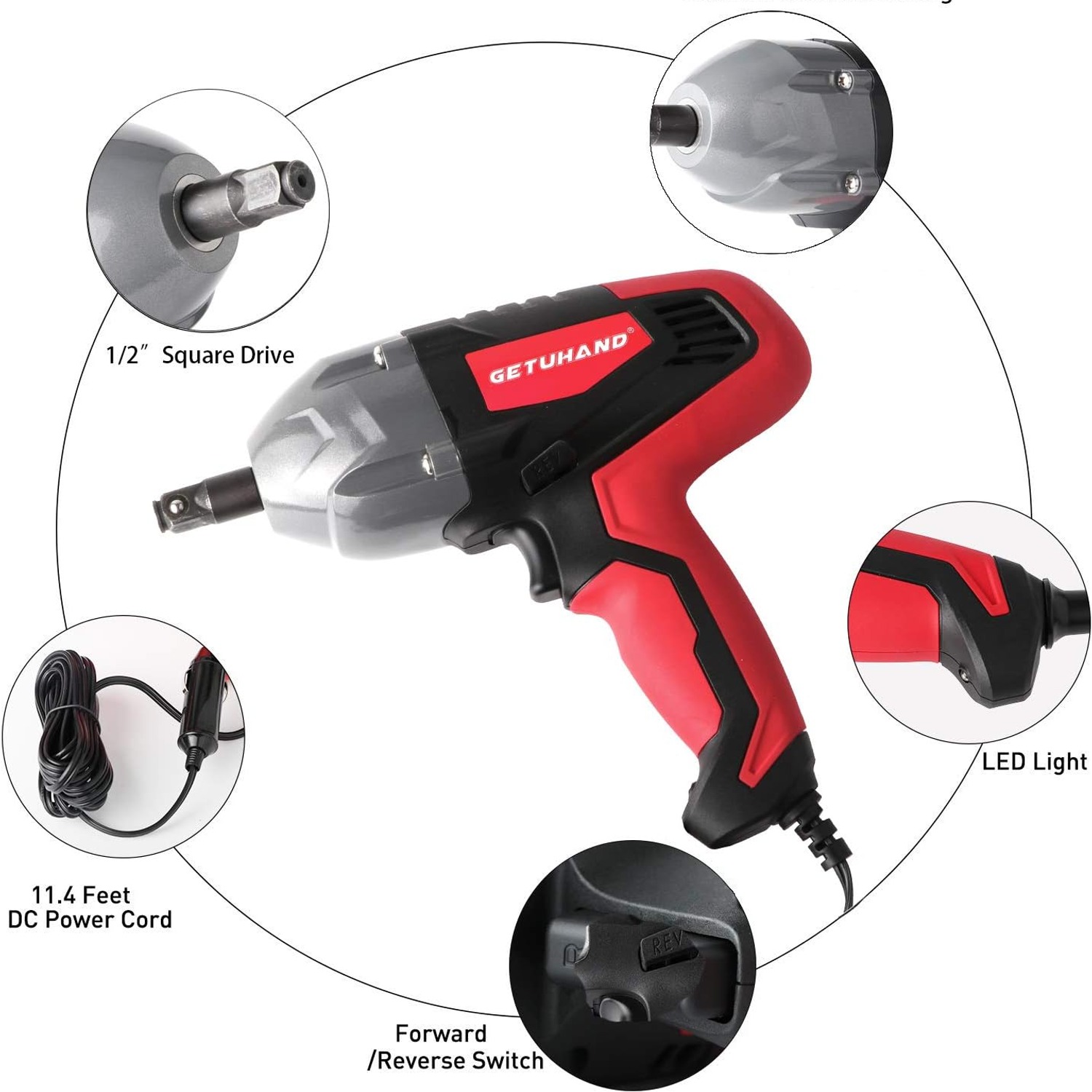
Two things come out of that design. First, the tool can deliver far more torque than a motor of the same size could apply through a straight gearbox, because it is storing energy and releasing it all at once. This one is rated at 400 N m, which is also quoted as 300 ft lb. Second, very little of that shock travels back into your wrist. The reaction force is absorbed inside the mechanism rather than through the handle, which is why you can hold a 1.68 kg tool one handed while it shifts a nut that you could not budge by leaning on a bar.
The trade-off is precision. An impact mechanism is brilliant at breaking fasteners loose and running them on quickly. It is poor at stopping at an exact torque figure, because it just keeps hitting. That is why the sensible way to use one is to let it do the heavy and the repetitive work, and finish the final tightening by hand.
Why 12 volt matters
Power tools for cars come in three flavours. Mains corded tools need a plug socket, which is useless at the roadside. Battery tools are convenient until the battery is flat, and a tool that lives in a boot for a year will have a flat battery when you finally want it. Then there are 12 volt corded tools like this one, which take power from the vehicle itself.
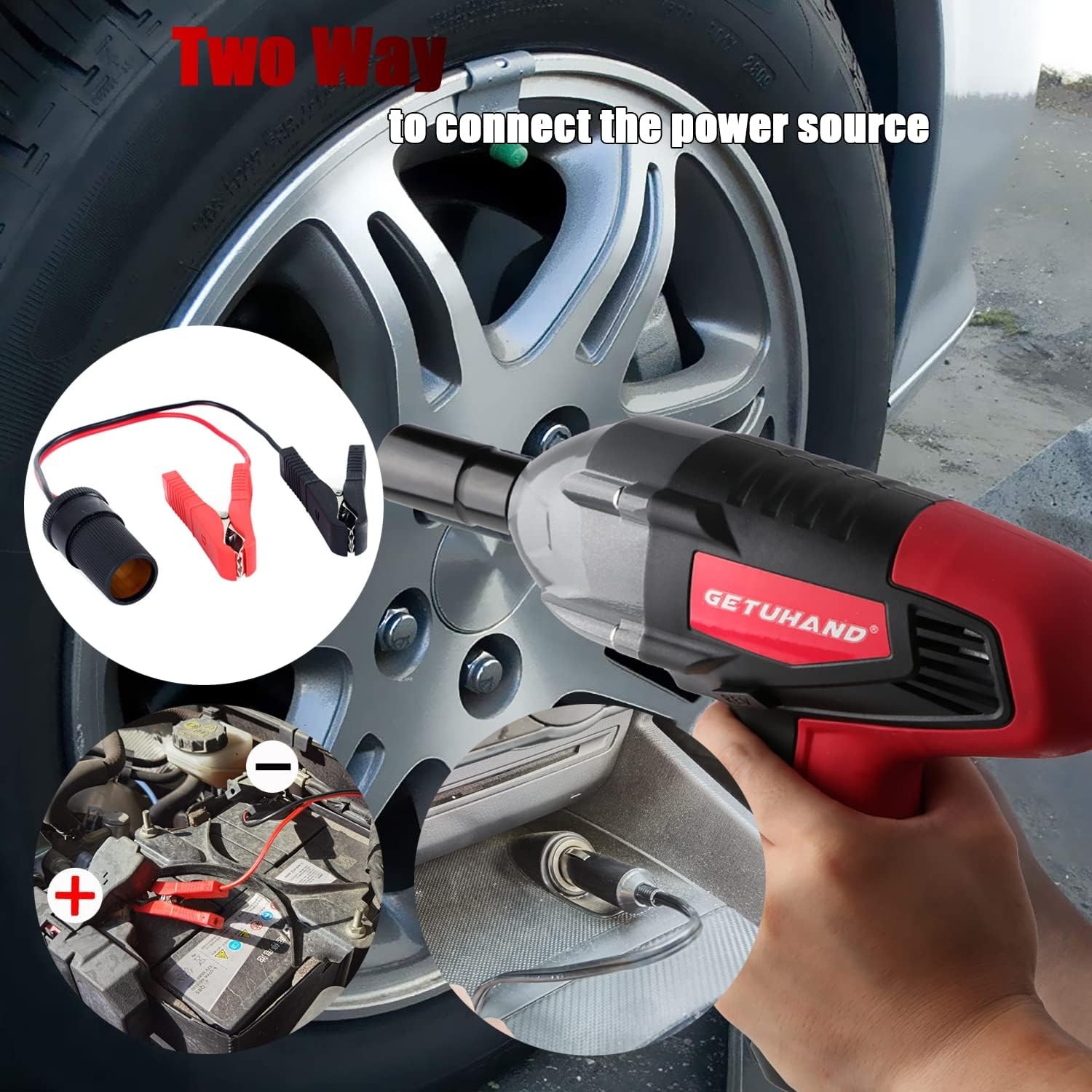
That third option is the most practical choice for an emergency kit. There is nothing to charge, nothing to remember, and no cell slowly dying in a cold boot over winter. The supplied cord runs about 3.5 metres (11.4 feet), long enough to reach all four wheels on most cars from a front socket.
There is one thing to watch. Vehicle accessory sockets are fused, often at 10 or 15 amps, and a tool pulling real current can blow that fuse. Two spare fuses come in the kit for that reason. A battery clamp is also included, which lets you connect straight to the battery terminals and bypass the socket entirely. On older vehicles, or ones with a low-rated socket, going direct to the battery is the more reliable route.
Will it fit your wheels
This is the question to settle before anything else. Two double-ended sockets are supplied, giving four sizes: 11/16 and 3/4 inch (17 and 19 mm), and 13/16 and 7/8 inch (21 and 23 mm). Those four cover an enormous share of passenger cars and light vans sold in North America and Europe.
Check your own vehicle before ordering. The handbook will list the wheel nut size, or you can simply try a socket on the nut. If your car uses a size outside that set, you will need a separate impact socket. Buy one rated for impact use, the black ones with thicker walls, rather than a thin chrome hand socket. Hand sockets are not made to absorb hammer blows and can split.
Also check whether your wheels use locking nuts. Those need the vehicle's own key adapter, and most people fit the key by hand rather than running an impact tool through it, because the adapters are not designed to take the punishment.
Using it properly
Park on firm, level ground, apply the handbrake and chock a wheel before you touch anything. Loosen the nuts about half a turn while the wheel is still on the ground, then jack the car up and finish the job. The impact wrench is at its best in that first loosening step.
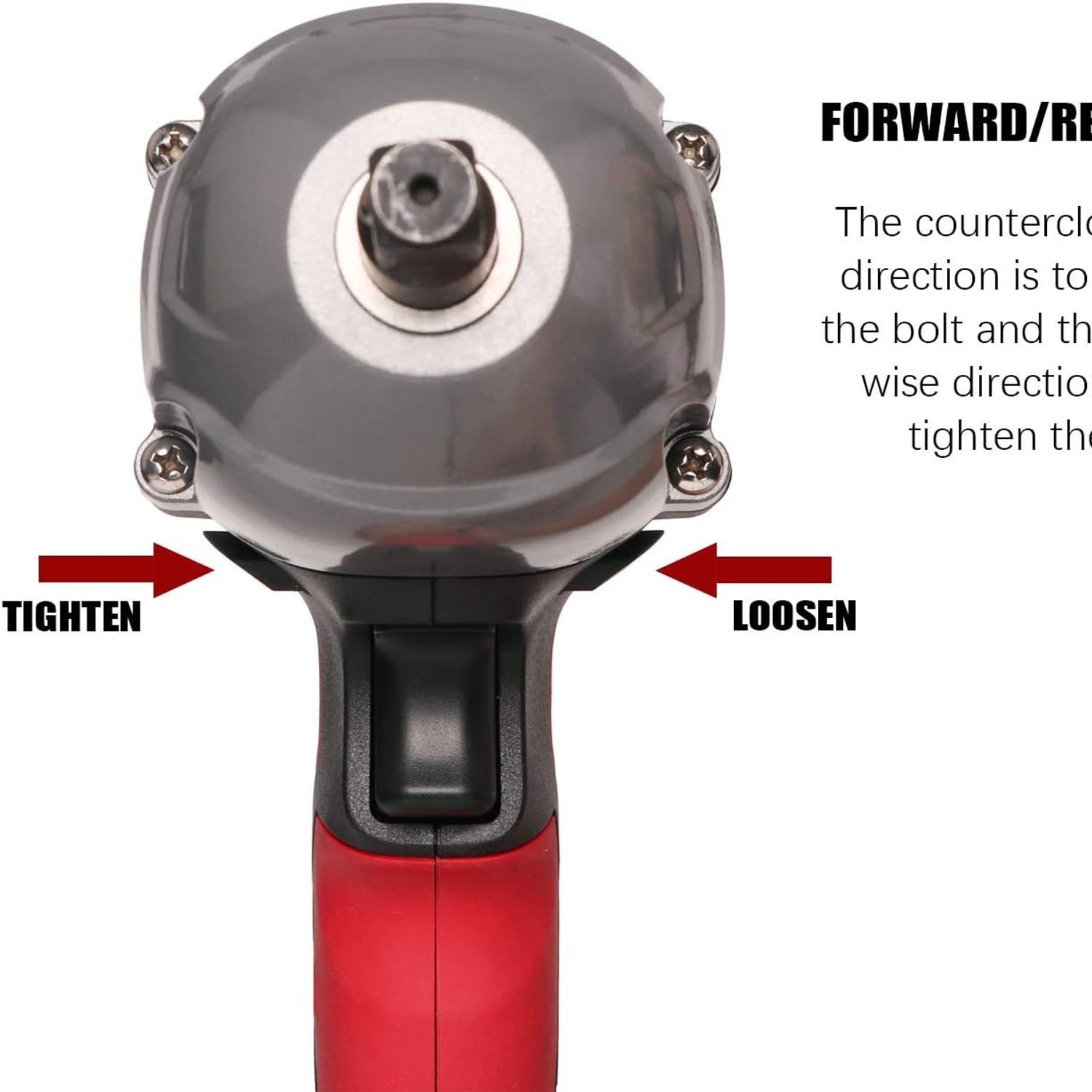
Hold the socket square on the nut. The bubble level on the body helps with this, and it matters more than people expect, because working at an angle is how nuts get rounded off. Keep the tool straight, give it short bursts rather than a long squeeze, and let the mechanism work. If a nut has not moved after several seconds of hammering, stop. Something is wrong: cross-threaded, over-tightened past spec, or badly seized, and more hammering will only damage the stud.
On the way back on, run each nut down until it just seats, then stop. Finish with a torque wrench set to the figure in the handbook, working in a star pattern rather than round the circle. Then re-check the torque after fifty kilometres or so of driving. That last step is the one almost everyone skips and the one that actually keeps a wheel on.
The LED on the front earns its place here. Most roadside tyre changes seem to happen in the dark, and having light coming from the tool itself means you are not trying to hold a phone in your teeth.
Looking after it
Wipe the housing and the cord down after use and let them dry before the kit goes back in the case. Water sitting in a closed box will find its way into contacts eventually.
Keep grit out of the sockets. A quick blow-out or wipe is enough, and a light film of oil helps if the kit will sit unused through a season. Coil the cord loosely in the case rather than wrapping it tight around the tool body, because repeated tight wrapping stresses the point where the cord enters the housing. That is the most common failure point on any corded tool.
If a fuse blows, replace it with one of the spares at the same rating. Fitting a higher-rated fuse to stop it blowing is the wrong answer, because the fuse is protecting the wiring, not the tool.
Give it rest between wheels. An impact mechanism generates heat and a small aluminium case can only shed so much. Four nuts, short pause, next wheel. Used that way the tool will outlast one that gets run flat out for twenty minutes.
The short version
If you change your own tyres, swap to winter wheels every year, or simply want a fighting chance against a seized nut at the roadside, this is a sensible piece of kit. It runs on vehicle power so nothing goes flat, it delivers 400 N m through a fixed square drive, and it arrives with the four most common wheel nut sizes, spare fuses, a battery clamp and a case to keep it all in.
Check your nut size first. Use it to loosen and to run nuts on, never for final tightening. Finish with a torque wrench and re-check after a short drive. Do that and you turn the worst part of a tyre change into a job that takes a couple of minutes.