


The complete guide
The Practical Guide to Aerator Grass Shoes
The problem nobody sees until the grass thins out
A lawn does not usually fail because of what is above the ground. It fails because of what is happening below it. Every footstep, every mower wheel, every bike leaning against the fence presses the top layer of soil down a fraction. Do that for a few seasons and the first three or four centimetres turn into something closer to a crust than a growing medium.
You can spot the signs without digging. Rain pools instead of soaking away. The grass goes yellow in high-traffic strips even though you are watering. Fertiliser sits on top and washes off in the next downpour. Moss creeps in along the shady edge. All of that points to one thing, which is soil that air cannot get into.
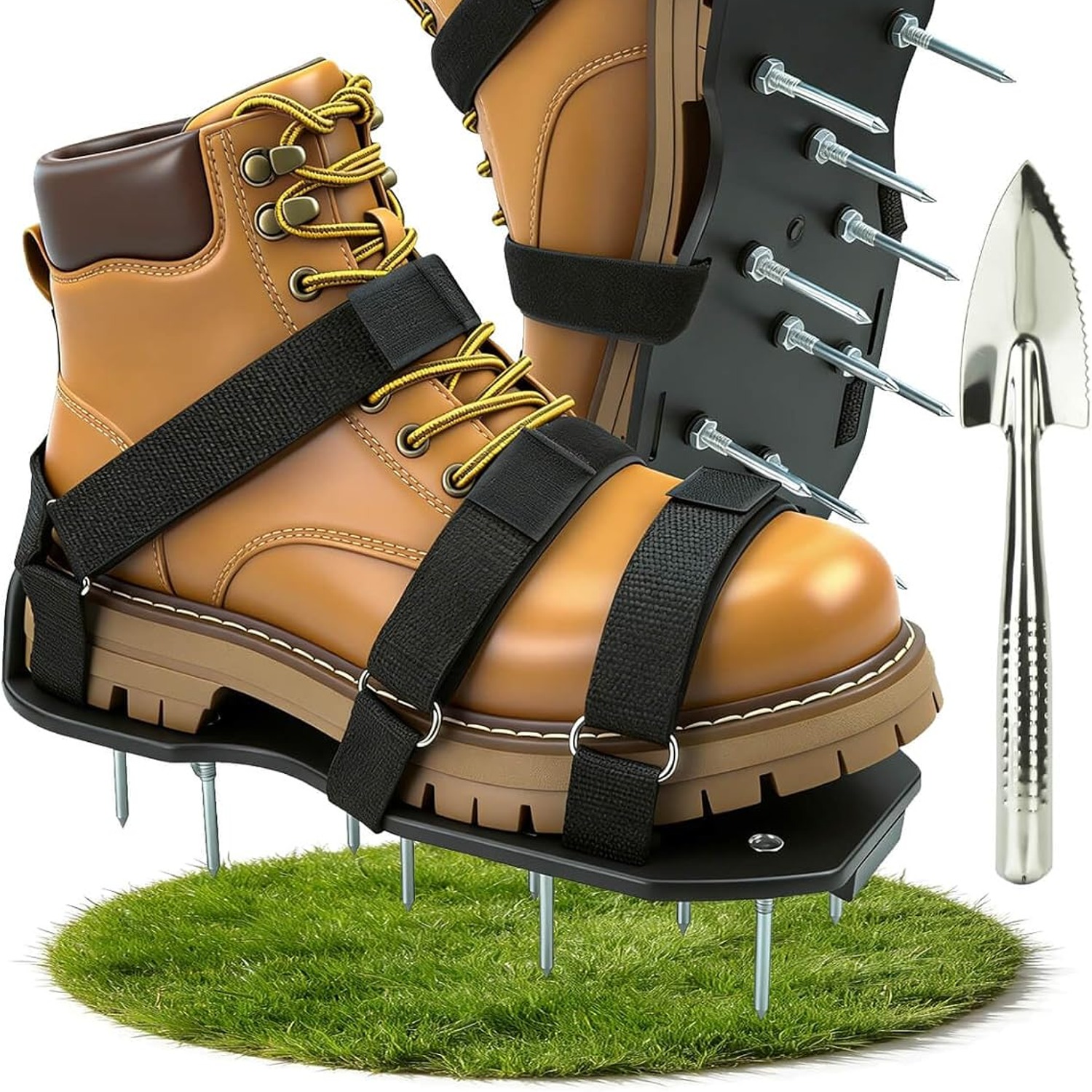
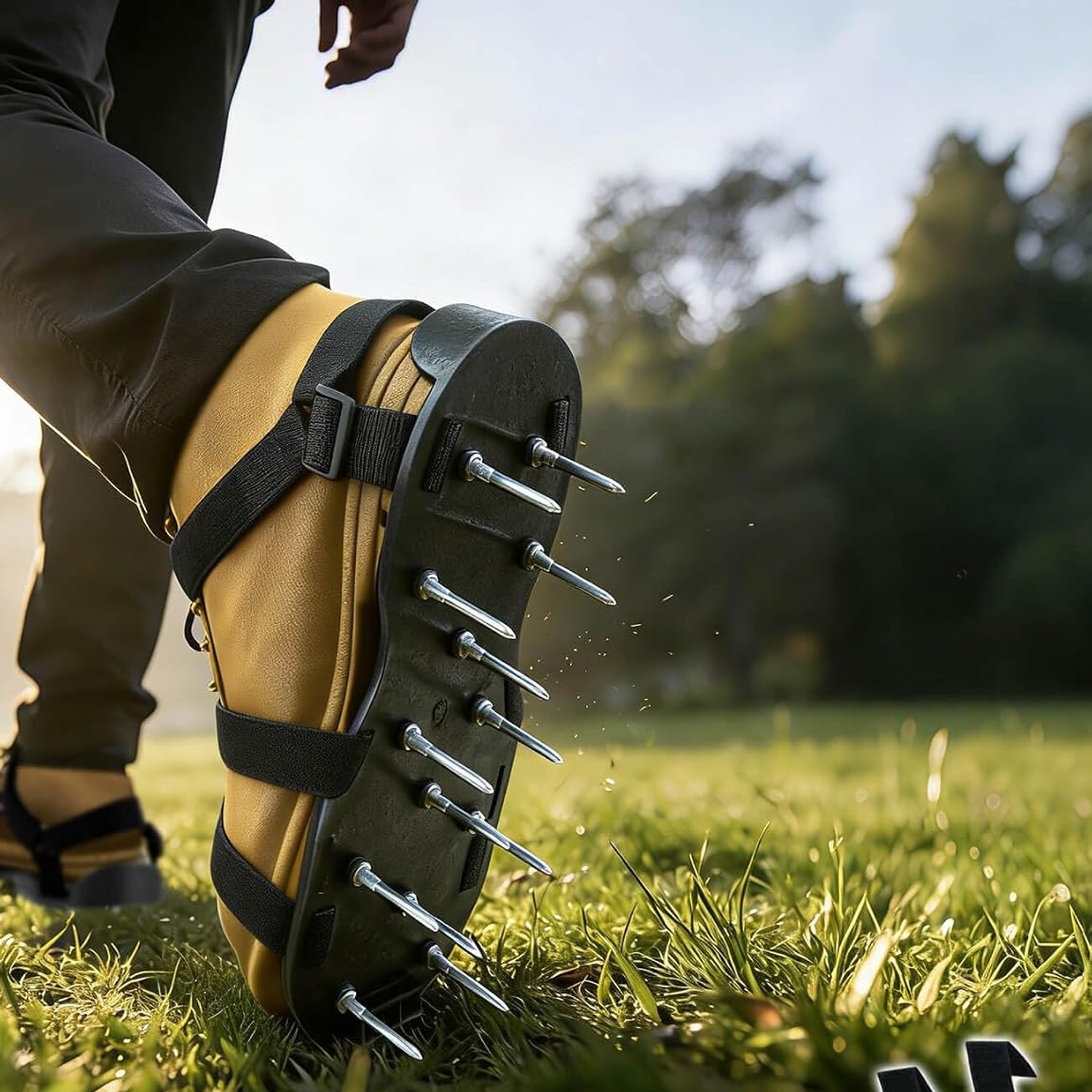
Aerator grass shoes fix this the most direct way possible. You strap them over your boots, walk the lawn, and 26 metal spikes punch channels through the crust as you go. No motor, no hire fee, no weekend spent wrestling a machine.
How spiked lawn sandals actually work
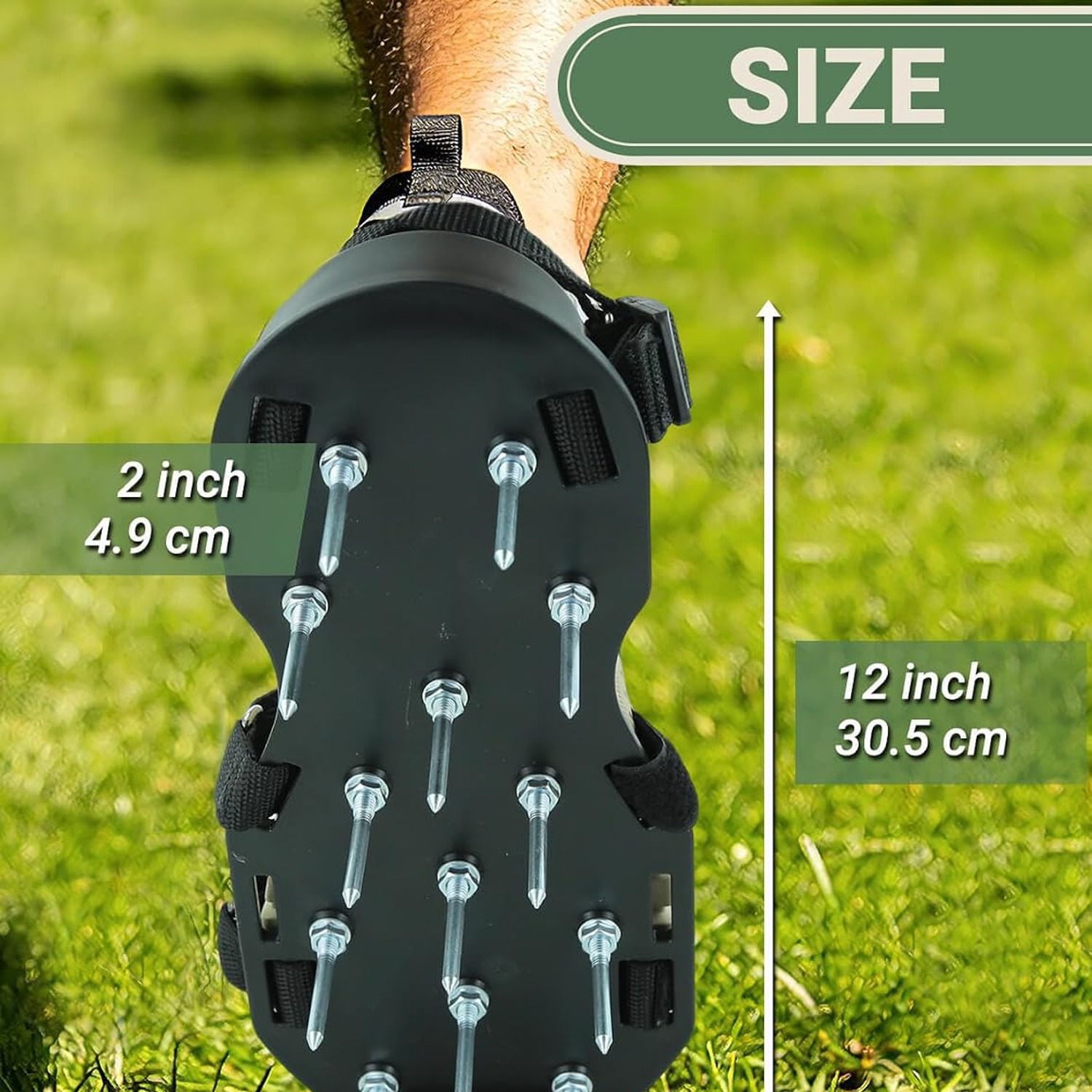
Each sandal in this pair carries 13 heavy duty metal spikes, and each spike is 48 mm long. Across the two sandals that is 26 holes per double step. Your body weight does the work. You lift a foot, place it down, and gravity drives the spikes through the thatch layer and into the soil below.
Those narrow channels do three useful things. They let oxygen reach the root zone, which roots need just as much as water. They give rainwater a route down instead of across. And they carry fertiliser and lawn feed to where it can actually be absorbed rather than leaving it to sit on the surface and burn off.
Over a few weeks the grass responds by sending roots sideways and down into the loosened ground. Thicker roots mean thicker grass, and thicker grass crowds out the weeds and moss that were taking advantage of the bare patches.
This is spiking rather than coring. A hollow tine tool removes a plug of soil, which is the deeper treatment used on sports grounds. Spiking presses soil aside instead. For a typical home lawn done twice a year, spiking is plenty, and it takes a fraction of the time and effort.
Fit, straps and why that matters more than you think
Cheap aerator sandals fail in one of two places. Either a spike works loose and starts spinning in its socket, or the base slides sideways under your foot and you spend the whole session fighting it.
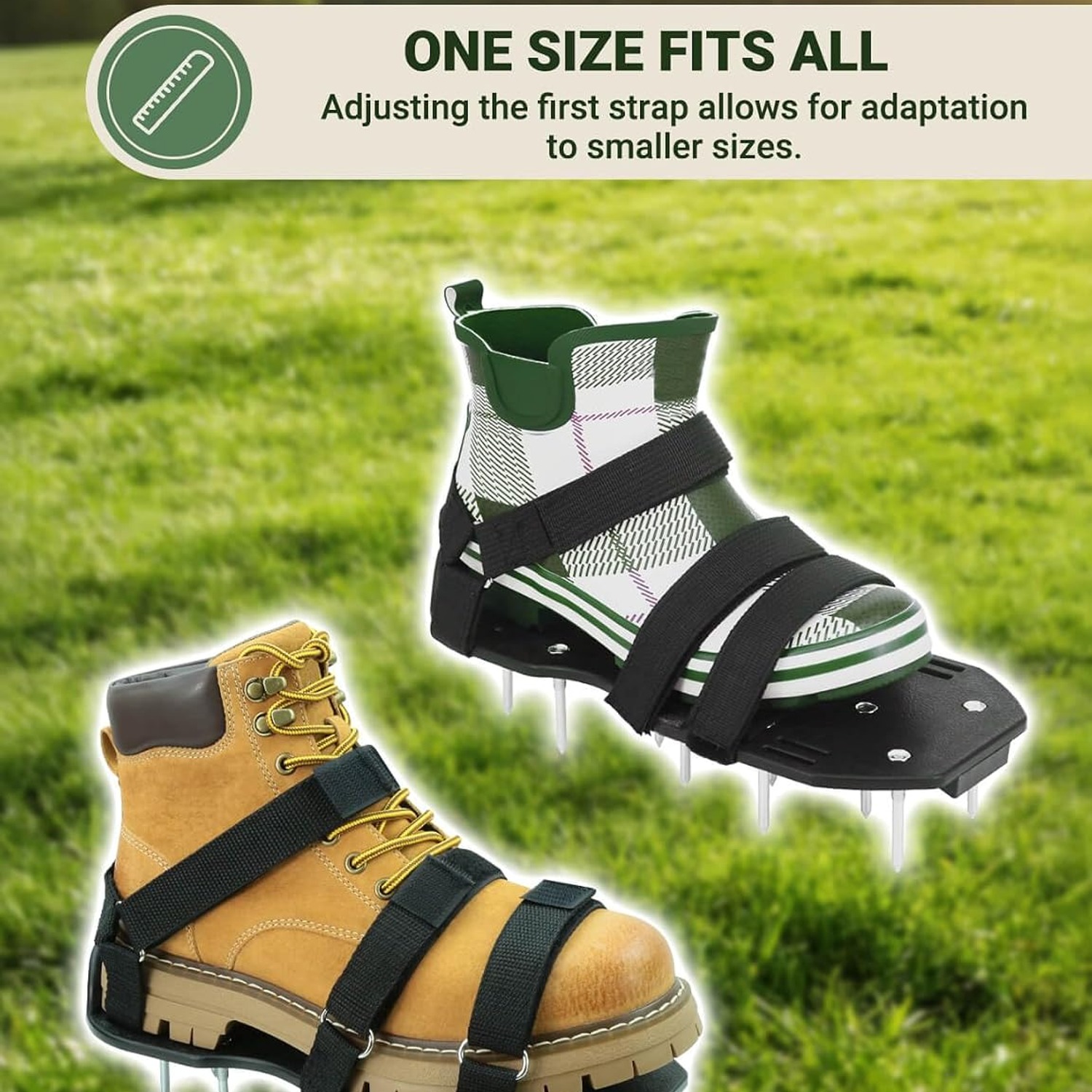
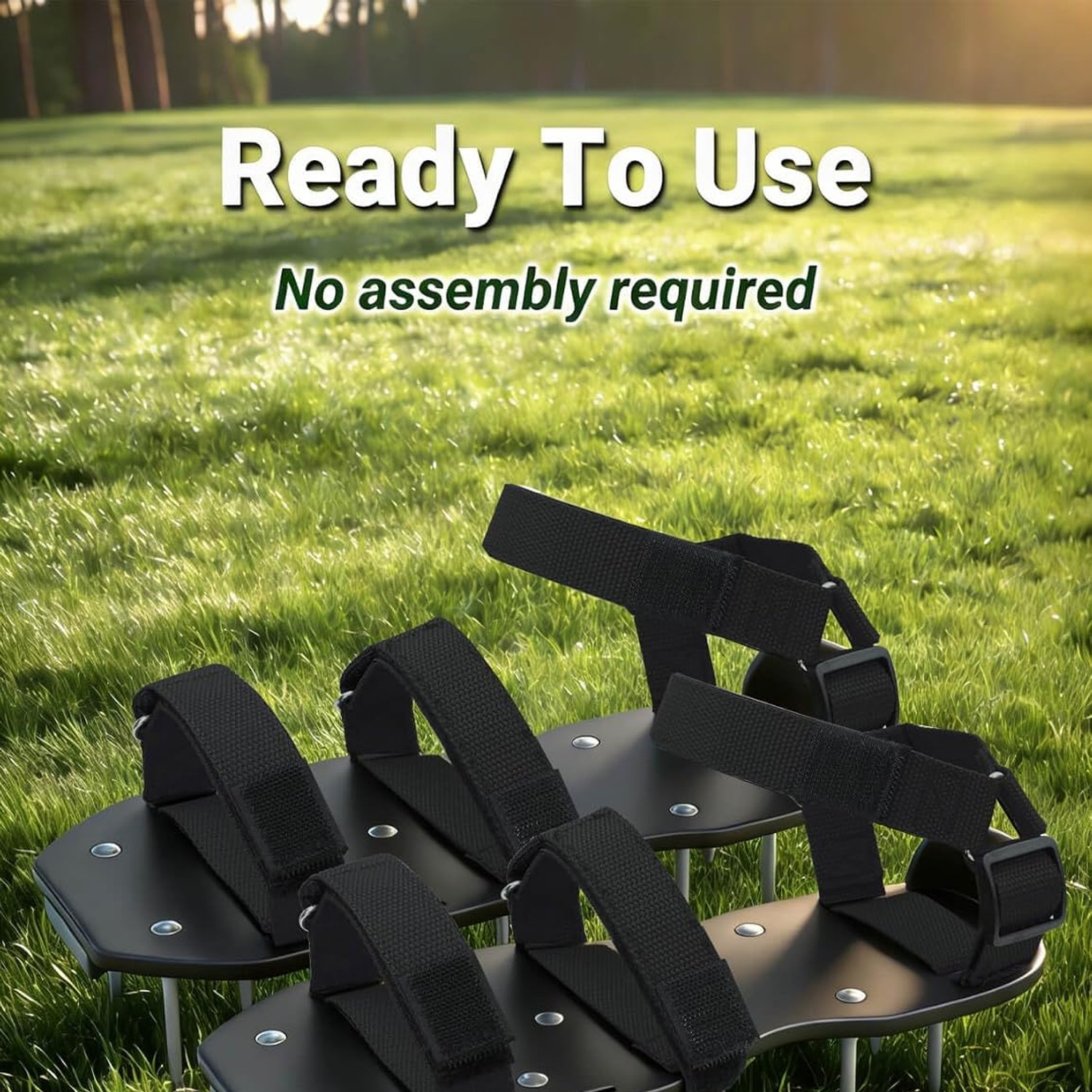
This design addresses both. There are two straps across the instep, not one. That second strap stops the base rocking when you shift weight onto the ball of your foot, which is exactly when a single-strap sandal twists. Adjustable fasteners on both straps mean one size covers slim trainers through to heavier work boots, so the same pair suits different people in the same household.
Underneath there is a lug boss, a raised mount that holds each spike firmly in its socket. Anti-slip pads sit on the base to give you more grip on damp grass. The plastic base includes heel support, so your heel is not left hanging off the back where it has nothing to push against.
None of this is glamorous, but it is the difference between a tool you use twice a year for a decade and one you give up on after a single Saturday.
Who these suit
Anyone with a small to medium natural lawn gets good value here. If you have been thinking about hiring a powered aerator for a weekend, consider walking your garden twice with a set of strap on lawn spikes first. For most suburban blocks it does enough.
They suit people who like combining jobs. Wear them while you mow and the lawn gets cut and spiked in the same trip. They suit renters who do not want to buy or store bulky equipment, because the whole pair packs down to a 32 x 14 x 11 cm box weighing 960 g.
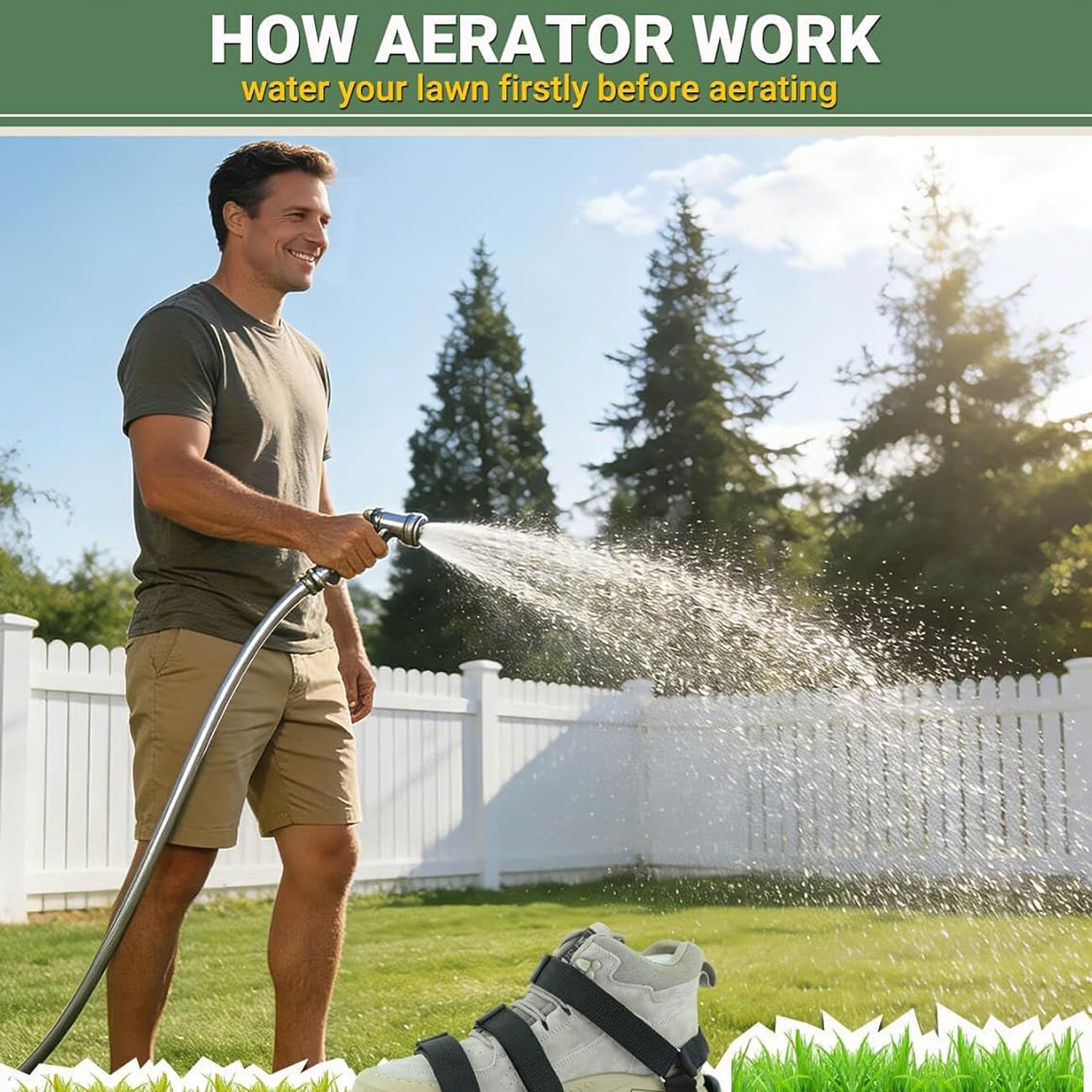
They are less suitable in a few cases. If you have artificial turf, do not use them at all, because the spikes will tear the backing. If your balance is not steady, walking on spikes takes care and you may be happier with a push-along tool. And if your soil is bone dry hard clay, you will want to water the lawn the day before so the spikes can get in.
Choosing the right approach for your lawn
Start by checking how bad the compaction really is. Push a screwdriver into the lawn. If it slides in easily to 10 cm, you probably do not need to do much. If it stops after two centimetres, your lawn is asking for help.
Timing matters. Spring and early autumn are the usual windows, because the grass is growing and will recover fast. Skip the hottest stretch of summer and skip frozen ground. Slightly moist soil is ideal, damp enough to give but not so wet that you leave boot-shaped dents.
Technique is simple. Walk in overlapping lines, like mowing, and lift each foot cleanly rather than dragging it. Dragging is how people tear turf. On a first pass over badly compacted ground, go slower and let your weight settle on each step. A second pass at right angles to the first gives you better coverage if you have the time.
Follow up straight away while the holes are open. Rake off any loose thatch, spread lawn feed or a thin layer of sandy topdressing, and water it in. The holes act as a delivery route and that is where most of the benefit comes from. Skipping this step means you have done half the job.
Looking after them
Care is quick. Hose the soil and clippings off the spikes and base after each use, then leave them to dry fully before they go back on the shelf. Mud left to sit is what turns metal spikes rusty, so a thirty second rinse does more than any amount of scrubbing later.
Before each session, run your thumb over the fasteners and give each spike a wiggle. A loose spike is usually just a loose nut, and tightening it takes a moment. Check the straps for fraying at the same time.
Store them spike-side down in a box or up on a shelf, well away from children and pets. Nobody wants to find a pair face up on a dark garage floor. If they are going into storage for a long winter, wipe the metal with a little oil first.
The short version
Compacted soil is the hidden reason a lot of lawns look tired, and aerator grass shoes are the cheapest direct answer to it. You get 13 metal spikes per sandal at 48 mm each, dual instep straps with adjustable fasteners, a lug boss holding the spikes in place and anti-slip pads underneath. There is nothing to build and nothing to charge.
Use them twice a year on slightly moist soil, walk in overlapping lines, feed and water straight after, and give the grass a few weeks. The thin patches fill in, water soaks away instead of pooling, and the lawn starts holding its colour between waterings.
For the price of a bag of good fertiliser, it is a tool that keeps earning its shelf space.