



The complete guide
Choosing Your First Flute, A Practical Buyer's Guide
The problem with buying a first flute
Most people buying a first flute are not flute players. A teacher sends home a note, the school band has a spot, or a child points at one in a concert, and suddenly there is a decision to make about an instrument nobody in the house understands. The vocabulary does not help. Offset G, split E, closed hole, C flute, 16 key. None of it means anything until somebody explains it, and shop staff often assume you already know.
The risk runs both ways. Spend too little and the instrument fights the player, pads leak, keys stick, notes refuse to speak, and the student concludes they are bad at the flute when really the flute is bad at being a flute. Spend too much and you have a professional instrument sitting in a cupboard after one term.
A sensible first flute sits in the middle. It has the standard keywork a teacher expects, it seals properly, it responds without heroic breath control, and it comes with the bits needed to look after it. That is what this page is about.
What the specifications actually mean
C flute. This is the pitch of the instrument, not a scale you have to play in. Every standard flute tutor book, every school band part, and almost every fingering chart assumes a flute in C. If a teacher asks for a C flute, this is it. Other flutes exist, piccolos, alto flutes, but they are for later and for specific music.
16 key. That is the number of keys in the mechanism. It is the normal count for a full range Boehm system flute, which is the design nearly all modern flutes use. It is not a feature that varies much between student instruments, so it is more of a reassurance than a selling point. If a flute has fewer, something unusual is going on.
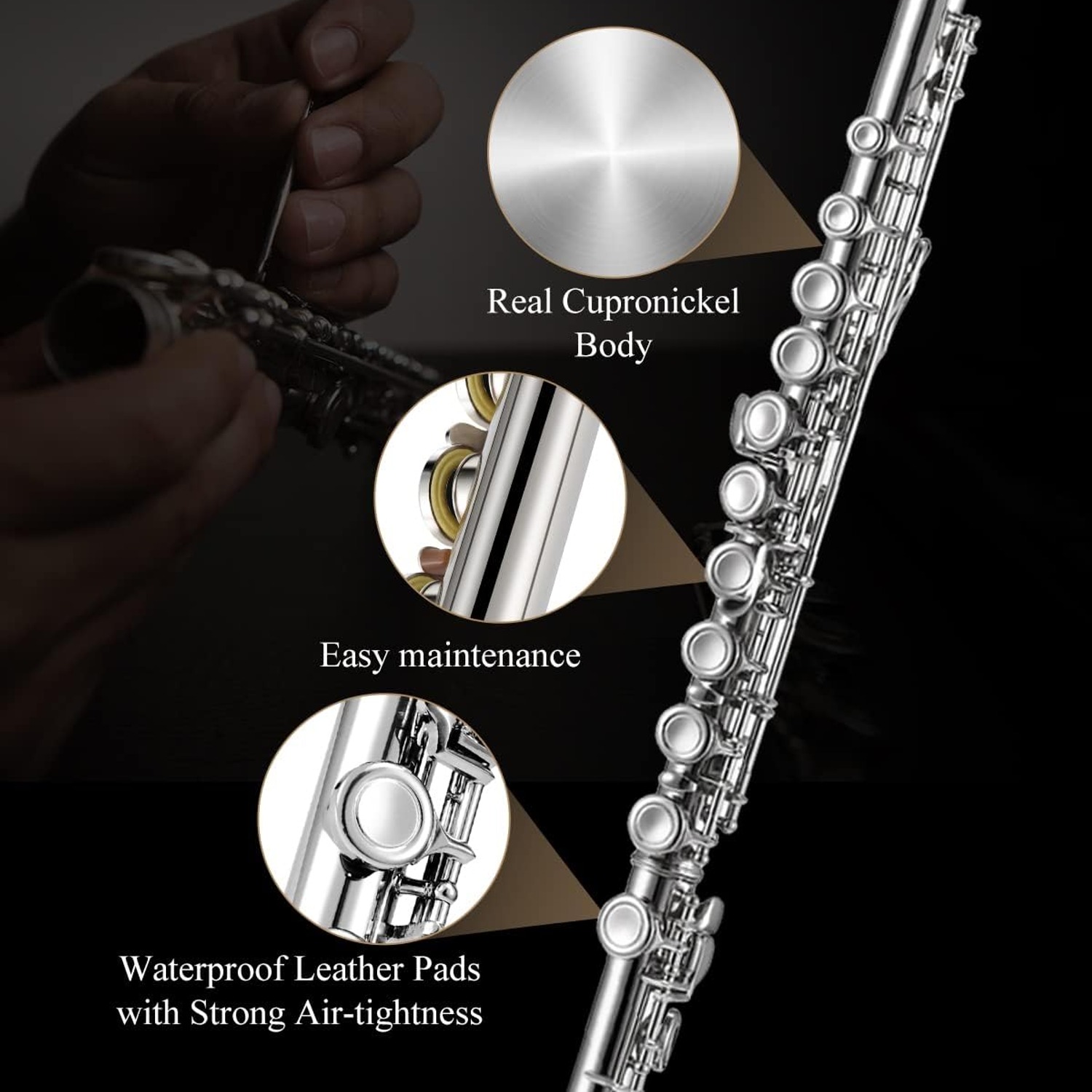
Closed hole. The keys have solid cups. A finger presses the key and the note seals. Compare that with open hole keys, where each key has a ring and the fingertip has to cover a gap precisely. Open hole flutes let advanced players bend pitch and play certain modern techniques, but for a beginner they are just an extra way to fail. Almost every teacher starts students on closed hole. If you are weighing up the best closed hole flute options for a first instrument, the answer is usually just to get one and move on.
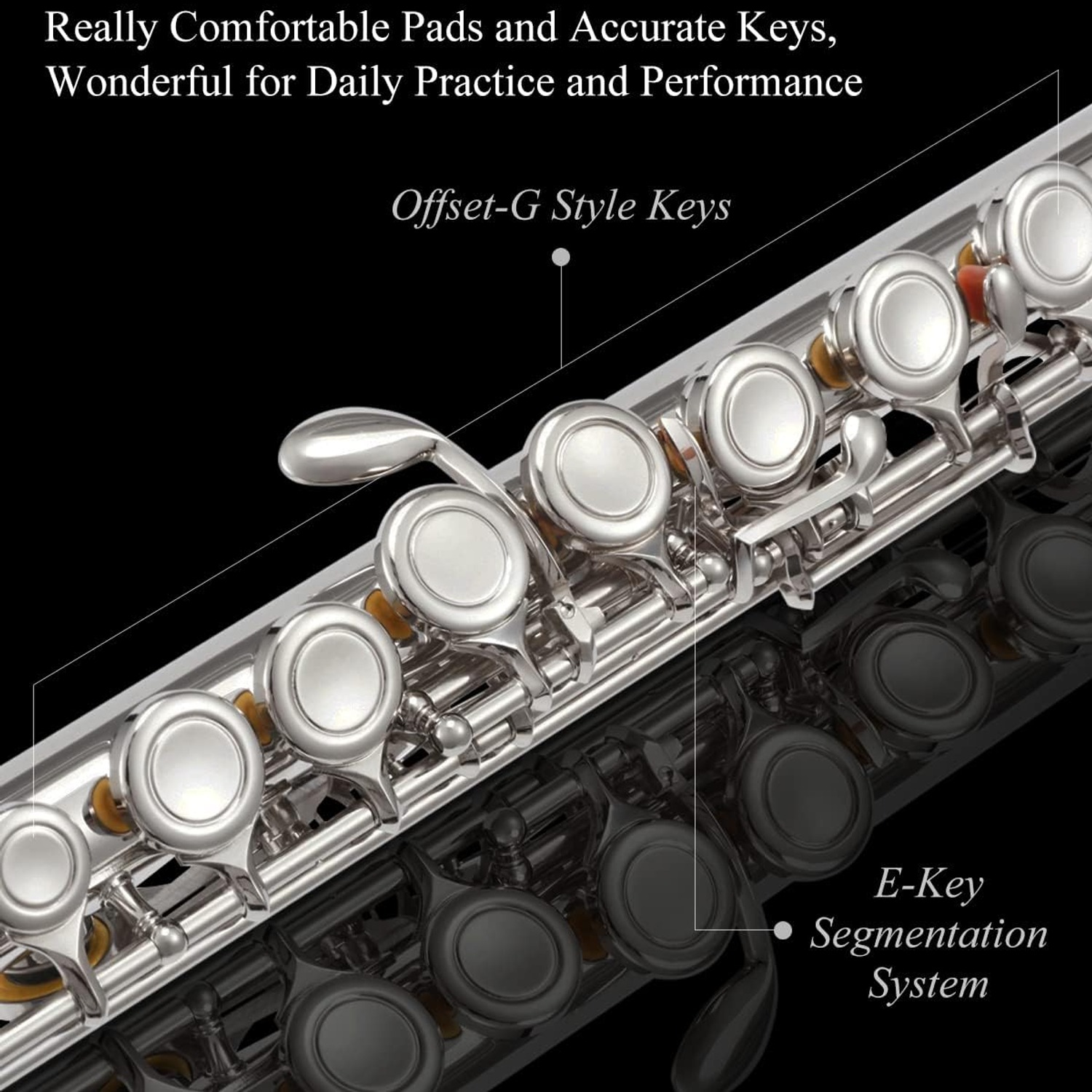
Offset G. The G key sits slightly out of line, nearer where the left hand ring finger naturally lands. Try resting your left hand flat on a table and you will see the ring finger does not line up with the others. Offset G respects that. The alternative, inline G, is a traditional layout that suits some hands and strains others. For students, offset wins.
Split E. A small linkage that closes an extra key when the high E fingering is used. Without it, high E is a note that cracks, squeaks, or simply does not come out on cue. With it, the note behaves. For a player working through early pieces, that is one less thing to get discouraged by.
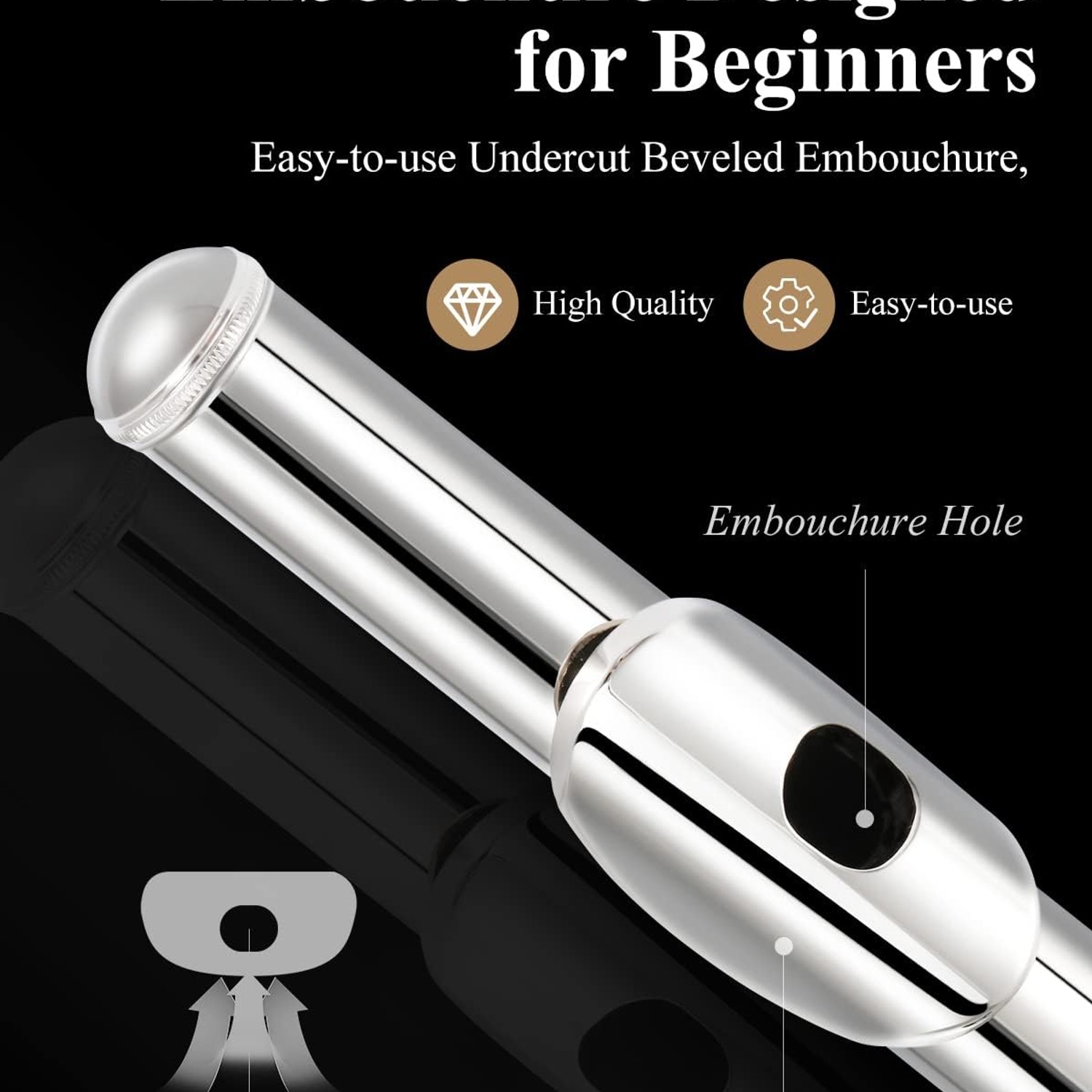
Beveled, undercut embouchure. The edge of the blow hole has been shaped rather than cut square. The practical effect is a slightly wider margin for error in air angle, so a beginner gets a note sooner and a steady tone faster.
Who this flute suits
This is a student instrument, and it is honest about that. It suits a child starting lessons at school, typically around nine or ten and upwards, an adult picking the flute up for the first time, or someone returning after years away who does not want to spend heavily before knowing whether the habit sticks.
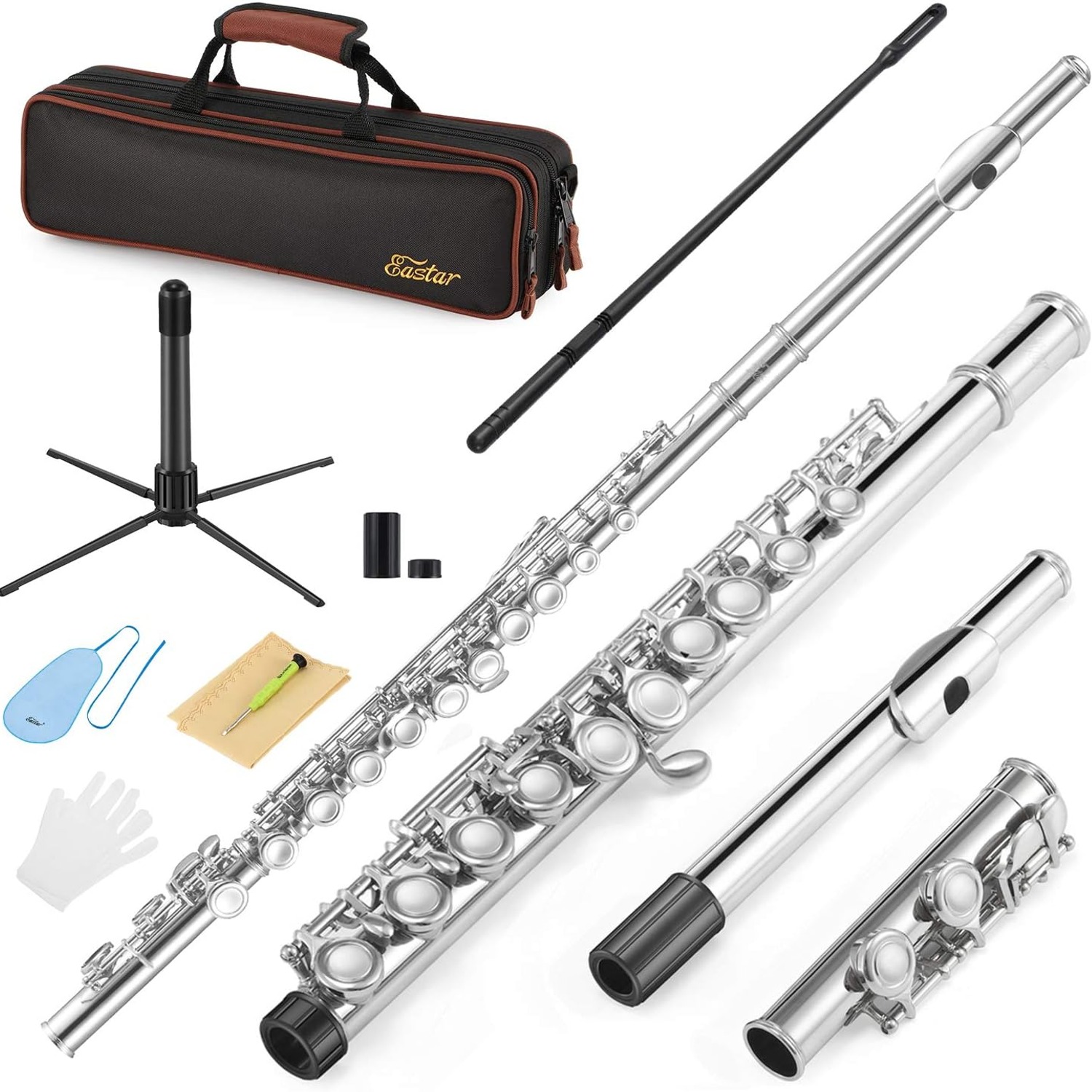
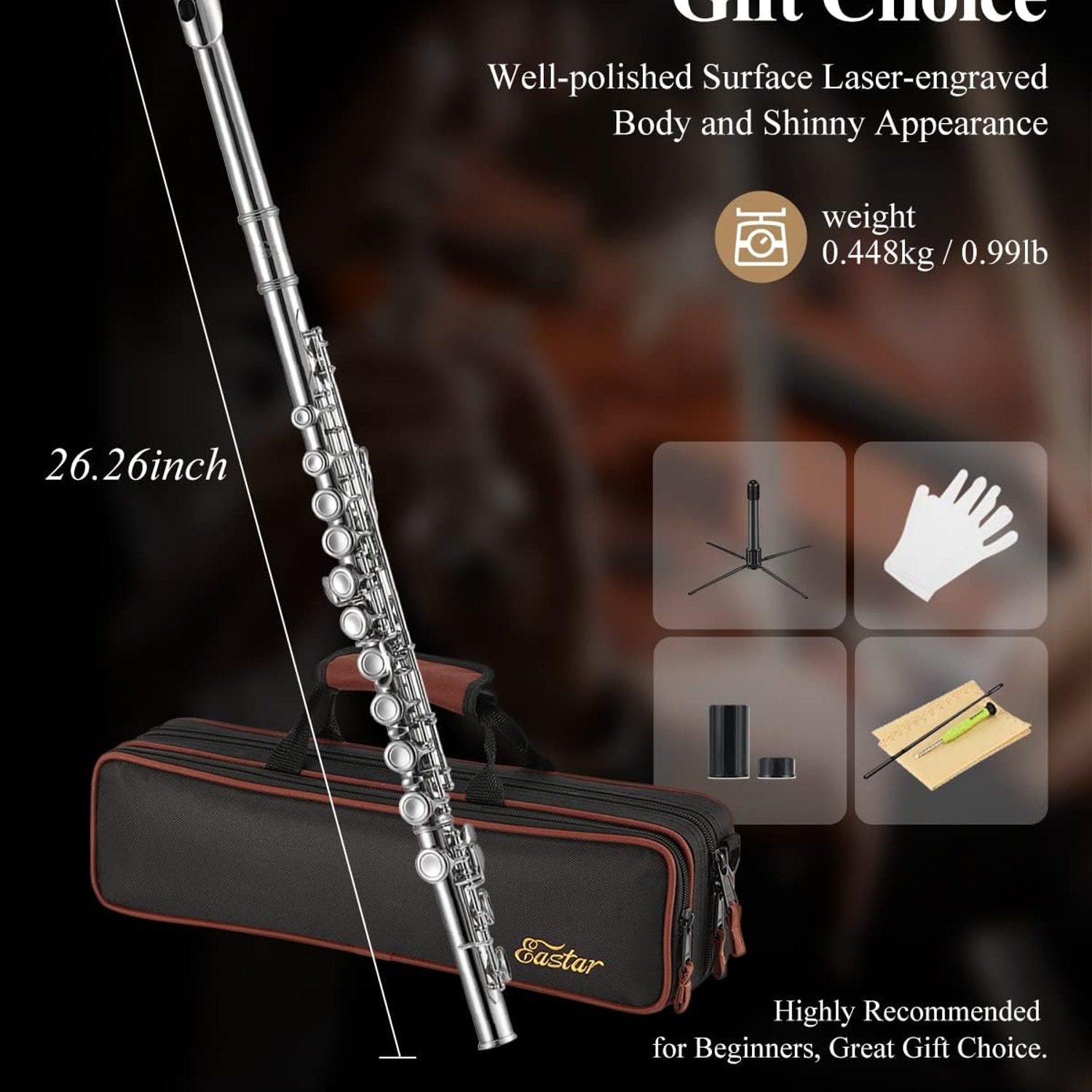
It also suits a household that wants one box rather than a project. The flute arrives with a hard case, a stand, a cleaning kit, gloves and adjustment screws. Looking for the best flute starter kit usually means looking for exactly that combination, because buying a case and a cleaning rod separately after the fact costs more and delays the first lesson.
Who it does not suit: a player already working at an advanced grade who needs open holes, a B foot joint, or a solid silver head joint for tonal reasons. If a teacher has specified those, this is not the instrument.
Fit matters more than price
The single most common reason a young beginner struggles is reach. Hold the assembled flute out to the right and check two things. Can the left hand fingers sit on their keys without the wrist bending hard? Can the right hand little finger reach the foot joint keys without the hand rotating uncomfortably?
If the answer is no, the issue is not effort or talent, it is arm length. Some players solve this with a curved head joint for a year or two. Others simply wait a term. A teacher can judge this in thirty seconds, so ask before buying if you are unsure.
Weight is the other comfort factor. At 400 g, this one is on the light side, which helps during longer practice. Good posture helps more. Shoulders down, flute roughly parallel to the floor, head facing forward rather than tipped.
Getting the first sound
Nobody plays a tune on day one. Start with the head joint alone. Rest the lip plate on the chin so the hole sits just below the lower lip, cover around a quarter of it with the lip, and blow a narrow stream across the opening, the way you would across a bottle top. The note arrives, then disappears, then arrives again. That is normal.
Ten minutes a day beats an hour on Sunday. Embouchure is muscle memory, and muscles learn through repetition rather than marathon sessions. Most players get a reliable tone within a week or two of short daily attempts.
Once the head joint sings, assemble the full instrument. Hold each section by a part without keys and twist gently. Pushing straight on, or gripping the rods, is how key mechanisms get bent.
Looking after it
Flute care is simple and the habits take two minutes.
After every session, swab each joint with the cleaning rod and cloth to pull moisture out. Moisture sitting on pads is what makes them stick, swell and eventually leak. Wipe fingerprints off the outside with a soft dry cloth. The supplied gloves are there so skin oils never reach the finish in the first place.
Never run water through the instrument. Never use metal polish or household cleaners, since they get into pad seats and ruin them. Do not leave the flute on a bed, a sofa or a chair, which is how most student flutes get sat on. The stand is for short breaks, the hard case is for everything else.
Store the case somewhere with stable temperature. Not a car boot in summer, not next to a radiator, not a damp garage. An annual service with a repair technician keeps pads seated and keys regulated, and it costs far less than fixing a neglected instrument.
The adjustment screws included in the set are for a technician, not for experimenting. If a note stops speaking, resist the urge to turn anything.
The short version
A first flute needs to be in C, have 16 keys, close properly, and not fight the player. This one checks those boxes, adds an offset G and split E that make the left hand and the high E easier, and ships with the case, stand, cleaning kit and gloves that a beginner needs anyway.
It weighs 400 g and packs down to 40.8 x 13.5 x 8.2 cm, so carrying it to lessons is not a chore. The body is listed as alloy steel with a silver finish and a nickel colour, and the sound profile is described as balanced and clear.
Check hand reach before you buy, build the daily swabbing habit from the first week, and book a service once a year. Do that, and the instrument will outlast the beginner stage comfortably.