




The complete guide
How To Choose And Use An Ultrasonic Pest Repeller At Home
The problem nobody wants to talk about
Pests are one of those household problems people keep quiet about. There is a weird shame attached to it, as if a mouse in the kitchen says something about how you live. It does not. Old buildings have gaps. New builds have service ducts. Terraced houses share walls with neighbours who may or may not be tidy. Insects and rodents follow warmth, water and crumbs, and almost every home offers all three.
The usual responses are sprays and traps. Both work in their own way, and both have obvious downsides. Sprays leave a smell and a film on surfaces you cook on. Traps mean dealing with the aftermath, which nobody enjoys, and they do nothing about the thing that brought the pest in to start with. Bait stations raise real worries if there are children or pets around.
That gap is where plug-in ultrasonic devices sit. They do not kill anything. They try to make a space uninviting, so pests choose somewhere else.
What an ultrasonic repeller actually does
The principle is simple. The unit emits sound at frequencies above comfortable human hearing, in this case a stated working range of roughly 5kHz to 15kHz. The intent is to create an environment that common indoor pests prefer to avoid.
It is worth being honest about what that means. This is a deterrent, not a cure. If there is already a nest in your loft, a plug-in device is not going to clear it out. What it can do is make a treated room less appealing over time, which is why the guidance talks about results after a few weeks rather than overnight. Some people notice more scurrying in the first few days, because pests are moving around rather than settling. That phase usually passes.
Two things decide whether you get a useful result. The first is placement. The second is patience.
Why four units instead of one
Ultrasonic sound is easily blocked. It does not travel through plasterboard, brick or closed doors. It gets soaked up by carpet, curtains, sofas, mattresses and stacked boxes. A single unit in the hallway does very little for the bedrooms off it.
That is the reason this comes as a four pack rather than a single device. Each unit is rated for coverage of up to around 1600 sq ft, but that figure assumes an open, uncluttered space. In a furnished room with soft furnishings, real-world reach is considerably less. One unit per room is the sensible rule.
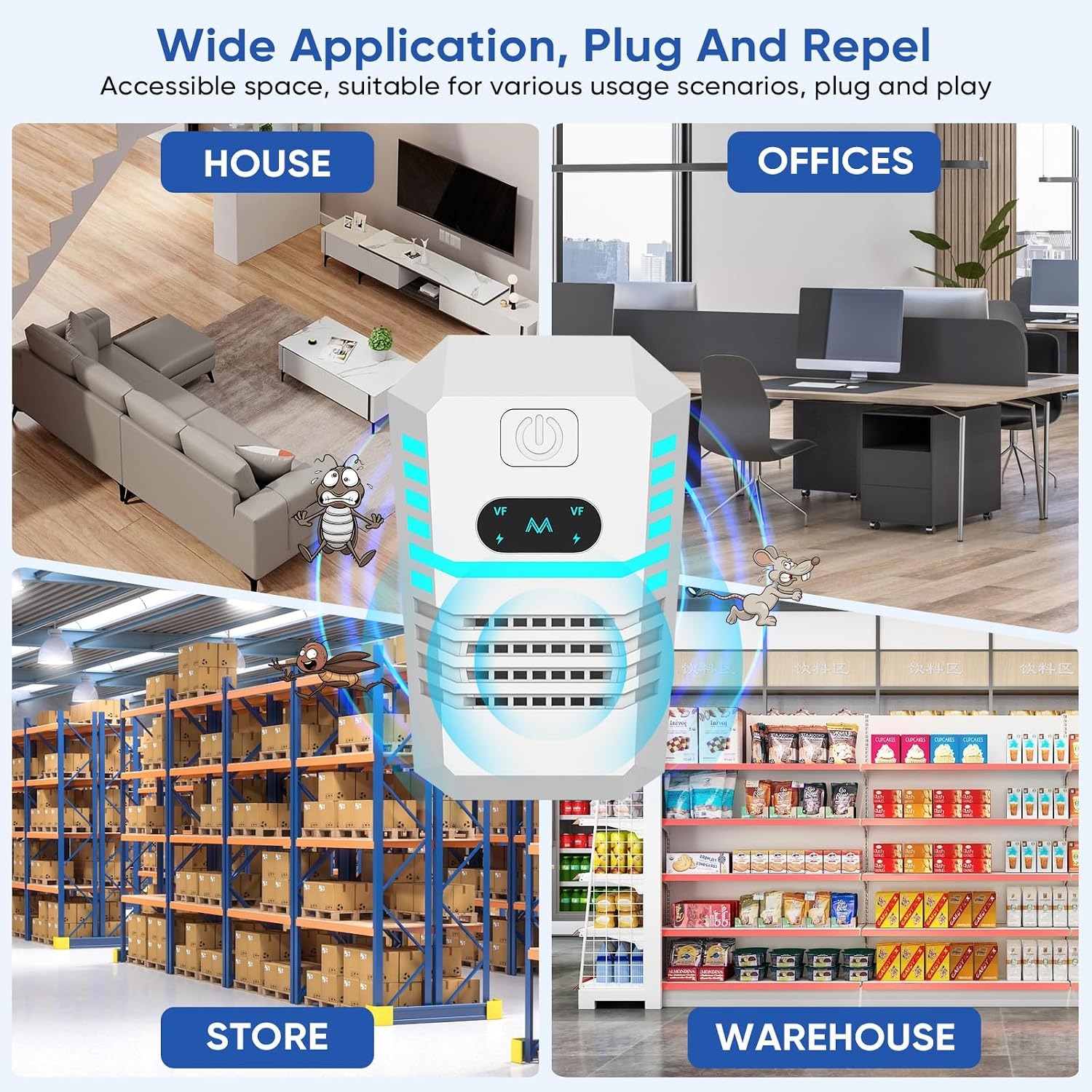
With four, most people cover the kitchen, a hallway or landing, a basement or garage, and one problem bedroom. If your home is smaller, you might put two in the rooms where activity is worst and keep the spares for later, or move them around as the problem shifts.
Picking the right mode for the room
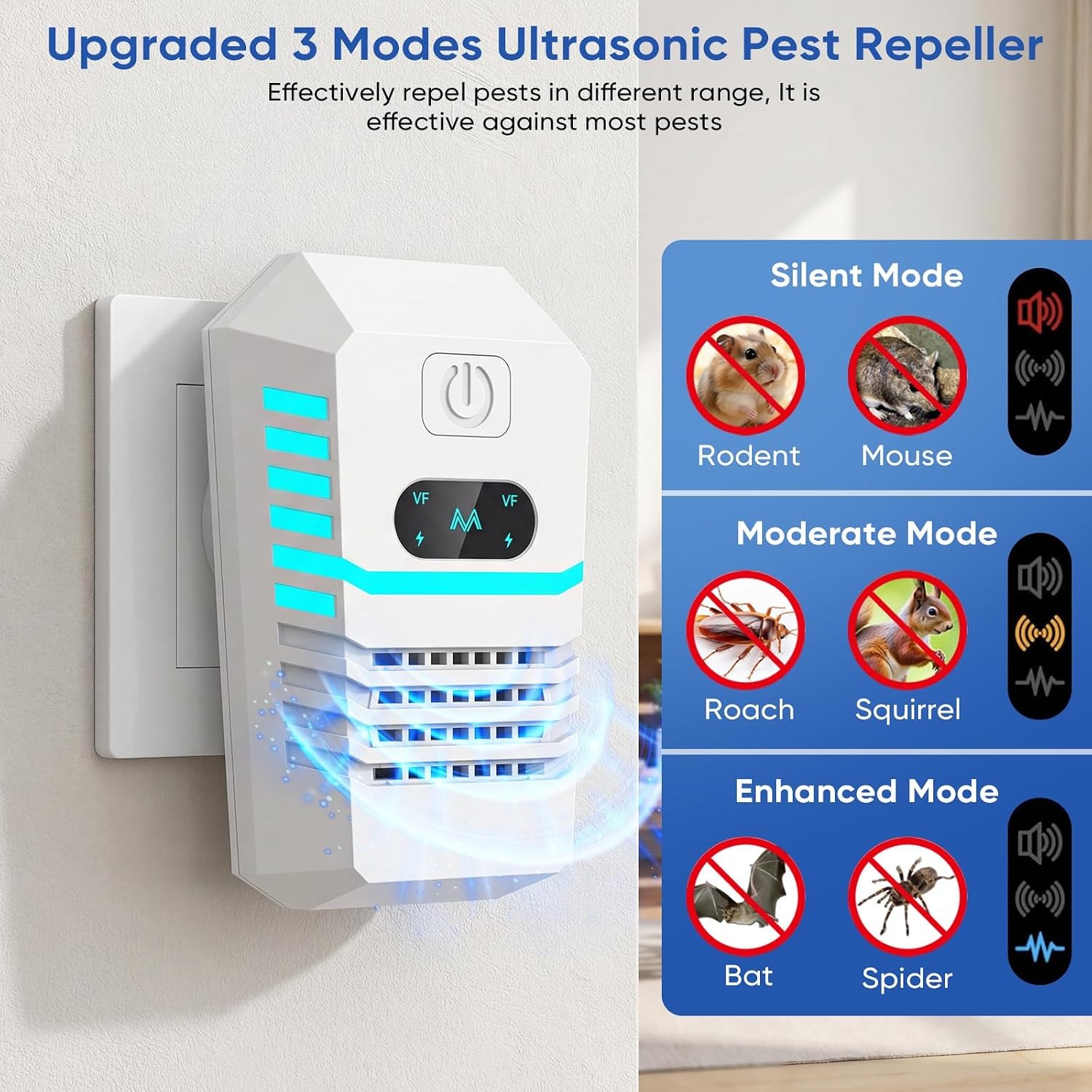
Three modes give you some useful flexibility. Enhanced is the strongest. Medium sits between. Silent is the gentlest.
A practical approach looks like this. Run Enhanced in utility spaces where nobody sits for long, so garages, basements, attics, laundry rooms and under-stairs cupboards. Use Medium in kitchens, hallways and living rooms. Keep Silent for bedrooms and anywhere a light sleeper spends the night.
You can change your mind freely. Pressing the button cycles through the settings, so there is nothing to reconfigure. If you have been running Enhanced in a room for a month and activity has dropped away, stepping down to Medium is a reasonable next move.
Where to plug it in
Placement is the single biggest factor people get wrong. A few guidelines help.
Pick a socket on an open wall rather than one tucked behind furniture. Mount height matters less than a clear line of sight from the front of the unit into the room. Somewhere between knee and chest height is typical, because that is where most sockets are anyway.
Keep the face of the device uncovered. A curtain hanging over it, a box pushed against it or a sofa backed up to it will cut the useful output hard. The same goes for plugging it in behind a chest of drawers.
Think about where you have actually seen signs. Droppings behind the cooker, webs in a particular corner, a chewed bag in the pantry. Put the unit in the same room as the evidence, ideally within sight of it.
Finally, avoid damp. Bathrooms, directly above sinks and anywhere that gets splashed are not good spots for a mains-powered device.
Who it suits, and who it does not
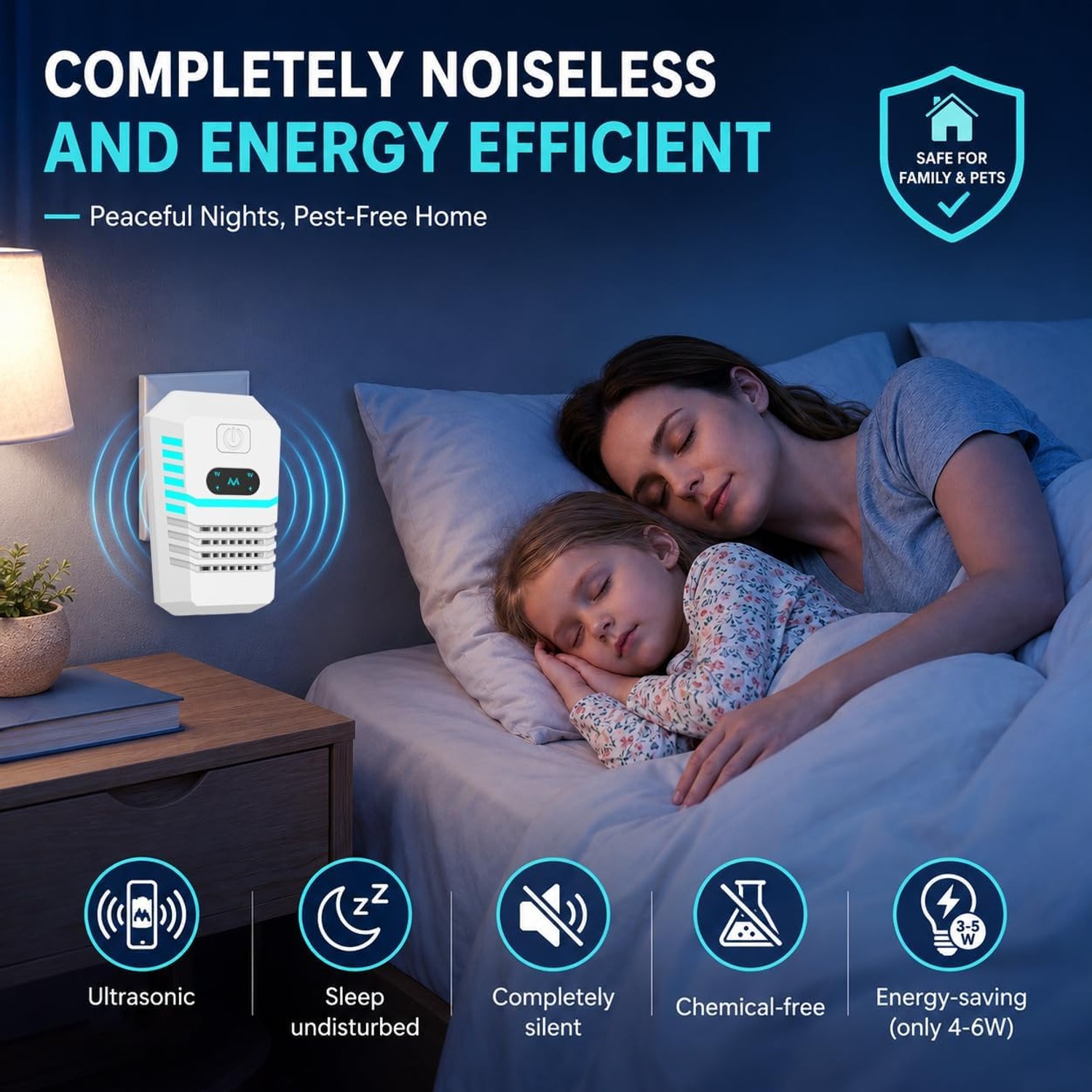
It suits people who want a chemical free pest control option they can leave running and mostly forget about. Renters like it because nothing is drilled, sprayed or permanently altered. Families with young children often prefer it to bait stations for obvious reasons. People in flats and shared buildings like that it creates no smell that neighbours will notice.
It is less suited to anyone facing a serious, established infestation. If you can hear sustained activity in the walls, if there are droppings appearing daily in multiple rooms, or if you have found a nest, call a professional first. Use the repeller afterwards to help keep the space from being reclaimed.
One more group to flag. If you keep rodents as pets, hamsters, gerbils, rabbits, guinea pigs, do not run an ultrasonic unit in the same room. The sound that is meant to bother a wild mouse will bother a pet one too. Cats and dogs are generally fine, but watch them for a few days after setup and move the device if behaviour changes.
Running costs and day to day use
Each unit draws about 3 to 5W. That puts it in the same bracket as a night light. Running four of them continuously, around the clock, costs very little over a year, and there is nothing to buy afterwards. No refills, no batteries, no cartridges.
Continuous running is the right approach. Switching the units off during the day or while you are on holiday undermines the whole point, because the area becomes comfortable again the moment the sound stops. Plug them in, choose a mode, and leave them.
Keeping them working
Maintenance takes about a minute a month. Unplug the unit, wipe the casing with a dry or barely damp cloth, and let it dry before plugging it back in. Do not use solvents, do not run it under a tap, and do not open the housing.
The other check is practical rather than technical. Over weeks and months, furniture gets moved, Christmas boxes get stacked, and a unit that was clear in January ends up behind a suitcase by June. Walk around now and then and make sure nothing has drifted in front of the devices.
Do not forget the basics
An ultrasonic repeller works best alongside sensible housekeeping, not instead of it. Pests come in for food, water and shelter.
Seal gaps around pipework and under doors. Keep dry goods in sealed containers rather than open packets. Empty bins regularly and rinse recycling. Fix dripping taps, because water is as big a draw as crumbs. Do not leave pet food down overnight.
None of that is glamorous, but it removes the reason pests came in. The repeller then handles the job of making what is left of the space unappealing.
The short version
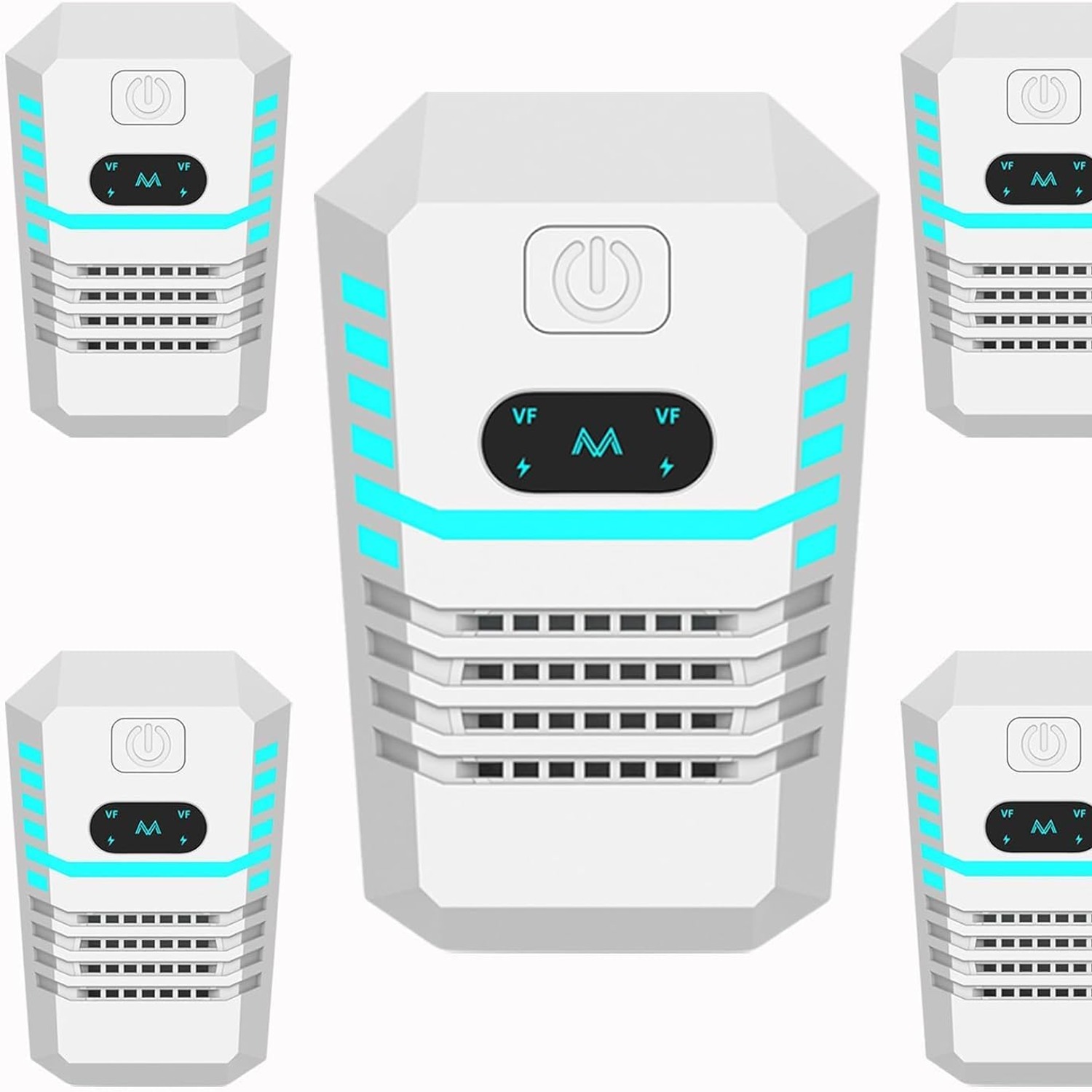
This is a four pack of white plug-in units, each 5.7 x 3.1 x 8.7 cm and 152 g, running from a standard socket at about 3 to 5W. Three modes let you pick between Enhanced, Medium and Silent, across a stated working range of roughly 5kHz to 15kHz. The listing points it at mice, rats, roaches, spiders, ants and common indoor insects, with coverage of up to 1600 sq ft per unit.
Put one in each room that has a problem, keep the front clear, leave it running, and give it a few weeks. Pair it with sealed food storage and a bit of gap-filling, and you have a low-effort, low-cost way to make your home a less attractive place to move into.