




The complete guide
Choosing A Magnetic Door Screen That Actually Stays Shut
The problem with warm weather and doors
There is a stretch every year, usually a few weeks either side of the hottest month, when the house only feels right with the back door open. Air moves. The kitchen stops holding onto the smell of last night's dinner. Then a fly comes in, then four more, and someone shuts the door again because it is easier than chasing them.
That is the whole reason a mesh screen exists. It takes the one good thing about an open door, the airflow, and removes the one bad thing, everything else that wants to come in. A magnetic door screen does it without carpentry, without a frame, and without leaving marks when you take it down.
How a magnetic screen door works
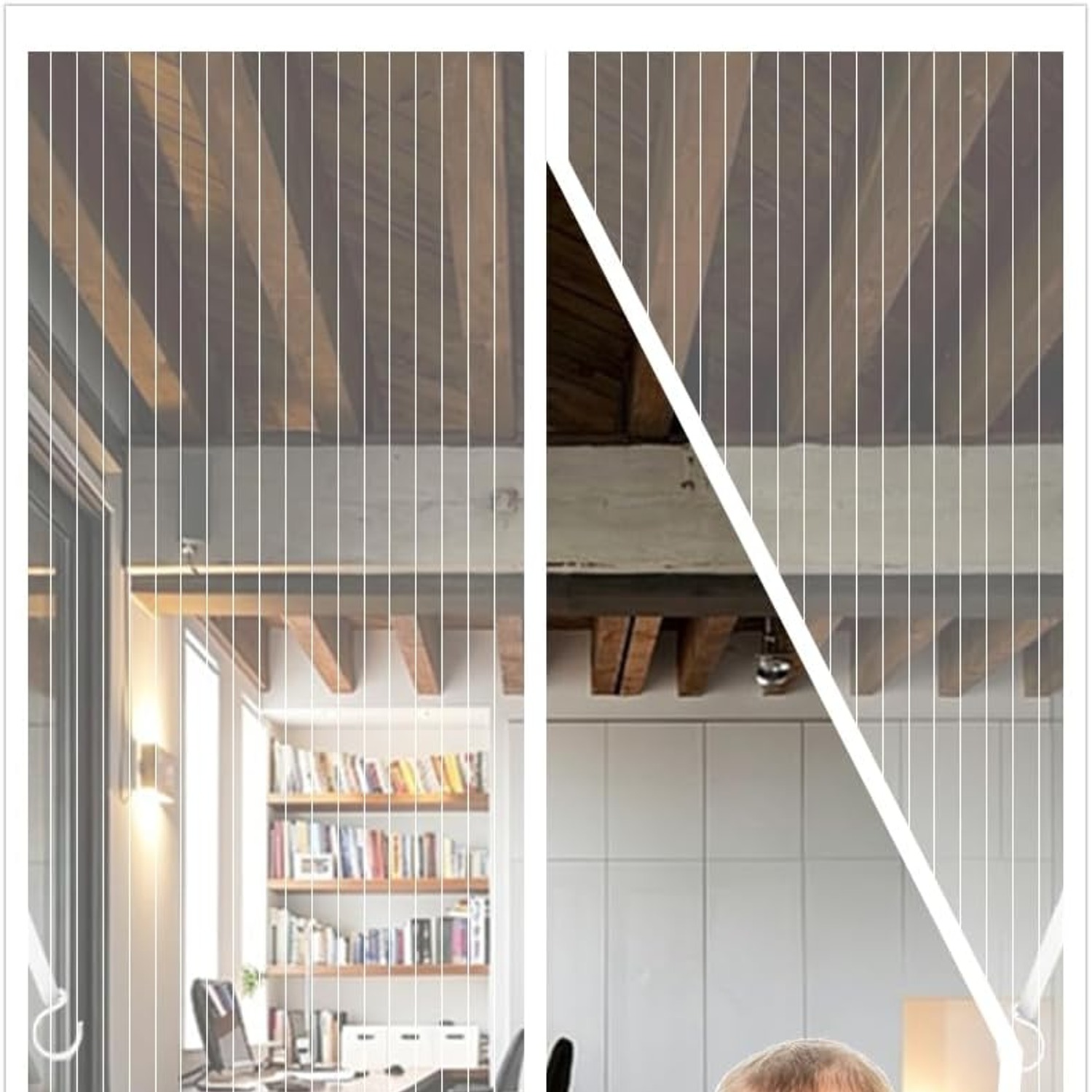
The design is simple on purpose. Two panels of mesh hang side by side from the top of the doorway. Down the centre, where they meet, sits a line of magnets. On this screen there are thirty six of them. You push through the middle, the panels part around you, and the magnets pull the seam back together once you are clear.
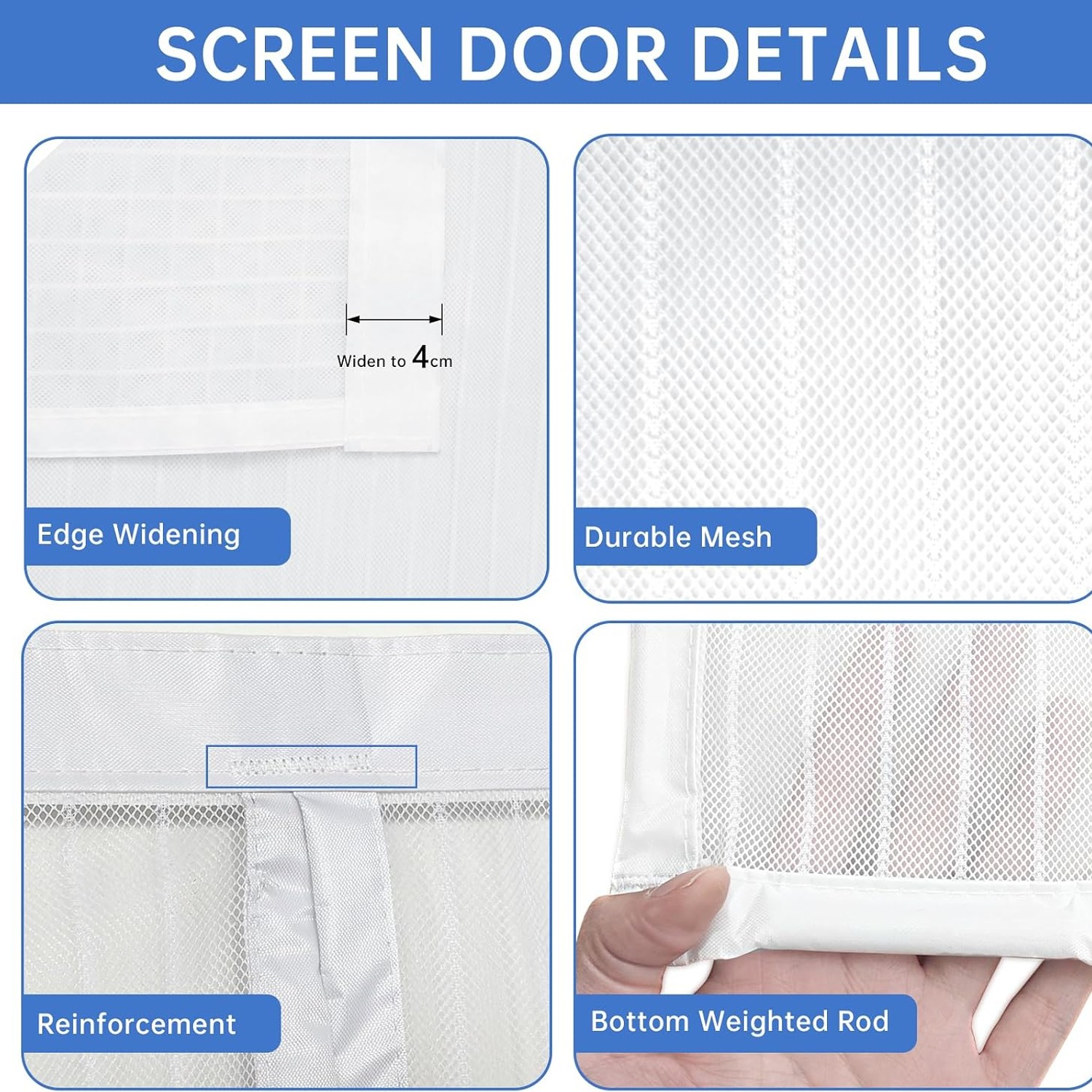
The bottom hem carries weighted rods. Without them, a light mesh panel lifts in the wind and the seam opens from the floor up, which is exactly where insects find their way in. The weight keeps the hem hanging straight and holds the lower part of the seam closed.
The top and sides attach with tape rather than screws. That is a deliberate trade. You lose a little of the rigidity of a permanent screen door, and you gain a fitting that takes twenty minutes, costs nothing to undo, and is allowed in a rented flat.
Who it suits
Pet owners get the most out of it. A dog that cannot decide whether it wants in or out will run you ragged over a long afternoon. Once a dog learns to push the seam, it lets itself through all day and nobody has to stand up. Cats work it out even faster. If you have been searching for the best hands free screen door because of an indecisive dog, this is the category you are looking at.
Anyone who carries things through a doorway benefits too. A tray of food heading out to the table, laundry heading to the line, shopping coming in from the car. You lead with a shoulder and the screen does the rest.
Renters and apartment dwellers come third. No drilling means no deposit argument later. The best screen door for apartments is usually the one that leaves no trace, and tape fitted mesh does exactly that.
It suits people who only need the screen for part of the year, as well. Come autumn the panel rolls up and goes in a cupboard, and the doorway looks like a normal doorway again.
Measuring before you buy
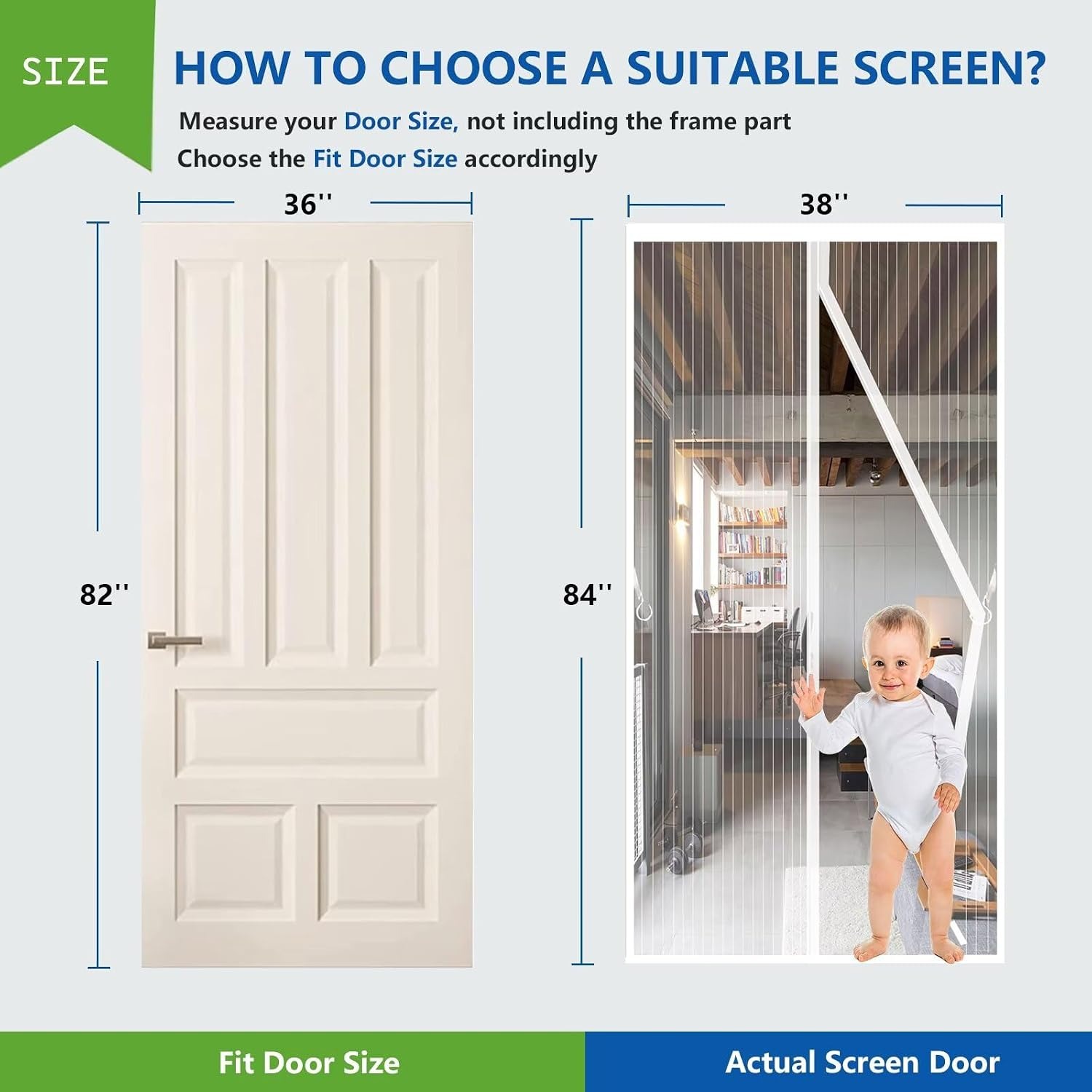
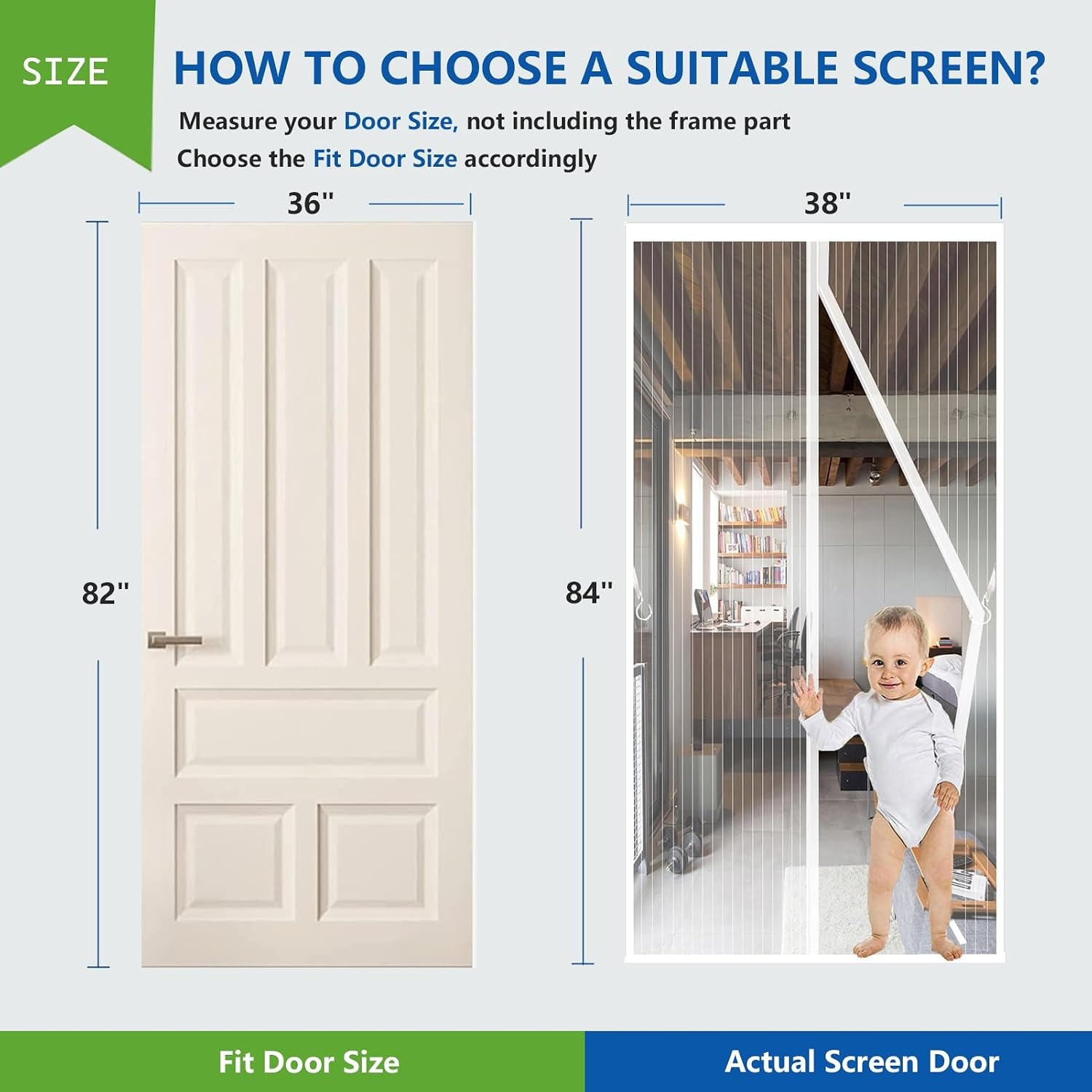
This is where most disappointment happens, so it is worth being careful. The screen is sized for a door opening up to 90 x 210 cm (36 x 82 in). That figure is the clear gap inside the frame, not the door leaf and not the outside of the architrave.
Take a tape measure to the opening and record the width at three heights, top, middle and bottom. Old houses settle and frames are rarely perfectly square. Use the smallest of your three readings. Then measure the height from the floor or threshold up to the underside of the top of the opening.
If your numbers come in a little under the fit size, you are fine. The extra mesh overlaps at the edges and sits against the frame, which actually helps the seal. If your opening is wider than 90 cm, this panel will not reach and you need a bigger size.
Also look at what surrounds the opening. The tape needs a flat, clean, dry surface along the top and both sides. Smooth painted timber is ideal. Rough render, flaking paint and heavy texture hold less well, and you may want to press the tape down firmly and check it again the next day.
Fitting it properly
Clean the frame first. Dust and cooking grease are the main reasons tape lets go a week later. Wipe with a mild cleaner, then dry it completely.
Start at the top. Get the horizontal edge straight before you worry about the sides, because a crooked top edge throws out the whole seam and the magnets will never line up neatly. Work from the centre outwards, pressing as you go. Then do the two sides from the top down, keeping gentle tension so the mesh hangs flat without stretching.
Close the seam and look at it from inside. The magnets should meet in a continuous line with no daylight showing. If you see a gap partway down, the panel is usually hanging slightly off square, and lifting one side of the tape a few millimetres fixes it.
Give the hem a check at floor level. The gravity rods should rest close to the threshold. Too high and insects wander in underneath. Too long and the hem drags and catches when you walk through.
Living with it
A magnetic screen is not silent in the way a solid wall is. You hear a soft click as the seam closes, and that is it. No slam, no spring, no hinge squeak.
Expect a short training period for pets. Hold the seam open and encourage them through a few times, maybe with a treat. Most animals have it worked out in a day or two. Small dogs sometimes prefer to push low near the hem, where the rods add a bit of resistance, so show them the middle.
Children walk through it without instruction. Worth saying clearly though, this is a mesh insect screen, not a safety barrier. It will not keep a toddler inside the house and should never be relied on for that.
Visibility runs one way more than the other. During the day you can see out easily. At night, with the lights on inside, the view works the opposite direction, so curtains still have a job to do.
Care and storage
Cleaning is quick. A damp cloth with a drop of mild detergent, a wipe over both sides of the mesh, then air dry. Skip the washing machine, skip bleach, skip the iron. If the seam starts feeling less positive, it is almost always dust or grit on the magnet strip rather than weak magnets, and a wipe along that line sorts it.
At the end of the season, take it down while the weather is still dry. Clean it, let it dry fully, and roll it up rather than folding. Hard creases in mesh are stubborn and they show when you rehang it. Keep the magnets roughly aligned as you roll so the seam does not twist. Store it somewhere dry, away from direct sun.
Handled that way, a screen comes out the following spring looking much as it did when you packed it.
A note on the listed specs
A couple of fields on this product deserve honesty. The supplier record lists material type as Glass, which plainly does not describe a flexible mesh panel. Rather than guess at the real fibre, we have left the material field blank. Country of origin and packed dimensions are not specified in the record either. What we can confirm is the fit size, the 36 magnets, the gravity rods, the white colour, the no tools fitting and the 650 g item weight.
The short version
Measure the clear opening inside your frame first. If it is 90 x 210 cm (36 x 82 in) or a little under, this screen fits. Clean the frame, get the top edge straight, and the magnets will do their job from there.
You get a doorway you can leave open, air moving through the house, and insects staying where they belong. It goes up in twenty minutes, comes down without damage, and packs away for winter. For a lot of homes that is all a door screen needs to do.