



The complete guide
How to Choose a Trunk Mounted Bike Rack
The problem with getting bikes to the ride
Owning a bike is easy. Getting it somewhere worth riding is the awkward part. A bike will not fit in most boots without taking wheels off, and once it does fit, the rest of the car is full of chain grease and luggage that will not go anywhere.
There are three real ways to carry a bike on a car. A hitch rack is the sturdiest, but it only works if you have a tow hitch, and paying to have one fitted for a handful of weekends is a lot of money for not much use. Roof bars work on nearly anything, but you have to lift a bike over your head, fuel use goes up, and sooner or later someone drives into a low car park.
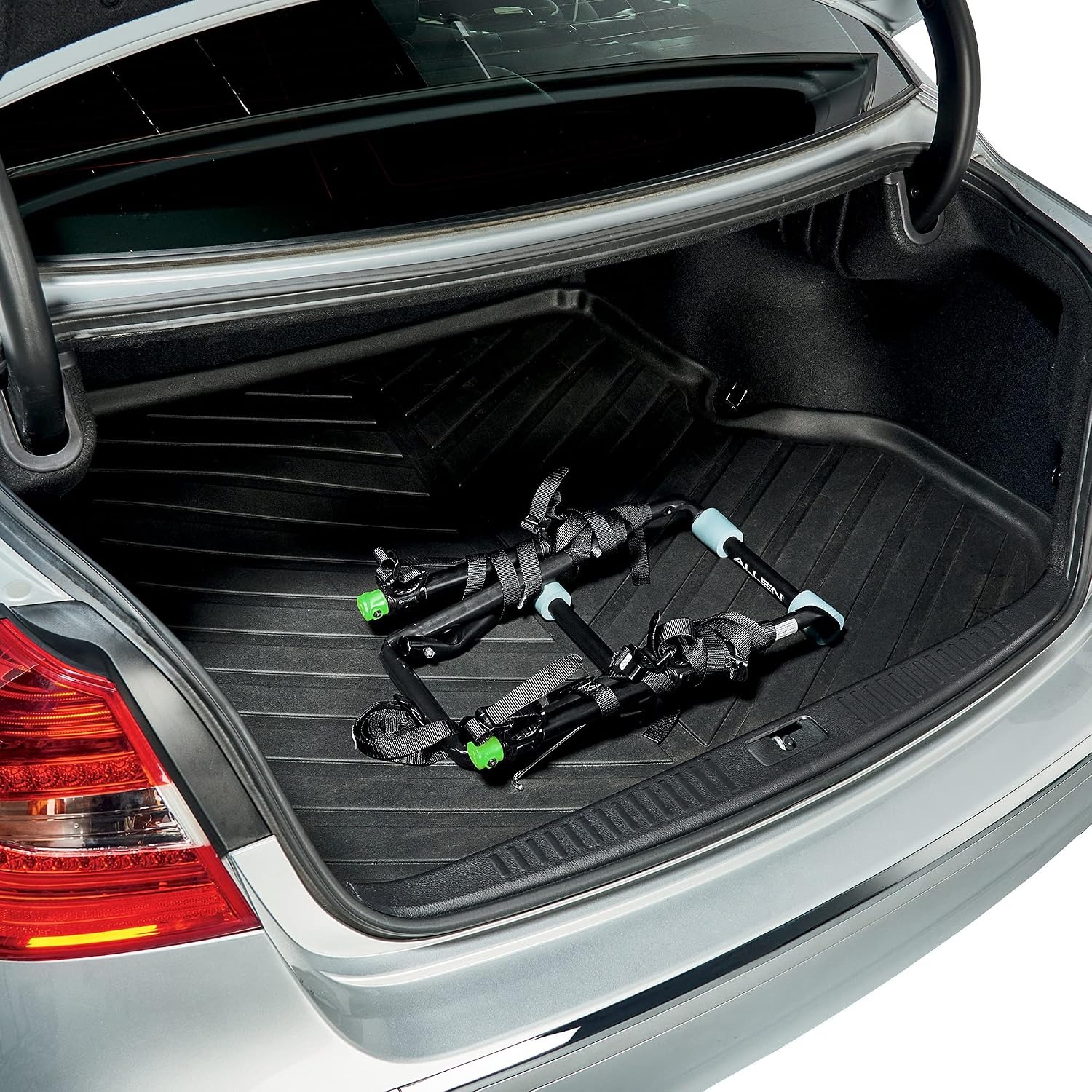
That leaves the strap rack. It hooks over the boot or hatch of the car you already own, holds the bikes at waist height, and comes off in a minute when you get home. This one takes two bikes, weighs 3.99 kg, and folds down to 58.5 x 34.5 x 10 cm.
How a strap rack actually holds on
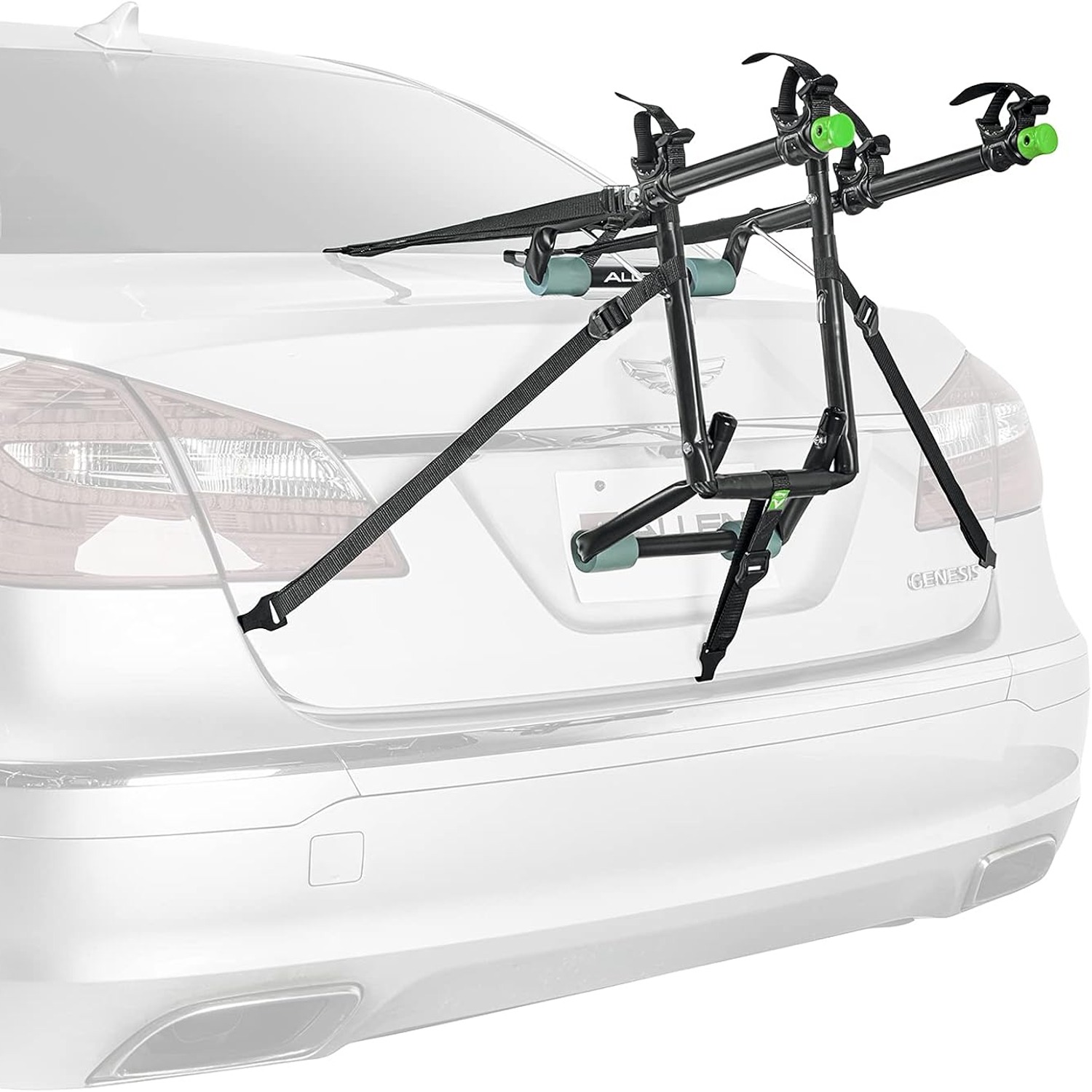
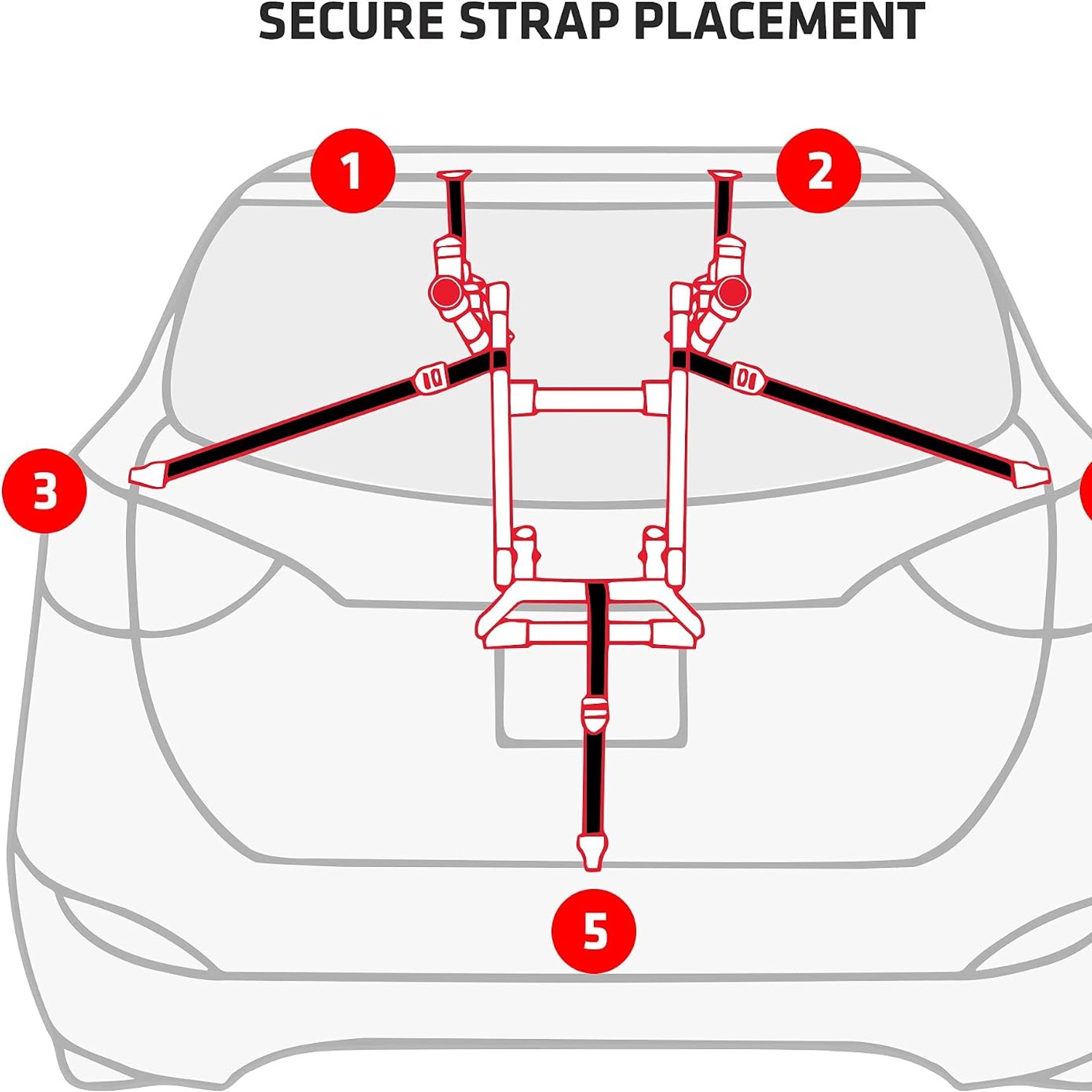
The idea sounds precarious until you see it set up. The rack frame rests against the back of the car on padded contact points. Straps hook over the top edge of the boot lid or hatch, down under the lower edge, and out to the sides. Tension all of them and the rack is pulled tight against the bodywork from several directions at once.
The side straps are the part people overlook. Top and bottom straps stop the rack sliding down. Side straps stop it swinging left and right, which is what you notice on roundabouts, in crosswinds and when a lorry passes. A rack without them wobbles. This one includes them.
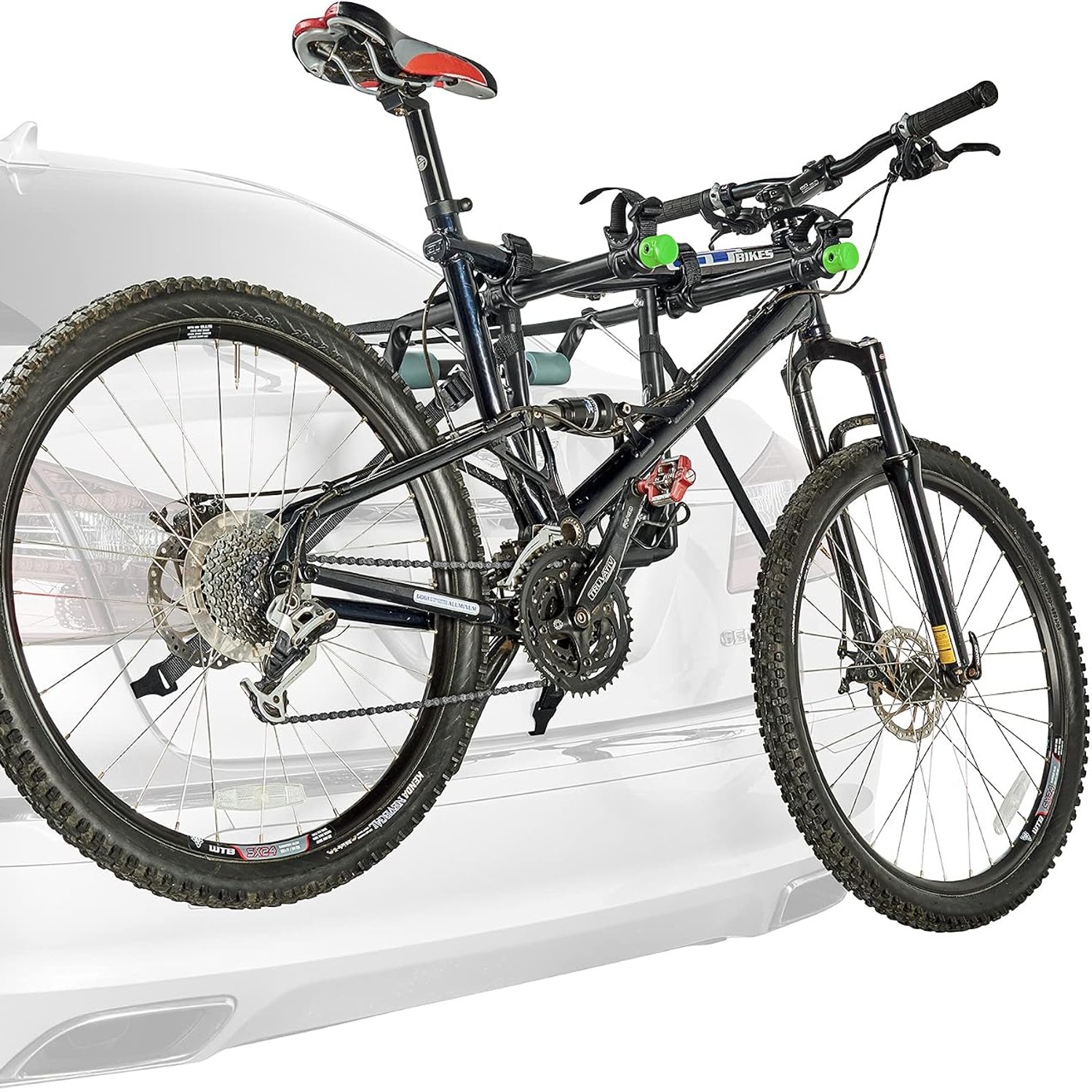
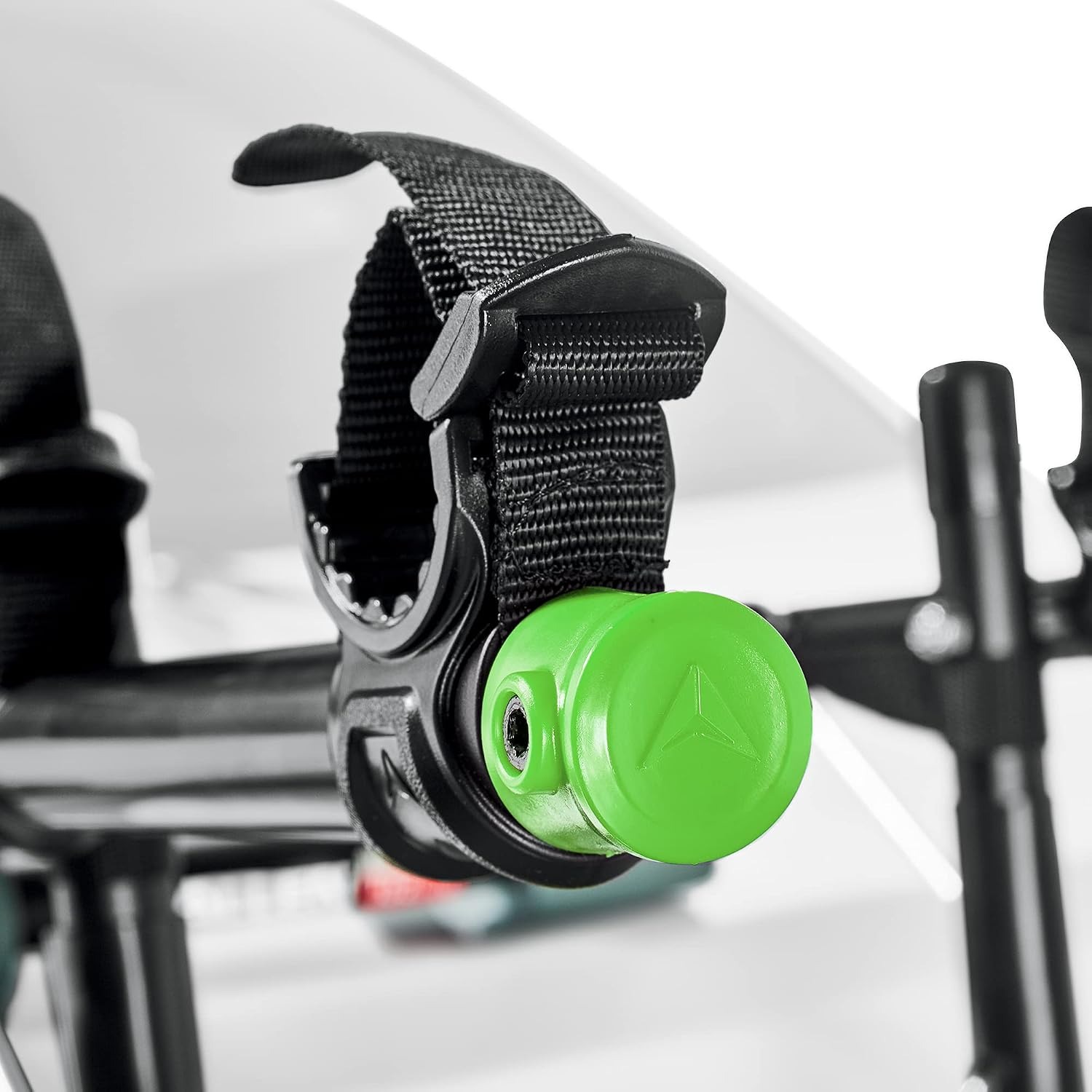
Then there are the carry arms. They stick out from the frame and the bike top tubes rest across them. These arms are 12 inches long and sit 11.5 inches apart, so there is room to position two frames without them fighting each other. Each bike has its own tie down, which means you can take one off without disturbing the other. If you have ever unpicked a single long strap in the rain to get one bike free, you will appreciate that.
The lower frame is padded. That pad is doing a simple job, keeping steel away from paint, but it only works if it stays clean. Grit caught under a pad is sandpaper.
Who this suits
This rack makes sense for the rider who goes out somewhere a few times a month rather than every day. Weekend trail trips, a bike holiday, driving the family bikes to a cycle path, getting a bike to a shop for a service. That is the sweet spot for the best strap on bike rack setup, and the reason so many people pick one over a hitch.
It covers sedans, hatchbacks, minivans and SUVs, which is most of what sits on a driveway. If you are looking for the best bike rack for hatchbacks or the best bike carrier for minivans, a strap mount is usually the first thing you should consider, because it needs nothing permanent added to the car.
It is less suited to heavy bikes. The combined load limit is 31.75 kg, listed as 70 pounds, for both bikes together. Two road bikes or two hybrids sit comfortably under that. Two downhill mountain bikes may not. An electric bike with a battery can swallow most of the allowance on its own. Weigh them if you are near the line, because guessing is how people overload a carrier.
It is also not a daily commuter solution. You cannot open the boot while it is fitted, and leaving the straps baking in the sun all year does them no favours.
Checking fit before you buy
Fit type here is listed as vehicle specific, and that phrase is doing real work. A strap rack has to grab onto edges, and not every car gives it the same edges.
Things that complicate fit include rear spoilers, rear wipers, full glass hatches with no metal lip, steeply raked boots, and rear-mounted spare wheels. None of these automatically rule a car out, but they change where the straps can sit. The manufacturer publishes fit information by vehicle. Spend two minutes with it. It is far less annoying than finding out in a car park on a Saturday morning.
Also think about your number plate and rear lights. With two bikes loaded, one or both may be hidden. Rules differ by country, and the fix is usually a cheap supplementary plate and light board. Worth sorting before a long trip rather than after a conversation at the roadside.
Loading two bikes without a fight
There is a method to this. Put the heavier bike on first, closest to the car, so the weight sits nearest the vehicle rather than hanging out at the end of the arms. Then load the second bike facing the opposite direction. Alternating them keeps handlebars away from saddles and stops the pedals tangling.
Tighten each tie down so the frame cannot rotate on the arm. A bike that can spin will eventually slap the car or the other bike. If a frame shape makes it hard to get a flat contact on the arms, a top tube adapter bar solves it. This is the standard fix for full suspension frames and small children's bikes, and it is a cheap accessory.
Before pulling away, grab the rack and shake it. It should move with the car, not independently of it. Then drive a few kilometres and stop to check again. Webbing settles, and the first short stretch of a journey is when it settles most. Repeat at every fuel stop. That one habit prevents nearly every problem people have with a two bike carrier.
Looking after it
Nothing complicated here. Rinse off salt, mud and road grime with fresh water after a wet trip. Dry the frame and the straps before you fold it away, because damp webbing stored in a dark corner is how straps go mouldy and stiff.
Look over the straps each time you fit the rack. You are checking for fraying, cuts, stretched sections and buckles that will not hold tension. Straps are the one wearing part on a rack like this. If one looks tired, replace it rather than hoping. The frame is alloy steel and will outlast the webbing by a long way.
Store it folded and under cover. Sun is harder on straps than rain is. At 3.99 kg and 58.5 x 34.5 x 10 cm, it will stand in a corner of a garage or lie flat in a cupboard without being in the way.
The short version
If you want to carry two bikes occasionally and you do not have a tow hitch, this is the straightforward answer. It arrives assembled, fits in minutes, carries up to 31.75 kg across two bikes, and comes off again when the trip is done.
Do the fit check first. Load the heavier bike nearest the car. Retension the straps at your first stop. Rinse and dry it before it goes back in the garage. Do those four things and a strap rack will see out a lot of weekends.