


The complete guide
Choosing a Walk-In Greenhouse for a Small Garden
The problem with a short growing season
Every gardener runs into the same wall. You sow too early and the seedlings sulk or die in a cold snap. You sow late to be safe and the harvest arrives just as the weather turns. Tender plants spend spring being carried from windowsill to doorstep and back again, and by May the kitchen table has disappeared under seed trays.
A greenhouse fixes that, but a glass one is a big commitment. It needs a base, planning, a decent budget and a permanent patch of ground. Plenty of gardens simply do not have room, and plenty of gardeners do not want a structure they cannot move.
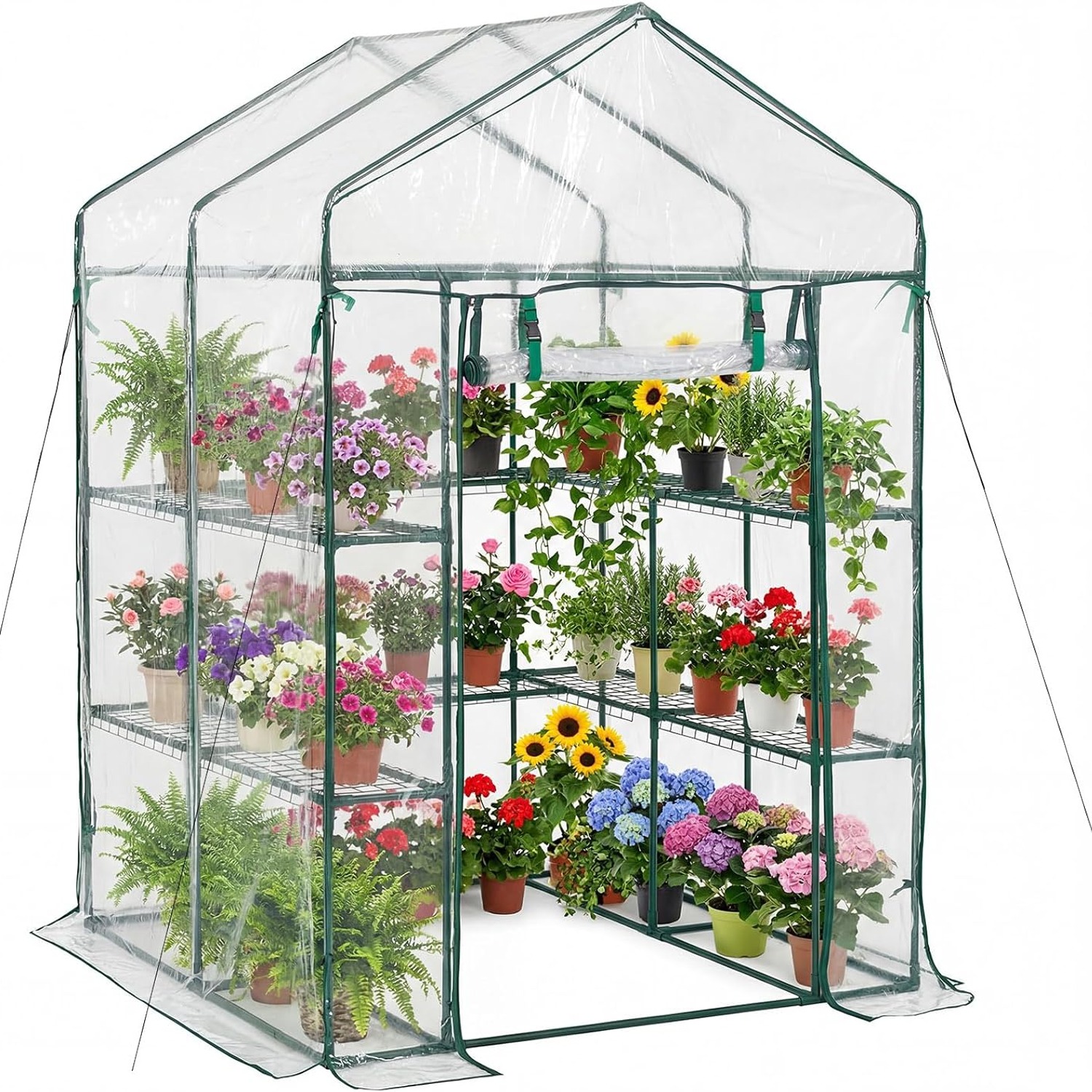
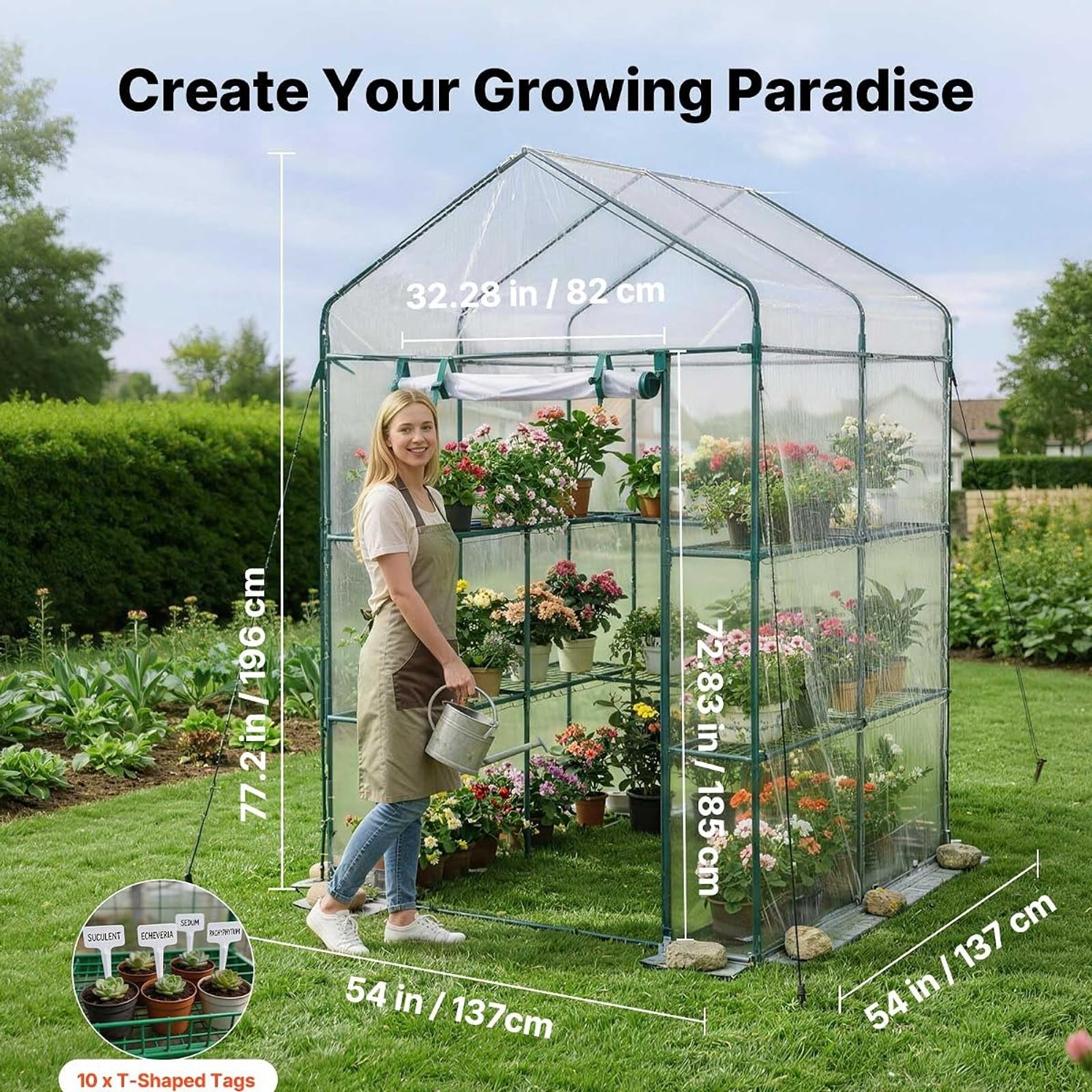
That gap is where a walk-in greenhouse sits. It gives you a sheltered, bright space for plants, it goes up in an afternoon, and it comes down again if you change your mind. This one is 137 x 137 cm on the ground and 196 cm tall, which is a footprint about the size of a small dining table and a height you can stand under.
How a fabric greenhouse actually works
The principle is simple. Clear material lets sunlight in. That light warms the soil, the pots and the air inside. The cover then slows the escape of that warmth, so the inside stays several degrees above the outside, especially overnight. It also blocks wind, which is often more damaging to young plants than cold alone.
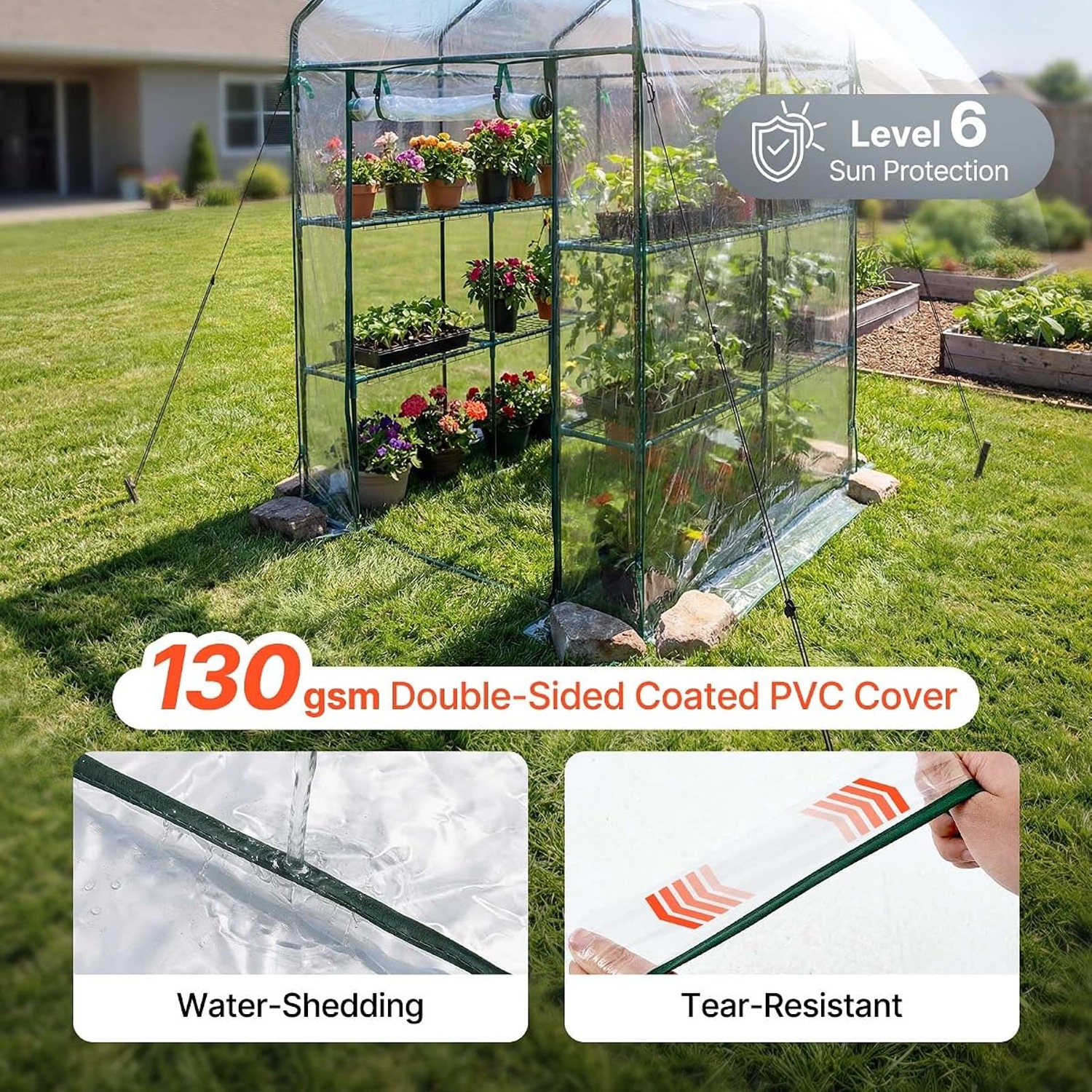
The cover here is 130 g/m² double-sided coated PVC. The gsm figure tells you the weight of the material per square metre, and the double-sided coating is what gives it water resistance and the tear resistance the supplier mentions. It is transparent, so light passes through, and the listing credits it with insulation and level 6 sun protection.
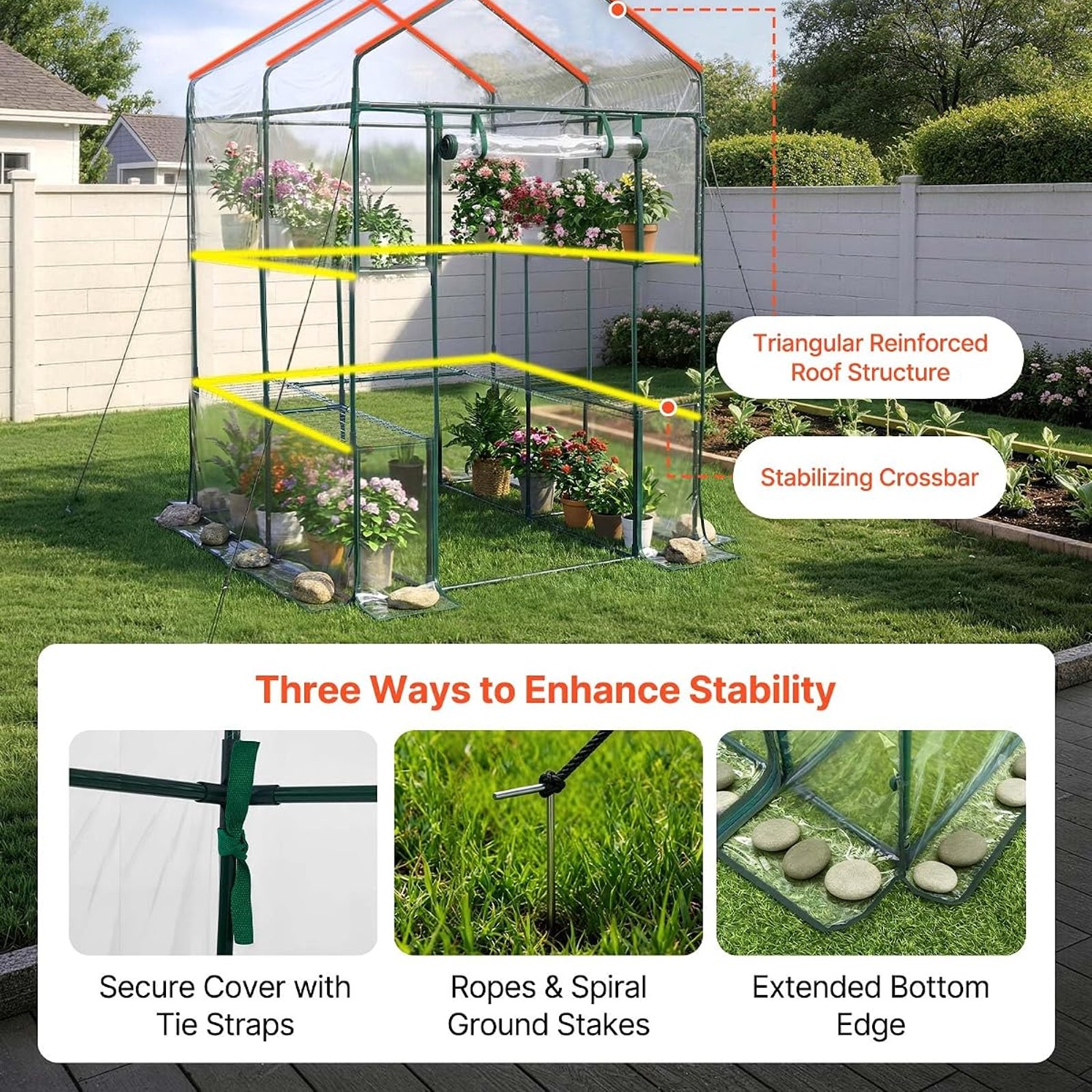
The roof is a peak shape, not a flat top. That sounds like a detail until it rains. Water on a flat roof pools in the middle, stretches the fabric, and eventually finds a seam. A sloped roof sheds it straight off the sides.
Underneath, the frame is made from Q195 powder-coated steel tubes with a triangular support at the top. Steel gives a structure of this size the rigidity it needs, and the powder coating protects it from weather. Assembled, the whole thing weighs 10.1 kg, which tells you two useful things: one person can move it, and you absolutely must anchor it.
Who it suits
This is a good fit if you have a courtyard, a back garden, a yard or an allotment plot and want more growing space without building anything permanent. It suits people starting seeds in volume, people hardening off young plants, and people trying to keep chillies, herbs or pelargoniums alive through a cold winter.
It also works for renters. Nothing is fixed to the ground with concrete, so it leaves with you.
It is less suited to very exposed sites. The manufacturer advises installing it in a sheltered location, and that advice is worth taking seriously with any fabric structure. A spot beside a fence, hedge or wall that takes the edge off the wind will last far better than the middle of an open lawn.
Working out whether the size is right
Before buying any garden greenhouse tent, go outside with a tape measure and mark out 137 by 137 cm on the ground. Stand in the middle of it. That is your working space, minus the shelving on either side.
The height is the thing that makes this size usable. At 196 cm, most adults can walk in without stooping. Compare that with a low grow-house where you kneel in wet grass to reach the back row, and the difference in how often you actually use it becomes obvious.
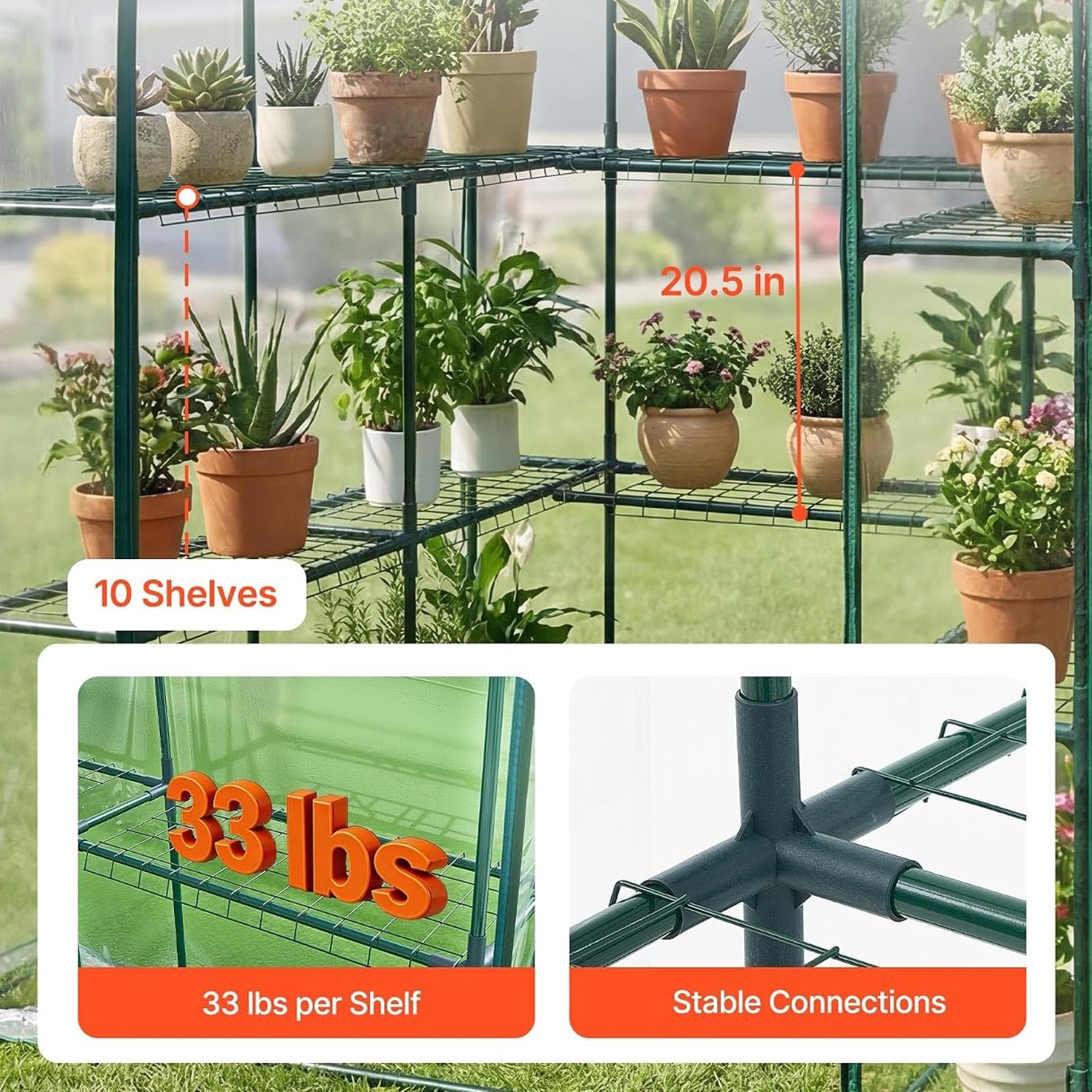
The shelving does the heavy lifting on capacity. There are two tiers holding ten wire shelves in total, each rated to 15 kg. Wire rather than solid is deliberate. Water drains through instead of sitting in a puddle under your pots, and light reaches the lower level instead of being blocked. Seed trays go up high where the light is strongest. Heavier pots go low. The strip of floor between the two tiers stays free for a grow bag or a single tall plant.
If you need more headroom for tomatoes, take out one side's shelves. The ties that hold them in place come off easily enough.
Setting it up so it stays put
A light structure with a big surface area is a sail waiting for a gusty afternoon. Getting the anchoring right is the single most important part of the job.
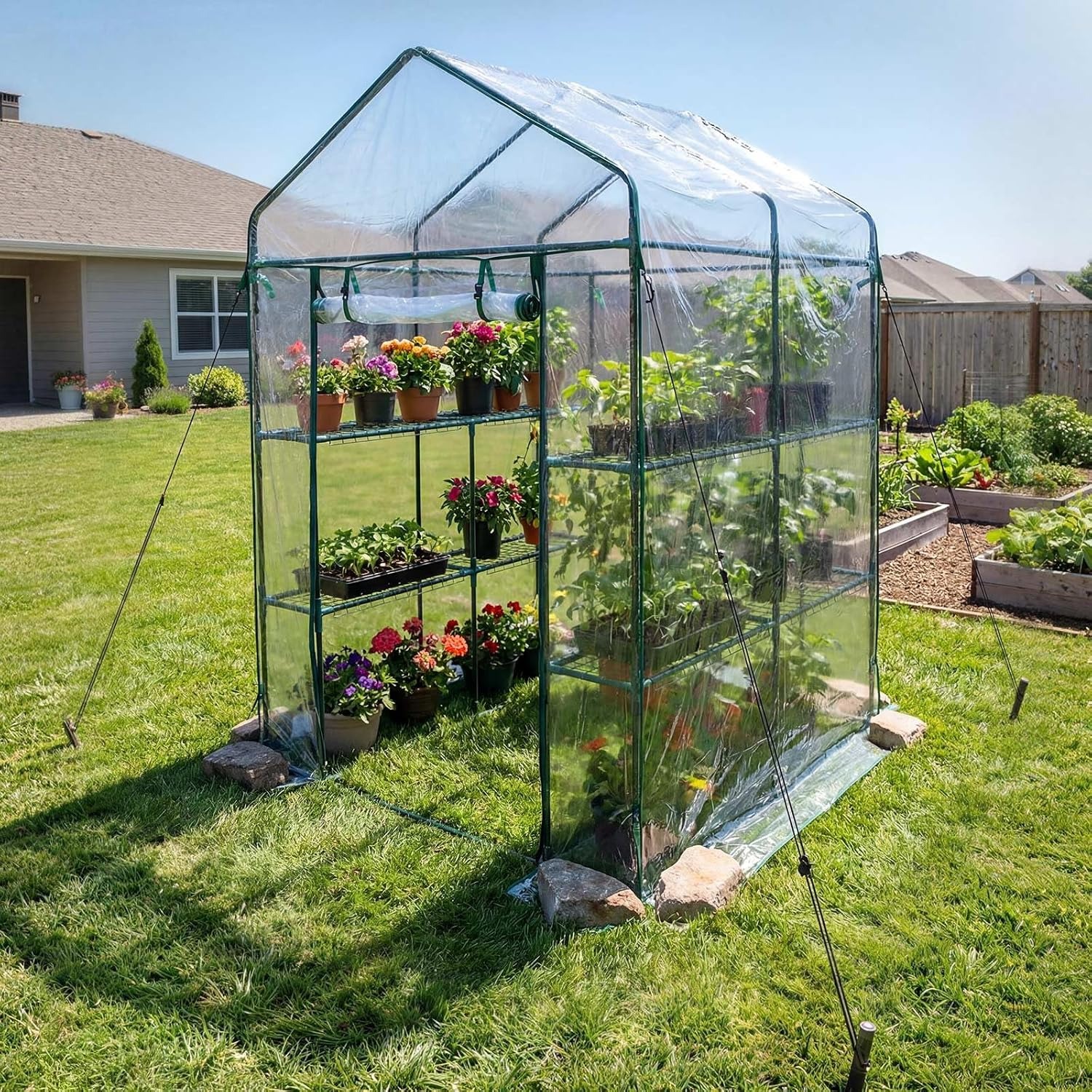
On a lawn or bare soil, drive the supplied U-shaped ground stakes in at an angle through the base loops, then run the guy ropes out and peg them. The bottom edge of the cover extends outward past the frame, and that flap is there to be weighed down. Bricks, paving slabs, bags of compost or a shovelful of soil along it all work.
On a patio or decking, stakes are no help. Use heavy weights on the base flap instead and tie the guy ropes to a fence post, a railing or something equally solid. Sandbags along the bottom edge are cheap and effective.
Build it on a still day if you can. Handling a large sheet of PVC in a breeze is the part of the job people remember, and not fondly.
Managing heat and air
A sealed clear structure in full sun gets hot quickly. On a bright spring day the temperature inside can climb far higher than you would guess from standing outside in a jumper, and heat is what kills seedlings faster than cold does.
The roll-up zipper door is your control. It has straps to hold it open, so on sunny mornings you roll it up and let air move through, then close it in the late afternoon before the temperature drops. Get into that rhythm and the greenhouse looks after itself.
A cheap min-max thermometer hung inside is one of the best few dollars you can spend. It tells you what actually happened overnight rather than what you assumed.
Watering changes too. Pots under cover never get rained on, so they dry out faster than you expect, particularly on the upper shelves. Check them daily in warm weather.
Keeping it in good shape
Clean the PVC once or twice a season with a soft cloth and mild soapy water, then rinse. Skip abrasive pads, strong solvents and pressure washers, all of which scratch or cloud the material and cost you light transmission.
After any storm, walk around and check the stakes, the guy ropes and the shelf ties. Things work loose. Two minutes of retightening prevents a much bigger problem later.
In winter, brush snow off the roof rather than letting it build up. Snow is heavier than people think and a fabric roof is not designed to carry it.
If you are putting the greenhouse away for a season, let the cover dry completely before folding it. Damp PVC stored in a dark shed grows mildew, and mildew stains do not come out. Store the frame somewhere dry and touch up any deep scratches in the powder coating with outdoor paint.
The short version
A walk-in greenhouse gives you a few extra weeks at both ends of the growing year, a dry place to pot things up, and somewhere for tender plants to sit out a cold snap. This one is 137 x 137 x 196 cm, weighs 10.1 kg, and uses a 130 g/m² double-sided coated PVC cover over a Q195 powder-coated steel frame.
The ten wire shelves across two tiers are what make a small footprint productive. The roll-up zipper door is what stops it cooking your plants on a sunny day. And a sheltered spot with the stakes properly driven in is what makes it last.
Measure your space, pick your corner, and stake it down well. The rest is just gardening.