


The complete guide
How To Choose And Fit Vertical Bike Hooks
The problem with bikes on the floor
Bikes are awkward objects. They are long, wide at the bars, greasy at the chain, and they do not stack. Two of them lean against each other in a corner until one slides and takes the other down. Add a kid's bike and a spare commuter and suddenly a single garage bay is gone.
The floor is also the worst place for a bike. Tyres pick up grit, derailleurs get knocked, and if you have ever reversed a car into a handlebar you know how that ends. Most of the space a bike occupies is empty air anyway. It is tall and thin, not wide and heavy. All you really need is somewhere to hang it.
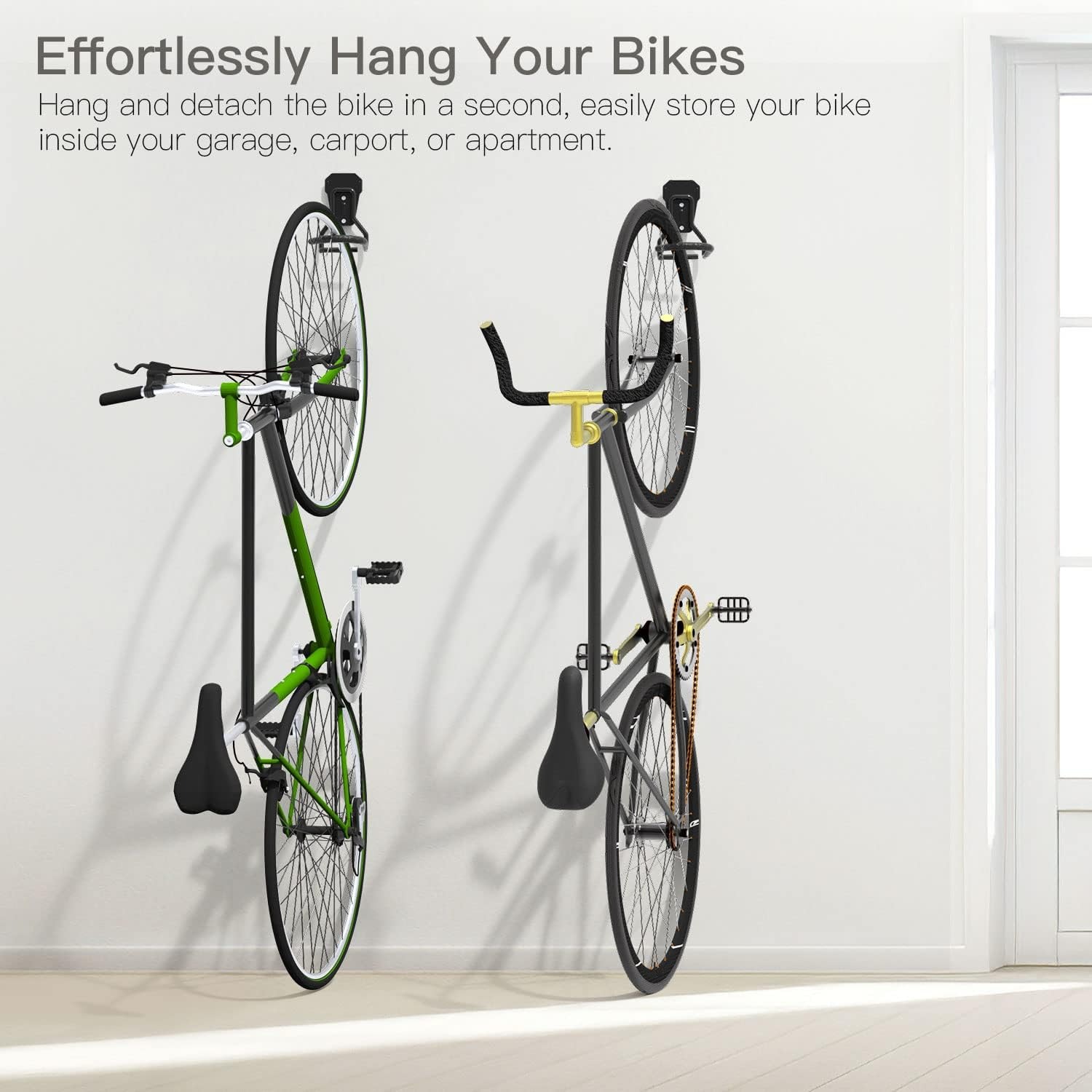
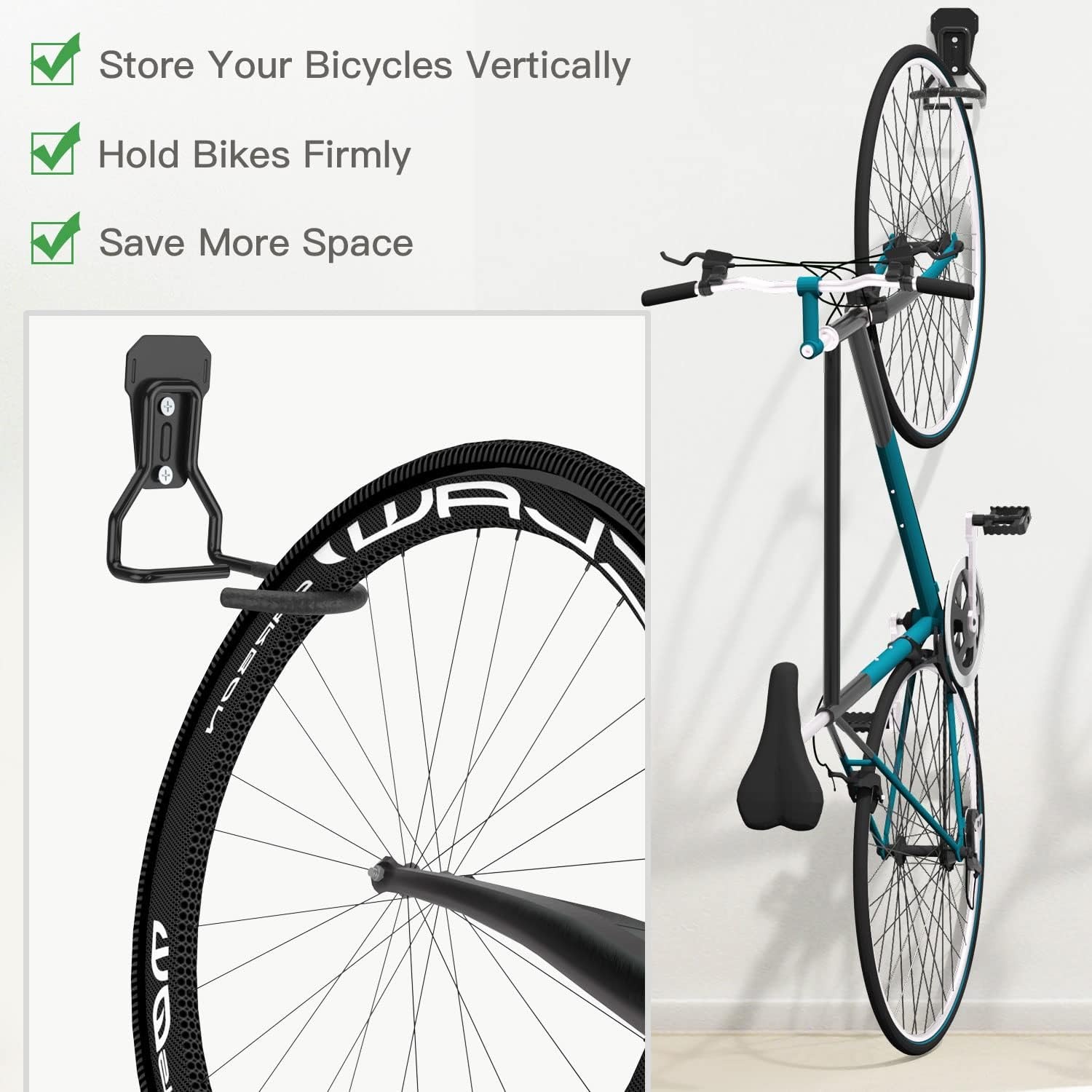
That is the whole idea behind a vertical bike hook. The bike goes nose-up against the wall, one wheel over the hook, and the footprint drops to about the width of the handlebars. You get your floor back for almost nothing.
How a vertical bike hook works
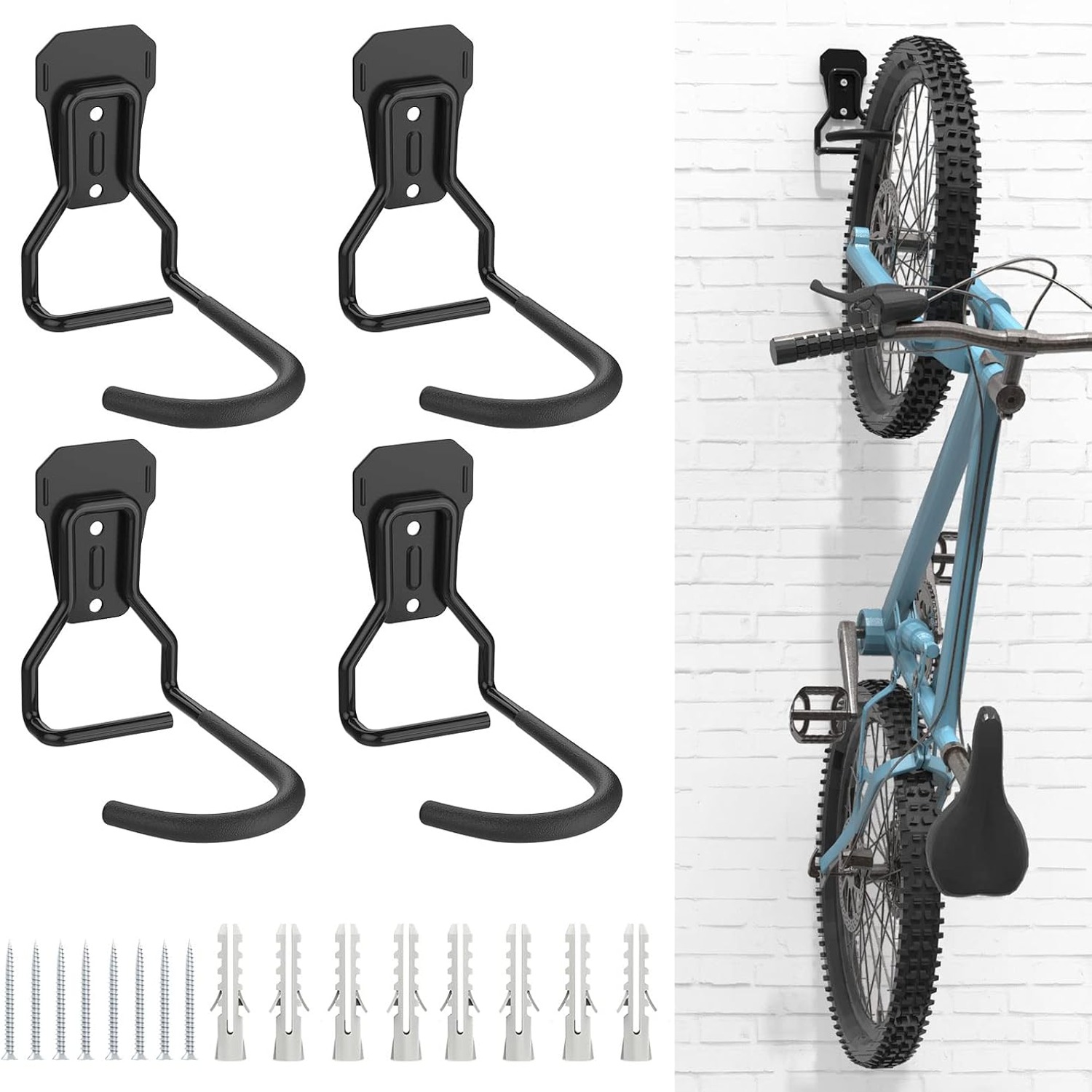
The mechanics are simple. A bracket mounts to the wall, and a curved arm projects from it. You lift the front of the bike, drop the wheel rim into the curve, and let go. Gravity does the rest. The bike hangs with the rear wheel touching the wall or floor and the frame kept clear of the paintwork.
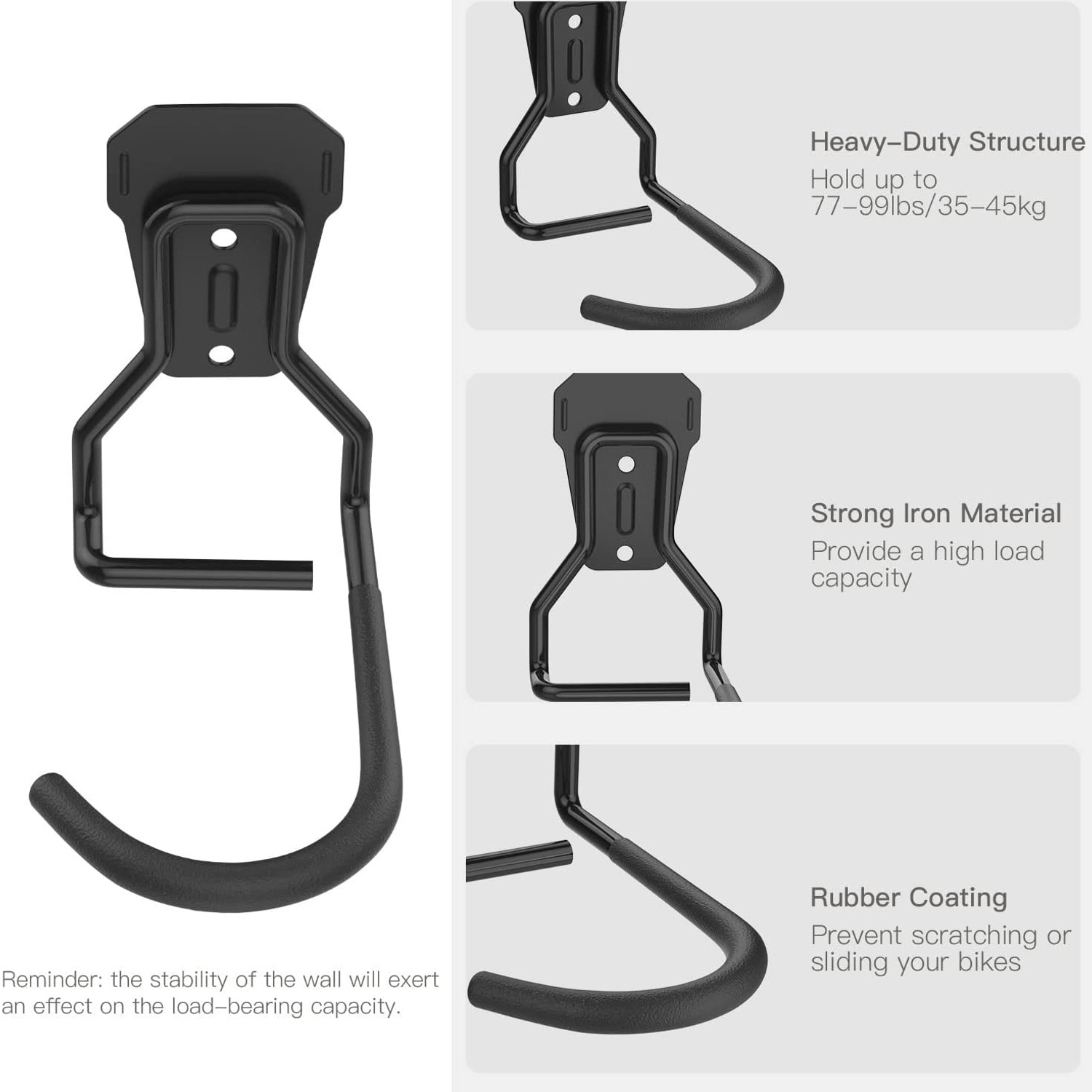
On this set, the arm is rubber-coated. That coating does two jobs. It stops bare iron pressing on your rim, which is what causes marks and scuffs, and it adds grip so the wheel does not slide along the arm. There is also a safety locking mechanism built in, which holds the bike once it is seated and reduces the chance of an accidental release. That is a retention feature, not a theft deterrent, so treat it as such.
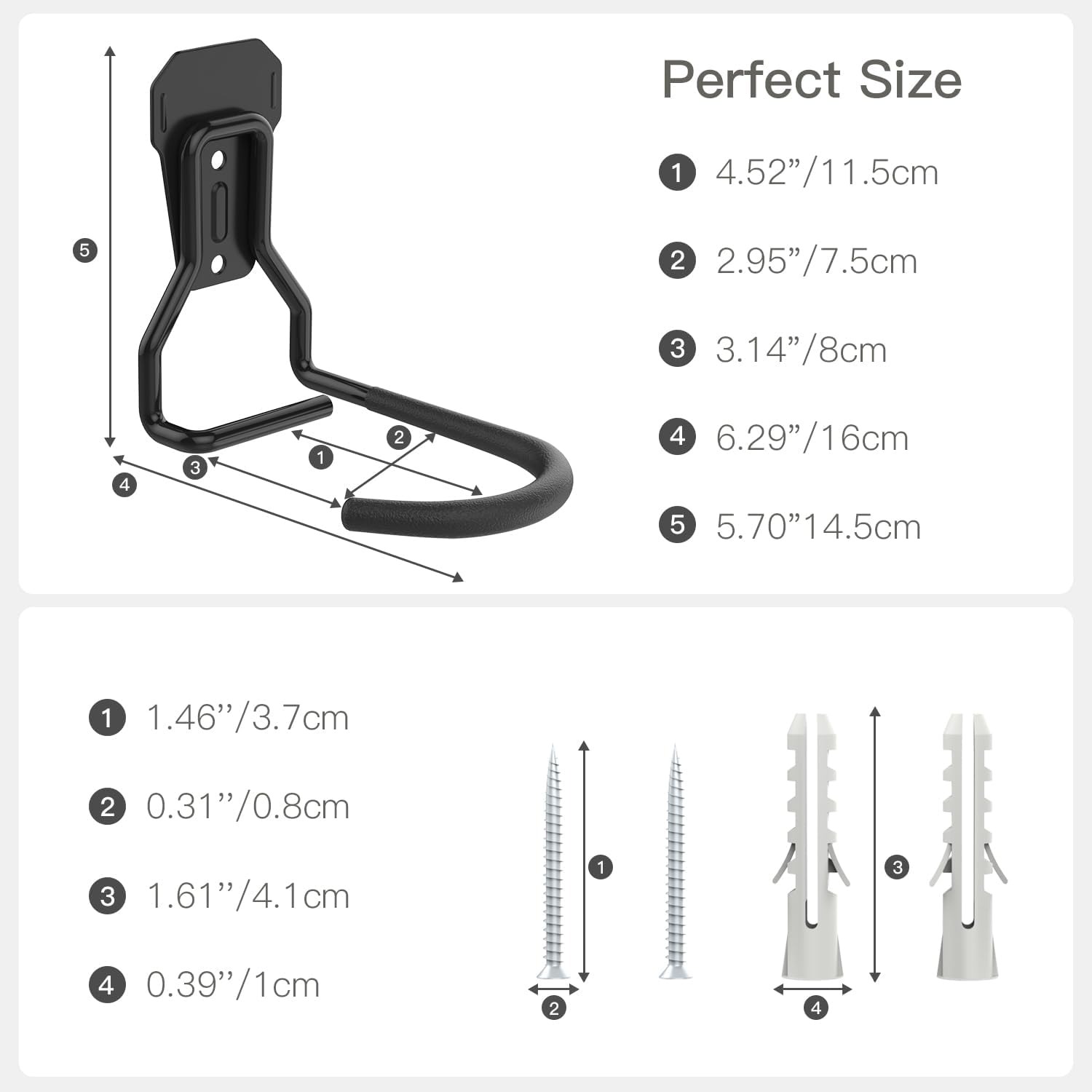
The hooks themselves are iron, finished in black, measuring 14 x 12 x 11 cm. Each one is rated to a maximum weight capacity of 45 kg, with a maximum weight recommendation of 44.91 kg stated in the specifications. The pack weighs 1.2 kg in total and contains four hooks.
Who these suit
Anyone with a garage, carport, shed or solid-walled hallway and more bikes than floor space. The 4 pack size makes it natural for families, but plenty of people buy a set like this for one bike and keep the rest for a workshop or a second property.
The weight rating is generous enough to cover almost everything on two wheels. A road bike might be 8 kg. A hardtail mountain bike is often 13 to 15 kg. A steel cruiser or a cargo-style commuter could be 20 kg. Even most electric bikes, which typically run 20 to 30 kg, sit well inside the 45 kg figure. The only group to check carefully is heavy e-cargo bikes, which can exceed the rating.
Bike shops and clubs use the same arrangement. A line of hooks along a wall is a cheap way to store or display stock, and the compact size means the hooks are not in the way when a space is empty.
Picking the right wall
This is where most installs succeed or fail. The listing recommends concrete and says to install on solid walls only. That matters more than anything else you will read here.
A bike hanging on a hook creates a pulling force on the fixings, and that force is concentrated on a small area. Concrete, brick and block handle it well with the right anchors. Plasterboard on its own does not, no matter how confident the packaging on a wall plug looks. If your garage is lined with board over timber studs, you need to find the stud and fix into it, or add a timber batten across several studs and mount the hooks to that.
Before you drill, check what is behind the wall. Pipes and cables live in walls and a masonry bit does not care. A cheap detector is worth the five minutes.
Getting the install right
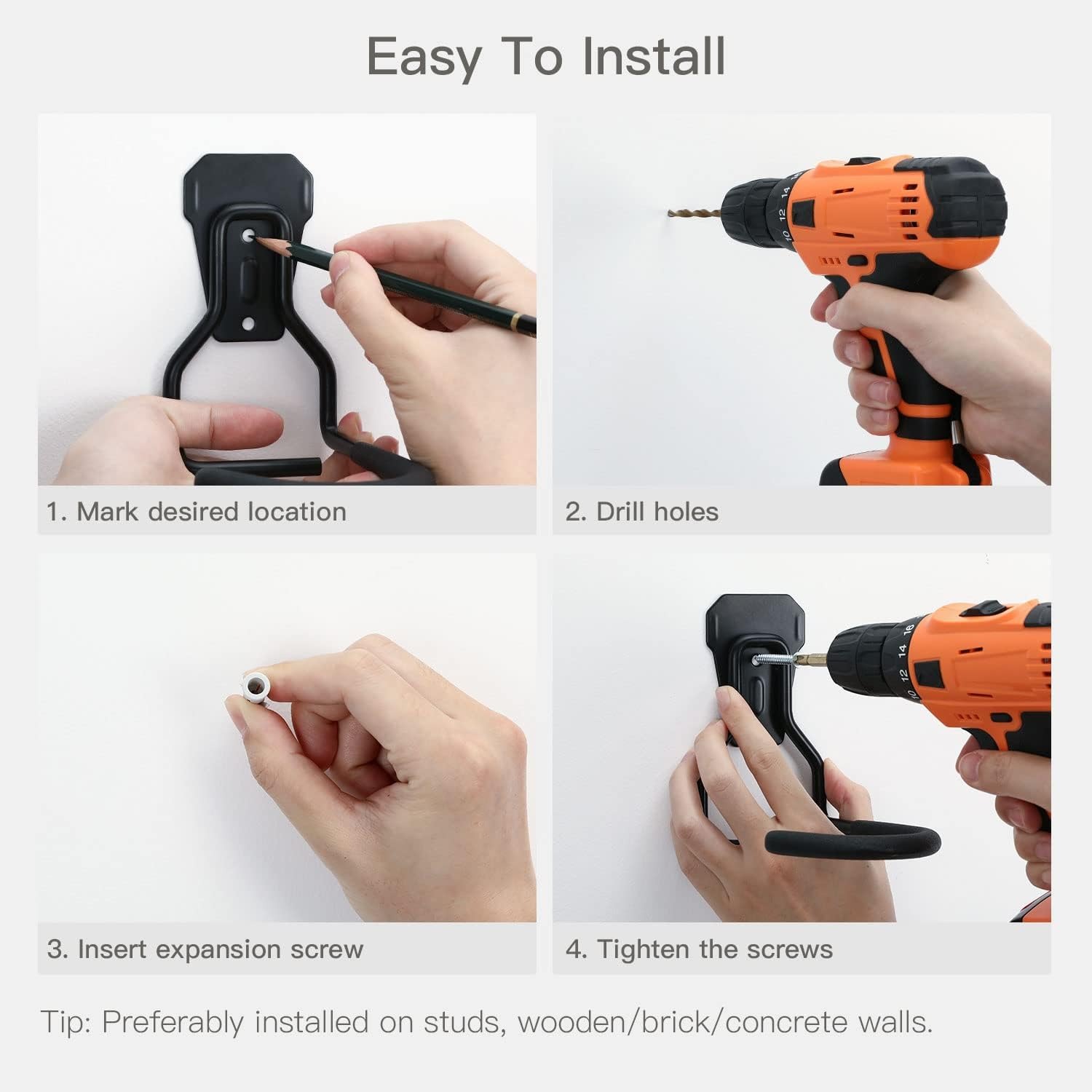
Two things to get correct. The first is orientation. The instructions are clear that the hook must be fitted in the direction shown, because fitting it the wrong way round loads the hook unevenly and can cause it to come away. It is a small detail that makes a large difference to how the hook carries weight.
The second is spacing. If you are hanging more than one bike side by side, the limiting factor is handlebar width, not wheel width. Most people allow 40 to 50 cm between hooks. A neat trick is to stagger them, mounting every second hook 20 cm higher or lower so the bars pass each other rather than clash. That lets you squeeze bikes closer together along the same run of wall.
Height is the other call. Hang the hook so the bottom wheel just clears the floor, or sits lightly against it. Too high and lifting the bike becomes a chore, especially with a heavier machine. Too low and the rear wheel bunches on the ground. If children will be hanging their own bikes, set theirs lower so they can manage it without stretching.
Finally, measure the depth. A hung bike usually needs 30 to 40 cm of clearance from the wall out to the handlebars. If that intrudes on where your car door opens, shift the hooks along the wall before you commit.
Living with them
Day to day, there is almost nothing to it. Lift, hook, release. Most people get it down to a couple of seconds once they have done it a few times. The hook on this set is listed as detachable, so the arm can come off the mounted base if you want the wall clear at some point in the year.
Care is light. Wipe the hooks with a dry or slightly damp cloth to keep grit off the rubber, since grit between coating and rim is the usual cause of scuffing. Dry iron properly after cleaning, because iron marks if it stays wet. Keep oil and solvent off the rubber sleeve.
Every few months, give the fixings a check and tighten anything that has moved. This takes a minute and it is the single best habit for any wall-mounted bike rack. Also glance at the rubber coating for splits or thinning, and look at the hook arm for any sign of bending, which would mean it has been loaded past what it is rated for.
If you are storing bikes in a damp shed or an exposed carport, remember these are iron. A covered, dry space is ideal. A fully exposed outdoor wall will eventually bring corrosion, as it would with any iron hardware.
A few things to measure first
Before ordering, it helps to know three numbers. Your bike's weight, so you can compare it to the 45 kg rating. Your tyre width, since very wide fat-bike tyres may not fit a standard hook opening. And the clear depth from your wall to the nearest obstacle, so the hung bike has room.
Write those down, check them against the specifications, and the rest of the decision is easy.
The short version
Four iron hooks, black finish, 45 kg maximum weight capacity each, rubber-coated arms and a safety locking mechanism. No assembly, compact at 14 x 12 x 11 cm, and recommended for concrete and other solid walls. Fit them the right way up, space them for handlebar clearance, and keep the fixings tight.
Do that and the bikes come off the floor permanently. You get the garage back, the paintwork stays clean, and nobody trips over a pedal in the dark again.