


The complete guide
How To Choose A Telescopic Ladder (And Use One Safely)
The problem with owning a tall ladder
Nearly every home needs a ladder that reaches three or four metres, and nearly every home has nowhere sensible to put one. A standard extension ladder is four metres of awkward. It leans in the garage, slides down the wall at 2am, blocks the shelving, and scratches the car every time you shuffle past it. So most people do not buy one. They borrow from a neighbour, stand on a kitchen chair, or just let the gutters fill up for another winter.
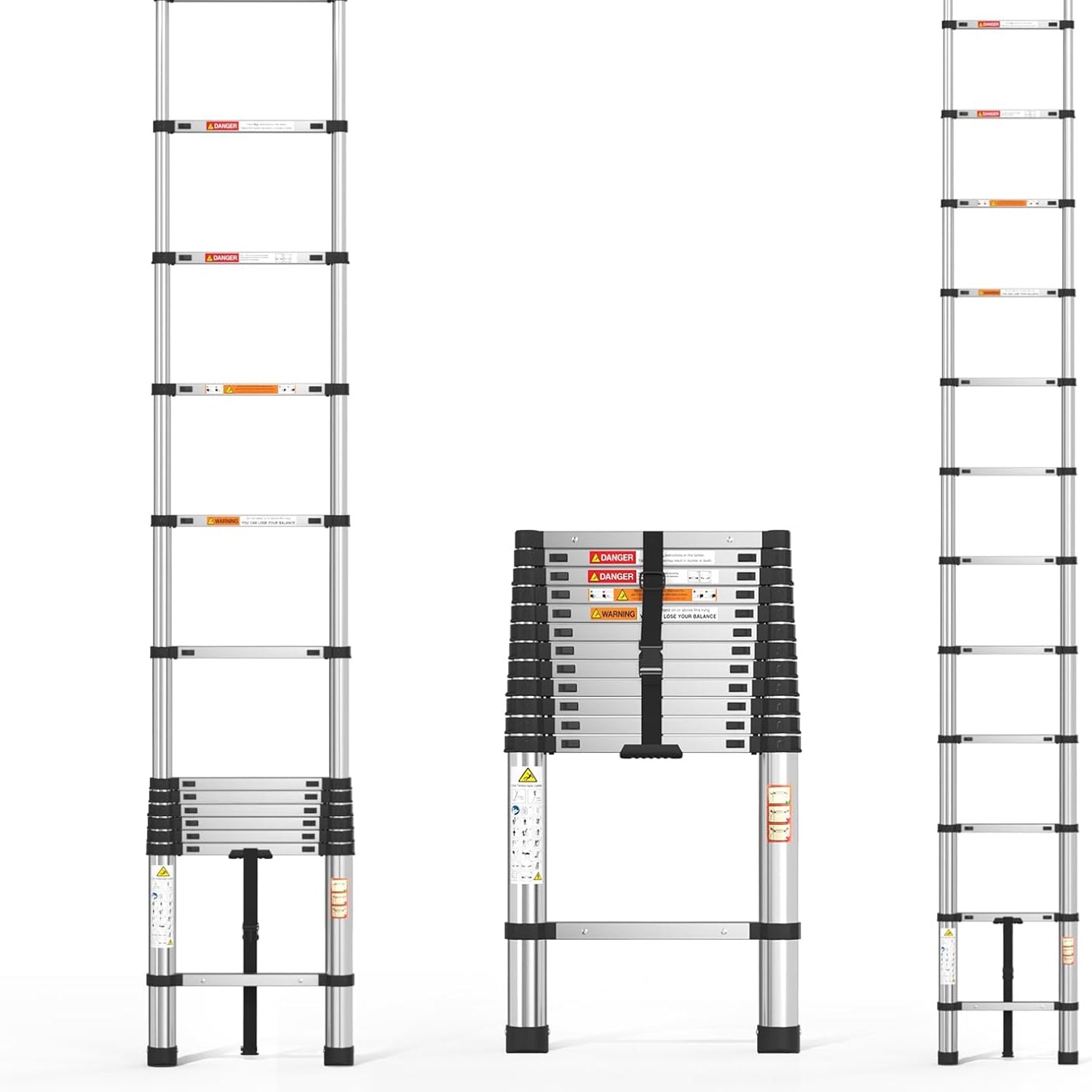
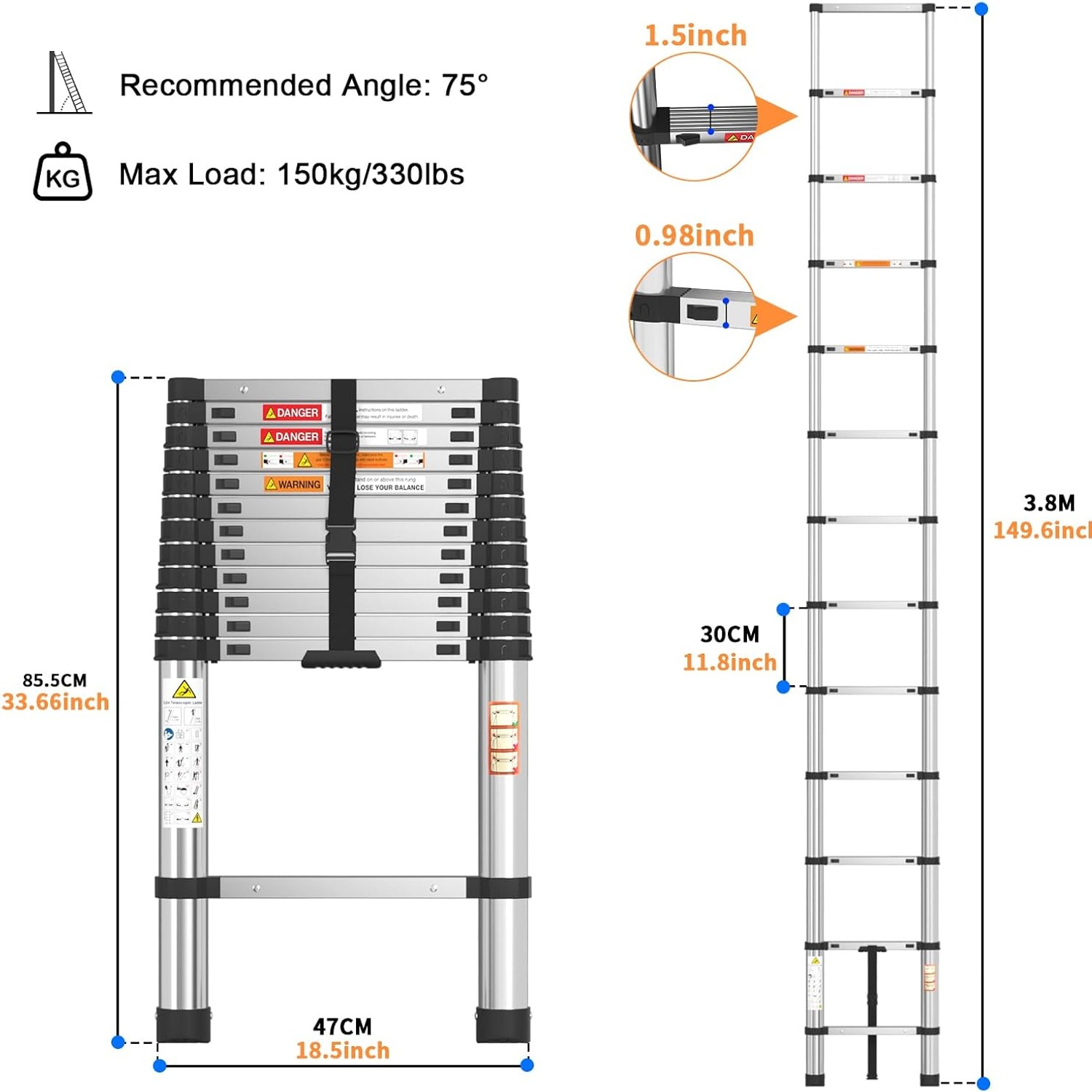
A telescopic ladder exists to break that trade-off. The sections slide inside one another instead of sitting side by side, so the thing that reaches 3.8 metres when it is open becomes a block about 46.5 cm wide when it is shut. That block fits in a cupboard, under a bed, on a garage shelf or in a car boot. You own a full-height ladder without living with a full-height ladder.
How a telescopic ladder actually works
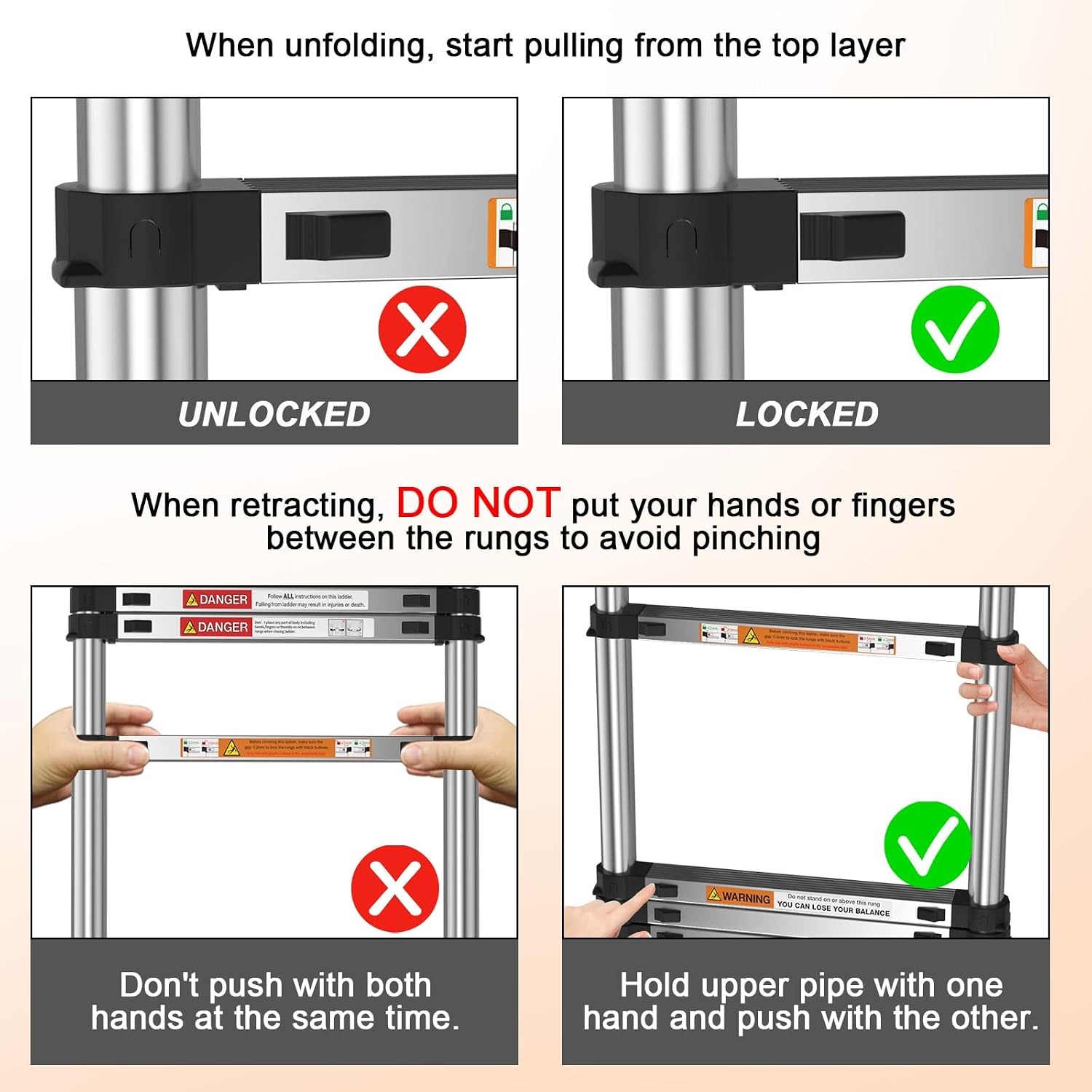
Each rung on a telescoping extension ladder sits on a pair of tubes, and each tube slides inside the one below it. Pull the top rung upward and the sections draw out one by one, with a lock engaging at each stage. Push the lock tabs and the sections drop back down into each other.
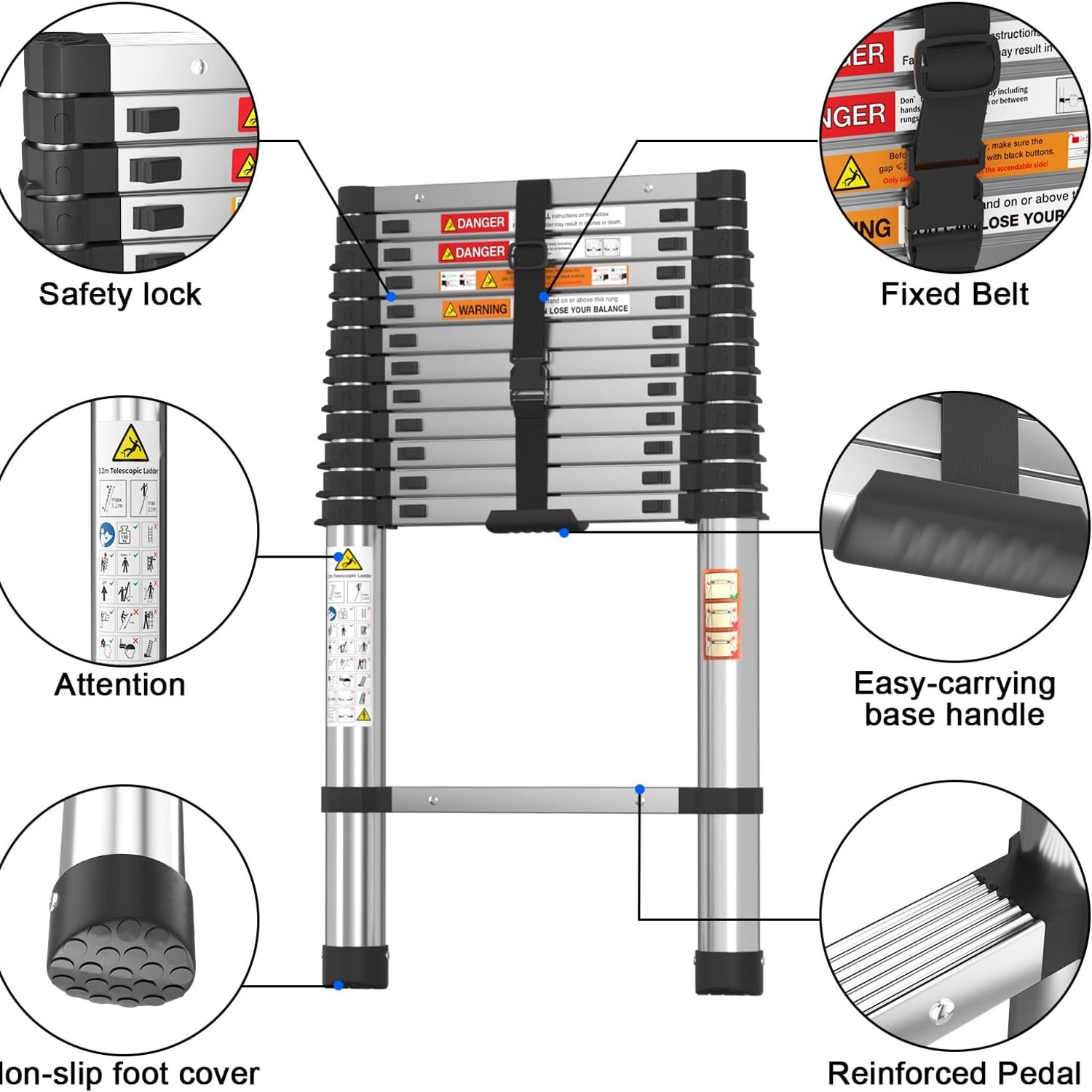
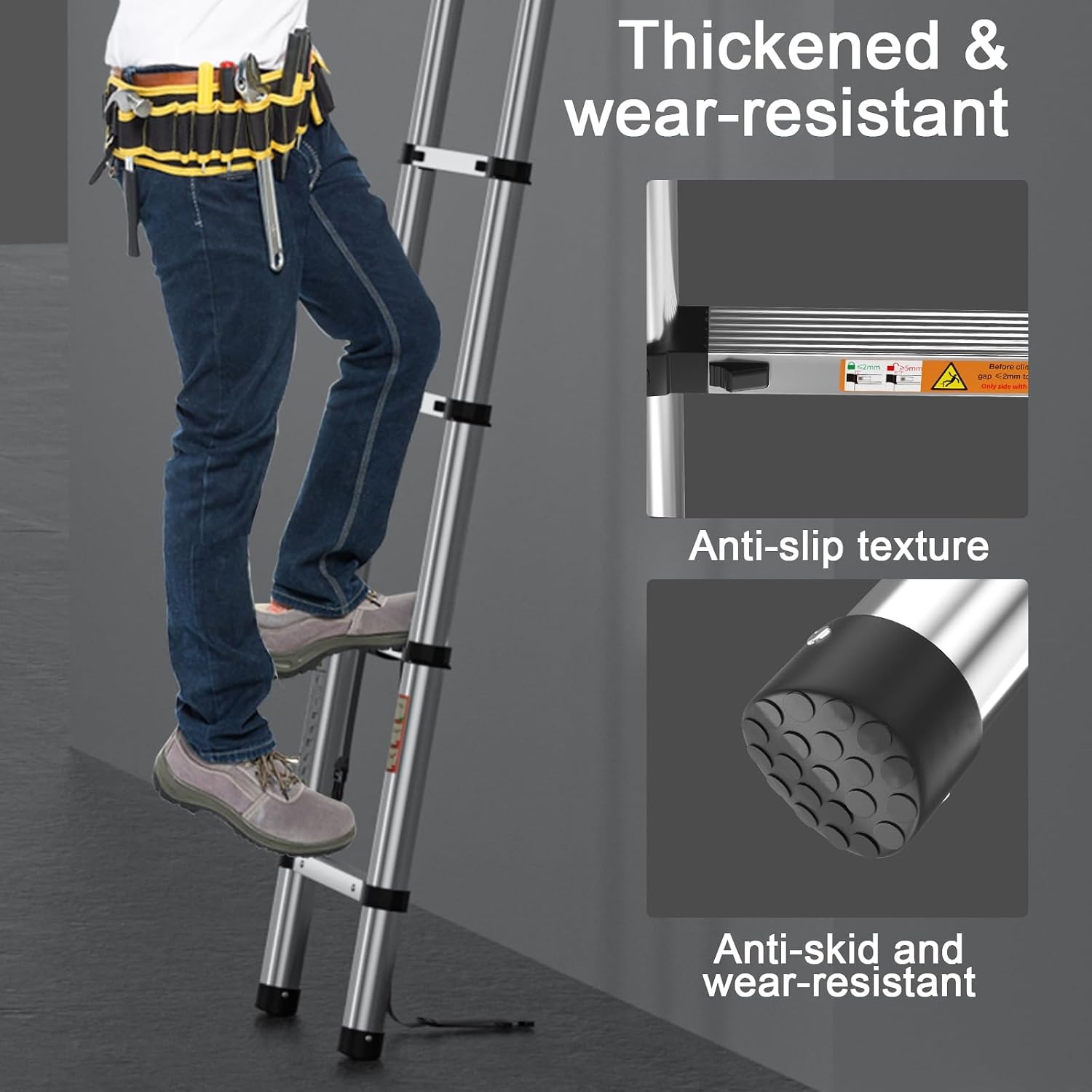
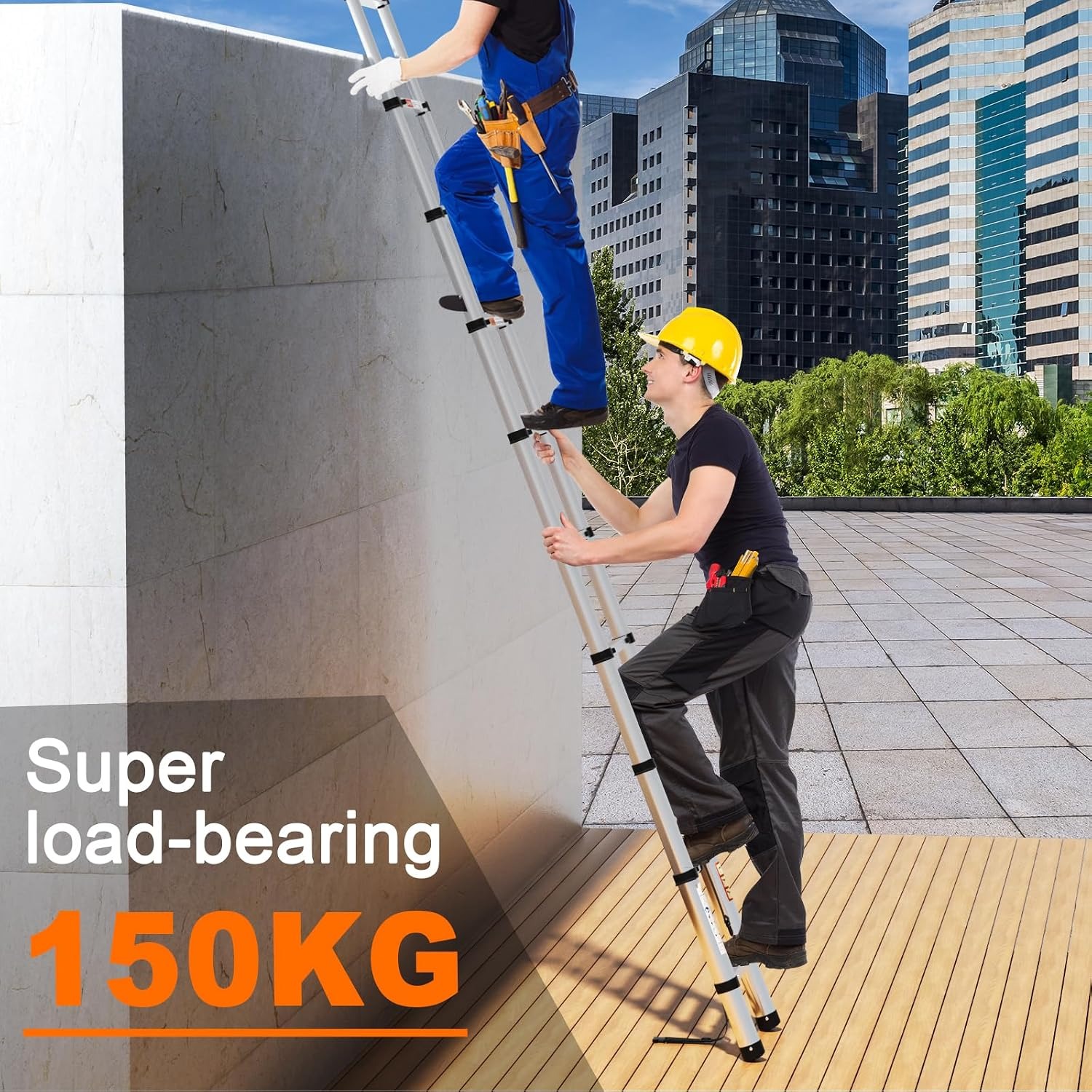
This model has thirteen steps and reaches a maximum height of 380 cm. The frame is stainless steel, and the listing says the plastic fittings are high tenacity nylon, which is the part most people never think about. The locks and end caps take a great deal of the stress on a telescopic ladder, so the quality of the plastic matters as much as the metal. The stated load capacity here is 149.69 kg, also given as 330 lb.
The thirteen steps are worth dwelling on. More steps across the same height means smaller gaps between them, and smaller gaps mean you can nearly always find a rung that puts the work at chest height. Reaching above your head on a ladder is where most of the wobble and most of the risk comes from. Being able to stand one step lower is a real safety feature, not a spec-sheet number.
Who this suits
If you own a house and do your own small jobs, a 3.8 metre ladder is close to the sweet spot. It handles single-storey gutters, loft hatches, high light fittings in stairwells, the top of a painted wall, upstairs windows from outside on a bungalow, and garden pruning. It is not a roofing ladder and it is not a commercial access tower, and nothing in the listing claims it is.
If you rent a flat, this is the kind of ladder that makes sense when a conventional one simply will not fit anywhere. A collapsible ladder for apartments has to vanish between uses, and this one does.
If you work out of a van or a car, 11.8 kg and a half-metre footprint means it travels. Plenty of people buy a portable step ladder for the car and then find they needed more height than a step ladder gives.
Who it does not suit: anyone needing to work for hours at height every day, anyone who needs a free-standing A-frame indoors with no wall to lean on, and anyone whose combined body and tool weight gets near the 149.69 kg limit.
How to choose the right height
The easy mistake is buying for the tallest thing you can imagine reaching. The better method is to measure the highest job you genuinely do, then think about where you will stand.
Measure from the ground to the gutter, hatch or light fitting. You should be standing on a step well below the top of the ladder, with your hips below the top rung and your hands free to work. As a rough rule, your comfortable working height is around a metre less than the ladder's full extension, and your reach adds back whatever your arm length is. For a typical single-storey gutter at around three metres, a 3.8 metre ladder is a comfortable match rather than a stretch.
Then measure your storage. The 46.5 cm width is the figure to check against your cupboard, shelf or car boot.
Setting it up safely
Three things decide whether a ladder is safe: the ground, the angle, and the locks.
Ground first. Firm and level beats everything. Soft lawn, loose gravel, wet tile and ice are all bad news, and no anti-slip foot compensates for a surface that moves. If the ground is soft, put a board under the feet.
Angle next. The supplier recommends about 75 degrees, which is the standard lean for an extension ladder. The quick check is the one-in-four rule: the base sits one unit out from the wall for every four units of height. Too upright and the ladder can tip backward. Too shallow and the feet can slide out. The angled feet on this ladder are designed to sit flush at roughly that lean, which is part of why the recommendation exists.
Locks last, and this is the one people rush. Before you put weight on it, check every section you have raised is properly engaged. Give the ladder a push and a shake at ground level. You want a solid, dead feel, not a click or a settle.
Coming down is its own skill. Hold the ladder upright, release the locks from the top down, and keep your fingers clear of the gaps between rungs as each section drops. Never release locks while the ladder is leaning on a wall.
Everyday care
Telescopic ladders fail at the locks, not the tubes. Grit is the enemy. After an outdoor job, wipe the tubes with a damp cloth and dry them before you collapse the ladder, so you are not sealing water and sand inside the sections. Keep paint off the rungs. Dried paint on a tread turns a ribbed anti-slip surface into a slick one, and paint in a lock stops a section seating.
Store it dry and indoors. Leaving a heavy duty telescopic ladder out in the weather all winter is the fastest way to a sticky lock in spring. Once a year, extend it fully in good light and look over the feet, the step housings and the lock tabs for cracks or wear.
Jobs it handles well
Gutter clearing is the obvious one, and the close rung spacing helps because you can stand at exactly the height where the gutter is at your waist. Window cleaning is similar. For painting, hook your tin on a rung rather than holding it, so one hand stays on the ladder. Loft access works if your ceiling height allows the proper lean, so check that before you buy if that is the main reason you want it.
Outdoors in the garden, it handles light pruning, fruit picking and shed roof inspections. Indoors, it does stairwell bulbs, curtain poles, smoke alarms and the high shelf nobody has touched since moving in.
The short version
This is a 3.8 metre telescopic ladder with thirteen stainless steel steps, ribbed treads, angled non-slip feet and a stated 149.69 kg load rating. It weighs 11.8 kg, measures 46.5 cm wide, and the listing states CE and EN131 compliance. Set it at about 75 degrees on firm ground, check every lock before you climb, wipe it down afterward and store it dry.
It is for the person who needs real height a few times a year and has no room for a real ladder. That describes most of us.