


The complete guide
Saucer Tree Swing Buyer's Guide - Picking, Hanging And Living With A Round Swing
The problem with normal swings
A single strap swing has one seat and one rider. If you have more than one child, or your child has friends over, you have just installed a queue. Add the fact that most kids outgrow the sit-and-pump routine by about seven, and a lot of garden swings end up hanging unused by year three.
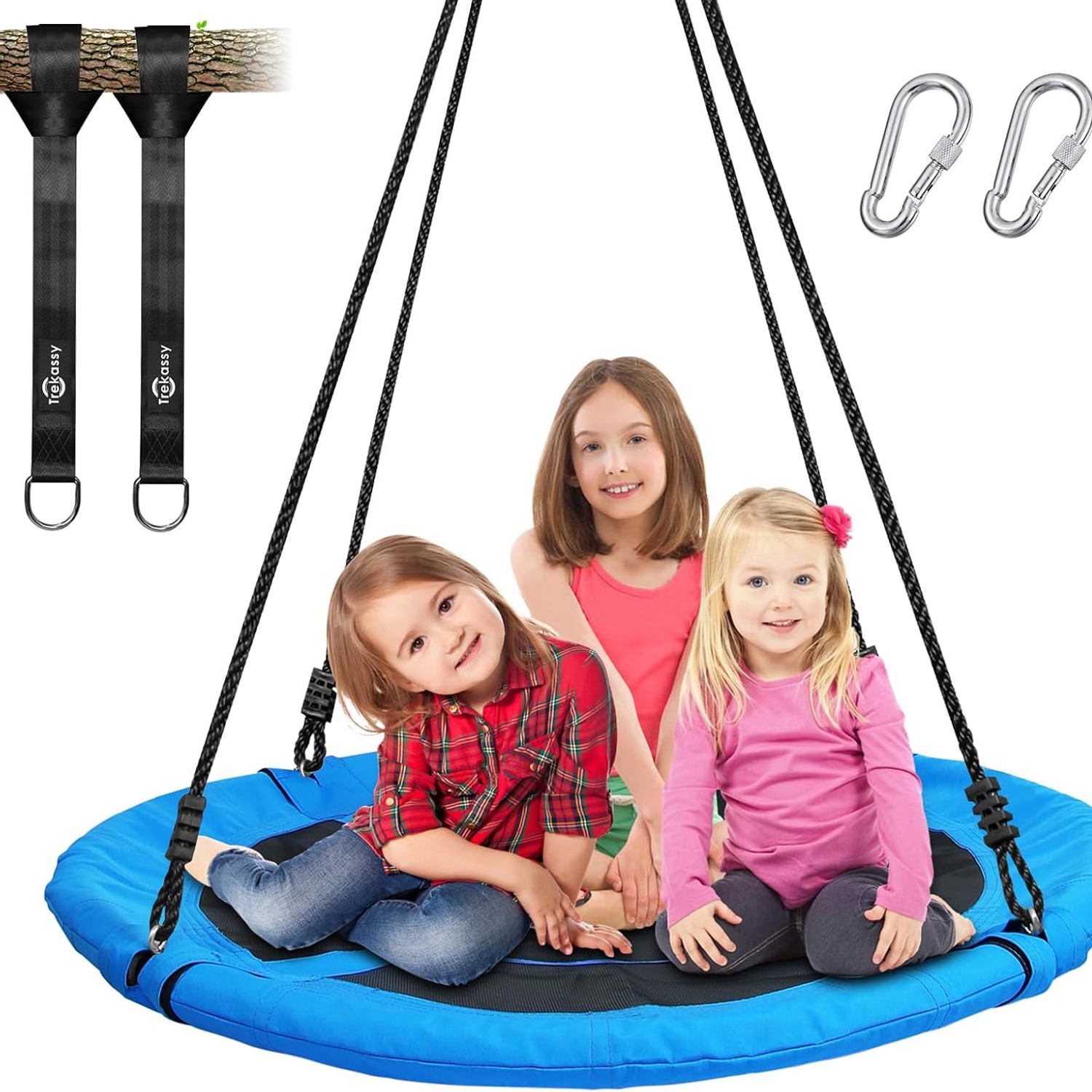
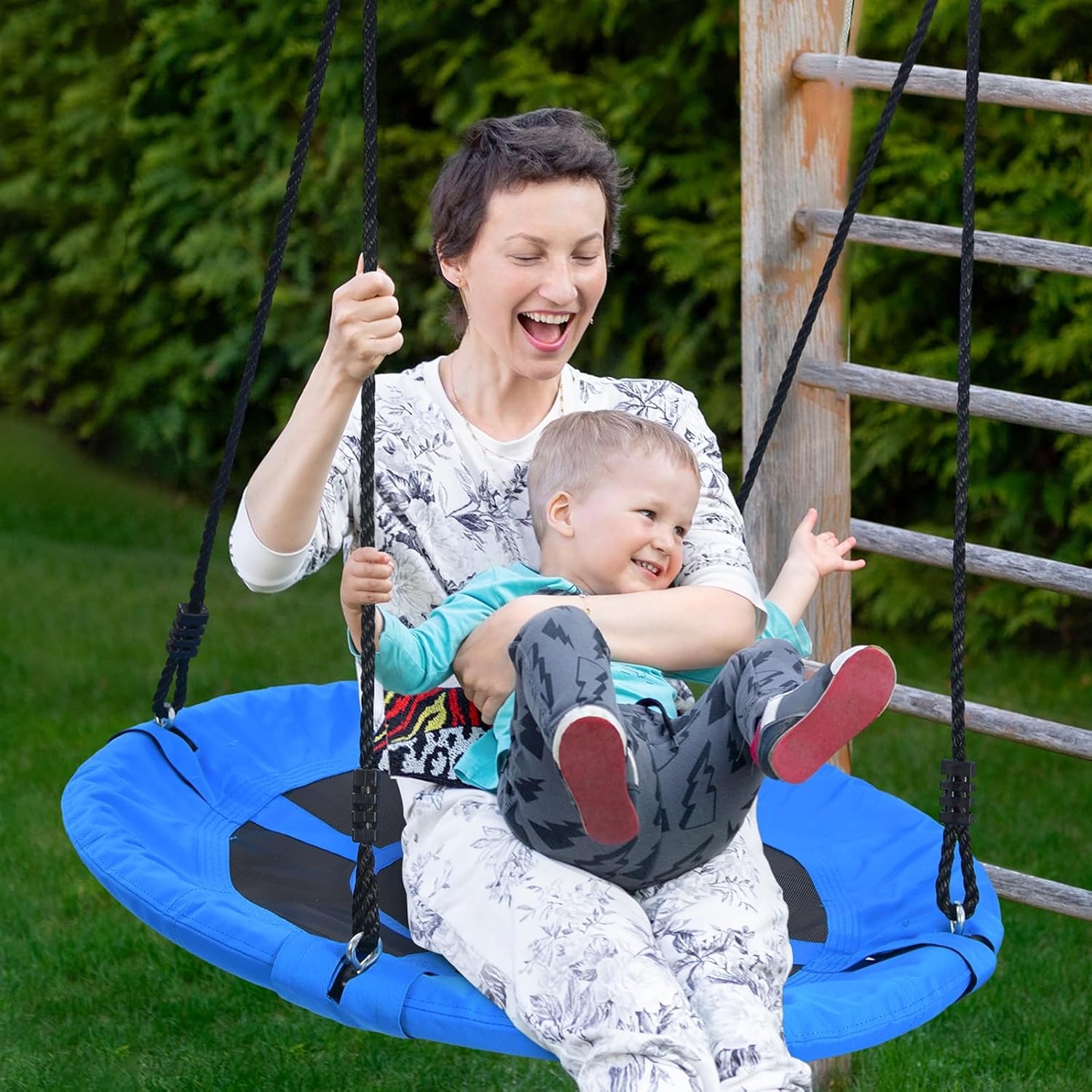
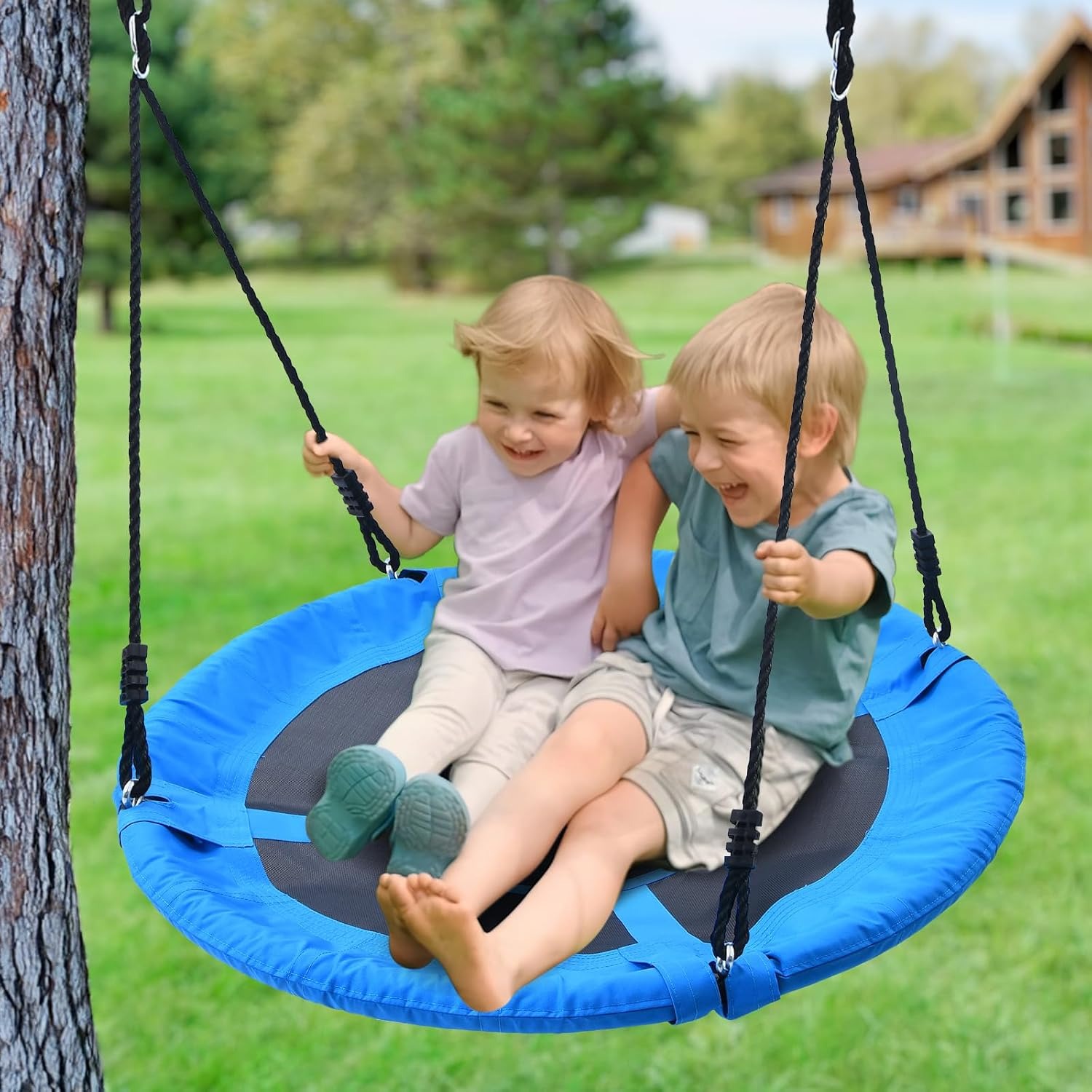
A saucer tree swing fixes both problems in a fairly obvious way. It is a wide round seat, 101.6 cm across in this case, so two or three children can get on at the same time. And because it spins as well as swings, it keeps being interesting long after a plain seat has got boring. Kids lie on it, kneel on it, pile on top of each other, and use it as a hammock when they are tired. One of the best tree swing for kids arguments is simply that it holds attention.
How a round swing actually works
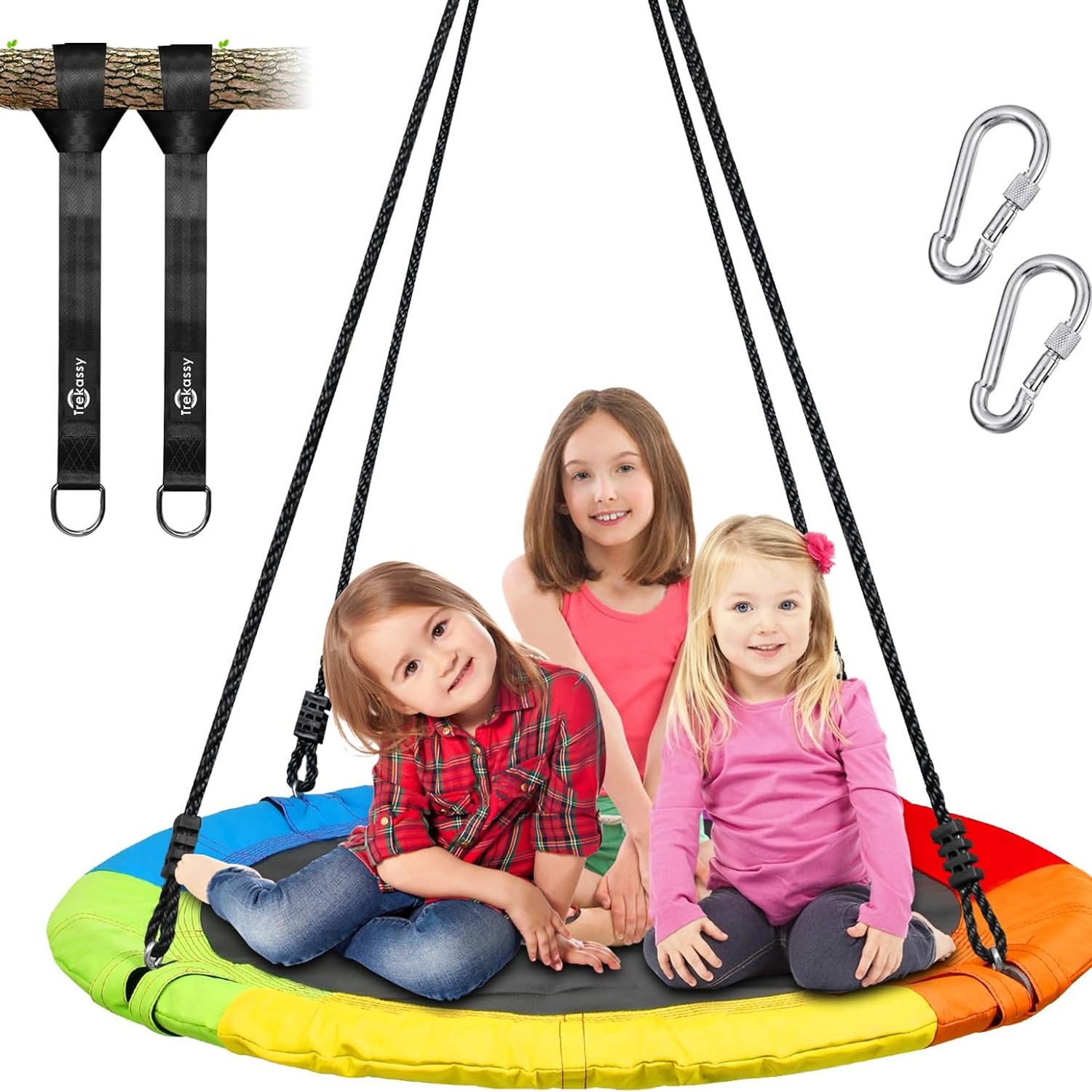
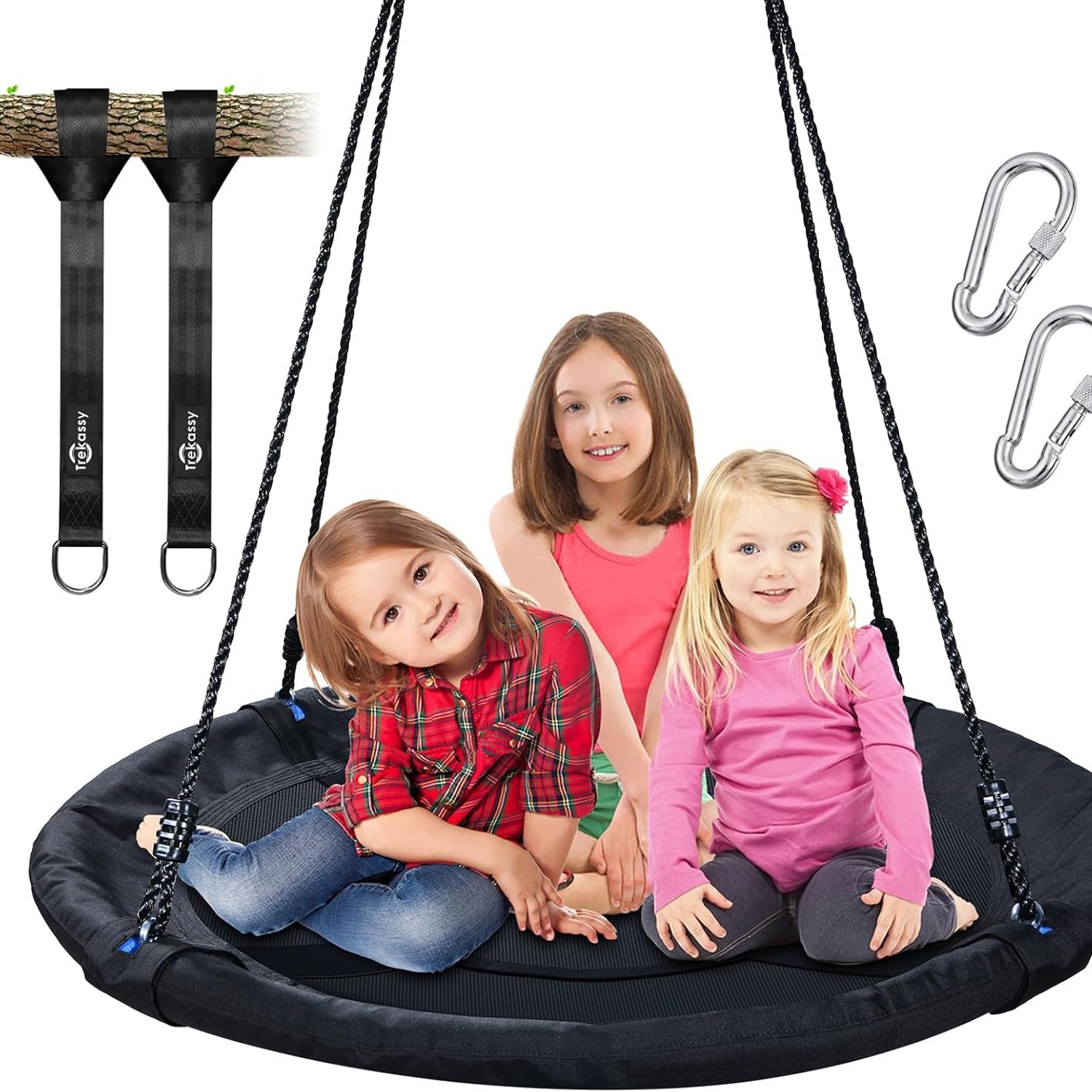
The construction is straightforward. A steel ring forms the outer frame, fabric is stretched across it, and four ropes run from the frame up to the hanging point or points. On this model the fabric is 900D Oxford, a tight polyester weave, and the frame is alloy steel. The whole seat weighs 1.73 kg, which is light for something rated to 317.52 kg.
The clever part is the hanging. If you gather all four ropes to a single point directly above the centre, the seat is free to rotate. Push off with one foot and it turns a full circle. If instead you run the ropes to two separate points spaced apart along a branch, the seat is held square and swings back and forth like a traditional swing. You can change your mind later. It is a ten minute job either way.
The adjustable ropes matter more than people expect. A three-year-old wants the seat low enough to climb onto by themselves. A nine-year-old wants it high enough to get real height. Being able to shorten or lengthen the ropes means the same swing works across that whole range without buying anything new.
Who it suits
The manufacturer recommends ages 36 months to 10 years. In practice the sweet spot is roughly four to ten, when kids are confident enough to spin themselves but still light enough that a parent can lift them on and off.
Families with more than one child get the most out of it, because the shared seat removes the turn-taking fight. It also works well for children who like motion for its own sake, including kids who seek out spinning and rocking. A hanging platform swing gives a lot of sensory input in a small footprint.
Adults do use swings like this. The weight rating allows for it. Just remember the age guidance is what the listing states, and that a swing used by a grown-up puts different loads through the branch than a swing used by a child.
Choosing where to hang it
This is the part worth slowing down for. Everything about how well the swing works comes down to the branch you pick.
You want a living hardwood branch, roughly horizontal, thick enough that it does not move when an adult hangs from it. Oak, maple, beech and sycamore are common choices. Avoid anything dead, hollow, split, or leaning away from the trunk. Avoid soft or brittle species that drop limbs. If you have any doubt at all, pay an arborist for twenty minutes of their time. It is cheap compared to the alternative.
Height of the branch matters too. A very high branch gives long, slow swings and needs a lot of rope. A branch two and a half to three and a half metres up is usually easiest to work with. Then set the seat itself low, around 40 cm to 60 cm from the ground for younger children.
Clearance is the thing people get wrong. Because a saucer swing for backyard use spins, the rider's legs sweep a circle much wider than the seat. Allow at least two metres clear in every direction, and check at head height as well as ground level. Trunks, fence posts, garden furniture, washing lines, other swings and low branches all need to be outside that circle.
Under the swing, soft wins. Grass is fine. Bark chip, play sand or rubber matting are better. Paving and concrete are not acceptable landing surfaces for any swing, regardless of how careful the rider is.
Hanging it on a frame instead
Plenty of people hang a round disc swing seat from an existing swing set rather than a tree. That is usually fine, with two checks. First, the frame has to be rated for the load you are putting on it, including the possibility of three kids at once. Second, the crossbar needs enough clearance from the uprights that a 101.6 cm seat can spin without striking the legs. On narrow A-frames, it often cannot. Measure before you commit.
Pergolas, beams and porch rafters can work too, but only if you fix into solid structural timber with hardware rated for dynamic loads. A swing does not just hang, it yanks. That is a different kind of force to a hanging basket.
Setting it up
Assembly is light. The seat arrives with the fabric already fitted to the frame, so your work is attaching the four ropes to the frame and getting the straps over the branch. Picture instructions are included.
Getting a strap over a high branch is the only fiddly bit. The usual trick is tying a small weight to a length of cord, throwing it over, then using the cord to pull the strap across. A ladder and a second person both help.
Once it is up, load test it before any child gets on. Have an adult sit on the seat and bounce gently. Watch the branch, watch the straps, watch the knots. If anything shifts, sort it out then.
Care and checking
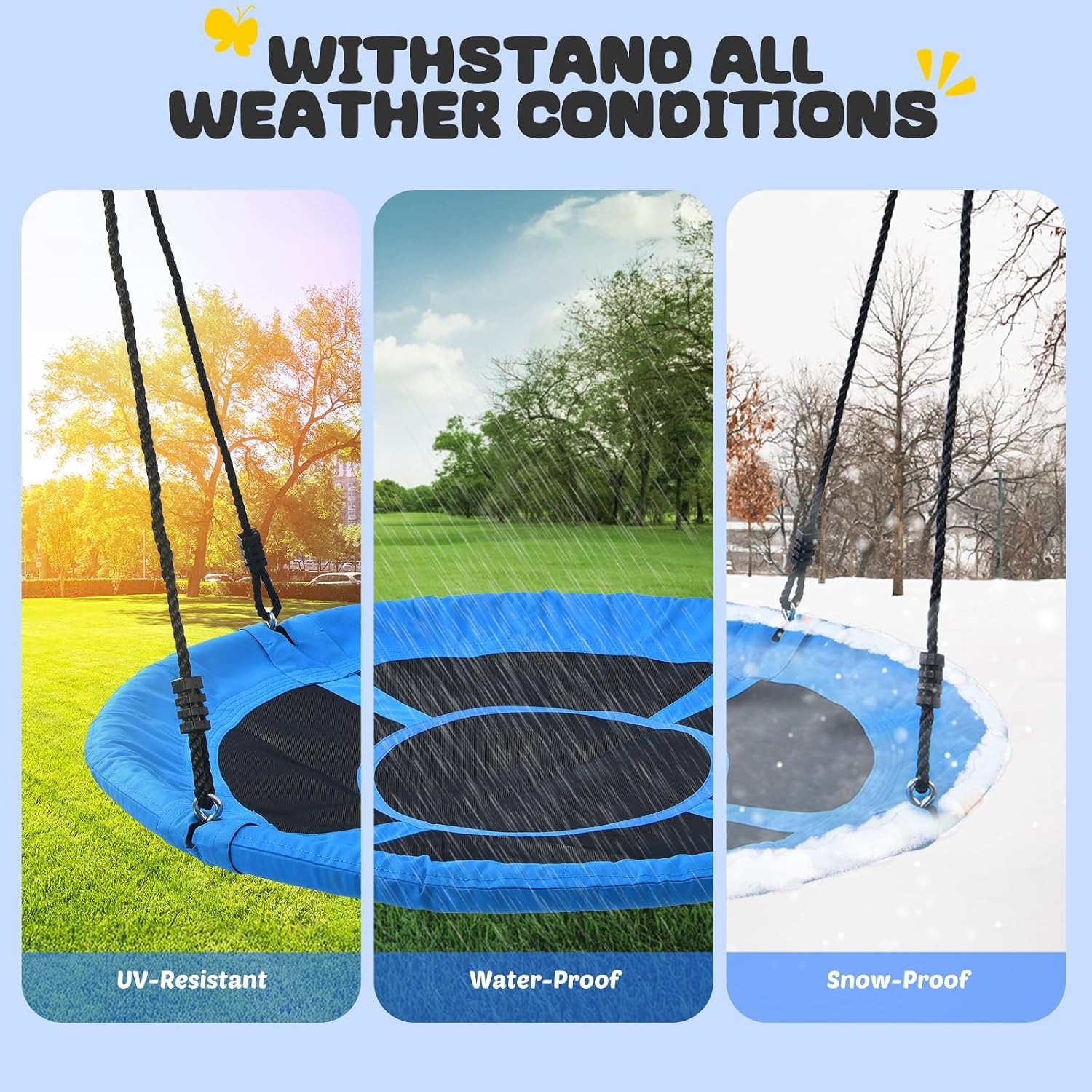
Outdoor gear lives longer indoors. Take the swing down in storms and over winter if you have somewhere to put it. At 1.73 kg that is a two minute job.
Clean the fabric with a damp cloth and mild soapy water, then let it dry fully before you store it. Do not put it in a washing machine.
Make a habit of a quick look before play, especially after bad weather. You are checking for frayed webbing, pulled stitching, bent or rusted metal, and bark that has started cutting into the strap. Reposition the strap slightly every few months so it is not always wearing the same patch of bark. If anything looks wrong, take it down until it is fixed or replaced.
The short version
A saucer tree swing is a wide fabric disc on a steel frame that hangs from a branch or sturdy crossbar. This one has a 101.6 cm seat, 900D Oxford fabric, an alloy steel frame, a maximum weight recommendation of 317.52 kg, and a recommended age range of 36 months to 10 years. Two 3.3 ft tree straps and adjustable ropes come in the box.
Hang it from one point and it spins. Hang it from two and it swings. Pick a living branch you would trust with your own weight, leave a generous circle of clear space around it, put something soft underneath, and check the hardware regularly. Do that and you have the one thing in the garden that gets used every single day.