


The complete guide
How To Choose And Fit A Suction Grab Bar In Your Bathroom
The moment that catches people out
Ask anyone who has slipped in a bathroom and they will usually describe the same few seconds. One foot is over the tub wall, the other is still on the mat, and the hand that reaches out grabs whatever is closest. Sometimes that is a towel rail. Sometimes it is the shower screen. Neither of those was built to take a person's weight, and both of them have sent people to hospital.
The fix is not complicated. Most people do not need a full bathroom renovation. They need a solid handhold at the right height, in the right place, that they can actually see and reach without thinking about it. That is the whole job a grab bar does.
Where suction models come in is for households that cannot or do not want to drill. Renters, people in apartment blocks, anyone with tiled walls they would rather not put holes through, and anyone who needs a handhold for six weeks after a knee replacement rather than forever. A removable bar solves the problem now and leaves no trace when it comes off.
How a suction grab bar actually works
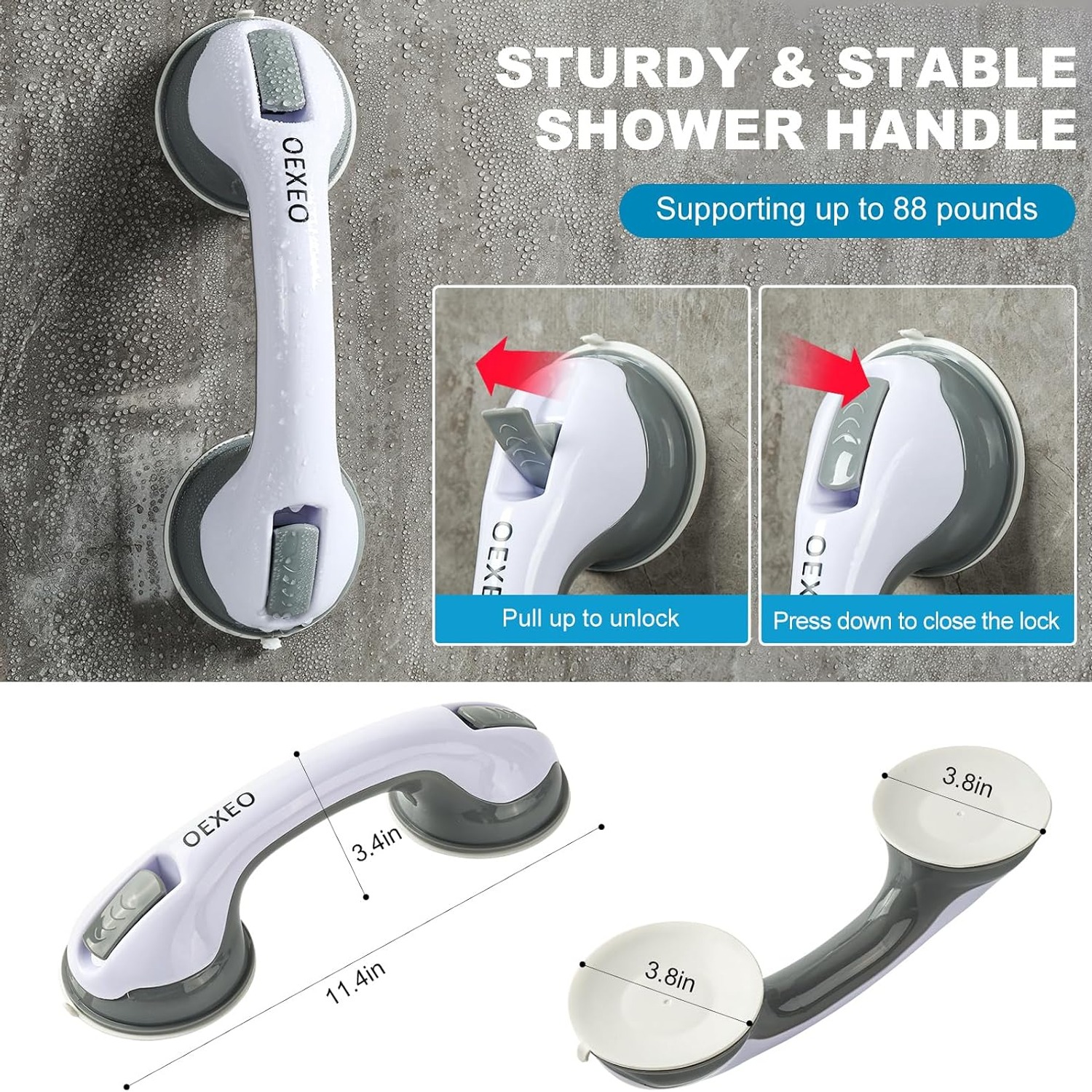
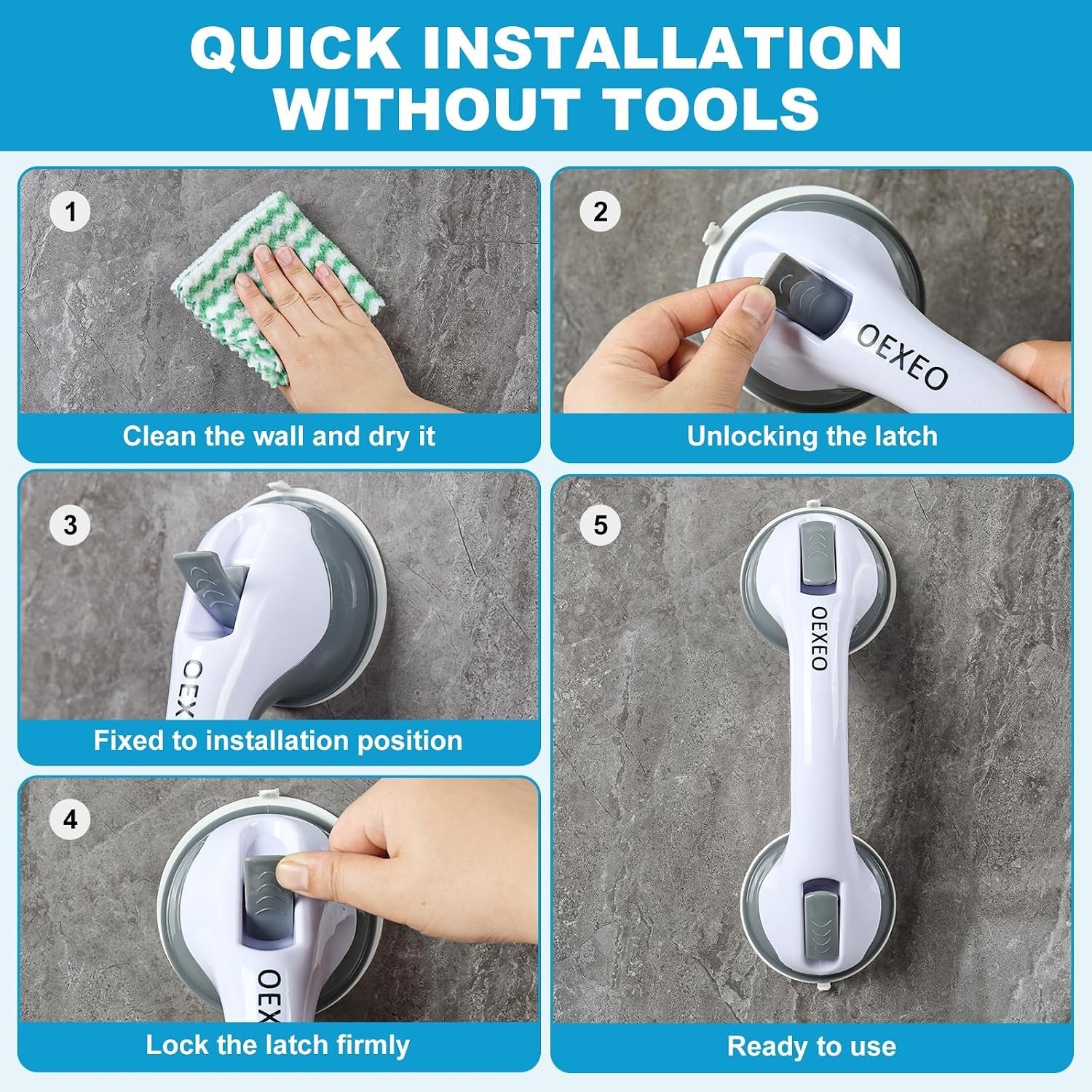
The back of each handle has two large suction pads. You press those flat against a clean, dry surface and then flip a locking latch on each end. The latch does the real work. It pulls the pad in tighter and squeezes out the last of the air, which is what turns a loose stick into a proper seal.
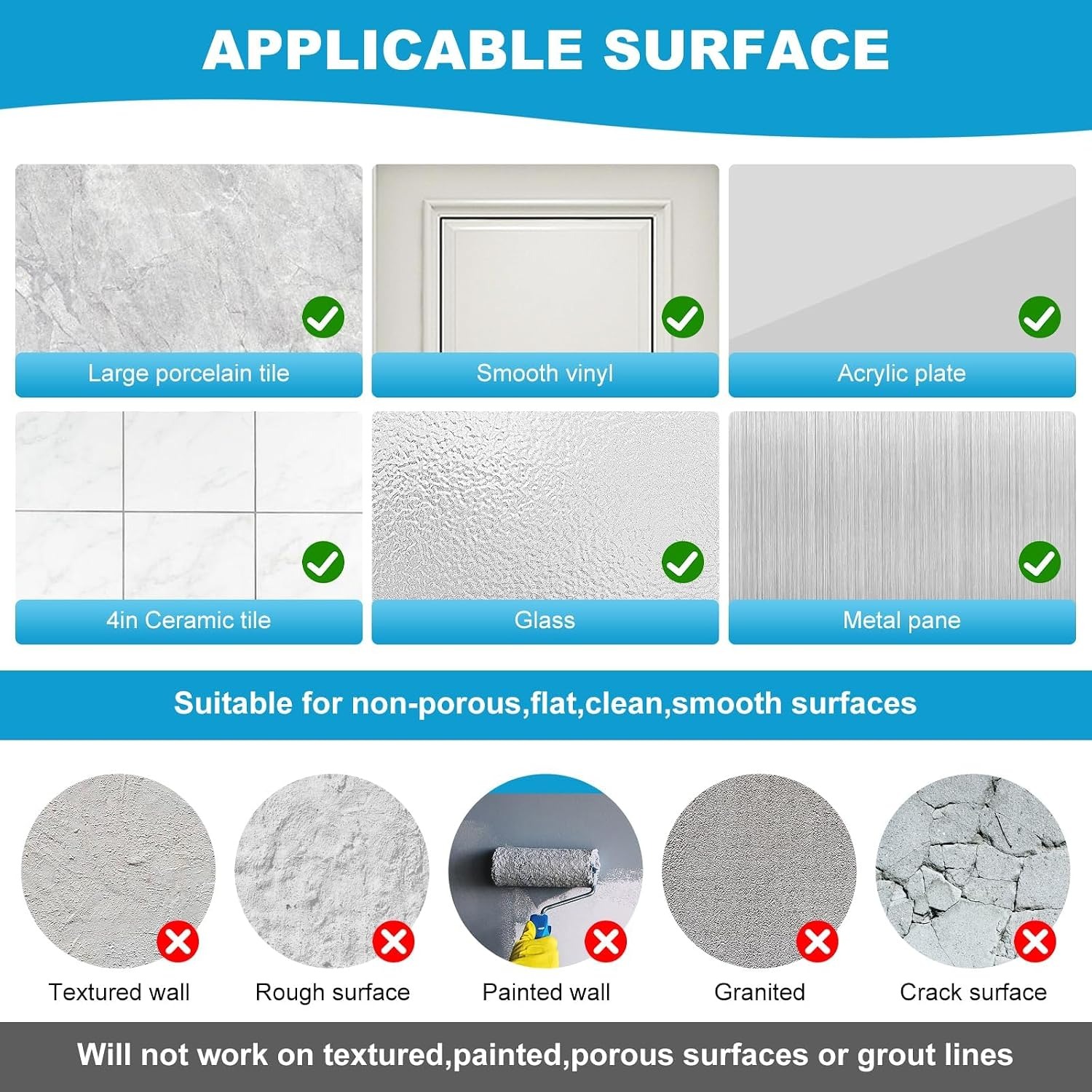
The surface matters more than anything else. Suction needs something non-porous, flat and smooth. Tile, glass, acrylic and metal all work. What does not work is textured tile, stone with an open grain, anything heavily patterned, and the strip of grout running between small tiles. Air leaks along grout lines and the seal quietly fails over a few hours. If your tiles are small mosaic squares, a suction bar is probably not the right product for that wall.
The handles here curve away from the mounting surface to leave roughly 4 inches of space, about 10 cm. That sounds like a small detail and it is not. If the gap is too tight you can only hook your fingers over the top of the bar, which is a weak hold. With a full hand wrapped around it you get a much stronger grip, and the moulded finger grooves on the underside give each finger its own spot to settle into.
Who these suit
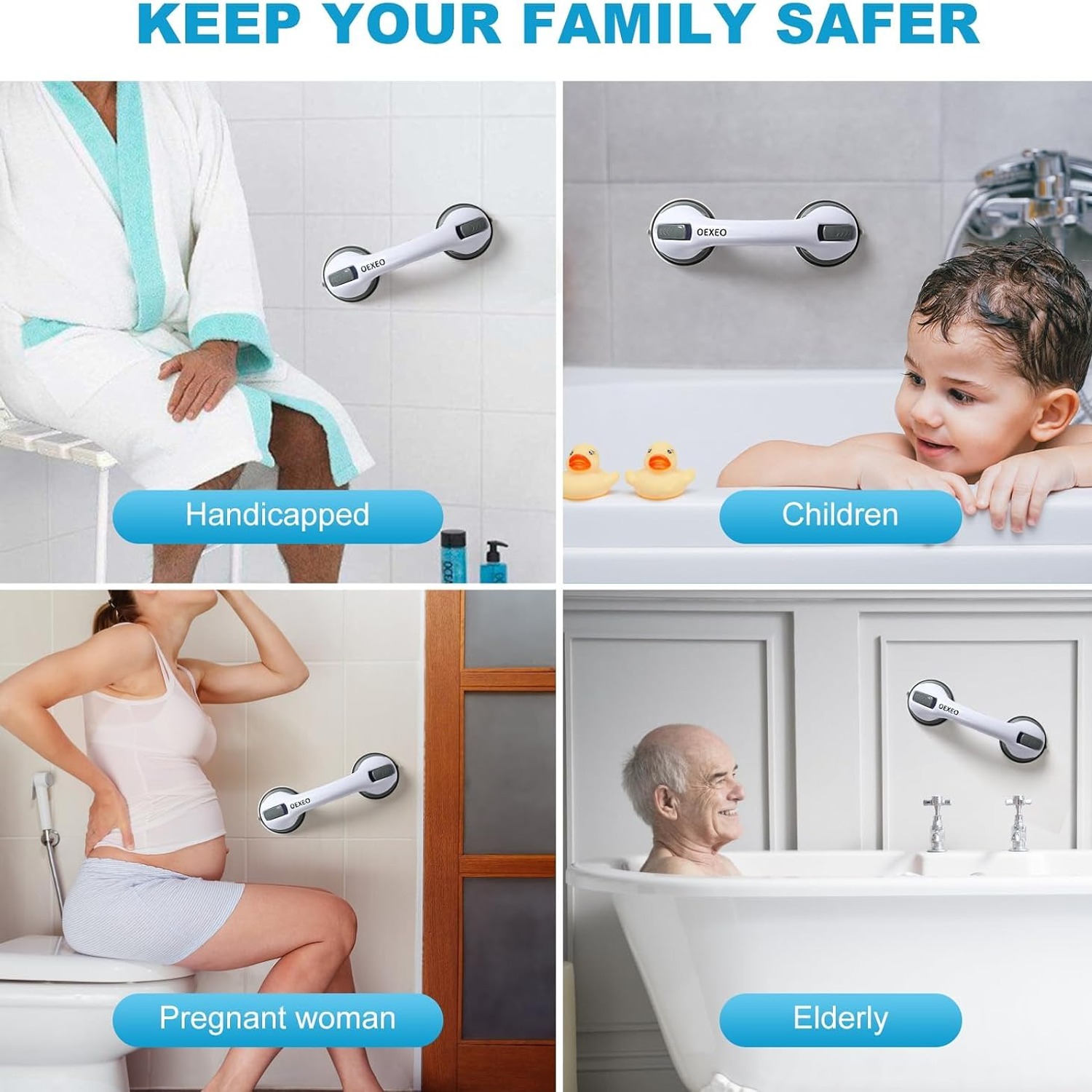
Older adults who are still independent but want a bit of reassurance on the step over the tub wall. People recovering from surgery or injury, where the need is real but temporary. Children who are climbing in and out of a bath on their own for the first time. Travellers who have arrived at a holiday rental to find a bathroom designed by someone who has clearly never struggled with anything.
They are also useful in shared households where one person needs support and nobody wants a permanent fixture on the wall. The bars come off in seconds, so the bathroom goes back to normal between uses if that matters to you.
Where they are not the right answer is where someone genuinely relies on a rail to hold their full body weight, or where there is a real risk of falling rather than just wobbling. Treat this as a steadying handhold. A person who needs fall protection needs a bar bolted into the studs, fitted by someone who knows what they are doing. There is no shame in that, and plenty of households use both: a drilled rail in the main spot and a portable grab handle wherever else it helps.
Picking your spots
Here is the part most people get wrong. They stick the bar on the wall at whatever height looks reasonable from outside the bath, then discover it is nowhere near their hand when they are actually in there.
Do it the other way around. Get in the bath, dry, and go through the motions. Step over the rim. Lower yourself down if you sit. Stand back up. Notice where your hand naturally reaches at each point. That is where the bar goes.
With two handles you can cover two of those moments instead of one. A typical setup puts one bar on the wall at about chest height when standing, useful in the shower and for the step over, and the second lower down, either on the tub surround or the inner tub wall, for the sit and the rise. If two people in the house need different heights, you can split the pair that way instead.
Give yourself permission to move them. That is the point of the lift tabs. Try a position for a few days, and if it does not feel right, peel it off and shift it. Most people land on their final spots within the first week.
Checking the seal, every time
This is the habit that makes a suction bar safe. Before you lean on it, push down and pull outward with firm but controlled pressure. You are testing the seal while standing on a dry floor, not discovering a problem halfway into the bath.
If anything moves, take the bar off, wipe both the pad and the wall, make sure both are dry, and re-seat it. A seal usually fails for a boring reason. Soap film on the tile. A hair caught under the rim. A pad that has not been cleaned in a month.
Temperature swings and humidity also work against suction over time. A bar that was rock solid on Sunday can be slightly loose by Thursday. That is normal behaviour for this type of mount and the reason the check matters more than the initial install.
Keeping them clean
Cleaning is quick. Wipe the grip and the pads with a soft damp cloth and a little mild soap, rinse, then dry them off. The textured surface is what gives you grip on wet hands, and soap residue sitting in that texture makes it slick, so it is worth doing regularly.
Take the bars off every week or two and clean the wall behind them. Anywhere that stays damp and covered will eventually grow mould, and a suction pad traps moisture by design. Thirty seconds with a cloth prevents the problem entirely.
Stay away from scouring pads and strong solvents. They will dull the grip texture and can damage the pad material, which is the last thing you want on a part that depends on a smooth, flexible surface to seal.
Storage and travel
Each handle is 29.2 cm long and 9.4 cm wide, and the pair weighs 400 g. They pack flat. People take them to hotels, to holiday rentals, to a relative's place for Christmas. If the bathroom there has a smooth tiled wall or a glass screen, you have a grab bar in under a minute.
That portability also makes them easy to store between uses. A drawer, a cupboard shelf, the side pocket of a suitcase. They do not need a dedicated home.
The short version
A suction grab bar is the practical answer when you need a handhold in a bathroom and drilling is off the table. These come as a pair, so you can cover the step over the tub rim and the sit-and-rise with separate handles rather than compromising on one position. The textured grip, the moulded finger grooves and the 4 inch clearance all point at the same thing, which is giving a wet hand something real to hold.
Two rules decide whether they will work for you. First, the surface has to be flat, smooth and non-porous, so check your tile before ordering. Second, check the seal before every single use. Do those two things and you have a genuinely useful piece of safety kit that leaves no marks and comes with you when you move.